
10 Best Primers For Rusted Metal in 2026
This post contains affiliate links. As an Amazon Associate, we earn from qualifying purchases.
For rusted metal, the best overall primer is Rust-Oleum Stops Rust Reformer Spray, which converts rust instantly into a paintable surface and dries tack-free in 20-40 minutes. For large projects, the Corroseal Rust Converter & Metal Primer offers one-step conversion and priming in a gallon size. DIYers needing a fast-drying option should consider the Seymour 16-45 Rust Converter.
The real challenge with rusted metal isn’t just covering the rust, it’s stopping it from coming back. A good primer must chemically convert iron oxide into a stable, paintable barrier. Without this conversion, paint will peel and rust will spread underneath.
This guide is research-based, drawing on manufacturer specifications, expert round-ups, and patterns in owner feedback. We evaluated each product on its ability to bond with rust, ease of application, drying time, and overall value for different project sizes.
Top 10 Primers For Rusted Metal in the Market
Certain content that appears on this site comes from Amazon. This content is provided "as is" and is subject to change or removal at any time.
The Best Primers For Rusted Metal, Reviewed
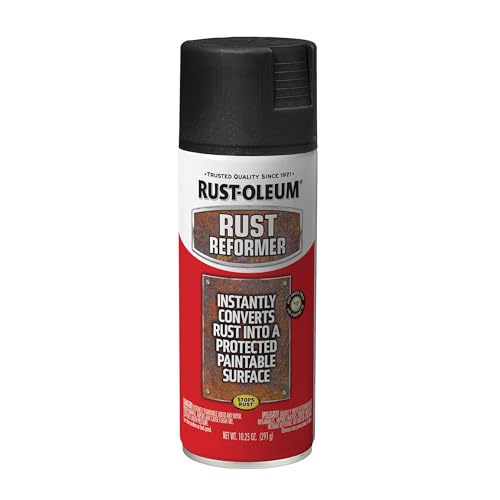
Rust-Oleum Stops Rust Reformer Spray
What We Like
- Converts rust instantly to paintable surface
- Any-angle spray works upside down
- Dries tack free in 20-40 minutes
- Oil-based formula bonds with rust
Trade-offs
- Needs 24 hours before topcoat application
- Requires 24 hours before topcoat can be applied
The Rust-Oleum Stops Rust Reformer Spray converts rust into a flat black, paintable surface as you spray, which means you can skip the long, dusty work of sanding down to bare metal. Its oil-based formula bonds directly with the rust, and the any-angle spray technology lets you reach awkward spots like the underside of a car fender or a fence rail without tilting the can. Drying tack free in 20 to 40 minutes, it keeps the job moving fast, though you will want to wait a full 24 hours before applying a topcoat for best results.
That 24-hour wait is the main trade-off. If you need a one-and-done coating that cures quickly for outdoor gear or a trailer, the Corroseal Rust Converter & Metal Primer dries to a protective layer without a separate topcoat step. But for anyone who wants a primer that turns rust into a smooth, paintable base and then lets you choose your own finish, this spray is hard to beat.
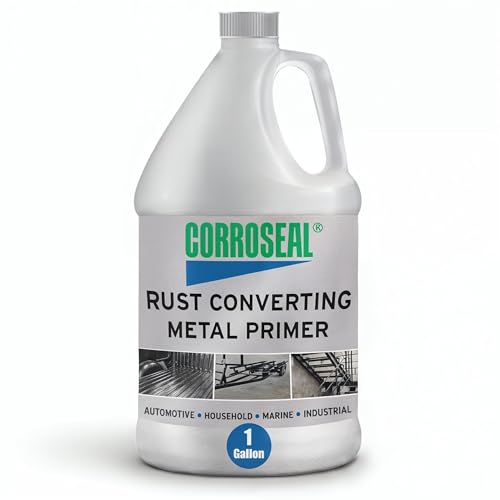
Corroseal Rust Converter & Metal Primer
What We Like
- Converts rust and primes in one step
- Large 1-gallon size covers 200-250 sq ft
- Water-based, non-flammable, easy cleanup
- Works on marine, auto, and industrial metal
Trade-offs
- Heavy at 10.2 pounds, less portable than sprays
- Requires 8-10 mils wet thickness for proper coverage
This water-based rust converter and primer covers 200 to 250 square feet per gallon, making it a practical choice for large metal surfaces such as marine, automotive, and industrial equipment. It combines rust conversion and priming into one step, so you save time and avoid buying separate products. The non-flammable formula cleans up with just soap and water, which simplifies the process compared to solvent-based options.
Weight and application style are the main considerations here. At 10.2 pounds, this gallon can is heavier than aerosol alternatives like the Rust-Oleum Stops Rust Reformer Spray, which is more portable for quick repairs. You need to apply it at a wet thickness of 8 to 10 mils to achieve the stated coverage, so following the recommended application method is important. It is a practical choice for big jobs where you value efficiency over portability.
Seymour 16-45 Rust Converter

What We Like
- Dries to touch in 10 minutes
- Accepts topcoats after 24 hours
- Chemically transforms rust into protective coating
- Reduces time spent sanding and wire brushing
Trade-offs
- 24-hour wait before topcoating slows multi-step jobs
- Black finish only, limits color options without topcoat
The Seymour 16-45 dries to the touch in 10 minutes, so you can handle the part quickly without waiting around. It chemically converts rust on iron and steel into a black protective primer, cutting down the heavy sanding and wire brushing you’d normally need. The coating resists moisture and prevents future rust from forming, making it a practical foundation before applying a topcoat.
You’ll need to wait a full 24 hours before painting over it, so if you’re hoping to finish a repair in one afternoon, that extra day can throw off your schedule. For projects where you can let it sit overnight, the quick initial dry and solid rust conversion make it a very practical choice.
Corroseal Water-Based Rust Converter Metal Primer

What We Like
- Combines rust conversion and primer in one step
- Water-based with easy soap-and-water cleanup
- Non-flammable and non-corrosive formula
- Works for marine, automotive, and household use
Trade-offs
- Requires 8-10 mils wet application for proper coverage
Covering 200-250 square feet per gallon, this water-based rust converter and primer handles large metal surfaces without needing a separate conversion step. You brush, roll, or spray it on, and it cleans up with just soap and water, no solvents or harsh fumes. The one-step process combines paint, prime, and convert in a single coat, which simplifies the job for anyone working on a rusted fence, trailer frame, or marine equipment.
You must apply it at 8-10 mils wet to get full coverage, which takes a bit of attention during application. This water-based primer is non-flammable and non-corrosive, so it works without special ventilation, but it may not be the fastest option if you need a quick-drying finish. For treating large rusty areas, this quart-sized converter delivers a practical solution.
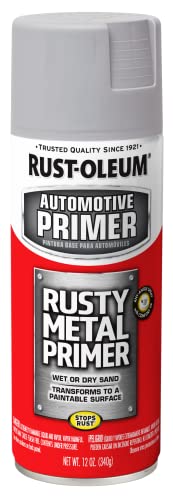
Rust-Oleum Automotive Rusty Metal Primer Spray
What We Like
- Protects heavily rusted surfaces
- Fast dry and recoat in 15 minutes
- More than twice rust protection of enamels
- Accepts any topcoat with superior adhesion
Trade-offs
- Oil-based formula requires solvent cleanup
- Covers only 12 sq ft per can
This primer sprays a flat light gray coat that covers up to 12 square feet and dries to the touch in just 15 minutes. That lets you move through a multi-step rust repair job on a car or truck without long waits between coats. Its oil-based Stops Rust formula is engineered for heavily rusted automotive surfaces, delivering more than twice the rust protection of standard enamels while creating a surface that grabs any topcoat firmly. That speed and adhesion make it a natural fit for anyone restoring a vehicle panel or treating a rust-prone underbody area where time and durability both matter.
One thing to keep in mind is that being oil-based means you need mineral spirits or similar solvent for cleanup, which adds a step compared to water-based options like Corroseal’s water-based converter. If you are working on a car or truck and need a primer that bonds to rust, dries fast, and preps the surface for paint, this one earns its place in the guide.
Eastwood Rust Converter Aerosol

What We Like
- No sanding or scraping needed
- Turns rust into paintable primer
- Fast-acting rust converter
Trade-offs
- Requires protective gear during use
- 90-day limited warranty only
This aerosol converter skips the sanding and grinding step entirely, turning surface rust directly into a black primed coating through a chemical reaction. For anyone working on car frames, tractor parts, or barn finds where elbow grease is scarce, that single feature makes it a natural fit. The 13-ounce can is easy to aim into tight spots.
Personal safety is non-negotiable when working with any rust converter. Appropriate eye, skin, and respiratory protection must be worn during every application. The container itself lists safety information, and the Material Safety Data Sheet provides complete requirements. This isn’t a step to skip, even for a quick touch-up. Aerosolized chemicals can irritate lungs and skin, so a respirator with organic vapor cartridges and nitrile gloves are standard precautions. Taking a few minutes to gear up prevents exposure that could ruin your day or your health. Treat the can with the same respect you would any automotive chemical.
Product photos
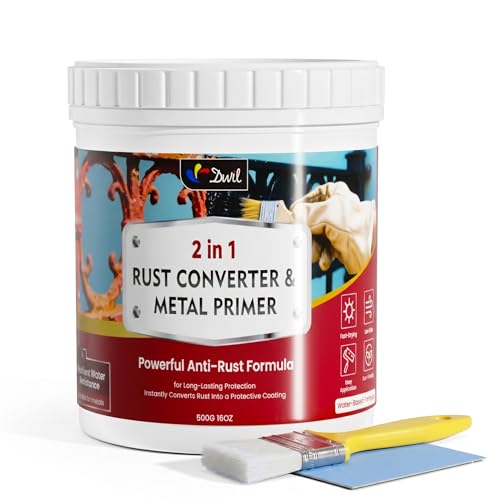
DWIL Rust Converter and Metal Primer
What We Like
- Water-like flow reaches deep crevices
- No separate primer needed
- Low odor for indoor use
- UV and salt spray resistant
Trade-offs
- Requires two thin coats for best results
- Needs 4-step surface prep before application
This rust converter uses a thin, low-viscosity formula that seeps into microscopic pores and tight crevices via capillary action, reaching spots brushes can’t access. It chemically converts rust into a black protective barrier and serves as a primer, so no separate primer coat is needed. The low-odor, low-VOC formula makes it suitable for indoor projects like garden gates or railings, and it resists UV and salt spray for outdoor durability on car chassis, truck frames, or marine equipment. For best results, apply two thin coats and follow the manufacturer’s 4-step surface prep to ensure a uniform seal.
The DWIL Rust Converter and Metal Primer is a 100% liquid, not a thick paint, so it uses capillary action to reach microscopic pores and crevices that brushes can’t reach. To get a uniform seal, the manufacturer recommends applying two thin coats and following their 4-step prep. The payoff is a rock-hard black polymer shield that permanently blocks oxygen and moisture, protecting metal from the inside out.
Product photos
Bartoline Rust Converter Spray

What We Like
- Converts rust in 15 minutes
- No separate primer required
- Works on automotive parts and tools
- Prevents rust from returning
Trade-offs
- Only for ferrous metals, not aluminum
- Requires surface cleaning before use
The 15-minute conversion time means you can treat rust and move on to painting in the same afternoon, no waiting overnight. This self-priming spray eliminates the extra step of buying and applying a separate primer, making it a straightforward choice for anyone tackling rusted garden furniture, tools, or automotive parts. The formula prevents rust from returning, so a quick treatment now can save you from sanding and re-coating later.
One limitation is that this spray is designed specifically for ferrous metals, so it won’t help on aluminum or other non-iron surfaces. The Rust-Oleum Stops Rust Reformer Spray comes in a can of the same dimensions, but the Bartoline’s self-priming formula means you skip the primer step entirely. If you need a converter that also works as a primer for larger industrial projects, the Corroseal Rust Converter & Metal Primer comes in a gallon jug, though you’ll need a brush or roller instead of a spray can. For a quick rust-to-paint job on iron or steel, this aerosol gets the job done without extra steps.
Product photos
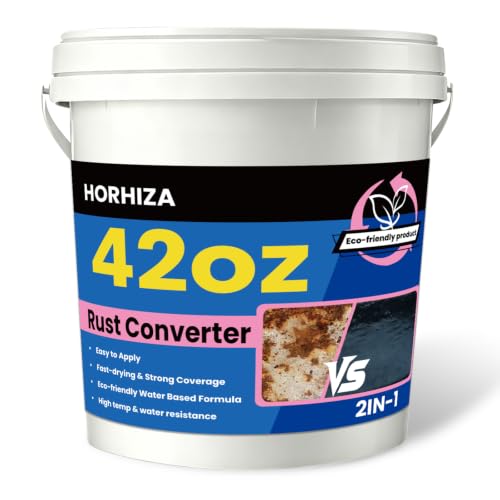
HORHIZA 2 in 1 Rust Converter & Metal Primer
What We Like
- 2-in-1 converter and primer
- Heat-resistant anti-rust coating
- Eco-friendly, low-odor formula
- Works on steel, iron, aluminum
Trade-offs
- 24-hour dry time between coats
- Requires 2-3 thin coats for best results
A 42-ounce water-based formula that converts rust into a stable protective layer while priming the surface in one step means less time prepping and more time protecting. This makes the HORHIZA a natural fit for automotive chassis, marine gear, and outdoor equipment where heat and corrosion fight each other. The eco-friendly, low-odor composition also keeps the workshop breathable, so you can work on a trailer or fence without gassing yourself out.
Patience is key here. Each coat needs a full 24 hours to dry, and the manufacturer recommends two to three thin coats for the best bond. That’s slower than a fast-drying spray like Rust-Oleum Stops Rust Reformer, but the HORHIZA builds a thicker, more abrasion-resistant finish that stands up to salt and chemicals. If you can plan ahead and brush on a few layers over a weekend, this coating delivers lasting protection in one can.
Product photos
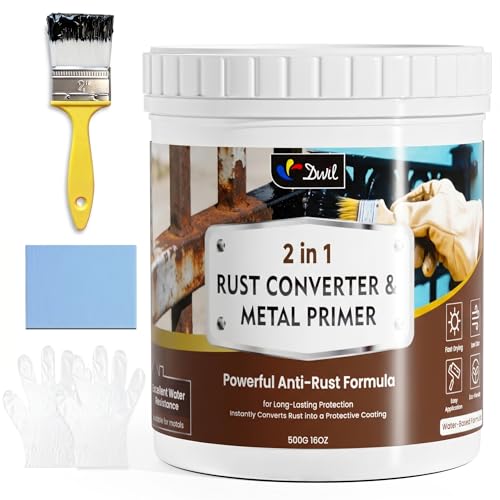
DWIL High-Flow Rust Converter and Primer
What We Like
- Capillary action reaches microscopic crevices
- Chemically converts rust into protective barrier
- Low-odor water base for indoor use
- UV and salt spray resistant
Trade-offs
- Requires two coats for uniform seal
- Not a thick paint for filling heavy pitting
A 100% liquid formula that uses capillary action to seep into microscopic pores and tight crevices means this converter reaches rust spots brushes can’t touch. It chemically turns corrosion into a black polymer shield, blocking oxygen and moisture without needing a separate primer. The low-odor, water-based composition makes it safe for indoor restoration work, and its UV and salt spray resistance suits outdoor metal like truck frames, railings, and marine gear. For anyone dealing with rust in intricate ironwork or hard-to-reach joints, this high-flow approach delivers protection from the inside out.
The manufacturer recommends two thin coats for a uniform seal, which adds a step compared to a single-thick aerosol like Rust-Oleum Stops Rust Reformer Spray. Where that spray dries fast and covers in one pass, the DWIL rewards patience with deeper penetration into hidden rust spots. It’s the better choice when you need to treat complex shapes and crevices rather than broad, flat panels.
Product photos
How We Evaluated Primers For Rusted Metal
Our evaluation focused on the specifications and performance claims of each primer. We reviewed manufacturer data on drying times, coverage area, and chemical composition. We also analyzed patterns in owner feedback to understand real-world results, focusing on adhesion, durability, and ease of use.
The most important criteria for this category were rust conversion effectiveness, application method, drying time, and coverage. A primer that only seals rust without converting it will fail over time. We prioritized products that chemically transform rust into a stable, inert layer. Application method matters because a spray can is convenient for small jobs, while a brush-on gallon is better for large surfaces.
The honest limit of a research-led evaluation is that we cannot replicate every real-world condition. Factors like surface preparation, humidity, and temperature all affect results. We present what the specifications and owner feedback tell us, so you can choose the right tool for your specific project.
What To Look For In Primers For Rusted Metal
Choosing the right primer for rusted metal means understanding how it works, not just what it costs. The key is finding a product that chemically converts rust and bonds to the surface, then matches your project’s size and timeline.
Look for a primer that converts rust chemically rather than just sealing it. Check the drying time, coverage area, and whether it needs a separate topcoat. For large projects, a water-based gallon may be easier to apply and clean up.
Rust Conversion vs. Sealing
The single most important distinction is whether a primer converts rust or simply seals it. Converters use tannic acid or similar chemicals to react with iron oxide (rust) and turn it into a stable, black protective layer. This layer is paintable and stops further corrosion. Sealers, on the other hand, only block air and moisture temporarily. If moisture gets underneath, rust will continue to spread. For rusted metal, always choose a converter.
Application Method and Coverage
Primers come as aerosols, brush-on liquids, or spray-on gallons. Aerosols are ideal for small parts, tight spaces, and vertical surfaces. They often feature any-angle spray valves for hard-to-reach areas. Brush-on liquids are better for large, flat surfaces like truck beds or metal roofs. Coverage varies widely: a typical aerosol covers around 12 square feet, while a gallon can cover 200-250 square feet. Consider your project size before buying.
Drying Time and Recoat Window
Drying time affects how quickly you can move to the next step. Some primers dry to the touch in 10-15 minutes, while others take 20-40 minutes. Most require a full 24 hours before a topcoat can be applied. If you are working on a multi-step job, a fast-drying primer can save hours. However, fast drying does not mean fast topcoating, check the manufacturer’s recoat window to avoid adhesion problems.
- Check if the primer is oil-based or water-based for cleanup and odor considerations.
- Look for a formula that works on your specific metal type (ferrous vs. Non-ferrous).
- Consider whether you need heat resistance for engine parts or exhaust systems.
- For indoor use, a low-odor, water-based formula is safer and more comfortable.
A rule of thumb: If the surface is heavily pitted or flaking, you will get better results with a brush-on primer that can be applied thicker.
Primers For Rusted Metal Compared
The table below compares the key specs of each primer, including drying time, coverage, and application method, so you can quickly see which one fits your project.
| Product | Formula Base | Application Method | Drying Time |
|---|---|---|---|
| Rust-Oleum Stops Rust Reformer Spray | Oil-based | Any-angle spray | 20-40 minutes |
| Corroseal Rust Converter & Metal Primer | Water-based | Brush, roll, or spray | N/A |
| Seymour 16-45 Rust Converter | N/A | Spray aerosol | 10 minutes |
| Corroseal Water-Based Rust Converter Metal Primer | Water-based | Brush, roll, or spray | N/A |
| Rust-Oleum Automotive Rusty Metal Primer Spray | Oil-based | Any-angle spray | 15 minutes |
| Eastwood Rust Converter Aerosol | N/A | Aerosol spray | N/A |
| DWIL Rust Converter and Metal Primer 2 in 1 | Water-based | N/A | N/A |
| Bartoline Rust Converter Spray | N/A | Self-priming spray | 15 minutes |
| HORHIZA 2 in 1 Rust Converter & Metal Primer | Water-based | Brush | 24 hours |
| DWIL High-Flow Rust Converter and Primer | Water-based | N/A | N/A |
Frequently Asked Questions
Can I just paint over rust without a primer?
Painting directly over rust will not stop it from spreading. The rust will continue to corrode under the paint, causing peeling and blistering. A rust converter primer chemically neutralizes the rust and creates a stable surface for paint to adhere to.
How do I prepare rusted metal before applying primer?
The surface should be relatively clean and free of loose rust, oil, and grease. Wire brushing or sanding to remove flaking rust is usually recommended. Most converters work best on a surface with some firm rust remaining, as they need the rust to react with.
Is a rust converter the same as a rust inhibitor?
No. A rust converter chemically reacts with existing rust to change its composition. A rust inhibitor prevents new rust from forming on bare metal. Many primers combine both functions, but a converter is essential for surfaces that already have rust.
How long does a rust converter primer last?
Durability depends on the product, surface preparation, and exposure to elements. Most high-quality converters provide long-term protection when topcoated. Owner reports suggest several years of protection on properly prepared and painted surfaces in moderate conditions.
Can I use a rust converter on galvanized metal?
Most rust converters are designed for ferrous metals like iron and steel. Galvanized metal has a zinc coating that prevents rust, but it also prevents the converter from reacting. Check the product label; many converters specify they are not for galvanized surfaces.
The Bottom Line
For most DIYers and mechanics, the Rust-Oleum Stops Rust Reformer Spray is the best overall choice. It converts rust instantly, works at any angle, and dries tack-free in 20-40 minutes, making it ideal for fast repairs on car parts, tools, and equipment. If you are tackling a large rusted surface like a metal roof or truck bed, the Corroseal Rust Converter & Metal Primer in the 1-gallon size offers excellent coverage and easy water-based cleanup.
Budget-conscious readers will find the Corroseal Water-Based Rust Converter Metal Primer a reliable all-in-one option for large household projects, though it requires careful application at the right wet thickness. For automotive bodywork, the Rust-Oleum Automotive Rusty Metal Primer Spray provides superior adhesion and fast recoat times.
The single most important factor is choosing a primer that chemically converts rust rather than just covering it. That conversion is what stops rust from coming back, saving you time and frustration down the road.
