
10 Best Pool Paint in 2026
This post contains affiliate links. As an Amazon Associate, we earn from qualifying purchases.
The In The Swim White Epoxy Swimming Pool Paint is our Best Overall pick for its ceramic-like high-gloss finish and stain resistance that can last up to eight years. For maximum durability on rough surfaces, the WOOLSEY Premium Epoxy Pool Paint earns Best Long-Lasting Epoxy, while the Dyco Waterborne Acrylic Pool Paint wins Best Easy-Clean Finish for low-odor application.
Choosing the right pool paint means matching the formula to your pool’s surface material and your tolerance for prep work. A two-part epoxy offers the longest service life but requires careful mixing, while waterborne acrylics are simpler to apply but less durable.
This guide is based on manufacturer specifications, expert round-ups, and patterns in owner feedback. We evaluated each paint for surface compatibility, durability, coverage, and application requirements to help you choose confidently.
Top 10 Pool Paints in the Market
Certain content that appears on this site comes from Amazon. This content is provided "as is" and is subject to change or removal at any time.
The Best Pool Paints, Reviewed
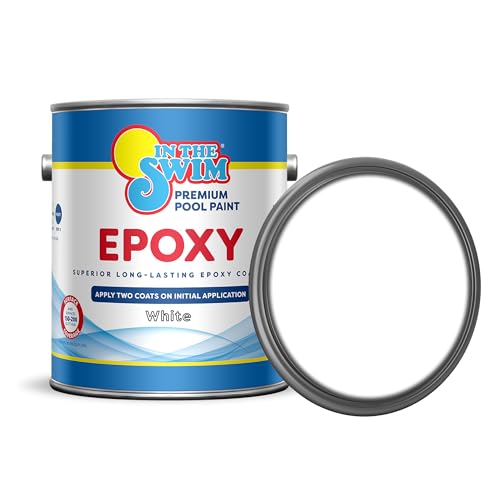
In The Swim White Epoxy Swimming Pool Paint
What We Like
- Ceramic-like high-gloss finish
- Covers 150-200 square feet per gallon
Trade-offs
- Needs sand added for slip resistance
- Two-part mixing process is messy and time-consuming.
The trade-off is that you cannot just open a can and start painting. That extra prep is a small price for the durability you get.
Product photos
WOOLSEY Premium Epoxy Pool Paint

What We Like
- High solids for durable finish
- Smooths rough surfaces at 8 mils
- Up to 8 years of service life
- Resists stains, chemicals, abrasions
Trade-offs
- Two coats needed for full 8-year life
- Epoxy requires careful mixing and application
- Satin finish less reflective than high-gloss options
Two coats of this epoxy build up to 8 mils thick per layer, smoothing rough plaster or concrete into a satin finish that provides protection against stains, chemicals, and abrasions. The manufacturer states up to 8 years of service life with two coats, which means fewer repaints over time. It suits anyone who wants a durable coating and is comfortable with epoxy application.
Epoxy requires careful mixing and application, and the satin finish won’t give you the mirror-like shine of a high-gloss product. But if your pool surface is rough or you want a coating that lasts, the WOOLSEY’s build and durability make that extra work worthwhile.
Dyco Waterborne Acrylic Pool Paint

What We Like
- Resists UV, salt, and chemicals
- Seals hairline cracks in surfaces
- Easy waterborne application
Trade-offs
- Only for concrete, plaster, or masonry surfaces
- Less durable than epoxy paints for heavy-use pools
A waterborne acrylic formula that resists UV, salt, chemicals, fading, and cracking means this paint is built to handle the punishing conditions around a pool without peeling or staining. It also seals hairline cracks, which helps prevent small surface flaws from turning into bigger headaches.
Waterborne acrylic, while easy to apply and clean up, typically doesn’t match the long-term toughness of epoxy-based paints like the RAMUC Hi-Build Epoxy. For someone who values a fast, simple application and a finish that resists the elements without the fuss of a two-part system, this Dyco paint delivers exactly that.
Product photos
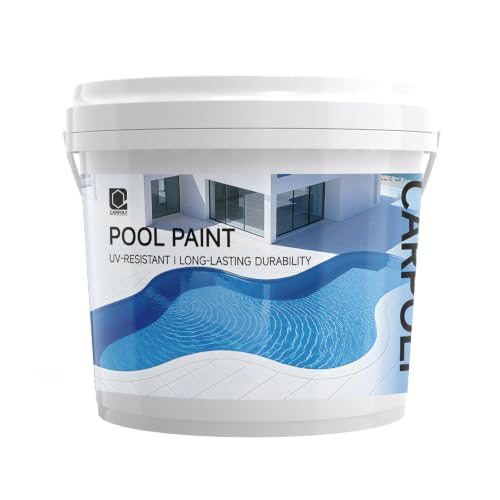
CARPOLY Pool Paint Waterproof Coating
What We Like
- High coverage up to 320 sq. ft.
- UV and weather resistant finish
Trade-offs
- Only available in one color (blue)
- Not suitable for metal or vinyl pool surfaces
Covering up to 320 square feet per container, this water-based coating stretches further than many competitors, making it a smart pick for large concrete or fiberglass pools where minimizing material cost matters. The single-component formula goes on with a brush or roller, no mixing required, so you can knock out a weekend restoration without complicated prep. UV and weather resistance help it hold up against sun and rain, which is especially useful for exposed pool decks and fountains.
One container covers up to 320 square feet, so a single gallon-sized can handles a medium-sized pool or deck without needing a second coat. That kind of coverage cuts down on material costs and makes weekend renovation projects much more practical. For a concrete or fiberglass pool that needs a fast refresh, this water-based coating goes on with a brush or roller and cures without complicated mixing.
Product photos
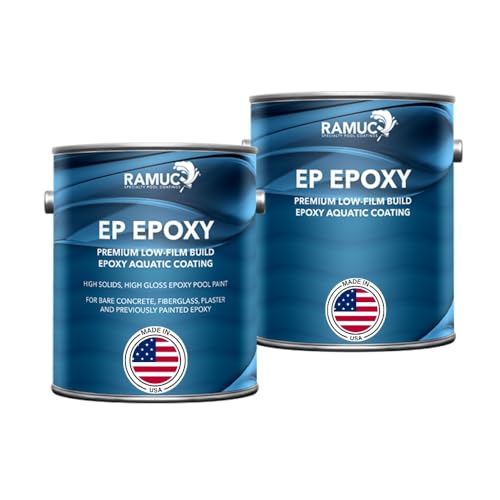
RAMUC EP Epoxy Pool Paint
What We Like
- Trusted American brand since 1933
- Two-part epoxy for hard, non-porous coating
- Excellent adhesion to concrete, gunite, fiberglass
Trade-offs
- Kit size requires precise mixing of two parts
- Only for properly prepared surfaces to ensure adhesion
A two-part epoxy system forms a hard, non-porous coating that stands up to heavy use and prolonged water exposure. That means fewer recoatings and a finish that keeps its color and gloss season after season. With excellent adhesion to concrete, gunite, and fiberglass, this 1.25-gallon kit from a trusted American manufacturer gives you contractor-grade protection without needing to hire a crew. It’s the right call if you want a long-lasting, high-gloss look and are willing to follow the prep and mixing steps carefully.
This is a two-part epoxy system, so you have to mix Part A and Part B before rolling or spraying. That adds a step compared to a one-part paint, but the result is a hard, non-porous coating built to handle heavy use and prolonged water exposure. If you’re comfortable with that extra mixing, you get a finish designed for multi-year durability.
Product photos
WOOLSEY Synthetic Rubber Pool Paint

What We Like
- Renews chlorinated and synthetic rubber surfaces
- High-gloss finish resists dirt buildup
- VOC compliant in all 50 states
- Self-priming two-coat system
Trade-offs
- Limited to rubber surfaces only
- Requires two coats for full coverage
This is a rubber-based coating designed specifically to renew and protect previously painted chlorinated rubber and synthetic rubber pool surfaces. That narrow focus means it delivers strong hiding power and uniform coverage where other paints might peel or fail. The self-priming two-coat system simplifies application by roller or airless spray, and the high-gloss finish resists dirt buildup, making routine maintenance easier. For anyone refreshing an existing rubber pool finish, this is the formulation built for that exact job.
This paint is not a universal solution. But for its intended purpose, renewing rubber surfaces, the synthetic rubber base provides durable protection against pool chemicals and weather exposure. The high-gloss finish also helps the pool stay cleaner longer, which reduces scrubbing time between seasons.
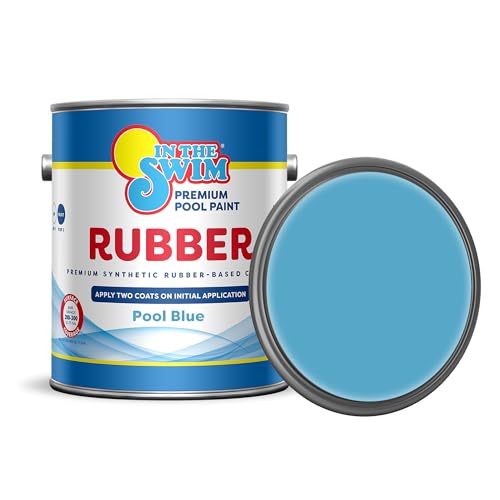
In The Swim Synthetic Rubber-Base Pool Paint
What We Like
- Lasts up to 3 years with two coats
- Excellent chemical resistance and color retention
- Works on gunite, plaster, and concrete
- Can apply over existing chlorinated rubber paint
Trade-offs
- Surface temperature must be above 50°F during application
- Avoid direct sunlight during painting
- Requires a 3-step cleaning process for best results
A single gallon covers 200 to 300 square feet, so for a typical residential pool you’ll need to measure your surface area to determine how many gallons are required for a two-coat job. This synthetic rubber paint works on gunite, plaster, or concrete surfaces and is designed to last up to three years with two coats. The formula offers excellent chemical resistance and color retention, which helps the finish hold up against pool chemicals and sunlight.
The In The Swim White Epoxy Pool Paint demands careful application conditions: the surface must be above 50°F and out of direct sunlight, plus a thorough three-step cleaning beforehand. That limits your painting window to mild, overcast days. If you want a glossier, even longer-lasting coating and are willing to mix two parts, this paint offers a high-gloss alternative, though it weighs a pound more per gallon and requires the same careful prep.
Product photos
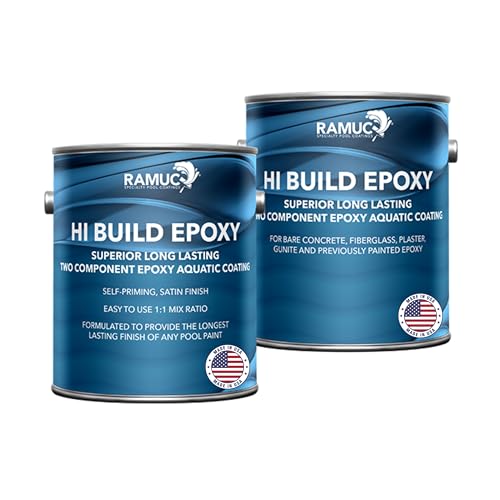
RAMUC Hi-Build Epoxy Pool Paint
What We Like
- High-build formula fills minor imperfections
- Self-leveling for smooth application
- Covers 125-150 sq ft per gallon
Trade-offs
- Two-part epoxy requires mixing before use
- Requires careful surface preparation for proper adhesion
A coverage rate of 125 to 150 square feet per gallon means this two-part epoxy stretches further than many single-coat paints, cutting down the number of coats you need. The high-build formula is thick enough to smooth over minor cracks and surface flaws in aging concrete or plaster, so you get a clean, renewed interior without endless prep work. The satin finish reflects light without the harsh glare of a high-gloss surface. Reviewers note it provides durable protection for residential and commercial pools.
This is a two-part epoxy, which means you have to mix the resin and hardener yourself before rolling it on, and you have a limited working window once it’s combined. That extra step is standard for epoxies that deliver this kind of film thickness and water resistance, but it does demand a bit more planning than grabbing a single-can acrylic like Dyco’s Waterborne Acrylic Pool Paint. If you prefer grab-and-go convenience, you will want to look elsewhere. For anyone willing to mix and apply carefully, the payoff is a self-leveling coating that renews old plaster.
Product photos
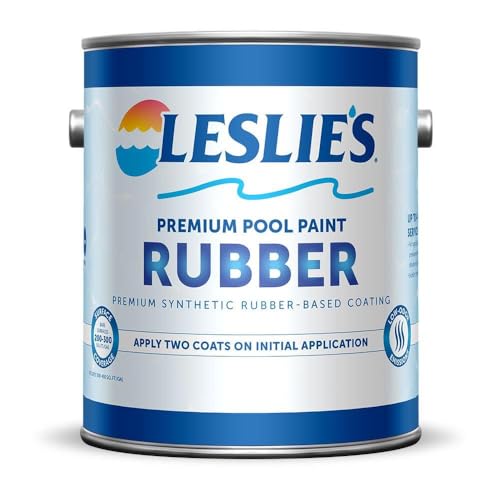
Leslie's Premium Synthetic Rubber Coating
What We Like
- Self-priming saves a step
- Gloss finish for a polished look
- Up to 4 years service life
- VOC compliant in US and Canada
Trade-offs
- Only for previously painted rubber surfaces
- Not for bare concrete or fiberglass pools
You can skip the primer coat entirely, because this coating is self-priming, and the gloss finish holds up for up to four years of service life. That makes it a straightforward pick if you’re refreshing an older pool that already has a synthetic or chlorinated rubber surface. The excellent coverage rates mean you won’t be running back to the store as often.
The catch is that this coating is designed only for previously painted synthetic or chlorinated rubber surfaces, so it won’t work on bare concrete, fiberglass, or plaster. If your pool already has a rubber-based finish and you want a self-priming process, this fits the bill. For other surfaces, you’d need a product made for those materials.
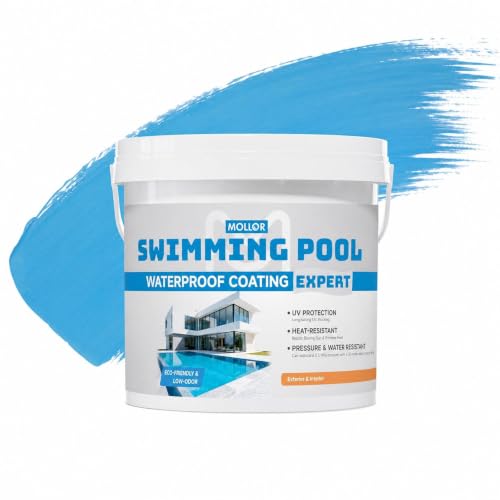
Mollor Water-Based Acrylic Blue Pool Paint
What We Like
- Withstands 30-meter deep water submersion
- Resists UV, salt water, and pool chemicals
- Covers 320 sq ft per coat on smooth surfaces
- Flexible formula resists minor crack movement
Trade-offs
- Requires 72 hours of continuous dry time
- Coverage drops to 200 sq ft on rough surfaces
A 30-meter deep-water submersion rating means this acrylic paint can handle full-time soaking in a swimming pool or pond without peeling, wrinkling, or discoloring. That extreme waterproof performance is what earns it the top spot for buyers who need a reliable barrier that won’t quit after a season or two. It also shrugs off UV rays, salt water, and pool chemicals, so the saturated blue finish stays vibrant through months of sun and splashing. For DIYers painting a concrete, fiberglass, or metal pool, the wide compatibility and smooth roll-on application make it a straightforward weekend project.
That makes it less forgiving than a fast-curing epoxy like In The Swim White Epoxy Swimming Pool Paint if you’re racing against a short summer. Also, coverage drops from 320 square feet on smooth surfaces to 200 on rough substrates, so a textured pool deck may need an extra gallon. Still, for a water-based acrylic that seals deep and stays flexible through minor base settlement, this is the one to reach for.
Product photos
How We Evaluated Pool Paints
We researched each paint’s chemical composition, coverage rates, and service life claims from manufacturer documentation. We also reviewed expert round-ups from painting and pool maintenance professionals to understand which formulas perform best on different surfaces.
Our evaluation focused on four key criteria: surface compatibility (concrete, plaster, gunite, fiberglass, or rubber), durability (years of service life and resistance to chemicals, UV, and abrasion), coverage (square feet per gallon), and application complexity (one-part vs. Two-part mixing, required number of coats, and dry time).
We prioritized paints with clear, verifiable performance data and strong owner satisfaction across multiple sources.
What To Look For In Pool Paints
Choose a pool paint that matches your pool’s surface material, your desired finish (gloss or satin), and your willingness to perform proper surface preparation. The right formula can last years; the wrong one can peel within months.
Surface Material Compatibility
The most important factor is whether the paint is designed for your pool’s surface. Epoxy paints work well on plaster, gunite, and fiberglass. Waterborne acrylics are limited to concrete, plaster, and masonry. Rubber-based paints only adhere to existing chlorinated or synthetic rubber surfaces. Using the wrong type guarantees poor adhesion and premature failure.
Durability and Service Life
Two-part epoxy paints generally offer the longest service life, with some rated up to eight years. Acrylic and rubber-based paints typically last three to four years with proper application. High-solids epoxy formulas also fill and smooth rough surfaces better, adding to their longevity. If you want to minimize how often you repaint, an epoxy is worth the extra mixing effort.
Coverage and Application Requirements
Coverage rates vary from 125 to 320 square feet per gallon depending on the formula and surface texture. Rough surfaces reduce coverage significantly. Two-part epoxies require precise mixing and have a limited pot life once combined. Waterborne paints are easier to apply and clean up with soap and water but may need more coats for full opacity.
- Check the recommended number of coats for full service life.
- Confirm the paint is self-priming or requires a separate primer.
- Verify the minimum and maximum application temperature range.
- Ensure you have enough dry time between coats and before filling the pool.
- Look for VOC compliance if you are sensitive to fumes.
A rule of thumb: the longer the promised service life, the more meticulous the surface preparation and application must be.
Pool Paints Compared
The table below compares each pool paint’s surface compatibility, finish type, and coverage to help you find the right formula for your project.
| Product | Paint Type | Coverage | Surface Compatibility |
|---|---|---|---|
| In The Swim White Epoxy Swimming Pool Paint | Epoxy-base | 150-200 sq ft/gal | Plaster, gunite, fiberglass |
| WOOLSEY Premium Epoxy Pool Paint | Epoxy | N/A | Concrete, plaster, fiberglass |
| Dyco Waterborne Acrylic Pool Paint | Waterborne Acrylic | N/A | Concrete, plaster, or masonry |
| CARPOLY Pool Paint Waterproof Coating | Water-based | 320 sq. ft. | Concrete, fiberglass, decks |
| RAMUC EP Epoxy Pool Paint | Two-part epoxy | N/A | Concrete, gunite, fiberglass |
| WOOLSEY Synthetic Rubber Pool Paint | Rubber-based | N/A | N/A |
| In The Swim Synthetic Rubber-Base Pool Paint | Synthetic rubber | 200-300 sq ft per gallon | Gunite, plaster, concrete |
| RAMUC Hi-Build Epoxy Pool Paint | Two-part epoxy | 125-150 sq ft per gallon | Concrete & plaster |
| Leslie's Premium Synthetic Rubber Coating | Synthetic rubber coating | Excellent coverage rates | N/A |
| Mollor Water-Based Acrylic Blue Pool Paint | Water-based acrylic | 320 sq ft | Concrete, fiberglass, metal |
Frequently Asked Questions
What is the best type of pool paint for concrete pools?
For concrete pools, a two-part epoxy like the In The Swim White Epoxy or RAMUC EP Epoxy provides the longest-lasting, most durable finish. If you prefer easier application, waterborne acrylics like the Dyco Waterborne Acrylic Pool Paint are a good choice but will need recoating sooner.
How long does epoxy pool paint last?
High-quality epoxy pool paints can last up to eight years when applied correctly over a properly prepared surface. The WOOLSEY Premium Epoxy Pool Paint, for example, is rated for up to eight years of service life with two coats.
Can you paint a fiberglass pool?
Yes, but you must use a paint formulated for fiberglass surfaces. Epoxy pool paints, such as the In The Swim White Epoxy and RAMUC EP Epoxy, are suitable for fiberglass pools. Avoid waterborne acrylics and rubber-based paints, which are not designed for fiberglass.
Do I need to drain my pool before painting?
Yes, the pool must be completely drained and the surface thoroughly cleaned and prepared before applying any pool paint. Most manufacturers recommend a multi-step cleaning process that may include acid washing or pressure washing to ensure proper adhesion.
What is the difference between epoxy and rubber pool paint?
Epoxy pool paint is a two-part, high-solids coating that forms a hard, non-porous, high-gloss finish lasting up to eight years. Rubber pool paint is a single-component coating that bonds to existing rubber surfaces, offering a glossy finish with a service life of three to four years.
The Bottom Line
For most pool owners, the In The Swim White Epoxy Swimming Pool Paint offers the best balance of durability, stain resistance, and glossy appearance. It is ideal for plaster, gunite, and fiberglass pools and can last up to eight years with proper application.
If your pool has rough concrete or you prioritize maximum service life, the WOOLSEY Premium Epoxy Pool Paint is a better fit. For a simpler, low-odor application on concrete pools, the Dyco Waterborne Acrylic Pool Paint is the right choice.
The single most important factor in a successful pool paint job is matching the formula to your pool’s surface material. Choose the right type, prepare the surface thoroughly, and follow the manufacturer’s application instructions for the best results.
