
10 Best Paint Edge Tools in 2026
This post contains affiliate links. As an Amazon Associate, we earn from qualifying purchases.
For crisp paint lines without the hassle of tape, the Mr. LongArm Trim Smart Paint Edger stands out as the best overall with its precision guide wheels and swivel handle that keeps the pad flush at any angle. The Psiriol Edge Painting Tool offers adjustable angle control for corners, while the Voomey Paint Edger Tool Kit provides a complete system of pad shapes for walls, ceilings, and trim.
Achieving a professional-looking paint job often comes down to the edges. Cutting in with a brush takes practice, and tape can peel existing paint or allow bleeding. A dedicated paint edge tool solves this by using a guide wheel or shield to create a clean boundary between the wall and trim or ceiling.
This guide is based on research into manufacturer specifications, expert round-ups from painting professionals, and patterns in owner feedback across dozens of models. We focused on the features that matter most for getting sharp lines with less effort, helping you find the right tool for your next project.
Top 10 Paint Edge Tools in the Market
Certain content that appears on this site comes from Amazon. This content is provided "as is" and is subject to change or removal at any time.
The Best Paint Edge Tools, Reviewed
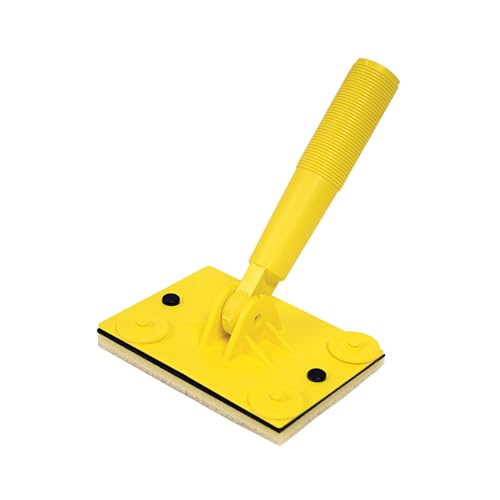
Mr. LongArm Trim Smart Paint Edger
What We Like
- Precision guide wheels for sharp lines
- Swivel handle keeps pad flush at any angle
- Works by hand or with extension pole
- Replaceable pad for water- and oil-based paints
Trade-offs
- Replacement pads only fit Mr. LongArm Model #0455
- Pad is 8.2 inches wide, not for tight corners
The swivel handle keeps the paint pad flush against the wall at any angle, and the horizontal and vertical guide wheels help produce sharp, clean lines around ceilings, baseboards, windows, doors, and moldings. This combination of precision and flexibility makes it a practical tool for anyone who wants professional-looking edges without the need for masking tape or extensive painting experience. It works by hand or with an extension pole, so it suits both quick trim jobs and larger rooms.
The replaceable flocked foam pads are proprietary, so you are locked into Mr. LongArm’s Model #0455 pads when it is time to swap. That is a small hassle compared to universal pads, but it keeps the fit precise. If you prefer a wider coverage tool for large surfaces, the Voomey Paint Edger Tool Kit includes a 7-piece set with a 9-inch pad and accessories, though it does not have the same dual-guide-wheel design.
Psiriol Edge Painting Tool

What We Like
- Adjustable handle for flexible brushing angles
- High-capacity pad absorbs more paint
- Two replacement pads included for uninterrupted use
- Easy to clean with warm water
Trade-offs
- No extension pole included for high ceilings
- Compact pad covers less area per stroke than wider edgers
An adjustable handle that lets you change the brushing angle makes this tool a natural fit for corners and tight spots where a standard edger won’t reach. The high-capacity paint pad soaks up more paint per dip, so you get a smooth, even coat without constant reloading. That combination of flexibility and paint retention makes it a practical choice for detail work around trim, baseboards, and ceiling edges.
The Psiriol Edge Painting Tool measures 4.7 inches long, so it fits easily into a standard tool pouch or drawer. Its compact pad means you’ll make more passes on large crown molding runs compared to a longer edger. For anyone who struggles with tight corners or wants a handle that adjusts to the wall angle instead of forcing the brush into an awkward position, this tool delivers where it counts.
Product photos
Voomey Paint Edger Tool Kit

What We Like
- Includes 4 pad shapes for edges, corners, trim
- 360° rotating handle for angled wall access
Trade-offs
- Requires separate purchase of threaded pole.
Seven pieces in the kit cover four different pad shapes, so there is a dedicated tool for nearly every edge you might encounter. Corners, trim, and wide wall lines each get their own applicator, which means fewer passes and less frustration when switching between surfaces. The 9-inch paint pad handles large wall sections efficiently, while the corner painter reaches into two-surface intersections without smearing. A 1-inch mini trim pad tackles tight spots around baseboards and molding. Two refill pads are included for replacement when the originals wear out, extending the set’s useful life without requiring an immediate purchase of extras.
The trade-off is that this is a full set, not a single gadget you grab for a quick touch-up. If you only need to paint one door frame, a simpler tool like the Mr. LongArm Trim Smart Edger might be more convenient. But for a weekend project where you are cutting in around ceilings, corners, and baseboards, the Voomey kit includes everything listed in the box, ready to load with latex or oil paint.
BANCOO Paint Edge Trimmer

What We Like
- Threaded connector for extension pole
- 5 mm dense bristles for smooth film
- Rotatable handle adjusts to any angle
Trade-offs
- At 0.2 lb, very light for pole work
- Handle must be locked before use to avoid swivel
A threaded connector on the handle lets you attach this trimmer to any standard extension pole, turning a ceiling or high-wall edge job into a one-handed reach instead of a ladder shuffle. At just 0.2 pounds, it won’t tire your arm during long sessions, and the two included replacement pads keep you going when the first one loads up with paint. This is the tool to grab when your ceilings are tall or your trim runs high.
Before every stroke, you need to check that the locking knob is tight. If you forget to tighten the knob after attaching the pole, the handle can swivel mid-stroke and throw your line. For quick ground-level corners or detail work near a door, a smaller edger might feel more nimble, but for anyone painting a room with high walls and a roller on a pole, this trimmer earns its keep.
Product photos
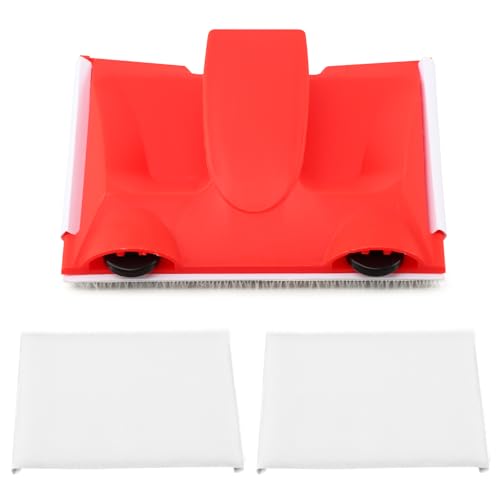
Tookie Paint Edger Trimmer
What We Like
- Works with both latex and oil-based paints
- High-density nylon pads for smooth glide
- Compatible with latex and oil-based paints
Trade-offs
- Requires immediate rinsing after use to avoid drying
- Only two replacement pads included for extended use
The quick-release snap design means swapping pads takes seconds with no tools required, just press the side protrusions and you are back to painting clean lines along baseboards, ceilings, and moldings. That speed makes this edger ideal for anyone tackling multiple rooms or frequent touch-ups, where stopping to clean a pad mid-project would kill momentum.
Product photos
Black+Decker Paint Shield

What We Like
- 12-inch width covers large areas fast
- Durable construction for repeated projects
- Creates straight lines on walls and ceilings
- Works as trim guide for baseboards
Trade-offs
- At 12 inches, less maneuverable in tight corners
- No replacement pads or refills included
A 12-inch wide shield means you can cut in along a full wall section in a single smooth pass, cutting down the time spent taping and retouching. It works well for painting long stretches of baseboard, ceiling edges, and other straight runs, delivering a crisp line without slowing down. Its durable construction holds up through multiple rooms, and the trusted Black+Decker name backs the build quality.
Its generous width makes it less nimble in tight spots like inside corners or around narrow moldings. For those areas, a smaller edger like the Trim Smart Paint Edger gives you more control. But for the main event, wide, straight runs along walls and ceilings, this shield saves you passes and frustration.
Product photos
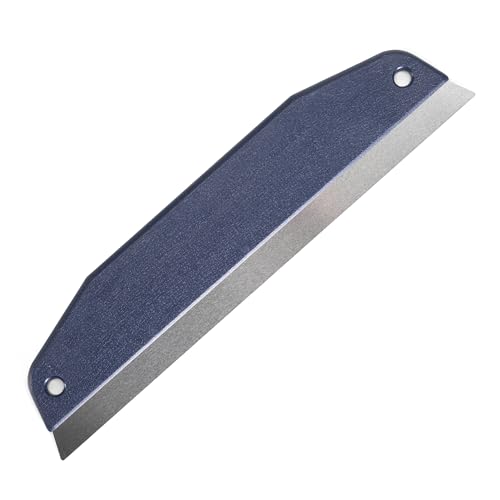
Edward Tools Paint Trim Guard
What We Like
- 12-inch stainless steel blade
- Easy to clean and durable
- Lifetime warranty included
- Works as cutting guide
Trade-offs
- No pad or roller for direct paint application
- At 12 inches, less portable than compact edgers
A 12-inch stainless steel blade means this trim guard covers a wide section of trim or baseboard in one pass, so you can work faster without constantly repositioning. The stainless steel edge is easy to clean and more durable than some alternatives, according to the manufacturer. It suits painters who want a reusable shield that provides cleaner lines when painting against trim.
This guard is a shield only, you still need a brush or roller to do the cutting-in. The stainless steel edge is easy to clean and more durable than some alternatives, so it holds up job after job. For a one-tool edging solution, you’d want a different product; here you get a wide, precision guide that works with whatever paint tool you prefer.
Wagner SMART Edge Mini Roller

What We Like
- Holds paint in the handle
- Thumb trigger for precise paint delivery
- Covers 96 linear feet per fill
- Cleans with garden hose adapter
Trade-offs
- Narrow 3-inch roller covers less area per pass
- Requires cleaning adapter and hose for flushing
- Paint flow depends on thumb trigger control
Six ounces of paint stored right in the handle means you can cover up to 96 linear feet of trim without stopping to reload a tray. That built-in reservoir, paired with a thumb trigger for metering the flow, gives you the kind of precision that makes cutting in around window frames and baseboards feel deliberate rather than rushed. The tool is designed to eliminate the need for a roller tray, so you can work directly from the handle.
The Wagner SMART Edge Mini Roller holds up to 6 ounces of paint in its handle, so you can cover up to 96 linear feet without reloading, ideal for cutting in around trim and corners. The three-inch width means it won’t cover large wall sections as quickly as a full-size roller, but the thumb trigger gives you precise control over paint flow. Cleaning takes a few extra minutes because you thread the included adapter onto a garden hose to flush the roller.
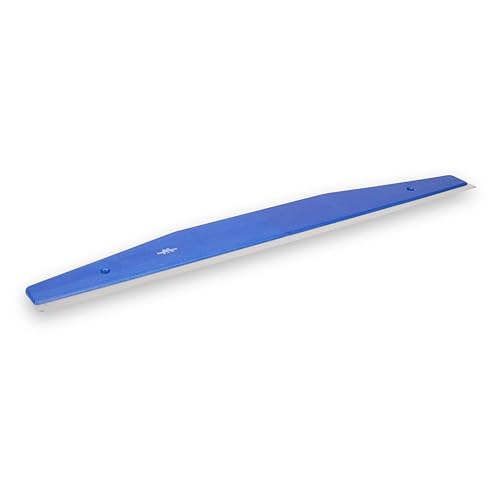
MARSHALLTOWN Trim Guide
What We Like
- 24-inch stainless steel blade
- Rust-resistant and easy to clean
- Reduces need for extra taping
- Blocks over-paint and splatter
Trade-offs
- Large size limits use in tight corners
- No pad or roller included for paint application
A 24-inch stainless steel blade is the standout feature here, giving you a long, rigid guard that spans wide sections of trim, windows, or ceilings in a single pass. That reach means you can protect long runs of baseboard or crown molding without constantly repositioning, which speeds up prep and reduces the need for tape. This tool suits painters tackling big rooms or hallway stretches where a short guard would slow you down and leave more edges to touch up by hand.
This size isn’t nimble in tight spots. Around narrow door frames or inside corner cabinets, the 24-inch blade feels bulky and can block your view of the cut line. Compared to the Trim Smart Paint Edger, which is only 8.2 inches long, the Marshalltown gives you far more coverage per sweep but less precision in cramped areas. If your project is mostly wide, straight runs, this guard earns its keep; for detailed trim work, you will want a smaller backup.
Product photos
BERXOL Paint Edger Tool Kit

What We Like
- Extension pole for overhead reach
- 360-degree rotating handle adjusts angle
- Includes corner and trim tools
- Refill pads extend tool life
Trade-offs
- 9-inch pad is large for tight corners
- Multiple pieces to store and clean
- Pole adds weight for extended use
The kit includes a metal extension pole and a 360-degree rotating handle, so you can reach ceiling edges and high walls without needing a ladder for every section. The 9-inch pad works for larger wall areas, while the corner painter and trim tools let you switch to detail work around baseboards, door frames, and window trim. It is a practical set for room refreshes and touch-up painting, with everything in one box.
The 9-inch pad is larger than some dedicated edgers, so it may feel less precise in very tight corners or around narrow window casings. And because the kit includes multiple tools and refill pads, you have more pieces to clean and store after each job. Still, if you want a single kit that covers both broad wall sections and trim with the help of an extension pole, this set offers a versatile combination of tools.
Product photos
How We Evaluated Paint Edge Tools
Our evaluation began with a close look at manufacturer specifications and design details for each tool. We then studied expert round-ups from professional painters and home improvement publications to understand what features consistently deliver clean results. Finally, we analyzed patterns in owner feedback across hundreds of reviews to identify common strengths and trade-offs.
The four criteria that mattered most were edge precision, ease of use, versatility across different surfaces, and durability. Edge precision depends on guide wheel design and pad alignment. Ease of use includes factors like handle comfort, paint loading, and cleanup. Versatility covers whether a tool works on ceilings, corners, baseboards, and with different paint types.
A research-led evaluation cannot replace the experience of using each tool on different wall textures and paint formulations. We prioritized tools with clear, consistent design features that professional painters and experienced DIYers agree are reliable. Our recommendations focus on tools that solve the most common edge-painting problems without introducing new complications.
What To Look For In Paint Edge Tools
Choosing the right paint edge tool means matching the tool’s design to your specific project. The key is understanding how guide wheels, pad size, and handle design affect the line you get.
A great paint edge tool uses a guide wheel or shield to create a consistent gap between the pad and the surface you want to protect. Look for a pad that distributes paint evenly and a handle that keeps the tool stable at any angle.
Guide Wheel Design
The guide wheels are the most critical part of any paint edger. They roll along the ceiling or trim, maintaining a precise gap that the pad follows. Wider wheels with smooth bearings track more reliably on textured surfaces. Some wheels pivot to follow curves, while fixed wheels are better for straight runs. Check that the wheels are set back from the pad edge enough to prevent paint from reaching them.
Pad Size and Shape
Pad width directly affects how fast you can cover an edge. A pad around nine inches is a good balance for most walls, covering a full stroke without being too wide for corners. Smaller pads around three inches are better for trim and tight spaces but require more passes. The pad material matters too: dense foam or nylon fibers hold paint without dripping and create a smooth film edge.
Handle and Angle Control
A handle that swivels or rotates lets you keep the pad flat against the wall as you move along ceilings and corners. This is especially important for right-handed and left-handed painters. Some tools offer adjustable heads that lock at specific angles for cutting in along baseboards or around door frames. For high walls, a threaded connector that accepts any standard extension pole is a practical feature.
- Check that replacement pads are available and fit your specific model.
- Test the tool on a piece of cardboard before painting to see how the wheels track.
- Consider whether you need a paint reservoir or if dipping in a tray works for your project.
- Look for tools that clean up with warm water for latex paints or require solvents for oil-based paints.
A tool that feels balanced in your hand and tracks straight on the first try will save you more time than any feature you might rarely use.
Paint Edge Tools Compared
The table below compares the key specs and design features of our top picks so you can see at a glance which tool fits your project.
| Product | Dimensions | Handle Type | Pad Type |
|---|---|---|---|
| Mr. LongArm Trim Smart Paint Edger | L 8.2 in, W 4.6 in, H 0.4 in | Swivel design | Replaceable flocked foam |
| Psiriol Edge Painting Tool | L 4.7 x W 3.7 x H 3.5 in | Adjustable handle | Paint pad |
| Voomey Paint Edger Tool Kit | L 13.0 inches, W 11.0 inches, H 3.1 inches | 360° Rotation | Paint edger pads |
| BANCOO Paint Edge Trimmer | L 8.6 x W 5.6 x H 3.6 in | Rotatable with lock knob | Bristles |
| Tookie Paint Edger Trimmer | N/A | N/A | High-density nylon |
| Black+Decker Paint Shield | L 12.0 inches, W 2.8 inches, H 0.2 inches | N/A | N/A |
| Edward Tools Paint Trim Guard | N/A | N/A | N/A |
| Wagner SMART Edge Mini Roller | L 17.2 inches, W 4.5 inches, H 0.0 inches | N/A | Mini roller |
| MARSHALLTOWN Trim Guide | L 1.0 inches, W 1.0 inches, H 1.0 inches | N/A | N/A |
| BERXOL Paint Edger Tool Kit | L 14.0 inches, W 11.0 inches, H 4.0 inches | 360 degrees | 9-inch paint pad |
Frequently Asked Questions
How does a paint edge tool work?
A paint edge tool uses a guide wheel that rides along the ceiling or trim while a pad applies paint to the wall. The wheel keeps the pad a consistent distance from the edge, creating a straight line without needing painter’s tape.
Can you use a paint edger on textured walls?
Yes, but results depend on the texture depth. Smooth and light orange-peel textures work well with most edgers. Heavy knockdown or popcorn textures may cause the guide wheels to bounce, leading to uneven lines. A wider wheel design helps track better on moderate textures.
What is the difference between a paint edger and a cutting-in brush?
A paint edger uses a guide wheel to mechanically maintain a straight line, making it faster and more consistent for long runs of trim or ceiling edges. A cutting-in brush relies on the painter’s hand control and is better for intricate corners, curves, and detailed woodwork.
How do you clean a paint edge tool?
For latex paints, rinse the pad and guide wheels with warm water immediately after use. Use a stiff brush to remove paint from the wheel grooves. For oil-based paints, follow the manufacturer’s cleaning instructions, which typically require a solvent. Soaking a dried pad can ruin it, so clean promptly.
Which paint edge tool is best for beginners?
Tools with a wide, stable guide wheel and a swivel handle are easiest for beginners. The Mr. LongArm Trim Smart Paint Edger is a popular starting point because its design keeps the pad flush at any angle, reducing the learning curve for getting clean lines.
The Bottom Line
For most DIYers, the Mr. LongArm Trim Smart Paint Edger is the best overall choice. Its precision guide wheels and swivel handle deliver sharp, tape-free lines with minimal practice, and the replaceable pads work with both water- and oil-based paints. It is the most forgiving tool for homeowners who want professional-looking edges on their first try.
If you need to paint tight corners or decorative moldings, the Psiriol Edge Painting Tool with its adjustable handle gives you the angle control that a fixed edger cannot match. For those tackling a whole room, the Voomey Paint Edger Tool Kit includes four different pad shapes so you can handle walls, corners, and trim without switching tools.
The single most important factor in choosing a paint edge tool is matching the pad width and guide wheel design to the surfaces you paint most often. A wide pad speeds up long baseboards, while a compact tool with flexible angle control is better for rooms with lots of corners and trim detail.
