
10 Best Paint Rollers For Exterior Siding in 2026
This post contains affiliate links. As an Amazon Associate, we earn from qualifying purchases.
For most homeowners tackling rough exterior siding, the PinStone Microfiber Paint Roller Covers earn the top spot with their non-shedding microfiber weave and high paint capacity for large areas. The Wooster Super/Fab Roller Cover is the best for extra-rough surfaces, while the Bates Choice Paint Roller Kit offers a solid budget-friendly option for general projects.
Painting exterior siding is a different beast than interior walls. Rough textures like cedar shingles, hardboard lap siding, and stucco demand a roller that can reach deep into grooves without shedding fibers or leaving bare spots. The wrong nap height or material leads to frustration, missed spots, and a messy finish.
We built this guide by analyzing manufacturer specifications, expert recommendations, and patterns in owner feedback across dozens of roller covers and kits. Our goal is to help you match the right tool to your siding type, project size, and budget without wasting time on trial and error.
Top 10 Paint Rollers For Exterior Siding in the Market
Certain content that appears on this site comes from Amazon. This content is provided "as is" and is subject to change or removal at any time.
The Best Paint Rollers For Exterior Siding, Reviewed
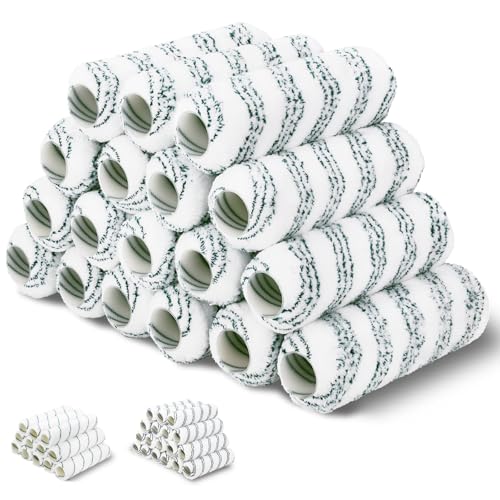
PinStone Microfiber Paint Roller Covers
What We Like
- Non-shedding tightly woven microfiber
- Works with all paints and stains
- Ideal for rough exterior surfaces
- High capacity for large areas
Trade-offs
- 3/4-inch nap too thick for smooth walls
- 18-pack takes up more storage space than a 3-pack
An 18-count pack of 9-inch microfiber roller covers with a 3/4-inch nap means you can tackle an entire exterior siding job without running out of fresh sleeves mid-project. The dense, non-shedding microfiber holds plenty of paint and lays it down evenly, which cuts down on drips and the need to reload constantly. For anyone painting textured surfaces like stucco, masonry, or wood siding, this set offers the right balance of capacity and control to get consistent coverage across large walls.
The 3/4-inch nap is designed for rough surfaces like stucco, masonry, and siding, as stated by the manufacturer. For extremely deep textures or popcorn-style ceilings, a longer nap cover may be more appropriate, but the PinStone covers are specified for the surfaces listed in the product description.
Product photos
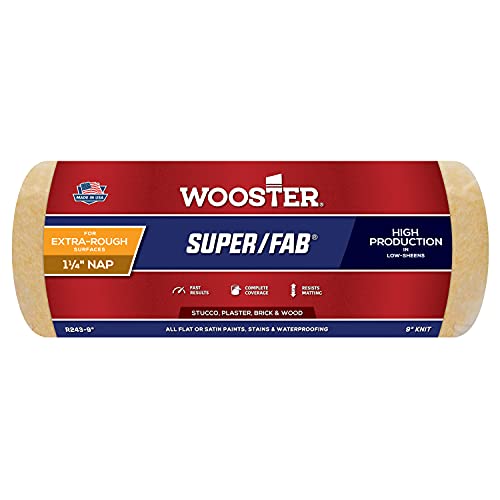
Wooster Super/Fab Roller Cover
What We Like
- Proprietary golden yellow fabric for high paint capacity
- Resists matting for smoother coverage
- Green double-thick polypropylene core resists solvents
- Designed specifically for extra-rough surfaces
Trade-offs
- Narrow focus on extra-rough surfaces limits versatility
- 1-1/4-inch nap is too thick for smooth walls.
A 1-1/4 inch nap is deep enough to carry a heavy load of paint and work into extra-rough surfaces. The proprietary golden yellow fabric resists matting, which helps deliver complete coverage and smoother results. The green double-thick polypropylene core resists water, solvents, and cracking, so it holds up with oil- and water-based paints. This cover is built for the toughest surfaces where you need maximum paint pickup.
The Wooster Super/Fab Roller Cover’s nap depth is designed specifically for extra-rough surfaces, so on smoother areas it may apply more paint than necessary. The Purdy Colossus has a 1-inch nap, making it a better fit for less textured walls. If your surface is extra-rough, this cover is a good match. For smoother siding, a shorter-nap cover like the Purdy would be a better choice.
Product photos
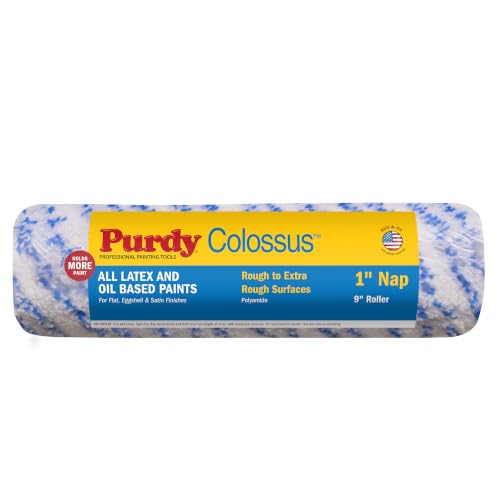
Purdy Colossus Roller Cover
What We Like
- Woven polyamide resists shedding
- 1-inch nap reaches deep textures
- Works with latex and oil-based paints
Trade-offs
- Only one size: 9-inch by 1-inch nap
- Heavier than a 3/4-inch nap cover on the roller
A 1-inch nap of woven polyamide is exactly what rough exterior siding demands. Stucco, brick, or textured wood all have crevices that a shorter nap would skip, and this cover’s polyamide fabric is shed-resistant, so you won’t be picking fibers out of dried paint. It works with both latex and oil-based paints, which means no switching covers between projects. The 1-1/2-inch polypropylene core keeps the sleeve stable on the frame, preventing slipping during heavy rolling. Owners who tackle rough surfaces find this cover holds enough paint to reduce constant dipping, making long runs on a wall or fence more efficient.
A 1-inch nap holds a lot of paint, which can mean heavier roller weight and more spatter if you’re working on smoother surfaces. The Wooster Super/Fab has a deeper nap, while the Colossus is designed for rough to extra-rough surfaces. If your surface is truly rough, this cover is a focused solution; for mixed surfaces, you might want a second cover on hand.
Product photos
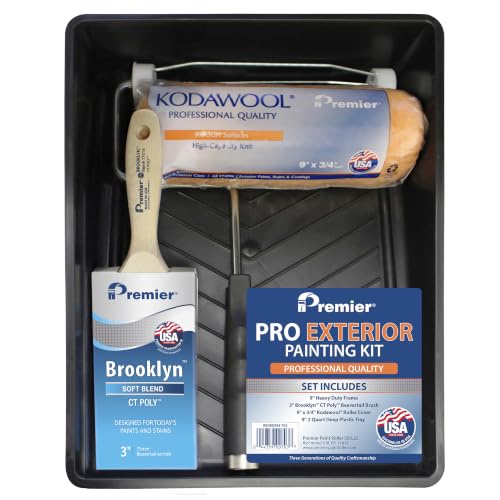
Premier Paint Roller Exterior Kit
What We Like
- Complete 4-piece exterior painting kit
- High-density covers for consistent coverage
- Works on stucco, siding, brick, wood
- Compatible with latex, acrylic, oil paints
Trade-offs
- No mini roller for tight corners or trim
- Kit includes only one frame, limits multitasking
A four-piece kit engineered for fast, smooth paint application on rough exterior surfaces like masonry, wood, siding, and brick means you can grab this set and start painting without hunting for separate parts. The high-density roller covers are built for maximum paint pickup and release, so you get consistent heavy-duty coverage on textured walls. This is for anyone who wants a single-box solution that handles stucco, siding, or rough wood trim without fuss, and it works with latex, acrylic, or oil-based paints, giving you flexibility across different projects.
The Premier Paint Roller Exterior Kit comes with only one roller frame and no mini roller, so if you are painting large areas alongside detailed corners or window trim, you may need to swap covers or buy a smaller roller separately. Compare that to the Bates Choice Paint Roller Kit, which packs 19 pieces including multiple sleeves and frames for less stopping and starting. Still, for a straightforward exterior job where you want a professional finish without piecing together a system, this Premier kit delivers everything essential in one rugged package.
Product photos
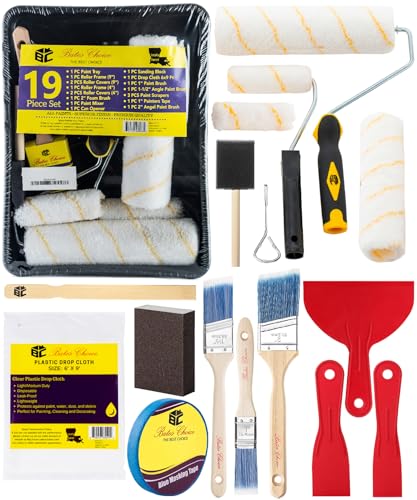
Bates Choice Paint Roller Kit
What We Like
- Complete 19-piece kit for painting
- Includes both 9-inch and 4-inch rollers
- Drop cloth and prep tools included
- Lightweight at 1.9 pounds
Trade-offs
- No extension pole included for siding work
- Drop cloth is too small for large rooms
The 19-piece kit includes roller frames and covers, a drop cloth, sanding block, brushes, tape, and scrapers. That makes it a convenient all-in-one set for a homeowner starting a painting project. The two roller sizes, 9-inch and 4-inch, let you cover broad walls and then switch to the smaller frame for trim or tight corners, while the prep tools help smooth rough spots before paint goes on. Buying each item separately would take more effort to gather, so this kit simplifies the process.
The included roller covers and plastic tray are designed for general use, not specialized heavy-duty exterior work. For rough siding like textured wood or stucco, a dedicated cover with a longer nap, such as the Purdy Colossus with its 1-inch nap, holds more paint and reaches into deeper grooves. But if your surface is smooth or you want a single kit that covers prep, painting, and cleanup, this Bates set provides everything in one box.
Product photos
Wooster Popcorn Acoustical Roller Cover

What We Like
- Multi-slit foam for textured surfaces
- PVC core resists water and solvents
- Lint-free foam construction
- Works with all paints including latex
Trade-offs
- 9/16-inch nap limits deep texture coverage
- Foam nap skips over heavy stucco ridges
The 9/16-inch multi-slit orange foam nap is designed specifically for uneven surfaces like popcorn ceilings, textured walls, masonry, and stucco, making it a good match for rough exterior siding that standard roller covers struggle with. Its PVC core resists water and solvents, so it holds up with both latex and solvent-based paints without swelling or softening during the job. The lint-free foam construction avoids the shedding you might get from fabric covers on rough textures.
A 9/16-inch nap is shallower than the 1-inch nap on the Purdy Colossus or the deeper nap on the Wooster Super/Fab, which means it carries less paint per load. On large, flat stucco walls you will need to reload more often than with those deeper-nap covers. But the multi-slit foam is built for pronounced texture where a thicker fabric nap might skip low spots or leave lint, so the trade-off makes sense for popcorn, acoustical, or rough stucco surfaces.
Product photos
FoamPro High Capacity Slit-Foam Roller Cover

What We Like
- Slit foam reaches deep textures
- Ideal for popcorn ceilings and rough siding
- Resilient foam holds paint well
Trade-offs
- 1/2-inch nap limits use on very rough surfaces
A 1/2-inch slit-foam nap is purpose-built for deep textures like rough siding, popcorn ceilings, and uneven fencing. The resilient foam is designed for deep paint penetration on rough surfaces, so it suits anyone tackling heavily textured exterior surfaces. One thing to consider is that a 1/2-inch nap holds less paint than longer naps found on some other covers, meaning more frequent reloads on large flat areas. Stick with the FoamPro for deep texture work, but if your siding is mostly smooth, a longer nap will cover more ground per dip.
A 1/2-inch nap holds less paint than the 3/4-inch or 1-inch naps found on the PinStone Microfiber covers, meaning more frequent reloads on large flat areas. Stick with the FoamPro for deep texture work, but if your siding is mostly smooth, a longer nap like the PinStone will cover more ground per dip.
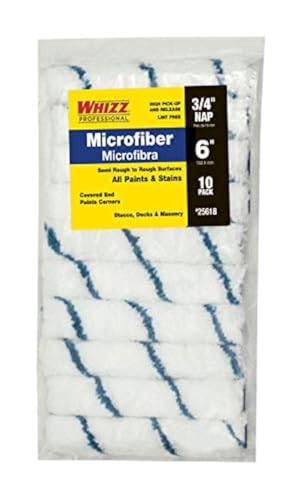
Whizz Microfiber Mini Roller Covers
What We Like
- Covered end paints corners cleanly
- 3/4" nap for semi-rough to rough surfaces
- 10-pack value for multiple jobs
Trade-offs
- 6" length covers less area per stroke than 9" rollers
- Not ideal for large, flat walls or ceilings
A covered-end design that lets you paint right into corners without switching to a brush is the single most useful feature here. The 3/4″ nap is suited for semi-rough to rough surfaces, and the microfiber material picks up and releases paint evenly. This mini roller is ideal for anyone who needs to paint corners and edges with precision, keeping the finish clean without extra tools.
At 6 inches long, each pass covers less surface than a standard 9-inch roller like the Wooster Super/Fab Roller Cover. That means more trips back to the tray for larger open areas. But for its intended job, corner painting on semi-rough to rough surfaces, the Whizz Mini delivers the reach and control that a bigger roller can’t offer in tight spots. Keep a 9-inch roller for the broad faces and use this one for the edges, and you’ll get a clean finish in every corner.
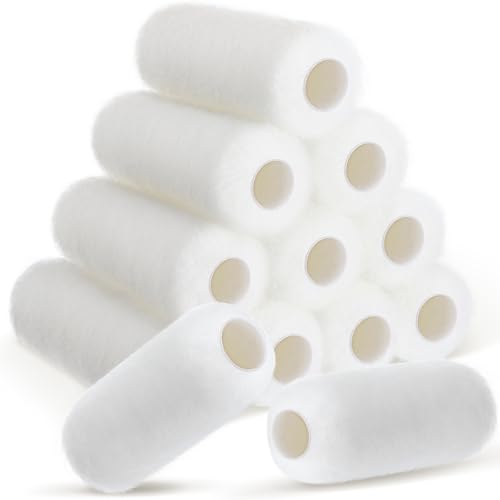
Qunclay Lambswool Roller Covers
What We Like
- High paint pickup from dense lambswool fibers
- Works with oil- and water-based paints
- Reusable and easy to clean
- 12-pack offers great value for large jobs
Trade-offs
- Not ideal for ultra-smooth surfaces needing lint-free finish
- Loose fibers shed on smooth surfaces requiring cleanup
Each of the 12 covers holds noticeably more paint than synthetic rollers, thanks to lambswool’s dense fiber structure. That means fewer trips to the paint tray and faster coverage on large siding or stucco walls. The 3/4-inch nap reaches into crevices and uneven textures, making it a natural fit for rough exterior surfaces like concrete block or brick. This is a cover that rewards patience with a thick, even coat and a finish that feels more organic than flat.
Lambswool’s dense fiber structure holds more paint than other types, so you can coat large areas quickly without constant reloading. One thing to keep in mind is that rolling over rough surfaces can leave loose fibers behind, which some painters embrace for a textured finish while others sand them down. If you want a natural material that handles tough siding and uneven surfaces, this cover delivers.
Product photos
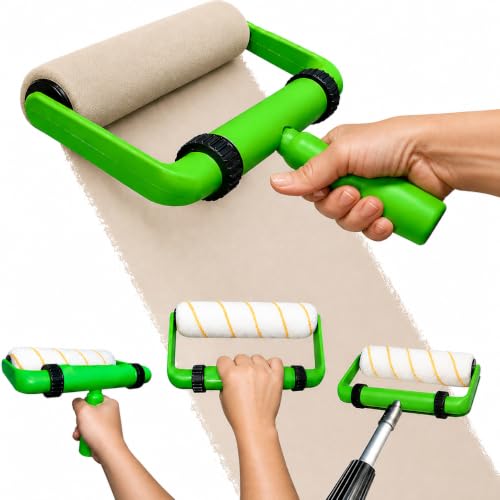
BetterGrip Paint Roller Kit
What We Like
- Ergonomic frame reduces hand strain
- Fits standard 9-inch roller covers
- Includes 5.5-inch extension handle
- Easy clean: unscrew and tilt off
Trade-offs
- No adapter included for 4 or 18 inch
- Extension handle is short for high siding
The ergonomic frame lets you hold the roller with a natural hand position, which reduces hand strain and fatigue during long painting sessions. The kit includes a 5.5-inch extension handle that screws into the main handle for extra reach, and it accepts any standard extension pole for taller walls. This makes it a comfortable, easy-to-clean frame that works with common 9-inch roller covers in 3/8 or 3/4 nap.
One thing to know is that the kit does not include adapters for smaller or larger roller sizes. So you will need to buy those separately if you want to switch between a 4-inch trim roller and an 18-inch wide roller. Compared to the Premier Paint Roller Exterior Kit, which is engineered for fast paint application on masonry, wood, and siding, the BetterGrip focuses on frame comfort and compatibility rather than a complete kit for those specific surfaces. For painters who already own roller covers and just want a frame that keeps their hands happy, this is a practical, ergonomic choice.
Product photos
How We Evaluated Paint Rollers For Exterior Siding
This guide is based on manufacturer specifications, material data, expert round-ups from painting professionals, and patterns in owner feedback across a wide range of exterior painting projects. The focus is on what the specifications and experienced users consistently report.
The three criteria that mattered most were nap height and fabric type for texture coverage, paint capacity and release for efficiency on large surfaces, and build quality including core material and shedding resistance. A roller that skips over deep grooves or leaves lint behind fails the core job of exterior painting.
An honest limitation of a research-led evaluation is that individual painting technique, paint viscosity, and surface condition all affect real-world results. We prioritized products with consistent positive feedback across multiple surface types and painting conditions.
What To Look For In Paint Rollers For Exterior Siding
Choosing the right roller for siding starts with matching the nap height to your surface texture. Here is what matters most.
Choose a roller with a 3/4-inch to 1-1/4-inch nap for rough exterior siding. Look for tightly woven microfiber or synthetic fabrics that resist shedding. A PVC or polypropylene core holds up to solvents and cleaning.
Nap Height and Texture Match
Nap height is the single most important spec for exterior siding. For smooth lap siding, a 3/8-inch to 1/2-inch nap works well. For rough surfaces like cedar shingles, hardboard, or textured wood, choose a 3/4-inch to 1-inch nap. For extra-rough surfaces like stucco or brick, a 1-1/4-inch nap is best.
A nap that is too short will skip over grooves, leaving bare spots. A nap that is too thick for your surface wastes paint and creates an uneven finish.
Fabric Material and Shedding
Microfiber rollers are the most popular choice for exterior work because they hold more paint and release it evenly without shedding. Natural fibers like lambswool offer high paint pickup but can leave lint on rough surfaces. Synthetic fabrics like woven polyamide resist matting and hold up well to latex paints.
Check owner feedback for shedding complaints, especially on rough surfaces where loose fibers are hard to remove.
Core Durability and Solvent Resistance
The roller core must resist softening from water-based latex paints and solvents used for cleaning. Green polypropylene cores and PVC cores are standard for exterior work. Cardboard cores can swell and collapse when wet, so avoid them for siding projects.
A double-thick polypropylene core adds durability for heavy use and repeated cleaning.
- Match nap height to your siding texture (smooth, rough, extra-rough)
- Choose microfiber or synthetic fabric for low shedding
- Verify the core material is solvent-resistant (polypropylene or PVC)
- Consider a complete kit if you need frame, tray, and covers
- Check that the roller width matches your extension pole threads
A 3/4-inch microfiber roller is the most versatile starting point for standard rough siding.
Paint Rollers For Exterior Siding Compared
The table below compares the key specs and best uses for each roller cover and kit in our lineup, from the best overall pick to specialty options for deep texture and corners.
| Product | Nap Length | Material | Surface Type |
|---|---|---|---|
| PinStone Microfiber Paint Roller Covers | 3/4 inch | Microfiber | Rough surfaces, siding, stucco |
| Wooster Super/Fab Roller Cover | 1-1/4 inch | Golden yellow fabric | Extra-rough |
| Purdy Colossus Roller Cover | 1 inch | Woven Polyamide | Rough to Extra Rough |
| Premier Paint Roller Exterior Kit | N/A | High-density | Stucco, siding, brick, rough wood |
| Bates Choice Paint Roller Kit | N/A | Microfiber | N/A |
| Wooster Popcorn Acoustical Roller Cover | 9/16-inch | Multi-slit orange foam | Uneven surfaces like popcorn or acoustical ceilings textured walls masonry and stucco |
| FoamPro High Capacity Slit-Foam Roller Cover | 1/2 inch | Slit foam | Semi-rough & uneven |
| Whizz Microfiber Mini Roller Covers | 3/4" | Microfiber | Semi rough to rough |
| Qunclay Lambswool Roller Covers | 3/4 inch | Natural lambswool | Rough siding, stucco, masonry |
| BetterGrip Paint Roller Kit | N/A | Ergonomic frame, rust-resistant | N/A |
Frequently Asked Questions
What nap size roller should I use for exterior siding?
For rough exterior siding such as cedar shingles or hardboard, use a 3/4-inch to 1-inch nap. For smooth lap siding, a 3/8-inch nap is sufficient. Extra-rough surfaces like stucco or brick call for a 1-1/4-inch nap to reach deep into the texture.
Can I use a regular interior paint roller on exterior siding?
Interior rollers typically have a shorter nap and softer fabric that cannot handle rough exterior textures. They also lack the solvent-resistant cores needed for cleaning after exterior paint jobs. A dedicated exterior roller cover with a longer nap and durable core will perform better and last longer.
How do I prevent roller shedding on rough siding?
Choose a tightly woven microfiber roller cover, which sheds far less than traditional woven or knit fabrics. Look for “non-shedding” or “lint-free” in the product description. Before use, run the roller over a piece of scrap wood or tape to remove any loose fibers.
What is the best roller material for latex paint on siding?
Microfiber is the top choice for latex paints on siding. It holds a high volume of paint, releases it evenly, and cleans up easily with water. Synthetic fabrics like woven polyamide also work well. Avoid natural fibers like lambswool if you need a lint-free finish.
Do I need an extension pole for painting siding?
Yes, an extension pole is essential for reaching high siding on a single or two-story house without a ladder. Most roller frames have standard thread sizes that fit universal poles. An adjustable pole of a few feet covers most siding work.
The Bottom Line
For most homeowners, the PinStone Microfiber Paint Roller Covers are the best overall choice. Their non-shedding microfiber weave and 3/4-inch nap handle standard rough siding efficiently, and the 18-pack provides great value for large projects. If your siding is extra-rough, the Wooster Super/Fab Roller Cover with its 1-1/4-inch nap is the better fit.
Budget-conscious readers should look at the Bates Choice Paint Roller Kit, which includes two roller sizes and prep tools for general projects. For deep textures like popcorn ceilings or heavily grooved siding, the FoamPro High Capacity Slit-Foam Roller Cover is worth paying more for.
The single most important factor in choosing an exterior siding roller is matching the nap height to your surface texture. Get that right, and the rest of the job goes smoothly.
