
8 Best Antifouling Bottom Paint in 2026
This post contains affiliate links. As an Amazon Associate, we earn from qualifying purchases.
The TotalBoat Spartan Multi-Season Bottom Paint is our Best Overall pick because it combines a high 38% cuprous oxide loading for heavy fouling with an ablative formula that reduces paint buildup over time. For racers who want a burnishable surface, the Pettit Vivid Hybrid Dual Biocide Paint is a standout. And boaters on a budget will appreciate the TotalBoat Underdog Ablative Bottom Paint for its easy DIY application.
Keeping a boat’s bottom clean and protected from barnacles, algae, and slime is one of the most important maintenance tasks for any owner. The right antifouling paint depends on your hull material, fiberglass, wood, steel, or aluminum, and the type of water you boat in, whether fresh, salt, or brackish.
This guide is based on manufacturer specifications, expert round-ups, and patterns in owner feedback. We evaluated eight paints across key criteria like copper content, paint type (ablative vs. Hard), application ease, and compatibility with different hulls. Our goal is to help you find the right paint for your boat and your boating habits.
Top 8 Antifouling Bottom Paints in the Market
Certain content that appears on this site comes from Amazon. This content is provided "as is" and is subject to change or removal at any time.
The Best Antifouling Bottom Paints, Reviewed
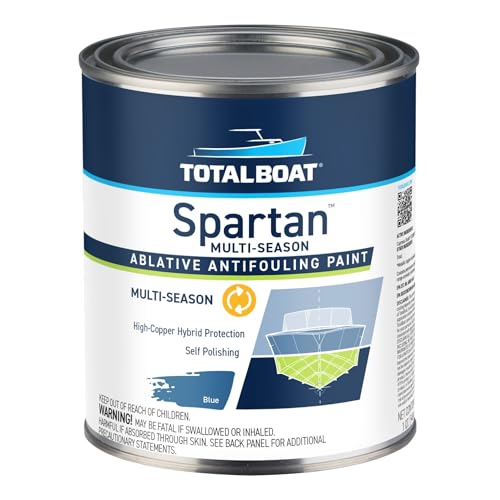
TotalBoat Spartan Multi-Season Bottom Paint
What We Like
- 38% cuprous oxide for heavy fouling
- Ablative wear reduces paint buildup
- No maximum dry time before launch
- Works on fiberglass, wood, and steel
Trade-offs
- Requires compatible thinner for spray application
- Not suitable for aluminum hulls.
A 38% cuprous oxide load makes this ablative paint a serious barrier against barnacles, slime, and weeds in salt, fresh, or brackish water. That high copper content means it keeps working season after season as the coating slowly wears away, exposing fresh biocide while preventing heavy buildup on your hull. It suits powerboaters and sailors who leave their boats in the water for extended periods and want reliable protection without repainting every year. The flexible launch timing lets you prep and paint well ahead of the season, then launch when ready, which is a real convenience for DIY owners juggling a spring to-do list.
The main limitation is that this paint cannot be used on aluminum hulls, so owners of alloy boats need to look elsewhere. Compared to TotalBoat’s own Underdog single-season paint, Spartan’s 38% copper versus 24% gives you longer intervals between coats. The trade-off is that if your boat sits out of the water for more than two weeks, you must lightly scuff-sand before relaunching to reactivate the antifouling. For most multi-season users that’s a minor step, but it’s worth planning around if you regularly haul out mid-season.
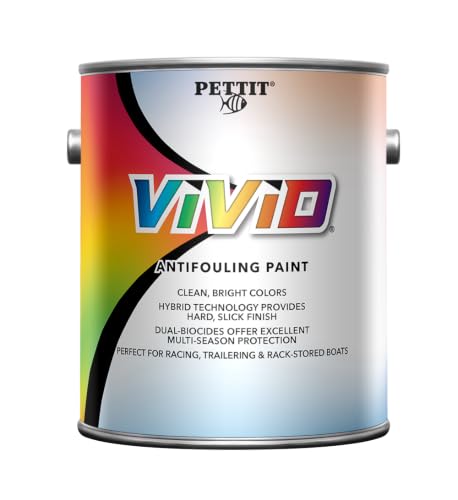
Pettit Vivid Hybrid Dual Biocide Paint
What We Like
- Hybrid hard-ablative reduces paint buildup
- Burnishable to a super-slick racing surface
- Dual-biocide protection for multi-season use
- Aluminum safe with recommended primer
Trade-offs
- Requires specific primer system for aluminum hulls
- Not ideal for boaters who prefer single-season paints
A hybrid formula that combines hard-paint durability with ablative self-renewal means you get a finish tough enough for trailering and rack storage yet smooth enough to burnish into a racing surface. This is the paint to pick if you want bright, vivid colors, including true white and deep black, without sacrificing antifouling performance. Powered by Cuprous Thiocyanate and Zinc Pyrithione, the dual-biocide system provides multi-season protection against barnacles, algae, and slime. Racers and performance sailors will especially appreciate how the hard finish holds up to hauling and can be polished to a slick, low-drag surface.
The trade-off is that this isn’t a pure ablative paint, so it won’t shed layers as quickly as some ablative options, which means you may need to sand between coats to manage buildup. And while it’s aluminum-safe with the right primer, that primer system adds an extra step and cost for owners of metal hulls or outdrives. For boats used in racing or frequent trailering, the durability and burnishable smoothness make it a strong choice. If you prefer a water-based application, Pettit’s own Hydrocoat is available, but it is a different type of paint.
Product photos
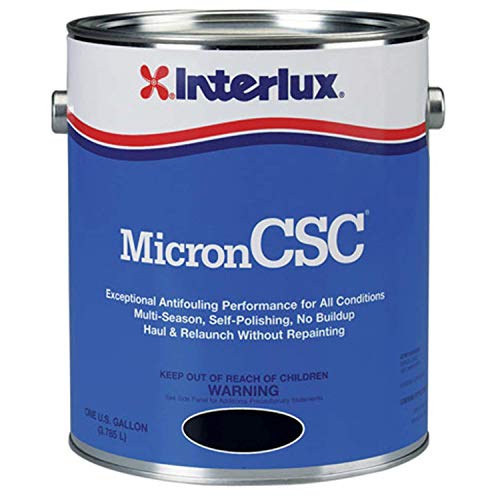
Interlux Micron CSC Antifouling Paint
What We Like
- 37.2% copper biocide
- Suitable for all power and sail in all waters
Trade-offs
- Heavy at 18 pounds per gallon
- Only available in black in this listing
At 18 pounds per gallon, this paint is heavier than some alternatives, for instance, the Pettit Hydrocoat weighs 5 pounds per quart. That extra weight can be a factor if you’re carrying cans to the dock or working on a smaller boat. But if your goal is longer-lasting protection with fewer haul-outs, the copper chemistry here is built to deliver.
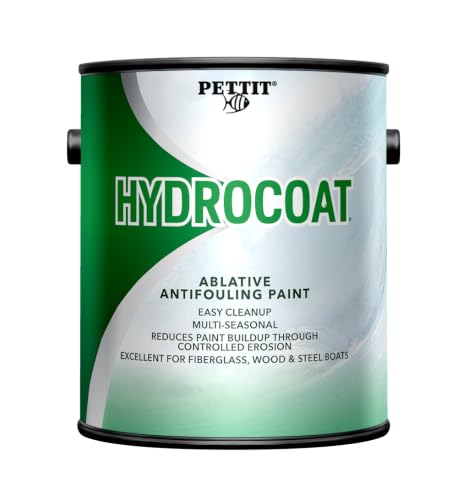
Pettit Hydrocoat Water-Based Ablative Paint
What We Like
- Cleans up with soap and water
- No harsh solvent odors during application
- Self-polishing ablative reduces paint buildup
- Works in fresh, salt, and brackish water
Trade-offs
- Quart size covers less area than gallon options
- Only 5.0 pounds per quart limits coverage for larger hulls
Pettit Hydrocoat’s water-based formulation means you can clean brushes and spills with just soap and water, skipping the harsh solvents that make traditional bottom paint a headache. For boaters who work in confined spaces or want to avoid strong chemical fumes, this is a genuinely easier experience. The self-polishing ablative technology continuously exposes fresh copper biocide as the coating wears, so you get multi-season protection without heavy buildup that demands sanding between cycles. It also tolerates unlimited dry time before launching, letting you paint months ahead without worrying about a launch window.
The quart size covers less area than gallon options, so active boaters with larger hulls may need to buy multiple quarts for a single application. Compared to TotalBoat Spartan’s 38% copper biocide, Hydrocoat relies on a different copper delivery system that prioritizes convenience over raw copper percentage. That makes it a better fit for the weekend trailer sailor who values easy cleanup and low odor over maximum heavy-duty fouling resistance in extreme growth zones. For racers or year-round mooring in warm waters, a solvent-based option might still be the better call.
Product photos
TotalBoat Underdog Ablative Bottom Paint

What We Like
- Economical single-season ablative paint
- Flexible launch timing with no max dry time
- Compatible with most existing bottom paints
- Easy DIY application with common tools
Trade-offs
- Single-season formula requires annual reapplication
With 23.7% copper biocide, this ablative paint fights barnacles, slime, algae, and weeds. It wears away gradually as you move through the water, exposing fresh biocide and reducing paint buildup for next season. This paint is designed for boats that are trailered, hauled, or beached often, and it can be applied by DIY boaters using a roller or brush. The lack of a maximum dry time lets you prep and paint ahead of the season and launch when you’re ready.
The trade-off for that budget-friendly price is that Underdog is a single-season paint, so you will need to reapply every year, unlike longer-lasting options like TotalBoat Spartan Multi-Season which packs 38% copper for multi-year protection.
Product photos
Rust-Oleum Marine Boat Bottom Paint
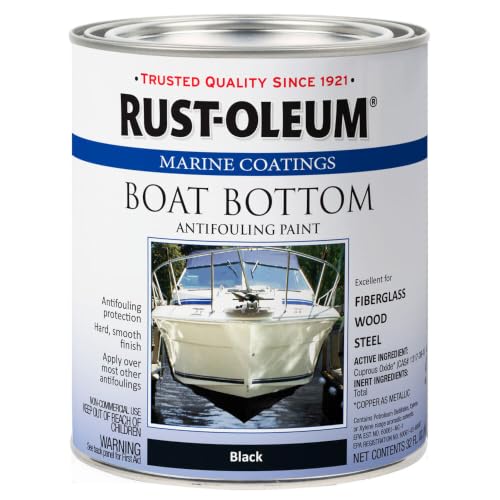
What We Like
- Hard smooth finish resists barnacles and algae
- Works on fiberglass, wood, or steel hulls
- Copper-based antifouling for fresh and saltwater
- Recoat in 4 hours, launch in 16 hours
Trade-offs
- Quart size covers only 110 sq ft
- Hard finish can be difficult to remove later
A 16-hour launch time means you can apply this paint and have your boat back in the water the next day, which is a real advantage for weekend warriors or quick turnarounds. The hard smooth finish creates a durable, flat barrier that resists barnacles and algae buildup on fiberglass, wood, or steel hulls. That makes it a straightforward choice for boaters who want reliable protection without fussing over multiple coats or extended drying periods. This paint is ideal for those who prioritize a tough, no-nonsense coating that holds up season after season.
This paint resists barnacles, algae, and other marine growth below the waterline, so your hull stays cleaner longer between hauls. It works on fiberglass, wood, or steel surfaces and can be recoated in just 4 hours, meaning you can finish the job in a single day. The coating releases copper slowly to prevent fouling, and after 16 hours you can launch the boat.
Interlux Micron CF Antifouling Paint

What We Like
- Heavy-duty protective formulation
- Black color hides fouling buildup
- Trusted Interlux brand reputation
Trade-offs
- At 15.8 lb, heavier than some alternatives
- Single color option limits hull aesthetics
At 15.8 pounds per can, this Interlux Micron CF is a substantial product that suggests a dense, high-copper formulation for antifouling protection. The black color is the only option listed, and the Interlux brand is well-known in marine coatings. This paint is designed for boat owners who need reliable antifouling performance without frequent repainting.
Sea Hawk Cukote Black Antifouling Paint

What We Like
- Lightweight at only 2.0 pounds
- New condition ensures fresh paint
Trade-offs
- Quart size covers less area than gallon options
- No multi-season claim like TotalBoat Spartan
Weighing 2.0 pounds and measuring 4.2 inches on each side, this quart is light and compact, so it stores easily in a small locker or shelf. The black color is a standard option for many hulls. The product is listed as new, meaning it has not been opened or used.
A quart of Sea Hawk Cukote Black Antifouling Paint covers less area than a gallon, so if you’re painting a full keel or a large sailboat, you’ll need multiple quarts or a larger can. The product is listed as new, meaning the buyer receives factory-fresh paint with no shelf-life concerns.
How We Evaluated Antifouling Bottom Paints
Our research began with a close look at each paint’s chemical composition, including the percentage of active biocides like cuprous oxide and copper. We compared paint types, ablative (self-polishing) versus hard (slick) versus hybrid, to understand how each performs over time and under different fouling pressures. Manufacturer data on coverage rates, dry times, and launch intervals were also reviewed.
We prioritized four criteria that matter most to boat owners: fouling protection (copper loading and biocide type), application ease (cleanup, odor, and compatibility with existing paints), durability (single-season vs. Multi-season performance), and hull compatibility (safe for fiberglass, wood, steel, or aluminum). Owner feedback patterns helped us understand real-world performance, such as how well a paint holds up after a full season in warm salt water.
Every evaluation has limits. Individual results vary based on water temperature, salinity, and boat usage. The recommendations here are based on what the specs and owner experiences consistently show, giving you a solid starting point for your own decision.
What To Look For In Antifouling Bottom Paints
Choosing the right bottom paint means matching the chemistry and coating type to your hull, your waters, and how you use your boat. Here are the key factors to consider.
Choose an ablative paint for multi-season use and easy maintenance, or a hard paint for a smooth, burnishable racing finish. Match the copper content to your fouling pressure, and always check compatibility with your hull material.
Paint Type: Ablative, Hard, or Hybrid
Ablative paints are designed to wear away slowly as the boat moves through the water, constantly exposing fresh biocide. This makes them ideal for boats that are used regularly and left in the water for multiple seasons. Hard paints create a durable, smooth finish that can be sanded and burnished for maximum speed, but they do not self-polish and can be difficult to remove. Hybrid paints combine features of both, offering a burnishable surface that still wears away over time.
Copper Content and Biocides
The active ingredient in most antifouling paints is copper, typically in the form of cuprous oxide. Higher copper percentages are generally better for heavy fouling conditions in warm salt water. Some paints also include a second biocide for added protection. For aluminum hulls, you must use a paint specifically formulated to prevent galvanic corrosion, often requiring a special primer.
Application and Cleanup
Some paints require solvent-based thinners for cleanup, while others are water-based and wash up with soap and water. Water-based formulas have lower odor, making them a good choice for enclosed workspaces or off-season painting. Pay attention to dry times between coats and the recommended wait time before launching. Some paints have no maximum dry time, which is a major advantage for DIYers.
- Check the manufacturer’s recommended primer for your hull material.
- Look at the coverage rate per gallon or quart to estimate how much paint you need.
- Consider the paint’s weight, a heavy gallon can be harder to handle on a ladder.
- Verify the paint’s compatibility with any existing bottom paint layers.
- Note the recoat and launch intervals to plan your painting schedule.
When in doubt, choose an ablative paint with a high copper content for the best balance of protection and ease of maintenance.
Antifouling Bottom Paints Compared
The table below compares all eight paints side by side, highlighting their key specs, strengths, and best-use scenarios.
| Product | Paint Type | Copper Content | Compatible Hulls |
|---|---|---|---|
| TotalBoat Spartan Multi-Season Bottom Paint | Ablative (multi-season) | 38% cuprous oxide | Fiberglass, wood, steel |
| Pettit Vivid Hybrid Dual Biocide Paint | Hybrid hard/ablative | N/A | N/A |
| Interlux Micron CSC Antifouling Paint | Ablative | 37.2% | N/A |
| Pettit Hydrocoat Water-Based Ablative Paint | Water-based ablative | Copper-based | Most existing hard and ablative paints |
| TotalBoat Underdog Ablative Bottom Paint | Ablative | 23.7% | Fiberglass, wood, steel |
| Rust-Oleum Marine Boat Bottom Paint | Hard, smooth, flat sheen | N/A | Fiberglass, wood, steel |
| Interlux Micron CF Antifouling Paint | N/A | N/A | N/A |
| Sea Hawk Cukote Black Antifouling Paint | N/A | N/A | N/A |
Frequently Asked Questions
What is the difference between ablative and hard bottom paint?
Ablative paints are designed to wear away slowly, releasing fresh biocide as the boat moves. Hard paints create a durable, smooth finish that does not wear away, making them ideal for racing but harder to remove and maintain.
How long does antifouling bottom paint last?
Multi-season ablative paints can last two to three years before needing reapplication, while single-season formulas require annual maintenance. Hard paints can last longer if the surface remains intact, but they may need sanding between coats.
Can I apply bottom paint over old paint?
Yes, but compatibility is key. Most ablative paints can be applied over other ablative paints if the old surface is properly prepared. Hard paints often require more thorough removal. Always check the manufacturer’s instructions.
Is bottom paint safe for aluminum hulls?
Not all bottom paints are safe for aluminum. You need a paint specifically formulated to prevent galvanic corrosion, often requiring a compatible primer. Pettit Vivid and Interlux Micron CSC are examples of aluminum-safe options with the right primer.
How do I choose the right copper content?
Higher copper content is best for warm salt water and heavy fouling. Lower copper content can work in fresh water or cooler climates. Match the copper percentage to your local fouling pressure and how often you use your boat.
The Bottom Line
The TotalBoat Spartan Multi-Season Bottom Paint is the best choice for most boat owners. Its high copper content and ablative formula provide reliable protection in heavy fouling waters, and its compatibility with fiberglass, wood, and steel hulls makes it versatile. It is the one to choose if you want multi-season performance without the hassle of annual repainting.
If you race or want a mirror-smooth finish, the Pettit Vivid Hybrid Dual Biocide Paint is worth the investment. For budget-minded owners who trailer their boats, the TotalBoat Underdog Ablative Bottom Paint offers solid single-season protection at an economical price. And for those who hate the smell of solvents, the Pettit Hydrocoat Water-Based Ablative Paint makes application much more pleasant.
The single most important factor in choosing bottom paint is matching the paint type and copper content to your specific hull material and fouling conditions. Get that right, and you will spend more time on the water and less time scrubbing the hull.
