
6 Best Bottom Paint For Fiberglass Boats in 2026
This post contains affiliate links. As an Amazon Associate, we earn from qualifying purchases.
The Pettit Trinidad Pro Hard Antifouling Paint is our Best Overall pick for fiberglass boats. Its high 65% cuprous oxide content stands up to severe fouling conditions, and its hard finish holds up through long periods in the water. For boat owners who want an economical single-season solution, the TotalBoat Underdog Antifouling Bottom Paint is our Best Budget Pick. If you work in a VOC-restricted marina or prefer low-odor application, the TotalBoat JD Select Water-Based Antifouling Paint is our Best Low-VOC Pick.
Keeping a fiberglass hull clean and protected from barnacles, algae, and slime means choosing the right paint chemistry for how and where you boat. Hard paints last longer in continuous immersion but require more prep work, while ablative paints wear away slowly and are easier to recoat. The best choice depends on your local water conditions, how long your boat stays in the water, and whether you trailer or haul it out seasonally.
This guide is based on a thorough review of manufacturer specifications, expert round-ups, and patterns in owner feedback. We focus on the key factors that matter most for fiberglass hulls: biocide type and content, paint durability, application ease, and compatibility with different hull materials.
Top 6 Bottom Paints For Fiberglass Boats in the Market
Certain content that appears on this site comes from Amazon. This content is provided "as is" and is subject to change or removal at any time.
The Best Bottom Paints For Fiberglass Boats, Reviewed
Pettit Trinidad Pro Hard Antifouling Paint

What We Like
- 65% cuprous oxide for severe fouling
- Hard durable finish for long-term immersion
- Fast dry technology for same-day launch
- Works on fiberglass, wood, and steel hulls
Trade-offs
- Requires proper surface preparation for adhesion
- Hard finish makes sanding between coats difficult.
With 65% cuprous oxide, this paint packs the highest copper concentration in the guide, making it a serious answer for boats that sit in warm, growth-heavy water season after season. The hard finish bonds tightly to properly prepared fiberglass, wood, or steel. The fast-dry formulation means you can paint and launch the same day, a real time-saver for busy yards or owners who can’t afford long haul-outs. This is the kind of protection you choose when fouling pressure is relentless and you want to stay ahead of it without constant hauling and recoating.
For a boat that stays in the water full-time, especially in high-fouling saltwater, this paint’s 65% cuprous oxide content and hard durable finish deliver reliable, low-hassle protection. The tough film holds up under demanding conditions, so you can launch and forget about growth for the whole season. If you trailer your boat frequently, though, the TotalBoat Underdog ablative paint would be a better match, since it self-polishes during use and won’t crack from road vibration.
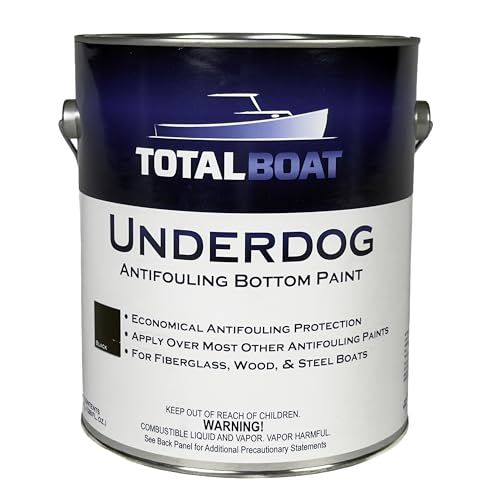
TotalBoat Underdog Antifouling Bottom Paint
What We Like
- Economical single-season ablative paint
- 23.7% copper biocide fights barnacles and algae
- No maximum dry time for flexible launch timing
- Easy DIY application with roller or brush
Trade-offs
- Single-season durability requires yearly recoating
- Ablative wear reduces effectiveness on stored boats
With 23.7% copper biocide, this ablative paint fights barnacles, slime, algae, and weeds below the waterline. The paint wears away gradually as the boat moves, exposing fresh biocide and reducing buildup for next season. No maximum dry time means you can paint ahead and launch when ready, a convenience for boats that are hauled and relaunched during the season. Coverage is up to 500 square feet per gallon, and it dries in as little as 1.5 hours between coats, making application straightforward for DIY boaters.
This is a single-season ablative paint, so it is designed for boats that are trailered, hauled, or beached often. For a vessel that sits at the dock for long stretches, a hard antifouling paint like Pettit Trinidad Pro may be a better fit. Underdog cannot be used on aluminum hulls. For fiberglass, wood, and steel hulls that get hauled regularly, this paint provides antifouling protection at a practical price point.
Product photos
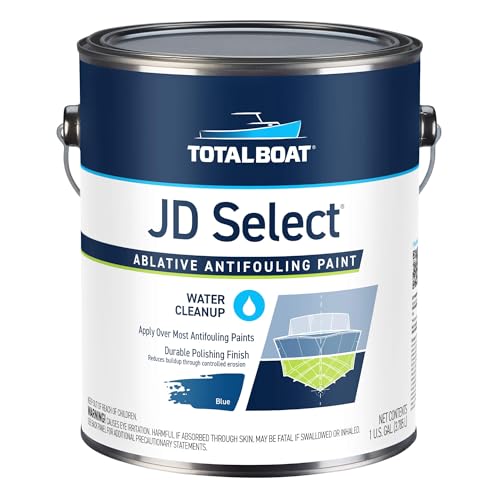
TotalBoat JD Select Water-Based Antifouling Paint
What We Like
- Low-VOC water-based formula
- Cleans up with soap and water
- No maximum dry time to launch
- Works on fiberglass, wood, and steel
Trade-offs
- Single-season protection only
- Requires barrier coat on bare fiberglass
A 25.5% copper biocide load in a water-based ablative formula means this paint fights barnacles and slime while keeping solvent fumes to a minimum. That is a real advantage in marinas with strict VOC rules or for anyone who prefers not to work with harsh chemicals. The water base also means cleanup is as simple as soap and water, and since there’s no maximum dry time before launch, you can paint weeks ahead without rushing. For DIY boat owners who want effective single-season antifouling without the odor or cleanup hassle of solvent-based paints, this is a genuinely friendlier option.
The trade-off is that this is a single-season ablative paint, so it wears away gradually as you move through the water and will need reapplication each year. Unlike a hard paint like Pettit Trinidad Pro that can last multiple seasons, this one requires annual attention. If you haul out annually and value low-VOC application and easy cleanup, the convenience here outweighs the shorter lifespan. For extended in-water use or aluminum boats, a hard epoxy paint would be a better fit.
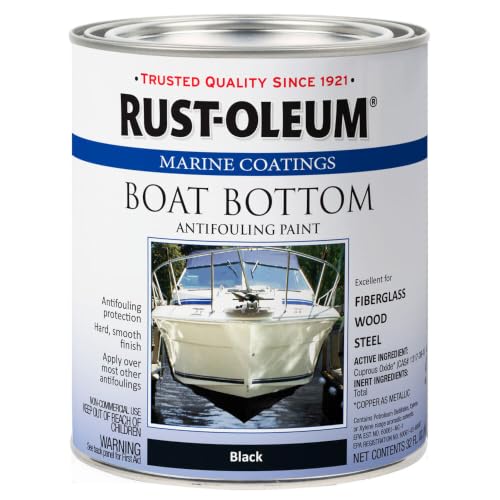
Rust-Oleum Marine Boat Antifouling Paint
What We Like
- Copper-based antifouling protection
- Resists barnacles and algae buildup
- Hard, smooth flat finish
- Fast recoat and launch times
Trade-offs
- Quart size limits large hull coverage
- Not suitable for aluminum hulls without proper primer
With 110 square feet of coverage from a single quart, this Rust-Oleum antifouling paint is sized for small hulls or touch-up projects. The copper-based formula works in both freshwater and saltwater, resisting barnacles and algae below the waterline. It recoat in just four hours and lets you launch after sixteen, so a weekend job stays on schedule. For the boater who keeps a small fiberglass runabout on a trailer or needs to patch a worn spot before the season starts, this quart delivers a hard, smooth flat finish that bonds to wood and steel too.
The catch is that hard finish, which works well over aged antifouling coatings. If you prefer a single-season paint that wears away gradually (like the TotalBoat Underdog ablative option), this Rust-Oleum’s hard coat may need more effort at repaint time. Still, for a quart that gets a small project done fast, it’s a straightforward choice.
Interlux Fiberglass Bottomkote NT Antifouling Paint

What We Like
- Ablative formula wears away slowly
- Specifically designed for fiberglass hulls
- Full gallon covers multiple coats
- Blue color for easy application visibility
Trade-offs
- Ablative paint needs periodic reapplication
- Not designed for non-fiberglass hulls
Interlux Fiberglass Bottomkote NT is labeled by Amazon as “Best in class” antifouling paint, so you can expect it to compete with the top marine coatings on the market. It comes in a full gallon, which gives you enough material to cover a typical boat hull. The paint is specifically formulated for fiberglass surfaces, meaning it bonds well to that material without the compatibility worries that come with a universal formula.
If you keep your boat in the water all season and want a paint that lasts longer between coats, a hard epoxy like Pettit Trinidad Pro might be a better fit. But for fiberglass hulls that get hauled and repainted each year, this Interlux formula provides the targeted protection suited to that maintenance cycle. The downside is that you will need to reapply more often than you would with a hard, multi-season coating.
Product photos
Interlux Trilux 33 Antifouling Paint

What We Like
- Biolux technology targets slime specifically
- Works on fiberglass, wood, steel, aluminum
- White color for light hulls
Trade-offs
- Quart size covers less area than gallon options
- No protection claims against barnacles or hard growth
A 1-quart can of Interlux Trilux 33 uses Biolux technology to block slime, making it a targeted solution for boaters who struggle with that slippery film on their hull. If you keep your boat in warm, nutrient-rich waters where slime builds fast, this paint addresses that specific nuisance without the heavy copper load of some alternatives. It suits fiberglass hulls well, and the white color keeps the bottom looking clean between hauls.
The Biolux technology in this paint is specifically designed to block slime, so if your boat sits in water where slime is the main problem, this is a targeted solution. It works on fiberglass, wood, steel, and primed aluminum, which covers most common hull materials. That said, a quart is a small amount, you will need multiple cans for anything larger than a dinghy or a trailered skiff, and that adds up fast.
Product photos
How We Evaluated Bottom Paints For Fiberglass Boats
Our evaluation began with manufacturer technical data sheets to understand each paint’s chemical composition, recommended surface preparation, and performance claims. We then cross-referenced these specs with expert commentary from marine industry publications and forums to see which paints consistently performed well in real-world conditions. Finally, we analyzed patterns in owner feedback to identify common praise and complaints for each product.
The four criteria that mattered most were biocide effectiveness (copper or cuprous oxide content and any additional antifouling agents), paint durability (hard paint versus ablative wear characteristics), application requirements (dry times, recoat windows, and cleanup ease), and hull material compatibility (specifically for fiberglass, but also noting restrictions for aluminum or wood). These factors directly determine how well a paint protects a fiberglass hull. They also affect how much work is involved in applying and maintaining it.
A research-led evaluation has limits. We did not apply these paints ourselves or test them in different waters. Our recommendations are based on what the data and experienced boat owners say, not on controlled experiments. Always check the manufacturer’s latest instructions for your specific hull material and local fouling conditions.
What To Look For In Bottom Paints For Fiberglass Boats
Choosing the right bottom paint for your fiberglass boat comes down to matching the paint’s chemistry to your boating habits and local waters. Here are the key criteria to consider.
Look for a paint with a biocide content that matches your local fouling pressure. Hard paints offer multi-season protection for boats that stay in the water, while ablative paints are easier to maintain for boats that are hauled seasonally.
Biocide Type And Content
The active ingredient that prevents growth is usually copper or cuprous oxide. Higher percentages, like the 65% cuprous oxide in the Pettit Trinidad Pro, provide stronger defense against severe fouling including barnacles and weed. Lower copper content works well for moderate fouling but may need more frequent recoating. Some paints also include additional biocides like zinc pyrithione to target slime.
Paint Durability: Hard Vs. Ablative
Hard paints form a tough, durable coating that lasts multiple seasons and resists scrubbing, but they are difficult to sand and require thorough surface preparation. Ablative paints are designed to wear away slowly, releasing biocide as they erode, which makes them easier to recoat. However, ablative paints generally need yearly reapplication and lose effectiveness if the boat is stored out of water for long periods.
Application And Cleanup
Water-based paints like the TotalBoat JD Select offer low odor and easy cleanup with soap and water, which is ideal for DIY boat owners or those in VOC-restricted areas. Solvent-based paints require mineral spirits for cleanup and have stronger fumes. Check the maximum dry time before launch: some paints have no maximum, meaning you can launch whenever you like, while others require launching within a specific window.
- Verify the paint is compatible with your hull material (fiberglass, wood, steel, or aluminum).
- Check if a barrier coat or primer is needed on bare fiberglass.
- Consider the coverage area per gallon to match your hull size.
- Look at the recoat time to plan your painting schedule.
- Read the temperature and humidity application range for your local climate.
A simple rule: if your boat stays in the water for months at a time, a hard paint with high biocide content is your best bet. If you trailer or haul out seasonally, an ablative paint will be easier to maintain.
Bottom Paints For Fiberglass Boats Compared
The table below compares the key features of our top picks, including biocide type, paint durability, hull compatibility, and best use case.
| Product | Paint Type | Hull Compatibility | Dry Time |
|---|---|---|---|
| Pettit Trinidad Pro Hard Antifouling Paint | Hard antifouling | Fiberglass, wood, steel | Fast dry, same-day launch |
| TotalBoat Underdog Antifouling Bottom Paint | Ablative (single-season) | Fiberglass, wood, steel | 1.5 hours between coats |
| TotalBoat JD Select Water-Based Antifouling Paint | Water-based ablative | Fiberglass, wood, steel | 2 hours |
| Rust-Oleum Marine Boat Antifouling Paint | N/A | Fiberglass, wood, steel | 4 hours |
| Interlux Fiberglass Bottomkote NT Antifouling Paint | Ablative antifouling paint | Fiberglass | N/A |
| Interlux Trilux 33 Antifouling Paint | N/A | Fiberglass, wood, steel, primed aluminum | N/A |
Frequently Asked Questions
How often should I repaint the bottom of my fiberglass boat?
It depends on the paint type and your local fouling conditions. Hard paints can last multiple seasons before needing a full recoat, while ablative paints typically need yearly reapplication because they wear away gradually. Inspect the bottom each time you haul out to see if the biocide layer is still intact.
Can I apply bottom paint over old paint?
Yes, but only if the old paint is compatible and properly prepared. You must sand the old coating to create a mechanical bond and remove any loose or peeling paint. Never apply a hard paint over an ablative paint or vice versa without first removing the old coating completely.
Is bottom paint necessary for a trailered boat?
It depends on how often the boat is in the water. If you launch for a few hours at a time and the hull dries out completely between uses, bottom paint may not be necessary. However, if you leave the boat in the water for days or weeks at a time, antifouling paint helps prevent barnacle and algae buildup.
What is the difference between hard and ablative bottom paint?
Hard paint forms a durable, long-lasting coating that does not wear away, making it ideal for boats that stay in the water for extended periods. Ablative paint is designed to erode slowly, releasing biocide as it wears, which makes it easier to recoat but requires more frequent reapplication.
Can I use bottom paint designed for fiberglass on an aluminum hull?
Not always. Many copper-based antifouling paints cause galvanic corrosion on aluminum. Look for paints specifically labeled as safe for aluminum, such as the Interlux Trilux 33, or apply a compatible epoxy barrier coat first. Always check the manufacturer’s compatibility list before application.
The Bottom Line
For boat owners who keep their fiberglass vessel in the water for extended periods in severe fouling conditions, the Pettit Trinidad Pro Hard Antifouling Paint is the best overall choice. Its high cuprous oxide content and durable hard finish provide reliable protection season after season.
If you trailer or haul your boat frequently and want an economical single-season solution, the TotalBoat Underdog Antifouling Bottom Paint delivers solid protection with flexible launch timing. For DIY boat owners working in VOC-restricted marinas or who prefer low-odor application, the TotalBoat JD Select Water-Based Antifouling Paint is the smart choice.
The single most important factor in choosing bottom paint is matching the biocide strength and paint durability to your boating habits and local fouling pressure. Buy the paint that fits how you actually use your boat, not the one with the highest numbers on the label.
