
10 Best Primers For Plastic in 2026
This post contains affiliate links. As an Amazon Associate, we earn from qualifying purchases.
For reliable paint adhesion on plastic surfaces, Hycote White Plastic Primer Spray is the best overall pick, offering optimal adhesion without pretreatments and a fast-drying formula that fills minor imperfections. For rigid plastics like polypropylene, the Bartoline Plastic Primer Spray provides a high-adhesion gray base, while the JENOLITE Plastic Primer Aerosol works well for both indoor and outdoor projects.
The real challenge with painting plastic is getting the paint to stick. Unlike wood or metal, plastic is non-porous and often has mold-release agents that cause paint to peel or chip. A purpose-made primer solves this by creating a chemical bond that topcoats can grip.
This guide is based on manufacturer specifications, expert round-ups, and patterns found in owner feedback. We evaluated adhesion technology, drying time, surface compatibility, and ease of application to help you choose the right primer for your specific plastic project.
Top 10 Primers For Plastic in the Market
Certain content that appears on this site comes from Amazon. This content is provided "as is" and is subject to change or removal at any time.
The Best Primers For Plastic, Reviewed
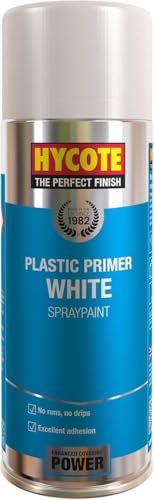
Hycote White Plastic Primer Spray
What We Like
- Optimal adhesion without pretreatments
- Fast drying for quick project turnaround
- Works with most automotive finishes
- Fills minor imperfections for smooth base
Trade-offs
- Automotive focus limits appeal for non-car DIY projects
- Requires a topcoat for best results
A 13.5-ounce spray that promises optimal adhesion without specialized pretreatments means you can skip extra steps and still get a bond that holds. Hycote White Plastic Primer Spray is designed to fill minor imperfections and create a smooth base, which makes it a natural pick for anyone refinishing car bumpers, trim, or interior parts. It dries fast, works with acrylics, cellulosics, alkyds, and polyurethanes, and pairs directly with Hycote top coats for a showroom-quality finish. For a project that demands reliable grip and a professional look, this primer handles the heavy lifting without fuss.
Compared to the Bartoline Plastic Primer Spray, which comes in gray and may suit darker surfaces better, Hycote’s white base is a trade-off worth knowing. Still, for most automotive and DIY plastic jobs where adhesion and speed matter most, this primer’s broad compatibility and no-pretreatment promise make it the one to reach for first.
Product photos
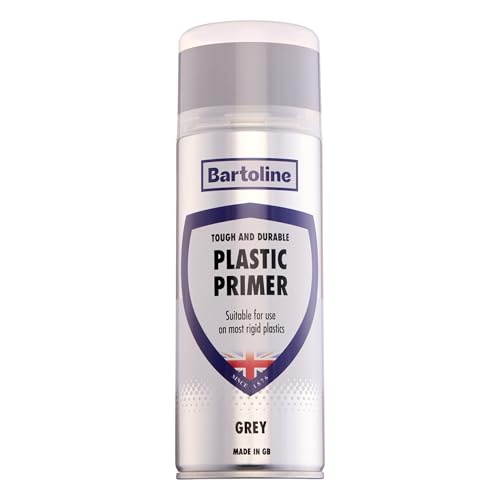
Bartoline Plastic Primer Spray
What We Like
- High-adhesion formula for rigid plastics
- Matt finish for professional overcoating
- Consistent even coverage on car parts and models
- Convenient aerosol spray saves prep time
Trade-offs
- Only 13.5 oz can limits large projects
- Gray tint requires extra paint to cover light topcoats
A 13.5-ounce aerosol that’s formulated specifically for tough rigid plastics like polypropylene, PVC, resin, fiberglass, and vinyl means you get a bond that actually holds on surfaces most primers slide off. That makes this gray matt spray a natural fit for automotive parts, garden tools, and DIY models where a strong foundation matters more than flash. The consistent coverage from the aerosol nozzle saves you from patchy spots and extra sanding, so you can move straight to your topcoat with confidence.
Gray primer works best under dark or metallic topcoats, so if you plan a light or white final color, the Hycote White Plastic Primer Spray gives you a white base that won’t need as much paint to cover. This Bartoline spray is formulated for tough adhesion on rigid plastics like polypropylene, PVC, resin, fiberglass, and vinyl. That makes it a solid grip for car parts, models, and outdoor gear. Just match your topcoat to the gray tint and you’re set.
Product photos
JENOLITE Plastic Primer Aerosol

What We Like
- Superior adhesion to hard plastics
- Works indoors and outdoors
- Quick-drying for fast projects
- Modern acrylic formulation
Trade-offs
- Only available in white finish
- Aerosol limits precise application control
The 13.5-ounce aerosol delivers a quick-drying acrylic base coat that bonds to challenging surfaces like polypropylene, PVC, and fiberglass, so you can move from priming to topcoating without long waits. This makes it a strong fit for anyone refreshing garden furniture, automotive trim, or household plastic items that see both sun and rain. Its British-made formulation gives a professional-grade foundation that holds up across changing conditions, which is why it suits projects that live partly indoors and partly out.
The white finish of this primer is the main trade-off to consider. On dark plastics or when aiming for a deep color, owners report that an extra topcoat layer may be needed to achieve full coverage. That white base does an excellent job of showing where you’ve sprayed evenly, which helps avoid thin spots. It also works well as a light-reflective undercoat for lighter topcoat colors, making them pop without multiple coats. For anyone painting black or dark gray items, just plan for that additional pass of color paint to get the final shade you want.
SEM Flexible Primer Surfacer

What We Like
- Flexible formula adheres to difficult plastics
- Quick drying for faster project progress
- Sandable surface hides minor defects
- Compatible with most refinish topcoats
Trade-offs
- Requires thorough shaking before each use
- Heavier than single-can primers at 4.3 lbs
This primer is a flexible, sandable formulation that adheres to difficult plastics and hides minor surface defects. The quick-drying nature helps you move through prep work faster, and the sandable surface allows you to smooth out imperfections before topcoating. For anyone working on automotive plastic parts that need a primer that grips tricky surfaces, this product is built for that job.
The four-pack weighs 4.3 pounds, which is noticeably heavier than a single can like the Hycote White Plastic Primer Spray at 0.8 pounds. So it’s better suited for larger jobs or multiple pieces rather than a quick touch-up. You have to shake it for a full minute after the mixing ball starts rattling, which adds a bit of prep time compared to simpler sprays. But if you’re working with difficult plastics or want a primer that hides minor surface defects, this pack delivers the adhesion you need.
SprayMax 1K Plastic Adhesion Promoter

What We Like
- No sanding required before application
- Fast-drying formula reduces downtime
- Works with all common 1K and 2K coatings
Trade-offs
- Smaller 11.1 oz can than some competitors
- Smaller 11.1 oz can than some competitors' 13.5 oz cans
A direct-to-plastic formula that skips sanding entirely means you can move from degreasing to priming in minutes. SprayMax 1K dries fast and bonds aggressively to automotive plastics like bumpers, trim, and interior panels, which is exactly what a professional shop needs when every minute of prep counts. Its clear finish keeps color-sensitive work predictable, and compatibility with radar sensors adds a layer of trust for modern repairs. This is the primer you reach for when adhesion failure isn’t an option.
At 11.1 ounces, the SprayMax can is smaller than several competitors’ 13.5-ounce cans, so a full bumper may require more than one can. But if your workflow demands reliability on tricky plastics without extra sanding steps, the SprayMax delivers where a general-purpose primer might lift. It’s built for the pro who values speed and adhesion over raw volume.
Rust-Oleum Automotive Adhesion Promoter

What We Like
- Bonds to vinyl, plastic, fiberglass
- Dries to touch in 10 minutes
- Sprays at any angle
- Comfort spray tip included
Trade-offs
- 11 oz can covers less area than 13.5 oz competitors
- Clear finish requires careful application on dark plastics
This Rust-Oleum spray dries to the touch in 10 minutes, so you can handle the part quickly without waiting long between steps. It bonds to vinyl, plastic, fiberglass and more, making it suitable for bumpers, trim, and interior panels. The comfort spray tip and any-angle spray system help you reach awkward spots, which is handy for car parts or plastic repairs.
The 11-ounce can covers 10 to 12 square feet, so you can finish a bumper or a few trim pieces with one can. The clear finish makes it easy to see where you’ve sprayed, and it dries to the touch in 10 minutes. That speed is handy when you’re working on a quick repair.
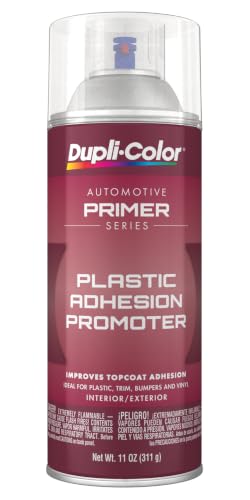
Dupli-Color Plastic Adhesion Promoter
What We Like
- Dry to touch in 20 minutes
- Works on interior and exterior
- Improves top coat adhesion
- Clear finish suits any top coat
Trade-offs
- 11 oz can is smaller than many 13.5 oz competitors
- Requires a top coat for durable finish.
A 20-minute dry-to-touch time means you can apply a top coat in about an hour, which suits quick jobs on plastic or chrome parts. The clear primer works on interior and exterior surfaces, so it fits a range of repairs from car trim to household items. That speed is the main reason to choose it over slower-drying primers.
The 11-ounce can holds less material than the 13.5-ounce Hycote and Bartoline sprays, so you’ll need to buy more cans for the same job. It dries clear, which means you can skip the color-matching step on light plastics but have to track your passes carefully on dark surfaces. If you value speed over visibility and can work in thin coats, this is your pick.
Nicpro Airbrush Primer Set

What We Like
- Three colors for value and versatility
- Pre-diluted, ready to spray from bottle
- Fast drying with hard, durable finish
- Works on plastic, metal, resin, and more
Trade-offs
- Requires compressor with 20+ L/min airflow
- Brush application possible but airbrush recommended
Three 8.45-ounce bottles of black, gray, and white primer mean you can match your base coat to the model’s final color without buying separate cans. The paint is pre-diluted and ready to spray, so there’s no guesswork mixing ratios, just shake and go. It dries fast to a hard, matte finish that seals the plastic and hides small surface flaws, giving topcoats a smooth surface to grip. This set suits scale modelers who airbrush regularly and want a reliable, consistent primer across multiple projects without hunting for different shades.
The trade-off is the compressor requirement: Nicpro recommends 20 to 23 liters per minute for direct spraying. If your airbrush compressor runs below that, you will need to thin the primer with an airbrush thinner, adding a step. That makes it less convenient than a rattle-can primer, which works straight from the can with no compressor at all.
Product photos
Rust-Oleum Universal Bonding Primer

What We Like
- Bonds to difficult surfaces like PVC and porcelain
- Prevents rust and corrosion for durability
- Works in moist or humid environments
- Dries to the touch in 30 minutes
Trade-offs
- Covers only up to 12 sq. ft. per can
- Low coverage per can for large projects like full metal railings
A 30-minute dry time and a formula that bonds to galvanized steel, laminate, PVC, porcelain, and glazed brick make this primer the right choice when you’re tackling the trickiest surfaces in your home or workshop. Its water-based, low-odor build lets you work indoors without suffocating fumes, and the anti-corrosion protection means metal pieces stay sound under paint. If you’ve ever watched paint bead up on a slick plastic chair or a glazed tile, this is the grip you’ve been missing.
The coverage is limited to 10-12 square feet per can, so you’ll need multiple cans for larger projects like a full set of metal railings. For small, stubborn jobs, a single PVC planter, a wrought-iron chair, a porcelain touch-up, it delivers the grip you need. Compared to the Bartoline Plastic Primer Spray, which targets only plastics, this Rust-Oleum bonds to a wider range of surfaces including galvanized steel, laminate, and glazed brick.
Product photos
KLEAN-STRIP Bulldog Adhesion Promoter

What We Like
- Fills 320-grit sanding scratches
- 5-minute tack-free dry time
- Active up to 24 hours
- Compatible with multiple paint types
Trade-offs
- Only for polyolefin plastics, not all plastics
- Aerosol can limits application to small jobs
A 15-ounce aerosol that fills 320-grit scratches and dries tack-free in five minutes means you can prep polyolefin plastics in a single afternoon without waiting overnight. Its 24-hour active window lets you spray a day ahead and still get good adhesion when you paint the next morning.
This adhesion promoter is formulated exclusively for polyolefin plastics, so if your project involves other materials, you’ll need a separate primer for those surfaces. The 15-ounce aerosol can is sized for small jobs, and with a tack-free dry time of just 5 minutes, you can move through prep quickly without waiting around.
Product photos
How We Evaluated Primers For Plastic
Our evaluation focuses on the technical aspects that matter most when painting plastic: adhesion chemistry, surface compatibility, drying speed, and application convenience. We analyzed manufacturer data sheets, reviewed expert recommendations from automotive and DIY painting communities, and looked at consistent patterns in user feedback across hundreds of product reviews.
The four criteria that mattered most were adhesion to untreated plastic, which is the primary job of any plastic primer. Compatibility with different plastic types also mattered, from rigid polypropylene to flexible bumpers. Drying time was critical for project speed, and can size versus coverage was practical for the scale of work.
This is a research-led evaluation, not a hands-on test. We synthesize what is known from documented specifications and what experienced painters consistently report, so you can make an informed choice without having to experiment with products that might fail.
What To Look For In Primers For Plastic
Choosing the right primer for plastic starts with understanding the plastic itself. Not all primers stick to all plastics, and the wrong choice means wasted time and peeling paint.
Look for a primer that matches your plastic type (rigid, flexible, or polyolefin), offers adequate coverage for your project size, and dries quickly enough for your schedule. Clear primers work with any topcoat color; white and gray primers help with color accuracy.
Adhesion Technology
The primer’s ability to bond without sanding or etching is the most critical factor. Some primers use aggressive solvents that microscopically etch the plastic surface, while others contain adhesion promoters that create a chemical grip. For difficult plastics like polypropylene (PP) and polyethylene (PE), you need a specialized polyolefin primer like the KLEAN-STRIP Bulldog Adhesion Promoter. For most automotive plastics, a general adhesion promoter like Hycote or Dupli-Color works well.
Plastic Type Compatibility
- Rigid plastics (PVC, ABS, polycarbonate): Most primers work, but Bartoline is formulated specifically for these.
- Flexible plastics (bumpers, trim): Requires a flexible primer like SEM Flexible Primer Surfacer that moves with the part without cracking.
- Polyolefin plastics (PP, PE, TPO): These low-energy plastics resist adhesion. Use a dedicated product like KLEAN-STRIP Bulldog.
- Small rigid parts (models, crafts): Airbrush primers like Nicpro offer fine control and thin coats.
Drying Time And Workflow
Fast-drying primers let you sand and topcoat the same day. Dupli-Color dries to touch in 20 minutes, while Rust-Oleum Automotive Adhesion Promoter dries in 10 minutes. If you are working on a large project with multiple coats, a slower drying time can be acceptable. For scale models, fast-drying airbrush primers prevent dust from settling on wet surfaces.
Can Size And Coverage
- Standard aerosol cans are 11-13.5 oz. A 13.5 oz can like Bartoline covers more area than an 11 oz can like Dupli-Color.
- For large projects (bumpers, full panels), consider coverage per can. Rust-Oleum Universal Bonding Primer covers up to 12 sq. Ft.
- For small projects (models, trim pieces), smaller cans are more economical and less wasteful.
- Airbrush primers come in bottles and require a compressor with sufficient airflow.
A good rule: buy one can more than you think you need. Running out mid-project means inconsistent texture between coats.
Primers For Plastic Compared
The table below compares key specs across our top picks, so you can quickly see which primer matches your plastic type and project size.
| Product | Color/Finish | Target Materials | Drying Speed |
|---|---|---|---|
| Hycote White Plastic Primer Spray | White | Plastic, PVC, Vinyl, Resin | Fast Drying |
| Bartoline Plastic Primer Spray | Gray, Matt | Rigid plastics (polypropylene, PVC, resin, fiberglass, vinyl) | N/A |
| JENOLITE Plastic Primer Aerosol | White | Hard plastics, polypropylene, PVC, vinyl | quick-drying |
| SEM Flexible Primer Surfacer | N/A | Difficult plastics | Quick drying |
| SprayMax 1K Plastic Adhesion Promoter | Clear | Automotive plastics | Fast-drying |
| Rust-Oleum Automotive Adhesion Promoter | Clear | Vinyl, plastic, fiberglass | 10 minutes to touch |
| Dupli-Color Plastic Adhesion Promoter | Clear | Metal and Plastic | 20 Minutes |
| Nicpro Airbrush Primer Set | Black, Gray, White | Plastic, metal, resin, wood, paper, canvas, fabric, leather, glass, ceramics | N/A |
| Rust-Oleum Universal Bonding Primer | Flat White | Galvanized steel, wrought iron, railings, furniture, laminate, PVC, porcelain, masonry, glazed brick | 30 minutes to touch |
| KLEAN-STRIP Bulldog Adhesion Promoter | clear | Polyolefin plastics | 5 minutes tack-free |
Frequently Asked Questions
Do I need to sand plastic before using a primer?
Not always. Many modern plastic primers contain adhesion promoters that bond directly to clean plastic. However, sanding with 320-grit sandpaper helps remove gloss and gives the primer a mechanical grip. Products like SprayMax 1K Plastic Adhesion Promoter are designed to work without sanding.
What is the difference between a plastic primer and an adhesion promoter?
The terms are often used interchangeably, but adhesion promoters are specifically formulated to create a chemical bond with difficult, non-porous surfaces like plastic. Plastic primers may also fill minor scratches and provide a uniform base color. For the best results on automotive plastics, use a dedicated adhesion promoter.
Can I use a plastic primer on metal or wood?
Some plastic primers work on multiple surfaces, but they are optimized for plastic adhesion. Using a plastic primer on metal may not provide rust protection. For mixed-material projects, look for a universal bonding primer like Rust-Oleum Universal Bonding Primer that is formulated for difficult surfaces including plastic, metal, and PVC.
How long should I wait before applying topcoat over plastic primer?
Drying times vary by product. Quick-dry primers like Rust-Oleum Automotive Adhesion Promoter are dry to touch in 10 minutes, while others may need 30 minutes or longer. Always check the manufacturer’s recoat window. For best adhesion, some primers recommend topcoating within 24 hours while the primer is still chemically active.
Why does paint peel off plastic even with primer?
Peeling usually happens when the primer is not matched to the plastic type. Polyolefin plastics like polypropylene and polyethylene require a specialized primer like KLEAN-STRIP Bulldog. Other causes include applying primer over dirty or oily plastic, insufficient drying time, or using a primer that is too rigid for flexible plastic parts.
The Bottom Line
For most plastic painting projects, the Hycote White Plastic Primer Spray is the best overall choice because it delivers reliable adhesion without pretreatments and dries fast enough to keep your project moving. It is ideal for DIYers and car enthusiasts who want a smooth base for automotive finishes.
If you are working with rigid plastics like PVC or polypropylene, choose the Bartoline Plastic Primer Spray for its high-adhesion gray formula. For flexible plastic parts like bumpers, the SEM Flexible Primer Surfacer is the right pick. Budget-conscious readers will appreciate the Rust-Oleum Automotive Adhesion Promoter for small to medium auto parts.
The single most important buying factor is matching the primer to your plastic type. A great primer on the wrong plastic will fail, while the right primer makes painting plastic straightforward and long-lasting.
