
10 Best Rubber Paint For Flat Roof in 2026
This post contains affiliate links. As an Amazon Associate, we earn from qualifying purchases.
For flat roof repairs or recoats, the best rubber paint is Liquid Rubber Color Roof Sealant. It wins for its exceptional 900% elongation and UV-stable, low-odor formula that works on both flat and metal surfaces. Homeowners with smaller roofs who want maximum heat reflection should consider the AMES Maximum Stretch Roof Coating. The Liquid Rubber Silicone Roof Coating is a top choice for DIYers who want to skip the primer step on most surfaces.
The real challenge with flat roofs is that water doesn’t run off, it sits. That means your coating needs to handle standing water, temperature swings, and direct sun without cracking or peeling. A general-purpose paint won’t cut it; you need a flexible, waterproof membrane designed specifically for low-slope conditions.
This guide is based on a thorough review of manufacturer specifications, product documentation, and patterns in owner feedback. We evaluated 10 rubber roof coatings across the key criteria that matter most for flat roofs, so you can match the right product to your specific roof type, size, and weather conditions.
Top 10 Rubber Paints For Flat Roofs in the Market
Certain content that appears on this site comes from Amazon. This content is provided "as is" and is subject to change or removal at any time.
The Best Rubber Paints For Flat Roofs, Reviewed
Liquid Rubber Color Roof Sealant

What We Like
- 900% elongation resists cracking
- UV-stable and solar reflective
- Water-based, low-odor formula
- Covers flat and metal roofs
Trade-offs
- Heavy 45-lb pail requires careful handling
- Requires multiple heavy coats
Up to 900% elongation means this coating flexes with your roof through extreme temperature swings from -40°F to 150°F without cracking or peeling. For a flat roof that endures standing water and thermal movement, that kind of stretch is what keeps a waterproof membrane intact year after year. It applies like paint with a brush, roller, or sprayer, and the water-based low-odor formula makes the job more pleasant than solvent-heavy alternatives.
The trade-off is weight and patience. At 45 pounds per five-gallon pail, hauling it up a ladder takes some muscle. The 75-square-foot coverage on flat roofs means you will need multiple pails for a typical roof. It also demands multiple heavy coats and a full 24 to 48 hours to cure, so this is not a same-day fix. Compared to the AMES Maximum Stretch Roof Coating, which comes in a lighter one-gallon size, the Liquid Rubber is better suited for larger jobs where you can commit the time and effort for a durable, long-lasting seal.
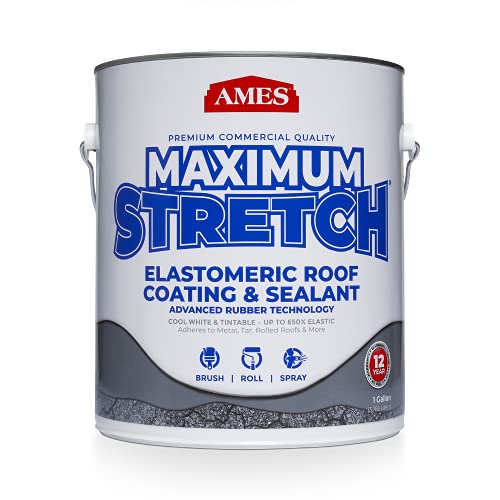
AMES Maximum Stretch Roof Coating
What We Like
- 650% elongation resists cracking and peeling
- 88% light reflectivity lowers cooling costs
- Non-toxic, low VOC, made in USA
- Adheres to metal, tar, rolled roofs
Trade-offs
- White finish shows dirt more than darker coatings
- 1-gallon size requires multiple pails for full roof coverage
With 88% light reflectivity, this coating bounces back most of the sun’s heat instead of soaking it into your roof. That means a noticeably cooler surface and lower cooling bills during hot months, exactly what you want on a flat roof that bakes in direct sun. The 650% elongation also means it stretches with the roof’s natural movement, so it won’t crack or peel as temperatures shift. It sticks to metal, tar, and rolled roofing, making it a versatile choice for low-slope maintenance.
Volume is the main thing to think about here: a single gallon covers a modest area, so if your roof is large or you’re applying a second coat, you’ll need multiple pails. That adds up in cost and hauling. Compared to the Liquid Rubber Silicone Roof Coating, which comes in a 4-gallon pail, the AMES is a smaller quantity for those who need less material. The bright white finish is highly reflective, which helps reduce cooling costs, but may show dirt more than darker coatings.
Liquid Rubber Silicone Roof Coating
What We Like
- No primer needed on most surfaces
- 237% elongation resists cracking
- UV-stable, won't degrade in sun
- Zero solvents, safe for indoor use
Trade-offs
- Requires primer on EPDM and TPO roofs
- Heavy 45-pound 5-gallon pail for larger jobs
The cured membrane stretches over 237% before cracking, so thermal expansion from hot sun to freezing nights won’t pull the sealant apart. UV stability means the coating won’t break down under constant sun exposure, unlike some acrylic options that chalk or peel within a few seasons. On metal, concrete, or wood surfaces, no primer is needed at all, which eliminates a full prep step and lets you start coating immediately. For large low-slope roofs, that time savings adds up fast, especially when you can finish in just one or two coats at a rate of roughly 1 gallon per 50 square feet.
The trade-off: while it skips primer on most materials, Liquid Rubber explicitly says you still need primer on EPDM and TPO membranes, common flat-roof surfaces. That means if your roof is rubber or thermoplastic, you’ll need an extra product and step.
RV Roof Magic Butyl Rubber Coating
What We Like
- One-coat application saves labor
- 20-year performance guarantee
- Works on flat and low-slope roofs
Trade-offs
- Coverage limited to 50 sq ft per gallon
- Requires purchase of Roof Protect cleaner for guarantee
A single coat that bonds directly to EPDM, TPO, metal, fiberglass, or concrete without primer, that is the central promise here, and it is backed by a 20-year performance guarantee. For someone patching a flat roof or recoating an RV, that means less time on the ladder and fewer trips to the hardware store. The coverage of 50 square feet per gallon is modest, but the one-and-done approach makes it a strong fit for small to medium jobs where speed matters more than covering a whole warehouse.
The guarantee requires the brand’s Roof Protect cleaner, so you’ll need to factor in that extra purchase. One gallon covers 50 square feet, which means a small roof patch or a single RV panel is a straightforward job, but a larger area will call for multiple gallons.
EverBond Liquid Rubber Waterproof Sealant

What We Like
- Elongates over 1000% without losing adhesion
- UV stable for sunlight resistance
- Water-based, low VOC and safe indoors
- Works on metal, wood, concrete, and more
Trade-offs
- Flat roof coverage only 15 sq ft per gallon
- Needs 4-5 heavy coats for full membrane
- Original black color only
An elongation capacity over 1000% means this sealant can stretch more than ten times its original length without losing grip, critical for flat roofs that expand and contract with temperature swings. That extreme flexibility, combined with UV stability, makes it a strong pick for roofs that see direct sun and seasonal movement. It also bonds to metal, wood, and concrete, so you can use it on sheds, planters, or foundations too. The water-based formula keeps VOCs low, which matters if you’re working indoors or around pets.
Coverage is the main trade-off here. On a flat roof, a gallon covers just 15 square feet, and you need four to five heavy coats to build a 60-80 mil membrane. That adds up fast on larger roofs. For a small roof or one with tricky details like vents and seams, the extreme flexibility, over 1000% elongation, means the membrane won’t crack or peel as the building shifts. On a big open roof, you might prefer a faster-covering product.
Lanco Siliconizer 1000 Roof Coating

What We Like
- Permanently resists standing water
- Rain-ready in 15 minutes
- Reflective white finish reduces heat
Trade-offs
- Not recommended over shingles of any kind
- 5-gallon pail is heavy for rooftop carrying
It also cures fast enough to be rain-ready in just 15 minutes, which is a real advantage if you’re working in a humid climate or chasing a weather window. This is the coating to reach for when your flat roof has chronic ponding issues and you need a tough, long-lasting seal.
This product is strictly for certain roof surfaces, it’s not recommended over shingles of any kind, so if your roof is asphalt shingle, you’ll need to look elsewhere. That 5-gallon pail is heavy, so plan for a helper or a sturdy hoist if you’re working on a large or steeply pitched low-slope roof. For anyone dealing with persistent standing water on a compatible flat roof, this silicone coating delivers exactly what the spec sheet promises.
Product photos
Gardner Flat Roof Coat-N-Seal
What We Like
- UV inhibitors reflect heat
- Expands and contracts with temperature
- Specifically designed for built-up roofs
- Permanent waterproof protection
Trade-offs
- At 57.8 lb, heavy to carry up a ladder
- Requires dry surface for application
A 5-gallon pail that weighs 57.8 pounds tells you this coating is built for serious roof work, not quick touch-ups. The silicone rubberized formula expands and contracts with temperature shifts, which matters most on built-up roofs where layers can separate under thermal stress. UV inhibitors reflect heat away, keeping the surface cooler and reducing the chance of cracking over time. This is the coating you reach for when you need a permanent waterproof layer on flat or low-slope roofs, especially older built-up constructions that demand flexibility and adhesion.
Weight and prep work are the main considerations here. At 57.8 pounds, hauling this pail onto a roof is a two-person job, and the surface must be completely dry before you roll it on with a 3/4-inch nap roller. Compared to Liquid Rubber Color Roof Sealant at 45 pounds, the Gardner is heavier but offers a silicone formulation that handles expansion and contraction better on built-up surfaces. If you are dealing with a small leak or a quick patch, the 5-gallon size and heavy pail may be more than you need, but for a full built-up roof restoration, this is the right tool.
Product photos
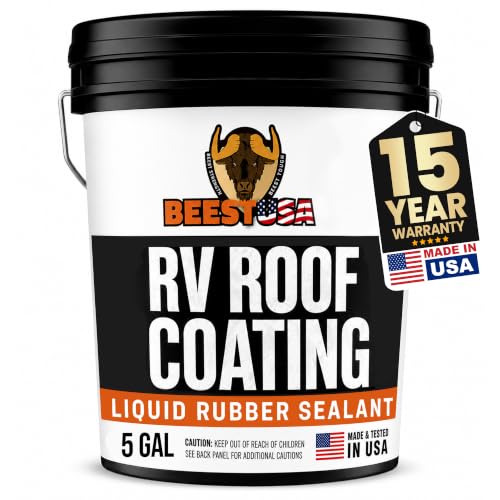
BEEST RV Roof Coating
What We Like
- Flexible liquid rubber for leak repair
- Works on EPDM, metal, wood, concrete
- Eco-friendly, solvent-free, low VOC
Trade-offs
- Requires primer for EPDM roofs
- 2-3 heavy coats needed for full coverage
- 48-hour full cure time delays use
RV owners looking for a waterproof sealant that’s safe to use around people and pets will find this coating well-suited to their needs. It works on flat roofs, gutters, and metal surfaces, so it’s not limited to just the RV. The formula is eco-friendly, solvent-free, and ultra-low VOC, making it a practical choice for both indoor and outdoor applications. Reviewers note that it handles extreme temperatures year-round, which means less worry about cracking or peeling in harsh weather. For best results, the surface should be cleaned and primed first, especially on EPDM roofs, where primer is required.
The real trade-off is the extra prep: EPDM roofs must use a primer for best results, and the product demands 2-3 heavy coats plus a 48-hour full cure between 40-90°F. It is less suited for large home flat roofs where faster coverage or a single coat is preferred.
Product photos
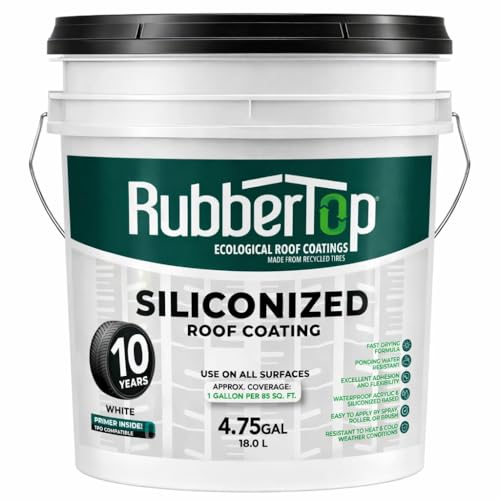
Rubbertop USA Siliconized Roof Coating
What We Like
- Lowers interior temperature up to 25%
- Waterproof acrylic & siliconized formula
- Resistant to heat and cold weather
Trade-offs
- Only available in white color
- 4.75 gallon pail is heavy to maneuver
A 25% reduction in interior temperature is the standout feature here, making this coating a smart pick if your flat roof soaks up sun and drives up cooling costs. The acrylic and siliconized blend seals out water while reflecting heat, so the space below stays noticeably cooler without extra air conditioning. It resists both hot and cold weather conditions, which helps it hold up through seasonal swings. For anyone tired of a stuffy attic or a top-floor room that feels like an oven, this formula directly tackles that problem.
This coating comes only in white, which is the most reflective color but may show dirt or stains more easily over time. Compared to the Liquid Rubber Silicone Roof Coating, which also offers solar reflection in a one-coat silicone formula, the Rubbertop USA relies on a siliconized acrylic blend. If your priority is maximum heat rejection and you can handle a white roof, this pail delivers real temperature relief.
Product photos
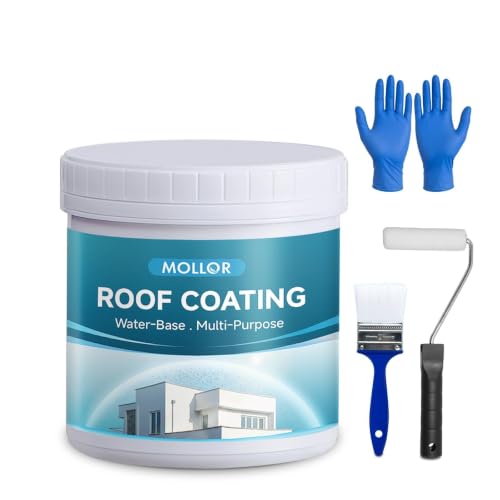
MOLLOR Elastomeric Roof Coating
What We Like
- 84% solar reflectivity for cooler roof
- 300% elongation resists cracking
- Water-based, low-VOC, low-odor
- UV-stable formula fights chalking
Trade-offs
- 1KG size covers only 50 sq ft
- Low-VOC still has a mild paint-like odor
An 84% solar reflectivity rating means this coating bounces back most of the sun’s heat before it ever reaches your roof deck, which can noticeably lower indoor temperatures and cooling costs during hot months. The bright white acrylic formula stretches up to 300% with temperature swings, so it resists cracking and peeling on flat roofs that expand and contract through seasons. That combination of high reflectivity and flexibility makes it a strong pick for homeowners who want an energy-saving upgrade they can apply themselves with a brush or roller. There are no harsh solvents or strong odors to deal with.
Coverage is the main thing to keep in mind: a 1KG pail covers just 50 square feet at two coats, so larger roofs will need multiple pails. For smaller roofs or RVs where reflectivity matters most, this is a clean, easy-to-use solution. Just plan your square footage carefully before you start.
Product photos
How We Evaluated Rubber Paints For Flat Roofs
Our evaluation pulls from manufacturer technical data sheets, expert round-ups from building and roofing professionals, and the common themes found in thousands of owner reviews. We focused on the performance claims that matter most for a flat roof: flexibility (elongation), UV and weather resistance, adhesion requirements, and coverage rates.
The four criteria that drove our rankings were elongation percentage, UV stability and solar reflectivity, application complexity, and coverage per gallon. Elongation measures how much the coating can stretch without cracking. UV stability and solar reflectivity are critical for preventing heat buildup and premature aging. Application complexity covers primer needs, number of coats, and cure time. Coverage per gallon directly affects total project cost and labor. For flat roofs, ponding water resistance also factored heavily into our top picks.
An honest evaluation has limits: we cannot replicate years of real-world weathering in a lab setting. Recommendations are based on the consensus of experienced users, but local climate, roof condition, and application technique will always play a role in your final results.
What To Look For In Rubber Paints For Flat Roofs
Choosing the right rubber roof coating means matching the product to your roof’s material, your climate, and the size of the job. Focus on these three criteria to avoid leaks and wasted labor.
Look for a rubber roof coating with at least 300% elongation, UV stability, and a coverage rate that fits your roof size. Check whether a primer is needed for your specific roof surface, and confirm the product is rated for standing water if your roof has flat or ponding areas.
Elongation and Flexibility
The single most important number on a rubber roof coating spec sheet is the elongation percentage. This tells you how much the dried film can stretch before it cracks. Flat roofs expand and contract with temperature changes, and a rigid coating will fail after one hot summer. Look for products with at least 300% elongation for basic protection, and higher for roofs in extreme climates or with frequent foot traffic.
UV Stability and Solar Reflectivity
Direct sunlight degrades standard roof coatings over time, causing chalking, cracking, and loss of waterproofing. UV-stable formulas include additives that resist this breakdown. Solar reflectivity is a separate but related factor: a white or reflective coating bounces sunlight away from the roof, lowering interior temperatures and reducing thermal stress on the coating itself. If your flat roof gets full sun, prioritize a product with 80% or higher reflectivity.
Application Requirements and Coverage
No two rubber roof coatings apply the same way. Some require a separate primer on certain surfaces (especially EPDM and TPO), while others are self-priming. The number of recommended coats varies from one to five, and coverage per gallon ranges from 15 to 100 square feet per coat. Heavy pails (40-60 pounds) are common for 5-gallon sizes, so consider how you’ll get the material to the roof.
- Check whether your roof material requires a primer before buying.
- Calculate total gallons needed: divide roof square footage by coverage per gallon per coat, then multiply by the number of coats.
- Confirm the product is rated for ponding water if your roof has areas where water sits for more than 24 hours.
- Read the cure time: some products need 48 hours before rain exposure.
- Consider the weight of the pail and your ability to carry it up a ladder.
A good rule of thumb: for any flat roof coating, buy one extra gallon to account for heavy spots and touch-ups.
Rubber Paints For Flat Roofs Compared
The table below compares all 10 rubber roof coatings head-to-head on elongation, coverage, and application requirements to help you narrow your choice.
| Product | Coverage | Base/Type | Container Size |
|---|---|---|---|
| Liquid Rubber Color Roof Sealant | 75 sq ft per 5 gal | Elastomeric | 5 Gallon |
| AMES Maximum Stretch Roof Coating | N/A | Elastomeric acrylic rubberized | 1 Gallon |
| Liquid Rubber Silicone Roof Coating | 1 gal per 50 sq ft | Silicone | 4 Gallon |
| RV Roof Magic Butyl Rubber Coating | 50 sq ft per gallon | Butyl rubber | 1 Gallon |
| EverBond Liquid Rubber Waterproof Sealant | 15 sq ft per gallon | Water-based | 4.75 Gallon |
| Lanco Siliconizer 1000 Roof Coating | Up to 80 sq. ft./gallon | 100% Silicone | 5 Gallon |
| Gardner Flat Roof Coat-N-Seal | N/A | Silicone rubberized | 5 Gallon |
| BEEST RV Roof Coating | 1 gallon/50 sq. ft. | Elastomeric | 5 Gallon |
| Rubbertop USA Siliconized Roof Coating | N/A | Acrylic & siliconized | 4.75 Gallon |
| MOLLOR Elastomeric Roof Coating | 50 sq ft (2 coats) | Acrylic elastomeric | 1KG / 35 Fl Oz |
Frequently Asked Questions
Can I apply rubber roof coating over an old roof?
Yes, most rubber roof coatings are designed to go over existing asphalt, metal, concrete, or built-up roofs. The surface must be clean, dry, and free of loose debris or peeling paint. Some products require a primer on certain surfaces like EPDM or TPO, so check the manufacturer’s instructions for your specific roof type.
How long does rubber roof coating last?
A high-quality rubber roof coating typically lasts 10 to 20 years when applied correctly and maintained properly. The lifespan depends on the product’s UV stability, the number of coats applied, and your local climate. Products with higher elongation and UV inhibitors tend to last longer, especially on sun-exposed flat roofs.
Do I need a primer for rubber roof coating?
It depends on the product and your roof surface. Some rubber coatings, like the Liquid Rubber Silicone Roof Coating, are self-priming on most surfaces but require primer on EPDM and TPO. Others, like the AMES Maximum Stretch Roof Coating, adhere directly to metal, tar, and rolled roofs without primer. Always read the product’s surface compatibility list before starting.
What is the difference between silicone and rubber roof coating?
Silicone roof coatings are a specific type of rubber coating that offers superior resistance to ponding water and UV degradation. They are typically more expensive but require fewer coats and last longer in wet climates. Standard rubber coatings (often acrylic-based with rubber additives) are more flexible and affordable but may not perform as well on roofs with standing water.
Can I walk on a rubber roof coating after it dries?
Most rubber roof coatings are not designed for frequent foot traffic, but they can handle occasional maintenance visits once fully cured. Products with higher elongation tend to be more durable under foot. For roofs that require regular access, consider a coating specifically rated for foot traffic or add a walkway pad.
The Bottom Line
For most homeowners and contractors, the Liquid Rubber Color Roof Sealant delivers the best balance of flexibility, durability, and ease of use for large flat roofs. Its 900% elongation and UV-stable formula handle the expansion and sun exposure that cause other coatings to fail, and the water-based, low-odor formula makes application more pleasant than solvent-based alternatives.
If your roof is small and you want maximum heat reflection, the AMES Maximum Stretch Roof Coating offers excellent 88% light reflectivity and 650% elongation in a non-toxic, low-VOC formula. For DIYers who want to skip the primer step on metal, concrete, or wood, the Liquid Rubber Silicone Roof Coating is a strong choice that simplifies the process.
The single most important factor for any flat roof coating is matching the product’s elongation and UV stability to your climate and roof material. A coating that cracks in the first summer or degrades in the sun will cost you more in repairs than you saved on the initial purchase.
