
5 Best Paint For Concrete Block Walls in 2026
This post contains affiliate links. As an Amazon Associate, we earn from qualifying purchases.
For painting concrete block walls, KILZ Self-Priming Masonry Paint is the best overall pick because its self-priming formula saves a coat and it resists alkali. The INSL-X TuffCrete Acrylic Concrete Stain earns the Best For Vertical Walls award, while the Rust-Oleum Whitewash Masonry Paint offers customizable coverage for smaller projects.
Painting concrete block is different from painting drywall. The porous surface, high alkali content, and rough texture demand a specialized coating that can bond, breathe, and resist chemical reactions. A standard wall paint will peel or chalk quickly.
This guide is based on research into product specifications, manufacturer documentation, and patterns in owner feedback. We focus on the features that matter most for concrete block: adhesion, alkali resistance, coverage, and finish durability.
Top 5 Paints For Concrete Block Walls in the Market
Certain content that appears on this site comes from Amazon. This content is provided "as is" and is subject to change or removal at any time.
The Best Paints For Concrete Block Walls, Reviewed
KILZ Self-Priming Masonry Paint

What We Like
- Self-priming saves a coat
- Alkali-resistant up to pH 12.0
- Works on smooth and rough textures
- Cleans up with soap and water
Trade-offs
- Flat finish shows imperfections more
- Coverage varies with surface texture
This acrylic latex paint covers 250 to 400 square feet per gallon depending on surface texture, so for many small to medium masonry projects a single can may be enough. It is self-priming, which means you skip a separate primer step, and it resists alkali up to pH 12.0, a real advantage on fresh concrete or mortar that can eat standard paints. For anyone painting interior or exterior block, stucco, or brick, it offers a straightforward, one-product solution that rolls, brushes, or sprays on easily and cleans up with just soap and water.
The flat finish is designed to accentuate textured surfaces while achieving a natural look, which works well for vertical walls where a matte appearance is desired. If you need a slip-resistant surface for a floor, the KILZ Decorative Slip-Resistant Concrete Coating is another option in the same brand line. For vertical block walls where a natural, matte look is fine, this paint keeps things simple and reliable.
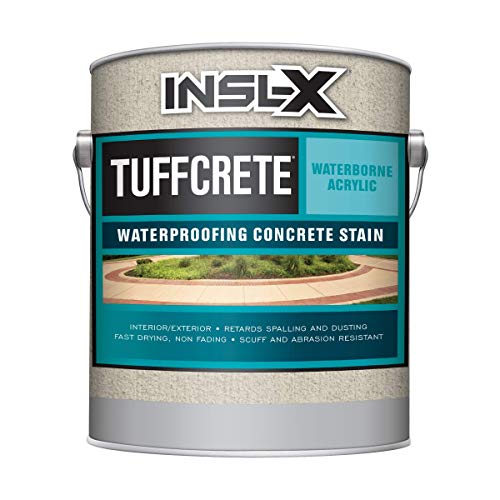
INSL-X TuffCrete Acrylic Concrete Stain
What We Like
- One-coat stain or two-coat opaque finish
- Resists detergents, oils, grease, scrubbing
- Non-fading and fast drying
- Works on vertical masonry surfaces
Trade-offs
- Surface temperature must stay below 90°F
- Requires careful prep per label instructions
- One coat gives only a stain, not full coverage
Coverage of 300 to 400 square feet per gallon means you can coat a typical basement wall or garage partition without buying extra gallons. The ability to apply it as a one-coat stain or two-coat opaque finish gives you control over the final look. This makes INSL-X TuffCrete a strong fit for vertical concrete block walls where you want a durable, fade-resistant surface that stands up to cleaning and occasional grease or oil splashes. The fast-drying formula helps you move through the job efficiently, which matters when you’re working on a wall that sees regular use.
You cannot apply this stain when the surface is above 90°F, so plan for early mornings or shaded spots on hot days. At 9.3 pounds per gallon, it’s lighter than the 11.4-pound KILZ Self-Priming Masonry Paint, and you can use one coat for a stain look or two coats for an opaque finish. Just follow the label’s preparation steps to get good adhesion. For a vertical concrete block wall that needs a washable coating and you can control application conditions, this is a smart pick.
Product photos
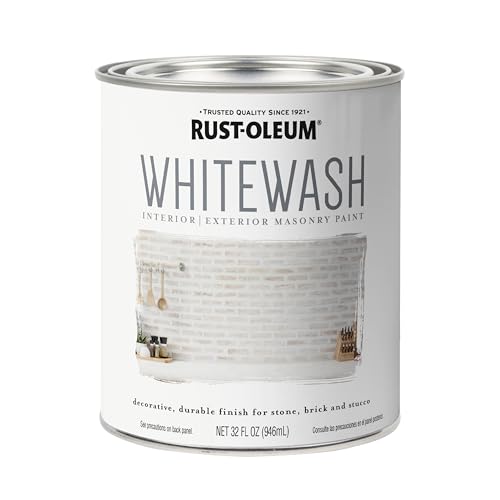
Rust-Oleum Whitewash Masonry Paint
What We Like
- Self-priming and self-sealing formula
- Customizable coverage with water dilution
- Low odor, low VOC for comfort
- Works on porous masonry surfaces
Trade-offs
- Quart size limits coverage for large projects
- Matte finish is less scrubbable than glossier coatings
A self-priming and self-sealing formula means you can skip the primer coat entirely, saving time and effort on porous surfaces like brick, stone, stucco, and wood. Because the coverage is customizable by diluting with water, you can dial in exactly how much of the natural texture shows through, from a light whitewash to a more opaque finish. This quart-sized can suits smaller projects like an accent wall or a fireplace surround, especially if you want a low-odor, low-VOC option for indoor work.
The quart size limits how much wall you can cover in one go. For a larger area you would need multiple cans or a bigger container like the KILZ Self-Priming Masonry Paint, which comes in a gallon. The smooth matte finish is best for surfaces that don’t need frequent cleaning, as matte coatings are less scrubbable than glossier options. If you value control over opacity and a gentle painting experience, this is a thoughtful pick.
Product photos
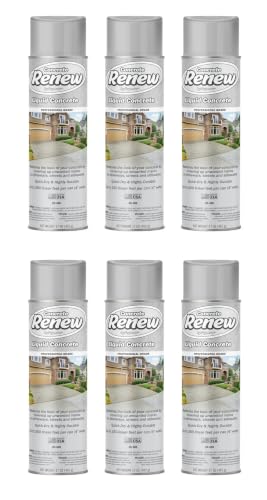
STANIOS INDUSTRIAL SUPPLY 20-600-6PACK Paint
What We Like
- Six cans for bulk touch-up work
- Blends with existing gray concrete
- Hides marks, stains, and discoloration
- Targeted repair without full resurfacing
Trade-offs
- Aerosol cans limit coverage for large walls
- Gray color only, no tint options
- Designed for touch-ups, not full wall painting
Six 17-ounce aerosol cans give you 102 ounces of spray paint formulated for concrete restoration. That means you can spot-fix scuffs, stains, and discolored patches on concrete block walls without mixing a bucket of paint or committing to a full resurfacing job. The gray coating is designed to blend with surrounding concrete for a cleaner, refreshed appearance. This is a go-to option when you need to clean up eyesores on an existing wall quickly, especially in warehouses, driveways, or industrial settings where a uniform finish matters more than a full repaint.
The six-pack delivers 102 ounces total of gray concrete coating, so you get enough material for multiple targeted repairs without committing to a full resurfacing job. Each 17-ounce can is designed for refreshing compatible concrete surfaces like driveways, sidewalks, and warehouse floors, making it a practical choice for facilities or property maintenance. For a whole wall project, a gallon of brush-on paint would cover more square footage, but this spray format excels at concealing marks, stains, and discoloration on gray concrete quickly.
Product photos
KILZ Decorative Slip-Resistant Concrete Coating

What We Like
- Slip-resistant textured finish for safety
- Fills hairline cracks and resists hot tire pickup
- Fast drying, cures fully in 72 hours
- Works on porous concrete, brick, and stone
Trade-offs
- Requires 2 coats, limiting coverage to 50 sq. ft. per gallon
- Needs a specific 1/4" adhesive roller for proper texture
- Must wait 30 days before cleaning after application
A coverage of just 50 square feet per gallon with two coats means this coating is best for smaller horizontal projects like a porch, patio, or pool deck rather than a full driveway. The stone-like textured finish is designed to fill hairline cracks and resist hot tire pickup, so it holds up under foot traffic and parked cars. For horizontal concrete surfaces that need traction, the slip-resistant surface adds real safety without sacrificing durability.
The trade-off is that you cannot use a standard roller or brush and expect the same speckled texture; this coating demands a 1/4″ adhesive roller to build its intended finish. Compared to the KILZ Self-Priming Masonry Paint, which is listed as a masonry paint for interior/exterior use, this product is purpose-built for horizontal surfaces that see wear and weather. If your project is a vertical wall, the masonry paint may be a better fit for that application.
Product photos
How We Evaluated Paints For Concrete Block Walls
We evaluated these paints by examining their technical specifications, reading manufacturer application guides, and analyzing owner feedback across multiple retail platforms. Our research focuses on how each product performs on the specific challenges of concrete block masonry.
The four criteria that mattered most were alkali resistance (critical for new or unsealed block), self-priming capability (saves time and materials), coverage per coat on rough surfaces, and the finish’s durability against moisture and scrubbing. For horizontal surfaces, slip resistance became a primary factor.
A research-led evaluation cannot replicate real-world application conditions like temperature, humidity, or surface porosity. We present what the specs and user patterns suggest, not controlled test results. The right choice depends on your specific wall condition and project location.
What To Look For In Paints For Concrete Block Walls
Choosing the right paint for concrete block means looking past color and sheen. The block’s chemistry and texture demand specific properties.
Look for a paint labeled for masonry or concrete block. It must be alkali-resistant to prevent peeling, and self-priming if you want to skip a step. Consider coverage rate, finish durability, and whether the surface is vertical or horizontal.
Alkali Resistance
Concrete block is alkaline, with a pH that can reach 12 or higher. Standard paint reacts with the alkali, causing peeling, chalking, and discoloration. A paint with alkali resistance, like the KILZ Self-Priming Masonry Paint rated up to pH 12.0, forms a chemical barrier that prevents this reaction. Always check the label for this specification.
Self-Priming Formula
Block surfaces are porous and uneven. A self-priming paint seals the surface and provides a uniform base in one product, saving you an entire coat of labor and material. This is especially valuable for large walls or projects where time is limited.
Coverage and Finish
Coverage on concrete block varies dramatically with texture. A smooth block may need one coat; a rough split-face block might need two or three. Flat finishes hide surface imperfections but are harder to clean. For vertical walls, a matte or satin finish is common. For floors, a slip-resistant textured coating is safer.
- Check the label for “self-priming” to save a step.
- Confirm the paint is rated for your surface (vertical wall or horizontal floor).
- For high-moisture areas like basements, look for a vapor-permeable formula.
- Buy a small quart first to test adhesion and coverage on your block.
A single test patch on your block wall will tell you more than any spec sheet.
Paints For Concrete Block Walls Compared
The table below compares the five top paints for concrete block walls, highlighting their best uses and key features.
| Product | Coverage | Finish | Surface Type |
|---|---|---|---|
| KILZ Self-Priming Masonry Paint | 250-400 sq ft per gallon | Flat | Masonry, stucco, brick, drywall |
| INSL-X TuffCrete Acrylic Concrete Stain | 300-400 sq ft/gal | One coat (stain) or two coats (opaque) | Interior/exterior, vertical/horizontal masonry |
| Rust-Oleum Whitewash Masonry Paint | N/A | Smooth, matte | Interior & exterior |
| STANIOS INDUSTRIAL SUPPLY 20-600-6PACK Paint | N/A | N/A | Concrete, cinder block |
| KILZ Decorative Slip-Resistant Concrete Coating | 50 sq. ft. per gallon (2 coats) | Stone-like textured, slip-resistant | Interior & exterior horizontal surfaces |
Frequently Asked Questions
What kind of paint do you use on concrete block walls?
Use a paint specifically labeled for masonry or concrete block. These paints are formulated with alkali resistance to prevent peeling and chalking. A self-priming masonry paint, like the KILZ Self-Priming Masonry Paint, is a suitable option for most interior and exterior block walls.
Do I need to prime concrete block before painting?
It depends on the paint you choose. Many masonry paints are self-priming, meaning they seal and paint in one coat. If you use a standard exterior paint, you must apply a dedicated masonry primer first. Self-priming formulas save time and ensure proper adhesion.
Can you paint concrete block without it peeling?
Yes, if you use the right paint and proper surface preparation. The key is using an alkali-resistant masonry paint. Without this property, the alkaline salts in the block will react with the paint film, causing it to peel or chalk within months. Clean the surface thoroughly and let it dry before painting.
How many coats of paint do concrete block walls need?
Most concrete block walls need two coats of paint for full, even coverage. A self-priming paint can serve as the first coat. Rough or highly porous block may require three coats. A small test patch will tell you exactly how many coats your specific wall needs.
What is the best paint for vertical concrete block walls?
The INSL-X TuffCrete Acrylic Concrete Stain is formulated for vertical masonry surfaces. It offers a fast-drying, fade-resistant finish that resists detergents and grease. It can be applied as a single-coat stain or built up to an opaque finish with a second coat.
The Bottom Line
For most concrete block wall projects, the KILZ Self-Priming Masonry Paint is the best overall choice. Its self-priming formula saves a coat, its alkali resistance prevents peeling, and it works on both smooth and rough textures. This is the paint to reach for whether you are painting a basement wall, a garden retaining wall, or a stucco facade.
If your project is a vertical wall where you want a fast-drying, fade-resistant finish, consider the INSL-X TuffCrete Acrylic Concrete Stain. For small decorative projects where you want to control the opacity, the Rust-Oleum Whitewash Masonry Paint offers low-odor, customizable coverage. And for horizontal surfaces like a garage floor or patio, the KILZ Decorative Slip-Resistant Concrete Coating provides the safety and durability you need.
The single most important factor is using a paint made for masonry. A standard wall paint will fail on concrete block. Choose a product with alkali resistance and the correct finish for your surface, and you will get a lasting, professional-looking result.
