
10 Best Paint For Wood Decking in 2026
This post contains affiliate links. As an Amazon Associate, we earn from qualifying purchases.
The best paint for wood decking is Ready Seal Exterior Wood Stain & Sealer, chosen for its forgiving, no-back-brushing application and durable semi-transparent finish. For high-traffic decks, the Cabot Solid Color Decking Stain delivers maximum scuff resistance, while the KILZ Over Armor Textured Solid Coating Resurfacer is the top choice for worn, splintered wood.
Choosing a deck coating means balancing coverage, durability, and look. A solid stain hides imperfections but covers the wood grain, while a semi-transparent finish lets the natural wood show through. You also need to consider slip resistance, UV protection, and how much prep work you are willing to do.
This guide is based on manufacturer specifications, expert round-ups, and patterns in owner feedback. We evaluated each product on application ease, durability, coverage, and the specific needs of wood decking, from sun exposure to heavy foot traffic.
Top 10 Paints For Wood Decking in the Market

Certain content that appears on this site comes from Amazon. This content is provided "as is" and is subject to change or removal at any time.
The Best Paints For Wood Decking, Reviewed
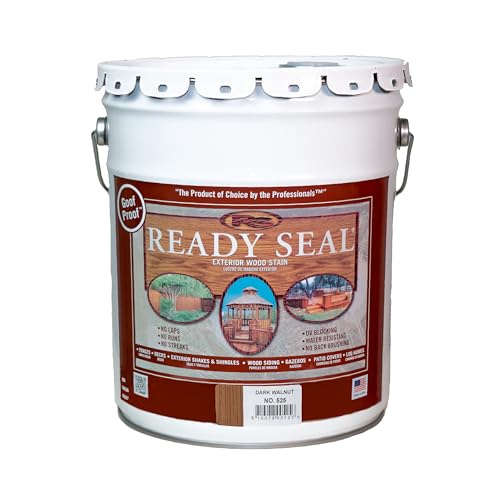
Ready Seal Exterior Wood Stain & Sealer
What We Like
- No laps, runs, or streaks
- No back brushing required
- Can be applied in direct sunlight
- Low odor formula
Trade-offs
- Semi-transparent finish offers less color coverage than solid stains
- 5-gallon size is heavy to carry and store
The 5-gallon bucket holds enough oil-based stain and sealer to cover a large deck without needing to mix multiple containers. Its Goof Proof formula eliminates laps, runs, and streaks even when applied in direct sunlight. That forgiving application means you don’t have to back-brush or maintain a wet edge, making it a strong choice for DIYers who want professional-looking results without the stress. The semi-transparent finish lets the wood grain show through while delivering excellent moisture resistance and UV protection, so your deck stays protected without hiding its natural character.
The trade-off is that this is a semi-transparent stain, not a solid coating like Cabot Solid Color Decking Stain, so it won’t hide heavy discoloration or previous paint as effectively. If your deck has deep stains or you want a uniform opaque color, the Cabot solid stain would be a better fit. But for anyone who wants a durable, easy-to-apply finish that resists cracking, chipping, and peeling, and can handle rain minutes after application, this Ready Seal product performs as described.
Cabot Solid Color Decking Stain

What We Like
- Maximum-pigmented formula for heavy traffic
- Scuff resistant finish
- Water repellent protection
- 100% acrylic durability
Trade-offs
- Solid color hides wood grain completely
- 9.0 pounds adds weight for carrying
- Only one color option in this listing
A maximum-pigmented 100% acrylic formula means this stain is built to take the pounding of daily foot traffic without wearing thin. The scuff-resistant and water-repellent properties keep the deck looking fresh even when kids, pets, or patio furniture are constantly moving across it. For anyone with a busy deck that sees real use, this is the kind of tough coating that holds up season after season.
A solid color stain like this completely covers the wood grain. If you want the natural texture and grain pattern to show through, a semi-transparent option like the Ready Seal Exterior Wood Stain & Sealer works better.
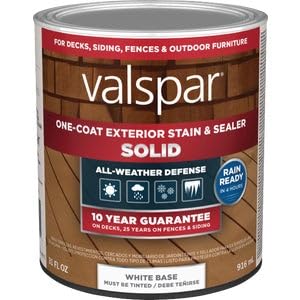
Valspar One-Coat Solid Exterior Wood Stain & Sealer
What We Like
- One-coat waterproof protection
- Blocks sun and hides wood grain
- Works on decks, siding, fences, furniture
Trade-offs
- Solid stain hides wood grain entirely
- White base limits color options out of can
A single coat that seals out rain, snow, and sun is the headline here. Valspar One-Coat Solid Exterior Wood Stain & Sealer delivers waterproof protection in one application, so you can finish a deck in a day without waiting for a second coat. The solid formula blocks UV rays and hides most wood grain, giving a uniform, clean look that resists fading season after season. This is the right pick if you want quick, reliable coverage with minimal fuss, especially on older wood where you don’t want the grain showing through.
A solid stain completely covers the wood texture, so you lose the natural grain character that a semi-transparent stain like Ready Seal would preserve. That makes it less ideal for new, attractive decking where you want the wood’s pattern to show. But if your priority is a durable, uniform finish that stands up to harsh weather and requires fewer coats, Valspar’s one-coat system is a time-saver that delivers exactly what it promises.
KILZ Over Armor Textured Solid Coating Resurfacer
What We Like
- Fills cracks up to 1/4 inch
- Hides splinters and imperfections
- Waterproof and weather-resistant
- Slip-resistant textured finish
Trade-offs
- Not suitable for semi-transparent wood grain look
- Requires proper surface preparation before application
A thick resurfacer that bridges cracks up to a quarter-inch wide means you can revive a splintered, weathered deck without replacing boards. KILZ Over Armor is built for worn wood and concrete, hiding imperfections and creating a uniform, slip-resistant surface that stands up to sun and rain.
If your deck is cracked, splintered, or weathered, this thick, solid-color resurfacer is designed to restore worn wood and concrete by bridging cracks up to 1/4 inch and hiding imperfections. That makes it a practical fix for aging surfaces, but it won’t let the natural wood texture show through like a semi-transparent stain would.
Product photos
DEFY Extreme Wood Stain and Sealer

What We Like
- Zinc nano-particles block harmful UV rays
- Prevents graying and weathering of wood
- Waterproof coating protects from moisture damage
- Can be applied with sprayer, brush, or roller
Trade-offs
- Semi-transparent finish won't hide heavy grain flaws
- 1 gallon covers only 100-150 sq ft, less than some competitors
Zinc nano-particles are the key reason this stain stands apart for sun-exposed decks. They block harmful UV rays, which helps prevent graying and weathering while the waterproof coating protects wood from moisture damage. DEFY Extreme combines stain and sealer in one coat, so a deck in full sun gets defense against both sun and water in a single application. For anyone whose deck sees a lot of sun, this stain is designed to keep the wood from graying and fading.
Coverage is the main trade-off: at 100 to 150 square feet per gallon, you will need more product than a stain like Ready Seal, which spreads farther per gallon. That makes DEFY a choice for smaller decks or for homeowners who want strong UV protection on exposed surfaces. If your deck is large and shaded, a higher-coverage option might make more sense, but for a deck that gets a lot of sun, the extra cost per square foot buys protection against graying and weathering.
Product photos
Thompson’s WaterSeal Semi-Transparent Wood Stain

What We Like
- Fade-resistant advanced polymers
- Waterproofing protection exceeds industry standards
- Applies to damp or dry wood
Trade-offs
- Requires thorough surface cleaning before application
- Only semi-transparent, not solid coverage for bare wood
It also exceeds the ASTM D-4446 standard for waterproofing, meaning the sealant is built to block moisture from soaking into the wood. For anyone who wants a finish that keeps its color through sun exposure and provides reliable waterproofing, this is a practical option, especially if you value a consistent tint over a deep grain show.
For those who prefer to showcase the natural grain pattern of their decking, a clear protector like Cabot Clear Wood Protector may be a better fit. That product leaves the wood’s original appearance largely unchanged, whereas this stain adds a lightly tinted color that covers the grain while preserving the texture. The choice ultimately depends on whether you prioritize seeing the full grain or want a uniform, fade-resistant color with waterproofing that meets industry standards.
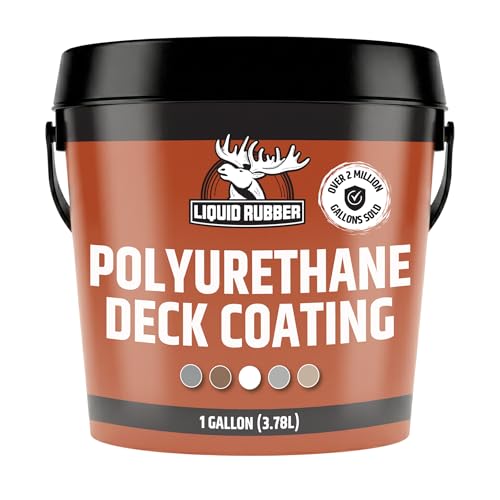
Liquid Rubber Polyurethane Deck Coating
What We Like
- 10X stronger than traditional deck paint
- Textured finish for extra grip on wet areas
- Waterproof polyurethane membrane resists peeling and cracking
- DIY-friendly with brush or roller application
Trade-offs
- Low coverage: 50 sq ft per gallon requires planning
- Full waterproof cure takes 72 hours
- Needs primer and proper surface prep for lasting results
A textured polyurethane membrane that builds 10X stronger than traditional deck paint means this coating is built for high-traffic, wet areas where slips are a real concern. The textured finish adds grip on stairs, docks, and pool decks, and the flexible waterproof layer resists peeling and cracking through seasons of UV and moisture. It suits anyone restoring an aging deck or patio who wants long-lasting protection and doesn’t mind a weekend project.
One gallon covers only 50 square feet, so a typical 200-square-foot deck needs about four gallons, that adds up in both cost and weight, with each gallon weighing 9.3 pounds. The coating builds into a hard, flexible polyurethane membrane that bonds to properly prepared wood, concrete, and metal, resisting peeling, cracking, moisture, UV exposure, and everyday wear. Proper prep is essential: cleaning with Liquid Rubber Deck & Patio Cleaner, priming most surfaces, reinforcing seams with Geo-Textile where needed, and repairing cracks before coating.
Product photos
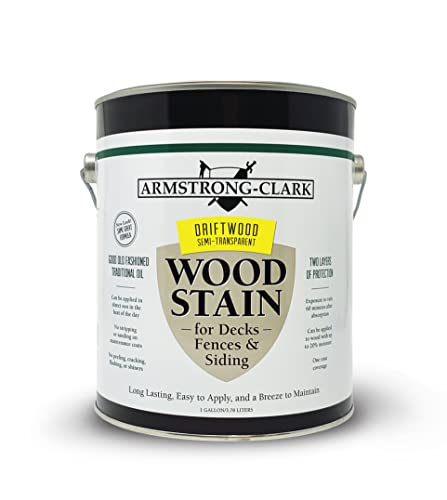
Armstrong-Clark Oil-Based Wood Stain
What We Like
- Penetrates deep into wood fibers
- UV & water resistant protection
- Easy maintenance without sanding
- Works on cedar, redwood, pine, pressure-treated
Trade-offs
- Semi-transparent, less hide for worn decks
- Color varies by wood type and prep
A gallon covering 150-250 square feet on horizontal softwoods means this stain goes a long way on a typical deck, but the real story is how it works. The advanced conditioning oils penetrate deep into wood fibers while drying oils lock in protection, helping prevent cracking, peeling, and premature wood deterioration. Maintenance coats typically require cleaning and reapplication without extensive sanding, stripping, or media blasting, which simplifies upkeep. The semi-transparent finish lets the wood grain show through, giving a natural-looking look that enhances the wood’s character.
Semi-transparent stains won’t hide heavy wear, deep scratches, or color inconsistencies the way a solid stain would. If your deck boards are weathered or have old paint flecks, the driftwood gray tone will blend but not cover. For full opacity, a solid stain like Cabot’s Solid Color Decking Stain works better, though it sits on the surface rather than penetrating. Armstrong-Clark is the right choice when you value deep penetration and easy upkeep over opacity, especially on wood that is in good condition and properly prepped.
Ames Safe-T-Deck Granulated Exterior Paint

What We Like
- Slip-resistant textured matte finish
- Barefoot-friendly surface
- Locks down splinters in old lumber
- Low odor and water cleanup
Trade-offs
- Thick paint requires careful application
- Only 4 stock colors plus tintable options
- Not a transparent stain, hides wood grain
The acrylic granulated formula creates a textured, slip-resistant matte finish that is barefoot-friendly, a rare combination for a deck coating. The textured finish provides added traction on stairs, ramps, and walkways. It also locks down splinters in older dimensional lumber, which means you can extend the life of a tired deck rather than replacing boards.
This is a thick, ready-mixed paint, so it requires careful application compared to a thinner stain. If you want the wood grain to show through, you would be better off with a semi-transparent stain. But if your priority is a textured, slip-resistant surface that is barefoot-friendly, the Ames coating delivers exactly that with low odor and water cleanup.
Product photos
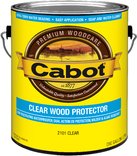
Cabot Clear Wood Protector
What We Like
- Deep-penetrating waterproof protection
- Mold, mildew, and algae resistant
- One-coat application with easy cleanup
- Works on wood and masonry surfaces
Trade-offs
- Clear finish offers no color or stain coverage
- Requires wood to be new or reconditioned for best results
A deep-penetrating formula that soaks into wood fibers means this sealer works from the inside out, locking out moisture while resisting mold, mildew, and algae. The one-coat application and soap-and-water cleanup make it a straightforward choice if you want to protect bare or stripped wood without adding pigment. It suits anyone who values a true clear finish that lets the natural grain show through, especially on newer decks or reconditioned surfaces where you just need reliable waterproofing and UV defense.
Clear equals zero color, unlike a semi-transparent stain such as Ready Seal Exterior Wood Stain & Sealer, this won’t hide imperfections or even out weathered tones. For those who want invisible protection with minimal fuss, this sealer delivers; if you need color or coverage, look at a tinted stain instead.
How We Evaluated Paints For Wood Decking
Our evaluation began with a close look at each product’s published specs: coverage rates, recommended surface prep, dry times, and the chemistry of the coating (acrylic, oil-based, polyurethane). We then compared these specs against the demands of outdoor wood decking, which faces sun, rain, foot traffic, and temperature swings.
We prioritized four criteria. Application ease matters because deck staining is a large DIY project; products like Ready Seal that do not require back-brushing or careful lap management save real time. Durability includes resistance to peeling, cracking, scuffing, and UV damage. Coverage per gallon affects both cost and labor. Finally, we considered the finish type, solid, semi-transparent, or clear, because the right choice depends on the deck’s current condition and the homeowner’s aesthetic goal.
An evaluation cannot replace testing adhesion or long-term weathering on different wood species. We rely on manufacturer data and the reported experiences of many homeowners to identify reliable patterns. Always test a small, inconspicuous area before committing to a full deck.
What To Look For In Paints For Wood Decking
Choosing a deck coating means matching the product to your deck’s condition and your expectations for appearance and maintenance.
Key factors: finish type (solid vs. Semi-transparent vs. Clear), durability and scuff resistance, UV and waterproof protection, coverage rate per gallon, and application difficulty including prep and dry time.
Finish Type And Wood Grain Visibility
Solid stains and paints completely hide the wood grain and any imperfections, giving a uniform color. Semi-transparent stains allow the natural grain to show through but offer less coverage for worn or mismatched wood. Clear sealers preserve the raw wood look but provide no color correction. Choose based on whether your deck’s wood is in good shape or needs concealing.
Durability And Protection
Look for UV blockers to prevent graying and fading, and waterproofing to resist moisture damage. For high-traffic decks, scuff-resistant formulas like 100% acrylic solids hold up better. Some products include mildewcides and algae resistance, which helps in shaded or damp areas. Check the expected recoat interval, longer-lasting coatings save labor over time.
Application And Coverage
Some stains require back-brushing or careful lap blending; others are more forgiving. Coverage rates vary significantly, from 50 to 150 square feet per gallon. Thicker resurfacers and textured paints cover less area but fill cracks and hide splinters. Consider the weight and size of the container, 5-gallon buckets are economical but heavy to carry and pour.
- Check the recommended surface prep: some products need bare wood, others work on damp wood.
- Verify the dry time and recoat times, especially if rain is in the forecast.
- Confirm compatibility with your wood type: cedar, redwood, pine, and pressure-treated wood each have different requirements.
- For slip-prone areas, choose a textured or granulated coating for added grip.
A good rule: if your deck is old and cracked, a thick resurfacer or solid coating will do more than a penetrating oil stain.
Paints For Wood Decking Compared
The table below compares the ten deck coatings side by side, focusing on finish type, key strengths, and the best use case for each.
| Product | Type | Volume | Resistance |
|---|---|---|---|
| Ready Seal Exterior Wood Stain & Sealer | Oil-based semi-transparent stain & sealer | 5 Gallon | Rain resistance: Within minutes of application |
| Cabot Solid Color Decking Stain | 100% Acrylic | N/A | Scuff resistant; Water repellent |
| Valspar One-Coat Solid Exterior Wood Stain & Sealer | Solid stain & sealer | 1 qt. | Waterproof |
| KILZ Over Armor Textured Solid Coating Resurfacer | Solid coating resurfacer | 1 Gallon | Waterproof, weather-resistant & slip-resistant |
| DEFY Extreme Wood Stain and Sealer | Semi-transparent stain & sealer | 1 Gallon | UV Protection: Zinc nano-particles block UV rays |
| Thompson’s WaterSeal Semi-Transparent Wood Stain | Semi-transparent stain & sealer | 1 Gallon | Fade-resistant, UV-resistant |
| Liquid Rubber Polyurethane Deck Coating | N/A | 1 Gallon | Waterproof |
| Armstrong-Clark Oil-Based Wood Stain | Penetrating oil-based stain | 1 Gallons | UV & water resistant |
| Ames Safe-T-Deck Granulated Exterior Paint | Acrylic, water-based | 1 Gallon | Slip-resistant |
| Cabot Clear Wood Protector | Clear | 1 Gallon | Mold, mildew, algae, UV, weather |
Frequently Asked Questions
What is the difference between deck paint and deck stain?
Deck paint forms a thick, solid-colored film on the wood surface, hiding grain and imperfections. Deck stain penetrates the wood fibers, allowing the natural grain to show through. Paint offers more color options and durability, while stain is easier to maintain and recoat.
How long does deck paint last before needing a recoat?
Depending on the product and exposure, a quality deck coating typically lasts two to three years before needing a fresh coat. Solid stains and paints in high-traffic areas may need more frequent touch-ups, while penetrating stains can sometimes be recoated without stripping.
Can I paint over old deck stain?
Yes, but the old stain must be clean and well-adhered. Loose or peeling stain needs to be stripped or sanded away. For best results, test a small area to ensure the new coating bonds properly. Solid stains cover old semi-transparent stains well.
What is the best deck coating for a slippery wood deck?
Textured or granulated coatings like Ames Safe-T-Deck Granulated Exterior Paint provide slip resistance. Polyurethane deck coatings with a textured finish also improve grip. Avoid smooth, glossy paints on decks that get wet.
Do I need to prime my wood deck before painting?
It depends on the product. Some solid stains and paints include primer, while others recommend a separate primer for bare wood or for maximum adhesion. Always follow the manufacturer’s instructions. A primer can help seal in tannins from cedar or redwood.
The Bottom Line
For most homeowners, the Ready Seal Exterior Wood Stain & Sealer is the best overall choice because it combines a forgiving application with a durable, natural-looking finish. It is ideal for DIYers who want good results without the stress of perfect technique.
If your deck sees heavy foot traffic or you need maximum scuff resistance, choose the Cabot Solid Color Decking Stain. For an old, cracked deck that needs a fresh start, the KILZ Over Armor Textured Solid Coating Resurfacer fills gaps and hides splinters.
The single most important factor is matching the finish type to your deck’s condition and your aesthetic preference. A semi-transparent stain on badly worn wood will disappoint, while a solid paint on beautiful cedar will hide what makes it special.
