
10 Best Primers For Drywall Patches in 2026
This post contains affiliate links. As an Amazon Associate, we earn from qualifying purchases.
For a smooth, long-lasting drywall repair, the Zinsser Bulls Eye Water-Base Primer & Sealer is our best overall pick. It dries fast, seals porous patches, and sticks to slick surfaces without sanding. For an all-in-one fix, the Gorilla High Performance Wall Repair combines spackle and primer, while the DAP DryDex offers a helpful color-change indicator.
The real challenge with drywall patches is getting the new compound to blend evenly with the old paint. A patch that isn’t properly primed will flash through the final coat, soaking up paint differently than the surrounding wall. The wrong primer can also fail to block old stains or adhere to glossy surfaces, leading to peeling.
This guide is based on a careful evaluation of manufacturer specifications, expert recommendations from painting professionals, and common patterns found in owner feedback. We break down the key features to look for and highlight the best primer for your specific repair job, whether you need fast drying, stain blocking, or a simple all-in-one solution.
Top 10 Primers For Drywall Patches in the Market
Certain content that appears on this site comes from Amazon. This content is provided "as is" and is subject to change or removal at any time.
The Best Primers For Drywall Patches, Reviewed
Zinsser Bulls Eye Water-Base Primer & Sealer

What We Like
- Dries to the touch in 30 minutes
- Low-odor water-based formula
- Seals porous drywall and blocks stains
- Adheres to slick surfaces without sanding
Trade-offs
- Quart covers only 100 sq. ft., not for large rooms
- Flat finish requires top coat for sheen
Dries to the touch in 30 minutes, so you can prime a patch and move on to topcoating without a long wait. That speed, combined with a low-odor water-based formula that seals porous drywall and blocks stains, makes this a go-to primer when you want the job done without strong fumes. It also adheres to slick surfaces without deglossing or sanding, meaning a fresh patch on glossy trim won’t need extra prep. For anyone patching a few spots and wanting a reliable, fast-drying foundation, this quart delivers exactly what the task requires.
The trade-off is coverage: at 100 square feet per quart, this is best for a few patches or a single accent wall, not a whole room. If you’re tackling a large repair area, the Zinsser 01500 Water Based Drywall Primer in a 5-gallon pail gives you far more reach for the money. But for the typical drywall patch job, a nail pop, a small hole, a corner crack, the Zinsser Bulls Eye’s combination of speed, low odor, and stain-blocking adhesion makes it the smarter grab. You get a uniform flat finish ready for top coating without the extra step of sanding slick surfaces.
Gorilla High Performance Wall Repair
What We Like
- Color-change formula shows when dry
- Spackle and primer in one step
- Lightweight, no-sag formula for easy spread
- Shrink and crack resistant for durable repairs
Trade-offs
- Not for continuous water submersion areas
- Small tub size for large repair jobs
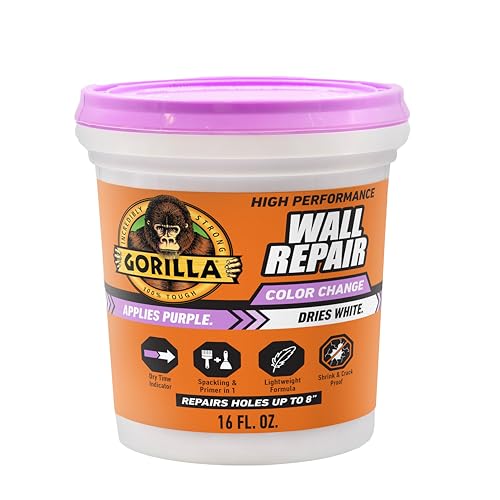
The color-change formula goes on purple and dries white, so you can see when the patch is ready to sand or paint. That helps avoid sanding too early or waiting longer than needed, which is handy for anyone doing wall repairs. Because it’s a spackling and primer in one, it paints like drywall for a smooth finish. The lightweight, no-sag formula is easy to spread on small or large holes with minimal mess. It’s also shrink and crack resistant, so repairs hold up over time. This product is designed for heavy-duty indoor and outdoor use, but not for continuous water submersion.
If you need a repair that holds up in constantly wet spots, like shower surrounds or outdoor downspout areas, this isn’t the product for you; it’s not recommended for continuous water submersion. What it does well is combine spackling and primer into one step, saving time on small holes and cracks. The 16-ounce tub is lightweight, so it’s easy to handle, but for larger drywall sections you’d likely need a bigger spackle plus a separate primer.
DAP DryDex Dry Time Indicator Spackling

What We Like
- Pink-to-white color shows dry readiness
- Dries in 1 hour for shallow repairs
- Won't crack, crumble, flake or shrink
- No primer needed for indoor use
Trade-offs
- Multiple layers needed for repairs over 1/8" deep
- Not a primer, only a spackle for filling holes
The spackle dries within one hour for repairs up to 1/8-inch deep, so you can patch a nail hole and move on to sanding or painting later. The pink-to-white color change tells you the product is dry, which removes any guesswork about when to sand. For indoor repairs, no primer is needed, which simplifies the process. The spackle resists cracking, crumbling, flaking, and shrinking, so the repair stays smooth without extra touch-ups.
For repairs deeper than 1/8 inch, this spackle requires two or more coats, each with its own drying time, so shallow dings and nail holes are its sweet spot. The pink-to-white color indicator confirms when the patch is dry within 1 to 5 hours, eliminating guesswork. For larger holes, a product like Gorilla High Performance Wall Repair, which is a spackling and primer in one, might be worth considering.
Rust-Oleum 01500 Primers

What We Like
- Sands easily for smooth finish
- Low odor, easy water clean-up
- Seals drywall and tape joints
Trade-offs
- At 61.0 lb, awkward to move
- Large 5-gallon size for small patches
A 5-gallon bucket of water-based primer means you can cover large drywall areas without running out mid-project. The high build and high resin content create a smooth surface for painting, and it seals drywall and tape joints effectively. It applies with any pad, brush, roller, or sprayer, and the low odor formula makes cleanup easy with water. This is a practical choice for finishing large surfaces like a whole room of drywall.
At 61 pounds, this bucket is a commitment to move and store, making it overkill for a single small patch job. For quick touch-ups, a quart of Zinsser Bulls Eye Water-Base Primer would be far more practical and easier to handle. Sand it lightly, and you’re ready to paint.
Zinsser B-I-N Shellac Primer-Sealer

What We Like
- Dries to the touch in 15 minutes
- Blocks deep stains and odors
- Sands easily to a powder when dry
- Works on wood, drywall, and metal
Trade-offs
- Shellac base means strong odor during application
- Small coverage area per can for larger patches
- Requires solvent cleanup, not water
A 15-minute dry time means you can prime a patch and be painting after 30 minutes. The shellac formula seals deep stains, knots, and water marks so they won’t bleed through your topcoat, which makes it a good choice for patching over old water damage or smoke stains. It also sands to a fine powder, so you can smooth the primed patch without gumming up sandpaper. This primer is designed for speed and stain-blocking, but the shellac base means a strong solvent odor during application.
The strong solvent smell that comes with shellac is the main downside here. You’ll want a well-ventilated space or a respirator. And at 20-24 square feet per can, it’s best for spot repairs rather than coating an entire wall. If you’re fixing a single patch and need it ready for paint today, this primer offers fast turnaround. For larger jobs, a water-based primer might be more practical.
KILZ Original Low Odor Primer

What We Like
- Low solvent odor for indoor use
- Fast odor dissipation with ventilation
- Stain blocking and strong adhesion
- Works with oil, alkyd, and water-based paints
Trade-offs
- Requires ventilation to dissipate odor
- Coverage per quart is modest for larger patches
A 30-minute dry-to-touch time means you can recoat or topcoat after one hour. KILZ Original Low Odor Primer is built for indoor spaces where strong solvent smells are a problem, offices, schools, dining areas, apartments, or other areas sensitive to high odor levels. Its advanced acrylic formula provides stain blocking and adhesion with a lower solvent odor and fast odor dissipation when ventilation is used. The bright white, non-yellowing finish helps keep topcoat colors accurate.
The trade-off: you do need to ventilate. Unlike some water-based primers that have very low odor, this one still has some solvent smell while wet, just less than traditional oil-based primers. If you’re working in a space where ventilation is difficult or you are very sensitive to any chemical smell, a water-based option like Zinsser Bulls Eye Water-Base Primer might be a better fit. But for most indoor priming jobs where you want stain blocking without lingering odor, this quart delivers reliable performance.
3M Patch Plus Primer

What We Like
- Four-in-one tube includes putty knife and sanding pad
- No separate priming step needed
- Will not shrink or crack after drying
- Works on drywall, plaster, stucco, and wood
Trade-offs
- 3 oz. tube is best for small repairs only
- Single tube limits quantity for larger patches
The 3M Patch Plus Primer packs a putty knife, sanding pad, spackling compound, and primer into one 3-ounce tube, so you can patch a nail hole or small crack without hunting for separate tools or a primer can. That all-in-one design makes it the obvious choice for quick touch-ups on drywall, plaster, stucco, or wood, especially when you want the repair to be paint-ready as soon as the compound dries white. For someone fixing a few dings before painting a room, this kit saves trips to the garage and keeps the mess contained to one tube.
At 3 ounces, this is a spot-repair tool, not a solution for fist-sized holes or multiple patches across a wall. If you are covering several square feet of damage, a tub like Gorilla High Performance Wall Repair gives you more material for the same all-in-one convenience, though you will need your own knife and sanding block. For the small, everyday repairs that pop up in any home, the 3M kit is the most complete grab-and-go option in this guide.
Product photos
INSL-X Stix Acrylic Waterborne Bonding Primer
What We Like
- Bonds to glossy tile, PVC, and glass
- Cures at temperatures as low as 35°F
- Low VOC with soap-and-water cleanup
- Excellent enamel holdout for even topcoat
Trade-offs
- Coverage only 75-100 sq ft per quart
- Needs label review for proper surface prep
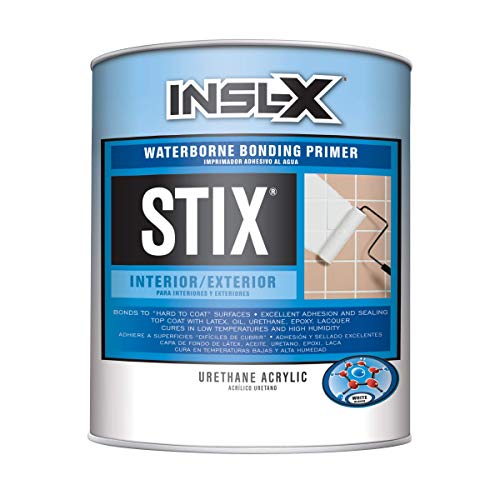
This primer sticks to glossy tile, PVC, vinyl, glass, and galvanized metal, so it handles surfaces where ordinary primers fail. The acrylic-urethane formula cures down to 35°F, meaning it works in unheated garages or chilly basements. For a patch on previously painted wall or a tricky material like Formica or glazed block, this primer bonds to those surfaces. Low VOCs and easy soap-and-water cleanup keep the job simple indoors. Before painting, review the INSL-X STIX label for proper preparation and application tips.
Coverage is the main limitation: a quart covers only 75 to 100 square feet, which is fine for a few patches but not for priming an entire room. If you need to seal a large area of new drywall, a dedicated drywall primer may be more economical. But for a handful of repairs on challenging surfaces, Stix bonds to materials that would otherwise require multiple specialty primers. Just check the label for prep steps before starting.
Product photos
KILZ Adhesion Primer Interior/Exterior
What We Like
- Compatible with water- and oil-based topcoats
- Works on difficult materials like tile and glass
- Dries fast: touch in 30 minutes
Trade-offs
- Covers only 75-100 sq ft per quart
- Requires 24-hour dry time before hot solvents
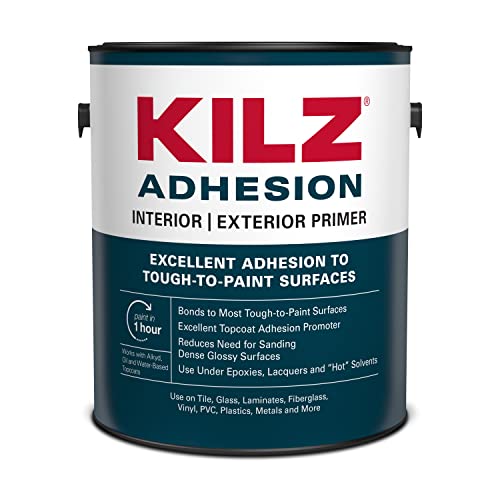
A styrenated acrylic polymer formula that grips surfaces most primers slide off of, glazed tile, glossy paint, PVC, even glass, means this primer turns impossible patches into paintable walls. For drywall repairs that border on laminate, vinyl, or previously painted slick finishes, that adhesion can reduce or potentially eliminate the sanding step that would otherwise be needed. It dries to touch in 30 minutes and accepts a recoat in an hour, so a patch job stays on schedule. This is the pick when the patch meets a surface that laughs at ordinary primer.
When a surface is notoriously difficult to get paint to stick, this high-adhesion primer is formulated to bond where traditional water- or oil-based primers might fail. Its advanced styrenated acrylic polymer formula creates a strong anchor for topcoats and can reduce or even eliminate the need to sand dense, glossy surfaces. Because of this specialized bonding capability, the product is best reserved for targeted repairs on challenging substrates like Kynar, PVC, Formica, vinyl, glass, tile, glazed brick, chalky paints, glossy finishes, fiberglass, and metals. For plain drywall patches elsewhere, a simpler primer will do.
Product photos
Masterchem Kilz Odorless Oil Based Sealer Primer
What We Like
- Mold-blocking formula for problem areas
- Low odor for indoor comfort
- Seals stains and odors effectively
- Works on drywall, masonry, and metal
Trade-offs
- Not waterproof; indoor dry environments only
- Oil-based requires solvent cleanup
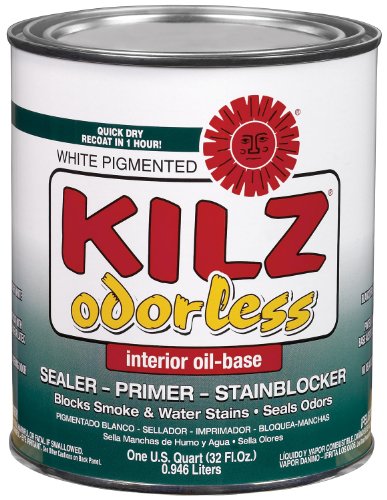
This quart of primer covers 75 to 87.5 square feet per coat, so it handles a typical room’s worth of surface prep. Its mold-blocking formula targets problem areas like bathrooms where moisture can cause mildew, and the low-odor oil base seals stains and odors without strong fumes. That makes it comfortable to use indoors on drywall, masonry, or metal.
This primer is not waterproof, so it belongs in dry environments only, not for shower surrounds or exterior patches. For a room where mold resistance matters, this Kilz fits the need. Compared to the Zinsser Bulls Eye Water-Base Primer & Sealer, the Kilz is an oil-based option for stain-blocking, while the Zinsser is water-based and low-odor.
How We Evaluated Primers For Drywall Patches
Our evaluation focused on the specific demands of patching, not whole-room priming. We analyzed product specs, manufacturer documentation, and expert round-ups to identify what makes a primer effective for this task. We also looked for common praise and complaints in owner feedback to understand real-world performance.
We prioritized four key criteria. Adhesion is critical because patches often sit next to slick paint or joint compound. Dry time matters for a project you want to finish in a day. Stain blocking is essential for covering old water marks or smoke damage. Ease of use, including low odor, water cleanup, and sanding properties, makes the job more pleasant for a DIYer.
A research-led approach has limits: we cannot replicate every possible wall condition or application technique. Our goal is to give you the information you need to match a primer’s strengths to your specific repair scenario, not to guarantee a perfect result in every home.
What To Look For In Primers For Drywall Patches
Choosing the right primer for a patch job comes down to understanding the surface you are covering and the environment it is in. The following criteria will help you match a product to your specific repair.
Look for a primer that seals the porous patch, adheres to the surrounding paint, and blocks any stains. Fast dry time and low odor are major conveniences for indoor DIY work.
Adhesion to Difficult Surfaces
A patch is often surrounded by glossy paint, old varnish, or slick joint compound. Standard primers may peel from these surfaces. Look for a bonding primer, like the INSL-X Stix or KILZ Adhesion Primer, which is formulated to grip non-porous materials like tile, glass, and glossy trim.
Dry Time and Recoat Window
The fastest drying primers, such as the Zinsser B-I-N Shellac, can be ready for paint in 15 minutes. Water-based options like the Zinsser Bulls Eye dry in about 30 minutes. A fast dry time lets you complete a patch in one afternoon. Slower-drying oil-based primers require more patience but offer superior stain blocking.
Stain and Odor Blocking
If your patch covers a water stain, smoke damage, or a marker mark, you need a dedicated stain-blocking primer. Shellac-based primers like Zinsser B-I-N are the most effective, but they have a strong odor. Low-odor options like the KILZ Original are better for occupied homes, though they may require more ventilation.
Ease of Use and Cleanup
- Check if the primer cleans up with soap and water (water-based) or requires solvents (shellac or oil-based).
- Look for a low-odor formula if you are working in a living space.
- Consider the coverage area: a quart is usually enough for several small patches.
- Read the label to see if sanding is recommended for best adhesion.
For most small drywall patches, a water-based primer with good adhesion and a 30-minute dry time is the most convenient choice.
Primers For Drywall Patches Compared
The table below compares our top picks across key features like dry time, adhesion, and best use case, helping you find the right primer at a glance.
| Product | Formula/Base | Dry Time to Touch | Coverage |
|---|---|---|---|
| Zinsser Bulls Eye Water-Base Primer & Sealer | Water-based | 30 minutes | 100 sq. ft. per quart |
| Gorilla High Performance Wall Repair | Spackling and Primer in One | Fast drying | N/A |
| DAP DryDex Dry Time Indicator Spackling | Latex polymer spackle | 1 hour (1/8" depth) | N/A |
| Rust-Oleum 01500 Primers | Water-based | N/A | N/A |
| Zinsser B-I-N Shellac Primer-Sealer | Shellac | 15 minutes | 20-24 sq. ft. per can |
| KILZ Original Low Odor Primer | N/A | 30 min to touch | 75-100 square feet per gallon |
| 3M Patch Plus Primer | Spackling + primer | N/A | N/A |
| INSL-X Stix Acrylic Waterborne Bonding Primer | Acrylic-urethane | N/A | 75-100 sq ft per quart |
| KILZ Adhesion Primer Interior/Exterior | Styrenated acrylic polymer | 30 min touch | 75-100 square feet |
| Masterchem Kilz Odorless Oil Based Sealer Primer | Oil-based | N/A | 75-87.5 sq ft per coat |
Frequently Asked Questions
Do I need to prime a drywall patch before painting?
Yes. Unprimed drywall compound is very porous. It will absorb the final paint unevenly, causing a noticeable flat spot called “flashing.” A coat of primer seals the patch, creating a uniform surface for the paint to adhere to.
Can I use a 2-in-1 spackle and primer for a wall repair?
Yes, for small holes and cracks. Products like the Gorilla High Performance Wall Repair and 3M Patch Plus Primer combine the filler and primer in one step. For larger patches or repairs over old stains, a separate primer is still recommended for best results.
What is the best primer for covering water stains on drywall?
A shellac-based primer like the Zinsser B-I-N is the most effective at sealing water stains and preventing them from bleeding through the new paint. Oil-based stain blockers are also very effective, though they have a stronger odor and require solvent cleanup.
How long should I wait for primer to dry before painting?
Drying times vary by product. Fast-drying shellac primers can be ready in 15 minutes, while many water-based primers are ready in 30 minutes to an hour. Oil-based primers typically require a longer dry time of several hours or overnight. Always follow the manufacturer’s instructions on the label.
What is the difference between a primer and a sealer for drywall?
A primer is designed to promote adhesion of the topcoat, while a sealer is specifically formulated to reduce the porosity of a surface, preventing it from absorbing paint. Many products, like the Zinsser Bulls Eye, are both a primer and a sealer, making them ideal for sealing new drywall compound before painting.
The Bottom Line
For most DIYers patching a few small to medium holes, the Zinsser Bulls Eye Water-Base Primer & Sealer is the best choice. It dries fast, has low odor for indoor use, and sticks to slick surfaces without sanding. It is the most versatile and convenient option for a typical weekend repair.
If you prefer a single-step solution, the Gorilla High Performance Wall Repair is a great 2-in-1 spackle and primer. For repairs near glossy tile or other tricky surfaces, the INSL-X Stix Acrylic Waterborne Bonding Primer is the specialist you need. And if you are covering a stubborn stain, the Zinsser B-I-N Shellac Primer-Sealer is the most effective blocker.
The single most important factor is matching the primer to your specific wall condition. A fast-drying water-based primer works for most jobs, but a dedicated stain blocker or bonding primer is worth the extra cost when your repair demands it.
