
9 Best Spray Primers For Miniatures in 2026
This post contains affiliate links. As an Amazon Associate, we earn from qualifying purchases.
The Citadel Chaos Black Spray Primer earns our best overall spot for its reliable deep black basecoat designed specifically for miniature priming. For painters who want a dedicated zenithal set, The Army Painter Classic Zenithal Primer Set includes both black and white. The Tamiya Gray Fine Surface Primer is our pick for the best fine surface finish.
Getting a smooth, even undercoat is the most critical step in miniature painting. A bad primer layer can obscure fine details, chip off, or cause paint to bead up. The challenge is choosing the right color, finish, and formula for your specific materials and technique.
We evaluated these primers by comparing manufacturer specifications, material compatibility, color options, and common patterns reported in hobbyist communities. This guide breaks down the key differences to help you match a primer to your painting style.
Top 9 Spray Primers For Miniatures in the Market
Certain content that appears on this site comes from Amazon. This content is provided "as is" and is subject to change or removal at any time.
The Best Spray Primers For Miniatures, Reviewed
Citadel Chaos Black Spray Primer

What We Like
- Black primer for deep shadow basecoats
- Compact 10 oz can size
- Designed for miniature model priming
Trade-offs
- Only one color option (black)
- No gray or white for zenithal techniques
A 10-ounce can of black spray primer from Citadel means you get a dedicated miniature undercoat that lays down a consistent dark base. This is the go-to choice if you want deep shadows from the start, especially for armies or models where black underpainting saves time. Its compact dimensions (7.8 inches tall, 2.3 inches wide) fit easily on a hobby desk. For painters who prefer a single, reliable black primer before layering colors, this delivers exactly that without fuss.
The trade-off is that black limits your options if you rely on white or gray for brighter zenithal highlights or transparent paint layers. Compared to other primers available, such as the Tamiya Gray Fine Surface Primer, Chaos Black locks you into a darker starting point. That said, if your style leans toward grimdark, metallic, or heavily shaded miniatures, this single-color focus is a strength rather than a limitation. It does exactly what it promises: a solid, opaque black foundation for your miniatures.
Tamiya Gray Fine Surface Primer

What We Like
- Works on ABS and Styrene plastic
- Also adheres to metal parts
- Works on ABS, Styrene, and metal parts
Trade-offs
- 180ml can is smaller than many competitors
- Not formulated for resin or vinyl materials
This 180ml can of light gray primer from Tamiya is formulated for use on ABS and Styrene plastic, as well as metal parts. The light gray color provides a neutral undercoat that prepares these surfaces for paint. For miniature painters who work on individual models, the 180ml size offers a focused amount of primer, though it will cover fewer models than larger cans.
The trade-off comes in capacity: at 180ml, this can holds less than half the volume of a typical 400ml spray primer like The Army Painter’s Uniform Grey. That means you will need to replace it sooner if you are priming multiple large miniatures or batch-painting an army. For the hobbyist focused on individual models or small projects, the reliable adhesion to ABS and Styrene plastic makes it a worthwhile pick.
The Army Painter Classic Zenithal Primer Set

What We Like
- Includes both black and white primers
- Fine pigment for smooth coverage
- Designed for zenithal highlighting
- 400 mL cans offer ample volume
Trade-offs
- No gray or colored primer included
- Requires careful spray technique for gradients
Two 400 mL cans of black and white primer come together in one set, so you can build light-to-dark transitions straight on the miniature without hunting for separate cans. The fine pigment formula lays down a smooth base that helps paint stick, which matters when you want zenithal highlights to show through thin glazes or contrast paints. For anyone who primes with black and white to create volume, this pairing saves the trouble of matching two different brands.
Because this set only includes black and white, you will need another can if your usual method starts with a gray or colored primer. Compared to a single can like The Army Painter Colour Primer Uniform Grey, this set asks you to commit to the two-step zenithal approach from the start. That focus makes it a practical choice for anyone who wants a dedicated highlighting setup rather than a general-purpose undercoat.
The Army Painter Colour Primer Uniform Grey

What We Like
- Prime and basecoat in one step
- Neutral grey suits many colour schemes
- Matt finish preserves sculpted details
- Works with acrylic and Speedpaint paints
Trade-offs
- Requires multiple thin coats for even coverage
- Not suitable for extreme weather conditions
A 400 ml can that primes and basecoats in one pass means you skip a whole painting step. The neutral grey tone gives a balanced foundation for historical uniforms, military vehicles, or fantasy miniatures, letting you add both lighter and darker colours without fighting an overly warm or cold base. For painters who want a consistent mid-tone start and a matt finish that holds acrylics well, this is a practical shortcut.
You need patience with thin coats and controlled bursts to avoid pooling, especially in humid or cold weather. This primer is designed to work with acrylic paints including Warpaints Fanatic and Speedpaint, giving you a matt surface ready for the next layer. It is best for modellers who want a fast, one-step grey basecoat for historical, military, or sci-fi miniatures.
Ideal for painters who want a fast, one-step grey basecoat for historical, military, or sci-fi miniatures. Not ideal for those who prefer a dedicated primer for maximum detail retention or need a black-and-white zenithal undercoat.
Product photos
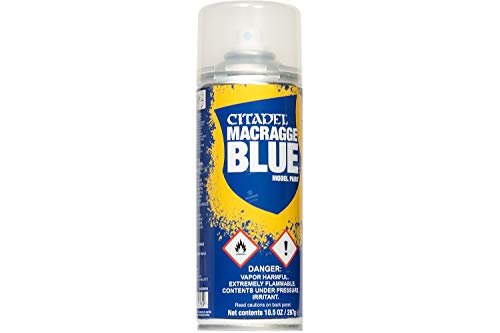
Citadel Spray Primer Macragge Blue
What We Like
- Smooth matt finish for even coating
- Lightweight can at 0.9 pounds
- Makes undercoating and basing simple
Trade-offs
- Only available in one color shade
- Not suited for priming large terrain pieces
A smooth matt finish means this primer lays down an even, non-reflective base that helps paint stick and keeps details crisp. The can weighs 0.9 pounds, and its dimensions are 2.8 by 2.8 by 8.0 inches. The product makes undercoating and basing your models simple, which can be helpful when your miniature calls for a blue foundation.
Since this primer is specialized for blue, you will need a separate can if your project needs black, gray, or a different hue. Compared to the Citadel Chaos Black Spray Primer, which is a different color option, Macragge Blue is more specific to blue schemes. For hobbyists committed to a blue color scheme, this primer streamlines the first two steps into one clean pass.
Vallejo Hobby Paint Spray Basic Primer Black

What We Like
- Two nozzles for detail and coverage
- Fast-drying matt finish
- Self-levelling formula protects fine details
- Color matches Vallejo Game/Model paint ranges
Trade-offs
- Low-discharge nozzle still requires steady hand
With two interchangeable nozzles, one low-discharge for precise work and one medium-discharge for larger surfaces, this primer gives you control for different tasks. The fast-drying, self-levelling formula is designed to respect fine details on metal, plastic, or resin models and miniatures. That makes it a strong fit for hobbyists who need to cover both small details and larger areas on their projects.
The low-discharge nozzle still requires a steady hand for truly tiny areas, so if you’re used to a single-nozzle can, you’ll need to adjust your technique. And because Vallejo is rebranding, you might receive either old or new packaging, functionally identical, but worth knowing if you’re particular about label consistency. For a primer that offers nozzle options for different jobs, this is a versatile pick.
Product photos
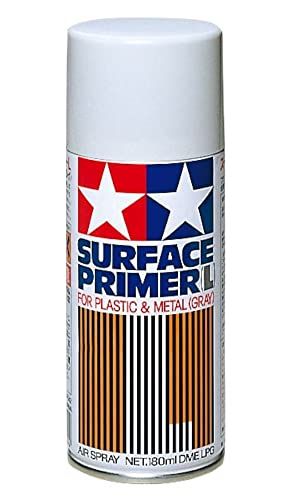
Tamiya Surface Primer L Gray
What We Like
- Works on plastic, metal, and wood
- Synthetic resin formula for durable finish
- 6.1 fl oz (180 ml) net volume
Trade-offs
- No color options beyond light gray
- Only available in light gray color
A single can of this synthetic resin primer works on plastic models, metal parts, and wood, so you can move from a styrene kit to a brass photo-etch fret without grabbing a different product. Reviewers appreciate that versatility for mixed-material builds. The 6.1-ounce spray can is compact enough to store alongside your hobby tools. It lays down a light gray finish that reveals surface details and helps subsequent paint coats adhere evenly. The color shown on the label is approximate, so actual paint may differ slightly from what you expect.
You get less paint per can than larger options from other brands, so if you are priming armies of miniatures or large terrain pieces, you will run out faster. The light gray color is the only shade this can provides, so you won’t have a choice of darker or colored base coats from this product. For the occasional project or a precise touch-up, the smaller volume is a fair compromise for the convenience.
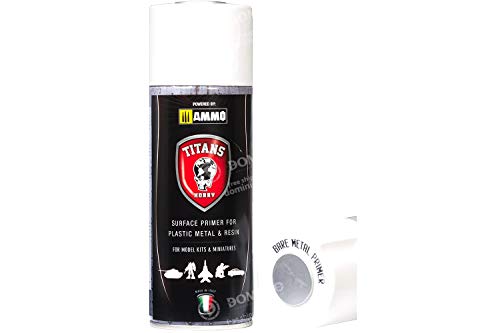
Mig Jimenez 109 Spray Primers
What We Like
- Branded for bare metal adhesion
- Dedicated primer from a known model paint brand
Trade-offs
- No listed dimensions for canister size
- Heavier than other hobby spray primers at 2.2 pounds
This primer is formulated specifically for bare metal, which means it’s designed to grip slick surfaces that other sprays might slide off. The can weighs 2.2 pounds, and the Mig Jimenez name signals a focus on hobby-grade adhesion. If you’re priming metal miniatures, this is the one that targets that job directly rather than trying to be a general-purpose spray.
This primer is formulated specifically for bare metal adhesion, so if you’re prepping metal miniatures or model parts, it’s the right tool for the job. The can weighs 2.2 pounds, which is heavier than many hobby spray primers, something to keep in mind if you’re spraying for long sessions. Reviewers note that for plastic or resin models, a general-purpose primer like Citadel Chaos Black might be more flexible, but for metal surfaces this specialist product is designed to stick.
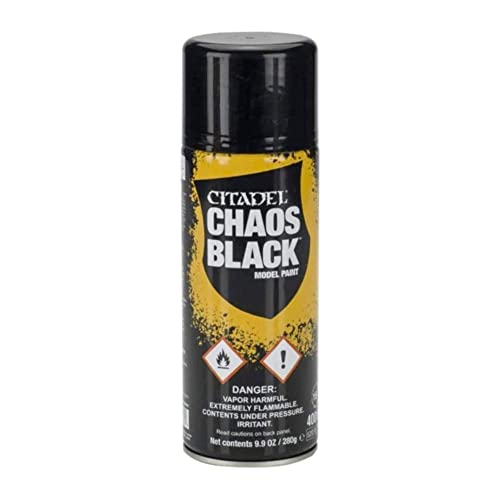
Games Workshop 99209999012 Spray Primers
What We Like
- Brand-specific formulation for Citadel paint range
- Matte black finish for strong shadow base
- Spray can format for quick coverage
Trade-offs
- Only one color option (black) limits versatility
- No listed can size or weight for portability planning
A black spray primer from Games Workshop is the undercoat designed for painting Citadel miniatures, so it grabs subsequent paint layers without glare and keeps details crisp. For hobbyists building Warhammer armies or similar plastic figures, this primer works with the brand’s own acrylic line, which reduces the risk of flaking or brush-on texture.
You are locked into black with this spray. If you prefer a gray or white zenithal undercoat for brighter top colors, you will need a second can from another brand like The Army Painter Classic Zenithal Primer Set. That said, for a single-coat black foundation that matches Citadel paints perfectly, this spray delivers exactly what it promises without surprises.
How We Evaluated Spray Primers For Miniatures
Our research focused on manufacturer data for each primer’s intended materials, plastic (ABS, Styrene, polystyrene), resin, metal, and wood, since using the wrong primer can ruin a model. We compared can sizes, nozzle designs, and drying characteristics from official product documentation.
We prioritized four criteria: adhesion and surface finish quality, color options and workflow compatibility, material compatibility range, and ease of use for both beginners and experienced painters. A primer that chips or obscures detail fails its core job, so finish quality carried the most weight.
This evaluation is based on published specifications and patterns in owner feedback. We focused on what the manufacturer states the product can do and what experienced painters consistently report about each formula.
What To Look For In Spray Primers For Miniatures
The right primer bonds to your miniature’s material, preserves sculpted details, and provides a toothy surface for paint to grip. Color choice affects your painting workflow, from simple basecoats to advanced zenithal highlighting.
Material Compatibility
Not all primers work on all materials. Styrene and ABS plastics require different formulations than resin or metal. Check the can for explicit compatibility lists. Tamiya primers, for example, are formulated for ABS and Styrene but not resin or vinyl, while the Mig Jimenez 109 is designed for bare metal adhesion. Using the wrong primer can cause a chemical reaction that melts plastic or fails to bond to metal.
Color and Workflow
Your primer color sets the foundation for your paint job. Black primers create deep shadows and are ideal for a single-coat basecoat approach. Grey primers offer a neutral midtone that works well for most color schemes and is forgiving for beginners. White primers are essential for zenithal highlighting and transparent colors. Some painters prefer a dedicated set like The Army Painter Classic Zenithal Primer Set, while others want a single neutral can.
Nozzle and Application
Spray nozzle design affects control and coverage. Standard nozzles work well for large surfaces, while detail nozzles allow precise application on small models. The Vallejo Hobby Paint Spray Basic Primer Black includes two nozzles for switching between coverage and detail work. Can size matters for portability and project scale, compact 180ml cans suit small projects, while larger 400ml cans are better for batch priming.
- Check the can’s recommended temperature and humidity range for spraying
- Confirm the primer is compatible with your miniature material (plastic, resin, metal)
- Decide if you need one color or a multi-color priming workflow
- Consider can size based on how many miniatures you typically prime at once
A good rule of thumb: the primer should be barely visible after application, just enough to provide a uniform tooth for your paint layers.
Spray Primers For Miniatures Compared
The table below compares each primer’s material compatibility, color options, and can size to help you match the right primer to your project needs.
| Product | Volume | Color | Compatible Materials |
|---|---|---|---|
| Citadel Chaos Black Spray Primer | 10 Oz | Black | N/A |
| Tamiya Gray Fine Surface Primer | 180ml | Light Gray | ABS, Styrene, Metal |
| The Army Painter Classic Zenithal Primer Set | 2 x 400 mL | Black and White | N/A |
| The Army Painter Colour Primer Uniform Grey | 400 ml | Uniform Grey | Plastic, resin, metal |
| Citadel Spray Primer Macragge Blue | N/A | N/A | N/A |
| Vallejo Hobby Paint Spray Basic Primer Black | 400 ml | Black | Metal, plastic, resin |
| Tamiya Surface Primer L Gray | 180ml | Gray | Plastic, metal, wood, styrene, ABS |
| Mig Jimenez 109 Spray Primers | N/A | N/A | N/A |
| Games Workshop 99209999012 Spray Primers | N/A | N/A | N/A |
Frequently Asked Questions
Can I use any spray paint as a miniature primer?
No. Standard spray paints are often too thick and can fill in fine details on miniatures. Hobby-specific primers use finer pigments and formulations designed to go on thin and smooth while preserving sculpted detail.
Do I need to wash my miniatures before priming?
Many resin and metal miniatures have mold release agents on the surface that can prevent primer from adhering. Cleaning with warm soapy water and a soft brush is recommended for these materials. Most plastic miniatures can be primed directly if they are free of dust and oils.
What is zenithal priming?
Zenithal priming is a two-step undercoating technique. You spray the miniature black from below, then spray white or gray from above to create a gradient that mimics natural lighting. This helps guide your paint layering and creates more dynamic highlights.
How long should I let spray primer cure before painting?
Most hobby primers are dry to the touch within minutes, but full curing takes longer. Waiting at least a day before painting gives the primer maximum adhesion and prevents paint from lifting during masking or handling.
Can I use a spray primer on terrain pieces?
Some primers are designed for smaller miniatures and may not cover large terrain efficiently. Citadel and Army Painter primers work on terrain but may require multiple cans for large pieces. For large terrain, consider a larger can of automotive primer designed for plastic models.
The Bottom Line
The Citadel Chaos Black Spray Primer is our best overall choice for hobbyists who want a dependable black basecoat that goes on smooth and preserves detail. It is purpose-built for miniature priming and works well with Citadel acrylics.
If you need a grey basecoat for historical or sci-fi models, The Army Painter Colour Primer Uniform Grey primes and basecoats in one step. For painters who want to experiment with zenithal highlighting, The Army Painter Classic Zenithal Primer Set gives you both colors in matching formulations.
The most important factor is matching the primer to your miniature’s material and your painting workflow. Choose a primer formulated for your model’s material, pick a color that supports your painting technique, and you will save yourself time and frustration at the painting table.
