
6 Best Primers For Mdf Board in 2026
This post contains affiliate links. As an Amazon Associate, we earn from qualifying purchases.
For priming MDF board, the Blackfriar Quick Drying MDF Primer and Undercoat is the best overall choice because it combines a primer and undercoat in one fast-drying formula, saving time on small to medium projects. For those sealing epoxy countertops, the Stone Coat Countertops Epoxy Undercoat Black is the dedicated pick, while the MOREBACK Professional White Gesso Primer is the top choice for artists prepping MDF for painting.
The real challenge with MDF is its porous, fibrous edges that soak up paint unevenly, leaving a rough, raised surface if not sealed properly. A good primer locks down those fibers, blocks tannin stains from bleeding through, and creates a smooth, uniform base for your topcoat.
This guide is based on a careful review of product specifications, manufacturer guidelines, and patterns in owner feedback across top brands. We evaluated each primer on its ability to seal MDF effectively, its drying speed, and its suitability for different project types, from furniture to fine art.
Top 6 Primers For MDF Board in the Market
Certain content that appears on this site comes from Amazon. This content is provided "as is" and is subject to change or removal at any time.
The Best Primers For MDF Board, Reviewed
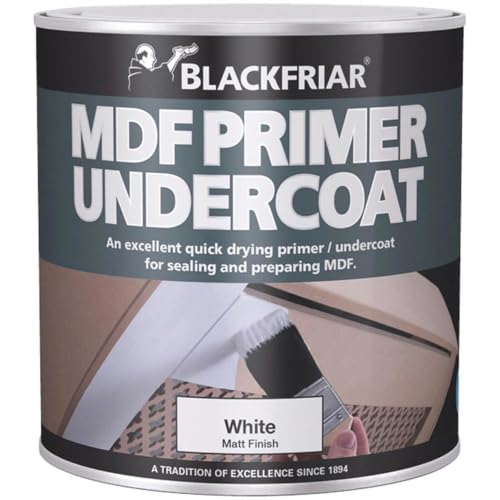
Blackfriar Quick Drying MDF Primer and Undercoat
What We Like
- Quick-drying formula saves time
- Combines primer and undercoat in one
- Compact 250ml size for small projects
Trade-offs
- 250ml can limits large-area coverage
- Only available in white
A 250ml can that works as both primer and undercoat means you can seal and prepare MDF in one step. The quick-drying formula is the key reason this suits anyone who wants to move from sanding to painting without a long wait. It’s a straightforward, no-fuss option for small to medium MDF projects like craft boxes, picture frames, or cabinet doors where a white base is needed before your top color goes on.
The 250ml tin is a small amount, so it’s best for touch-ups or a single small panel rather than a whole project. For larger work, the Glidden Interior/Exterior Stain Block Primer comes in a full gallon. But for quick, targeted jobs where you don’t want leftover paint, this Blackfriar size keeps things simple.
Product photos
Stone Coat Countertops Epoxy Undercoat Black

What We Like
- Ammonia-free and low odor for indoor use
- Two-coat application creates a firm, sealed foundation
- Ammonia-free and low odor formula
Trade-offs
- Requires two coats for proper seal
- Requires two coats, adding drying time
It also needs two coats to do its job, which adds drying time compared to a one-coat primer like the Blackfriar Quick Drying MDF Primer.
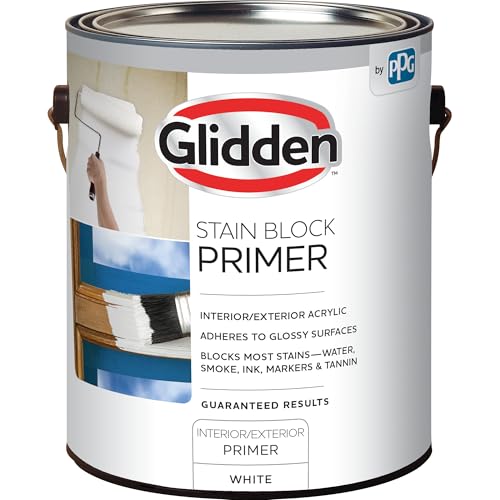
Glidden Interior/Exterior Stain Block Primer
What We Like
- Blocks water, smoke, ink, and tannin stains
- Adheres to glossy surfaces without sanding
- Acrylic formula cleans up with soap and water
- Ready for topcoat in just one hour
Trade-offs
- Not labeled specifically for MDF edge sealing
- Requires a topcoat for a glossy finish
A one-hour recoat time means you can apply a second coat or topcoat quickly, which is handy when you’re on a schedule. This acrylic primer blocks water, smoke, ink, markers, and tannins, common stains that can bleed through paint. That stain-blocking ability is the main reason to choose it. It also adheres to glossy surfaces, saving you the step of sanding before priming.
The most important thing to know is that this is a flat primer, so if you want a glossy final look, you’ll need to apply a topcoat. Compared to the Blackfriar MDF primer and undercoat, which comes in a 250ml can and weighs 0.6 pounds, the Glidden is a full gallon and focuses on stain blocking rather than being a dedicated MDF sealer. That makes it a good fit for projects where stain blocking is the priority, not a built-in finish.
Product photos
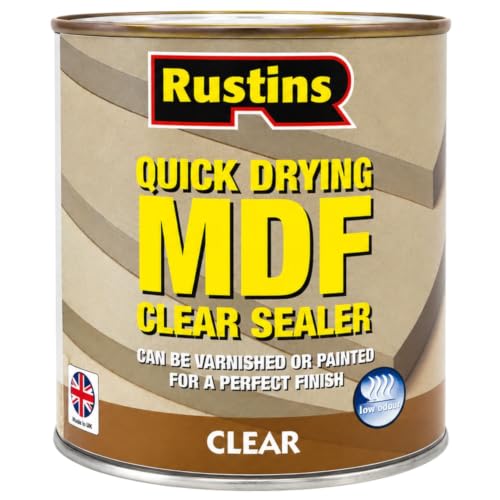
Rustins Quick Drying MDF Clear Sealer
What We Like
- Quick-drying formula saves time
- Clear finish preserves natural look
- Compact 250ml size for small jobs
Trade-offs
- 250ml covers limited surface area
- Clear only, no stain-blocking pigment
This Rustins sealer is a focused solution for small MDF projects where you want a fast-drying, clear base coat. Because it’s clear, it won’t alter the natural color of the board, making it ideal for projects where you plan to apply a transparent topcoat or leave the MDF’s surface visible.
The trade-off is that the 250ml bottle won’t stretch far on larger builds. If you need a pigmented primer for larger MDF surfaces, the Blackfriar MDF primer and undercoat is a white alternative in a similar compact size. For quick, small-scale clear sealing, though, this Rustins sealer gets the job done without fuss.
Product photos
Stone Coat Cabinet & Furniture Primer

What We Like
- Blocks wood tannins and old paint colors
- Bonds to wood, laminate, melamine, Thermofoil
- Self-leveling reduces brush marks
- Low odor for indoor use
Trade-offs
- Requires 1-2 coats for full coverage
- Dries in 1-3 hours per coat, not instant
A water-based acrylic primer that dries in 1-3 hours per coat and self-levels to minimize brush marks, this formula is built for adhesion on surfaces like wood, laminate, melamine, and Thermofoil. Its low odor and low VOC content keep the workshop comfortable during longer projects. The trade-off is that you’ll need to plan for at least two coats and a few hours of drying time between them, which slows down a quick one-day job.
The strongest feature of this primer is its ability to bond to laminate and Thermofoil, surfaces that many primers struggle with, so you can refinish kitchen cabinets or furniture without worrying about peeling. It also blocks wood tannins and old paint colors, giving your topcoat a true, vibrant finish. Drying takes one to three hours per coat, which is fast enough for a weekend project but slower than some dedicated MDF primers.
Product photos
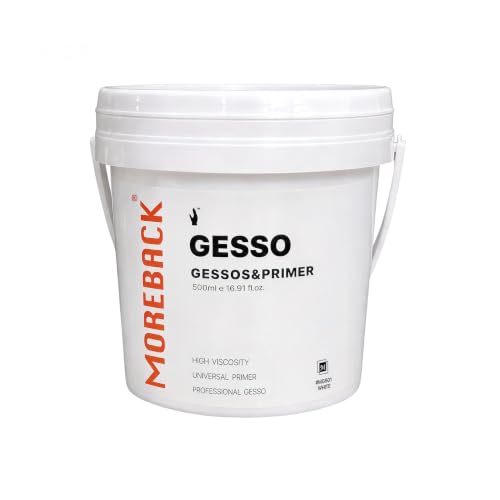
MOREBACK Professional White Gesso Primer
What We Like
- Works on MDF, canvas, wood, and plaster
- Dries to a flexible matte surface
- Can be sanded between coats
- Reduces absorbency for smoother application
Trade-offs
- Not labeled as quick-drying for MDF
- Requires sanding between coats for finest finish
This acrylic gesso bonds to MDF, canvas, wood, paper, and plaster, so you can prime a mixed-media project with one bottle. The flexible matte finish reduces surface absorbency, meaning paint glides on without soaking in unevenly. It suits artists who want a traditional painting ground that works across porous surfaces, especially if they plan to sand between coats for an ultra-smooth layer.
The trade-off is patience. Unlike the Blackfriar MDF primer, this gesso isn’t formulated to dry fast on MDF, so you’ll wait longer between coats. And if you skip sanding, the matte texture stays slightly toothy, which some painters love for grip but others find rough. Best for creative studio work where finish quality matters more than speed.
Product photos
How We Evaluated Primers For MDF Board
Our evaluation combines an analysis of manufacturer specifications, expert round-ups from painting and woodworking resources, and common feedback patterns from owners who have used these primers on MDF. We focused on the three criteria that matter most when sealing MDF. These are how well the formula controls fiber raise and blocks stains, how quickly the primer is ready for sanding or a topcoat, and the practical application volume for the job.
The first and most critical criterion was sealing performance. MDF is like a sponge, especially on cut edges. A primer must penetrate and seal the fibers to prevent them from swelling and roughening when paint is applied. We looked for formulas that either specifically mention MDF adhesion or demonstrate strong fiber-sealing properties through their viscosity and binder chemistry.
The second criterion was drying and recoat time. MDF projects often have multiple steps, prime, sand, prime again, paint. A primer that dries in one to two hours can cut a multi-day project down to a single afternoon. The third criterion was format and coverage. A 250ml can is perfect for a small shelf or art panel, but a large cabinet job needs a quart or gallon. We matched each primer’s volume to its best-use scenario, ensuring no pick is oversold for a job it cannot handle.
What To Look For In Primers For MDF Board
Choosing the right primer for MDF board means understanding how MDF behaves and what your finish needs to look like. A dedicated MDF primer or a high-quality stain-blocking primer is your best bet for a smooth, professional result.
The best MDF primer seals porous edges to prevent fiber raise, blocks tannin and water stains, and dries fast enough to keep your project moving. Look for a formula that matches your project size and your topcoat finish.
Sealing and Fiber Raise Control
The most common mistake with MDF is applying paint directly, which causes the wood fibers to swell and create a rough, fuzzy texture. A primer designed for MDF contains binders that penetrate the fibers and lock them down. Some primers require a light sanding between coats to knock down any raised grain. For the smoothest finish, look for a primer that explicitly states it controls fiber raise on MDF or engineered wood.
Stain Blocking and Adhesion
MDF contains resins and adhesives that can bleed through paint as yellow or brown tannin stains, especially on raw edges. A stain-blocking primer with a shellac or acrylic base seals these stains in. Good adhesion is also critical because MDF’s smooth surface can cause paint to peel. A primer that bonds chemically to the substrate, rather than just sitting on top, will give your topcoat a durable foundation.
Dry Time and Recoat Window
Time is often the limiting factor in a painting project. A quick-drying primer that is ready to sand or recoat in one hour lets you prime, sand, and apply a first topcoat all in one day. Slower-drying formulas may require overnight waits. Check the manufacturer’s recoat time carefully, and remember that humidity and temperature affect drying. For a fast turnaround, choose a primer with a one-hour recoat window.
- Check if the primer is labeled specifically for MDF or engineered wood.
- Look for a low-odor, water-based formula if you are working indoors.
- Confirm the coverage area per can to avoid running out mid-project.
- See if the primer requires sanding between coats for the best finish.
A good rule of thumb: if you can sand and recoat within two hours, you will finish your MDF project in half the time.
Primers For MDF Board Compared
The table below compares all six primers side by side, highlighting their key features, best uses, and important trade-offs to consider before you buy.
| Product | Volume | Type | Drying Time |
|---|---|---|---|
| Blackfriar Quick Drying MDF Primer and Undercoat | 250ml | Primer/Undercoat | N/A |
| Stone Coat Countertops Epoxy Undercoat Black | 1 Quart (32 FL OZ) | Epoxy Undercoat | N/A |
| Glidden Interior/Exterior Stain Block Primer | 1 Gallon | Acrylic primer | 1 hour |
| Rustins Quick Drying MDF Clear Sealer | 250ml (8.5 fl. oz.) | Clear sealer | Quick-drying |
| Stone Coat Cabinet & Furniture Primer | 1 Quart | Water-based acrylic | 1-3 hours per coat |
| MOREBACK Professional White Gesso Primer | N/A | Acrylic | N/A |
Frequently Asked Questions
Do I need to sand MDF before priming?
Yes, light sanding with fine-grit sandpaper helps knock down any rough fibers and gives the primer a better surface to grip. Always wipe away the dust with a tack cloth before applying primer.
Can I use regular wall primer on MDF?
Standard wall primer is not formulated to seal MDF’s porous edges and may cause fiber raise or poor adhesion. A dedicated MDF primer or a high-quality stain-blocking primer is a much better choice for a smooth, durable finish.
How many coats of primer should I apply to MDF?
Two thin coats are generally recommended for MDF. The first coat seals the surface and raises any remaining fibers, which you sand off lightly. The second coat provides a uniform base for your topcoat.
What is the best primer for MDF furniture?
The Stone Coat Cabinet & Furniture Primer is an excellent choice for furniture because it bonds well to laminate, melamine, and Thermofoil, blocks wood tannins, and self-levels to reduce brush marks.
Can I use gesso on MDF for painting?
Yes, gesso works well on MDF as an art surface primer. The MOREBACK Professional White Gesso Primer is a good option, as it reduces absorbency, dries to a flexible matte finish, and can be sanded for a smooth painting surface.
The Bottom Line
For most MDF projects, the Blackfriar Quick Drying MDF Primer and Undercoat is the best overall pick. Its two-in-one formula saves a step, dries quickly, and is perfectly sized for the small to medium jobs where MDF is most common. If you are building furniture or refinishing cabinets, the Stone Coat Cabinet & Furniture Primer offers superior adhesion to tricky surfaces like laminate and Thermofoil.
For artists prepping MDF panels for painting, the MOREBACK Professional White Gesso Primer is the clear winner, providing a flexible, sandable surface that works alongside canvas and wood. Budget-conscious DIYers blocking tough stains will find the Glidden Interior/Exterior Stain Block Primer a reliable, fast-drying option.
The single most important factor is matching the primer to your project’s demands. A quick-drying MDF primer saves time on small builds, while a stain-blocking primer prevents costly rework on furniture. Choose based on your surface, your schedule, and your finish.
