
10 Best Fine Art Paper For Photography in 2026
This post contains affiliate links. As an Amazon Associate, we earn from qualifying purchases.
For photographers who want their prints to last and look their best, the Epson UltraSmooth Fine Art Paper is the best overall choice, thanks to its thick 100% cotton construction and archival matte surface. The Hahnemühle Platinum Rag offers the best smooth texture, while the Canson Infinity Platine Fibre Rag delivers the truest white tone for color-accurate work.
The challenge with fine art paper is balancing texture, weight, and archival stability with your specific printer and image style. A heavy, cotton rag paper gives prints a museum-quality feel but requires a printer that can handle thicker media.
This guide is research-based, drawing on manufacturer specifications, expert round-ups, and patterns in owner feedback. We cover ten distinct papers to help you match the right surface to your work.
Top 10 Fine Art Papers For Photography in the Market
Certain content that appears on this site comes from Amazon. This content is provided "as is" and is subject to change or removal at any time.
The Best Fine Art Papers For Photography, Reviewed
Epson UltraSmooth Fine Art Paper

What We Like
- 100% cotton hot press construction
- 325 gsm weight for sturdy handling
- 18 mil thickness for archival feel
- Matte surface reduces glare
Trade-offs
- Large 13×19 sheets need a wide-format printer
- Matte finish won't suit glossy image preferences
A 325 gsm weight and 18 mil thickness give this paper a substantial, rigid feel that holds up to handling and framing without curling. The 100% cotton hot press surface delivers a smooth matte finish that minimizes glare, making it suitable for photographers who want deep blacks and fine detail in their prints.
The trade-off is that these 13×19 inch sheets require a printer capable of handling larger media, so it won’t work for standard desktop models. Compared to the Hahnemühle Platinum Rag, which comes in a smaller 8×10 size, the Epson UltraSmooth needs a wide-format printer. If you have the right printer and prefer a matte, archival look, this paper fits that need.
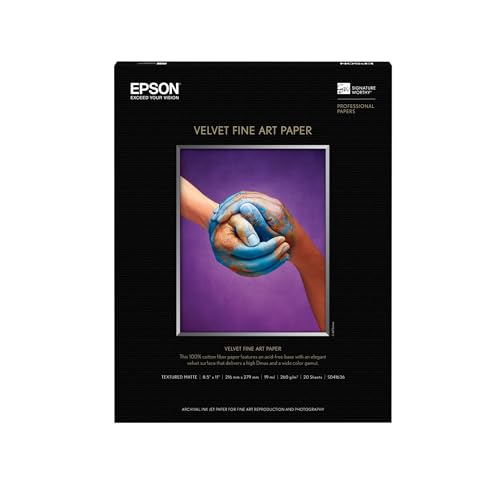
Epson Velvet Fine Art Paper
What We Like
- Museum-quality acid-free base
- 100% cotton rag for archivability
- Bright white surface for color reproduction
- Enhanced 1440 dpi printing support
Trade-offs
- Only 20 sheets per pack
- 8.5×11 inch size limits large prints
The acid-free base and 100% cotton rag construction are what make this paper archival, meaning it resists yellowing over time, exactly what you want for prints that are meant to last. The bright white surface helps colors look clean and vivid, and the enhanced 1440 dpi support keeps fine details sharp. This is a paper for photographers who treat their prints as finished artworks, not just test proofs.
If you need more sheets or bigger prints from the start, the Epson UltraSmooth Fine Art Paper gives you 25 sheets at 13×19 inches for broader output.
Product photos
Hahnemühle Platinum Rag Fine Art Paper

What We Like
- 100% cotton for archival quality
- Smooth surface with subtle texture
- Acid and alkaline buffering free
- Optimized sizing for easy handling
Trade-offs
- Smaller 8×10 inch size limits print size options
At 300 gsm with a smooth, subtle textured surface, this paper gives you the refined feel of a traditional darkroom fiber print without the chemical hassle. The 100% cotton base and acid-free construction mean your prints stay true for decades, making it a natural fit for photographers who value archival permanence and a soft, elegant surface that holds detail without glare.
At 300 gsm, it’s lighter than the Epson UltraSmooth’s 325 gsm, so it has a slightly less substantial hand feel under the fingertips. If you prefer a heavier, more rigid sheet, that Epson option delivers extra heft. But for smooth, nuanced black-and-white or color work where you want the paper to disappear into the image, this Hahnemühle sheet is hard to beat.
This paper is best suited for fine-art photographers who value a smooth, archival surface with a subtle texture. It is not the right choice for those who want a heavy, ultra-rigid sheet or a high-gloss finish, as its matte, 300 gsm construction prioritizes a soft, natural feel over extreme stiffness or shine.
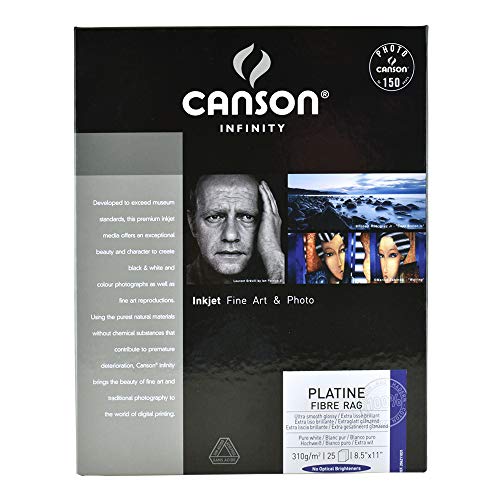
Canson Infinity Platine Fibre Rag Fine Art Paper
What We Like
- True pure white tone
- No optical brighteners for archival stability
- Ultra smooth matte surface
- Microporous coating for sharp detail
Trade-offs
- 8.5×11 inch size limits large format prints
- Matte finish does not suit glossy photo preferences
The paper has a 310 gsm weight and a microporous coating, which gives it a dense feel. Its true pure white tone comes without optical brighteners, so highlights stay natural and prints remain archivally sound over time. This makes it a strong match for photographers who want clean, neutral whites in black-and-white or color work, especially when gallery longevity matters.
The 8.5×11 inch sheet size works for smaller prints but limits you if you regularly print larger. Compared to the Epson UltraSmooth Fine Art Paper, which offers a 13×19 inch option, the Canson is better suited for smaller-format work. Its ultra smooth matte finish differs from gloss or textured papers.
Hahnemühle Photo Rag Ultra Smooth Paper

What We Like
- 100% cotton paper base
- Extremely large color gamut
- Smooth surface texture
- Slightly higher white point
Trade-offs
- 8.5×11 inch size limits large prints
- Heavier than some 8.5×11 fine art papers at 1.5 pounds
A 100% cotton paper with an extremely large color gamut means your photo prints will capture vivid, nuanced tones without sacrificing detail. The smooth surface texture and slightly higher white point give images a crisp, bright base that makes colors pop. This paper suits photographers who want rich, accurate color reproduction in a fine art print, especially for portraits or landscapes where tonal range matters most.
Pacific Inkjet Fine Art Natural Matte Paper

What We Like
- 100% cotton archival base
- OBA-free natural white tone
- Double-sided for versatile printing
- Works with Canon, Epson, HP
Trade-offs
- 205 gsm is lighter than many fine art papers
- 12 mil thickness feels less substantial than premium rivals
- 5×7 inch size limits large-format work
This 100% cotton paper is OBA-free, so it won’t develop a blueish cast over time like some brightened papers, a real plus for archival prints. The double-sided coating lets you print on both sides, handy for cards or portfolios, and it works with Canon, Epson, and HP inkjet printers. At 205 gsm and 12 mil, it’s lighter than many fine art papers. That means it’s less rigid and may not handle heavy ink saturation as well as thicker sheets, but it keeps costs down for small-format work.
At 205 gsm and 12 mil, this paper feels lighter and less rigid than a sheet like the Epson UltraSmooth (325 gsm, 18 mil). So it may not hold up as well under heavy ink saturation or for large prints.
Product photos
Canon Premium Fine Art Rough Paper

What We Like
- Rough texture for tactile prints
- Premium fine art paper stock
- Canon brand quality assurance
- Standard 8.5×11 sheet size
Trade-offs
- Only one size option available
- Rough surface limits fine detail work
This 25-sheet pack of Canon Premium Fine Art Rough Paper weighs 1.6 pounds, giving it a substantial feel that suits fine art printing. The rough surface is designed for photographic prints where texture is part of the aesthetic, making it a natural choice for artists and photographers who want a matte, non-glossy finish. The 8.5×11 inch size fits standard printers and portfolios, so it works well for smaller prints or proofing.
Because the surface is rough, it may not be the best pick for images that depend on ultra-fine detail or razor-sharp edges. If you need maximum crispness, a smoother fine art paper like the Epson UltraSmooth Fine Art Paper (available in 13×19 inch sheets) would preserve that sharpness better. But if you want a paper that adds a tactile, watercolor-like grain to your prints, this Canon paper delivers that texture, though you are limited to the 8.5×11 inch size for this specific product.
Ilford Galerie Prestige Fine Art Smooth

What We Like
- Warm tone for rich prints
- Smooth matte surface
- Crystal-clear (as stated)
Trade-offs
- 200 gsm is lighter than many fine art papers
- 200 gsm is lighter than 325 gsm Epson UltraSmooth Fine Art Paper
A warm tone sets this paper apart from cooler white options, giving photographs a subtle, natural warmth that flatters skin tones and landscapes alike. The smooth matte surface keeps reflections at bay, and the paper is described as crystal-clear with bright colours, making it a strong match for portrait and fine art photographers who want an elegant, non-glare finish. Its lightweight 200 gsm construction keeps it flexible and easy to handle, though it lacks the heft of heavier fine art stocks.
At 200 gsm, this paper is lighter than the 325 gsm Epson UltraSmooth Fine Art Paper listed in the guide, so it won’t feel as substantial in hand. That makes it less suited for applications where a heavier stock is preferred, but for photographers who value a warm, smooth, glare-free surface, it delivers that character at a more manageable thickness.
Strathmore 59-701 Textured Inkjet Paper

What We Like
- Lightly textured surface for watercolor feel
- 80lb weight handles ink without bleed
- 25 sheets per pack for multiple prints
Trade-offs
- 8.5×11 size limits larger print formats
- 80lb paper is lighter than fine art rag papers
The lightly textured surface is the defining feature here, as it is designed to replicate the look of pastel or watercolor artwork. At 80lb, the paper provides a sturdy feel for inkjet printing, and the 25-sheet pack offers enough material for multiple prints. This makes it a natural fit for anyone who wants their prints to have a textured, artistic finish, especially when working within the 8.5×11 format.
Size and weight are the main considerations here. At 8.5×11 inches, you cannot print larger portfolio pieces or gallery mats without cropping or tiling. The paper weighs just 0.4 pounds, making it easy to carry in a messenger bag or store in a desk drawer. Unlike heavier fine art sheets like the Epson UltraSmooth Fine Art Paper at 4.4 pounds, this pack stays light and compact. Reviewers note the 80lb weight feels substantial enough for handling but keeps shipping costs low. The lightly textured surface works well for replicating pastel or watercolor artwork, giving prints a tactile, handcrafted look without the bulk of thicker media.
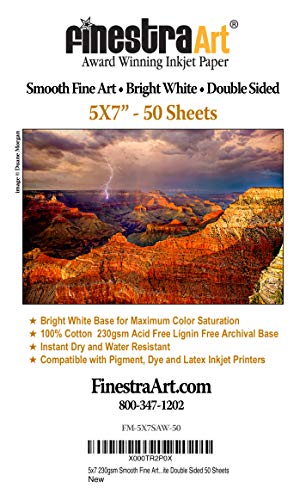
Finestra Art Smooth Fine Art Archive
What We Like
- 100% cotton, acid and lignin free
- Double-sided for efficient printing
- Works with all major inkjet brands
Trade-offs
- Only 50 sheets per pack
The compact size won’t suit everyone. If you regularly print larger formats, you’ll need a bigger sheet. And for photographers who prefer a natural white, the bright surface here may feel too cool. Still, for small-format work where punchy color and archival longevity matter, this paper delivers real value.
Product photos
How We Evaluated Fine Art Papers For Photography
We evaluated these papers by examining their core specifications, weight in gsm, thickness in mil, cotton content, and surface finish, as reported by manufacturers. Archival qualities like acid-free and lignin-free construction were a primary filter, as these determine how long a print will last without yellowing or degrading.
The three criteria that mattered most were paper weight and thickness for handling and durability, surface texture for image reproduction, and color characteristics (white point, presence of optical brighteners) for accurate prints. A paper that feels flimsy or curls under ink is not suitable for gallery display.
A research-led evaluation cannot replicate the tactile experience of holding a print or the subtle color shifts different papers produce. We recommend ordering sample packs from your preferred brands before committing to a full box.
What To Look For In Fine Art Papers For Photography
Choosing the right fine art paper means matching the paper’s physical properties to your printer’s capabilities and your artistic intent. Here are the key factors to consider.
Prioritize 100% cotton, acid-free papers for archival longevity. Match paper weight (gsm) and thickness (mil) to your printer’s media specifications. Choose a surface finish, matte, smooth, or textured, that complements your image subject.
Paper Weight and Thickness
Paper weight, measured in grams per square meter (gsm), affects how the paper handles ink and feels in hand. Heavier papers (300 gsm and above) resist curling and feel substantial, making them ideal for framed or matted prints. Thinner papers (200 gsm and below) are lighter and may be better for double-sided printing or portfolios but can buckle under heavy ink coverage.
Thickness, measured in mil (thousandths of an inch), is another factor. A thicker paper (18 mil or more) provides a rigid, board-like feel that many photographers prefer for gallery presentation. Your printer’s manual will specify a maximum media thickness; exceeding it can cause jams or poor print quality.
Surface Finish and Texture
The surface finish directly impacts how your image is perceived. A smooth matte surface reproduces fine detail and sharpness well, making it suitable for landscape and architectural photography. A textured or rough surface adds a tactile, painterly quality that can soften an image, ideal for portraits or artistic work.
A glossy or semi-gloss surface offers high contrast and deep blacks but is more prone to fingerprints and glare. Most fine art papers for photography are matte, as this reduces reflections under gallery lighting and is preferred by collectors and curators.
Color Characteristics and Archival Stability
A paper’s white point, whether it is a bright white, natural white, or warm tone, affects color reproduction. Papers with optical brightening agents (OBAs) appear whiter under UV light but can shift color over time as the brighteners degrade. OBA-free papers offer more stable, predictable color over the long term.
- Check your printer’s paper feed path for compatibility with heavy or thick media.
- Look for 100% cotton or alpha-cellulose content for true archival quality.
- Evaluate the paper’s opacity if you plan to print on both sides.
- Read owner feedback on how the paper handles black-and-white vs. Color images.
For the most reliable results, always download the manufacturer’s ICC color profile for your specific printer and paper combination.
Fine Art Papers For Photography Compared
The table below compares the ten fine art papers side-by-side, highlighting their key specifications and best-use scenarios.
| Product | Weight | Surface | Sheet Size |
|---|---|---|---|
| Epson UltraSmooth Fine Art Paper | 325 gsm | Matte | 13 x 19 inches |
| Epson Velvet Fine Art Paper | N/A | Bright white, matte | 8.5×11 Inches |
| Hahnemühle Platinum Rag Fine Art Paper | 300 gsm | Smooth, subtle textured | 8 x 10" |
| Canson Infinity Platine Fibre Rag Fine Art Paper | 310 gsm | Ultra smooth bright white matte | 8.5 x 11 Inch |
| Hahnemühle Photo Rag Ultra Smooth Paper | N/A | Smooth surface texture | 8.5 x 11 In. |
| Pacific Inkjet Fine Art Natural Matte Paper | 205 gsm | Natural matte, OBA-free | 5×7 |
| Canon Premium Fine Art Rough Paper | N/A | Rough | 8.5' X 11' |
| Ilford Galerie Prestige Fine Art Smooth | 200 gsm | Smooth matte | A4 |
| Strathmore 59-701 Textured Inkjet Paper | 80 lb | Lightly textured | 8.5"x11" |
| Finestra Art Smooth Fine Art Archive | N/A | Bright white, double-sided | 5 x 7 inches |
Frequently Asked Questions
What is the best fine art paper for photography prints?
The Epson UltraSmooth Fine Art Paper is the best overall choice for photographers who want a thick, archival matte paper. Its 100% cotton hot press construction and 325 gsm weight provide a sturdy, gallery-quality feel that works well with wide-format printers.
What weight of paper is best for fine art photography?
A paper weight of 300 gsm or higher is generally preferred for fine art photography prints. Heavier papers resist curling, handle heavy ink coverage well, and provide a substantial, professional feel when framed or matted.
Should I choose a matte or glossy fine art paper?
Matte fine art paper is the standard for gallery and museum prints because it reduces glare and allows viewers to see the full tonal range without reflections. Glossy paper can produce higher contrast and deeper blacks but is more susceptible to fingerprints and lighting conditions.
How do I know if my printer can handle fine art paper?
Check your printer’s manual for the maximum media weight and thickness it supports. Many consumer printers can handle papers up to 300 gsm, while heavier papers (325 gsm and above) typically require a printer with a straight-through paper path or a wide-format model.
What is the difference between cotton rag and alpha-cellulose paper?
Cotton rag paper is made from 100% cotton fibers, offering superior archival stability, a soft feel, and excellent ink absorption. Alpha-cellulose paper is made from wood pulp but is purified to remove lignin and acids, making it a more affordable archival option that still meets museum standards.
The Bottom Line
The Epson UltraSmooth Fine Art Paper earns our top recommendation for photographers who demand a thick, archival matte paper that feels substantial in hand and produces gallery-quality prints. Its 325 gsm weight and 100% cotton construction set the standard for this category.
If your budget is tighter or you work with a standard-size printer, the Canson Infinity Platine Fibre Rag offers a superb true white tone and excellent archival properties in an 8.5×11 inch sheet. For those who prioritize a smooth, tactile surface, the Hahnemühle Platinum Rag is a worthy choice.
The single most important factor in choosing a fine art paper is matching its physical properties, weight, thickness, and surface, to your printer and your image’s needs. Start with a paper that fits your hardware, then experiment with surfaces to find the one that makes your photographs sing.
