
10 Best Primers For Aluminum Boat in 2026
This post contains affiliate links. As an Amazon Associate, we earn from qualifying purchases.
For aluminum boat owners, the TotalBoat Aluminum Boat Barrier Coat Epoxy Primer stands out as the best overall pick, delivering a high-build epoxy barrier that prevents corrosion both above and below the waterline. For those needing copper-free antifouling protection, the TotalBoat AlumiPaint AF is a top choice, while the Interlux Primocon Aerosol Primer is best for protecting outdrives and outboards from galvanic corrosion.
The real challenge with aluminum boats is preventing galvanic corrosion. Unlike fiberglass, aluminum reacts with many common marine paints and copper-based antifoulants, requiring a dedicated primer that bonds securely and seals the metal. Choosing the wrong primer can lead to paint failure and costly hull damage.
This guide is based on a thorough review of manufacturer specifications, expert recommendations, and patterns found in owner feedback. We evaluated primers specifically for their adhesion to aluminum, corrosion-fighting properties, ease of application, and compatibility with common marine topcoats, helping you find the right solution for your project.
Top 10 Primers For Aluminum Boats in the Market
Certain content that appears on this site comes from Amazon. This content is provided "as is" and is subject to change or removal at any time.
The Best Primers For Aluminum Boats, Reviewed
TotalBoat Aluminum Boat Barrier Coat Epoxy Primer

What We Like
- High-build epoxy for corrosion prevention
- Works above and below waterline
- Fast drying with no sanding between coats
- Compatible with marine paints and fairing compound
Trade-offs
- Two-component system requires mixing before use
- Requires TotalBoat Epoxy Primer Thinner 200
A two-component epoxy primer that covers 225 square feet per gallon at 7 mils wet means you can coat a typical pontoon or small aluminum hull in one kit without running short. This barrier coat is designed specifically to prevent corrosion on aluminum and other underwater metals, and it works both above and below the waterline. That versatility makes it the best overall choice for boat owners who want a single primer that handles the whole job, from topside prep to bottom painting, without switching products.
This is a two-component epoxy primer that you have to mix yourself, but the payoff is excellent corrosion prevention on aluminum hulls and pontoon boats. Coverage is roughly 225 square feet per gallon at 7 mils wet, so a quart kit will cover a smaller area. The manufacturer recommends TotalBoat Epoxy Primer Thinner 200 for thinning.
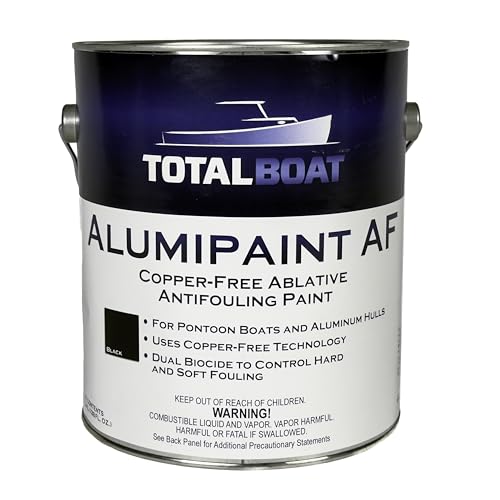
TotalBoat AlumiPaint AF Antifouling Bottom Paint
What We Like
- Copper-free formula safe for aluminum
- Ablative action reduces paint buildup
- No maximum dry time for flexible launch
- Compatible with most existing bottom paints
Trade-offs
- Requires separate barrier coat on bare aluminum
- Only available in Black and Blue
- Needs thin application to avoid waste
A copper-free antifouling paint that uses an organic biocide paired with zinc means this paint protects aluminum hulls without the galvanic corrosion risk that copper-based paints cause. It wears away slowly as the boat moves, continuously exposing fresh biocide so you get full-season protection against barnacles, slime, and algae. For aluminum boat owners who want antifouling performance without damaging their hull, this is the clear choice.
The trade-off is that bare aluminum needs a separate epoxy barrier coat underneath. TotalBoat makes one specifically for that, so you are looking at a two-step process if you are starting from scratch. If you already have a barrier coat or are repainting over an existing bottom paint, the flexible launch timing and ablative action are practical benefits to consider.
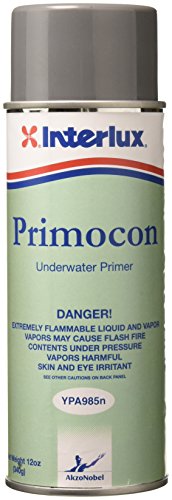
Interlux Primocon Aerosol Primer
What We Like
- Non-bleeding formula prevents stains
- Reduces galvanic corrosion on underwater metal
- Designed for outdrives and outboards
- Works on stainless steel and bronze too
Trade-offs
- Aerosol can limits coverage for large hulls
- Only 16 oz. per can means multiple cans needed
This aerosol primer is formulated to reduce galvanic corrosion on underwater metal surfaces, so it directly addresses the biggest threat to aluminum outdrives and outboards: electrolysis between dissimilar metals. The non-bleeding formula means it won’t stain your topcoat, and it also works on stainless steel props and bronze shafts, making it a one-can solution for the whole drive system. If you’re maintaining an outboard or sterndrive and want a primer that targets the specific corrosion risks below the waterline, this is the one to grab.
Interlux Primocon Aerosol Primer is a non-bleeding, anti-corrosive primer that provides a barrier on underwater metal surfaces, reducing galvanic corrosion. It works on aluminum outdrives and outboards, stainless steel, bronze props, and shafts. The trade-off is coverage: at 16 ounces per can, you’ll need several cans to coat a full outdrive, and the aerosol format isn’t practical for large hull panels. Compared to TotalBoat’s Aluminum Boat Barrier Coat Epoxy Primer, which comes in a quart and is meant for brush or roller application over bigger areas, this can is far more convenient for tight engine bays and quick touch-ups but less efficient for broad surfaces. Choose it when precision and portability matter more than volume.
Product photos
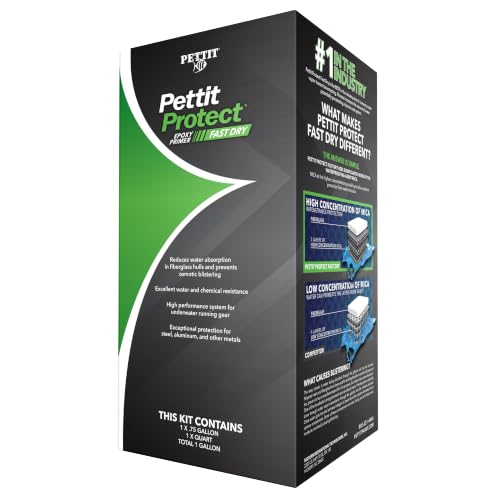
Pettit Protect Fast Dry High Build Epoxy Primer
What We Like
- Fast-drying two-component formula
- High-build barrier coat
- Prevents osmotic blistering on fiberglass
Trade-offs
- Two-component system requires mixing before use
- Designed for below-waterline only
A fast-drying two-component epoxy primer that builds a thick barrier coat means you can protect a hull and move on to painting sooner than with slower-curing alternatives. Pettit’s Protect Fast Dry High Build Epoxy Primer is engineered to resist corrosion in both freshwater and saltwater, and its heavy-duty epoxy technology also blocks water intrusion and chemical damage. This makes it a practical choice for boat owners who want a durable below-waterline foundation.
The most decisive fact about this primer is that it’s a two-component epoxy that must be mixed before application, so you’ll need a few extra minutes of prep time compared to a single-part primer. It’s formulated specifically for below-waterline use, meaning it’s engineered to protect fiberglass, metal, and underwater running gear from corrosion and osmotic blistering. For above-waterline aluminum surfaces, a product like TotalBoat Aluminum Boat Barrier Coat Epoxy Primer is rated for use both above and below the waterline, so that would be the better choice there.
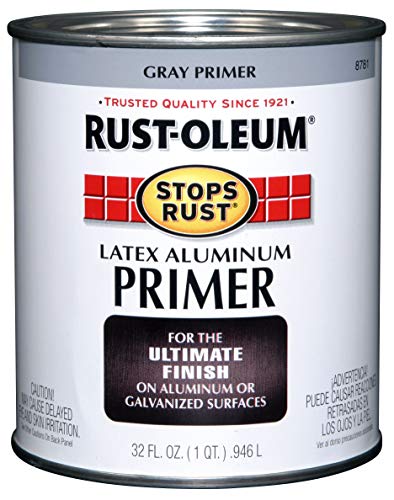
Rust-Oleum Stops Rust Flat Aluminum Primer
What We Like
- Formulated for aluminum and galvanized metal
- Weather and corrosion resistant
- Dries to touch in 1-2 hours
- Accepts a wide variety of topcoats
Trade-offs
- Not designed for below-waterline use
- Brush or roller only, no spray option
A water-based acrylic formula that bonds tightly to aluminum and galvanized surfaces, this primer dries to the touch in just one to two hours and covers up to 90 square feet per quart. That quick turnaround makes it a practical choice for weekend boat projects where you want to move from priming to painting without waiting days. The flat gray finish also provides a neutral base that accepts a wide variety of topcoats, which is handy if you are matching an existing hull color or plan to switch finishes later. For an affordable primer that handles exterior and interior surfaces with solid rust prevention, this one fits the bill for light-duty aluminum boat work.
Rust-Oleum Stops Rust Flat Aluminum Primer is a water-based acrylic formula that provides a durable protective coating with excellent rust prevention. It dries to the touch in one to two hours and covers up to 55 to 90 square feet. The trade-off is that this primer is not intended for below-waterline use where constant immersion demands a marine-grade epoxy. If your boat spends most of its time on a trailer or in dry storage and you are touching up topsides or pontoons, this primer delivers dependable corrosion resistance at a budget-friendly cost. For boats that live in the water full-time, the TotalBoat Aluminum Boat Barrier Coat Epoxy Primer offers the heavy-duty epoxy protection needed for submerged surfaces.
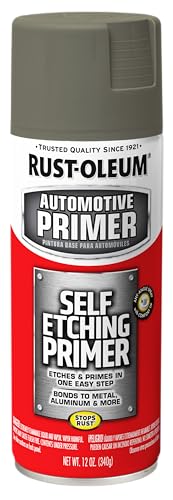
Rust-Oleum Automotive Self Etching Primer Spray
What We Like
- Self-etching and priming in one step
- Dries to touch in 10 minutes
- Topcoatable in just 30 minutes
- Any-angle spray for hard-to-reach spots
Trade-offs
- Only 12 sq ft coverage per can
- Oil-based formula requires mineral spirits for cleanup
The 30-minute recoat time means you can apply a topcoat the same day, making this primer efficient for quick projects. This self-etching spray provides a rust-resistant base coat for bare metal, aluminum, and fiberglass surfaces, with maximum adhesion and a flat finish that promotes smooth topcoating. Its any-angle spray lets you reach under gunwales and inside tight corners without flipping the can. For a weekend project on a small boat or vehicle, it delivers reliable adhesion with minimal effort.
Rust-Oleum Automotive Self Etching Primer Spray is a self-etching primer suitable for bare metal, aluminum, and fiberglass surfaces. It covers up to 12 square feet, dries to the touch in 10 minutes, and can be topcoated in 30 minutes. The trade-off is coverage: at up to 12 sq ft per can, you may need multiple cans for larger surfaces, which adds cost compared to a quart of epoxy primer like TotalBoat Aluminum Boat Barrier Coat. The flat finish also means you will want a topcoat for appearance and added protection.
Dupli-Color Multi-Purpose Self-Etching Primer

What We Like
- Excellent etching on bare surfaces
- Maximum adhesion and corrosion resistance
- Works on bare metal, aluminum, fiberglass
- Perfect for spot repairs
Trade-offs
- 12 oz can covers small areas only
- Aerosol limits control on large repairs
A 12-ounce self-etching aerosol that bonds directly to bare aluminum, this primer is built for quick, targeted fixes rather than whole-boat jobs. It offers excellent etching ability on bare surfaces and maximum adhesion and corrosion resistance, so you can treat a scratch or a patch of bare metal. It is ideal for use on bare metal, aluminum, and fiberglass. For anyone needing to touch up nicks, scrapes, or bare spots, this is a practical option.
A 12-ounce can covers a few small repairs, not a full hull, so it’s best for spot jobs rather than an entire topside or bottom. For larger areas, a quart of TotalBoat Barrier Coat is a better fit. But for sealing a dozen small repairs or a patch, this Dupli-Color can does exactly what it says without waste. Keep a can in the toolbox, and you’ll have a reliable primer for bare spots.
Product photos
Custom Shop Self Etching Primer Spray

What We Like
- Anti-corrosion barrier on aluminum
- No-sand application saves time
- Bonds to galvanized steel and aluminum
- Compatible with major truck bed liners
Trade-offs
- Aerosol limits control on vertical boat surfaces
- No-sand claim depends on perfect application conditions
A self-etching primer that uses phosphoric acid to etch and prime bare metal in one step means you get corrosion resistance without sanding first. That no-sand feature is a real time-saver when prepping metal surfaces, and the high-atomization nozzle lays down a wide, consistent fan pattern for even coverage. This spray works for aluminum, steel, and stainless steel surfaces where you need durable adhesion fast.
Custom Shop Self Etching Primer Spray creates a powerful barrier against rust on steel and corrosion on aluminum. Its fast-drying formula allows you to prime and protect bare metal surfaces in one efficient step. At 12.9 ounces, this can is better suited for small jobs or touch-ups than for covering an entire boat hull, so you’ll want to grab several cans if you’re tackling a large project. The fast-drying formula means you can prime and protect bare metal in one step, which saves time compared to using a quart of TotalBoat Aluminum Boat Barrier Coat Epoxy Primer that requires more setup and cleanup. It also works with Raptor liner and other brands, making it a flexible prep coat for both automotive and marine metal surfaces.
Product photos
Eastwood Self Etch Primer Gray

What We Like
- Etches and primes bare metal in one step
- Adheres to aluminum, steel, stainless, chrome
- Withstands up to 170°F
- No catalyst needed
Trade-offs
- Single-stage limits custom mixing options
- Not for use below the waterline on boats
This one-step etching primer bonds directly to bare aluminum, steel, stainless, and chrome without needing a separate catalyst. That simplicity makes it ideal for prepping bare metal before painting, just spray and let the lacquer-based formula bite into the surface for adhesion. It handles heat up to 170°F, so it won’t soften under a hot sun or engine compartment, and its 120-square-foot-per-gallon coverage stretches further than many aerosol alternatives. For starting from bare metal and wanting a foundation for non-epoxy topcoats, this primer delivers adhesion and heat resistance without extra steps or mixing.
Because it’s a single-stage lacquer, you won’t be able to adjust the mix yourself, and some two-part marine topcoats may not bond as well as they would over a dedicated epoxy primer. For dry-sanded bare metal prep on decks, gunwales, or superstructures, though, this Eastwood primer delivers the adhesion and heat resistance you need without extra steps or mixing.
SEM Self Etching Primer Green

What We Like
- Adheres to steel and aluminum
- Self-etching for one-step application
- Quart size covers multiple projects
Trade-offs
- Not formulated for marine environments
- Requires a topcoat for full protection
SEM Self Etching Primer bonds directly to steel and aluminum with its self-etching formula, which means you skip a separate acid-wash step. That saves time when prepping a bare aluminum hull or a steel trailer for paint. It suits DIYers who want a reliable foundation coat on metal surfaces before applying a topcoat, especially for small repairs or custom paint jobs where a clean etch is critical for adhesion.
This primer etches and primes steel or aluminum in one step, so you can skip a separate etching stage. The quart size gives enough for several small projects, though it is not formulated for marine environments like the TotalBoat Aluminum Boat Barrier Coat Epoxy Primer is. For a quick etch-and-prime step on steel or aluminum, this quart delivers solid grip without the extra marine price tag.
How We Evaluated Primers For Aluminum Boats
To identify the best primers for aluminum boats, we focused on technical specifications from manufacturers and insights from marine paint experts. We analyzed product data sheets, application guides, and compatibility charts to understand how each primer performs on bare aluminum, both above and below the waterline. The most critical factors were corrosion prevention, adhesion strength, and the ability to work with a variety of topcoats.
Our evaluation centered on four key criteria. First, we looked for primers specifically formulated to prevent galvanic corrosion on aluminum, as this is the primary threat to metal hulls. Second, we considered ease of use, including drying times, mixing requirements, and application methods like spray, brush, or roller.
Third, we assessed the primer’s role in a complete paint system, noting whether it works as a barrier coat, an etching primer, or a direct base for antifouling paint. Finally, we factored in coverage and value, comparing product sizes and the area they can treat.
Because this is a research-led evaluation, our recommendations are drawn from available technical data and the reported experiences of boat owners in forums and product reviews. We prioritize primers that have a clear, documented track record for protecting aluminum in marine environments.
What To Look For In Primers For Aluminum Boats
Choosing the right primer for your aluminum boat means understanding how the metal reacts to different coatings. The most important factor is preventing galvanic corrosion, which occurs when dissimilar metals meet in an electrolyte like saltwater. A dedicated marine primer creates a protective barrier that stops this reaction and ensures your topcoat adheres properly.
Look for a primer that is explicitly labeled for aluminum or metal boats. It should either be a self-etching formula that bites into the metal or a high-build epoxy that seals the surface. Avoid copper-based antifouling paints unless the primer is specifically designed to block copper contact.
Corrosion Protection & Compatibility
The primary job of a primer on an aluminum boat is to stop galvanic corrosion. This means the primer must be compatible with both the aluminum hull and the topcoat you plan to use. Many standard primers contain copper, which causes rapid pitting on aluminum.
Always choose a primer that is explicitly labeled as safe for aluminum, and if you plan to use an antifouling paint, select a copper-free formula like the TotalBoat AlumiPaint AF. For underwater metals like outdrives, look for a non-bleeding primer such as the Interlux Primocon to prevent staining.
Application Method & Drying Time
Primers come in aerosol cans, quarts for brushing or rolling, and two-component epoxy kits. Aerosols like the Rust-Oleum Self Etching Primer are perfect for small touch-ups and hard-to-reach spots, but they offer limited coverage for a full hull. For large areas, a brushable or rollable primer like the Rust-Oleum Stops Rust Flat Aluminum Primer is more economical. Two-component epoxies like the TotalBoat Barrier Coat require mixing but provide a much tougher, high-build finish. Consider your project size and your comfort with mixing before choosing.
Surface Preparation & Etching
Aluminum is a non-porous, slick metal that requires mechanical or chemical etching for paint to stick. Self-etching primers, such as the Dupli-Color Self-Etching Primer, contain acids that microscopically roughen the surface while applying a primer coat, saving a step. Other primers require you to sand the aluminum with coarse sandpaper first. If you are working on bare, polished aluminum, a self-etching primer is almost always the better choice for adhesion.
- Check the label to confirm the primer is “self-etching” or requires a separate etching step.
- For below-waterline use, ensure the primer is rated for continuous submersion.
- Verify the primer’s compatibility with your chosen topcoat (e.g., two-part polyurethane, one-part marine enamel, or antifouling paint).
- Consider the temperature range during application; some primers require specific conditions to cure properly.
A good rule of thumb: if you’re painting a bare aluminum hull, invest in a high-build epoxy barrier coat. For touch-ups or small repairs, a self-etching aerosol is the most convenient choice.
Primers For Aluminum Boats Compared
The table below compares the key features of our top-rated primers for aluminum boats, helping you decide which one fits your specific project needs.
| Product | Type | Coverage | Drying |
|---|---|---|---|
| TotalBoat Aluminum Boat Barrier Coat Epoxy Primer | Two-component epoxy primer | 225 sq ft/gallon @ 7 mils wet | Fast drying |
| TotalBoat AlumiPaint AF Antifouling Bottom Paint | Copper-free ablative antifouling | 500 sq. ft. per gallon | 1 hour between coats |
| Interlux Primocon Aerosol Primer | Anti-corrosive primer | N/A | N/A |
| Pettit Protect Fast Dry High Build Epoxy Primer | Two-component epoxy primer | N/A | Fast Dry |
| Rust-Oleum Stops Rust Flat Aluminum Primer | Water-based acrylic | 55-90 sq. ft. | 1-2 hours |
| Rust-Oleum Automotive Self Etching Primer Spray | Self etching primer | 12 sq ft | 10 minutes |
| Dupli-Color Multi-Purpose Self-Etching Primer | Self-etching primer | N/A | N/A |
| Custom Shop Self Etching Primer Spray | Acid etch primer | N/A | Fast drying |
| Eastwood Self Etch Primer Gray | Lacquer-based, single-stage | 120 sq ft per gallon | N/A |
| SEM Self Etching Primer Green | Self-etching primer | N/A | N/A |
Frequently Asked Questions
Can I use regular automotive primer on an aluminum boat?
No. Most automotive primers are not formulated to resist the constant moisture and galvanic corrosion found in marine environments. They may also lack the necessary etching agents to bond properly to aluminum, leading to peeling and rust. Always use a primer specifically designed for marine aluminum.
Do I need to sand aluminum before applying primer?
Yes, in most cases. Even with self-etching primers, you should scuff the surface with coarse sandpaper to remove the oxide layer and provide a mechanical tooth. For bare, polished aluminum, this step is critical for adhesion. Self-etching primers then chemically bite into the metal for an even stronger bond.
What happens if I use a copper-based paint on an aluminum boat?
Copper-based paints cause severe galvanic corrosion on aluminum. The copper acts as a cathode, and the aluminum as an anode, creating a battery that rapidly eats away the hull. This can lead to pinholes and structural failure. You must use a copper-free antifouling paint, like the TotalBoat AlumiPaint AF, or a dedicated barrier coat first.
How many coats of primer should I apply to an aluminum boat?
For above-waterline surfaces, one to two coats of a good etching or epoxy primer is typically sufficient. For below-waterline protection, a high-build epoxy primer like the TotalBoat Barrier Coat benefits from two or three coats to create a thick, impermeable barrier against water and corrosion.
Can I paint directly over old paint on an aluminum boat?
It depends on the condition and type of the old paint. If the old paint is firmly adhered and compatible with your new primer, you can scuff it and prime over it. However, if there is any rust, peeling, or if the old paint is copper-based, you must strip it down to bare aluminum and start fresh with a marine-grade primer.
The Bottom Line
For most aluminum boat owners, the TotalBoat Aluminum Boat Barrier Coat Epoxy Primer is the best overall choice. It provides a high-build, corrosion-resistant barrier that works above and below the waterline, making it ideal for a full hull repaint. If your priority is preventing marine growth without risking copper damage, the TotalBoat AlumiPaint AF is your best bet.
If you’re on a budget and only need to paint above the waterline, the Rust-Oleum Stops Rust Flat Aluminum Primer offers reliable corrosion resistance at a low cost. For those tackling small touch-ups or outdrive protection, the Dupli-Color Self-Etching Primer or Interlux Primocon aerosol are the most convenient options.
The single most important factor in choosing a primer for your aluminum boat is ensuring it is specifically designed to prevent galvanic corrosion on aluminum. Skimping on this step can lead to expensive hull damage, so invest in the right primer for the job.
