
How to Remove Paint From Carpet: Step-by-Step
This post contains affiliate links. As an Amazon Associate, we earn from qualifying purchases.
To remove paint from carpet, match the method to the paint you spilled. Wet latex lifts with a damp white towel and a 1/4 teaspoon-per-cup dish detergent solution, then a cold water rinse. Oil paint needs a solvent, and a wet rag just spreads the pigment.
Oil paint is where the real damage happens. The how to remove paint from carpet question gets serious here: a wet rag carries the pigment deeper into the pile and leaves a pink halo that no amount of blotting lifts out. That halo is a dye stain, and dye stains need different chemistry than the paint itself.
What follows runs in the order a spill actually happens: the first five minutes, the detergent ratio two industry bodies disagree about, the dwell times printed on three separate product sheets, and the point where cleaning stops working and repair becomes the honest answer.
Key Takeaways
- Blot, never rub. Rubbing drives pigment sideways into neighboring tufts and turns a small spill into a wide, faint stain.
- Never pour solvent onto the carpet. It can reach the latex that bonds the primary and secondary backings, and that bond does not come back.
- Dwell time depends on the product and the paint. Krud Kutter says 1 minute on carpet, cloth, or porous surfaces and 3 to 6 minutes on dried paint. Actichem POG says 5 to 10.
- Epoxy paint will not come out. Tip shearing, a bonded insert, or a reweave are the only options once a solvent has failed.
The First Five Minutes Decide Whether You Have a Stain or a Smear
The paint hadn’t moved on its own. I pushed it.
Fresh latex comes up shockingly well before it starts to set.
Fresh latex paint sits on top of the carpet pile rather than soaking in. Lifting it requires downward pressure with an absorbent white towel followed by a lift, repeated with a clean section of towel each time. Rubbing drives pigment sideways into neighboring tufts and turns a small spill into a wide, faint stain.
Before you start: Solvent vapors accumulate in a closed room, so open a window before you break the seal on any dry-cleaning type product. Use all necessary PPE when working with chemicals, so keep gloves on for the whole job.
Actichem’s guidance is to use a white terry towel for minor spills specifically so no other pigment bleeds onto the carpet. A colored towel can transfer dye into wet paint and hand you a second problem.
The cheapest version of this whole how to remove paint from carpet job is the one you prevent.
Water-Based or Oil-Based? Check the Label Before You Touch Anything
Water-based paint is the easier of the two, and Actichem says it plainly: water-based paints generally offer easier removal than oil-based varieties. That single sentence decides your whole approach.
| Paint type | What lifts it | What ruins it | Realistic outcome |
|---|---|---|---|
| Latex, still wet | Damp white towel, then 1/4 tsp/cup detergent | Rubbing, laundry detergent | Usually gone in one pass |
| Latex, dried | Krud Kutter, 3 to 6 minute dwell | Picking at it dry | Clean after one or two cycles |
| Oil-based, wet | Solvent on a rag, backing protected | Water, which spreads pigment | Good if caught early |
| Oil-based, dried | Volatile dry solvent, then a poultice | Solvent poured on the pile | May leave a dye shadow |
| Epoxy | Nothing dissolves it | Every solvent you own | Tip shear or bonded insert |
Dried latex paint is a different job from the wet stuff, and the remover does most of the work rather than your arm. Oil paint needs a solvent, and the solvent has to stay off the backing no matter how tempting it is to soak the spot.
The Detergent Ratio Two Industry Bodies Disagree About
I mix at the weaker ratio first. There’s no upside to starting strong, because CRI explicitly warns never to use a stronger concentration than the recommended mix. Thorough rinsing is the whole point of the exercise.
Mix at the weaker ratio and rinse like you mean it. CRI warns never to use a stronger concentration than the recommended mix.
Two detergents are off the table entirely. CRI bans laundry detergent of any type because optical brighteners are fluorescent dyes that can dye the fiber. It also rules out automatic dish washing detergent, since many contain bleaching agents that destroy dyes and some fibers.
How to Remove Paint From Carpet When It Has Already Dried
Dried paint needs a remover with a stated dwell time, and the sheets don’t agree on what that time is. That’s not a problem if you read the label on the product you actually bought.
| Product | Condition | Dwell before wiping |
|---|---|---|
| Krud Kutter Latex Paint Remover | Carpet, cloth, porous surfaces | 1 minute |
| Krud Kutter Latex Paint Remover | Dried paint | 3 to 6 minutes, or until it loosens |
| Actichem POG | Paint stain on carpet | 5 to 10 minutes |
| CRI detergent solution | General spot | No set dwell; blot, then rinse |
The best paint removers for carpet all share one trait: they rinse clean. A remover that leaves residue behind has just traded a paint stain for a soil magnet.
Here’s the sequence that works on dried latex:
- Scrape or vacuum off what’s loose. Chem Max’s first step is removing as much dried paint as possible without damaging the carpet. Skip it and your remover spends its dwell time softening crumbs instead of the paint bonded to the fiber.
- Pretest in a hidden corner. Krud Kutter’s own sheet says to test first because the product may dull some surfaces. Skip it and you find out on the part of the room guests actually see.
- Apply and wait the full interval. Three to six minutes for dried paint on Krud Kutter’s sheet. Wiping too early just pushes a film back into the pile.
- Tamp straight down, don’t scrub. Actichem uses a spotting brush tamped up and down to maximize penetration and warns that a brushing motion damages carpet fibers. CRI and Carpet One both say blot only.
- Repeat the cycle for residue. Actichem’s instruction is to run apply, agitate, dwell, and extract again if paint remains. One pass rarely gets everything out of a deep pile.
The Rinse Question: Water, Solvent, or Nothing at All
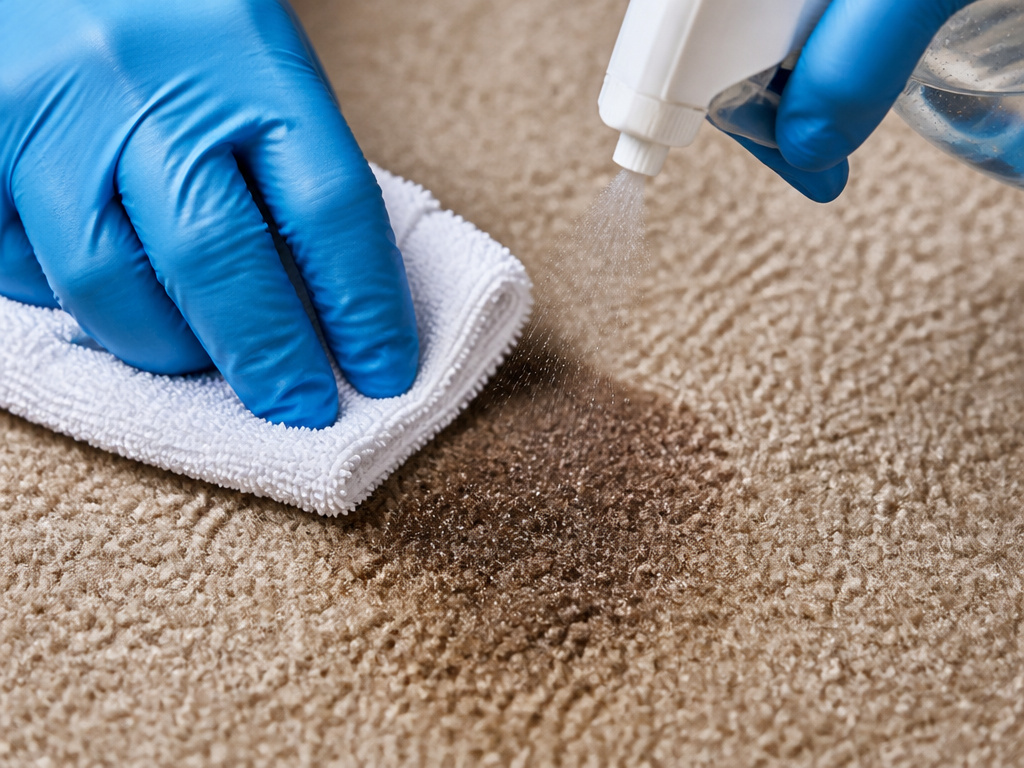
This is the one place where the sources flatly contradict each other, and picking the wrong side can cost you the backing. The oil-based paint removal steps published by the Carpet and Rug Institute call for a cold water rinse and a blot with a dry cloth until all moisture is gone, plus several rinses with lukewarm tap water using a mist sprayer to avoid overwetting, while Chem Max says to vacuum only during solvent stages with no water rinse.
Chem Max takes the opposite position for solvent work. Its protocol says to vacuum only during the solvent stages, with no water and no rinse, because water at that point just moves dissolved paint around. Bridgepoint’s p.i.g. Sheet sits in the middle: the product is both water soluble and solvent soluble, so water works where the fabric tolerates it, and a volatile solvent flush takes over where it doesn’t.
Where this goes sideways: Rinsing a solvent job with water before the paint is fully out. The water carries dissolved pigment into the backing, and you’ll see a faint shadow creep outward over the next day as it wicks back up through the pile.
Solvents may damage carpet and rug backings, cushions and subfloors, and Chem Max’s advice is to test that your solvent won’t dissolve adhesive or other materials before you commit.
When Cleaning Stops Working: Tip Shearing, Bonded Inserts, and Reweaving
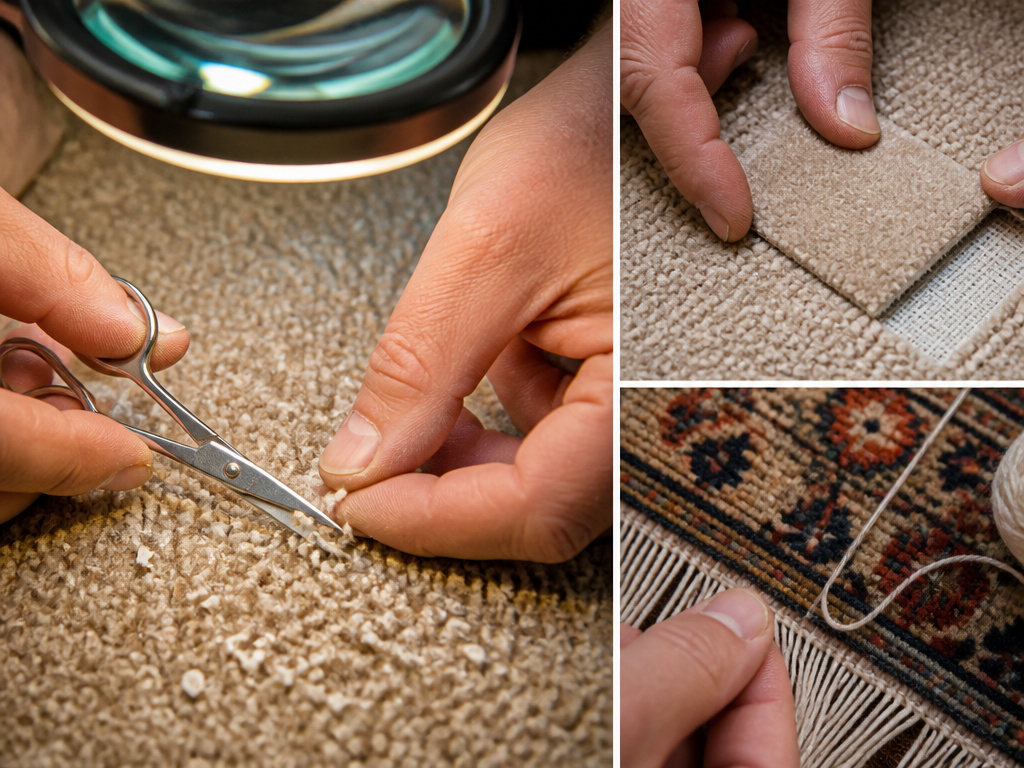
Epoxy paint will not come out, and no solvent on the shelf changes that. Chem Max is blunt about it: some paints simply won’t dissolve, and carpet or rug repair is the offered solution.
There are three exits, and which one you take depends on where the paint sits. If paint is only on the tips of the pile yarns, tip shearing can take it off. A bonded insert can fix a tufted carpet. A hand knotted rug can be rewoven. All three are repair work, not cleaning work.
The same logic applies to a dye shadow left after the paint is gone. Actichem’s answer is Conquer O2, applied and left slightly damp, with the brittle residue coming up at the next vacuuming. Chem Max’s answer is a Low Odor Dye Stripper started weak and worked up through 1%, 2%, and 3% concentrations.
One more practical note from Chem Max: dissolved paint gets all over and inside extraction tools. If you’re hiring a machine, you may want a dedicated tool and hose for paint jobs, or you’ll spend the next job cleaning up the last one.
What Never Goes on the Carpet
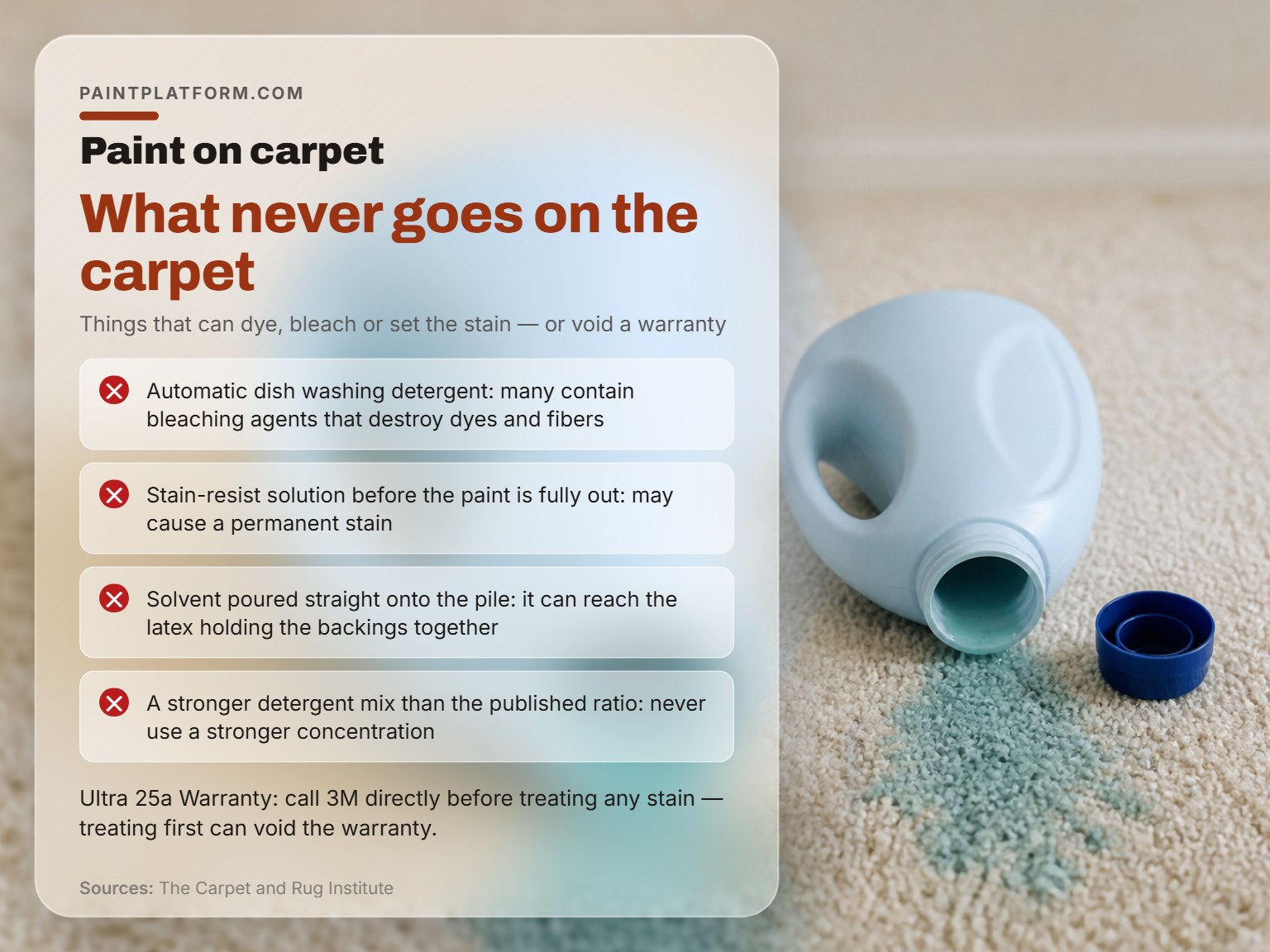
- Laundry detergent of any type. Optical brighteners are fluorescent dyes, and they can dye the fiber you’re trying to save.
- Automatic dish washing detergent. Many contain bleaching agents that destroy dyes and some fibers.
- A stain-resist solution before the paint is fully out. CRI warns this can set a permanent stain.
- Solvent poured straight onto the pile. It reaches the latex holding the primary and secondary backings together.
- A stronger detergent mix than the published ratio. Residue causes rapid soiling, and you’ll be back here in a month.
- Water on an oil paint spill. It spreads pigment into a halo that behaves like a dye stain.
The part nobody mentions: If your carpet carries an Ultra 25a Warranty, Carpet One states you must call 3M directly before treating any stain. Treating first can void the warranty, and no cleaning method is worth that trade.
Frequently Asked Questions
Does dish soap actually work on paint in carpet?
Yes, on water-based paint that hasn’t fully cured. CRI’s mix is 1/4 teaspoon of liquid dish detergent per cup of lukewarm water, and the rinse matters as much as the wash. On oil-based paint, detergent does almost nothing.
Can I use nail polish remover on a paint stain?
CRI describes two types. One contains acetone, a dry cleaning solvent, and needs the same precautions as any solvent. The other contains amyl acetate, which shows up in many paint, oil, and grease removers, and those leave residues that cause rapid soiling unless you rinse thoroughly with a dry solvent.
What if the paint dried overnight before I found it?
Go to a dedicated remover with a stated dwell time rather than detergent. Krud Kutter specifies 3 to 6 minutes on dried paint, and Actichem POG specifies 5 to 10. Pretest either one in a hidden corner first.
Will trying to clean it myself void my carpet warranty?
It can. Carpet One states that failure to follow its stain removal guidelines may void your warranty, and that an Ultra 25a Warranty requires a call to 3M before any stain treatment. Check the paperwork before you open a bottle.
Should I use a wet extraction machine on paint?
For larger spills, Actichem recommends rinsing and extracting with a wet extraction machine after the dwell. Chem Max warns that dissolved paint contaminates the tool and hose, so a dedicated paint hose is worth having. On a small spot, a towel and patience do the same job with less mess.
Before You Go
Here’s the threshold I’d give a friend. If the paint is epoxy, or if repeated passes with a solvent have moved nothing at all, stop. Every additional pass costs you backing integrity and buys you nothing. Call a pro or call a repair shop, because the honest answer at that point is a bonded insert or a reweave.
Everything above also assumes a carpet you can afford to lose a little of. On a hand knotted wool rug, the first call is a professional, not a bottle. And on a cheap rental-grade carpet in a room you’re repainting anyway, a faint shadow may be the reasonable outcome, so don’t burn a Saturday chasing it.
One last thing worth doing this week, before the next spill: put a stack of white terry towels in the room where you paint. Not a specialty kit. A towel, a can, and the number for your carpet’s fiber company if you have a warranty to protect. That’s the whole setup, and it beats panic every time.
