
Chemical Paint Stripper Guide: DCM Ban and Ventilation
This post contains affiliate links. As an Amazon Associate, we earn from qualifying purchases.
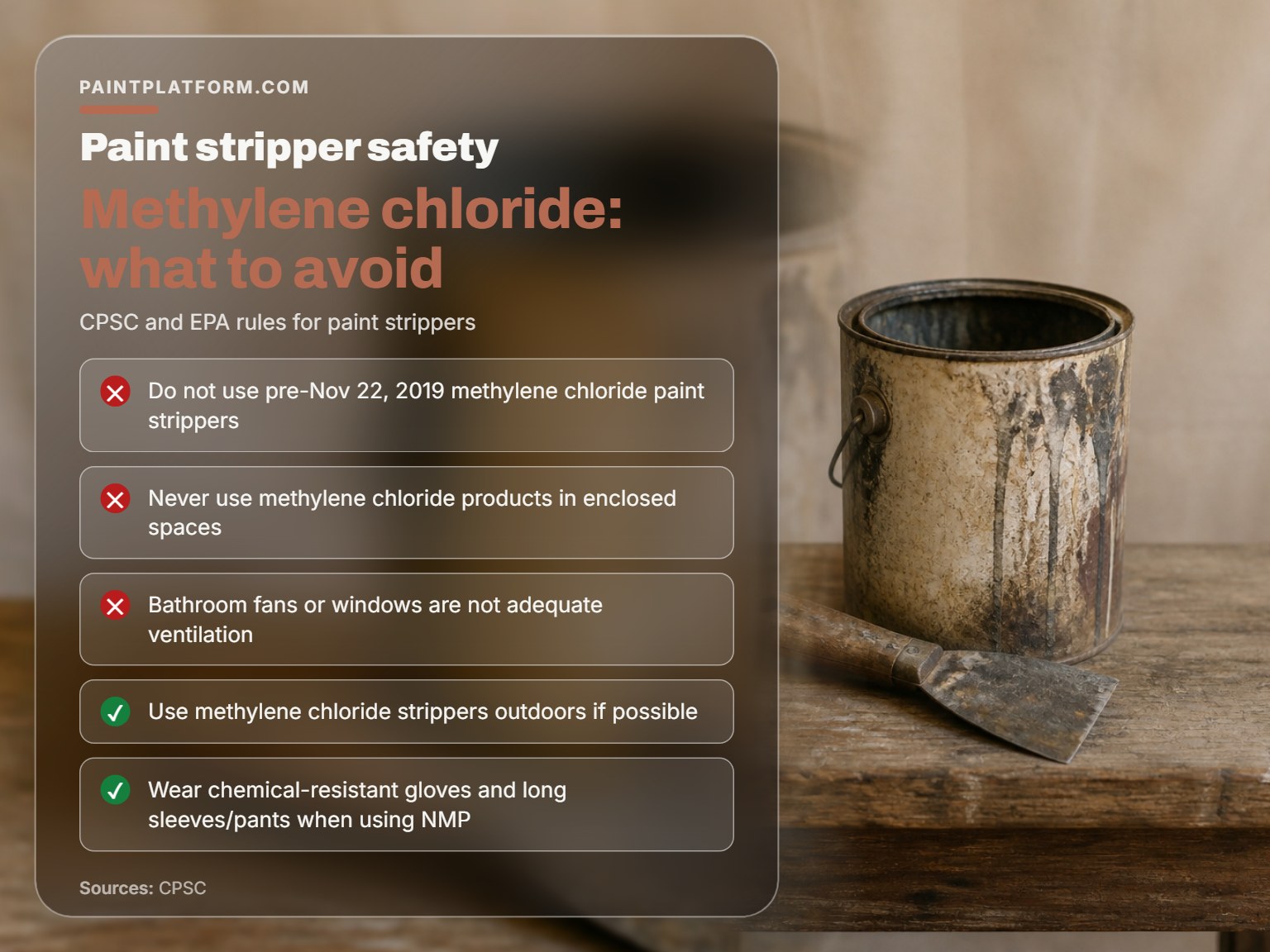
A chemical paint stripper guide starts with the ban: after November 22, 2019, US retailers can’t sell methylene chloride paint strippers to consumers, and CPSC says don’t use any pre-ban stock you still have. Commercial shops can still use them under OSHA work-practice rules.
That consumer-commercial split is where most chemical paint stripper guide advice goes wrong. Retail shelves emptied in 2019, but job sites didn’t, and the rules for a homeowner with a half-empty can differ from the rules for a trained worker in air-supplied respiratory gear.
What follows walks the timeline, the ventilation fight between two CPSC documents, the glove question, and the lower-DCM trap. Then it lands on what to actually reach for when you’re stripping a table leg in your garage.
Key Takeaways
- No consumer MeCl strippers have been sold in the US since November 22, 2019. Pre-ban cans are still out there, and CPSC says don’t use them.
- Bathroom fans and open windows don’t count as adequate ventilation for MeCl work, per CPSC’s methylene chloride fact sheet.
- Butyl rubber or neoprene gloves, not kitchen latex. CPSC is specific about this.
- Lower-DCM strippers may need reapplication that cancels out the emissions benefit, per Canada’s code of practice.
- Test a small patch before you commit to a whole piece.
What the November 22, 2019 Ban Actually Covers
The federal ban on consumer methylene chloride strippers took effect after November 22, 2019. EPA’s rule prohibits all retailers, including e-commerce sellers, from distributing any product containing methylene chloride for paint and coating removal. That’s a distribution ban, not a use ban. That matters.
The federal paint stripping standard covers operations that remove dried paint from wood, metal, plastic, and other substrates using methylene chloride. Coatings addressed include paint, enamel, varnish, shellac, and lacquer. The rule applies to area sources and does not cover stripping operations that use other chemical families.
CPSC recommends consumers do not use commercial or consumer paint stripping products containing methylene chloride purchased before November 22, 2019. Those pre-ban cans are still an ongoing potential source of exposure, per the agency’s fact sheet. If you find one in a garage or basement, treat it as hazardous waste, not as a thrifty find.
Here’s how the rules break down by who you are:
| Who You Are | Can You Buy MeCl Stripper? | Can You Use It? |
|---|---|---|
| Consumer / DIY | No, banned after Nov 22, 2019 | CPSC says no, including pre-ban stock |
| Commercial shop | Yes, still sold | Yes, under OSHA work-practice standards |
| Contractor in a home | Yes, still sold | Yes, with local exhaust, no spraying, isolation |
What the 2018 Label Change Added
CPSC updated its labeling guidance on March 21, 2018, to emphasize acute health risks. The front panel label reads: “WARNING Contains Methylene Chloride. INHALATION OF VAPOR CAN KILL YOU. DO NOT USE IN ENCLOSED AREAS such as bathrooms, basements, or closets. SYMPTOMS MAY NOT BE NOTICEABLE.”
That last line in the chemical paint stripper guide is the one that gets me. Symptoms may not be noticeable. You can be in trouble before you know it.
Why Methylene Chloride Hits the Body Differently
Methylene chloride does two things at once inside the body. It evaporates fast enough that you inhale a lot of it, and the human body converts some of that inhaled dose to carbon monoxide. CO lowers the blood’s ability to carry oxygen, which is why people with heart, lung, or blood disease get hit hardest.
You can be standing in what feels like fresh air at head height while the MeCl is collecting around your knees.
Here’s what to watch for and what to do:
| Symptom | Possible Cause | Action |
|---|---|---|
| Dizziness, headache | Early MeCl exposure | Leave the area, get fresh air |
| Lack of coordination | CO buildup in blood | Leave, seek medical attention |
| Breathing problems | Serious exposure | Leave, call for help |
| Delayed skin swelling | NMP contact | Seek medical attention if severe |
CPSC is blunt about this: leave the area and seek immediate medical attention if you experience dizziness, headache, lack of coordination, breathing problems, or other adverse health effects. Homeowners, building occupants, and workers have died following application of paint strippers containing methylene chloride.
Do Bathroom Fans and Open Windows Actually Ventilate a MeCl Job?
Two CPSC documents say different things about ventilation, and the gap between them is where people get hurt. The 423 Paint Stripper Publication says to ventilate the work area with a fan, and if you must work indoors, open all doors and windows and use a fan to move fresh air in and out of the room.
The methylene chloride fact sheet says using bathroom fans or opening windows does not provide adequate ventilation. It calls for local exhaust ventilation instead.
Both documents are from the same agency. The 423 Paint Stripper Publication says to ventilate with a fan and open doors and windows, while the methylene chloride fact sheet says bathroom fans or open windows do not provide adequate ventilation and calls for local exhaust ventilation.
So what does adequate ventilation actually look like? If work must be done indoors under low ventilation conditions, CPSC says consider having the work done professionally instead of attempting it yourself.
There’s a second ventilation trap. Electrical sparks from fans may ignite flammable stripper fumes. Flammable MeCl strippers have less methylene chloride but contain acetone, toluene, or methanol, and those are the flammable part. The safest place to use a flammable MeCl stripper is outdoors, away from sparks, flame, or high heat.
The fan rule inverts by product type:
- Nonflammable MeCl stripper: follow the product’s ventilation instructions.
- Flammable MeCl stripper: fan sparks can ignite the fumes. Work outdoors.
- Any MeCl stripper indoors: the methylene chloride fact sheet calls for local exhaust ventilation.
- Confined space like a bathtub: hire it out. CPSC flags bathtub refinishing specifically.
Before you start: Have local exhaust or work outdoors. Have local exhaust or work outdoors. Check the can for “flammable” before you plug in any fan, because fan sparks can ignite acetone, toluene, or methanol fumes.
The Glove Question: Butyl Rubber, Neoprene, or Kitchen Latex?
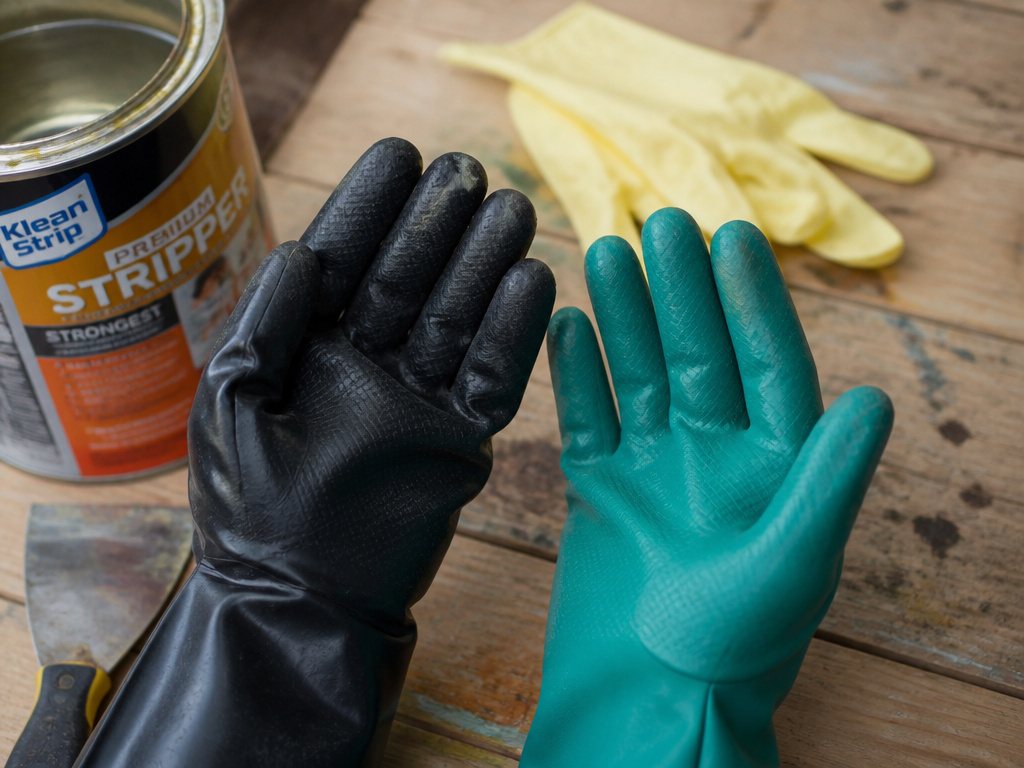
Two glove materials. Butyl rubber or neoprene, per CPSC. Common kitchen latex gloves do not provide enough protection against paint stripper chemicals.
That’s the short answer. The longer answer is that CPSC also says to see the manufacturer’s instructions or an SDS on your product to determine the appropriate glove type, because no single glove is universally correct across stripper types. Ask your local store which gloves to choose for the specific product you bought.
Gloves That Actually Work
- Butyl rubber: CPSC’s named example of a chemical-resistant glove.
-
Neoprene: the other named example of a chemical-resistant glove.
-
Kitchen latex: not enough protection. CPSC is explicit.
- Fit matters: gloves should fit properly and be chemical-resistant.
Wash hands immediately after use, even when wearing gloves. Excessive contact with NMP may cause skin swelling, blistering, and burns. Those skin reactions may not appear until sometime after exposure, which is the part that catches people off guard.
Women of child-bearing age who work with or use paint strippers regularly should take special precautions, including appropriate gloves, increased ventilation, and limited work times.
Lower-DCM Strippers and the Reapplication Trap
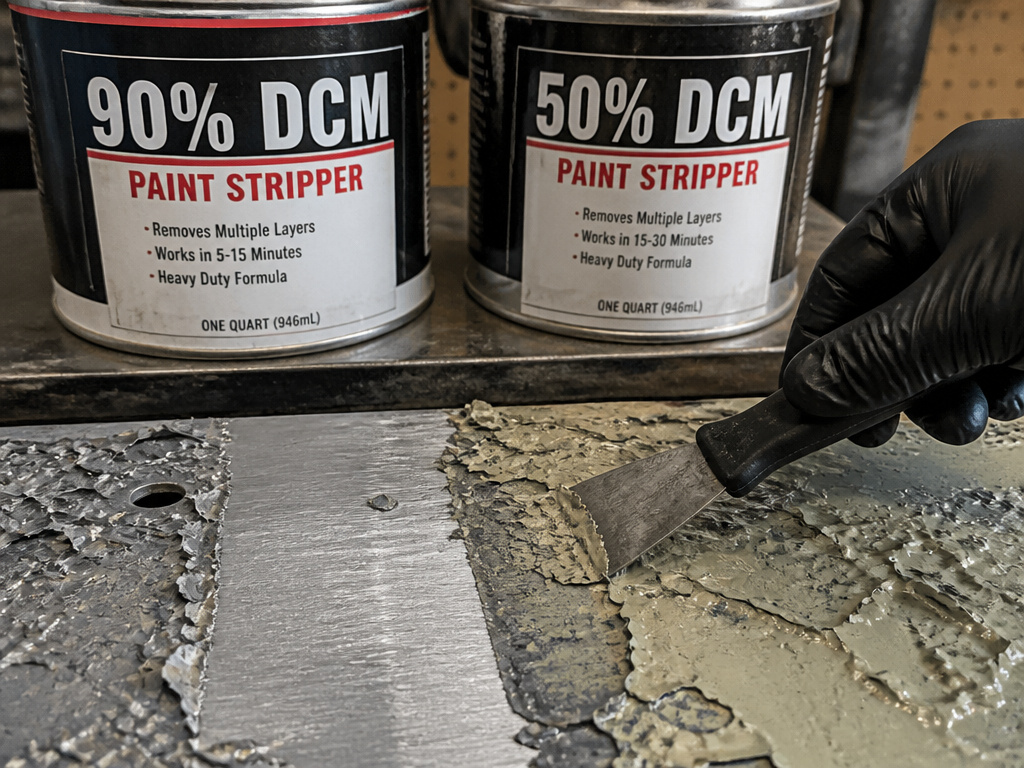
A can of lower-dichloromethane stripper sits on the shelf looking like the responsible choice. I’ve made this mistake with paint sheen, where a tiny chip looked soft and pretty until it covered a 12-foot wall and turned into a mirror for every roller mark. A chip is not a sample. Same with strippers.
Canada’s code of practice recommends using paint strippers with a lower DCM content whenever possible, and metal-parts strippers generally run about 70-90% DCM, so a lower number sounds like an obvious win.
The same code says lower-DCM strippers will not in all instances result in reduced emissions. They may not remove paint as rapidly, and additional applications would offset the benefits of using a lower content stripper. Each facility should evaluate its own situation.
That’s the trap. You buy the “gentler” can, it takes three passes instead of one, and you’ve used more solvent overall than if you’d bought the strong stuff and done it once.
If you’re choosing between two strippers for the same job, compare total volume used, not the percentage on the label. A 90% DCM stripper applied once can beat a 50% DCM stripper applied three times on total emissions and on your exposure time.
If you want a genuinely non-MeCl route, look at the alternatives Canada’s code lists: thermal stripping, caustic stripping, and media blasting. Each should be thoroughly evaluated before use. On furniture, thermal stripping usually means a heat gun, and that’s where my own story gets messy.
Heat Gun vs Chemical Stripper: My Messy Education
Heat guns are overrated for most stripping jobs. I say that as someone who scorched a table leg with one. The layered paint went gummy and smeared instead of lifting, and I was back to scraping and sanding anyway, with a scorch mark to hide.
Chemical strippers made a bigger mess than I expected. Between the sticky residue and the wait, a scraper and sander would’ve been done before the stripper even bubbled. The cleanup rags were their own project.
I’ve stripped enough furniture to have opinions. I read the CPSC documents so you don’t have to. If you want the full breakdown of which tool wins on which surface, the heat gun vs chemical stripper comparison covers the trade-offs surface by surface.
For most home furniture jobs, my honest ranking is:
- Test a palm-sized patch first. If the paint lifts clean with a carbide scraper, skip the chemistry entirely.
- Try heat on the lowest setting that softens the paint. Keep the gun moving. A scorch mark is permanent.
- Reach for chemical stripper when the paint has bonded hard. Old varnish, multiple layers, detailed carvings.
- Cover the paste with poly sheeting. Canada’s code says chemical-resistant sheeting extends drying time and helps penetration. It also keeps the stripper from crusting before it works.
- Neutralize and wash the surface after stripping. The Peel-Away system uses a fibrous cloth over the paste, then the substrate is washed and neutralized.
A heat gun on low and a carbide scraper handle most of the work. If you’re stripping a whole piece, the strip paint from furniture walkthrough covers the sequence in more detail than I can fit here.
The Heat Gun Verdict
Try it on scrap first.
Dip Tanks, Sheeting, and the Cover-Up That Saves Solvent
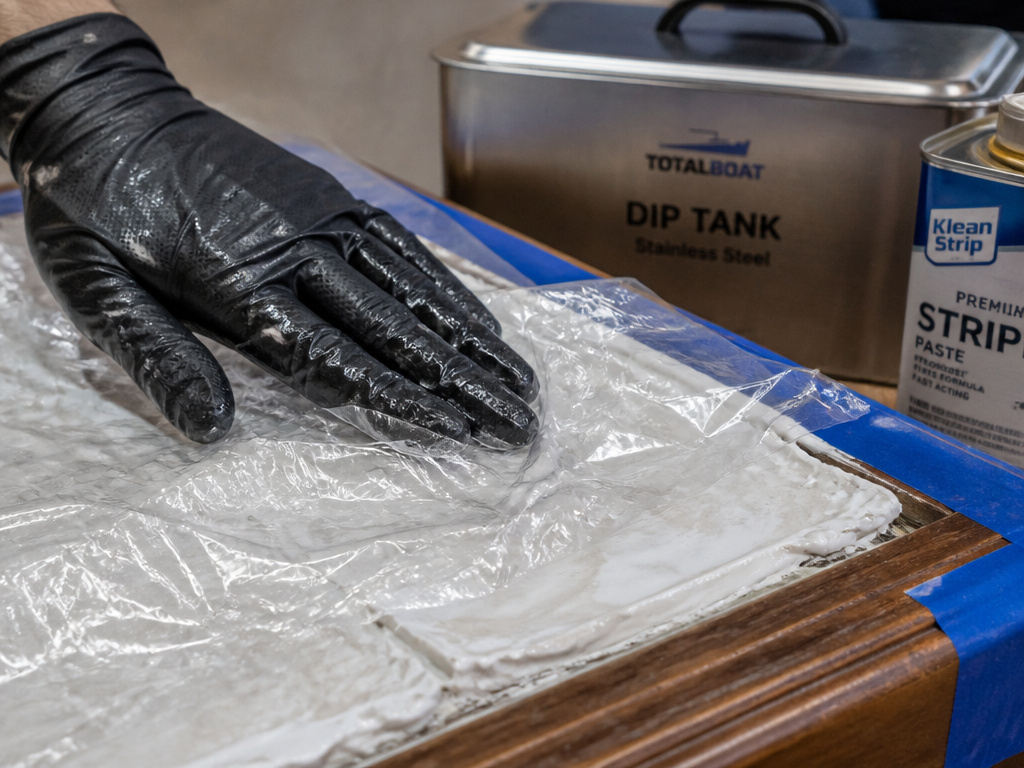
Dip tanks and open cans lose solvent to the air every minute the lid is off. Canada’s code is specific about this for commercial shops: fit dip tanks with lids, keep the lid on whenever possible, and open it only when placing parts in or taking parts out. Keep the lid on.
Stainless steel is the most desirable lid material. Plywood or polypropylene lids can retain dichloromethane through absorption or diffusion and release vapors over time.
For a home job, the equivalent move is covering the paste. Once paint stripper is applied, cover the surface with chemical-resistant sheeting (polypropylene or nylon) and tape down the corners. That extends drying time and helps the stripper penetrate the coating.
A few more practical notes from the code that translate to home work:
- Follow the manufacturer’s application rate. Over-applying wastes stripper and doesn’t speed anything up.
- Gently open and close lids. Air disturbance over the stripper surface drives emissions.
- Re-submerge parts with paint in crevices. Material caught in crevices may prevent the stripper from removing all the paint on the first pass.
- Equip tanks with dikes and drain containment.
If you’re working on metal rather than wood, the paint removers for metal guide covers which stripper families work on which alloys. For wood, the paint removers for wood breakdown is the better starting point.
Frequently Asked Questions
Is it legal to use methylene chloride paint stripper at home?
No. EPA’s rule prohibits all retailers, including e-commerce sellers, from distributing methylene chloride paint strippers to consumers after November 22, 2019. CPSC also recommends against using any pre-ban stock you still have. Commercial use is still permitted under OSHA work-practice standards, but that’s for trained workers with air-supplied respiratory protection.
What should I do if I still have an old can of MeCl stripper?
Don’t use it. CPSC says pre-2019 consumer products containing methylene chloride remain an ongoing potential source of exposure. Check with your local household hazardous waste program for disposal. If you suspect a product caused a health problem, CPSC asks consumers to file an online Consumer Product Incident Report on SaferProducts.gov.
Do I need a respirator for chemical paint stripping?
CPSC doesn’t name a specific respirator for consumer use. What it does say is that local exhaust ventilation is the control measure for MeCl work, and that bathroom fans or open windows don’t provide adequate ventilation. OSHA requires air-supplied respiratory protection for commercial workers. For a home job, the practical answer is to work outdoors or hire it out.
Can I use a heat gun instead of chemical stripper?
It struggles on carved details and on paint that’s bonded hard to the wood. Watch the temperature, because a scorch mark is permanent.
What gloves protect against paint stripper?
Butyl rubber or neoprene, per CPSC. Kitchen latex gloves don’t provide enough protection. Check the SDS for your specific product, because no single glove is universally correct across stripper types.
The Bottom Line
If you’re stripping a piece of furniture in your garage, most jobs don’t need the heavy chemistry. A carbide scraper, a heat gun on low, and patience handle more than the internet admits. Save the chemical route for the jobs where the paint has bonded to the wood and won’t budge.
When you do reach for a stripper, test a palm-sized patch before you commit to the whole piece. That’s the rule I wish someone had handed me before I scorched a table leg. And if the can in your hand says methylene chloride, put it down and check the date. If it’s pre-2019, it’s hazardous waste.
Dumond Peel-Away 6 uses dimethyl esters and NMP, and Peel-Away 1 is the alkaline (sodium hydroxide) version for interior and exterior paint. All three carry risk. The risks are just different.
