
9 Best Paint For Interior Concrete Walls in 2026
This post contains affiliate links. As an Amazon Associate, we earn from qualifying purchases.
For interior concrete walls, the KILZ Basement and Masonry Waterproofing Paint is our best overall pick because it blocks up to 12 PSI of water pressure while remaining low-odor enough for indoor use. For those battling mold in damp spaces, the Zinsser WaterTite Mold & Mildew Waterproofing Paint offers a 15-year waterproof guarantee. And if you want a single-coat solution on masonry, the KILZ Self-Priming Masonry Paint skips the primer step entirely.
The challenge with interior concrete is that it’s porous, often damp, and prone to alkali buildup that can ruin standard paints. You need a coating that bonds to masonry, resists moisture, and won’t peel or chalk over time. The wrong paint can trap moisture or fail to adhere, leaving you with a mess.
This guide is based on a review of manufacturer specifications, owner feedback, and expert round-ups. We’ve focused on the key factors that matter for interior concrete: moisture resistance, adhesion, and ease of application. We’ll walk you through what to look for and which product fits your specific wall condition.
Top 9 Paints For Interior Concrete Walls in the Market
Certain content that appears on this site comes from Amazon. This content is provided "as is" and is subject to change or removal at any time.
The Best Paints For Interior Concrete Walls, Reviewed
KILZ Basement and Masonry Waterproofing Paint

What We Like
- Blocks up to 12 PSI water pressure
- Low-odor formula for indoor use
- Dries to touch in 1 hour
- Resists alkali buildup in high-moisture areas
Trade-offs
- Full cure takes 7-14 days before washable
- 12.5 pounds is heavy for a gallon can
Up to 12 PSI of water pressure blocked means this paint does more than just cover concrete, it stops moisture from pushing through basement walls. That level of waterproofing is rare in a single-coat product, and the low-odor formula makes it practical for enclosed spaces where ventilation is limited. It dries to the touch in an hour and accepts a recoat in four, so you can finish a wall in a day. For anyone dealing with a damp below-grade wall that isn’t actively leaking, this is the most capable option for the job.
The trade-off is patience: full cure takes seven to fourteen days, during which the surface isn’t washable. That matters if you’re painting a basement that sees foot traffic or needs to be put back into use quickly. Compared to the Zinsser WaterTite, which also targets moisture resistance, the KILZ claims a higher pressure rating but demands a longer cure window. If you can wait for the cure, the protection is worth the pause.
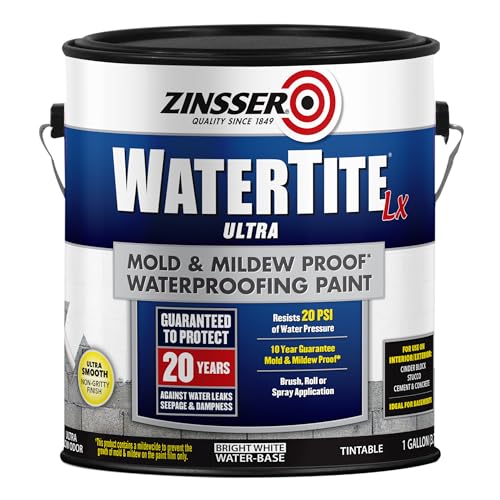
Zinsser WaterTite Mold & Mildew Waterproofing Paint
What We Like
- Resists up to 20 lbs. water pressure
- Ultra low odor for indoor use
- Easy soap and water cleanup
- 15-year waterproof guarantee
Trade-offs
- Heavier than many paints at 12.2 pounds
- Requires dry walls for application
With a water pressure resistance rating up to 20 lbs., this paint can help hold back moisture seepage on basement or foundation walls, making it a serious option for damp interior concrete. The ultra low odor formula and soap-and-water cleanup keep the job comfortable and straightforward, while the 15-year waterproof and 10-year mold & mildew guarantees back its long-term protection. This suits anyone who needs a reliable barrier against persistent dampness and mold growth in below-grade spaces without fussing with harsh solvents or complex application.
Compared to KILZ Basement and Masonry Waterproofing Paint, which also targets damp masonry but weighs slightly more, the Zinsser offers a smoother, non-gritty surface that feels more like a finished wall than a rough sealer. That smoothness and ease of application makes it the better choice when you need both protection and a clean look and minimal odor during the job.
Product photos
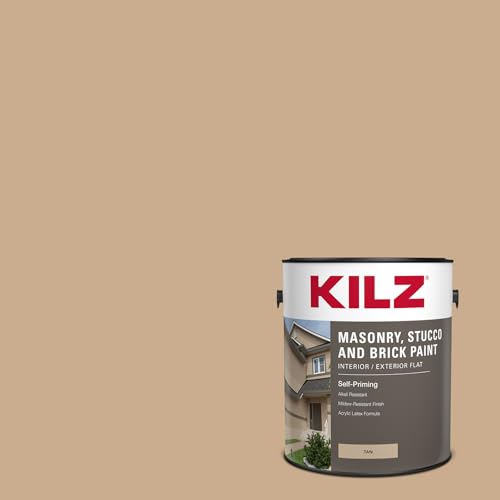
KILZ Self-Priming Masonry Paint
What We Like
- Self-priming on masonry surfaces
- Alkali-resistant up to pH 12.0
- Works on smooth, rough, textured surfaces
- Acrylic latex for water repellency
Trade-offs
- Flat finish shows imperfections on smooth walls
- Coverage varies widely with surface texture
- Not designed for waterproofing damp basements
With alkali resistance up to pH 12.0, this paint handles the chemical bite of fresh concrete and mortar without blistering or peeling. The self-priming formula saves you a full coat of primer on properly prepared masonry, stucco, or brick. The acrylic latex base gives good water repellency for interior walls that see occasional moisture. It applies with a roller, brush, or spray, and cleans up with soap and water, so it’s a straightforward choice for a DIYer who wants one can to do the job on textured concrete or stucco.
The flat finish hides texture well but won’t reflect light to mask dings on smooth walls. Coverage can drop to 250 square feet on rough surfaces, so buy extra for heavily textured block. If your main concern is stopping water seepage in a basement, the KILZ Basement and Masonry Waterproofing Paint is formulated for that, but for a decorative topcoat on dry interior concrete that also primes, this paint pulls double duty cleanly.
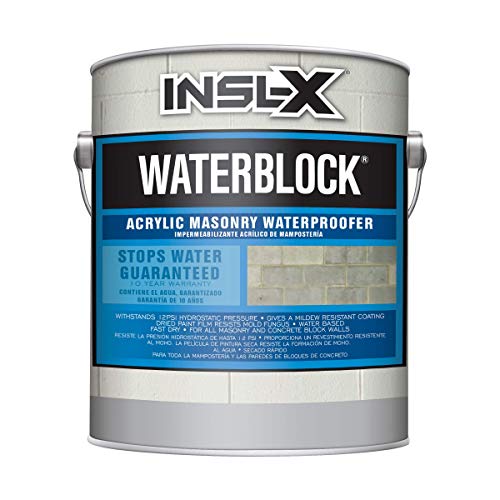
INSL-X WaterBlock Acrylic Masonry Waterproofer
What We Like
- Withstands up to 12 psi hydrostatic pressure
- High alkali resistance up to pH-13
- Fast-drying waterproof paint for masonry
Trade-offs
- Apply only when surface is 50-90°F
- Requires 50-90°F temperatures to apply
A 12 psi hydrostatic pressure rating means this paint can handle serious water pressure against basement walls, not just dampness. That makes it the strongest barrier in this guide for below-grade concrete where groundwater pushes in. It resists alkali up to pH-13, so fresh concrete or high-lime masonry won’t break down the coating. Anyone dealing with a chronically wet basement will find this a reliable defense, especially on poured foundations or cinder block.
You need to work within a narrow temperature window, 50 to 90°F, which limits application in cold basements or hot garages. For a basement that truly weeps, this is the one to reach for.
Product photos
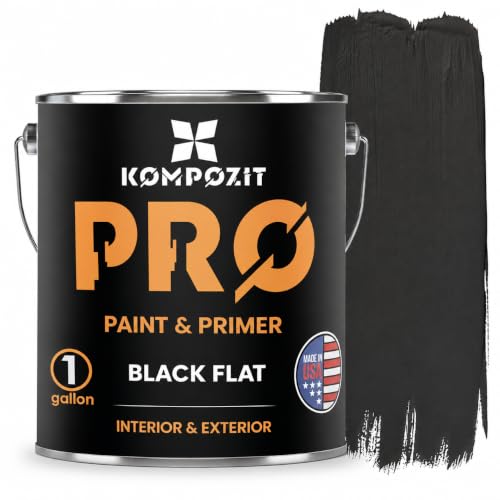
KOMPOZIT Acrylic Paint & Primer In One
What We Like
- Low VOC, low odor formula
- Built-in primer for strong adhesion
- Scrubbable flat finish resists wear
- Works on interior concrete walls
Trade-offs
- Only available in black flat finish
- Not formulated for waterproofing against seepage
- Requires properly prepared surfaces
With 300-400 square feet of coverage per gallon and a touch-dry time of about one hour, this paint-primer combo works well on properly prepared surfaces like drywall, trim, and previously painted walls. The low-VOC, low-odor formula means you can use it in living spaces without strong fumes, and the scrubbable matte finish holds up to cleaning while keeping a modern look. It’s a good fit for anyone wanting a charcoal-black wall that is easy to maintain.
This is a flat black paint only, so if you need a light color or a waterproofing barrier against damp walls, it won’t fill that role. Compared to the KILZ Basement and Masonry Waterproofing Paint, which is designed to stop water seepage, the KOMPOZIT focuses on a smooth, washable aesthetic rather than moisture protection. For a decorative concrete wall that needs a quick, low-odor update, it’s a capable choice.
Product photos
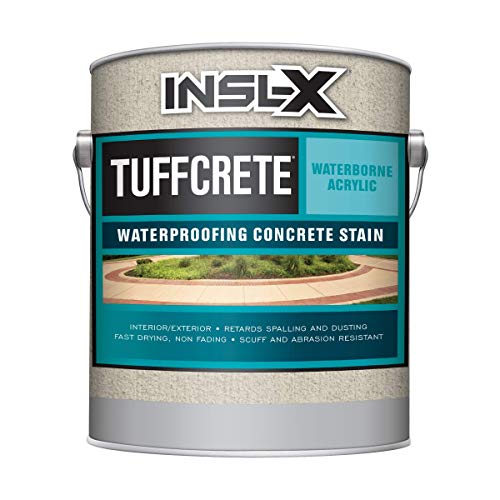
INSL-X TuffCrete Acrylic Concrete Stain Paint
What We Like
- One-coat stain or two-coat opaque finish
- Non-fading, fast-drying formula
- Resists detergents, oils, and grease
- Works on interior and exterior masonry
Trade-offs
- Requires surface temperature below 90°F
- Light gray only in this gallon size
This acrylic concrete stain paint can be applied in one coat for a translucent stain effect or two coats for a fully opaque finish, giving you control over the final look. With coverage of 300 to 400 square feet per gallon, a single can handles a typical basement wall or accent wall without needing a second can. The formula resists detergents, oils, grease, and scrubbing, so it holds up to cleaning and everyday wear. It works on concrete, stucco, and brick surfaces, both indoors and outdoors, on vertical or horizontal areas.
You need to keep the surface temperature below 90°F during application, which can limit summer exterior work or hot interior spaces. Compared to the KILZ Self-Priming Masonry Paint, which comes in a light warm tan flat finish, the INSL-X TuffCrete offers a stain option that can be applied in one coat. This gallon size is only available in light gray. If you want a finish that can be applied as a stain or opaque coating and still holds up to cleaning, this is a practical choice for masonry surfaces.
Product photos
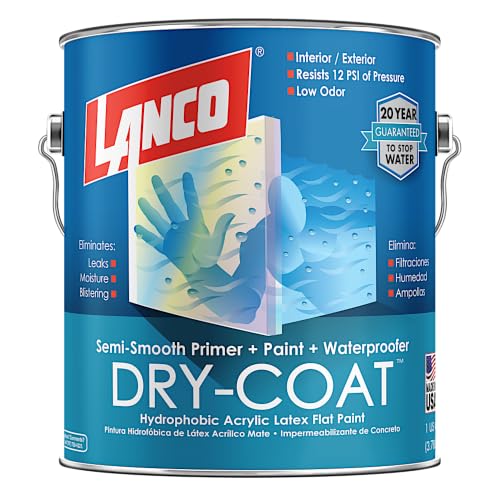
LANCO Dry-Coat Waterproofing Paint
What We Like
- Acts as primer, paint, and sealant
- Resists up to 12 PSI hydrostatic pressure
- UV-resistant and chalk-resistant
- Free of heavy metals and lead
Trade-offs
- Only available in white
- Requires multiple coats for full waterproofing.
Resisting up to 12 PSI of hydrostatic pressure means this paint can handle serious moisture pushing through basement walls, not just dampness or condensation. It combines primer, textured paint, and sealant in one coat, which cuts down on prep time and materials for a budget-conscious project. That versatility makes it a smart pick if you need reliable waterproofing without spending on multiple products or extra labor.
It comes only in white with a semi-smooth finish, so if you want a decorative color or a heavy texture to mask rough block, you will need to topcoat it. For a straightforward, no-frills waterproofing job where budget matters most, this one delivers the core performance.
Product photos
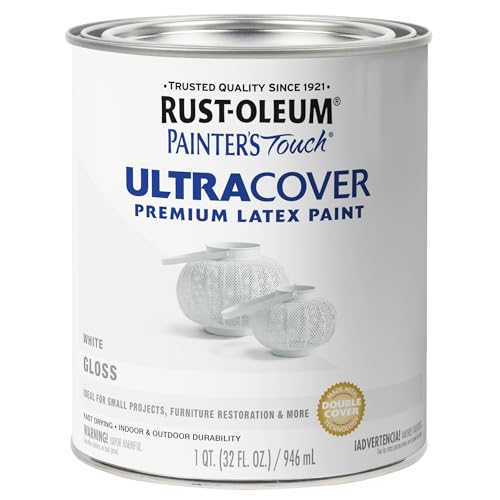
Rust-Oleum Painter's Touch Latex Brush-On Paint
What We Like
- Fast dry in 30 minutes
- Low odor water-based acrylic
- Chip and fade resistant
- Works on masonry surfaces
Trade-offs
- Quart size covers only 120 sq ft
- Requires sanding and degreasing before use
A quart that covers just 120 square feet tells you this paint is built for touch-ups, accent walls, or small basement patches, not a whole room. The water-based acrylic formula dries to the touch in 30 minutes, so you can knock out a quick project without waiting around. Its low odor and chip-resistant finish make it a practical choice for a single concrete wall in a laundry room or workshop where you want a fresh look without the hassle of a gallon bucket.
The prep work is the real trade-off: you’ll need to sand surfaces with 180/200 grit sandpaper and wash with a degreaser before painting, which adds a couple of steps for a small area. But once that’s done, this water-based acrylic formula resists chips and dries to the touch in 30 minutes, so you can move furniture back or hang shelves the same afternoon. For dry interior concrete where you want a fast, glossy finish, it’s a practical choice, just don’t expect it to handle damp basement walls the way a dedicated waterproofing paint would.
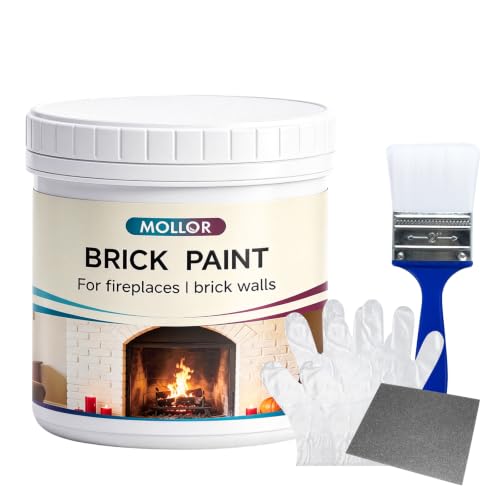
Mollor Brick Paint Fireplace Makeover Kit
What We Like
- Non-toxic, low-odor water-based formula
- Full DIY tool kit included
- Adheres to rough masonry without grinding
- Resists rain and sunlight outdoors
Trade-offs
- Only 16 oz, covers a small area
- Small 16-ounce size limits coverage to small projects
A 16-ounce kit with a full set of painting tools means this is built for small, focused makeovers, like a single fireplace or an accent brick wall. It is not for coating an entire basement. The water-based, low-odor formula keeps the workspace comfortable, and the paint is designed to adhere to brick, stone, and concrete without complex grinding treatment, so a DIYer can get a fresh white finish on textured masonry surfaces.
Scale is the main limitation: 16 ounces is a small amount compared to gallon-size options from brands like KILZ or Zinsser, so if you’re painting a full concrete wall, you will need multiple kits and careful dilution math to keep the color consistent. For a fireplace or a small stone feature, though, the included tools and the paint’s adhesion to textured surfaces make it a convenient all-in-one choice.
A 16-ounce kit is a fraction of the gallon-size options from KILZ or Zinsser, so if you’re painting a full concrete wall, you’ll need multiple kits and careful dilution math to keep the color consistent. For a fireplace or a small stone feature, though, the included tools and the paint’s adhesion to textured surfaces make it a convenient all-in-one choice.
Product photos
How We Evaluated Paints For Interior Concrete Walls
We started by analyzing manufacturer data sheets for each paint’s hydrostatic pressure resistance, alkali tolerance, and dry times. Owner feedback patterns helped us understand real-world performance on damp walls, adhesion to smooth vs. Rough concrete, and how each finish holds up over time.
The three criteria that mattered most were moisture protection (measured in PSI resistance), chemical compatibility (alkali resistance up to pH 12 or higher), and practical application (low odor, dry time, and cleanup). A paint that scores high in moisture resistance but requires perfect conditions or smells too strong for indoor use is a trade-off we weighed carefully.
The honest limit of this research-led evaluation is that we didn’t test these paints ourselves. Our recommendations come from comparing specs and synthesizing what experienced homeowners and painters report. For your specific wall, always follow the manufacturer’s surface prep instructions.
What To Look For In Paints For Interior Concrete Walls
Choosing the right paint for interior concrete means understanding your wall’s condition first. Here are the key features to evaluate before you buy.
Look for a paint that matches your wall’s moisture level: waterproofing paints for damp basements, self-priming masonry paints for dry walls, and low-VOC options for finished living spaces.
Moisture & Hydrostatic Pressure Resistance
If your concrete wall is below grade or in a basement, you need a paint rated for hydrostatic pressure. This is the force of water pushing through the wall from the outside. Paints like the KILZ Basement and Masonry Waterproofing Paint handle up to 12 PSI, while the Zinsser WaterTite resists up to 20 PSI. For walls with active leaks, this is non-negotiable. For dry interior walls, a standard masonry paint without a waterproofing rating is fine.
Alkali Resistance
Fresh concrete and masonry are highly alkaline, which can break down ordinary paint and cause peeling or discoloration. Look for paints that specifically state alkali resistance, ideally up to pH 12 or higher. The KILZ Self-Priming Masonry Paint resists up to pH 12.0, and the INSL-X WaterBlock handles up to pH-13. This feature is critical if you’re painting new or unsealed concrete.
Finish & Odor For Indoor Use
Interior spaces require low-odor, low-VOC formulas that won’t linger. The KILZ Basement and Zinsser WaterTite are both low-odor, while the KOMPOZIT Acrylic Paint offers a scrubbable flat finish for living areas. Consider the finish: flat hides imperfections but is harder to clean, while matte or satin offers a balance of durability and appearance. Always check the cure time, some waterproofing paints take up to 14 days to fully cure before they can be washed.
- Check the PSI rating if the wall is below grade or in a damp basement.
- Confirm alkali resistance (pH 12 or higher) for fresh or unsealed concrete.
- Choose a low-odor, low-VOC formula for occupied indoor spaces.
- Verify dry and cure times to plan your project schedule.
- Look for self-priming formulas to save a step on masonry surfaces.
A simple rule: dry walls can use any masonry paint, damp walls need a waterproofing paint, and actively leaking walls need professional repair before any coating.
Paints For Interior Concrete Walls Compared
The table below compares the key specs and best uses for each of the nine paints we evaluated.
| Product | Type | Finish | Coverage |
|---|---|---|---|
| KILZ Basement and Masonry Waterproofing Paint | Waterproofing Paint | N/A | N/A |
| Zinsser WaterTite Mold & Mildew Waterproofing Paint | Waterproofing Paint | Bright white, non-gritty | N/A |
| KILZ Self-Priming Masonry Paint | Acrylic latex | Flat | 250-400 sq ft/gal |
| INSL-X WaterBlock Acrylic Masonry Waterproofer | Water-based acrylic | N/A | N/A |
| KOMPOZIT Acrylic Paint & Primer In One | Acrylic Paint & Primer | Low-sheen matte | 300-400 sq ft/gal |
| INSL-X TuffCrete Acrylic Concrete Stain Paint | Acrylic concrete stain | N/A | 300-400 sq ft/gal |
| LANCO Dry-Coat Waterproofing Paint | Primer, textured paint & sealant | Semi-smooth | N/A |
| Rust-Oleum Painter's Touch Latex Brush-On Paint | Water-based acrylic | Gloss | 120 sq ft |
| Mollor Brick Paint Fireplace Makeover Kit | Water-based, low-odor | N/A | N/A |
Frequently Asked Questions
Can I use regular wall paint on concrete walls?
Regular wall paint is not formulated for concrete’s porous, alkaline surface. It may peel, bubble, or fail to adhere, especially in damp conditions. You need a masonry or concrete-specific paint that can handle moisture and high pH levels.
How do I prepare concrete walls for painting?
Preparation starts with cleaning the surface to remove dirt, grease, and efflorescence. Repair any cracks or holes with a masonry patching compound. For previously painted walls, remove loose paint and sand glossy areas. Most paints require a dry, clean surface for proper adhesion.
What is the best paint for a damp basement concrete wall?
For damp basement walls, look for a paint rated for hydrostatic pressure resistance, like the KILZ Basement and Masonry Waterproofing Paint or the Zinsser WaterTite Mold & Mildew Waterproofing Paint. These are designed to block moisture from seeping through the concrete.
Do I need a primer before painting concrete?
Some paints are self-priming on masonry, meaning they bond directly without a separate primer. The KILZ Self-Priming Masonry Paint is one example. Other paints may recommend a dedicated masonry primer for best results, especially on new or highly porous concrete.
How long does concrete paint take to dry?
Dry times vary by product. Many water-based masonry paints dry to the touch in one to two hours. However, full cure, when the coating reaches its maximum hardness and washability, can take from several days to two weeks, depending on humidity and temperature.
The Bottom Line
For most homeowners with interior concrete walls, the KILZ Basement and Masonry Waterproofing Paint is the best all-around choice. It balances strong moisture protection with a low-odor formula that works well indoors. If you have a damp basement and want extra mold resistance, the Zinsser WaterTite is worth paying more for its 15-year guarantee.
If your walls are dry and you want to skip primer, the KILZ Self-Priming Masonry Paint is a solid mid-range option. For small projects or touch-ups, the Rust-Oleum Painter’s Touch in a quart size is a practical budget pick.
The single most important factor is matching the paint to your wall’s moisture level. Choose a waterproofing paint for damp walls and a standard masonry paint for dry ones. That one decision will save you from peeling, bubbling, and rework.
