
9 Best Orbital Sandpaper in 2026
This post contains affiliate links. As an Amazon Associate, we earn from qualifying purchases.
The Skil 5-Inch Random Orbital Sander takes our Best Overall spot because it balances variable speed control, effective cyclonic dust collection, and a compact design for the widest range of DIY and woodworking jobs. For a swirl-free finish, the Bosch ROS20VSC Palm Sander is our top choice, while the DEWALT 20V Max XR Cordless Sander offers true cordless freedom.
Choosing the right orbital sander comes down to more than just power. You need to consider dust management, vibration levels for comfort during long sessions, and whether a cord or battery better suits your workspace.
This guide is based on a thorough review of manufacturer specifications, expert round-ups, and patterns in owner feedback. We focus on the features that matter most for getting a smooth, efficient finish on wood, paint, and other surfaces.
Top 9 Orbital Sanders in the Market
Certain content that appears on this site comes from Amazon. This content is provided "as is" and is subject to change or removal at any time.
The Best Orbital Sanders, Reviewed
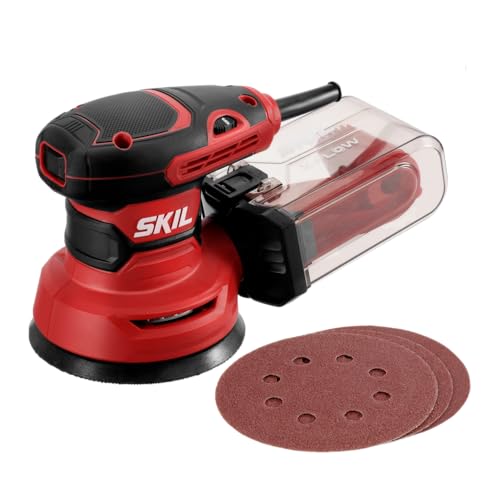
Skil 5-Inch Random Orbital Sander
What We Like
- Variable speed control for different materials
- Cyclonic dust box easy to empty
- Low vibration with ergonomic rubber grip
- Compact size reaches tight spaces
Trade-offs
- Corded design limits mobility away from outlets
- 3.4 pounds is heavier than the 3.0-pound DCA sander
A 2.8 amp motor pushing 13,000 orbits per minute gives this sander the muscle to handle everything from rough stock removal to fine finishing passes without bogging down. The variable speed dial lets you dial in exactly the right aggression for the material, whether it’s soft pine or a hard maple tabletop. That kind of flexibility, paired with a cyclonic dust box that actually pulls debris into an easy-to-empty container rather than clogging a bag, makes it a natural fit for anyone who wants one sander that can do it all without constant cleanup interruptions.
A 2.8 amp motor spins this sander at 13,000 orbits per minute, giving you smooth, consistent material removal across a wide range of sanding jobs. The variable speed control lets you dial in the right pace for different surfaces, so you’re not stuck with a one-speed tool when switching from rough wood to a delicate finish. It’s a corded tool, so you’ll need to stay near an outlet, but that also means you never have to worry about battery life fading mid-project.
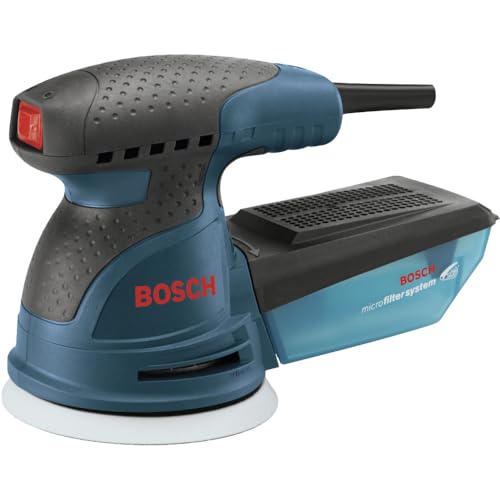
Bosch ROS20VSC Palm Sander
What We Like
- Pad dampening system reduces swirl marks
- Variable speed control for task matching
- Includes carrying bag and vacuum adapter
Trade-offs
- Corded design limits mobility away from outlets
- At 3.5 lb, heavier than some palm sanders
The trade-off is that this is a corded tool, so you’re tethered to an outlet, and at 3.5 pounds it’s heavier than the Mirka DEROS II 650X (2.4 lb). If your work demands a clean finish and you don’t mind the cord, this Bosch is worth considering.
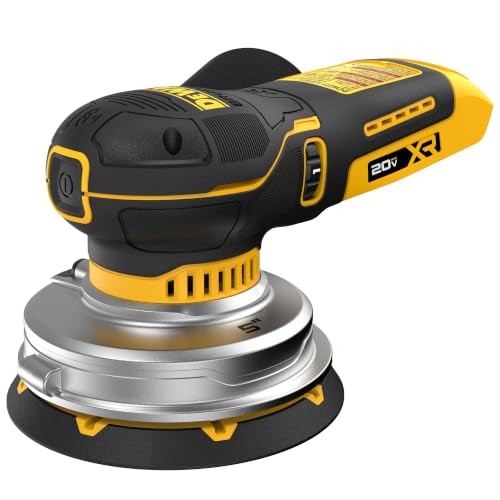
DEWALT 20V Max XR Cordless Sander
What We Like
- Up to 50 sq. ft. per charge
- Wireless tool control for vacuum
- Variable speed control 5 speeds
Trade-offs
- Battery and charger sold separately
- At 3.8 lb, heavier than some palm sanders
For trim, cabinets, or small furniture, every inch of clearance matters and battery life matters as much as dust control. This sander’s compact body lets you reach into tight spots where bulkier tools simply won’t fit, and a single charge covers up to 50 square feet of sanding. The dust port collects up to 95% of debris, so you spend less time cleaning and more time working. Variable speed control with five settings from 8,000 to 12,000 OPM lets you match the tool’s action to the material, whether you’re roughing out or finishing.
At 3.8 pounds, this sander is slightly heavier than the Bosch ROS20VSC corded palm sander, which weighs 3.5 pounds and doesn’t require a battery. If you prefer not to deal with cords and want the freedom to move around a job site, the DEWALT’s cordless design makes it easy to carry from room to room. It also collects up to 95% of dust when used with a compatible vacuum, which helps keep your work area cleaner.
Festool ETS EC150/5 EQ-Plus Sander

What We Like
- Weighs only 2.5 lbs for fatigue-free use
- Stepless speed pre-selection under load
- Weighs 2.5 lbs for easy handling
Trade-offs
- Corded design limits mobility on large jobs
- Heavier than the 2.4 lb Mirka DEROS II 650X
The 5 mm stroke clears material quickly while the stepless speed control stays constant even when you lean into a tough spot, so you don’t get swirls or chatter.
The catch is that this sander is corded, unlike the cordless DEWALT 20V Max XR, which offers freedom on a jobsite without an outlet nearby. The Festool requires a power source, but the constant speed under load and the 5 mm stroke deliver consistent results without the battery weight or runtime limitations of cordless models. Reviewers note that the cord can be a minor inconvenience on remote work, but the steady power and longer run time without recharging are benefits for stationary or shop use.
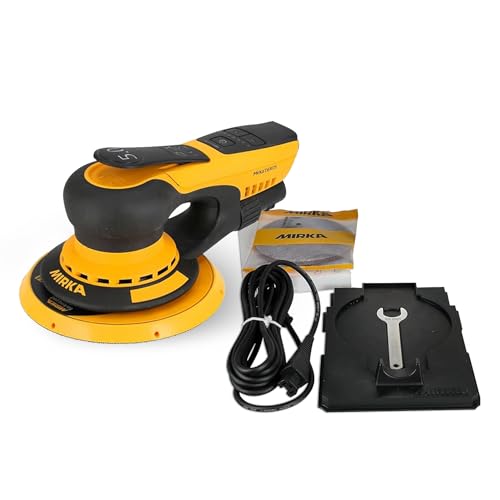
Mirka DEROS II 650X Sander
What We Like
- Bluetooth vibration monitoring via app
- Lightweight 2.4 lb ergonomic build
- Brushless motor for reliable performance
- Central vacuum-ready dust collection
Trade-offs
- Battery and charger sold separately
- Tool only: no sanding discs included
At just 2.4 pounds, this 6-inch sander is built to keep your hands fresh during long sessions. The Bluetooth-connected vibration monitoring gives you real-time feedback through the Mirka app so you can adjust your grip or pace before fatigue sets in. The brushless motor delivers steady power without the maintenance of brushed alternatives, and the LED speed control lets you dial in exactly the right orbit for wood, drywall, or ceiling work. It is a smart choice for anyone who spends hours on end sanding overhead or on ceilings, where every ounce of weight and every minute of comfort matters.
The biggest catch is that this sander comes as a tool only, so you’ll need to supply your own battery and charger, which bumps up the initial cost. Compared to the Skil 5-inch sander, the Mirka has a larger 6-inch disc, but the Skil includes a dust box and sanding sheets right in the box. For someone who already has compatible batteries and values low vibration and Bluetooth monitoring, this sander delivers those features without extra accessories.
Ideal for users who need a lightweight low vibration sander for extended overhead or extended sanding sessions with Bluetooth monitoring feedback. Not ideal for those who need a battery and charger included or a complete sanding discs included.
Product photos
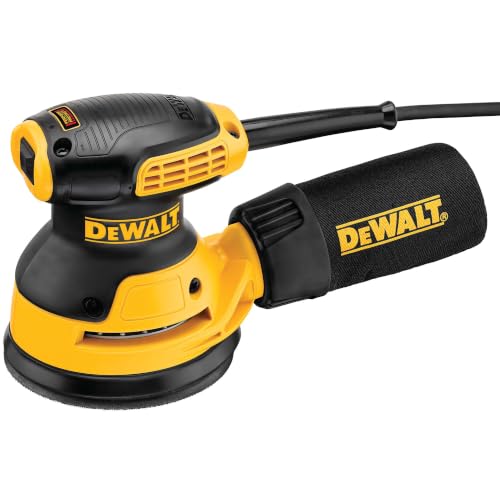
DEWALT DWE6421 Palm Sander
What We Like
- 3.0-amp motor delivers 12,000 OPM
Trade-offs
- Single speed offers no OPM adjustment
- No variable speed for different materials
The downside is that you get one fixed speed, so there is no dialing down for delicate work or softer woods. Compared to the Bosch ROS20VSC, which offers variable speed, the DEWALT is less forgiving when you need a gentler touch. The cord also ties you to an outlet, unlike the DEWALT 20V Max XR cordless model. If your projects demand relentless power and you do not mind a single speed, this palm sander delivers exactly that.
Product photos
Festool ETS 125 REQ-Plus Sander

What We Like
- Ergonomically formed for any hand size
- Compact and light weight for extended vertical and overhead use
Trade-offs
- At 8.2 pounds, heavier than palm sanders
At 8.2 pounds, this sander is noticeably heavier than palm-style models like the Bosch ROS20VSC, so it won’t disappear in your hand during long sessions.
Compared to the lighter Skil 5-Inch Random Orbital Sander, the Festool asks you to carry extra pounds in exchange for an ergonomically formed shape that fits comfortably in any size hand. That makes it suitable for finishers who prioritize that shape and the ability to work overhead and on vertical surfaces.
Product photos
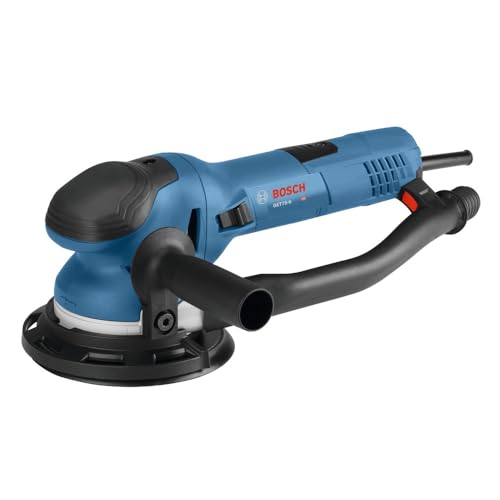
Bosch GET75-6N Orbital Sander
What We Like
- Turbo mode for aggressive stock removal
- 7.5 amp variable speed motor
- Multi-hole pad accepts wide abrasive range
- Includes removable front handle
Trade-offs
- At 5.7 lb, heavier than palm sanders
- Vacuum required for dust collection
- Hoses sold separately
A 7.5 amp motor and a turbo mode that delivers five times the stock removal of standard random orbit let this 6-inch sander tackle heavy material removal jobs that would bog down smaller palm sanders. The dual-mode design means you can switch from aggressive stripping to fine finishing without changing tools, making it a strong fit for floor refinishing, furniture leveling, or any task where you need both speed and control. Variable speed from 290 to 640 RPM gives you the flexibility to match the tool to the surface, from delicate polishing to fast wood removal.
At 5.7 pounds, this sander is noticeably heavier than a palm-style model like the Bosch ROS20VSC, so overhead or vertical work will fatigue your arm faster. It also relies on a passive dust collection system that requires a vacuum and hoses sold separately, adding cost and a tether to your workspace. If you need a lightweight sander for quick touch-ups or tight spaces, this isn’t it. But for heavy-duty sessions where power and dual-mode versatility matter most, the GET75-6N delivers.
Product photos
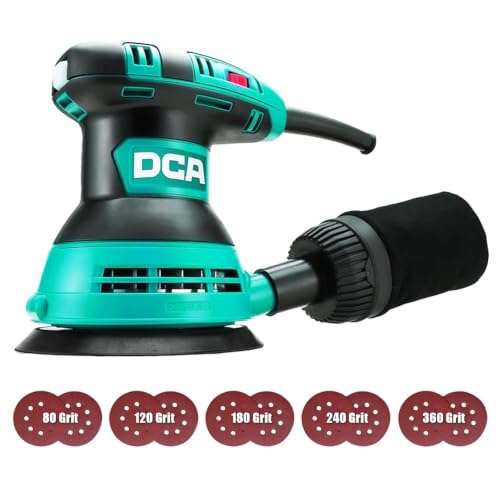
DCA Random Orbital Sander
What We Like
- 6 variable speeds for different tasks
- Low vibration rubberized grip
- Quick-change hook-and-loop sandpaper system
- Includes 10 sandpapers across 5 grits
Trade-offs
- Corded design limits mobility
- Dust bag small at 10 fl oz
A 3.0 AMP motor with six speeds from 4000 to 12000 OPM lets you match the tool to the task, from slow flat sanding to faster stock removal. The rubberized grip and hook-and-loop pad make it easy to hold and quick to swap sandpaper, while the included 10 discs in five grits cover common needs. At under three pounds, it stays comfortable for extended use.
The cord keeps you tied to an outlet, unlike the cordless DEWALT 20V Max XR. The 10 fl oz dust bag collects shavings and fine dust, though some users may want a larger capacity for heavy sessions. For someone who values speed control and a light tool, this sander covers the basics without extra complexity.
Product photos
How We Evaluated Orbital Sanders
Our evaluation is research-based, drawing on manufacturer specifications, expert round-ups, and common themes from owner feedback across the category. We analyzed what real users and professionals consistently report about performance and durability.
We prioritized four key criteria. Dust collection is critical for visibility and health, and we looked for systems that capture debris effectively. Speed control and orbit size determine how well a sander handles both aggressive stock removal and fine finishing tasks. Vibration and ergonomics directly affect user fatigue, especially during extended sanding sessions. Finally, we considered power source and weight to match different workshop setups and portability needs.
An honest limitation of this research-led approach is that it cannot replicate the feel of a sander in your hand. We recommend using these findings to narrow your choices, then visiting a local retailer to test the ergonomics of your top contenders.
What To Look For In Orbital Sanders
To pick the right orbital sander, focus on the features that control your finish quality, comfort, and dust management. Here is a breakdown of the most important buying criteria.
Choose a sander with variable speed control and effective dust collection. Look for a comfortable grip and a weight you can manage for the duration of your project.
Dust Collection System
A good dust collection system keeps your work surface visible and reduces airborne particles. Many sanders include a dust box or bag, but some models are designed to connect directly to a shop vacuum for superior suction. The size of the dust container matters for how often you need to stop and empty it. Models with a cyclonic or similar separation system, like the Skil 5-Inch, help keep the filter from clogging, maintaining suction longer.
Variable Speed and Orbit
Variable speed control lets you match the sanding speed to the material and task. Lower speeds are better for delicate work like sanding between paint coats, while higher speeds remove material faster. The orbit diameter also plays a role: a 5-millimeter orbit is common for general-purpose work, while a 3-millimeter orbit is better for fine finishing. A single-speed sander, like the DEWALT DWE6421, offers maximum power but less flexibility for detail work.
Vibration and Ergonomics
Low vibration is essential for comfort and control, especially during long sanding sessions. Features like rubberized grips and counterbalanced pads help reduce the vibration transferred to your hand. The weight of the sander is another key factor; lighter tools (under 3 pounds) cause less fatigue for overhead or vertical work. Some advanced models, like the Mirka DEROS II, offer Bluetooth monitoring to track vibration exposure.
- Check the sander’s stated weight and compare it to your comfort level for your typical project duration.
- Look for a rubberized grip area that matches your hand size.
- Consider whether a corded or cordless model better suits your workspace and mobility needs.
- Verify that the sanding pad size (usually 5 or 6 inches) matches the sandpaper you plan to use.
A sander that feels comfortable in your hand for five minutes will feel much heavier after an hour of work.
Orbital Sanders Compared
The table below compares the key specs and features of our top nine orbital sanders to help you see the differences at a glance.
| Product | OPM / Speed Range | Weight | Pad Size |
|---|---|---|---|
| Skil 5-Inch Random Orbital Sander | 13,000 OPM | 3.4 pounds | 5-inch |
| Bosch ROS20VSC Palm Sander | 7,500-12,000 OPM | 3.5 pounds | 5 in. |
| DEWALT 20V Max XR Cordless Sander | 8,000-12,000 OPM | 3.8 lb | 5 in |
| Festool ETS EC150/5 EQ-Plus Sander | Stepless | 2.5 lbs | 6-inch |
| Mirka DEROS II 650X Sander | LED indicators | 2.4 pounds | 6 inches |
| DEWALT DWE6421 Palm Sander | 12,000 OPM | 3.4 pounds | 5 Inch |
| Festool ETS 125 REQ-Plus Sander | N/A | 8.2 pounds | N/A |
| Bosch GET75-6N Orbital Sander | 3300 to 7300 OPM | 5.7 pounds | 6 Inch |
| DCA Random Orbital Sander | 4000-12000 OPM | 2.87 lbs | 5-Inch |
Frequently Asked Questions
What is the best orbital sander for removing paint?
The DEWALT DWE6421 palm sander, with its powerful 3.0-amp motor delivering 12,000 OPM, is a strong choice for aggressive material removal on flat surfaces. For heavy-duty jobs, the Bosch GET75-6N orbital sander offers a turbo mode specifically designed for fast stock removal.
Should I get a corded or cordless orbital sander?
Choose a corded sander for consistent, unlimited runtime on large projects or in a workshop with easy outlet access. Choose a cordless model, like the DEWALT 20V Max XR, for portability on job sites or for sanding in areas far from power outlets.
How do I avoid swirl marks when using an orbital sander?
Use a random orbital sander with a pad dampening system, such as the Bosch ROS20VSC, which is designed to reduce swirl marks. Always use quality sandpaper and keep the sander moving in a consistent pattern to prevent creating visible swirls.
What size orbital sander pad should I buy?
A 5-inch pad is the most common size for general DIY work and is compatible with a wide range of sandpaper. A 6-inch pad, like on the Bosch GET75-6N, is better for covering large, flat surfaces quickly but can be harder to maneuver in tight spaces.
How do I connect my orbital sander to a vacuum?
Most modern orbital sanders have a built-in port that accepts a standard vacuum hose adapter. Some models, like the Bosch ROS20VSC, include a vacuum adapter in the box. The DEWALT 20V Max XR sander offers wireless tool control to automatically start and stop a compatible vacuum.
The Bottom Line
For most DIYers and woodworkers, the Skil 5-Inch Random Orbital Sander is the best overall choice. Its combination of variable speed, effective dust collection, and comfortable ergonomics offers the best balance of performance and value for a wide range of projects.
If a swirl-free finish is your top priority, the Bosch ROS20VSC Palm Sander is the clear winner. For those who need cordless portability, the DEWALT 20V Max XR is the pick. Budget-conscious buyers will find the DCA Random Orbital Sander an affordable entry point with useful included accessories.
The single most important factor in choosing an orbital sander is matching its features to your specific projects. Prioritize variable speed and dust collection for the most versatile tool.
