
How to Paint Canvas Shoes: Step-by-Step
This post contains affiliate links. As an Amazon Associate, we earn from qualifying purchases.
To paint canvas shoes, clean the canvas with Angelus Easy Cleaner, let it dry fully, then brush on 3 to 5 light coats, letting each coat dry before the next. Mix paint 1 to 1 with 2-Soft Fabric Medium to keep the canvas soft, and heat-set at 300 degrees Fahrenheit for 3 to 5 minutes if you used it.
That how to paint canvas shoes conditional at the end carries more weight than it looks. Heat is what locks 2-Soft into the cotton fibers, and heat is also what turns a clean paint job into a scorched, discolored mess if you push past the set point. Angelus only calls for the gun when 2-Soft is in the mix. Straight paint on canvas air-dries on its own.
What follows is the full sequence: prep, coats, heat, sealer, and the three spots where the published guides quietly stop agreeing with each other.
Key Takeaways
- Brush on 3 to 5 light coats, never one heavy one. Canvas drinks paint, and an overloaded brush sends color bleeding under the tape.
- Mix paint 1 to 1 with 2-Soft if you want the finished shoe to flex like fabric instead of feeling like a screen print.
- Heat-set at 300 degrees Fahrenheit for 3 to 5 minutes, and only when 2-Soft is in the mix. Angelus ties the two together.
- Leather Preparer and Deglazer will not fix canvas mistakes. Angelus is direct about this: it cleans eyelets, nothing more.
What Do You Actually Need to Paint Canvas Shoes?
Less than the how to paint canvas shoes supply aisle suggests. A pair of canvas sneakers, one bottle of paint, and a #6 Filbert Angelus paint brush gets you a finished shoe. Everything past that is comfort and cleanup.
Canvas weave absorbs paint far faster than leather does, so a loaded brush bleeds color past a taped edge within seconds. Three to five light coats, each allowed to dry, build an even layer without saturating the cotton. Angelus specifies 2-Soft Fabric Medium at a 1 to 1 ratio to keep the finished canvas flexible.
Here’s the short list, and it’s genuinely short:
- Angelus Easy Cleaner for the wipe-down before anything else touches the shoe.
- Angelus 2-Soft Fabric Medium, mixed 1 to 1 with your color when you want flexibility.
- A #6 Filbert brush, used in Angelus’s tutorial to cover the uppers with base colors.
- Angelus Satin Acrylic Finisher or Flat 4-Coat if you want a sealed, store-bought look.
- A Wagner Furno 300 heat gun, listed among Angelus’s recommended tools.
- Painter’s tape, plus a shoe tree or a wad of tissue paper.
Paint choice matters less than coat thickness, but it still matters. The best paint for canvas shoes depends on how hard you plan to wear them, so settle that question before you buy a bottle.
Prep Takes Ten Minutes, and Most of It Is Taping
Laces out, tape on, shoe tree in. That’s the whole job, and it takes less time than reading this section.
Canvas is the forgiving surface in shoe painting. Angelus’s own tutorial says canvas needs almost nothing before paint: pull the laces, tape off whatever you want left alone, and move on. No primer, no deglazer, no sanding.
The one thing worth doing is firming up the shoe. Canvas isn’t thick, and an unsupported upper shifts under the brush. Angelus’s customizer drops a shoe tree inside for exactly that reason; tissue paper does the same job if you don’t own one.
That give is what makes your lines wander halfway through a curve.
Tape technique is where beginners lose edges. Press the tape down hard along the seam where it meets the sole, because paint finds any lifted corner and wicks under it. How you paint denim is how you paint canvas: thin coats, dry in between, no flooding. Same cotton twill family, same habits.
Thin Coats Beat Thick Coats Every Time
One flooded coat ruins more shoes than bad brushwork ever does.
Angelus publishes the sequence plainly. Clean the canvas with Easy Cleaner and let it dry completely. Mix 1 to 1 with 2-Soft if you want softness. Brush on 3 to 5 light layers, letting each one dry. Then heat-set if you used the medium.
Keep the tip moving and never rest it against the shoe. Set the gun down on metal or stone, not on paper or a plastic tray. Overheating burns the paint and shifts its color before you see smoke.
Here’s the order that works:
- Clean and dry. Wipe the canvas with Angelus Easy Cleaner and let it dry completely. Paint over a damp shoe traps moisture under the film.
- Tape the edges. Cover the midsoles, eyelets, and any panel you want untouched. Press the tape flat along the seam.
- Mix 1 to 1 with 2-Soft if you want flexibility. Skip it on small designs that barely cover the shoe.
- Load the brush lightly. Canvas soaks up paint fast, and an overloaded brush sends color bleeding under the tape.
- Let each coat dry, then repeat. Three to five light layers, each dry before the next.
- Heat-set if you used 2-Soft. 300 degrees Fahrenheit for 3 to 5 minutes, gun moving the whole time.
- Seal it. One layer of Flat 4-Coat or Satin Acrylic Finisher. Optional per Angelus, but it’s what makes the finish read as store-bought.
Angelus is a fabric paint for shoes at heart, pigmented and thinned for footwear. If you’re comparing bottles, check whether the label mentions heat-setting, because that tells you what the maker expects the paint to do on cotton.
Heat-Setting: 300 Degrees for 3 to 5 Minutes, and Only Sometimes
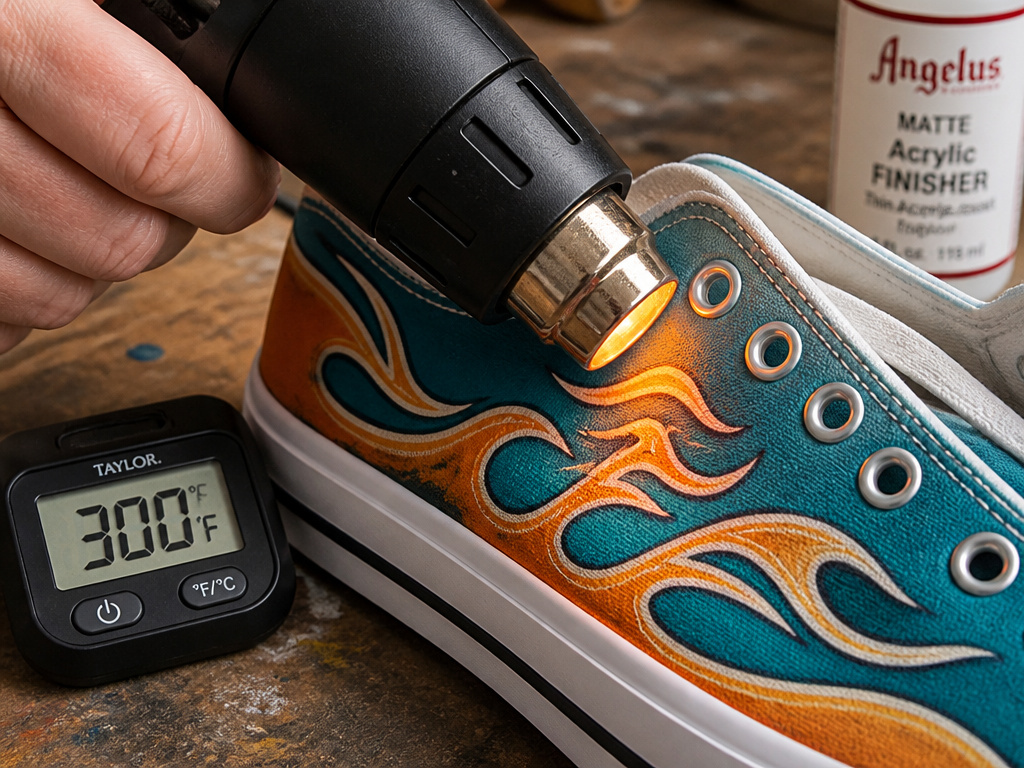
Three hundred degrees Fahrenheit for 3 to 5 minutes is the only heat-set figure Angelus publishes, and it arrives with a condition attached.
The condition is 2-Soft. Angelus ties the heat gun to the medium: if you mixed 2-Soft into the paint, heat-set it once it’s dry. If you didn’t, the FAQ doesn’t ask you to.
Plenty of customizers heat-set every layer regardless, medium or no medium. The risk in that is real. Push past the set point and the paint burns and changes color, and Angelus publishes no ceiling above 300 to warn you where that starts.
Keep the gun moving for the full 3 to 5 minutes.
You can watch the paint tell you when it’s done.
Sealing comes after the heat-set, never before. Sealing canvas with a thin acrylic topcoat keeps paint from scuffing at the heel, and it’s the step that makes a homemade pair look bought.
Where the Guides Stop Agreeing
Every tutorial says thin coats. Almost none of them agree on how many.
Angelus says 3 to 5 light layers. Other customizer guides come in lower, at 2 to 4, arguing that fewer coats leave more of the canvas texture showing. Neither number is wrong. Coat count is a texture decision as much as a durability one, and a shoe painted in four coats will feel different under the thumb than one painted in two.
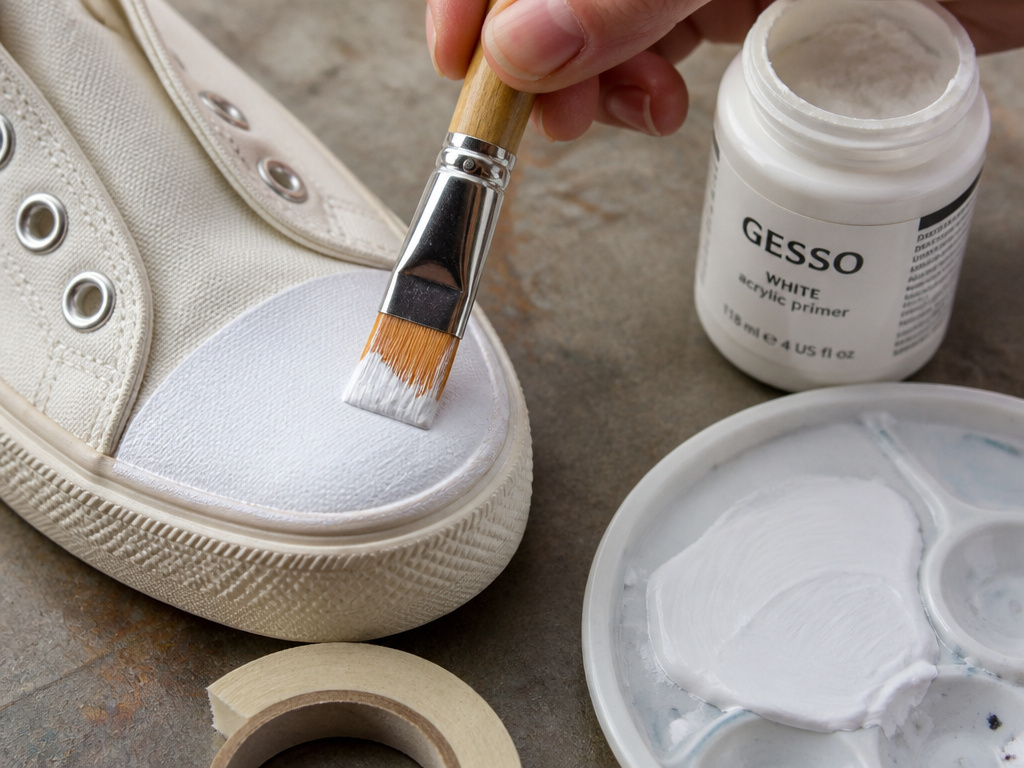
Primer is the bigger split. Angelus says canvas needs no added protection before paint. Both positions have a logic to them. If you’re using Angelus, skip the gesso. If you’re using craft acrylic, one thin gesso layer is cheap insurance.
Sealing splits the same way. Angelus calls the finisher optional.
I’d rather see a shoe with four honest coats than six panicked ones. If you’re counting layers to hit a number, you’ve lost the plot. Stop when the color reads even and the canvas still feels like canvas.
Spray is a different route entirely. Some customizers reach for spray paint for canvas shoes when they want one flat color block, though it gives you less control at the tape line than a brush does.
What Goes Wrong, and How to Fix It
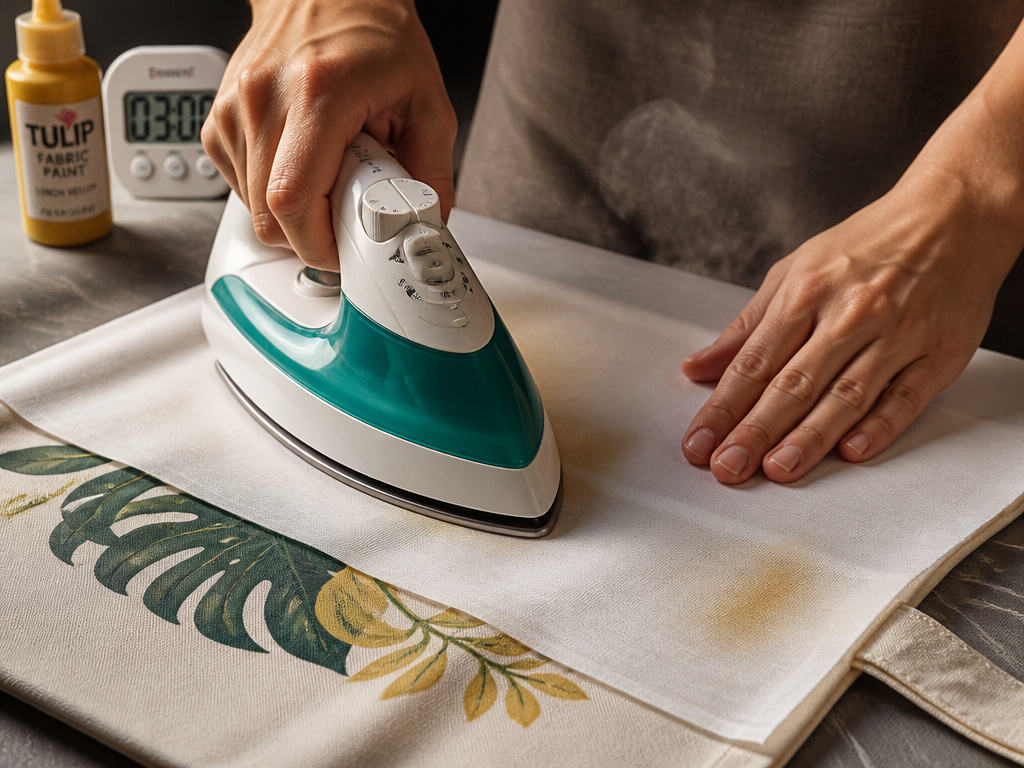
I hadn’t.
Most canvas failures are mechanical, not artistic. Here’s the diagnostic sheet:
| Problem | Why it happens | Fix |
|---|---|---|
| Fuzzy, bleeding edges | Tape lifted at the seam | Press tape flat, reseal the edge, repaint |
| Cracking at the toe crease | Too-thick coat on bare canvas | Thin coats; gesso first for craft acrylic |
| Paint flaking off the sole | Hard rubber midsole | Tape it off and leave the rubber bare |
| Color looks patchy | Uneven coats, uneven pressure | More thin coats, not more brush pressure |
| Paint on the eyelets | The brush wandered | Angelus Leather Preparer and Deglazer |
Mistakes You Can’t Undo
Leather Preparer and Deglazer will not lift paint out of canvas. Angelus says so directly: it cleans paint off the eyelets, and that’s the extent of what it does here. Once a wrong color is in the weave, your options are paint over it or live with it.
Four habits that keep you out of that hole:
- Tape the edge twice wherever the design runs close to the sole.
- Test your mixed color on the inside of the tongue before it touches the outside.
- Keep a dry brush within reach to wick up a run before it sets.
- Never touch up wet paint with more wet paint. Let it dry, heat-set, then touch up.
Craft Paint vs Angelus: What Actually Matters
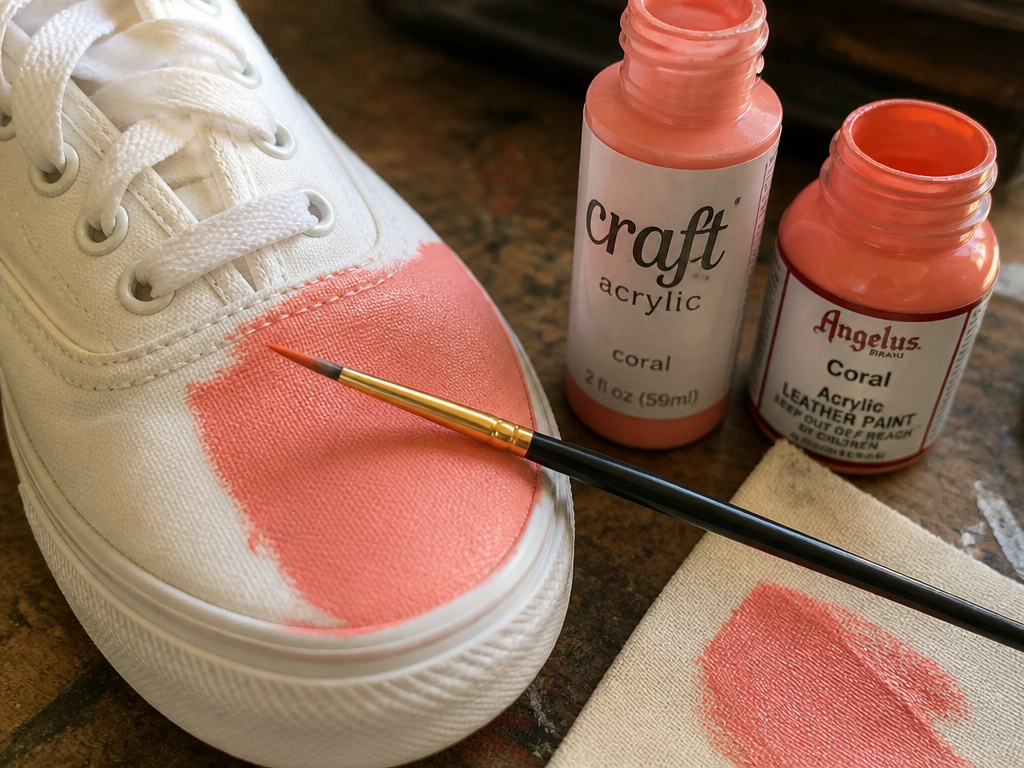
Angelus built its reputation on leather, and the canvas line inherits most of that chemistry.
| What | Angelus | Craft acrylic |
|---|---|---|
| Flexibility on canvas | Stays soft mixed 1 to 1 with 2-Soft | Dries stiff, cracks at the toe crease |
| Color range | Footwear palette, built for wear | Enormous range, cheap per bottle |
| Lightfastness | Formulated to hold up | Fades on a sunny windowsill |
| Best use | A shoe you’ll actually wear | Sketchbook studies and test swatches |
Here’s where I’ll take a side. Craft acrylic is a legitimate way to start, and the snobbery around it keeps people from picking up a brush at all.
What they won’t do is survive sunlight. Craft paint fades.
When Craft Paint Is the Right Call
Use the bottle stuff for studies. Paint a test shoe, paint the inside of a tongue, paint a scrap of cotton canvas cut from an old tote. Learn how the color shifts as it dries and how much pressure the brush needs before it bleeds. None of that lesson requires footwear chemistry.
If the shoe is going to be worn hard, buy sneaker paint built for footwear and save the craft bottle for the sketchbook.
Frequently Asked Questions
Do you have to heat-set paint on canvas shoes?
Only if you mixed in Angelus 2-Soft Fabric Medium. Angelus ties the heat gun to the medium specifically: 300 degrees Fahrenheit for 3 to 5 minutes once the paint is dry. Paint applied straight from the bottle air-dries without a gun. Some customizers heat-set everything anyway, but that goes beyond what the manufacturer publishes.
How many coats of paint does a canvas shoe need?
Angelus says 3 to 5 light layers, each dry before the next. Start at three and judge by eye. If the color still looks uneven under raking light, add another thin coat rather than a heavy one.
Can you use regular acrylic paint on canvas shoes?
You can, with caveats. Craft acrylic dries stiffer than footwear paint and cracks along the toe crease on a shoe that flexes. It also fades in sunlight, which footwear paint is formulated to resist. For a first pair or a study shoe, craft acrylic is fine. For something worn daily, use paint made for sneakers.
What happens if you paint the rubber midsole?
Paint doesn’t bond to hard rubber the way it bonds to canvas. On a classic Converse or Vans midsole it sits on the surface and flakes off as the rubber flexes. Tape the midsole off during prep and leave it bare. Soft midsoles on some models take paint better, but the stiff ones are a losing bet.
Can you wash painted canvas shoes?
The Bottom Line
Paint one shoe first. Not a pair. Do the outside of the left shoe, live with it for a day, and see how the paint behaves where your foot actually bends. If it cracks at the toe crease, you’ve learned that on one shoe instead of two.
Everything else here is forgiving. Canvas takes a correction better than leather does, the coats are thin enough to redo, and a shoe painted badly still gets worn. That’s the whole point of learning how to paint canvas shoes on a cheap pair rather than a good one.
Go make the first one messy.
