
10 Best Engine Compartment Paint in 2026
This post contains affiliate links. As an Amazon Associate, we earn from qualifying purchases.
For a durable, professional-looking engine bay, Dupli-Color Engine Paint with CERAMIC is the best overall pick, thanks to its ceramic resins that help dissipate heat and resist oil and automotive fluids. For extreme temperatures up to 2000°F, the Rust-Oleum High Heat 5-in-1 Spray Paint is a top choice, while the Eastwood High Temperature Ceramic Engine Paint offers tough nano-ceramic technology for restorers.
Painting an engine compartment is about more than just color. The real challenge is finding a paint that withstands intense heat, resists chemicals like oil and gas, and bonds to metal without blistering or peeling. A poor choice can lead to a flaking, discolored mess in a season.
This guide evaluates ten engine compartment paints based on manufacturer specifications, expert round-ups, and patterns in owner feedback. We break down heat resistance, chemical durability, and application ease to help you choose the right finish for your project.
Top 10 Engine Compartment Paints in the Market

Certain content that appears on this site comes from Amazon. This content is provided "as is" and is subject to change or removal at any time.
The Best Engine Compartment Paints, Reviewed
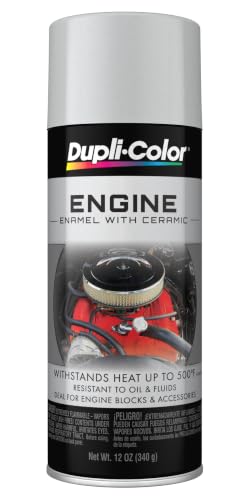
Dupli-Color Engine Paint with CERAMIC
What We Like
- Ceramic resins for heat dissipation
- Resists oil and automotive fluids
- Won't blister, flake, crack, or peel
- EZ Touch Conical Nozzle for control
Trade-offs
- 500°F heat limit lower than some rivals
- Nozzle can clog if not cleaned immediately after use
A 500°F heat ceiling with ceramic resins means this paint handles normal engine bay temperatures while resisting oil and other automotive fluids. The gloss aluminum finish and EZ Touch Conical Nozzle give you precise spray control around brackets and hoses without overspray. For someone refreshing a valve cover or an entire block, this Dupli-Color formula delivers the essentials without fuss.
The trade-off is that 500°F won’t cover extreme exhaust manifolds or turbo housings. If you need higher heat resistance, the Rust-Oleum High Heat 5-in-1 reaches 2000°F but comes as a clear coat. Here you get a gloss aluminum finish that resists blistering, flaking, cracking, and peeling, so it’s more about choosing the right tool for the temperature range you actually see. Stick with this one for standard engine compartments and you’ll get a durable, fluid-resistant coat that stays put.
Product photos
Rust-Oleum Automotive Engine Enamel Spray Paint

What We Like
- Resists oil, gas, grease, and salt
- Any-angle spray reaches tight spots
- Rust preventive formula protects metal
- Dries to touch in 20 minutes
Trade-offs
- Maximum 600°F limits extreme engine use
- Covers only 12 sq ft per can
Heat resistance up to 600°F means this enamel handles the intermittent temperatures found on many automotive engine parts, so it resists oil, gas, grease, salt, and rust without peeling or discoloration under those conditions. The any-angle spray technology lets you aim the can in any direction, even upside down, which helps you reach tight spots in an engine bay without removing parts. It’s a practical choice for a restoration or refresh where the engine sees typical heat levels, not extreme racing or turbo conditions.
If you’re working on a high-performance motor with headers or a turbocharger that routinely pushes past 600°F, this enamel won’t hold up. You would want a paint with higher heat resistance, such as the Rust-Oleum High Heat 5-in-1 Spray Paint with its 2000°F ceramic formula. For most automotive engine compartments, though, this enamel’s gas and oil resistance and rust-preventive finish give you a durable, glossy coat that protects parts without needing an activator or two-part mix. It’s straightforward and ready to spray straight from the can.
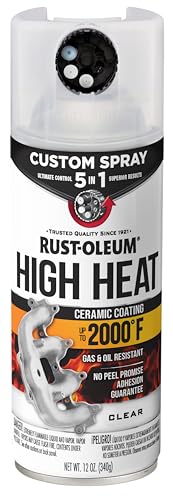
Rust-Oleum High Heat 5-in-1 Spray Paint
What We Like
- Withstands intermittent heat up to 2000°F
- Ceramic formula resists gas and oil
- Five spray patterns for precise control
- Sprays from any angle
Trade-offs
- Coverage of 10 sq ft per can limits larger jobs
- Gloss clear finish won't hide surface imperfections.
With a heat resistance of 2000°F, this paint handles the hottest engine compartments without peeling or fading. The ceramic formula shrugs off gas and oil, so it stays intact even if a valve cover weeps or a hose drips. That makes it a top choice for high-performance builds, turbo setups, or anyone who runs their engine hard and wants a finish that lasts through the heat cycles.
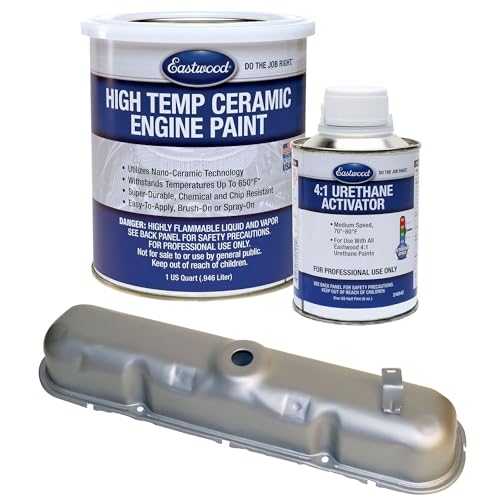
Eastwood High Temperature Ceramic Engine Paint
What We Like
- 650°F heat resistance without blistering
- Nano-ceramic microspheres for toughness
- Resists chemicals and mechanical abrasion
- Flexible brush-on or spray-on application
Trade-offs
- At 5 pounds, heavier than many aerosol options
- Requires activator for two-part mixing
A 650°F heat ceiling means this paint won’t blister or fade even on a hot-running engine block, so you can trust it to hold its factory-matched color through hard miles. The nano-ceramic technology uses ceramic microspheres and silicone alkyds to create a finish that repels oils, degreasers, and fuel spills. That makes it a strong fit for restorers who want a durable, authentic-looking engine bay without constant touch-ups.
At 5 pounds, this is a heavier kit than a typical 12-ounce aerosol like Dupli-Color Engine Paint with CERAMIC, and it requires mixing an activator before use. That extra step buys you the two-part toughness and chemical resistance that a rattle can can’t match, but it also means you’ll want a clean workspace and a bit more time. For a show-quality build or a daily driver that sees degreaser baths, the effort pays off in a finish that stays put.
Product photos
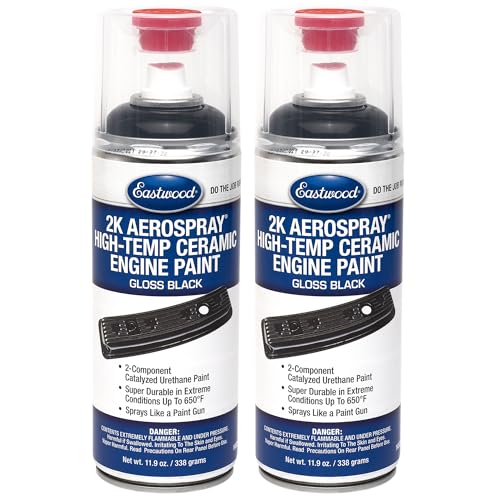
Eastwood 2K Aerospray High Temperature Ceramic Paint
What We Like
- 2-component urethane for extreme durability
- Resists heat up to 650°F
- Wide fan pattern for even coverage
- Dual-chamber aerosol keeps activator separate
Trade-offs
- Heavier than single-stage engine paints
- Dual-chamber design limits total paint volume
- Requires careful activation before spraying
A 2-component urethane system in an aerosol can means you get the toughness of a professional catalyzed paint without needing a spray gun. The dual-chamber design keeps the activator separate until you press the nozzle, so the ceramic paint cures into a hard, chemical-resistant finish that handles 650°F under the hood. This is the right choice for anyone rebuilding an engine or restoring a classic car who wants a gloss black finish that won’t soften from oil drips or heat cycling. The wide fan pattern helps you cover valve covers and block sides evenly, reducing the risk of runs on vertical surfaces.
At 1.5 pounds per two-pack, this is heavier than a standard 12-ounce can like Dupli-Color Engine Paint with CERAMIC, and the dual-chamber design leaves less actual paint per can. You will need to use the entire can after activating it, so plan your job to avoid waste. For a quick touch-up on a daily driver, a simpler single-stage enamel might be more practical. But for a show-quality engine bay that sees real miles, the Eastwood 2K delivers a finish that looks and lasts like a two-part job.
VHT Engine Metallic High Heat Spray Paint
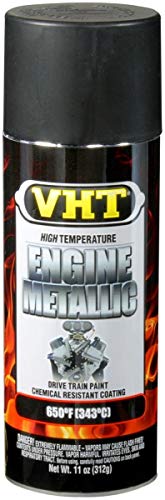
What We Like
- Urethane & ceramic resins for max heat resistance
- Withstands intermittent temperatures up to 650°F
- Dries to touch in 30 minutes
- Available in 31 colors including metallics
Trade-offs
- Overnight cure needed before full handling
- Requires overnight drying before engine reassembly.
VHT Engine Metallic paint blends urethane and ceramic resins to handle intermittent heat up to 650°F, so it stands up to the heat cycling around an engine block or header without fading or peeling. The Black Pearl metallic finish gives your engine bay a subtle sparkle that catches light without being flashy, making it a strong choice for restorations or custom builds where you want the look to match the performance. With 31 color options including four bright metallics, you can dial in exactly the shade you need.
Compared to the Dupli-Color Engine Paint with CERAMIC, which offers a gloss aluminum finish, VHT focuses on a wider metallic palette and a slightly higher heat ceiling. If you prefer a straightforward gloss black without the sparkle, Rust-Oleum Automotive Engine Enamel might be simpler, but for a metallic look that holds up under hood, this VHT delivers.
Seymour EN-42 Hi-Tech Engine Spray Paint
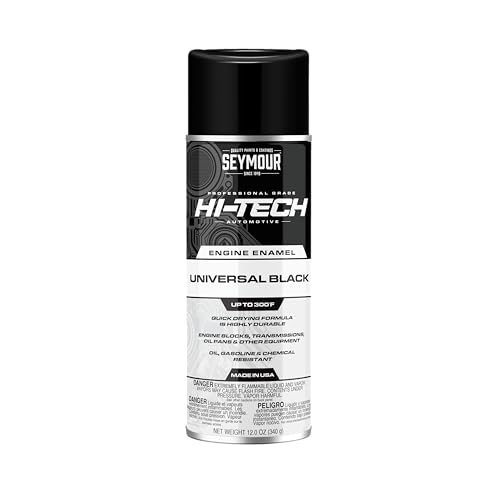
What We Like
- Dries to touch in 5 minutes
- Tack-free in 30 minutes
- Heat resistant to 300°F
- Chemical and gas resistant
Trade-offs
- Heat resistance limited to 300°F
- Coverage only 15 sq ft per can
A 5-minute dry-to-touch time means you can apply a second coat or handle the part sooner than with slower-drying paints, which helps when you are working on a tight schedule. The formula resists chemicals and gas, so the finish holds up against oil drips and fuel spills. It restores original factory color to engines, transmissions, and other OEM equipment, and the 300°F heat rating covers typical engine bay temperatures for most standard builds. This is a fast, practical choice for a routine restoration or a weekend project where quick turnaround matters more than extreme heat tolerance.
Seymour EN-42 offers 300°F heat resistance, which is lower than what some builds demand. It also provides up to 15 square feet of coverage per can, so you may need an extra can for larger projects like a full engine block and transmission.
Product photos
VHT Engine Enamel Satin Spray Paint
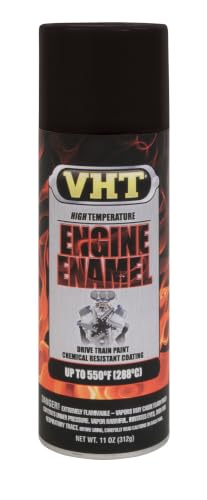
What We Like
- Excellent heat and chemical resistance
- Formulated against corrosion, rust, salt spray
- Durable satin finish for engine parts
Trade-offs
- Only available in GM Black color
- Smaller 11 oz can than some competitors
Excellent heat and chemical resistance means this paint is built for the demands of an engine bay. Formulated to withstand corrosion, rust, salt spray, and additives, it holds up against the typical contaminants found in automotive environments. The satin finish gives a clean look that many DIYers prefer for its ability to hide minor surface flaws, making it a practical option for those focused on protection and a straightforward appearance.
The main trade-off is color choice: this only comes in GM Black, so if you need aluminum, blue, or a custom shade you will have to look elsewhere. Compared to the Dupli-Color Engine Paint with CERAMIC, which offers a larger 12-ounce can and a gloss aluminum option, VHT gives you a smaller can and less flexibility. But for a straightforward black engine bay refresh where durability matters more than color variety, the VHT delivers the protection its formulation promises.
Product photos
STANIOS INDUSTRIAL SUPPLY 98-53-2PK Engine Compartment Paint
What We Like
- Fast-dry formula (tack-free in 5 min)
- Resists oil, chemicals and rust
- Even spray pattern minimizes runs
- Covers up to 30 sq ft total
Trade-offs
- Heat resistance only 250°F limits hot engine use
- Not a ceramic or high-temp formula
- Single color choice (Cadillac Blue)
A 250°F heat ceiling means this paint is best for cooler engine parts like valve covers and transmissions, not exhaust manifolds or turbo housings that run much hotter. The fast-dry formula reaches tack-free in about five minutes, so you can recoat in under half an hour and finish a project in a single afternoon. Cadillac Blue is a distinctive vintage shade that stands out under the hood, and the two-pack gives you enough coverage for an engine block and several accessories without running to the store for another can.
This enamel is rated for 250°F, while some other engine paints, like Rust-Oleum Automotive Engine Enamel, handle up to 600°F. If your engine bay sees sustained high temperatures, you will want a paint rated for that duty. But for a restoration project where color authenticity matters and the parts stay below 250°F, this Seymour-sourced enamel delivers a smooth, chemical-resistant finish that resists oil and rust. Just prep the surface properly and you will get a durable, factory-looking coat.
Product photos
TouchUp King 2K High Temp Engine Paint
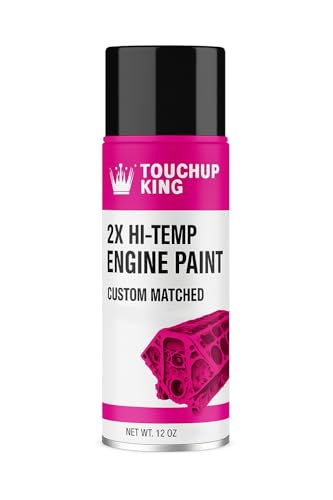
What We Like
- Precision nozzle reduces overspray
- Smooth even coverage with minimal prep
- Ceramic-like finish without a paint booth
Trade-offs
- Only available in gloss pink finish
- Gloss pink only, no other color options
A precision spray nozzle on a 12 oz can delivers smooth, even coverage with minimal prep, so you can get a ceramic-like gloss finish on valve covers and calipers without needing a paint booth. Reviewers note that the spray pattern helps reduce overspray, making it practical for at-home use. That easy application means you spend less time masking and more time finishing the job.
The gloss pink color is a specific choice, so if you’re aiming for a traditional black or aluminum engine bay, this paint won’t match. Compared to Rust-Oleum Automotive Engine Enamel, which is rated up to 600°F, the TouchUp King’s heat resistance is not given a specific number. For a high-performance engine where you need a guaranteed temperature ceiling, a paint with a published rating would be a safer bet.
How We Evaluated Engine Compartment Paints
Our evaluation is research-based, drawing on manufacturer technical data sheets, expert restoration guides, and the collective experience shared in automotive forums and owner reviews. We focused on the specific demands of an engine bay environment rather than general-purpose paints.
Three criteria mattered most for this category. Heat resistance was the primary filter, as engine compartments generate temperatures that standard paints cannot handle. Chemical resistance to oil, gas, grease, and salt was equally critical for long-term durability. Finally, application method and ease of use determined whether a DIYer could achieve a professional result without specialized equipment.
Because this is a research-led evaluation, we have not personally tested each paint on an engine block. Instead, we rely on documented specifications, expert consensus, and what owners consistently report about adhesion, curing, and real-world performance to make reliable recommendations.
What To Look For In Engine Compartment Paints
Choosing the right paint means balancing heat tolerance, chemical resistance, and your specific project needs. Here are the key factors to consider.
Focus on the maximum intermittent heat rating your engine bay will reach. For most street cars, 500°F to 650°F is sufficient, while race or turbocharged engines may require a 2000°F-rated coating. Always check the paint’s resistance to oil, gas, and coolant.
Heat Resistance
The most critical specification is the paint’s maximum operating temperature. Standard engine paints typically handle 300°F to 500°F, which works for engine blocks and valve covers. However, parts near exhaust manifolds, turbochargers, or headers can reach very high temperatures, requiring a specialized high-heat formula. Look for a rating that matches the hottest part you plan to paint.
Chemical and Fluid Resistance
Engine compartments are exposed to oil, gasoline, coolant, and road salt. A paint that resists these chemicals will prevent staining, peeling, and corrosion over time. Ceramic and urethane-based paints generally offer superior chemical resistance compared to standard enamels. Check if the paint is formulated to resist gas and grease specifically.
Application and Cure Time
Consider how you will apply the paint. Aerosol cans with adjustable spray patterns or any-angle nozzles make tight engine bay areas easier to reach. Some paints require overnight curing before handling or reassembly, while others dry to the touch in minutes. For a faster workflow. Two-component urethanes offer extreme durability but need careful mixing and activation.
- Check the maximum temperature rating against your engine’s hottest components.
- Confirm the paint resists oil, gas, and coolant for long-term durability.
- Look for a nozzle designed for tight spaces or any-angle spraying.
- Verify the cure time before you can handle or reassemble parts.
- Decide if you need a single-stage aerosol for convenience or a two-part urethane for maximum toughness.
Always test the paint on a small, hidden area first to confirm adhesion and color match before painting your entire engine bay.
Engine Compartment Paints Compared
The table below compares the top ten engine compartment paints across heat resistance, chemical protection, and application features to help you find the right match for your restoration.
| Product | Heat Resistance | Finish | Size |
|---|---|---|---|
| Dupli-Color Engine Paint with CERAMIC | Up to 500°F | Gloss Aluminum | 12 oz |
| Rust-Oleum Automotive Engine Enamel Spray Paint | 600°F intermittent | Gloss Black | N/A |
| Rust-Oleum High Heat 5-in-1 Spray Paint | 2000°F intermittent | Gloss Clear | N/A |
| Eastwood High Temperature Ceramic Engine Paint | 650°F | N/A | N/A |
| Eastwood 2K Aerospray High Temperature Ceramic Paint | 650°F | Gloss Black | 11.9 oz |
| VHT Engine Metallic High Heat Spray Paint | 650°F intermittent | Metallic (Black Pearl) | 11 oz |
| Seymour EN-42 Hi-Tech Engine Spray Paint | 300°F | N/A | N/A |
| VHT Engine Enamel Satin Spray Paint | N/A | Satin | 11 oz |
| STANIOS INDUSTRIAL SUPPLY 98-53-2PK Engine Compartment Paint | 250°F | N/A | 12 oz |
| TouchUp King 2K High Temp Engine Paint | N/A | Gloss | 12 oz |
Frequently Asked Questions
What is the best paint for an engine compartment?
The Dupli-Color Engine Paint with CERAMIC is the best overall choice for most DIYers because its ceramic resins help dissipate heat and resist oil and automotive fluids without blistering or peeling. For extreme heat applications up to 2000°F, the Rust-Oleum High Heat 5-in-1 Spray Paint is a better option.
How hot does an engine compartment get?
A typical engine bay can reach temperatures between 200°F and 300°F under normal driving conditions. However, areas near exhaust manifolds and turbochargers can get much hotter, which is why choosing a paint with a temperature rating that matches the specific part is important.
Do I need to prime an engine block before painting?
Most high-quality engine paints are designed to bond directly to properly cleaned bare metal or existing paint. However, using a compatible high-heat primer can improve adhesion and corrosion resistance, especially on raw metal surfaces. Always follow the paint manufacturer’s preparation instructions.
How long does engine paint take to cure?
Cure times vary significantly by formula. Some fast-dry paints like the Seymour EN-42 are tack-free in 5 minutes, while others, like the VHT Engine Metallic paint requires an overnight cure before full handling. Two-component urethanes also need a full cure period before the engine can be run.
Can I paint over rust in the engine bay?
Surface rust should be removed before painting for the best results. While some engine paints offer rust-preventive properties, they are not designed to bond to flaking or heavy rust. Sanding or using a wire brushing to clean, bare metal will ensure the best adhesion and a lasting finish.
The Bottom Line
For the vast majority of engine bay restorations, Dupli-Color Engine Paint with CERAMIC delivers the best balance of heat dissipation, chemical resistance, and a glossy finish. It is the ideal choice for DIYers who want a durable, professional-looking result without moving to a complex two-part system.
If your project involves extreme heat from turbochargers or headers, the Rust-Oleum High Heat 5-in-1 Spray Paint is worth paying more for its 2000°F rating. Budget-conscious builders should consider the VHT Engine Enamel Satin Spray Paint, which offers excellent heat and chemical resistance at an affordable price, though it is limited to a black finish.
The single most important factor in choosing engine compartment paint is matching the heat rating to the hottest part you plan to paint. Get that right, and you are most of the way to a finish that will last.
