
9 Best Paint Rollers For Concrete in 2026
This post contains affiliate links. As an Amazon Associate, we earn from qualifying purchases.
For painting concrete, the PinStone 9-Inch Microfiber Paint Roller Covers are our best overall pick because their non-shedding microfiber weave and high paint absorption deliver a smooth, even finish on rough surfaces. We also highlight the Wooster Super/Fab for extra-rough concrete and the ROLLINGDOG 12-Inch for fast coverage on large areas.
Choosing a paint roller for concrete isn’t the same as picking one for drywall. The texture of concrete, from smooth garage floors to rough, porous masonry, demands a specific nap thickness and material to ensure paint adheres properly and covers evenly without leaving lint behind.
This guide is based on a careful analysis of manufacturer specifications, expert round-ups, and patterns in owner feedback. We break down the key features to look for and recommend nine top-rated rollers to help you find the right tool for your project.
Top 9 Paint Rollers For Concrete in the Market

Certain content that appears on this site comes from Amazon. This content is provided "as is" and is subject to change or removal at any time.
The Best Paint Rollers For Concrete, Reviewed
PinStone 9-Inch Microfiber Paint Roller Covers
What We Like
- Non-shedding microfiber weave
- High paint absorption and even release
- Works with all paints and stains
- Ideal for rough concrete surfaces
Trade-offs
- 3/4-inch nap limits use on very rough concrete
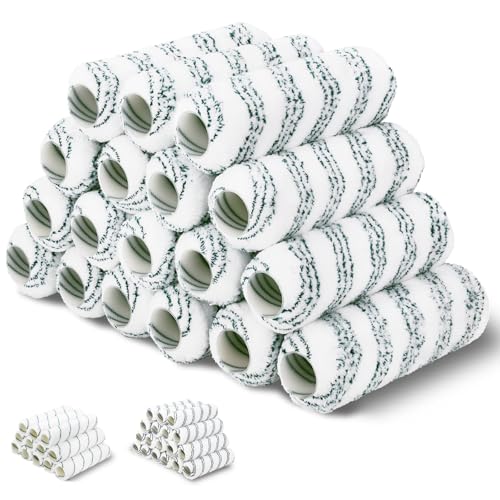
An 18-count pack of 9-inch microfiber roller covers with a 3/4-inch nap means you can tackle large concrete walls or floors without stopping to swap covers mid-project. The dense, tightly woven microfiber picks up plenty of paint and lays it down evenly. You get a smooth finish on textured surfaces like concrete blocks, masonry, and stucco without worrying about fibers shedding into your work. This is the set to grab if you’re covering a basement, garage, or exterior wall and want consistent results across a big area.
The 3/4-inch nap is designed for rough surfaces, but for heavily textured or extra-rough jobs, a thicker nap cover like the Wooster Super/Fab with its 1-1/4-inch nap may be better suited. Still, for most concrete blocks, masonry, and stucco work, the PinStone covers provide a reliable option that works with all paints and stains.
Product photos
Wooster Super/Fab Roller Cover 1-1/4-Inch Nap
What We Like
- 1-1/4-inch nap handles extra-rough concrete
- Double-thick polypropylene core resists solvents and cracking
- Proprietary fabric resists matting for smoother coverage
- High capacity with flat and satin paints
Trade-offs
- 9-inch width limits speed on large walls or floors
- Too rough a texture for smooth drywall or trim
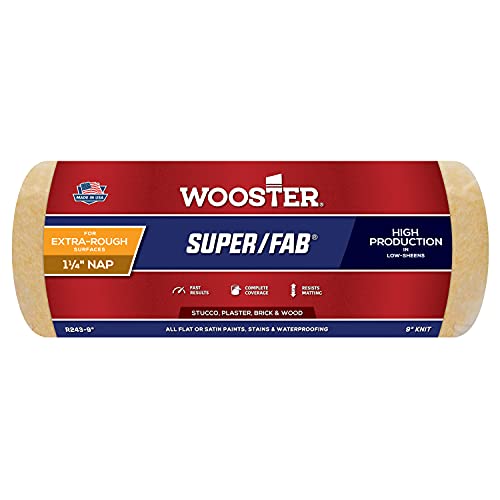
A 1-1/4-inch pile is designed for extra-rough surfaces, so this cover can hold a high capacity of paint with flat or satin paints, stains, and waterproofing. The proprietary golden yellow fabric resists matting for complete coverage and smoother results, while the green double-thick polypropylene core resists water, solvents, and cracking. For anyone working on rough concrete or textured masonry, this roller cover is built to match that surface exactly.
The 9-inch width covers ground more slowly than wider options like the ROLLINGDOG 12-inch, so if you are painting a large area, the narrower Wooster will require more passes. But for extra-rough surfaces where coverage matters, the Wooster’s thick nap and solvent-resistant core make it a suitable tool for the job.
Product photos
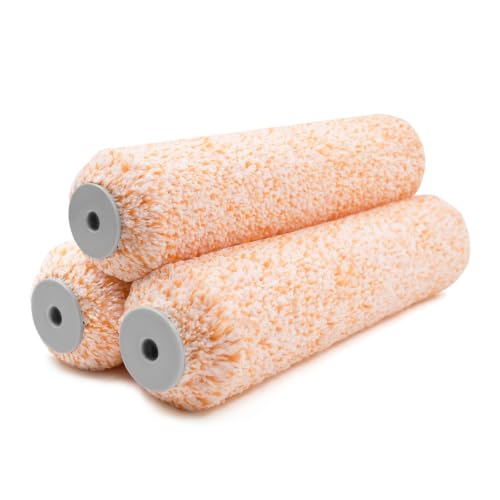
ROLLINGDOG 12-Inch Microfiber Paint Roller Covers
What We Like
- 12-inch width covers large areas fast
- 3/4-inch nap grips rough concrete
- High-density microfiber holds more paint
- Plastic end caps prevent fiber shedding
Trade-offs
- 1.5-inch core limits frame compatibility
- 12-inch length is too large for tight spaces
A 12-inch roller with a deep 3/4-inch nap is built for speed on rough concrete, and this one delivers. The high-density microfiber holds more paint than standard covers, so you dip less often and keep moving across large slabs or block walls. Plastic end caps lock the sleeve in place and stop fibers from shedding mid-roll, which matters when you are working with sticky latex on uneven masonry. If your project involves textured concrete, basement floors, or stucco, this cover matches the surface without skating or leaving thin patches.
The 1.5-inch core diameter fits standard heavy-duty frames, so you’ll want to confirm your frame accepts that size before buying. Compared to the 9-inch Purdy Colossus with its 1-inch nap, this 12-inch cover covers more ground per pass but has slightly less pile depth for extremely rough surfaces like split-face block. For most semi-rough to rough concrete jobs, the width, nap height, and paint-holding capacity make it a practical choice.
Product photos
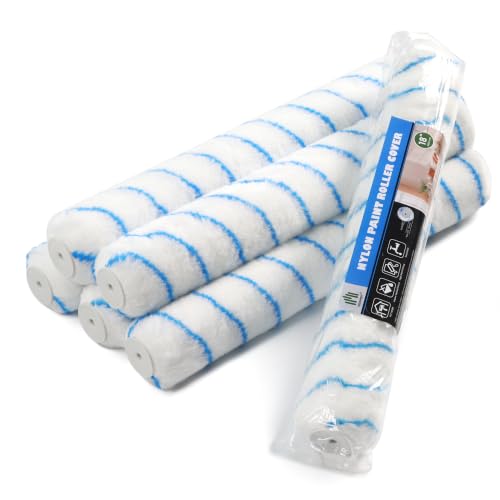
VOOMEY 18-Inch Paint Roller Covers 3/4-Inch Nap
What We Like
- Ultra-wide 18-inch for fast coverage
- 3/4-inch nap reaches deep concrete texture
- Durable nylon fiber resists shedding
- High paint loading reduces frequent reloading
Trade-offs
- 18-inch width is unwieldy on small walls
- Too wide for small walls or tight spaces
An 18-inch roller cover covers more area per stroke than a standard 9-inch roller, which speeds up work on large walls and ceilings. The deep 3/4-inch nap reaches into grooves and pits on rough concrete, stucco, or brick, so paint gets into every crevice. Nylon fibers hold up under heavy paint loads and resist shedding, giving a consistent finish across big jobs. This roller is a time-saver for anyone tackling large textured surfaces where speed matters.
The wide roller is less practical for small sections, corners, or trim, those areas will need a brush or a smaller roller. Compared to the PinStone 9-inch microfiber covers, which are better suited for detail work, the Voomey is built for covering broad, open areas like basement walls or exterior concrete with fewer dips. If your project is all large, rough surfaces, the extra width helps you finish faster.
Product photos
Ceenna Concrete Stamp Roller Cover

What We Like
- Polyurethane sleeve resists abrasion
- Creates realistic slate texture
- Works on flat and vertical concrete
- Easy to rinse with mild detergent
Trade-offs
- At 1.4 pounds, heavier than standard roller covers
- Requires separate texture patches for unique designs
A polyurethane roller cover that stamps realistic slate texture directly onto concrete is the whole point of this tool. Unlike standard fabric naps that just lay down paint, this 9-inch sleeve presses a stone pattern into the surface as you roll. It is ideal for patios, walkways, and vertical walls where you want a decorative finish without troweling or stenciling. The abrasion-resistant material holds up on rough concrete, and the compact size lets you work around edges and corners more easily than a wider drum.
The trade-off is weight. At 1.4 pounds this cover is heavier than some other roller covers, such as the Wooster Super/Fab at 0.2 pounds, so it may feel more substantial in hand. And because it stamps texture rather than simply painting, it is designed for decorative projects where the look matters more than raw square footage.
Product photos
Purdy WhiteDove Roller Covers 9-Inch 1/2-Inch Nap 3-Count
What We Like
- Lint-free woven fabric finish
- Handcrafted in the USA
- Works with latex and oil-based paints
- Durable polypropylene core resists solvents
Trade-offs
- 1/2-inch nap limits texture to semi-smooth surfaces
- Only suitable for semi-smooth surfaces, not rough textures.
The 1/2-inch nap is the sweet spot for semi-smooth surfaces, holding enough paint to cover evenly without leaving heavy stipple or skipping over low spots. The woven Dralon fabric provides a lint-free finish, which matters when you’re rolling a wall or ceiling where every stray fiber stands out. This three-pack from Purdy suits the painter who wants a clean, professional finish on drywall, ceilings, or floors, and the polypropylene core resists all paints, stains, and solvents, extending the cover’s life.
This nap is best for semi-smooth to semi-rough surfaces, not for rough or heavily textured areas. If your surface has deep texture, a thicker nap like Wooster’s 1-1/4-inch Super/Fab may be more appropriate. But for drywall, ceilings, or floors that are semi-smooth, the WhiteDove delivers a flat, consistent coat with less stipple. It is a tool for a specific range of surfaces, not a universal roller for all textures.
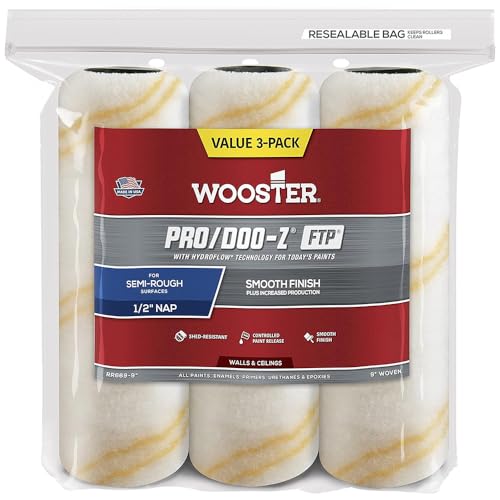
Wooster Pro/Doo-Z FTP Roller Cover 1/2-Inch Nap 9-Inch
What We Like
- Shed-resistant woven fabric for smooth finish
- Excellent paint pickup and release
- Works with many coating types
- Standard 9-inch size fits common frames
Trade-offs
- 1/2-inch nap limits use to semi-rough surfaces only
- 1/2-inch nap holds less paint than thicker naps
A 1/2-inch pile is designed for semi-rough surfaces, giving you enough cover to handle light texture without being too thick for smoother areas. The shed-resistant woven fabric helps minimize stray fibers in your finish, which means less time picking lint out of wet paint. This cover works with a wide range of coatings from flat to epoxy, so it’s versatile for different paint types on walls, ceilings, and other large surfaces.
The 1/2-inch nap is not intended for rough or heavily textured surfaces; for those jobs, a longer nap like the 1-inch on the Purdy Colossus would be more appropriate. But for semi-rough surfaces that need even coverage without excessive paint waste, this Wooster cover delivers consistent results at a practical price.
PinStone 12-Inch Microfiber Paint Roller Covers
What We Like
- 12-inch width covers large areas fast
- Non-shedding microfiber won't leave lint
- Works with all paints and stains
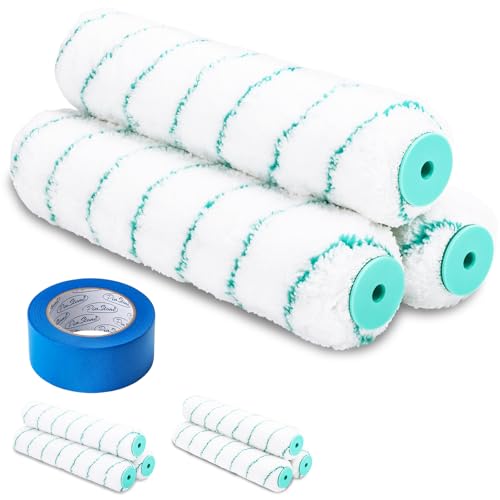
- Includes 60 yards of painter's tape
Trade-offs
- 3/4-inch nap is too thick for smooth surfaces
- 12-inch frame not as maneuverable as 9-inch
A 12-inch roller cover lets you finish a concrete wall or stucco facade in noticeably fewer passes than a standard 9-inch model. The deeper 3/4-inch nap is deep enough to push paint into rough texture without skipping. The microfiber material holds plenty of paint for a long run, and it releases evenly so you get a consistent coat with less dipping. This makes it a strong fit for anyone tackling large masonry or brick projects where speed and coverage matter more than fine detail.
The trade-off is that same 12-inch width feels heavier and less nimble on tight corners or around windows, so for trim work or small patches you will want a smaller roller. If your job is big and rough, this is a practical way to cut down on hours without sacrificing finish quality.
Product photos
WHIZZ Mini Microfiber Paint Roller 4-Inch
What We Like
- Covered end paints corners cleanly
- 10-pack value for small jobs
- Works with all paints and stains
- 4-inch size perfect for touch-ups
Trade-offs
- 1/2-inch nap is shallow for rough concrete
- Small width slows coverage on large areas
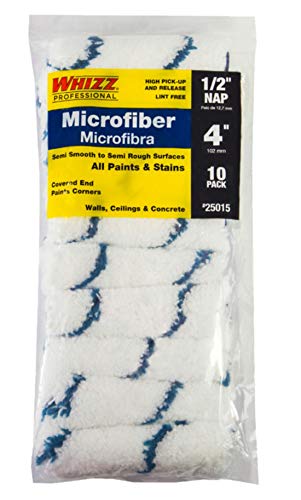
A 4-inch width with a covered end lets you paint right into corners without switching to a brush, which is exactly what makes this mini roller ideal for walls, ceilings, and concrete. The 1/2-inch microfiber nap works with all paints and stains, so you can use it for latex or oil-based coatings without worrying about compatibility. For anyone fixing up a patch of wall, touching up a ceiling, or working on small concrete projects, the pack gives you plenty of refills at a practical value.
The shallower 1/2-inch nap won’t hold as much paint or dig into deep textures as the deeper nap on the PinStone 9-inch roller cover. You’ll need to reload more often and work slower on uneven surfaces. For detailed trim or small patches, this WHIZZ roller does the job, but a longer-nap option like the PinStone 9-inch covers rough areas faster.
How We Evaluated Paint Rollers For Concrete
Our evaluation focused on the specific challenges of painting concrete surfaces. We analyzed manufacturer specifications, expert recommendations from painting and construction publications, and thousands of owner reviews to identify the most reliable and effective rollers.
The three most critical criteria were nap thickness, material composition, and paint compatibility. Nap thickness determines how well the roller reaches into concrete’s pores and texture. The material, whether microfiber, polypropylene, or woven fabric, affects shedding, durability, and paint release. Paint compatibility ensures the roller works with latex, oil-based, or specialty concrete paints.
We also considered practical factors like roller width for coverage speed, core size for frame compatibility, and overall value. This is a research-led guide; we haven’t personally tested every roller, but we’ve cross-referenced data to give you a clear, honest picture of what each roller does best.
What To Look For In Paint Rollers For Concrete
Choosing the right roller for concrete starts with understanding your surface. The texture and porosity of the concrete will dictate the nap thickness and roller material you need.
For rough concrete, choose a 3/4-inch to 1-1/4-inch nap. For semi-smooth surfaces, a 1/2-inch nap works best. Microfiber is ideal for smooth finishes, while polypropylene handles solvents and rough textures well.
Nap Thickness
Nap thickness is the most important factor for concrete. A 1/2-inch nap is suitable for semi-smooth concrete like painted garage floors or smooth basement walls. For rough, porous concrete, a 3/4-inch nap provides better coverage by reaching into the texture. For extremely rough or heavily textured concrete, a 1-1/4-inch nap is necessary to ensure paint gets into every crevice.
Roller Material
The material of the roller cover directly affects its performance on concrete. Microfiber covers are non-shedding and hold a lot of paint, making them great for smooth finishes. Polypropylene cores are solvent-resistant and durable, ideal for rough surfaces and oil-based paints. Woven fabric covers like those from Purdy offer a lint-free finish but may not hold up as well on very rough concrete.
Roller Width and Core Size
Roller width determines how fast you can cover a surface. A standard 9-inch roller is maneuverable and fits most frames. A 12-inch or 18-inch roller covers large areas faster but can be unwieldy in tight spaces. Core size matters for frame compatibility: most standard frames use a 1.5-inch core, but some rollers use a 1.5-inch core or a larger size, so check your frame before buying.
- Match the nap thickness to your concrete’s texture: 1/2-inch for smooth, 3/4-inch for rough, 1-1/4-inch for extra-rough.
- Choose a roller material that matches your paint: microfiber for latex, polypropylene for oil-based or solvent-based coatings.
- Pick a width that suits your project: 9-inch for detail work, 12-inch or 18-inch for large walls or floors.
- Ensure the core size fits your roller frame to avoid frustration.
A good rule of thumb: the rougher the concrete, the thicker the nap you need.
Paint Rollers For Concrete Compared
The table below compares the key specs and best uses for each of the nine paint rollers we recommend, making it easy to see which one fits your project.
| Product | Nap Length | Material | Surface Type | Width |
|---|---|---|---|---|
| PinStone 9-Inch Microfiber Paint Roller Covers | 3/4 inch | Microfiber | Rough / textured | 9 inches |
| Wooster Super/Fab Roller Cover 1-1/4-Inch Nap | 1-1/4 Inch | Proprietary golden yellow fabric | Extra-rough surfaces | 9 Inches |
| ROLLINGDOG 12-Inch Microfiber Paint Roller Covers | 3/4 inch | High-density microfiber | Semi-rough to rough | 12 inch |
| VOOMEY 18-Inch Paint Roller Covers 3/4-Inch Nap | 3/4 inch | Nylon fiber | Rough & Textured Surfaces | 18 inches |
| Ceenna Concrete Stamp Roller Cover | N/A | Polyurethane | Flat and vertical concrete | 9 inches |
| Purdy WhiteDove Roller Covers 9-Inch 1/2-Inch Nap 3-Count | 1/2 in | Woven Dralon Fabric | N/A | 9 in |
| Wooster Pro/Doo-Z FTP Roller Cover 1/2-Inch Nap 9-Inch | 1/2 in. | Shed-Resistant Woven Fabric | Semi-Rough Surfaces | 9 in. |
| PinStone 12-Inch Microfiber Paint Roller Covers | 3/4 inch | Microfiber | Semi-rough to rough | 12 inches |
| WHIZZ Mini Microfiber Paint Roller 4-Inch | 1/2 in | Microfiber | Walls, ceilings & concrete | 4" |
Frequently Asked Questions
What nap thickness is best for painting concrete?
For smooth concrete, use a 1/2-inch nap. For rough or textured concrete, choose a 3/4-inch nap. For extremely rough or pitted concrete, a 1-1/4-inch nap is best to ensure paint reaches all the way into the surface.
Can I use a regular paint roller on concrete?
You can, but it may not deliver the best results. A standard roller with a short nap won’t reach into the pores of rough concrete, leading to poor adhesion and an uneven finish. A roller designed for concrete with a thicker nap and durable material is recommended.
What type of paint roller cover is best for concrete?
Microfiber roller covers are excellent for concrete because they are non-shedding and hold a lot of paint. For rough or textured surfaces, a polypropylene cover is more durable and resists solvent damage. Woven fabric covers work well on semi-smooth concrete.
How do I clean a paint roller after using it on concrete?
Clean the roller immediately after use. For latex paint, wash with warm, soapy water until the water runs clear. For oil-based paints, use mineral spirits or paint thinner. Squeeze out excess water and let the roller dry completely before storing.
What is the best roller for painting a concrete floor?
A 12-inch roller with a 3/4-inch nap is a great choice for concrete floors, as it covers large areas quickly and reaches into the texture. The PinStone 12-Inch Microfiber or ROLLINGDOG 12-Inch are both excellent options for this task.
The Bottom Line
For most concrete painting projects, the PinStone 9-Inch Microfiber Paint Roller Covers offer the best balance of performance, durability, and ease of use. Its non-shedding microfiber and high paint absorption make it perfect for DIYers and contractors covering large surfaces with any paint type.
If you’re tackling extra-rough concrete or textured masonry, the Wooster Super/Fab with its 1-1/4-inch nap is your best bet. For those on a budget working with semi-smooth surfaces, the Wooster Pro/Doo-Z FTP provides a solid, affordable option that won’t break the bank.
No matter which roller you choose, remember that the nap thickness must match the texture of your concrete. Choosing the right roller for your specific surface is the single most important factor in getting a professional-looking finish.
