
4 Best Wood Stains For Plywood in 2026
This post contains affiliate links. As an Amazon Associate, we earn from qualifying purchases.
For plywood projects, the Minwax Wood Finish Simply White earns our best overall spot for its superior one-coat control and spatter-resistant coverage that dries fast. For blotch-prone plywood, the Old Masters Maple Oil-Based Gel Stain offers a forgiving formula, while the Varathane American Walnut Wood Stain delivers rich color that dries in just 1-2 hours.
Plywood presents a unique challenge for staining. Its thin veneer layer can absorb stain unevenly, creating blotchy patches that ruin a clean finish. You need a formula that offers control and consistent color penetration across the entire surface.
This guide is based on manufacturer specifications, expert round-ups, and patterns in owner feedback. We focused on the criteria that matter most for plywood: color control, drying time, compatibility with tricky surfaces, and ease of application.
Top 4 Wood Stains For Plywood in the Market
Certain content that appears on this site comes from Amazon. This content is provided "as is" and is subject to change or removal at any time.
The Best Wood Stains For Plywood, Reviewed
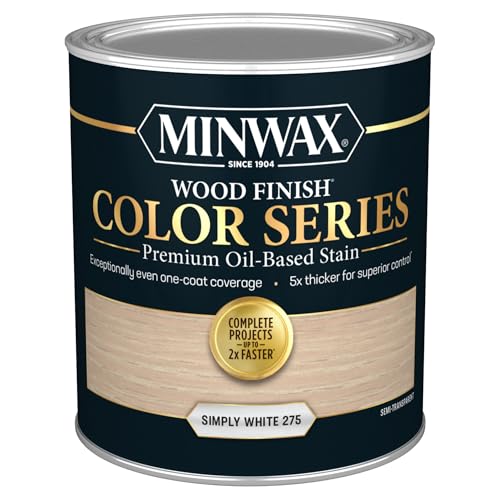
Minwax Wood Finish Simply White
What We Like
- Superior control in one coat
- Spatter-resistant coverage
- Fast dry time
- Can be tinted to 240+ colors
Trade-offs
- Only for unfinished bare wood
- No water-based cleanup option offered
A fast-drying oil-based stain that gives superior control in just one coat means you can lay down an even, spatter-resistant layer on plywood without fighting drips or waiting all day between passes. That makes it a natural fit for furniture and shelving projects where you want a clean, consistent white finish without the hassle of multiple coats or messy cleanup. The ability to tint it to 240-plus colors also adds versatility if you ever want to shift the shade without switching products.
The trade-off is that cleanup requires mineral spirits or paint thinner, so you’ll need to plan for that extra step. Compared to Varathane American Walnut, which also has a fast dry time, the Minwax Simply White offers a lighter, more opaque look that’s harder to achieve with traditional walnut tones. If you prefer a water-based option for easier soap-and-water cleanup, you might look elsewhere, but for a one-coat white that covers well and dries fast, this is a strong contender.
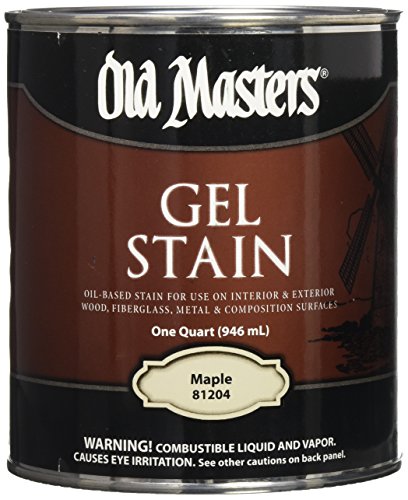
Old Masters Maple Oil-Based Gel Stain
What We Like
- Highly pigmented gelled formula
- Easy application and better color control
- Works on hard-to-stain wood
- Suitable for plywood and veneers
Trade-offs
- Oil-based formula requires mineral spirits cleanup
- Not for water-based cleanup fans
A highly pigmented gelled stain means you get thick, controlled coverage that stays where you put it, no running down the grain or soaking in unevenly. That’s exactly what makes this a go-to for hard-to-stain plywood, where blotchiness is the usual enemy. The maple color brings a warm, light tone that works well on pine, plywood, and veneers, and the gel consistency lets you build depth gradually without rushing. Anyone who has fought with streaky results on tricky wood surfaces will appreciate how this formula puts the control back in your hand.
Cleanup requires a solvent like mineral spirits or paint thinner instead of soap and water, which is a small inconvenience for the even finish it delivers. If your project involves veneered panels or plywood edges that tend to soak up stain unevenly, this is the one to reach for.
Varathane American Walnut Wood Stain

What We Like
- Dries to touch in 1-2 hours
- Covers up to 150 sq. ft.
- Wipes on without blotching or stirring
- Premium pigments enhance wood grain detail
Trade-offs
- Oil-based formula requires solvents for cleanup
- Not suitable for exterior use
A two-hour recoat time means you can apply a second coat the same day on interior wood furniture, cabinets, doors, or trim. The soya oil-based formula penetrates deeply for a natural color that enhances wood grain. For anyone working on interior wood projects, this speed and richness make it a practical choice when you need results without long waits between coats.
An oil-based stain needs a solvent for cleanup, adding a step that water-based stains skip. Compared to Minwax Wood Finish Simply White, which offers a lighter look, Varathane American Walnut delivers a deep walnut tone. If you prioritize quick turnaround and a translucent finish that shows off wood grain, this quart handles the job.
Product photos
Old Masters Early American Gel Stain

What We Like
- Highly pigmented gelled formula
- Easy application and color control
- Works on pine, plywood, and veneers
Trade-offs
- Oil-based requires mineral spirits for cleanup
- Strong odor during application and drying.
A highly pigmented gelled stain means you get thick, controlled color that won’t run or drip on tricky surfaces like plywood end grain or soft pine. This makes it a natural fit for anyone wrestling with blotchy absorption on hard-to-stain wood, where liquid stains often fail. It works on plywood and veneers straight from the can, and cleanup with mineral spirits keeps the mess manageable.
The oil base means you need a solvent for cleanup, not soap and water, which adds a step for water-based fans. Compared to Minwax Wood Finish Simply White, which is a different stain type, this gel excels where control matters most. If you prefer a simple water cleanup, the Minwax is a different option, but for woods that soak up stain unevenly, this gel delivers the grip and precision you need.
How We Evaluated Wood Stains For Plywood
Our evaluation draws from manufacturer documentation, professional woodworking advice, and the collective experience of DIYers who have finished plywood surfaces. We analyzed each stain’s formula type, pigment load, and recommended surface preparation to understand how it performs on plywood’s unique veneer layer.
The criteria that mattered most were color control on blotch-prone wood, drying time for project efficiency, coverage area per container, and cleanup requirements. Plywood stains must penetrate evenly without obscuring the grain, and gel formulas often excel here where liquid stains can fail.
A research-led evaluation has limits: we cannot replicate every application scenario or wood species. Your results will depend on plywood quality, sanding preparation, and application technique. We recommend testing any stain on a scrap piece before committing to your project.
What To Look For In Wood Stains For Plywood
Choosing the right stain for plywood means understanding how its thin veneer behaves. The wrong formula can leave you with splotchy, uneven color that’s difficult to fix.
Look for a stain with strong pigment load and controlled application. Gel stains are often the best choice for plywood because their thick consistency sits on the surface longer, allowing even penetration without blotching.
Formula Type: Gel vs. Liquid
Gel stains are the top recommendation for plywood because their thick, gelled consistency gives you more control during application. They sit on the surface rather than soaking in immediately, which helps prevent the blotchy absorption common on plywood veneers. Liquid stains can work on high-quality plywood but require more skill and careful technique to avoid uneven patches.
Drying Time and Workability
Fast-drying stains let you complete a project in a single day, but they demand quicker work. Oil-based stains typically need 1-2 hours to dry to the touch before a second coat. Water-based options dry faster but may raise the wood grain, requiring extra sanding. Consider your workspace and how much time you can dedicate to the staining process.
Cleanup and Odor
Oil-based stains require mineral spirits for cleanup and have a strong odor during application and drying. Water-based stains clean up with soap and water and have lower fumes. If you’re working indoors or in a space with limited ventilation, a water-based formula may be the better choice despite its faster drying time.
- Test the stain on a scrap piece of your actual plywood before starting your project.
- Sand the surface to at least 220 grit for the most even stain absorption.
- Apply a pre-stain wood conditioner to plywood if using a liquid stain for the first time.
- Work in a well-ventilated area, especially with oil-based formulas.
- Wipe off excess stain promptly to avoid dark, uneven patches.
A gel stain is almost always a safer bet for plywood than a liquid stain, especially if you’re new to finishing.
Wood Stains For Plywood Compared
The table below compares the four top-rated wood stains for plywood, highlighting their formula type, best use case, and key trade-offs.
| Product | Type | Color | Container Size |
|---|---|---|---|
| Minwax Wood Finish Simply White | N/A | Simply White | 1 Quart |
| Old Masters Maple Oil-Based Gel Stain | Oil-based gel stain | Maple | 1 quart |
| Varathane American Walnut Wood Stain | Oil-based, soya oil | American Walnut | Quart |
| Old Masters Early American Gel Stain | Oil-based gel stain | Early American | 2-Pack of 1 pt |
Frequently Asked Questions
Can I use any wood stain on plywood?
Yes, but gel stains work best for plywood because their thick formula prevents blotchy absorption on the thin veneer. Liquid stains can work on high-quality plywood but require careful application and often a pre-stain conditioner.
How do I prevent blotchy stain on plywood?
Use a gel stain or apply a wood conditioner before staining. Sand the surface evenly to a fine grit, and test your stain on a scrap piece first. Wipe off excess stain immediately to avoid dark patches.
Should I sand plywood before staining?
Yes, sanding is essential for even stain absorption. Start with a coarse grit and finish with a fine grit, sanding in the direction of the grain. Remove all dust before applying stain.
What’s the difference between oil-based and water-based stain for plywood?
Oil-based stains offer richer color and longer working time but require mineral spirits for cleanup and have strong fumes. Water-based stains dry faster, clean up with soap and water, and have lower odor, but they can raise the wood grain.
How long should I wait between coats of stain on plywood?
Follow the manufacturer’s drying time, typically 1-2 hours for oil-based stains. Always test a small area to ensure the first coat is dry to the touch before applying a second coat.
The Bottom Line
For most plywood projects, the Minwax Wood Finish Simply White is the best overall choice because it delivers one-coat coverage with spatter-resistant control and fast drying. It’s ideal for DIYers and woodworkers who want a reliable white stain for bare interior plywood.
If you’re working with blotch-prone plywood or veneer, the Old Masters Maple Oil-Based Gel Stain offers the forgiving gelled formula you need for precise color control. For those who want a fast-drying rich walnut tone, the Varathane American Walnut Wood Stain dries in just 1-2 hours without blotching.
The single most important factor when staining plywood is choosing a formula that gives you control over absorption. A gel stain will almost always outperform a liquid stain on this challenging surface.
