
5 Best Primers For Peel And Stick Tiles in 2026
This post contains affiliate links. As an Amazon Associate, we earn from qualifying purchases.
The Schluter Primer Peel & Stick Water-Based Primer is our best overall pick because it dries fast, bonds to tough surfaces like steel and concrete, and needs just one coat. For heavy-duty jobs, the Henry 336 Bond Enhancer is a dedicated self-stick tile primer, and the FloorPops FPP4182W Peel Stick Tile Primer is a lightweight option for smooth indoor floors.
Peel and stick tiles are a popular DIY flooring solution, but their success depends entirely on a clean, properly primed surface. A poor bond means tiles lifting, curling, or failing entirely, turning a weekend project into a frustrating redo.
We built this guide by comparing manufacturer specifications, reviewing expert round-ups, and analyzing patterns in owner feedback across dozens of products. We focused on adhesion strength, drying time, surface compatibility, and ease of application to help you choose the right primer for your specific subfloor and project size.
Top 5 Primers For Peel And Stick Tiles in the Market
Certain content that appears on this site comes from Amazon. This content is provided "as is" and is subject to change or removal at any time.
The Best Primers For Peel And Stick Tiles, Reviewed
Schluter Primer Peel & Stick Water-Based Primer

What We Like
- Dries in 15-60 minutes
- One-coat, ready-to-use application
- Works on steel, concrete, existing tile
- Water cleanup extends tool life
Trade-offs
- Must rinse tools while primer is still wet
- Requires prompt tool rinsing before primer dries
A 15-60 minute dry time means you can lay peel-and-stick tiles the same day you prime, without waiting overnight. Schluter’s water-based formula bonds to challenging surfaces like steel, concrete, and existing tile, so it’s a reliable foundation for projects on those substrates. The ready-to-use one-coat application keeps the process simple for both pros and DIYers, and water cleanup saves your rollers from hardening mid-project.
The trade-off is that the 3.78L container suits larger areas better than a single bathroom refresh, and you’ll need to rinse brushes and rollers while the primer is still wet or risk ruining them. Compared to the Henry 336 Bond Enhancer, which comes in a quart, Schluter offers more volume, making it a practical choice for larger jobs. If your project is small, a quart-sized primer might be a better fit.
Henry 336 Bond Enhancer Self-Stick Tile Primer

What We Like
- Heavy-duty bond enhancer formula
- Designed specifically for self-stick tile
- Compact 1 qt. size
Trade-offs
- Large package dimensions: 17.0 inches long
- Heavier than FloorPops primer at 11.5 lb vs. 2.0 lb
At 11.5 pounds, a quart of primer this dense means you’re getting a lot of solids in the can, which translates to better grab on surfaces that need extra help before you lay down peel-and-stick tile. The Henry 336 Bond Enhancer is designed to improve adhesion for self-stick tile projects, giving the tile a secure hold. For a bathroom or kitchen floor where you want the tile to stay put, this primer adds that extra layer of grip.
The container is 17 inches long, so it takes up more room on a shelf than the FloorPops primer, which measures 10 inches long and weighs 2.0 pounds. That means you’ll notice the heft when you carry it from the car to the job site. If you’re doing a small backsplash, the lighter FloorPops might be easier to handle, but for a full floor installation the Henry 336’s weight reflects its concentrated formula.
Mapei SM Primer Water-Based Latex Primer

What We Like
- Fast drying in 15 minutes
- Clear finish keeps layout lines visible
- High coverage for large areas
- Easy roller application with less splatter
Trade-offs
- 5-gallon size is heavy and bulky to handle
- Not suitable for use on existing vinyl or non-porous surfaces
A 5-gallon bucket of Mapei SM Primer uses a water-based latex formula that dries in about 15 minutes, so you can move through a room without long pauses between sections. The clear drying finish keeps floor layout lines visible, which helps with accurate placement of peel and stick membranes or tiles. This primer is designed for high coverage and fast drying, making it a practical choice for large flooring projects where speed and efficiency are priorities.
The 5-gallon bucket is a large container, so it may not be the most convenient option for a single small room. For smaller jobs, the Schluter Peel & Stick Primer comes in a 3.78-liter container and also offers a quick dry time. If you have a large area to cover and want to minimize trips to the store, Mapei SM Primer gives you the volume and fast drying performance to keep the work flowing.
Product photos
FloorPops FPP4182W Peel Stick Tile Primer

What We Like
- Dries in 30-90 minutes
- Covers 87.5-100 sq ft per quart
- Made in the United States
Trade-offs
- Limited to clean, smooth, suitable indoor floors
- Smaller coverage per quart than larger cans
Covering up to 100 square feet per quart, this primer is designed for peel-and-stick tile projects where you want a lightweight, low-commitment foundation. It dries in as little as 30 minutes, so you can move from priming to tiling in under an hour. That makes it ideal for renters or anyone who likes to refresh a kitchen or bathroom without a permanent bond.
The trade-off is that it only works on clean, smooth, properly prepared indoor floors, so rough or heavily textured surfaces are out. Compared to the heavier quart of the Henry 336 Bond Enhancer, the FloorPops primer is noticeably lighter and easier to handle during application. If your subfloor is already flat and you want a no-fuss primer that lets you change your mind later, this is the one to grab.
Product photos
LATICRETE Primer Plus Concentrated Primer
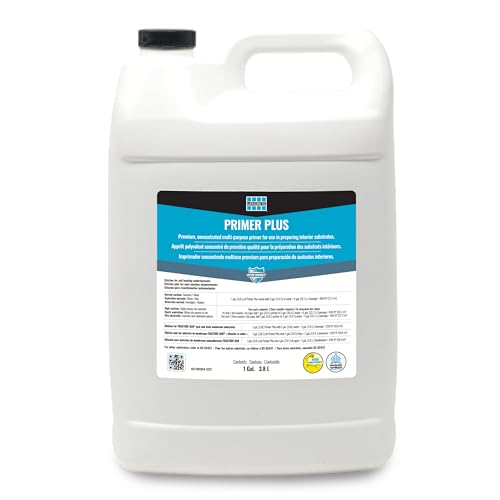
What We Like
- Works on concrete, wood, and gypsum
- Sustainable packaging with 25% recycled content
- Provides strong adhesion for longer-lasting application
Trade-offs
- Concentrate requires mixing with water before use
- Requires mixing, not ready-to-use like competitors.
A universal primer that handles concrete, wood, and gypsum substrates means you can use it on almost any surface before laying peel and stick tiles. It suits DIYers and pros alike who want one primer that works across varied subfloors without switching products.
How We Evaluated Primers For Peel And Stick Tiles
Our evaluation is research-based. We analyzed manufacturer specifications, product data sheets, and expert round-ups from flooring and painting professionals. We also studied common patterns in owner feedback to understand what works in real-world conditions and what causes failures.
The four criteria that mattered most were adhesion strength, drying time, surface compatibility, and ease of use. Adhesion is the primary job of any primer for peel and stick tiles, so we prioritized products with strong bond-enhancing formulas. Drying time matters because fast-drying primers let you install tiles sooner. Surface compatibility determines whether a primer works on concrete, wood, existing tile, or steel. Ease of use covers application method, cleanup, and whether the product is ready-to-use or requires mixing.
An evaluation has limits. Real-world results depend heavily on proper surface preparation, temperature, and humidity. Recommendations are based on product information and user experience.
What To Look For In Primers For Peel And Stick Tiles
Choosing the right primer means matching the product to your subfloor type, project size, and desired drying time. Not all primers work on all surfaces, and a mismatch can lead to adhesion failure.
The best primer for peel and stick tiles bonds strongly to your specific subfloor, dries within your timeline, and comes in the right size for your project. Prioritize adhesion strength and surface compatibility above all else.
Adhesion Strength
The primer’s primary job is to create a tacky, receptive surface for the tile adhesive to grip. Look for products labeled as bond enhancers or primers specifically formulated for self-stick tiles. A heavy-duty bond enhancer like the Henry 336 is designed for this exact purpose, while multi-substrate primers like the LATICRETE Primer Plus offer versatility across concrete, wood, and gypsum.
Drying Time
Drying time directly affects your project timeline. Some primers dry in as little as 15 minutes, while others take up to 90 minutes. Fast-drying primers like the Mapei SM Primer (15 minutes) or Schluter Primer (15-60 minutes) let you install tiles the same day. Slower-drying options may require waiting overnight. Consider your schedule and the size of your project when choosing.
Surface Compatibility
Not all primers work on every surface. Check the manufacturer’s specifications for your specific subfloor material. Some primers work on concrete, wood, and gypsum but not on existing vinyl or non-porous surfaces. Others are designed for tough surfaces like steel and existing tile. The Schluter Primer is notably versatile, working on steel, concrete, and existing tile.
- Check the primer’s approved surface list against your subfloor material.
- Consider whether you need a ready-to-use product or are willing to mix a concentrate.
- Factor in container size: quarts work for small projects, gallons and 5-gallon buckets for large areas.
- Look for water-based formulas for easier cleanup with soap and water.
- Read the drying time and recoat window to plan your installation schedule.
A primer that dries clear, like the Mapei SM Primer, helps you keep layout lines visible during installation.
Primers For Peel And Stick Tiles Compared
The table below compares the five primers on key specs to help you narrow your choice.
| Product | Volume / Size | Drying Time | Compatible Surfaces / Substrates |
|---|---|---|---|
| Schluter Primer Peel & Stick Water-Based Primer | 3.78L | 15-60 minutes | Gypsum, tile, plywood, OSB, steel, concrete |
| Henry 336 Bond Enhancer Self-Stick Tile Primer | 1 qt. | N/A | N/A |
| Mapei SM Primer Water-Based Latex Primer | 5 Gal | 15 minutes | Concrete, plywood, mortar beds |
| FloorPops FPP4182W Peel Stick Tile Primer | 1 quart | 30-90 minutes | N/A |
| LATICRETE Primer Plus Concentrated Primer | 1 gallon | N/A | Concrete, wood, gypsum |
Frequently Asked Questions
Do I really need a primer for peel and stick tiles?
Yes, a primer is strongly recommended for most subfloors. It creates a tacky surface that helps the tile adhesive bond properly, preventing tiles from lifting or curling over time. Skipping the primer can lead to adhesion failure, especially on porous surfaces like concrete or wood.
Can I use any primer for peel and stick tiles?
No, you should use a primer specifically formulated for peel and stick tiles or self-stick flooring. General-purpose primers may not provide the bond-enhancing properties needed for tile adhesion. Look for products clearly labeled for use with self-stick tiles or flooring.
How long does primer need to dry before installing peel and stick tiles?
Drying time varies by product, ranging from 15 minutes to 90 minutes. Always follow the manufacturer’s instructions for the specific primer you choose. Factors like humidity and temperature can affect drying time, so allow extra time if conditions are less than ideal.
Can I apply peel and stick tiles directly over existing tile?
Yes, but you need to use a primer designed for non-porous surfaces like existing tile. The Schluter Primer Peel & Stick is one option that works on existing tile. Clean the existing tile thoroughly and ensure it is smooth and free of debris before priming.
What happens if my subfloor is uneven?
Peel and stick tiles require a smooth, clean, and even subfloor for proper adhesion. Uneven surfaces can cause tiles to crack, curl, or fail to bond. Before priming, fill any gaps, sand down high spots, and ensure the subfloor is as flat as possible.
The Bottom Line
The Schluter Primer Peel & Stick Water-Based Primer is the best overall choice for most DIYers and pros. It dries fast, bonds to tough surfaces like steel, concrete, and existing tile, and applies in one coat. If you are working on a large floor area, the Mapei SM Primer offers high coverage and dries in just 15 minutes.
For heavy-duty bonding specifically for self-stick tile, the Henry 336 Bond Enhancer delivers a quart-sized solution. If you prefer a lightweight, compact primer for smooth indoor floors, the FloorPops FPP4182W is a suitable choice. The LATICRETE Primer Plus Concentrated Primer is your best option if you need one primer to handle concrete, wood, and gypsum subfloors.
The single most important factor for a successful peel and stick tile installation is matching the primer to your subfloor material. Choose a primer that is compatible with your surface, and your tiles will stay put for years.
