
9 Best Primers For Painted Walls in 2026
This post contains affiliate links. As an Amazon Associate, we earn from qualifying purchases.
The best primer for painted walls is the Zinsser Bulls Eye 1-2-3 Spray Primer, which sticks to glossy surfaces without sanding and blocks stains in a single coat. For tackling stubborn odors, the Zinsser Odor Killing Primer is an excellent choice, while the Glidden Stain Block Primer offers strong stain blocking on a budget.
Repainting a wall sounds simple, but old paint can be glossy, stained, or prone to peeling. A good primer solves these problems by creating a uniform, adhesive surface for your new paint to grab onto. Without it, you risk uneven coverage, bleed-through, and a finish that flakes.
This guide is based on manufacturer specifications, expert recommendations, and patterns in owner feedback. The goal is to give you clear recommendations so you can choose the right primer for your specific wall condition and project.
Top 9 Primers For Painted Walls in the Market
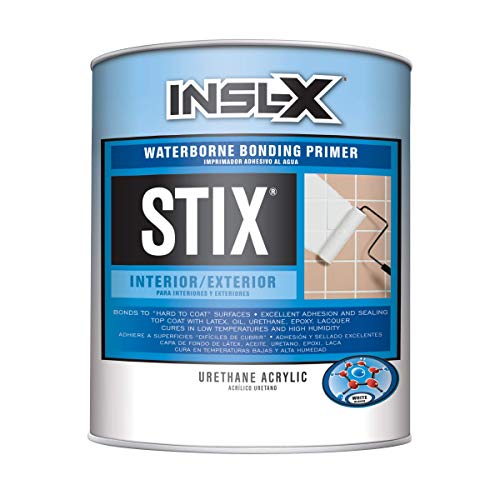
Certain content that appears on this site comes from Amazon. This content is provided "as is" and is subject to change or removal at any time.
The Best Primers For Painted Walls, Reviewed
Zinsser Bulls Eye 1-2-3 Spray Primer

What We Like
- Sticks to glossy surfaces without sanding
- Excellent stain blocking resistance
- One coat hide saves time
- Works with oil or latex topcoats
Trade-offs
- 13 oz can covers only 12 sq. ft
- Spray application requires ventilation and masking
A 30-minute dry time means you can prime a patch of wall, grab a coffee, and be painting over it before the hour is up. That fast turnaround, paired with its ability to stick to glossy or difficult surfaces without any sanding, makes this spray primer a practical shortcut for anyone refreshing painted walls. It blocks stains well and works under both oil and latex paints, so you are not locked into one topcoat type. This is the primer to reach for when you want speed, versatility, and a reliable bond on tricky existing paint.
Covering up to 12 square feet per can, this 13-ounce spray is built for spot repairs, not whole-room jobs. On a large wall, you’d need multiple cans, which adds up fast compared to a quart of liquid primer. But for small projects or a mix of surfaces like wood, metal, and drywall, the convenience of a spray that bonds without sanding is hard to beat.
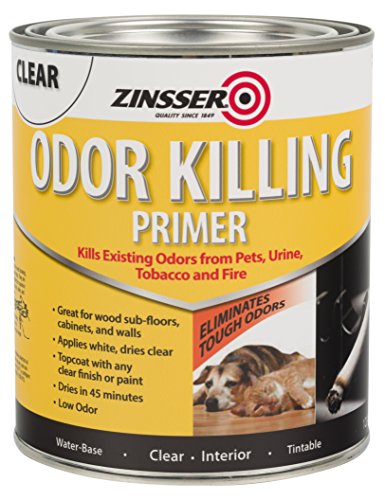
Zinsser Odor Killing Primer
What We Like
- Seals smoke, pet & musty odors
- Blocks stains on walls
- Adheres without sanding glossy surfaces
- Dries clear for easy topcoat application
Trade-offs
- Limited to 100 sq ft per quart
- Not for exterior use
A quart that covers 100 square feet and dries to the touch in 25 minutes means you can knock out a stinky room in an afternoon. This primer seals in smoke, pet, and musty odors and blocks stains on interior surfaces like subfloor, wood floors, cabinets, plaster, drywall, metal, masonry, PVC, and more. It adheres to glossy finishes, glass, and ceramic tile without sanding or deglossing. If you’re dealing with a space that smells like old cigarettes or a pet accident, this primer seals those odors in rather than just painting over them.
A quart covers up to 100 square feet, so for a large room you’ll need multiple quarts or a gallon-size option. The primer dries clear, which means it won’t change the color of your topcoat, and it sticks to glossy surfaces like glass and ceramic tile without any sanding. For spot-treating stubborn pet or smoke odors on tricky substrates, this is a practical choice.
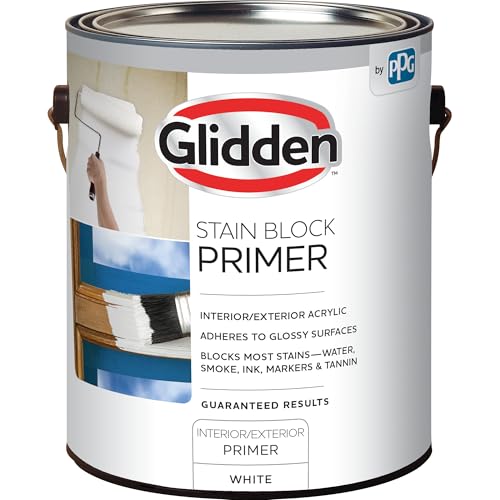
Glidden Stain Block Primer
What We Like
- Blocks water, smoke, ink, markers, tannins
- Adheres to glossy surfaces
- Recoatable in 1 hour
- Soap and water cleanup
Trade-offs
- No odor-blocking claim for smoke or pet smells
- Not designed for blocking strong odors
A one-hour recoat time means you can topcoat within an hour under ideal conditions, so priming a room and painting the same afternoon is possible if you plan carefully. This acrylic primer blocks most stains, water, smoke, ink, markers and tannins, making it useful for covering old marks on painted walls before a refresh. It also adheres to glossy surfaces, so you can skip sanding on previously painted trim or cabinets. For a stain blocker that handles interior and exterior jobs, this gallon delivers the basics without extra steps.
The trade-off is that this primer doesn’t claim to seal odors the way Zinsser Odor Killing Primer does, so if you’re covering heavy smoke or pet smells, that dedicated option may be a better fit. And because it dries to a flat finish, you’ll want to plan for a topcoat with the sheen you actually want. But for straightforward stain coverage on walls, ceilings or glossy surfaces, the Glidden Stain Block Primer keeps the process simple and the cost low.
Product photos
KILZ Original Low Odor Primer

What We Like
- Low-odor formula with fast dissipation
- Bright white non-yellowing finish
- Blocks stains on multiple interior surfaces
- Works with oil, alkyd, and water-based paints
Trade-offs
- Requires ventilation during and after application
- Not designed for exterior use
A special solution acrylic base gives this primer the stain-blocking power of a traditional oil-based primer without the lingering solvent smell. It becomes touch-dry in 30 minutes and accepts a topcoat after just one hour, so you can move through a room quickly. For anyone painting over water stains, smoke marks, or old wallcoverings in a home, office, or school where odor matters, this is the primer that solves the problem without driving everyone out of the building.
Ventilation is still required, and the odor is lower, not absent, so you will want windows open or a fan running. But for all-around stain blocking with less nose-wrinkling, this KILZ is hard to beat.
INSL-X Stix Acrylic Waterborne Bonding Primer
What We Like
- Bonds to glossy tile and PVC
- Cures in temperatures as low as 35°F
- Low VOC with soap-and-water cleanup
- Acrylic-urethane formula for enamel holdout
Trade-offs
- Coverage is 75-100 sq ft per quart
- Requires proper surface prep per label
An acrylic-urethane bonding primer that adheres to glossy tile, PVC, vinyl, glass, and galvanized metal means this is the go-to when ordinary primers peel off. It cures down to 35°F, so you can work in a cold garage or on an exterior wall in early spring without waiting for a warm spell. The low-VOC formula cleans up with soap and water, which keeps the mess manageable for DIYers painting tricky surfaces like ceramic tile or Formica.
Coverage is the trade-off: at 75 to 100 square feet per quart, you will need more product than a standard primer for a whole room. But when you are facing glossy tile, PVC, vinyl, plastic, glass, or glazed block, this primer’s premium acrylic-urethane bonding delivers adhesion that ordinary primers cannot match.
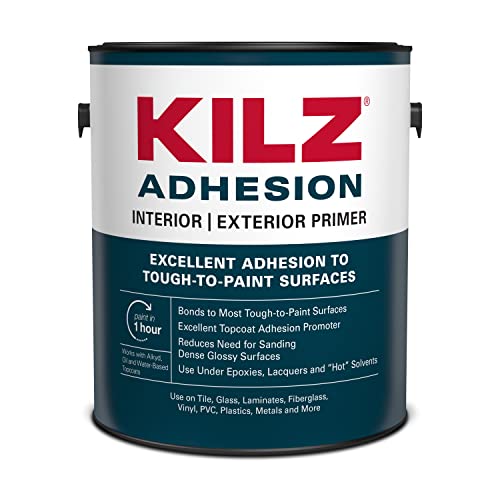
KILZ Adhesion Primer
What We Like
- Bonds to glossy and dense surfaces without sanding
- Works on interior and exterior surfaces
- Topcoat with water- or oil-based paint
- Dries to touch in 30 minutes
Trade-offs
- Requires 24-hour dry time before hot-solvent topcoats
- Coverage only 75-100 sq ft per quart
This primer’s advanced styrenated acrylic polymer formula is designed to anchor topcoats to surfaces that normally send painters reaching for sandpaper, glossy finishes, tile, glass, and even Formica. That means you can skip the tedious scuff-sanding step and still get a bond that holds. For anyone refinishing cabinets, trim, or mixed-material projects where adhesion is make-or-break, this is the one to grab. It becomes touch-dry in half an hour and accepts both water- and oil-based paint, so you’re not locked into one topcoat system.
The trade-off: if you plan to topcoat with epoxy, lacquer, or any solvent-heavy finish, you’ll need to wait a full 24 hours before painting and test a small spot first. That’s a slower schedule than some spray primers, but KILZ Adhesion is built for the tough bonds that ordinary primers can’t promise. It’s a specialist’s tool, worth the extra patience when failure isn’t an option.
Product photos
Rust-Oleum Painter's Touch Latex Primer
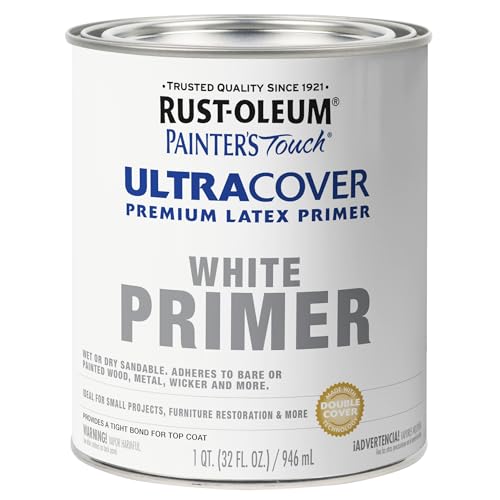
What We Like
- Works on wood, metal, plaster, masonry, ceramic
- Dries to touch in 30 minutes
- Low-odor water-based acrylic formula
Trade-offs
- Coverage up to 120 sq ft per quart
Covering 120 square feet per quart, this primer handles a wide range of surfaces from wood and metal to plaster and unglazed ceramic. That multi-surface reach makes it a practical one-can solution when you’re priming different materials around the house.
Before you apply it, the instructions say to sand surfaces with 180/200 grit sandpaper and wash with a degreaser, then let everything dry. That prep step takes time, but it helps the primer bond to the surface. For a single quick touch-up, that extra work might feel like a hassle. If you’re willing to put in the prep, this quart gives you a flat, low-odor base on multiple surface types.
Product photos
Rust-Oleum 02101 Primers
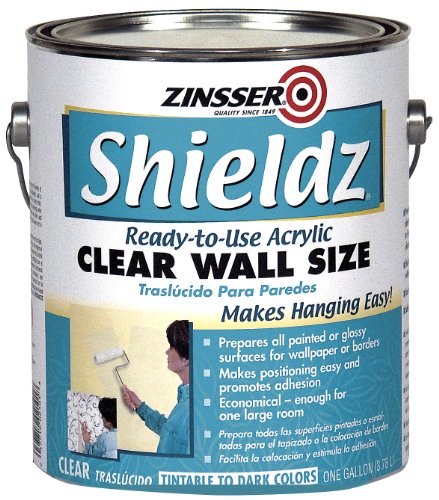
What We Like
- Prepares glossy surfaces for wallpaper
- Adheres to vinyl and paneling
- Makes wallpaper positioning easier
- Economical for one large room
Trade-offs
- Only for wallpaper preparation, not general priming
- Not for general priming or painting projects
A single gallon covers an entire large room, so you can prep a full wall space without running back to the store mid-project. This acrylic wall size sticks to glossy painted surfaces, vinyl, and paneling, finishes that normally reject wallpaper adhesive. It includes a tin table to hide seams, which helps disguise joints in the wallpaper. If you are hanging wallpaper over existing paint, this primer makes positioning easier and promotes excellent adhesion.
The product name makes it clear: this is a dedicated wallpaper primer, not a general-purpose paint primer. For projects that need stain blocking or odor sealing, you would want a different product like the Zinsser Odor Killing Primer instead. But for its intended job, turning a slick painted wall into a surface that grips wallpaper, this formula makes positioning easier and promotes excellent adhesion.
ROMAN PRO-977 Ultra Prime Wallpaper Primer

What We Like
- Promotes easy wallpaper strippability
- Tintable with up to 4 oz colorant
- Low odor and water cleanup
Trade-offs
- Designed specifically for wallpaper, not general priming
- At 11.3 lb, heavier than many gallon primers
- Only for drywall and painted surfaces
This primer carries a zero-VOC rating, so it won’t add harsh fumes to the room while you work, a real benefit when prepping walls for wallpaper in a space you’ll spend time in. The 400-450 square feet of coverage per gallon is enough for a typical small room, and the three-hour dry time means you can start hanging paper the same day. Roman formulated this specifically to make future wallpaper removal easier, so when you’re ready to redecorate, the paper comes off without tearing up the drywall underneath. It’s also tintable with up to four ounces of colorant, which helps if you want a tinted base to reduce show-through with lighter wallcoverings.
This is a specialist tool, not a general-purpose primer. If you just need to seal a patched wall before painting, a general-purpose primer would be more appropriate. But if wallpaper is your goal, the strippability feature here is something a standard primer won’t give you. At 11.3 pounds per gallon, the can is heavier than some gallon primers on the market, so plan for that when you’re carrying it up a ladder or moving it around the room. The low odor and water cleanup make it pleasant to work with, but the narrow focus means it’s not the right pick for mixed projects.
Product photos
How We Evaluated Primers For Painted Walls
Our evaluation is research-based. We examined manufacturer data sheets for adhesion claims, stain-blocking performance, dry times, and coverage rates. We also studied patterns in owner feedback to understand how these primers perform in real-world conditions, from covering dark paint to sealing smoke damage.
We focused on four criteria that matter most when priming painted walls. Adhesion was the top priority, as glossy or slick painted surfaces are the most common failure point. Stain and odor blocking came next, since covering water marks, smoke, or pet smells is a primary reason to prime. Coverage and dry time determined practicality for different project sizes. VOC levels and odor were important for indoor air quality and comfort during application.
An honest limitation of this research-led approach is that we cannot verify performance in every home. Surface condition, application technique, and topcoat choice all affect results. We recommend testing a small area and following the manufacturer’s instructions for the best outcome.
What To Look For In Primers For Painted Walls
Choosing a primer for painted walls means matching the product to the specific problem you are solving. Here are the key factors to consider.
A primer for painted walls must solve the specific problem you face: glossy adhesion, stain blocking, odor sealing, or surface preparation for wallpaper.
Adhesion To Glossy Or Slick Surfaces
Painted walls are often glossy, especially with semi-gloss or satin finishes. A standard primer may not grip these surfaces, leading to peeling or poor paint adhesion. Look for primers labeled as “bonding” or “high adhesion.” These contain specialized resins that grip slick surfaces without the need for sanding. The Zinsser Bulls Eye 1-2-3 and KILZ Adhesion Primer are formulated for this exact purpose.
Stain And Odor Blocking
If you are covering water stains, smoke damage, ink, or pet odors, you need a primer with active blocking technology. Shellac-based primers like Zinsser’s Odor Killing Primer seal odors permanently. Water-based stain blockers like the Glidden Stain Block Primer handle water, ink, and marker stains but may not seal strong odors. For heavy smoke or pet smells, a dedicated odor-blocking primer is essential.
Coverage And Application Method
Coverage rates vary significantly. Spray primers like the Zinsser Bulls Eye 1-2-3 Spray Primer cover about 12 square feet per can, making them ideal for small patches and trim. Brush-on primers cover 75 to 120 square feet per quart, which is more economical for larger walls. Consider the size of your project and whether you are willing to mask and ventilate for spray application.
VOC Levels And Odor
Primers can have strong solvent odors that linger for days. Low-VOC and zero-VOC formulas, like the ROMAN PRO-977 Ultra Prime Wallpaper Primer, reduce smell and are safer for indoor use. If you are sensitive to fumes or painting a bedroom or nursery, choose a low-odor option. Ventilation is still recommended during and after application.
- Check the label for “low VOC” or “zero VOC” if indoor air quality is a concern.
- For glossy walls, look for “no sanding required” or “bonds to glossy surfaces.”
- Measure your wall area and compare it to the primer’s coverage per quart or gallon.
- If covering stains, confirm the primer blocks the specific stain type (water, smoke, ink, marker).
- For wallpaper projects, choose a dedicated wallpaper primer that aids removal later.
A rule of thumb: if you can see or smell the problem, choose a primer that specifically addresses it.
Primers For Painted Walls Compared
The table below compares coverage, dry time, and key features for each primer in our guide, helping you see at a glance which one fits your project.
| Product | Formula | Dry Time | Surface Types |
|---|---|---|---|
| Zinsser Bulls Eye 1-2-3 Spray Primer | Water-based | 30 minutes | Drywall, wood, metal, masonry, glossy |
| Zinsser Odor Killing Primer | Water-base | 25 min to touch | Glossy, glass, ceramic tile |
| Glidden Stain Block Primer | Interior/exterior acrylic | 1 hour | Glossy surfaces |
| KILZ Original Low Odor Primer | Special solution acrylic | Touch in 30 min, recoat in 1 hr | Brick, drywall, wood, metal, masonry |
| INSL-X Stix Acrylic Waterborne Bonding Primer | Acrylic-urethane | N/A | Glossy tile, PVC, vinyl, plastic |
| KILZ Adhesion Primer | Water-based, styrenated acrylic polymer | Touch in 30 min, recoat in 1 hr | Kynar, PVC, Formica, vinyl, glass, tile, glazed brick, chalky paints, glossy finishes, fiberglass, metals |
| Rust-Oleum Painter's Touch Latex Primer | Water-based acrylic | 30 minutes to touch | Wood, metal, plaster, masonry, unglazed ceramic |
| Rust-Oleum 02101 Primers | Acrylic wall size | N/A | Painted or glossy walls |
| ROMAN PRO-977 Ultra Prime Wallpaper Primer | Water-based acrylic | ~3 hours | New and painted walls |
Frequently Asked Questions
Can I paint over glossy paint without priming?
Priming over glossy paint is strongly recommended. Without a bonding primer, the new paint may peel or chip because the glossy surface does not provide enough tooth for adhesion. A high-adhesion primer like the Zinsser Bulls Eye 1-2-3 or KILZ Adhesion Primer eliminates the need for sanding and creates a reliable surface for your topcoat.
How do I choose between a water-based and oil-based primer for painted walls?
Water-based (latex) primers dry faster, clean up with soap and water, and have lower odor. Oil-based primers offer superior stain blocking and adhesion to difficult surfaces but require mineral spirits for cleanup and have stronger fumes. For most painted wall projects, a water-based bonding or stain-blocking primer is sufficient and more convenient.
What primer blocks cigarette smoke odor on painted walls?
A dedicated odor-blocking primer like the Zinsser Odor Killing Primer is designed to seal smoke, pet, and musty odors permanently. It adheres to glossy surfaces without sanding and dries clear, allowing for easy topcoat application. Standard stain blockers may not seal the odor molecules effectively.
Do I need to sand painted walls before using a bonding primer?
Many bonding primers are formulated to adhere to glossy surfaces without sanding. Products like the Zinsser Bulls Eye 1-2-3 and KILZ Adhesion Primer explicitly state they bond to glossy and slick surfaces without surface preparation. However, cleaning the wall to remove dirt, grease, and dust is always recommended for the best results.
What primer is best for painting over dark colored walls?
A high-hide white primer is best for covering dark colors. The Zinsser Bulls Eye 1-2-3 offers one-coat hide, which saves time and reduces the number of topcoats needed. For very dark or bold colors, a tinted primer (tinted close to your topcoat color) can also improve coverage and reduce the number of paint coats.
The Bottom Line
For most DIYers repainting a painted wall, the Zinsser Bulls Eye 1-2-3 Spray Primer is the best overall choice. It sticks to glossy surfaces without sanding, blocks stains effectively, and dries fast, making it ideal for small patches, trim, and touch-ups. If you are covering a larger wall area, a brush-on version of the same formula would be more economical.
If odors from smoke or pets are your main concern, the Zinsser Odor Killing Primer is the specialist you need. For budget-conscious projects where stain blocking is the priority, the Glidden Stain Block Primer delivers reliable performance with fast drying and easy cleanup.
The single most important factor when choosing a primer for painted walls is matching the primer to the specific condition of your wall. Whether you need adhesion, stain blocking, odor sealing, or wallpaper preparation, the right primer makes the difference between a durable, professional-looking finish and one that fails.
