
8 Best Exterior Wood Primers in 2026
This post contains affiliate links. As an Amazon Associate, we earn from qualifying purchases.
For exterior wood projects, the right primer makes the difference between a paint job that lasts years and one that peels in months. The Zinsser Smart Prime Water-Based Primer earns our Best Overall pick because it bonds to glossy surfaces without sanding, dries in minutes, and resists mold and mildew. For stubborn tannin bleed on cedar or redwood, the Zinsser High Hide Cover-Stain Primer is our Best Stain Blocking choice, while the Polar Wood Primer White Undercoat is Best Quick-Drying for bare timber.
Exterior wood faces rain, sun, and temperature swings. A proper primer seals the wood, blocks stains, and gives topcoat paint a uniform surface to grip. The wrong primer can lead to peeling, blistering, or tannin stains bleeding through your finish.
This guide is based on manufacturer specifications, expert round-ups, and patterns in owner feedback. We evaluated each primer on adhesion, stain blocking, dry time, and surface compatibility to help you match the right product to your specific project.
Top 8 Exterior Wood Primers in the Market
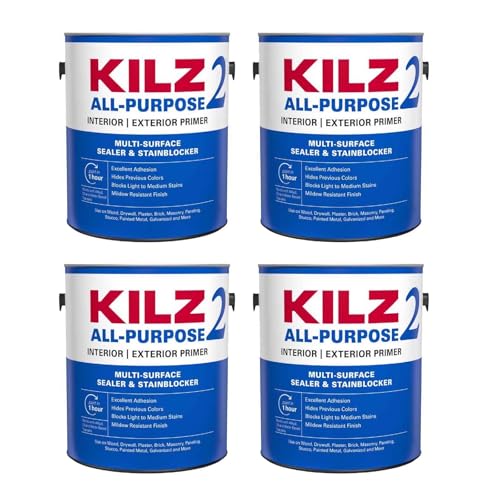
Certain content that appears on this site comes from Amazon. This content is provided "as is" and is subject to change or removal at any time.
The Best Exterior Wood Primers, Reviewed
Zinsser Smart Prime Water-Based Primer

What We Like
- Bonds to glossy surfaces without sanding
- Blocks stains with proprietary resins
- Mold and mildew resistant when dry
- Dries in minutes, recoat in 1 hour
Trade-offs
- Not oil-based for extreme tannin blocking
- Requires multiple coats on heavy stains
A primer that bonds to glossy surfaces without scuff sanding is rare, and that alone makes this quart-sized can a time-saver for anyone refinishing exterior wood. The proprietary stain-blocking resins tackle common outdoor stains, while the dried film resists mold and mildew, two threats that ruin a fresh paint job fast. It dries in minutes and accepts a recoat in just one hour, so you can move from primer to topcoat in a single afternoon. For most exterior wood projects, that combination of speed and adhesion earns it the top spot in this guide.
For general exterior wood, siding, trim, and fences, this primer’s fast dry time and no-sand adhesion to glossy surfaces make it the most versatile pick for DIYers who want results without the wait. The trade-off is the water-based formula: unlike oil-based primers, it may not block heavy tannin bleed-through as effectively on raw cedar or redwood. For such woods, an oil-based primer like the Zinsser High Hide Cover-Stain Primer in this guide is a better choice.
Zinsser High Hide Cover-Stain Primer

What We Like
- Blocks tannin bleed on exterior wood
- Permanently seals fire, smoke, water stains
- Fast-drying, recoatable in 2 hours
- High-hiding formula covers dark colors
Trade-offs
- Oil-based requires solvent cleanup
- Quart size covers only 100 sq ft
Zinsser High Hide Cover-Stain Primer uses an oil-based formula that penetrates and seals exterior wood to stop tannin bleed, a common headache when painting cedar or redwood. It dries to the touch in 35 minutes and accepts a topcoat in just 2 hours, so you can move through a project without waiting around. The high-hiding white covers dark colors, saving time on prep work.
The oil base means you’ll need mineral spirits or paint thinner for cleanup, not soap and water, which is a real hassle if you’re used to water-based primers. But that trade-off buys you a primer that blocks and seals tough stains from fire, smoke, and water damage permanently. It dries to the touch in 35 minutes with a flat white finish that can be recoated in 2 hours.
Polar Wood Primer White Undercoat

What We Like
- Dries in 1-2 hours
- Flexible, weather-resistant protection
- Deep penetration into bare wood
- UV and water resistant
Trade-offs
- Requires 4 hours before recoating
- Only white undercoat color available
- Not suitable as stain blocker
A 1-2 hour dry time means you can prime bare timber in the morning and start painting by afternoon, which keeps a renovation moving without long delays. The formula penetrates bare wood and forms a flexible base that helps resist cracking and repel water, making it a practical choice for exterior doors, window frames, and other timber projects exposed to weather. For anyone working on a tight schedule, the fast turnaround between coats helps maintain adhesion and weather protection.
The trade-off is that this primer is only available in white, so if you need a gray or tinted base for a dark topcoat, you will have to look elsewhere. Compared to the Zinsser Smart Prime, which blocks stains and works on metal and drywall too, Polar is designed specifically for wood preparation and offers quick drying. That makes it a good fit for timber-specific jobs where speed is important, but it is less versatile if your project involves mixed surfaces or requires stain blocking.
Product photos
Diamond Brite Industrial Oil Alkyd Primer

What We Like
- Rust resistant on metal
- Seals wood, metal, masonry
- Resists scuffs, fading, cracking
- Pairs with oil enamel topcoats
Trade-offs
- Requires oil-based enamel topcoat for max rust protection
- Oil-based means longer dry time and solvent cleanup
- Not ideal for quick, water-based projects
This primer’s oil alkyd formula bonds to both wood and metal while delivering rust resistance, so you get one can that handles two very different surfaces without switching products. That dual versatility makes it a natural fit for mixed-material projects like repainting a shed door with metal hinges or prepping a fence with galvanized posts. The 1-gallon size covers a typical medium job, and the tough, scuff-resistant finish means it holds up under outdoor exposure when paired with an oil-based enamel topcoat.
The slow drying time of an oil alkyd primer demands patience and proper ventilation, plus you need mineral spirits for cleanup, which adds time and a bit of hassle. When you pair it with an oil-based enamel topcoat, the primer provides a tough, durable surface that resists scuffs, fading, cracking, and peeling on wood and metal.
Product photos
INSL-X Stix Acrylic Waterborne Bonding Primer
What We Like
- Bonds to glossy tile, PVC, vinyl, glass
Trade-offs
- Not a stain-blocking primer
- Not suitable for blocking heavy stains
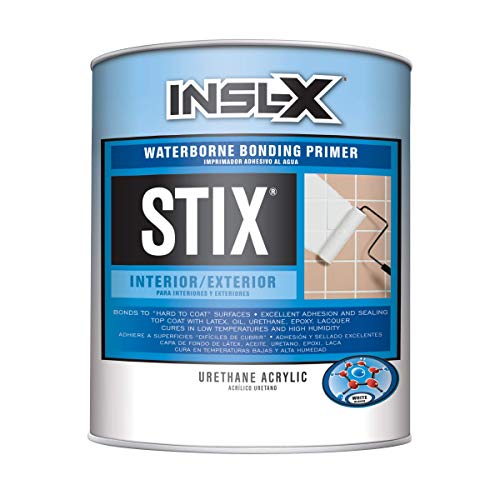
A primer that sticks to slick tile, glossy paint, PVC, vinyl, glass, and galvanized metal without sanding first is rare. INSL-X Stix uses an acrylic-urethane formula that grabs onto surfaces most primers slide off. That makes it the right choice when you’re painting over a previously painted door, a fiberglass shutter, or a plastic trim piece that refuses to hold paint. It cures down to 35°F too, so you can keep working into cool fall weather. For anyone tackling a mixed-material project or a surface that’s been a headache to coat, this is the primer that finally sticks.
Stain blocking is not part of this primer’s intended function, which sets it apart from a product like Zinsser Smart Prime. That Zinsser option is a quart-sized water-based primer-sealer formulated to seal water marks and block tannin bleed from wood. For projects where you need to cover old stains or prevent discoloration from knots in wood, it would be a more appropriate choice. This primer focuses instead on bonding to slick or non-porous surfaces, so it serves a different role in a painter’s toolkit.
EVOLVE Alkyd Enamel Primer Red Oxide
What We Like
- Scuff & abrasion resistant finish
- Rust protection for metal surfaces
- Moisture and chemical barrier
- Works on wood, metal, concrete, masonry
Trade-offs
- Oil-based formula requires solvents for cleanup
- Limited to 1 quart size for larger projects
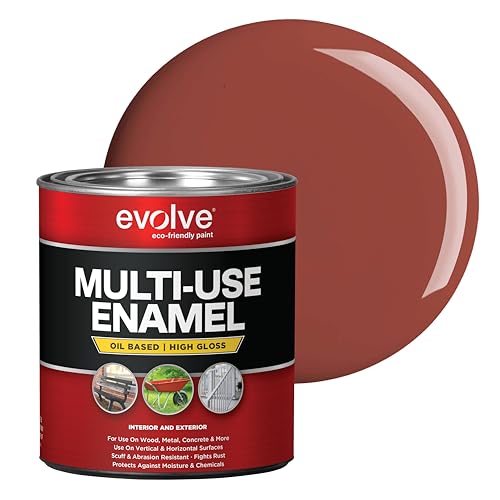
This primer offers scuff, abrasion, moisture, and chemical resistance, making it suitable for surfaces that need a durable protective layer. It also provides rust protection for metal. The alkyd enamel base is designed for wood, metal, concrete, and masonry, so it can be used on multiple surfaces around the house.
Scuff and abrasion resistance plus rust protection come together in this oil-based primer, so surfaces that see daily wear, like metal handrails or concrete floors, get a tough, lasting barrier. Cleanup requires mineral spirits or paint thinner rather than soap and water, which is a trade-off for that durability. For a water-based alternative, the INSL-X Stix Acrylic Waterborne Bonding Primer is listed among other primers, but its features differ from this oil-based formula.
Product photos
Glidden Interior/Exterior Stain Block Primer
What We Like
- Recoatable in just 1 hour
- Blocks water, smoke, ink, and tannins
- Soap and water cleanup
Trade-offs
- Not oil-based for heavy tannin bleed on cedar
- Requires topcoat for full durability
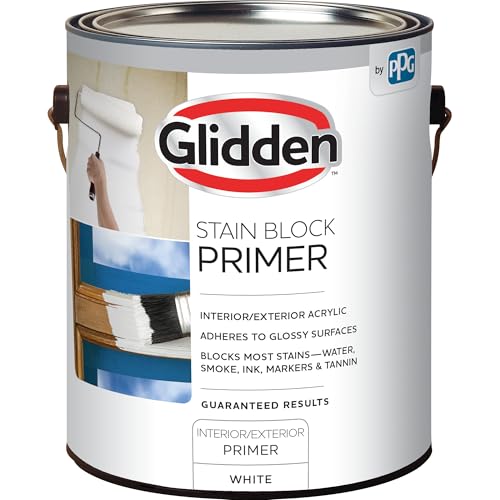
A one-hour recoat window means you can prime in the morning and topcoat by lunch. That speed comes from Glidden’s acrylic formula, which also lets you clean brushes with soap and water instead of solvents. For a weekend porch rail or fence project where time is tight, this primer keeps you moving without sacrificing stain-blocking ability, it handles water, smoke, ink, markers, and tannins.
This Glidden primer is acrylic, not oil-based, so on bare wood it may not seal heavy tannin bleed as aggressively as an oil-based primer. For most exterior wood where quick turnaround matters more than grain perfection, this primer delivers the speed you need without forcing you to change your cleanup routine.
Product photos
Factory Hardware Store 17937 – 4 Exterior Wood Primer
What We Like
- Dries to touch in 30 minutes
- Works on wood, drywall, masonry, metal
- Suitable for interior and exterior
- Bulk 4-pack for large projects
Trade-offs
- At 45 pounds, heavy to move around
- 45-pound weight makes it hard to carry up stairs
The 30-minute dry time and 1-hour recoat window mean you can move through a big exterior project without losing a full day waiting between coats. That speed, paired with a water-based acrylic latex formula that sticks to wood, drywall, masonry, stucco, brick, and painted metal, makes it a true go-anywhere primer. It is ideal for someone juggling multiple surface types on one job, say, siding, trim, and a metal door, and wants a single can that handles all of them without switching products.
At 45 pounds for the four-gallon pack, this Factory Hardware Store primer is not something you want to haul up a ladder or carry across a yard by hand. Compared to the Zinsser Smart Prime quart, which is far lighter and easier to grab for touch-ups, this pack is built for volume work where you set the cans on a cart or near the staging area. The stain-blocking and adhesion performance for painted surfaces is strong, as the formula is designed for interior and exterior use on multiple surfaces.
Product photos
How We Evaluated Exterior Wood Primers
Our evaluation draws from manufacturer technical data sheets, expert painter round-ups, and consistent patterns reported in thousands of owner reviews. We focused on the four factors that determine whether an exterior primer will perform: adhesion to difficult surfaces, ability to block tannins and stains, dry and recoat time, and versatility across different substrates.
Adhesion came first because an exterior primer that doesn’t stick will fail regardless of other qualities. We looked for formulations that bond to glossy, slick, or weathered surfaces without extensive prep work. Stain blocking was next, primers that seal tannins from cedar, redwood, and pressure-treated pine prevent ugly yellow or brown bleed-through.
Dry time matters for outdoor projects where weather windows are tight. We prioritized products that allow recoating within one to two hours. Finally, we considered how many surface types a primer handles, since exterior projects often mix wood with metal, masonry, or vinyl.
This is a research-based evaluation. We cannot tell you how a primer sprays through a particular gun or how it performs in your specific climate. What we can offer is a clear, data-backed comparison of the products that experts and users consistently recommend.
What To Look For In Exterior Wood Primers
Choosing the right exterior primer starts with understanding your wood type, the existing finish, and your project timeline. These criteria will help you narrow the field.
Look for a primer that matches your wood’s needs: oil-based for tannin-rich woods like cedar or redwood, water-based for fast drying and easy cleanup. Check the recoat time and surface preparation requirements before you buy.
Adhesion and Surface Preparation
The best primer in the world won’t help if it doesn’t stick. For glossy or previously painted surfaces, look for a bonding primer that can grab on without sanding, the Zinsser Smart Prime and INSL-X Stix are designed for this. For bare wood, a penetrating primer like Polar Wood Primer that soaks into the grain provides the strongest foundation.
Consider your willingness to prep. Oil-based primers like Zinsser Cover-Stain require mineral spirits for cleanup and have stronger fumes. Water-based options clean up with soap and water but may need more coats on heavy stains.
Stain Blocking and Tannin Control
Tannin bleed is the most common exterior wood primer failure. Cedar, redwood, and pressure-treated pine release natural dyes that can discolor light paint. Oil-based primers are traditionally the best at sealing these in. The Zinsser Cover-Stain is specifically formulated for this job.
Water-based primers have improved dramatically. The Glidden Stain Block Primer claims to block tannins, but owner feedback suggests it may need multiple coats on very resinous woods. If you’re painting cedar siding or redwood decking, an oil-based stain-blocking primer is the safer choice.
Dry Time and Recoat Window
Exterior painting is weather-dependent. A primer that dries in 30 minutes to an hour lets you topcoat the same day. The Zinsser Smart Prime and Glidden Stain Block Primer both allow recoating in one hour. The Polar Wood Primer needs four hours but offers excellent weather resistance once cured.
- Check the temperature range for application; most primers require a minimum temperature.
- Look at humidity limits; high humidity slows drying for water-based formulas.
- Confirm whether the primer needs a topcoat within a certain window for best adhesion.
- Read whether the primer can be applied in direct sun or needs shade.
- Verify that the primer is compatible with your chosen topcoat (latex or oil-based).
A fast-drying water-based primer is ideal for small projects and quick turnarounds, but an oil-based primer is still the standard for maximum stain blocking on difficult woods.
Exterior Wood Primers Compared
The table below compares our eight top picks across the key specifications that matter for exterior wood priming projects.
| Product | Type | Use | Recoat Time |
|---|---|---|---|
| Zinsser Smart Prime Water-Based Primer | Water-based primer-sealer | Interior/exterior wood, drywall & metal | 1 hour |
| Zinsser High Hide Cover-Stain Primer | Oil-based primer-sealer | Interior/exterior wood, metal, drywall | 2 hours |
| Polar Wood Primer White Undercoat | N/A | Interior and exterior wood | 4 hours |
| Diamond Brite Industrial Oil Alkyd Primer | Oil Alkyd Primer | Interior & exterior | N/A |
| INSL-X Stix Acrylic Waterborne Bonding Primer | Acrylic-urethane bonding primer-sealer | Interior or exterior | N/A |
| EVOLVE Alkyd Enamel Primer Red Oxide | Oil-based alkyd enamel | Interior & exterior | N/A |
| Glidden Interior/Exterior Stain Block Primer | Acrylic primer | Interior/exterior | 1 hour |
| Factory Hardware Store 17937 – 4 Exterior Wood Primer | Water-based acrylic latex | Interior & exterior | 1 hr recoat |
Frequently Asked Questions
What is the best primer for exterior wood with tannin bleed?
For cedar, redwood, or pressure-treated pine, an oil-based stain-blocking primer is the most reliable choice. The Zinsser High Hide Cover-Stain Primer is specifically formulated to seal tannins and prevent them from bleeding through your topcoat. Water-based primers have improved but may require multiple coats on heavy tannin woods.
Can I use water-based primer on exterior wood?
Yes, water-based exterior primers like the Zinsser Smart Prime work well on most exterior wood surfaces. They dry faster, clean up with soap and water, and have lower odors than oil-based options. The trade-off is that they may not block heavy tannin stains as effectively as oil-based primers.
How long should exterior wood primer dry before painting?
Dry time varies by product. Some water-based primers can be recoated in as little as one hour, while oil-based primers typically need two to four hours. Always follow the manufacturer’s instructions and check humidity and temperature, as these affect drying time. The Polar Wood Primer recommends four hours before recoating.
Do I need to sand exterior wood before priming?
It depends on the surface condition and the primer. Bonding primers like the Zinsser Smart Prime and INSL-X Stix are designed to adhere to glossy surfaces without sanding. For bare wood, a light sanding opens the grain for better penetration. For previously painted surfaces, sanding helps the primer grip.
What is the difference between oil-based and water-based exterior primer?
Oil-based primers offer superior stain blocking and adhesion on difficult surfaces like tannin-rich woods and metal. They require mineral spirits for cleanup and have stronger fumes. Water-based primers dry faster, have low odor, and clean up with soap and water, but may not block heavy stains as effectively. Your choice depends on the wood type and your project timeline.
The Bottom Line
For most exterior wood projects, the Zinsser Smart Prime Water-Based Primer delivers the best combination of adhesion, speed, and versatility. It sticks to glossy surfaces without sanding, dries in minutes, and resists mold and mildew, making it the right choice for DIYers and painters who want a reliable, fast-drying primer.
If you’re dealing with stubborn tannin bleed on cedar or redwood, reach for the Zinsser High Hide Cover-Stain Primer. Its oil-based formula is the standard for sealing in those natural dyes. For mixed wood-and-metal jobs, the Diamond Brite Industrial Oil Alkyd Primer offers rust resistance and works across multiple surfaces.
The single most important factor in choosing an exterior wood primer is matching the formulation to your wood type and existing finish. Get that right, and your paint job will last.
