
8 Best Rollers For Primer in 2026
This post contains affiliate links. As an Amazon Associate, we earn from qualifying purchases.
For priming walls, ceilings, or trim, the Wooster Pro/Doo-Z Roller Cover is the best overall pick thanks to its shed-resistant woven fabric and even paint pickup that works with all primers. For tight spots, the Shur-Line Microfiber Paint + Primer Mini Roller is a great mini refill option, while the Purdy White Dove Roller Cover delivers a lint-free finish on smooth surfaces.
The real challenge with primer is that it’s thinner than paint, so a low-quality roller can shed lint or leave uneven streaks that ruin the final coat. You need a cover that holds the primer well, releases it evenly, and won’t leave fibers behind.
This guide is based on manufacturer specifications, expert round-ups, and patterns in owner feedback. We’ve focused on the features that matter most for priming: nap material, lint resistance, and compatibility with different surface textures.
Top 8 Rollers For Primer in the Market
Certain content that appears on this site comes from Amazon. This content is provided "as is" and is subject to change or removal at any time.
The Best Rollers For Primer, Reviewed
Wooster Pro/Doo-Z Roller Cover

What We Like
- Shed-resistant woven fabric
- Double-thick polypropylene core
- Works with all paints and primers
- Even paint pickup and release
Trade-offs
- 9-inch size limits tight corner work
- 3/8-inch nap struggles on heavily textured walls
A 3/8-inch nap is the sweet spot for semi-smooth walls and ceilings, holding enough primer to cover evenly without leaving heavy texture behind. The shed-resistant woven fabric keeps lint off your finish, and the double-thick polypropylene core won’t soften or crack when you’re working with water-based primers or solvent-based urethanes. This roller cover suits anyone who wants a professional-looking coat on typical interior surfaces without fighting fuzz or uneven absorption.
At 9 inches wide, this roller cover is built for broad, open surfaces rather than tight corners or narrow trim. For those detailed areas, a mini roller like the Shur-Line 4-inch microfiber cover is a better fit. On main walls and ceilings, though, the six-pack delivers consistent, reliable results from one coat to the next. The dense woven fabric picks up paint efficiently and releases it evenly, which helps minimize lint and shedding for a smooth finish. Each cover features a double-thick polypropylene core that resists water, solvents, and cracking, so it holds up through multiple uses with different paint types.
Product photos
Shur-Line Microfiber Paint + Primer Mini Roller
What We Like
- Microfiber material for paint + primer
- Compact 4-inch size for tight spots
- Two refills in one pack
- Lightweight at 0.1 pounds
Trade-offs
- 4-inch width covers small areas slowly
- Refill only, requires separate frame
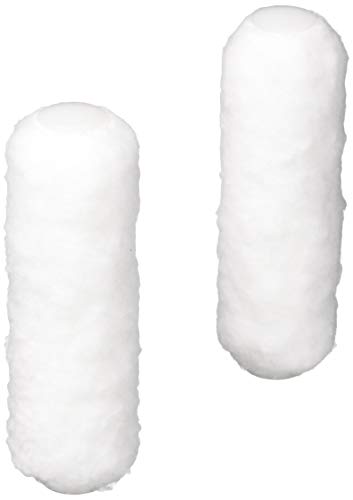
Weighing only 0.1 pounds, this mini roller refill is light enough to use for hours without fatigue, and its 4-inch width lets you work in tight spots where a full-size roller won’t fit. The microfiber cover is designed to handle both paint and primer, so you can switch tasks without swapping covers. That compact size also means less paint waste on small jobs.
The trade-off is speed: a 4-inch cover means more passes to cover a wall, so it’s not the best choice for large open areas. The pack includes covers only, so you’ll need a separate mini roller frame to use them. For detailed projects where control matters more than pace, that smaller footprint is a real advantage.
Purdy White Dove Roller Cover

What We Like
- Woven fabric prevents lint
- Polypropylene core resists solvents
- Handcrafted in the USA
- Works with latex and oil paints
Trade-offs
- 3/8-inch nap limits use to smoother surfaces
A woven fabric construction that prevents lint from forming during use means you can roll paint onto drywall or ceilings without picking fuzz off the wall afterward. That single detail makes this Purdy cover a natural fit for anyone who wants a clean, smooth base coat before painting. The 3/8-inch nap is suitable for semi-smooth to semi-rough surfaces, and the polypropylene core resists all paints, stains, and solvents, eliminating bending for even contact with the wall. It is built for the painter who values a consistent finish.
The Purdy White Dove Roller Cover is designed for semi-smooth to semi-rough surfaces, so it works best on flat ceilings, smooth drywall, and primed floors rather than heavily textured or rough areas. The 3/8-inch nap gives a lint-free finish with less stipple, which is ideal for achieving a clean coat on those smoother surfaces. For popcorn ceilings or deeply textured drywall, a thicker nap cover would hold more paint and reach into deeper crevices.
Product photos
Purdy WhiteDove Roller Cover 1/2-Inch

What We Like
- Handcrafted in the USA
- Works with latex and oil paints
- Durable polypropylene core resists solvents
Trade-offs
- 1/2-inch nap limits use on smooth surfaces
- Only 3 covers per pack, fewer than some competitors
A 1/2-inch nap is the sweet spot for semi-rough surfaces like textured drywall or old ceilings, where a shorter nap would skip over bumps and a longer nap would waste primer. It’s a straightforward, reliable tool for anyone tackling walls that have a bit of tooth.
The same nap that grabs texture will leave a heavier stipple on smooth surfaces like finished trim or cabinets. Compared to the Wooster Pro/Doo-Z with a 3/8-inch nap, this Purdy is built for rougher substrates; for fresh drywall, the shorter nap would give a flatter result. On semi-rough walls where primer needs to penetrate, this cover does exactly what it’s designed for.
PinStone High Density Foam Paint Roller Kit
What We Like
- Caved-in edges reduce splatter and drips
- High-density foam gives streak-free finish
- Works with all paints and primers
Trade-offs
- 4-inch width is slow for large walls
- Foam covers wear faster on rough surfaces
- No tray or drop cloth included in kit
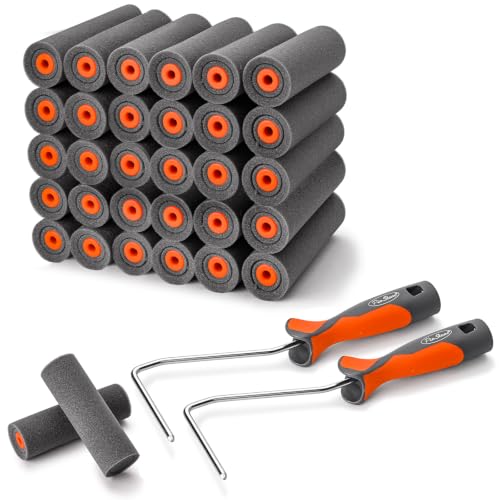
Thirty-two foam roller covers and two frames give you enough to keep working through multiple coats on a set of cabinets or doors without stopping to clean. The high-density black foam releases paint evenly, which helps you get a smooth, streak-free finish on each coat. The caved-in edges reduce splatter and dripping, so you can work on trim and corners with less cleanup. This kit is a good fit for painting smooth surfaces like cabinets, doors, and furniture where a clean result matters.
That said, the 4-inch width is built for precision, not pace. If you are painting a large wall, a 9-inch roller like the Wooster RR727-9 will cover more ground faster. For detailed work on edges, baseboards and tight spaces, the PinStone’s compact size and controlled paint release help you get clean lines. The foam covers are best on smooth surfaces; on rough drywall or textured walls, a microfiber nap may hold up longer. For projects that need even coats and clean lines, this kit delivers.
Product photos
ROLLINGDOG Microfiber Paint Roller Cover 18-Inch

What We Like
- Extra-wide 18-inch covers large areas fast
- Microfiber picks up and releases paint evenly
- Low-lint design for a clean finish
- Washable and reusable for multiple projects
Trade-offs
- Requires an adjustable frame (12-18-inch) sold separately
- 18-inch width can be unwieldy on narrow walls
An 18-inch roller cover, with a 3/8-inch microfiber nap, is designed for smooth to semi-smooth surfaces such as ceilings, walls, and floors. The microfiber construction soaks up paint well and spreads it uniformly, which helps provide consistent coverage and reduces trips back to the paint tray. The low-lint design minimizes loose fibers for a cleaner finish. If you are tackling a large room or whole house, this roller keeps you moving instead of reloading.
The trade-off is size: an 18-inch cover only fits frames built for 12-18-inch adjustable frames, and you will need to buy that separately if you do not already own one. Compared to the 9-inch Wooster Pro/Doo-Z, which is a different size and nap thickness, the ROLLINGDOG is a dedicated speed tool for broad, uninterrupted runs. For primer work on large, flat surfaces, that extra width is exactly what you want.
Bates Foam Paint Roller Set 4-Inch

What We Like
- Lint-free, streak-free foam covers
- Ergonomic frame reduces hand fatigue
- Compact 4-inch size for precision work
- Includes tray, frame, and 10 covers
Trade-offs
- Foam covers unsuitable for textured surfaces
- 4-inch width slows large wall coverage
The 4-inch roller size and high-density foam covers make this set ideal for precision priming on trim, doors, and cabinets. With 10 covers and a sturdy metal frame included, you get a complete kit that delivers a smooth, lint-free finish on smooth surfaces without needing extra trips to the store. This is the right choice for budget-conscious DIYers who need a reliable tool for small-scale primer projects and touch-ups, especially in tight spaces where a larger roller would be clumsy.
The narrow 4-inch width means covering a full wall takes noticeably longer than with a 9-inch roller such as the Wooster RR727-9. Because the foam covers are designed for smooth surfaces, they aren’t suited for rough or textured walls where a microfiber or woven nap roller would grip better. For focused work on cabinets, furniture, or small rooms, however, the Bates set provides a complete solution.
Product photos
Gavunero 4-Inch Foam Paint Roller Covers 10-Pack
What We Like
- High-density microfiber for even paint release
- Compact 4-inch size for detailed control
- Lint-free finish reduces roller marks
Trade-offs
- Small 4-inch size slows work on large walls
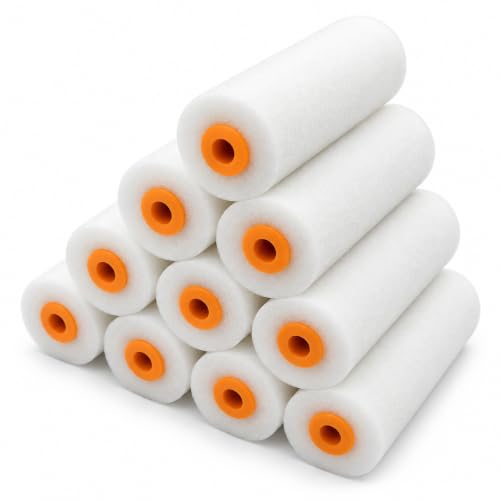
A 4-inch microfiber roller cover that holds paint well and lays it down evenly means fewer trips to the tray and a smooth, professional finish on detailed surfaces. This ten-pack from Gavunero is built for precision work on cabinets, doors, trim, and furniture, where a full-size roller would be clumsy and overspray a problem. The dense fiber structure minimizes lint and roller marks, so you get clean edges and a consistent coat without fighting with the tool. For anyone refreshing kitchen cabinets or painting a bookshelf, this is the right pick for control and finish quality.
Speed is the trade-off: at four inches wide, this cover is slow for large wall sections or expansive ceilings, where a nine-inch roller like the Wooster RR727-9 would cover ground faster. But for detail work where accuracy matters more than pace, these covers deliver a clean, reusable solution that handles water-based paints, primers, and stains equally well.
Product photos
How We Evaluated Rollers For Primer
Our evaluation is research-based, drawing on product specifications, manufacturer documentation, expert round-ups from painting professionals, and common themes in owner feedback. We analyzed what makes a roller perform well specifically with primer, which is thinner and more prone to dripping than standard paint.
The three criteria that mattered most were lint resistance, nap material and length, and core durability. Primers show every fiber, so lint resistance is critical. The right nap holds primer without leaving texture, and a solvent-resistant core prevents the roller from breaking down with oil-based primers. We also considered cover width, since priming a large room quickly requires a different tool than detailing a cabinet door.
A research-led evaluation has limits: owner experiences vary based on wall texture and primer brand. We prioritized products with consistent positive feedback across multiple sources and clear, verifiable specs.
What To Look For In Rollers For Primer
Choosing the right roller for primer comes down to matching the nap and material to your surface. Here’s what to keep in mind.
For smooth walls and trim, choose a short nap (3/8-inch or less) in a woven fabric or foam. For semi-rough drywall or textured surfaces, a 1/2-inch nap holds enough primer without leaving stipple. Always look for a solvent-resistant core if you use oil-based primers.
Nap Length and Surface Texture
The nap length determines how much primer the roller holds and the texture it leaves behind. A 3/8-inch nap works well on smooth to semi-smooth surfaces like finished drywall and ceilings. For semi-rough surfaces like unfinished drywall or light texture, a 1/2-inch nap is a better choice because it holds more primer and reaches into slight depressions. Avoid a very short nap for priming, it holds too little material and requires constant reloading.
Material: Woven Fabric vs. Foam vs. Microfiber
Woven fabric roller covers, like those from Wooster and Purdy, are the most lint-resistant option and work with both latex and oil-based primers. Microfiber covers are a close second, they pick up and release primer evenly and are washable for reuse. Foam rollers are best for ultra-smooth surfaces like cabinets and doors because they leave no stipple, but they wear down quickly on textured walls and can be damaged by solvent-heavy primers.
Core and Frame Compatibility
The roller core must resist the solvents in oil-based primers. Polypropylene cores are standard for this reason, they won’t swell or soften. Check that the cover fits your frame snugly: a loose cover will wobble and leave uneven coverage. For extra-wide covers (18-inch), you need a compatible adjustable frame; for 4-inch mini rollers, a separate mini frame is required.
- Choose a 3/8-inch nap for smooth walls and ceilings.
- Choose a 1/2-inch nap for semi-rough or textured surfaces.
- Choose foam for cabinets, trim, and furniture.
- Choose a woven fabric cover for the best lint resistance with oil-based primers.
- Verify your roller frame size matches the cover width.
A good rule: the thinner the primer, the shorter the nap you want to control drips and splatter.
Rollers For Primer Compared
The table below compares the key specs and best uses for each roller cover, helping you quickly find the right tool for your priming project.
| Product | Size/Length | Material | Pack Count |
|---|---|---|---|
| Wooster Pro/Doo-Z Roller Cover | 9 in. | Shed-resistant woven | 6-pack |
| Shur-Line Microfiber Paint + Primer Mini Roller | 4-Inch | Microfiber | 2-Pack |
| Purdy White Dove Roller Cover | 9 in. | Premium woven fabric | 6 count |
| Purdy WhiteDove Roller Cover 1/2-Inch | 9 in | Dralon Fabric | 3 per pack |
| PinStone High Density Foam Paint Roller Kit | 4 inches | High-density black foam | 32 covers + 2 frames |
| ROLLINGDOG Microfiber Paint Roller Cover 18-Inch | 18 inch | Microfiber | 3 Pack |
| Bates Foam Paint Roller Set 4-Inch | 4 inches | High-density foam | 10 covers |
| Gavunero 4-Inch Foam Paint Roller Covers 10-Pack | 4 inches | Premium microfiber | 10 covers |
Frequently Asked Questions
What nap roller is best for priming smooth walls?
A 3/8-inch nap is the best choice for priming smooth walls and ceilings. It holds enough primer for decent coverage without leaving a noticeable stipple texture. Woven fabric covers like the Wooster Pro/Doo-Z or Purdy White Dove are excellent options for this application.
Can I use a foam roller for primer on drywall?
You can use a foam roller for primer on smooth drywall, but it is not ideal for textured or unfinished drywall. Foam rollers leave a very smooth, streak-free finish that works well on cabinets and trim. On porous drywall, foam may not hold enough primer and can leave thin spots.
How do I prevent lint from my roller getting into the primer?
The best way to prevent lint is to choose a high-quality woven fabric roller cover designed for reduced shedding. Before starting, wrap the dry roller cover with painters tape and pull it off to remove loose fibers. Also, wet the roller cover with water (for latex primer) before dipping it into the tray to help the primer soak in evenly.
What size roller cover is best for priming a large room?
An 18-inch extra-wide roller cover, like the ROLLINGDOG Microfiber model, is the fastest option for priming large ceilings, floors, or walls. It covers nearly twice the area of a standard 9-inch roller per pass. You will need a compatible adjustable frame, and the wide size can be awkward on narrow walls or around obstacles.
Is a microfiber or woven roller better for primer?
Woven fabric rollers are generally better for primer because they are the most lint-resistant and durable with both latex and oil-based primers. Microfiber rollers are a good alternative, they pick up and release primer evenly and are washable. Foam rollers are best only for ultra-smooth surfaces where you want a completely flat finish.
The Bottom Line
For most priming jobs on smooth to semi-smooth walls and ceilings, the Wooster Pro/Doo-Z Roller Cover is the best overall choice. Its shed-resistant woven fabric and even paint release make it reliable for both latex and oil-based primers, which is exactly what you need when the first coat sets the foundation for everything that follows.
If your project is more specific, one of the other picks may suit you better. The Purdy White Dove is the top choice for a lint-free finish on smooth surfaces, while the Purdy WhiteDove 1/2-Inch handles semi-rough drywall and ceilings. For cabinets and trim, the PinStone Foam Roller Kit or the budget-friendly Bates Foam Set are both excellent options.
The single most important factor in choosing a roller for primer is matching the nap length to your surface texture. Get that right, and you’ll avoid the most common frustrations: lint in the finish, uneven coverage, and wasted time.
