
10 Best Paint For Basement in 2026
This post contains affiliate links. As an Amazon Associate, we earn from qualifying purchases.
For sealing damp basement walls, the Zinsser WaterTite Mold & Mildew White Waterproofing Paint is the best overall, resisting up to 20 lbs of water pressure with a bright, non-gritty finish. For durable basement floors, the Rust-Oleum EpoxyShield kit stands out, while the KILZ Basement and Masonry Waterproofing Paint is a top choice for masonry walls needing strong pressure resistance.
The challenge with basement paint isn’t just color, it’s managing moisture, hydrostatic pressure, and surface preparation. A wrong choice can peel or allow water seepage through the finish. This guide focuses on paints that handle the unique conditions of basements, from waterproofing sealers to durable floor epoxies.
We evaluated these paints based on their specifications, manufacturer claims, and patterns in owner feedback to understand real-world performance. This research-based approach helps you match the right paint to your basement’s specific needs, whether that’s stopping wall seepage or protecting a concrete floor.
Top 10 Paints For Basements in the Market

Certain content that appears on this site comes from Amazon. This content is provided "as is" and is subject to change or removal at any time.
The Best Paints For Basements, Reviewed
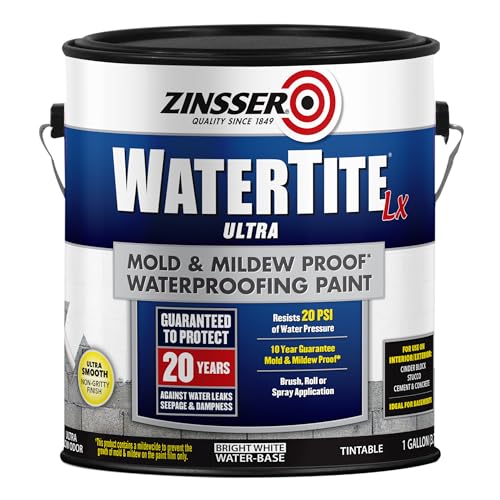
Zinsser WaterTite Mold & Mildew White Waterproofing Paint
What We Like
- Resists up to 20 lbs water pressure
- Bright white non-gritty finish
- Ultra low odor formula
- Easy soap and water cleanup
Trade-offs
- Designed for masonry surfaces only
- Not a floor coating product
- Single gallon limits large wall coverage
This paint resists up to 20 pounds of water pressure, which means it can handle moderate water exposure on basement walls. The bright white, non-gritty finish goes on smooth with a brush or roller, and the ultra-low odor formula keeps the work area comfortable without strong fumes. For anyone sealing damp masonry walls, this paint provides waterproofing and a clean look.
A 15-year waterproof guarantee and a separate 10-year mold and mildew-proof paint film back this coating, so buyers get long-term protection on interior masonry walls. It is not designed for floors, for a basement floor, the Rust-Oleum EpoxyShield kit is made for that horizontal surface. The latex base cleans up with just soap and water, no harsh solvents needed.
Product photos
KILZ Basement and Masonry Waterproofing Paint

What We Like
- Nanotechnology blocks up to 12 PSI water pressure
- Low-odor formula for enclosed basement use
- Alkali-resistant finish for high-moisture areas
- Dries to touch in 1 hour
Trade-offs
- Full cure takes 7-14 days before washable
- Requires hydraulic cement to fill cracks before painting
This paint blocks up to 12 PSI of water pressure, which means it can help stop water from seeping through concrete and masonry basement walls in below-grade spaces. The alkali-resistant finish is formulated for high-moisture areas, so it holds up on masonry surfaces that might otherwise damage standard paints. With a low-odor formula that dries to the touch in an hour, it’s practical for indoor use without strong fumes, and it works on both interior and exterior surfaces like brick, cinder block, and stucco. That makes it a good fit for homeowners looking for waterproofing on masonry walls.
It also demands patience: while it dries quickly, the full 7- to 14-day cure time means the surface isn’t truly washable until then. Compared to the Zinsser WaterTite Mold & Mildew paint, which focuses on mold resistance, KILZ puts its emphasis on raw waterproofing pressure. So choose based on whether your main enemy is water intrusion or long-term mildew growth.
Rust-Oleum EpoxyShield Satin Gray Basement Floor Coating Kit
What We Like
- 2-part epoxy for durable concrete floors
- One-coat coverage, no primer needed
- Walk-on ready in 8 hours
- Includes decorative color chips
Trade-offs
- Designed for floors only, not walls
- Full foot traffic takes 24 hours
A 250-square-foot coverage per kit means one gallon handles a typical small basement floor without needing a second coat or primer. That two-part water-based epoxy formula creates a tough satin finish that resists stains, moisture, and wear, exactly what a basement floor endures. This coating suits homeowners who want a durable, easy-to-clean surface that looks more refined than a flat garage paint, with decorative color chips included to hide minor imperfections.
The trade-off is that this is strictly a floor coating, not a wall paint. If you need waterproofing for masonry walls, the Zinsser WaterTite Mold & Mildew White Waterproofing Paint is a better fit. Also, while you can walk on it in 8 hours, regular foot traffic requires a full 24-hour wait. For a basement floor that needs long-lasting protection with minimal prep and a clean look, this kit delivers.
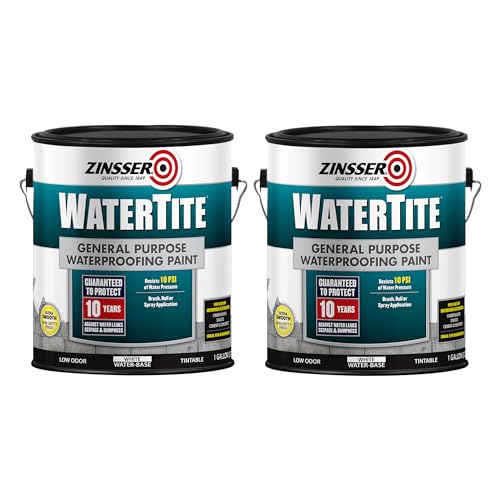
Zinsser WaterTite General Purpose White Waterproofing Paint
What We Like
- Resists up to 10 lbs. water pressure
- Bright white, non-gritty finish
- Applies to wet or dry masonry
- Covers up to 250 sq. ft. per gallon
Trade-offs
- No mold or mildew resistance built in
- One-gallon size covers only 250 sq. ft.
A waterproofing paint that resists up to 10 pounds of water pressure gives you serious protection against basement seepage, even in damp conditions. That kind of hydrostatic resistance means it can handle the steady push of groundwater against foundation walls, not just occasional splashes. The bright white, non-gritty finish also keeps the space feeling clean and open, which matters when you’re turning a dark basement into a usable room. If you need a straightforward waterproofer that goes on smoothly with a brush or roller and works on wet or dry masonry, this one delivers exactly that.
Unlike the mold-resistant version from Zinsser, this general-purpose paint skips the mold and mildew resistance. In a basement that stays humid or has a musty smell, that extra protection can make a real difference over time. For a dry basement where water pressure is the main concern, this general-purpose paint is a strong fit. But if moisture and mildew are already part of the picture, the mold-resistant sibling is worth a look.
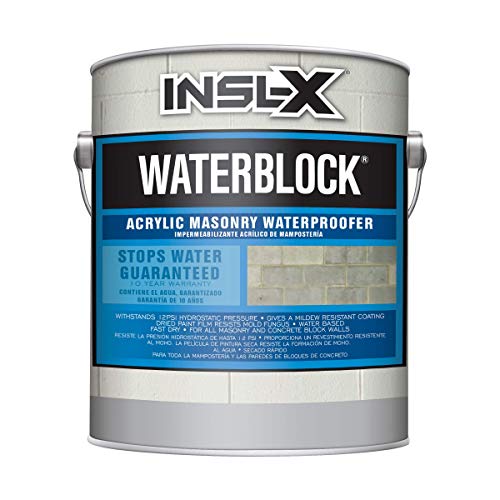
INSL-X WaterBlock Acrylic Masonry Waterproofer Paint
What We Like
- Withstands up to 12 psi hydrostatic pressure
- High alkali resistance up to pH-13
- Fast drying waterproof paint
- Suitable for interior and exterior walls
Trade-offs
- Only for vertical surfaces, not floors
- Requires 50-90°F surface and air temperature
A 12 psi hydrostatic pressure rating means this paint can handle serious water intrusion on basement walls, even in below-grade conditions where groundwater pushes hard against the foundation. That makes it a strong candidate for homeowners dealing with damp concrete or cinder block walls. It resists pH up to 13, so fresh masonry or walls with efflorescence won’t degrade the coating quickly. The water-based acrylic formula dries fast and works on both interior and exterior vertical surfaces, so you can seal a retaining wall or a basement wall with the same product.
This paint is engineered for vertical concrete walls only, basement floors need a different product, like Rust-Oleum EpoxyShield. The 11.1-pound gallon feels substantial, and you’ll have to work within a 50 to 90 °F temperature range. But for a wall fighting moisture and high alkali, this is the one designed to hold its ground.
Product photos
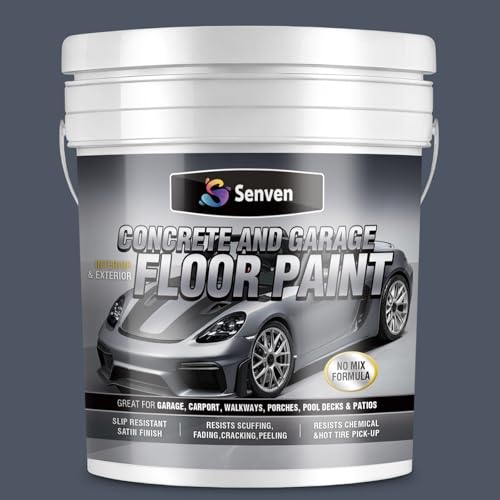
SENVEN Acrylic Concrete & Garage Floor Paint
What We Like
- Resists hot tire pickup and scuffing
- Covers up to 120 sq ft per gallon
- Low-VOC, cleans up with soap and water
- Works on concrete, masonry, stone, brick
Trade-offs
- Residential use only, no forklift traffic
- Requires properly prepared porous surface
Covering up to 120 square feet per gallon, this acrylic floor paint gives you a solid working area for a typical basement floor without needing multiple coats right away. The water-based formula is low-VOC, so you can apply it with a roller or brush and clean up with just soap and water, no harsh solvents needed. It resists hot tire pickup, scuffing, cracking, peeling, and fading, which makes it a practical choice for a basement that doubles as a workshop or parking spot. The satin finish looks clean without being too shiny, and the brand has been making surface coatings for over 50 years.
Keep in mind that this paint is designed only for horizontal surfaces, so it won’t work on basement walls. If you need waterproofing for below-grade walls, something like the Zinsser WaterTite Mold & Mildew White Waterproofing Paint would be a better fit for that job. Also, this is a residential-grade product, so it’s not suited for heavy commercial or forklift traffic. For a straightforward, durable floor coating that goes on easily and stays put, this acrylic paint delivers exactly what it promises.
Product photos
KILZ 1-Part Epoxy Concrete & Garage Floor Paint

What We Like
- Resists hot tire pickup and scuffing
- Covers 300-400 sq ft per gallon
- Low-VOC, cleans up with soap
- Works indoors and outdoors
Trade-offs
- Residential use only, no forklift traffic
- Coverage drops to 200-300 sq ft on rough surfaces
This paint covers up to 400 square feet per gallon on smooth concrete, which is a practical range for larger basement floors or garage slabs. The epoxy acrylic formula resists hot tire pickup, scuffing, and peeling, so it holds up under foot traffic and the occasional rolling chair or dropped tool. That durability, paired with a satin finish that hides minor imperfections, makes it a strong fit for homeowners who want a long-lasting floor finish without the complexity of a two-part system.
If your project includes both floors and walls, you will need a separate product like the Zinsser WaterTite Mold & Mildew White Waterproofing Paint for the vertical surfaces. The KILZ also carries a residential-use limit, meaning it is not built for heavy commercial or industrial traffic. For a straightforward, high-coverage floor coating that cleans up with soap and water, this one delivers reliable protection with minimal fuss.
Rust-Oleum Concrete & Garage Floor Paint

What We Like
- Self-priming formula saves a coat
- Resists hot tires, oil, grease, gasoline
- UV and weather resistant for indoors or out
- Cleans up easily with soap and water
Trade-offs
- Not designed as a waterproofing paint for walls
- Requires soap and water for cleanup, not solvent-based
A single coat application means you can finish a garage or basement floor without buying separate primer or waiting for multiple layers to dry. That cuts the project time in half compared to traditional two-coat systems. The self-priming battleship gray formula resists hot tires, motor oil, grease, and gasoline, so it holds up under parked cars or stored machinery. UV and weather resistance also makes it suitable for driveways, porches, and patios, not just interior slabs. It’s a straightforward, durable finish for anyone who wants a low-fuss floor coating that handles real-world abuse.
If your basement has damp walls or water seepage, this floor paint isn’t the right tool for that job, it’s formulated for horizontal concrete surfaces, not vertical masonry waterproofing. The satin finish resists fading and peeling, but it’s a floor coating first and foremost. For a one-coat floor paint that stands up to chemicals and weather, this Rust-Oleum product delivers what its label promises.
Ames Block & Wall Liquid Rubber Waterproofer

What We Like
- Fills cracks up to ⅛ inch
- Up to 1800% elongation resists cracking
- Low odor and non-toxic
- Sprayer, roller, or brush application
Trade-offs
- Two coats recommended for best results
- At 47 lb, heavy to carry and pour
- White color only limits finish options
An elongation rating up to 1800% means this coating can stretch significantly before tearing, so it moves with settling concrete and seasonal shifts without cracking. That flexibility makes it a strong choice for basement walls, foundations, and retaining walls where ground movement is a real concern. The thick liquid rubber formula fills cracks and crevices up to ⅛ inch. Since it’s low odor and non-toxic, you can work in a basement without needing a respirator or worrying about fumes drifting into living spaces. For anyone dealing with active moisture seepage through masonry, this is the kind of barrier that stays intact when cheaper paints peel away.
The 47-pound pail is a workout to carry down basement stairs, and you will need two coats for full waterproofing, which doubles the drying time and material cost compared to a single-coat paint. By contrast, Zinsser WaterTite Mold & Mildew White is lighter and easier to handle, but it is a waterproofing paint rather than a liquid rubber membrane. If your basement has stable, well-cured concrete and you just want a mildew-resistant finish, the lighter option makes sense. But if you need a membrane that truly bridges cracks and flexes with the foundation, the extra effort with Ames pays off.
Product photos
matvio Two-Part Epoxy Floor Coating

What We Like
- Self-leveling for a smooth finish
- Anti-slip textured surface
- 4H hardness resists abrasion
- Low-VOC, safe for indoor use
Trade-offs
- Light gray only limits color options
- Two coats needed on dusty concrete
- Small 0.53-gal kit covers limited area
A 4H pencil-hardness surface resists abrasion from tools and vehicles, as stated in the product specs. The self-leveling formula flows out to hide minor imperfections and brush marks, leaving a high-gloss finish that brightens any space. For slightly dusty concrete, the first coat acts as a primer/sealer, then a second coat provides a protective film; on solid, non-dusty concrete, a single thick coat may be sufficient.
Product photos
How We Evaluated Paints For Basements
This guide relies on manufacturer data, expert round-ups, and patterns in owner feedback. It focuses on what matters most for basement conditions: waterproofing ability, durability, ease of application, and the right formulation for the surface.
The most critical factor was water pressure resistance, measured in PSI or pounds of water pressure. Paints like the Zinsser WaterTite and KILZ Basement formulas are engineered to block hydrostatic pressure, while standard wall paints are not. For floors, we looked at epoxy and acrylic formulations that resist scuffing, hot tire pickup, and chemical spills.
A research-led evaluation has limits: owner experiences vary widely based on surface preparation and moisture levels. We prioritized paints with consistent positive feedback across multiple sources and clear, defensible performance specs.
What To Look For In Paints For Basements
Choosing the right paint starts with understanding your basement’s specific conditions. Here are the key criteria to consider.
Look for a paint that matches your surface (masonry wall vs. Concrete floor) and your moisture level. Waterproofing paints with PSI ratings are essential for walls with hydrostatic pressure, while epoxy or acrylic floor paints handle foot traffic and spills.
Water Pressure Resistance (PSI Rating)
For basement walls, the most important spec is the paint’s ability to resist hydrostatic pressure, the force of water pushing through the masonry. Products like the Zinsser WaterTite Mold & Mildew formula resist up to 20 lbs of water pressure, while others like the KILZ Basement paint block up to 12 PSI.
A higher PSI rating is better for walls that feel damp or show signs of seepage. For walls that are simply humid without active pressure, a lower-rated waterproofer like the Zinsser WaterTite General Purpose (10 lbs) may be sufficient.
Surface Compatibility: Walls vs. Floors
Basement paints are formulated for specific surfaces. Wall paints like the INSL-X WaterBlock and Ames Liquid Rubber are designed for vertical masonry and should not be used on floors. Floor paints like the Rust-Oleum EpoxyShield and SENVEN Acrylic Floor Paint are formulated to withstand foot traffic, tire contact, and abrasion. Using a wall paint on a floor will result in peeling and wear. Check the label to confirm the paint is intended for your surface type.
Application and Cure Time
Ease of application matters in an enclosed basement. Low-odor, water-based formulas like the Zinsser WaterTite and KILZ Basement paints allow for use without strong fumes. Cure time is another factor: some floor coatings are walk-on ready in 8 hours but require 24 hours for full traffic, while waterproofing paints may need 7-14 days before they can be washed. Plan your project timeline around these requirements.
- Check the PSI rating for wall paints if you have dampness or seepage.
- Confirm the paint is formulated for your surface (masonry wall, concrete floor).
- Look for low-VOC or low-odor formulas for indoor basement use.
- Review cure time and temperature requirements before starting.
- Prepare the surface properly, fill cracks with hydraulic cement before painting.
Always test a small area first to ensure adhesion and appearance on your specific surface.
Paints For Basements Compared
The table below compares the key specs and best uses for each of these ten basement paints, making it easy to see which one fits your project.
| Product | Base/Formula | Finish | Use/Surface |
|---|---|---|---|
| Zinsser WaterTite Mold & Mildew White Waterproofing Paint | Latex | Bright white, non-gritty | Interior Masonry Surfaces |
| KILZ Basement and Masonry Waterproofing Paint | N/A | N/A | Interior / Exterior; Concrete, Brick, Cinder Block |
| Rust-Oleum EpoxyShield Satin Gray Basement Floor Coating Kit | 2-part water-based epoxy | Satin | Interior concrete basement surfaces |
| Zinsser WaterTite General Purpose White Waterproofing Paint | N/A | Bright white, non-gritty | Basements, cellars, damp areas |
| INSL-X WaterBlock Acrylic Masonry Waterproofer Paint | Water-based acrylic | N/A | Vertical interior/exterior masonry |
| SENVEN Acrylic Concrete & Garage Floor Paint | Water-based acrylic | Satin | Interior & exterior horizontal surfaces |
| KILZ 1-Part Epoxy Concrete & Garage Floor Paint | Epoxy acrylic, water-based | Satin | Interior & exterior horizontal |
| Rust-Oleum Concrete & Garage Floor Paint | N/A | N/A | Concrete, garage, basement floors |
| Ames Block & Wall Liquid Rubber Waterproofer | High-solids liquid rubber | N/A | Basement walls, foundations, retaining walls |
| matvio Two-Part Epoxy Floor Coating | N/A | Self-leveling high-gloss | Garage & Basement Floor |
Frequently Asked Questions
Can I use regular wall paint in a basement?
Regular wall paint is not designed for the moisture and hydrostatic pressure common in basements. It will likely peel, bubble, or allow water seepage through the finish. Use a paint specifically formulated for basement conditions, such as a waterproofing masonry paint or a concrete floor coating.
Do I need to waterproof my basement walls before painting?
If your basement walls show signs of dampness, efflorescence, or water stains, a waterproofing paint is recommended. These paints are engineered to block moisture and resist hydrostatic pressure. For walls that are completely dry, a standard masonry paint may be sufficient, but a waterproofing formula adds an extra layer of protection.
How do I prepare a basement floor for epoxy paint?
Proper preparation is critical for epoxy adhesion. The floor must be clean, dry, and free of grease or old coatings. Etching the concrete with a muriatic acid solution or using a mechanical grinder is often necessary to create a porous surface for the epoxy to bond to. Fill any cracks with a concrete patching compound before applying the coating.
What is the difference between epoxy and acrylic floor paint?
Epoxy floor paints, like the Rust-Oleum EpoxyShield, are two-part systems that create a very hard, durable, and chemical-resistant finish. Acrylic floor paints, like the SENVEN formula, are single-component, lower-VOC, and easier to apply, but they are generally less durable than epoxy for heavy traffic areas.
How long does basement paint take to dry?
Drying and cure times vary by product. Waterproofing paints like the KILZ Basement formula dry to the touch in 1 hour but require 7-14 days to fully cure before they can be washed. Floor coatings like the Rust-Oleum EpoxyShield are walk-on ready in 8 hours but need 24 hours before full foot traffic. Always follow the manufacturer’s instructions for the specific product.
The Bottom Line
For most homeowners with damp masonry basement walls, the Zinsser WaterTite Mold & Mildew White Waterproofing Paint is the best overall choice. It offers the highest water pressure resistance in our guide at up to 20 lbs, a bright white finish, and a low-odor formula that makes application in an enclosed space manageable.
If your project is a basement floor, the Rust-Oleum EpoxyShield kit provides durable, one-coat epoxy protection with decorative chips. For those on a tighter budget or with less demanding moisture issues, the Zinsser WaterTite General Purpose waterproofer offers reliable performance at a lower pressure rating. The single most important factor is matching the paint to your surface and moisture level, a waterproofing wall paint won’t work on a floor, and a floor paint won’t seal a damp wall.
