
9 Best Polishers For Paint Correction in 2026
This post contains affiliate links. As an Amazon Associate, we earn from qualifying purchases.
For safe, effective paint correction, the Chemical Guys TORQX Random Orbital Polisher is our best overall pick. Its 800W motor and 9mm orbit balance defect removal with control, making it ideal for detailers who prioritize safety on curved panels. For tight spaces, the Griot’s Garage G8 excels, and budget-conscious DIYers will appreciate the PORTER-CABLE 7424XP.
Paint correction is about removing swirls and scratches without damaging the clear coat. The right polisher makes this possible, but with so many options, from corded to cordless, different orbit sizes, and varying power levels, choosing one can be confusing.
This guide is based on a careful review of specifications, manufacturer data, and patterns in owner feedback. We evaluated nine polishers to help you find the best fit for your skill level, workspace, and budget.
Top 9 Polishers For Paint Correction in the Market
Certain content that appears on this site comes from Amazon. This content is provided "as is" and is subject to change or removal at any time.
The Best Polishers For Paint Correction, Reviewed
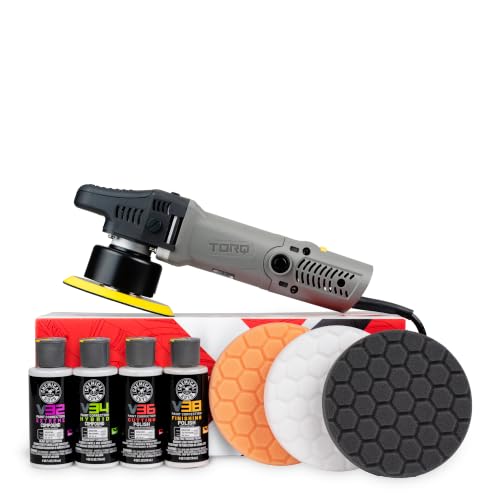
Chemical Guys TORQX Random Orbital Polisher
What We Like
- 800W motor delivers consistent torque
- 9mm orbit balances control and defect removal
- Lightweight 4.7 lb design reduces fatigue
- Dual action motion prevents burns and holograms
Trade-offs
- 9mm orbit slower for large panels than 15mm models
- Corded design limits mobility around vehicles
An 800W motor in a 4.7-pound body means this polisher can sustain power through a full correction pass without tiring your arms. The 9mm random orbit keeps the pad flat and predictable, which matters most when you are learning to remove swirls without burning through clear coat. Beginners get a forgiving tool that still has enough torque to cut oxidation and water spots, while experienced detailers will appreciate the consistent pad rotation on curved body panels. The kit includes nine pieces, so you have the basics to start correcting paint without buying extra accessories.
The 9mm orbit removes defects efficiently but covers less surface per pass than the 15mm orbit on the Rupes LHR 15ES Big Foot, so correcting a full SUV will take more time. That smaller orbit also gives you more control on curved panels and tighter areas, which is why the TORQX suits someone who values safety and precision over raw panel speed. The trade-off is speed.
Griot's Garage G8 Orbital Polisher

What We Like
- Includes 2" and 3" backing plates
- 45% stronger gearset than previous models
- Fan-cooled counterbalance for smooth operation
- Double-shot rubber dampening for comfort
Trade-offs
- Smaller 8mm orbit limits correction speed on large panels
- 8mm orbit removes material slower on large flat panels
The 2″ and 3″ backing plates make this the polisher you reach for when a full-size machine won’t fit. Door jambs, mirror bases, tight bumper curves, and A-pillars become accessible without switching to a manual applicator. The 700-watt motor and 8mm orbit keep the pad spinning even when you’re working into a concave panel, and the double-shot rubber dampening lets you hold it one-handed in awkward positions without fatigue. For anyone who spends as much time on the edges and crevices as the broad hood, this is the tool that turns those frustrating spots into quick, controlled passes.
The trade-off is the same compact design that makes it agile: an 8mm orbit removes material more slowly on large flat surfaces than the 15mm or 21mm strokes of a Rupes LHR 15ES. If your work is mostly full-door corrections and wide roof panels, the G8 will feel underpowered for the task. But as a dedicated tight-spaces machine alongside a full-size polisher, or as the primary tool for someone who details motorcycles, wheels, or small cars, its precision and comfort are hard to beat.
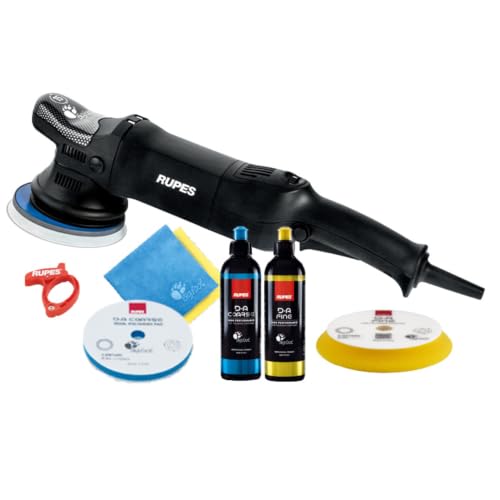
RUPES BigFoot LHR21 Mark V Starter Kit
What We Like
- Reduced vibration from composite gears
- Compact design improves maneuverability
- Anti-spinning ring helps extend polishing system life
Trade-offs
- Heavy at 11.0 pounds for extended overhead work.
- Corded design limits mobility without a power outlet.
A 21mm orbit paired with advanced POLYSYNTHEC composite gears cuts vibration noticeably, so you can work longer without your hands going numb. This kit is built for extended paint-correction sessions where comfort and consistent results matter more than speed.
That extra mass helps the tool stay planted during heavy cutting, but it can fatigue your arms on overhead panels or long days. If you prioritize smooth operation and don’t mind the heft, this starter kit gives you the core essentials to begin serious paint correction right out of the box.
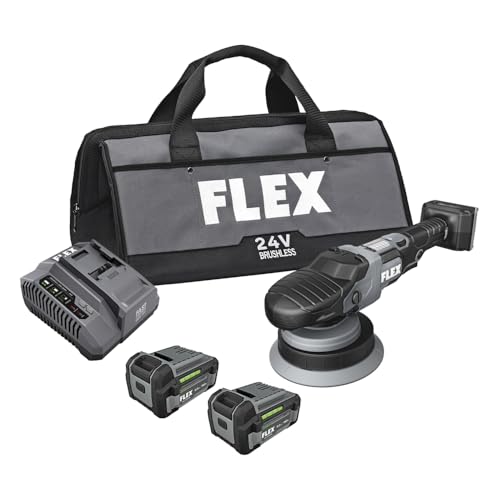
FLEX 24V Brushless Cordless Random Orbital Polisher Kit
What We Like
- Constant speed under load
- Two batteries and fast charger included
- Lightweight at 6.3 pounds
- THERMA-TECH heat management for longer runtime
Trade-offs
- Cordless means runtime limited by battery charge
- Battery system only works with FLEX 24V tools
The kit comes with two 5.0Ah lithium batteries and a 160W fast charger, so you can keep working with minimal downtime between charges. Constant speed technology maintains RPMs under pressure, which helps maintain consistent cut on tough spots. The 11-speed dial and variable speed trigger give you control over the tool’s speed, while vibration control and an ergonomic grip reduce fatigue during use.
At 6.3 pounds with the battery installed, this polisher sits between the 8.6-pound Chemical Guys TORQX and the 6.0-pound bare-tool Milwaukee M18 Fuel. That weight keeps it manageable for extended detailing sessions without tiring your arms, yet it still has enough heft to maintain steady contact on vertical panels. The lightweight body also pairs with an ergonomic grip, which helps you guide the tool precisely along curves and edges. Owners who switch between machines often note that a mid-range weight like this offers a good balance of control and reduced fatigue during long paint-correction jobs.
Adam's Polishes SK Pro 12mm Car Polisher Kit

What We Like
- Raised rubber touch-points absorb vibration
- Lightened counter-weight for smooth oscillations
- 25-ft detachable cord for reach
Trade-offs
- At 7.7 lbs, heavier than some cordless options
- Brushed motor requires more maintenance than brushless
A 12mm throw paired with a lightened counter-weight and raised rubber touch-points gives this polisher unusually smooth, low-vibration operation for long paint-correction sessions. The 3-inch backing plate makes it ideal for tight body panels and intricate areas where you need precise control without the machine fighting you. Beginners and experienced detailers alike will appreciate how the reduced chatter lets them focus on the finish rather than wrestling the tool.
At 7.7 pounds without the cord, this polisher is on the heavier side, but the raised rubber touch-points absorb vibration to reduce fatigue during long sessions. The 25-foot detachable cord gives you plenty of reach across a garage, so you don’t need to swap outlets constantly.
Product photos
Milwaukee M18 Fuel 15mm Random Orbital Polisher

What We Like
- 8-speed dial for precise RPM control
- Variable speed trigger for fine adjustment
- Motor feedback keeps speed steady under pressure
- Lock-on switch reduces hand fatigue
Trade-offs
- At 6.0 pounds, heavier than some corded models
- No backing plate or pads included in bare tool
The premium electronic motor feedback maintains speed and power under load, so the polisher doesn’t lose momentum when you press into tougher spots. Its 8-speed dial covers 2,650 to 5,100 RPM, and the variable speed trigger adds extra precision for adjusting on the fly. That combination means you can dial in exactly the right pace for different paint conditions without the tool fighting you.
At 6.0 pounds, this polisher is lighter than the Chemical Guys TORQX, so your arms won’t tire as quickly during longer sessions. Since it’s a bare tool, you’ll need to buy M18 batteries and a charger separately. If you’re already in the Milwaukee M18 system, that’s just grabbing a pack you already own; if not, a corded model like the Porter-Cable 7424XP might get you started with less upfront investment.
Product photos
PORTER-CABLE 7424XP Orbital Polisher

What We Like
- Variable speed dial for control
- Swirl-free random orbit action
- Includes counter balance for 6-inch pads
- Lightweight at 5.8 pounds
Trade-offs
- AC only: needs a wall outlet
- 4.5 amp motor limits heavy correction speed
A 4.5 amp motor and 2,500-6,800 OPM range make this polisher a straightforward entry point for paint correction without overwhelming a beginner. The random orbit action keeps swirls at bay, which is exactly what you want when learning to remove scratches and oxidation. At 5.8 pounds, it stays manageable for working around a whole car, and the included counter balance lets you run 6-inch pads smoothly.
The trade-off shows up when you push into heavier correction: the 4.5 amp motor limits how fast you can work through deep scratches. It’s also corded only, which means you’re tethered to an outlet, fine for a garage setup but less convenient for mobile detailing. If your work stays in the shop and you’re okay with a slower pace on tough defects, this Porter-Cable delivers the essential features.
Product photos
FLEX 120V Corded Brushless Random Orbital Polisher

What We Like
- Constant speed technology maintains RPM under load
- Brushless motor for efficiency and no maintenance
- 11-speed dial plus variable trigger for fine control
- Vibration suppression reduces user fatigue
Trade-offs
- Corded design limits mobility away from outlets
- Requires one-year warranty registration for coverage
Constant speed technology is the defining feature here: the polisher keeps delivering up to 4,350 RPM even when you lean into a tough scratch. That means the pad doesn’t bog down and the cut stays consistent across the panel. This makes the FLEX ideal for detailers who work on multiple cars in a day or tackle heavy oxidation where other random orbitals would slow down. The 11-speed dial paired with a variable-speed trigger gives you fingertip control to dial in exactly the right aggression for each section, while the brushless motor cuts out the maintenance hassle of brush replacements.
Being tethered to an outlet is the main downside of this polisher, but the cord delivers steady, load-holding power that doesn’t fade mid-job. Reviewers note the constant speed technology maintains up to 4,350 RPM and 8,700 OPM under pressure, so you don’t lose performance when leaning into a correction. For comparison, the cordless FLEX 24V kit offers battery freedom, but this corded model keeps its speed locked in regardless of battery charge.
Product photos
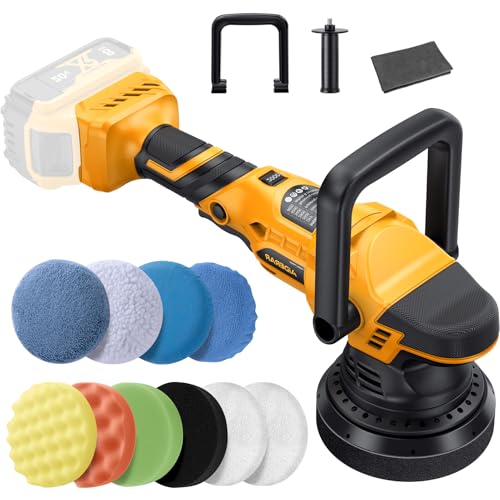
Aiderar Cordless Car Buffer Polisher
What We Like
- 15mm orbit for fast coverage
- Brushless motor, no carbon brushes
- 5-speed dial adjusts on the fly
- Includes polishing pads and bonnets
Trade-offs
- Tool only, battery and charger sold separately
- Not compatible with DCBP520 batteries
- Requires 3.0Ah or higher battery for heavy loads
Designed to run on DeWalt 20V MAX batteries, this bare tool is a smart way to expand your cordless detailing kit if you already own those batteries. The brushless motor delivers smooth, consistent power for swirl-free polishing and scratch correction without the risk of burn-through. The 5-speed dial lets you switch from waxing at 2000 OPM to heavy defect removal at 4600 OPM without stopping.
The trade-off is that you need to supply your own battery and charger, and for sustained heavy cutting, the manufacturer recommends a 3.0Ah or higher pack. Compared to a corded polisher, you give up unlimited runtime but gain the freedom to work around the car without a cord. This tool skips the all-in-one kit approach, instead targeting users who already own compatible batteries and want professional-grade results.
Product photos
How We Evaluated Polishers For Paint Correction
Our evaluation is based on manufacturer specifications, expert round-ups, and common themes found in owner reviews. We focused on the features and performance characteristics that consistently matter for successful paint correction.
We prioritized four key criteria. Power and speed control determines how effectively a polisher can remove defects without bogging down. Orbit size and motion affects both correction speed and safety; a random orbit action is essential to avoid holograms. Ergonomics and weight directly impact user fatigue during long sessions. Finally, corded vs. Cordless design influences mobility and runtime, a critical trade-off for different work environments.
A research-led approach has limits. Owner feedback can vary widely based on skill and pad choice, and specifications alone don’t capture the feel of a tool in use. We present this information to help you narrow your options, but the best polisher for you will depend on your specific needs and preferences.
What To Look For In Polishers For Paint Correction
Choosing a polisher for paint correction means balancing power, control, and comfort. Focus on these key factors to find the tool that matches your skill level and the jobs you plan to tackle.
A good polisher for paint correction should have a random orbit action to prevent paint damage, sufficient power to maintain speed under load, and an ergonomic design you can handle for extended periods.
Power and Speed Control
The motor’s power and how it delivers that power are crucial. Look for a motor that maintains consistent speed when you apply pressure, this is often called “constant speed” or “torque management.” A polisher that bogs down easily will be frustrating and slow to correct defects. Variable speed controls, either a dial or trigger, give you the ability to match the tool’s speed to the task, from applying wax to heavy compounding.
Orbit Size and Motion
Orbit size is measured in millimeters and describes the diameter of the pad’s motion. A larger orbit (15mm or more) covers more surface area quickly, making it faster for large panels. A smaller orbit (8mm to 12mm) is more controlled and better for tight areas, but slower on flat surfaces. Always choose a random orbital polisher (dual action) for paint correction. This motion prevents the swirls and holograms that can result from a forced-rotation or rotary polisher.
Ergonomics and Weight
Paint correction is a physical job. A polisher that is too heavy or poorly balanced will cause fatigue quickly, leading to inconsistent results. Consider the tool’s weight and how it feels in your hands. Features like rubber dampening, vibration-reducing gears, and a comfortable grip can make a significant difference during a long session. A lightweight tool is a major advantage for overhead or vertical panels.
- Check the tool’s weight in pounds; lighter is generally better for extended use.
- Look for vibration-dampening features like rubber touch-points or composite gears.
- Consider the cord length for corded models; a longer cord offers more reach.
- For cordless models, note the battery voltage and amp-hour rating for runtime.
- Ensure the backing plate size matches the pads you plan to use.
A good rule of thumb: choose a polisher with an orbit size that matches your primary work area, smaller for detail work, larger for full-panel correction.
Polishers For Paint Correction Compared
The table below compares the key specifications of each polisher, including orbit size, weight, and motor type, to help you quickly see the differences.
| Product | Motor Power | Orbit Size | Weight |
|---|---|---|---|
| Chemical Guys TORQX Random Orbital Polisher | 800W | 9mm | 4.7 lb |
| Griot's Garage G8 Orbital Polisher | 700 watts | 8mm | N/A |
| RUPES BigFoot LHR21 Mark V Starter Kit | N/A | N/A | 11.0 pounds |
| FLEX 24V Brushless Cordless Random Orbital Polisher Kit | 24V Cordless | N/A | 6.3 pounds |
| Adam's Polishes SK Pro 12mm Car Polisher Kit | 550W | 12mm | 7.7 Lbs |
| Milwaukee M18 Fuel 15mm Random Orbital Polisher | N/A | 15mm | 6.0 pounds |
| PORTER-CABLE 7424XP Orbital Polisher | 4.5 Amp | N/A | 5.8 pounds |
| FLEX 120V Corded Brushless Random Orbital Polisher | N/A | N/A | N/A |
| Aiderar Cordless Car Buffer Polisher | 1000W Brushless | 15mm | N/A |
Frequently Asked Questions
What is the best orbit size for paint correction?
A 15mm orbit is a popular choice for general paint correction because it offers a good balance of speed and control. For tight spaces and detailed work, an 8mm or 9mm orbit is better. Beginners often find a smaller orbit safer to learn on.
Can I use a cordless polisher for a full car?
Yes, but you will need multiple batteries. Cordless polishers offer great freedom of movement, but their runtime is limited by battery charge. For a full car, plan for at least two high-capacity batteries, or choose a corded model for continuous use.
What is the difference between a dual-action and a rotary polisher?
A dual-action (random orbital) polisher moves the pad in a random, oscillating pattern. This makes it very safe for paint correction because it is nearly impossible to burn through the clear coat. A rotary polisher spins in one direction and is more aggressive, but requires significant skill to avoid damaging the paint.
How much should I spend on a paint correction polisher?
You can find a reliable entry-level polisher for a budget-friendly price. Mid-range tools offer better power, speed control, and ergonomics, which are worth paying more for if you plan to use the tool regularly. Professional-grade tools with brushless motors and advanced vibration reduction are a premium investment.
Do I need a backing plate and pads with my polisher?
Some polishers come as a kit with a backing plate and pads, while others are sold as a bare tool. Always check what is included. You will need a backing plate that fits your polisher and pads that match the plate size. Most detailers use a variety of pads for different stages of correction.
The Bottom Line
The Chemical Guys TORQX Random Orbital Polisher is our best overall pick for most detailers. Its 9mm orbit and lightweight design make it a safe and controlled choice for paint correction on curved panels, ideal for anyone who values paint safety over raw speed.
For those on a budget, the PORTER-CABLE 7424XP offers reliable, swirl-free performance at an accessible price point, making it a great starting point for DIYers. If you need to work in tight spaces like door jambs, the Griot’s Garage G8 is the best tool for the job.
The single most important factor in choosing a polisher is matching the tool to your primary work. Consider the size of the panels you will correct most often, your tolerance for fatigue, and whether you need cordless freedom or continuous power. The right polisher makes the work easier and the results better.
