
10 Best Grit Sandpaper For Drywall in 2026
This post contains affiliate links. As an Amazon Associate, we earn from qualifying purchases.
For smooth, paint-ready drywall joints, the Mirka Abranet 5 Inch Mesh Sanding Discs earn our Best Overall pick for their open mesh design that extracts dust efficiently and resists clogging during sanding. The Gator Drywall Sanding Sheet is our Best Budget Pick for sharp cutting on a budget, while the 3M Drywall Sanding Screens deliver a Best Fine Finish for final passes.
Choosing the right grit for drywall means balancing material removal speed against surface smoothness. A grit that is too coarse leaves scratches; one too fine takes forever to level joints. Dust control also matters greatly in finished living spaces.
This guide is based on specifications, manufacturer documentation, and patterns in owner feedback. We looked at grit range, durability, dust extraction compatibility, and value to help you pick the right abrasive for your next drywall project.
Top 10 Grit Sandpapers For Drywall in the Market
Certain content that appears on this site comes from Amazon. This content is provided "as is" and is subject to change or removal at any time.
The Best Grit Sandpapers For Drywall, Reviewed
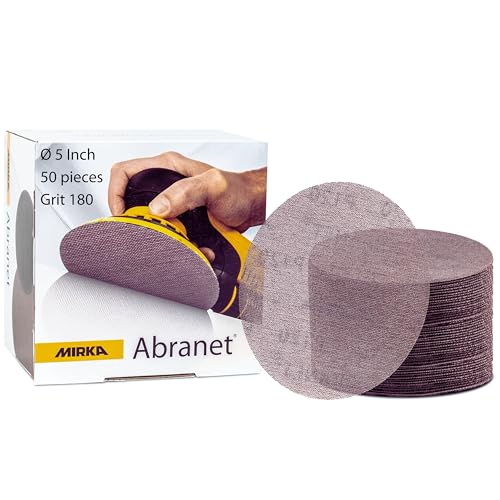
Mirka Abranet 5 Inch Mesh Sanding Discs
What We Like
- Open mesh for efficient dust extraction
- Clog-resistant design maintains consistent sanding
- Works on wood, drywall, paint, metal, plaster
- Compatible with all 5-inch orbital sanders
Trade-offs
- 5-inch size limits coverage on large flat walls
- Requires a vacuum for dust-free benefit
- 180 grit is medium-fine, not for heavy stock removal
Fifty discs in a 180-grit mesh design that pulls dust through the sanding surface itself, that is the core idea behind the Mirka Abranet. The open mesh structure is designed for efficient dust extraction when paired with a vacuum, which helps keep the workspace cleaner and reduces airborne dust. The mesh also resists clogging, so the abrasive maintains consistent performance over time, meaning fewer interruptions to swap pads. For anyone using a random orbital sander on drywall, this setup offers a practical way to get a consistent finish with less dust in the air.
The most decisive fact about these discs is their 5-inch size, which means they cover less area per pass than the 9-inch sheets or screens common for drywall work. For sanding an entire room of new drywall, a larger disc will get the job done faster. But for precision work like smoothing filler on a small patch or sanding a curved surface with an orbital sander, the Mirka Abranet is a practical choice when you hook it up to a vacuum. Its dust-free design and clog resistance make it well suited for these tasks.
Product photos
Gator Drywall Sanding Sheet 120 Grit

What We Like
- Quick-change hook and loop backing
- Aluminum-oxide with silicon carbide grain for smooth finish
Trade-offs
- No dust-extraction holes or mesh design
- Not compatible with dust-extraction sanders
The trade-off is versatility. And unlike the Mirka Abranet mesh discs, there are no built-in holes for dust collection, meaning you will need to sand with a shop vac nearby or accept more airborne dust.
3M Drywall Sanding Screens 220 Grit

What We Like
- Mesh screen resists tearing
- Resists clogging for longer life
- Waterproof for wet or dry use
Trade-offs
- 220 grit is too fine for heavy material removal
- 220 grit removes material too slowly for rough work
At 220 grit, this screen is built for the final pass before paint, not for knocking down rough mud or smoothing deep scratches. The mesh construction resists clogging and tearing, so you can work a joint compound feather edge without constantly shaking out dust or swapping sheets. The waterproof screen can be used wet or dry, which gives you flexibility depending on your preferred sanding method. For anyone whose priority is a glass-smooth surface, this is the right grit to reach for.
The trade-off is speed: 220 grit removes material slowly, so if you’re still shaping or leveling joints, you’ll want a coarser screen first. Stick with this one for the final sanding step, that’s where its tear resistance and clog-free life really pay off.
Product photos
DEWALT Drywall Sandpaper 9 Inch 120 Grit

What We Like
- Hook & Loop holds disc securely
- Resistant paper backing reduces tears
- Suction holes increase airflow with a vacuum system
Trade-offs
- 5-pack offers fewer sheets than bulk options
- Paper backing less durable than mesh for repeated flexing
The paper backing is reinforced to resist tearing, but it won’t last as long under repeated flexing as a mesh screen like the Mirka Abranet sheets. And with only five discs per pack, you’ll need to restock more often than if you bought a larger multi-pack for a big job. Still, for a focused sanding session where you want the vacuum to work well and the grit to stay effective, this Dewalt design does what it sets out to do.
Product photos
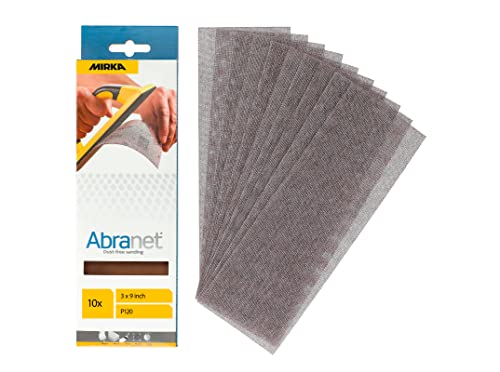
Mirka Abranet 3×9 Inch Mesh Sanding Sheets
What We Like
- Open mesh reduces dust with extraction
- Hook-and-loop backing for quick changes
- Resists clogging longer than paper
- Compatible with Mirka HandyKit block
Trade-offs
- Requires a dust extractor for full benefit
- Only 10 sheets per pack
- Limited to 3×9 inch hand tools
The open mesh structure lets sanding dust pass through the abrasive when used with a compatible dust extraction system, which helps keep the workspace cleaner and reduces loading compared to traditional sandpaper. That means less time swapping out a clogged sheet and more consistent results on drywall joints or filler. For anyone sanding walls, ceilings, or trim indoors where dust control matters, this design offers a practical way to keep the air cleaner and the work moving.
The mesh design is intended for use with a compatible dust extraction system to help remove sanding dust. Without suction, you don’t get that dust-control benefit. The 3×9 inch size fits the Mirka HandyKit block and similar hand tools, but it won’t work with standard pole sanders or larger power sanders. So it’s a hand-sanding solution only. Compared to the 3M Drywall Sanding Screens 220 Grit, which are pre-cut for pole sanders, the Abranet offers a different approach: it relies on a vacuum to pull dust through the mesh, while the 3M screens are designed for attachment to a pole sander.
Product photos
Diablo SandNET Drywall Sanding Discs 180 Grit

What We Like
- Up to 10x longer life than standard discs
- Ceramic grain for fast material removal
- Reusable: shake, vacuum, or rinse clean
- Covers large surfaces like 50 standard sheets
Trade-offs
- 9-inch size limits use to compatible sanders only
- 180 grit too fine for heavy stock removal on raw wood
The clog-reducing NET design helps these discs last up to ten times longer than standard sanding discs, so you spend less time swapping paper and more time on the wall. The ceramic grain blend cuts through joint compound and plaster efficiently, and the discs can be cleaned and reused by shaking, vacuuming, or rinsing. For medium to large drywall projects, this pack covers the equivalent of 50 standard sheets, making it a practical choice for extended work sessions.
The 180-grit is best for finishing work, so you will need a coarser grit for initial shaping or heavy material removal. Compared to the DEWALT 120-grit five-pack listed in the guide, the Diablo offers a finer grit and a larger pack size, but the DEWALT is a different product for rougher sanding. If your priority is endurance on big finishing jobs, the Diablo SandNET is worth considering.
Product photos
Ali Industries 7178 Grit Sandpaper

What We Like
- Clog-resistant open-mesh screen
- Fast cutting premium abrasive grain
- Quick-change hook and loop backing
Trade-offs
- Only 220 grit limits coarse sanding options
- Smaller 4.5 x 10.5 in size for hand sanding
A 220-grit open-mesh screen that resists buildup and loading means you spend less time shaking dust off the paper and more time smoothing joint compound. The quick-change hook-and-loop backing makes swapping sheets on a hand sander fast and convenient. This mesh is designed for fast cutting on joint compound, spackling, and scuffing paint.
The trade-off is that 220 grit is a finishing grit, so it won’t help with rough shaping or removing heavy texture. If you need to knock down high spots first, the Gator Drywall Sanding Sheet in 120 grit would be a better starting point. But for final smoothing and a fine finish on joint compound, this Ali Industries screen resists clogging as advertised.
Product photos
BOSHCRAFT Sanding Screen Mesh Sheets 120 Grit

What We Like
- Washable and reusable for multiple jobs
- Open mesh design reduces clogging
- Flexible for curved or intricate surfaces
Trade-offs
- Not for fine polishing before painting
- Single grit limits versatility
Fifteen sheets that you can wash and reuse make this pack a practical choice for sanding drywall, saving you from constantly buying disposables. The silicon carbon nylon construction and open mesh design reduce clogging and last longer than standard paper, so you spend more time sanding and less time swapping sheets. Its flexibility lets it conform to curves and contours, which is useful for detailed work on irregular surfaces.
The 120 grit is effective for sanding uneven surfaces and removing old paint, but if you need a finer finish before painting, you might want a higher grit like the 220 from the 3M Drywall Sanding Screens. If you prefer a pack that covers the bulk of your sanding and can be washed for the next job, this set delivers value. It avoids the waste of disposables.
Product photos
Norton ProSand 120 Grit Sandpaper Sheets

What We Like
- Open coat resists clogging and loading
- Fibre-reinforced backing resists tearing when folded
- No color transfer to workpiece
- No finish contamination from coating
Trade-offs
- Sheets require manual cutting for pole sanders
- No hook-and-loop backing for quick attachment
- 120 grit only, not a multi-grit pack
The open-coat construction on these Norton ProSand sheets resists clogging and loading during sanding, which is especially useful when working with materials that produce fine dust. The flexible fibre-reinforced backing gives the paper good tear resistance when folded, so you can bend it without it falling apart. Because the coating has no color dye, there is no risk of color transfer to the workpiece, and the waterbased stearate coating helps prevent clogging. This 20-pack of 9 x 11 inch sheets gives you a straightforward option for hand sanding or block sanding on wood, metal, drywall, or paint preparation.
These are plain sheets without hook-and-loop backing, so they require cutting or tearing to fit a pole sander or power sander pad. That means a bit of extra prep compared to some sanding discs or mesh sheets that come ready to attach. For hand sanding with a rubber block, the tear-resistant backing and anti-clog stearate coating are practical features. If you want a simple sheet for smoothing surfaces by hand, this pack delivers the basics without frills.
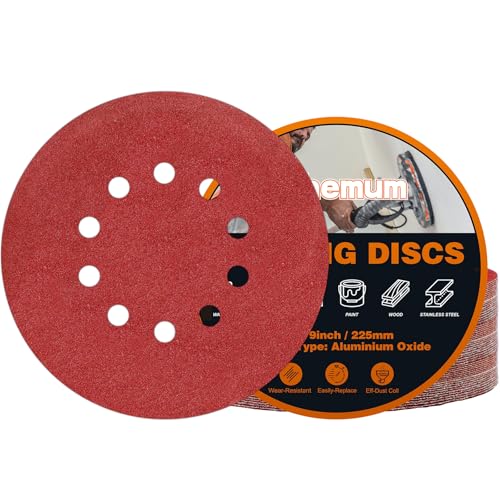
Pihemum 9 Inch Drywall Sanding Discs 120 Grit
What We Like
- 30 discs in one pack
- Hook-and-loop backing for secure fit
- Aluminum oxide construction for durability
- Compatible with standard 9-inch drywall sanders
Trade-offs
- 120 grit only; no finer or coarser options in pack
- Only one grit level per pack; no finer or coarser options included
Thirty discs per pack mean you can sand a whole room, or several, without restocking. Each disc uses aluminum oxide abrasive bonded to a hook-and-loop backing, so it stays put on your sander pad and keeps cutting through joint compound and drywall mud. The 120 grit is a middle-of-the-road choice: aggressive enough to knock down seams and ridges, yet fine enough to leave a surface ready for primer. For anyone tackling multiple drywall projects or a large renovation, this pack keeps you working instead of running to the store.
Thirty discs in one box means you can sand a whole room without running out to buy more, that’s six times the quantity you get in a five-pack of DEWALT 9-inch 120-grit discs. Just check that your sander’s dust-collection holes line up with the ten-hole pattern before you start, because a mismatch can reduce dust pickup.
Product photos
How We Evaluated Grit Sandpapers For Drywall
Our evaluation draws from manufacturer specifications, expert round-ups, and common patterns in owner feedback across dozens of drywall sanding products. We focused on the abrasive materials, backing types, and grit selections that matter most for smooth, efficient drywall finishing.
The four criteria that drove our rankings were grit range and effectiveness, dust extraction capability, durability and clog resistance, and value for the number of sheets or discs. Drywall sanding creates fine dust that hangs in the air, so compatibility with vacuum systems and mesh designs that reduce clogging were weighted heavily.
A research-led evaluation like this cannot replicate the feel of a specific abrasive on a real taped joint. We rely on published specs and what experienced finishers consistently report to identify which products deliver reliable results for most users.
What To Look For In Grit Sandpapers For Drywall
Choosing the right sandpaper for drywall starts with understanding grit numbers and backing types. Here are the key factors to consider before you buy.
Focus on 120 to 220 grit for drywall finishing. Look for open-coat or mesh designs that resist clogging with joint compound dust. Consider dust-extraction compatibility if you sand indoors.
Grit Range and Application
For drywall joint compound, 120 grit is the standard starting point for leveling dried mud. It removes material fast enough to smooth ridges without gouging the paper face. Move to 150 or 180 grit for a finer surface, then finish with 220 grit before priming. Coarser grits are for heavy shaping but risk scratching the drywall paper.
Backing Type: Paper vs. Mesh vs. Screen
Paper-backed sandpaper is affordable and works well for hand sanding but clogs quickly with drywall dust. Mesh and screen abrasives, like the Mirka Abranet or 3M Drywall Sanding Screens, have open structures that let dust pass through, reducing clogging and extending usable life. Mesh also works with dust-extraction systems for a cleaner workspace.
Dust Extraction Compatibility
If you sand drywall indoors, a vacuum-attached sander or dust-extraction system is a major health and cleanup benefit. Look for sanding discs with suction holes that match your sander’s pattern, or mesh sheets that allow airflow through the entire surface. Products like the DEWALT Drywall Sandpaper 9 Inch are designed with specific hole layouts for vacuum systems.
- Match the grit to the stage: 120 for leveling, 150-180 for smoothing, 220 for final finish.
- Check your sander size: 5-inch and 9-inch discs are not interchangeable.
- For hand sanding, consider flexible mesh sheets that resist tearing when folded.
- Buy multi-grit packs or bulk packs of 120 grit if you have large areas to finish.
One rule of thumb: start with 120 grit and only move finer if you see scratches you need to remove.
Grit Sandpapers For Drywall Compared
The table below compares the key specs and features of our ten recommended grit sandpapers for drywall, helping you see at a glance which one fits your sander and sanding stage.
| Product | Grit | Size | Pack Count |
|---|---|---|---|
| Mirka Abranet 5 Inch Mesh Sanding Discs | 180 | 5 inches | 50 discs |
| Gator Drywall Sanding Sheet 120 Grit | 120 | 5 x 12.1 inches | N/A |
| 3M Drywall Sanding Screens 220 Grit | 220 | 4.19 x 11.25 in | 10-Pack |
| DEWALT Drywall Sandpaper 9 Inch 120 Grit | 120 | 9 Inch | 5-Pack |
| Mirka Abranet 3×9 Inch Mesh Sanding Sheets | 120 | 3 x 9 inches | 10 sheets |
| Diablo SandNET Drywall Sanding Discs 180 Grit | 180 | 9 inches | 25 – Pack |
| Ali Industries 7178 Grit Sandpaper | 220 | 4.5 x 10.5 in | 4-pack |
| BOSHCRAFT Sanding Screen Mesh Sheets 120 Grit | 120 | 11 x 4.2 inches | 15 sheets |
| Norton ProSand 120 Grit Sandpaper Sheets | 120 | 9 x 11 Inches | 20 Pack |
| Pihemum 9 Inch Drywall Sanding Discs 120 Grit | 120 | 9 inches | 30 PCS |
Frequently Asked Questions
What grit sandpaper is best for drywall joint compound?
120 grit is the most versatile starting point for sanding dried joint compound. It removes ridges and bumps efficiently without scratching the drywall paper. For a final smooth surface before priming, switch to 220 grit.
Can I use regular wood sandpaper on drywall?
Yes, but it will clog faster than open-coat or mesh abrasives designed for drywall. Standard sandpaper lacks the open structure that lets joint compound dust pass through, so you will go through more sheets and create more dust.
How do I reduce dust when sanding drywall?
Use a mesh sanding screen or disc with a vacuum-attached sander. Mesh abrasives like Mirka Abranet allow dust to pass through the abrasive rather than building up on it. A pole sander with a vacuum port also helps control airborne particles.
Is 220 grit too fine for drywall?
220 grit is ideal for final sanding before painting, not for initial leveling. It removes very little material, so use it only after you have smoothed the joints with 120 grit. It leaves a surface that takes primer evenly.
What is the difference between open-coat and closed-coat sandpaper?
Open-coat sandpaper has abrasive grains covering about half of the backing, leaving gaps that prevent clogging with soft materials like joint compound. Closed-coat has full coverage for harder materials like metal. For drywall, open-coat or mesh is the better choice.
The Bottom Line
The Mirka Abranet 5 Inch Mesh Sanding Discs are our Best Overall pick for drywall finishers who want efficient dust extraction and clog-free sanding with a 5-inch orbital sander. If you are on a budget, the Gator Drywall Sanding Sheet delivers sharp cutting performance for hand or pole sanding without paying extra for dust-extraction features.
For those doing final finish work, the 3M Drywall Sanding Screens at 220 grit leave a smooth surface ready for paint. Large-area finishers should consider the Diablo SandNET discs for their exceptional lifespan. The single most important factor is matching your abrasive to your sander size and the grit stage of your project.
