
10 Best Filler Primers For 3d Prints in 2026
This post contains affiliate links. As an Amazon Associate, we earn from qualifying purchases.
The Siraya Tech Aegis Clear Primer is our Best Overall pick because it seals irritating carbon and glass fibers while blocking moisture absorption for hygroscopic filaments like Nylon. For ABS and Styrene, the Tamiya Gray Fine Surface Primer is the top choice, and the kuailaya 3D Print Primer is our Budget Pick for simple brush-on moisture sealing.
FDM 3D prints often have visible layer lines and porous surfaces that ruin paint adhesion. A good filler primer does double duty: it fills those micro-grooves and creates a uniform base that paint can grip. But the right choice depends on your filament type, application method, and whether you need to block moisture, fill deep lines, or just lay down a basecoat.
This guide is based on manufacturer specifications, expert round-ups of hobbyist primers, and patterns in owner feedback from the 3D printing community. We evaluated ten products across five key criteria to help you match a primer to your specific print material and finishing workflow.
Top 10 Filler Primers For 3D Prints in the Market
Certain content that appears on this site comes from Amazon. This content is provided "as is" and is subject to change or removal at any time.
The Best Filler Primers For 3D Prints, Reviewed
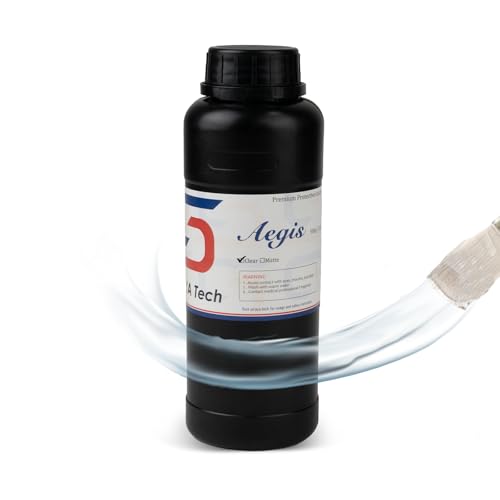
Siraya Tech Aegis Clear Primer
What We Like
- Seals irritating carbon and glass fibers
- Blocks moisture absorption for hygroscopic filaments
- Self-leveling base coat for paint adhesion
- Skin-friendly finish for wearable parts
Trade-offs
- Requires multiple thin coats, not one thick layer
- Must stir gently, no shaking to avoid bubbles
A 500-gram bottle of water-based primer that seals sharp carbon and glass fibers into a smooth, skin-friendly surface, Siraya Tech Aegis Clear tackles two problems at once. It turns prickly composite prints into a skin-friendly finish and blocks moisture from softening hygroscopic filaments like Nylon. The self-leveling formula fills microscopic gaps and creates a high-tension grip layer, so paints, epoxies, and topcoats stick without peeling. For anyone printing functional parts or wearables with fiber-filled materials, this primer provides a durable base that reduces the need for heavy sanding just to make a part safe to hold.
The gloss finish is designed to be followed by a matte topcoat if you want to reduce the visibility of layer lines, but the real strength is in sealing moisture and encapsulating sharp fibers. You cannot rush the application, thin, even coats applied with gentle stirring rather than shaking are required, which means a slower workflow. For hygroscopic filaments like Nylon or PPA, that extra care pays off by blocking atmospheric moisture to prevent softening or warping. It is not the quickest primer for simple PLA models, but for engineering-grade materials and wearables, it is a strong option.
Product photos
Tamiya Gray Fine Surface Primer

What We Like
- Formulated for ABS and Styrene
- Light gray color shows detail well
- Also works on metal parts
- Fine surface finish from spray
Trade-offs
- 180ml can is small for large prints
- Not water-based, requires ventilation
At 180ml in a spray can, this primer is formulated for ABS and Styrene plastics, the materials commonly used in model making and 3D printing. The light gray color provides a neutral base coat. It also works on metal parts, adding flexibility for mixed-material projects.
A 180ml can of primer won’t cover large surfaces without running out quickly, so plan your project size accordingly. Since this isn’t water-based, standard safety precautions for aerosol sprays apply. For comparison, the Siraya Tech Aegis Clear comes in a 500g water-based bottle and is designed for 3D prints, while this Tamiya primer is made specifically for ABS and Styrene plastic.
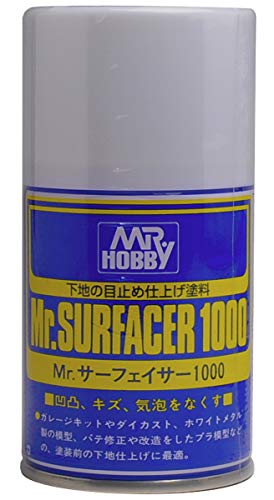
GSI Creos B505 Filler Primers
What We Like
- Primer and filler in one can
- Neutral color for paint prep
- Convenient spray application
Trade-offs
- Small can size limits coverage
- Not water-based like some 3D print primers
A single can that primes and lightly fills in one pass means you can skip a separate sanding step for minor layer lines and get straight to a neutral base for paint. That convenience makes it a natural pick for modelers who want quick results on small to medium prints without mixing or thinning. The spray format keeps setup simple, and the neutral gray background works well under most topcoats.
The spray format keeps setup simple, and the neutral gray background works well under most topcoats. Because the product is a primer with a mild filler agent, minor surface imperfections can be addressed in one step. Deeper layer lines or rough FDM surfaces will still need sanding or a separate filler primer beforehand. Compared to the Tamiya Gray Fine Surface Primer, which is listed at 0.1 pounds, this GSI Creos can is heavier at 0.2 pounds, so it offers a bit more material per can for similar priming tasks.
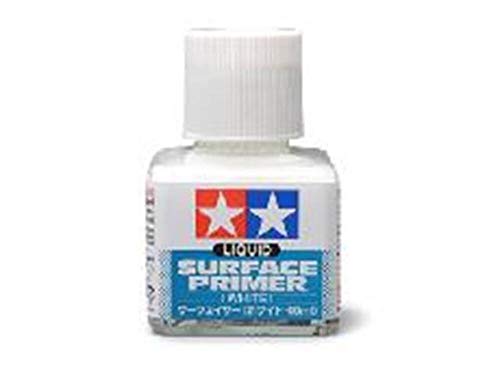
Tamiya Liquid Surface Primer White
What We Like
- Brush-on formula for precise control
- Lacquer base bonds strongly to plastic
- White color shows surface details clearly
- Small bottle easy to store and handle
Trade-offs
- Requires separate brush purchase
- Not for children (adult use only)
- Small 40 ml volume covers limited area
A 40ml bottle of brush-on lacquer primer means you apply it exactly where you want it, which is useful for small projects where a spray can might cover areas you want to keep bare. Tamiya makes this primer, and the brand is well known in model building. The white color can serve as a base coat for lighter paints.
The trade-off is that you will need to buy a paint brush separately, and the 40ml bottle contains less volume than the Tamiya Gray Fine Surface Primer spray can (180ml). This bottle requires more manual effort per coat compared to a spray. For hobbyists who prefer a brush-on method, this gives you direct control over application and uses the same lacquer formula as other Tamiya primers.
Mr. Hobby 8109859 Filler Primers

What We Like
- Spray can offers easy application
- 1500 grit filler surfacer for fine surface preparation
- Black color for dark undercoats
Trade-offs
- Aerosol requires ventilation during use
- Lacquer formula strong solvent smell
This 1500-grit filler surfacer in a spray can is designed to prepare model surfaces for painting by filling fine scratches and imperfections. The black color provides a dark undercoat that can help with certain paint applications. It is applied directly from the aerosol can, making it convenient for hobbyists working on small to medium model parts.
At 170ml, it offers less volume than some other primers on the market. For larger projects, you may need multiple cans. As with any aerosol product, use in a well-ventilated area. For small to medium projects where fine detail matters, this spray can provides a smooth base for painting.
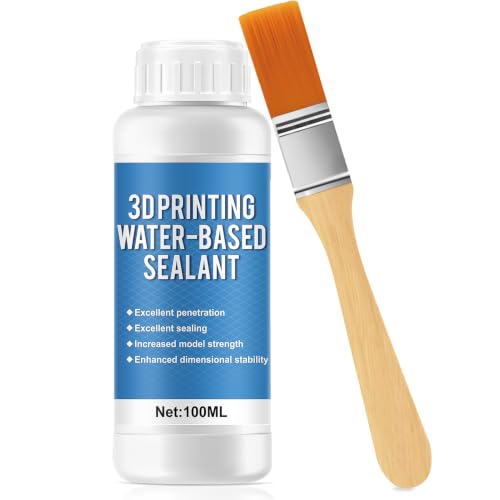
kuailaya 3D Print Primer
What We Like
- Quick-drying water-based formula
- Includes brush for easy application
- Blocks moisture penetration for 3D prints
Trade-offs
- 100ml bottle is small for large projects
- Brush-on only; no spray option for even coats
- Requires thorough stirring before each use
If you print parts that will face humidity or outdoor conditions, the waterproof barrier and scratch-resistant gloss finish give you real protection without complicated equipment.
At 100ml, you will run through this quickly on a big build plate or multiple parts, and the brush-on approach means you have to work carefully to avoid streaks or uneven coverage. Compared to the Siraya Tech Aegis Clear, which offers 500g and a self-leveling base coat, the kuailaya is better suited for smaller, detail-oriented jobs where you want to control exactly where the primer goes. For larger runs or a faster workflow, the extra cost of a larger bottle or a spray primer might be worth it.
Product photos
The Army Painter Matt Black Primer

What We Like
- Combines primer and basecoat in one step
- Matt black finish for dark or metallic schemes
- Fine spray preserves sculpted details
- Works with Speedpaint and acrylic paints
Trade-offs
- No filler properties for layer lines or gaps
- Requires shaking and thin coats to avoid drips
- Not recommended for extreme weather conditions
The Army Painter Matt Black Primer is a dedicated miniature primer that doubles as a basecoat, saving you a full painting step. Its 400 ml can delivers a fine, even spray that preserves tiny sculpted details on plastic, resin, and metal figures, making it a natural fit for wargaming armies or D&D miniatures where speed and consistency matter. The deep black finish creates natural shadows in recessed areas, which is especially helpful for dark or metallic color schemes.
The Army Painter Matt Black Primer is a spray that primes and basecoats in one step, so you can skip a separate painting layer. It’s designed for plastic, resin, and metal miniatures, not for filling in layer lines or imperfections. For clean models straight off the sprue, it gives a smooth, matt surface ready for acrylic paints like Warpaints Fanatic or Speedpaint.
Product photos
U-POL Expert Color Filler Primer

What We Like
- Fills minor surface imperfections
- Dries to touch in 30 minutes
- Wide fan spray nozzle for even coat
- Professional-grade automotive primer
Trade-offs
- Only 7.04 oz per can
- Solvent-based formula has strong fumes
A 30-minute dry time and a wide fan spray nozzle make the U-POL Expert Color Filler Primer a fast, efficient choice for smoothing small surface flaws before painting. Its filler technology is formulated to hide minor scratches and imperfections, creating a level base that’s ready for topcoat in under an hour. This primer suits anyone working on automotive parts or larger metal and plastic projects where a durable, professional-grade finish matters more than ultra-fine detail work.
A can holds just 7.04 ounces of primer, so you’ll use it up fast if you’re painting a whole car panel or several parts at once. That small size makes it handy for quick touch-ups or small projects, but not for big jobs. The U-POL is a solvent-based automotive primer that fills minor surface scratches and dries to the touch in 30 minutes, letting you recoat or paint the same day. It works best on properly prepared metal or plastic surfaces, not on 3D-printed parts or materials that need moisture sealing.
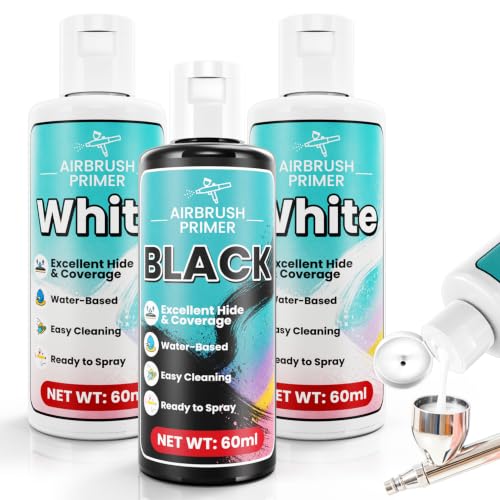
Togcolr Airbrush Primer Set
What We Like
- Ready-to-spray, no mixing needed
- Self-leveling matte hides layer lines
- Water-based, low odor, easy cleanup
- Leak-proof caps prevent spills
Trade-offs
- Only 180 ml total across three bottles
- Black primer comes as single bottle only
- Requires compressor at 15-20 PSI
Three bottles ready to spray straight from the bottle mean no mixing before you start priming. The self-leveling matte finish creates a uniform surface without hiding fine miniature details, so you get a smooth base for paint. This set is ideal for modelers who work with both dark and light base colors, since you get one black and two white primers in the kit. The water-based formula allows easy cleanup of airbrush tools with warm water, and the low-odor formulation makes it suitable for indoor use.
The three-bottle set contains 180 ml total, which is less primer than a single large spray can such as the Tamiya Gray Fine Surface Primer, but that Tamiya product is a spray can, not an airbrush primer. You get one black and two white bottles, so if you frequently use dark base coats you will finish the black faster. For airbrush users who want a ready-to-spray primer that resists clogging, this set offers a convenient option. Just make sure your compressor can hold steady at 15-20 PSI to get the best atomization from these primers.
Product photos
U-POL Multi-Use Filler Primer

What We Like
- Anti-rust technology protects metal surfaces
- High-build formula fills imperfections
- Anti-clog spray nozzle for steady use
- Strong adhesion for automotive substrates
Trade-offs
- Requires thorough surface prep before application
- Masking needed to protect from overspray
This high-build filler primer is designed for automotive metal surfaces like fenders, body panels, and wheels, with anti-rust technology that helps prevent corrosion after painting. The aerosol spray fills small imperfections to create a smooth base for a uniform finish, and the anti-clog nozzle keeps application steady. For best results, thorough surface preparation is required: clean, degrease, and abrade the area before spraying, and mask off surrounding parts to protect from overspray. This makes it a practical choice for vehicle refinishing projects where rust protection and a smooth topcoat are priorities.
The product requires cleaning, degreasing, and abrading the surface before spraying, which adds time compared to some primers that may need less preparation. Also, the spray nozzle design means you will need to mask off areas you do not want coated, so it is less convenient for small, detailed work where overspray is a concern.
Product photos
How We Evaluated Filler Primers For 3D Prints
Our research began with a close look at each primer’s chemical formulation and intended material compatibility. We studied manufacturer documentation for adhesion properties, drying times, and safety requirements, then cross-referenced those specs with expert round-ups from modeling and 3D printing communities.
The four criteria that mattered most were surface filling capability, material compatibility (especially for ABS, Nylon, and PETG), application method (spray vs. Brush-on), and the primer’s secondary functions like moisture blocking or anti-rust protection. For 3D prints, a primer that cannot fill layer lines or that reacts poorly with the base material is worse than no primer at all.
A research-led evaluation has limits: we cannot replicate the real-world spray patterns, drying conditions, or surface prep variations that affect final results. What we can do is give you the technical facts and owner-reported patterns so you can make an informed choice for your specific printer and materials.
What To Look For In Filler Primers For 3D Prints
The right filler primer saves sanding time and ensures paint sticks. Focus on compatibility with your filament, the primer’s filling ability, and whether you need spray convenience or brush-on precision.
Filament Compatibility
Not all primers stick to all plastics. ABS and Styrene require a solvent-based formula like the Tamiya Gray Fine Surface Primer, while Nylon and PETG benefit from moisture-blocking primers like the Siraya Tech Aegis. Water-based options like the Togcolr Airbrush Primer Set work well for PLA and resin prints but may not bond to engineering filaments.
Filler Properties
Layer lines on FDM prints need a high-build primer that can fill 0.1mm to 0.2mm gaps in a few coats. The GSI Creos B505 and U-POL Expert Color Filler Primer are formulated for this, while the Army Painter Matt Black Primer has no filler properties and is best for smooth resin miniatures.
Application Method
Rattle cans offer speed and even coverage for medium parts, but brush-on primers like the Tamiya Liquid Surface Primer give precision for small details. Airbrush users should look for ready-to-spray options like the Togcolr set that require no thinning.
- Check the primer’s drying time and whether it needs ventilation.
- Confirm the can or bottle volume is enough for your project size.
- Look for self-leveling formulas that reduce brush strokes or spray texture.
- For functional parts, verify moisture-blocking or fiber-sealing claims.
- Always test on a scrap print first to check adhesion and chemical reaction.
A good rule: if you can see layer lines, you need a filler primer. If the surface is already smooth, a standard primer will do.
Filler Primers For 3D Prints Compared
The table below compares all ten filler primers side by side, highlighting their best use cases and key trade-offs so you can find the right match for your next print.
| Product | Type | Volume | Target Materials |
|---|---|---|---|
| Siraya Tech Aegis Clear Primer | Primer & Functional Coating | 500g | UV Resin, PA, PETG, ABS, PLA, TPU |
| Tamiya Gray Fine Surface Primer | Spray Can | 180ml | ABS and Styrene |
| GSI Creos B505 Filler Primers | Spray can | N/A | N/A |
| Tamiya Liquid Surface Primer White | Lacquer primer | 40 ml | N/A |
| Mr. Hobby 8109859 Filler Primers | Filler surfacer | 170ml | N/A |
| kuailaya 3D Print Primer | 3D Print Coating | 100ml | Nylon, PPA, PET, PETG |
| The Army Painter Matt Black Primer | Acrylic spray primer | 400 ml | Plastic, resin, metal |
| U-POL Expert Color Filler Primer | Aerosol spray | 7.04oz | N/A |
| Togcolr Airbrush Primer Set | Ready to Spray Acrylic Surface Primer | 180 ml | N/A |
| U-POL Multi-Use Filler Primer | High-build filler primer | N/A | N/A |
Frequently Asked Questions
Can I use regular spray primer on 3D prints?
Yes, but regular spray primers are not formulated to fill layer lines or bond to common 3D printing filaments like ABS and Nylon. A dedicated filler primer like the GSI Creos B505 will fill micro-grooves and provide better adhesion for paint.
Do I need to sand 3D prints before using filler primer?
Sanding is not always required, but light sanding with fine grit paper improves adhesion and reduces the number of primer coats needed. For rough FDM prints with deep layer lines, sanding first gives the filler primer a better surface to grip.
What is the best primer for ABS 3D prints?
The Tamiya Gray Fine Surface Primer is formulated specifically for ABS and Styrene. Its solvent-based formula bonds strongly to these materials without cracking, and the fine gray finish shows surface details clearly for inspection.
How many coats of filler primer should I apply?
Most filler primers require two to three thin coats to fill layer lines completely. Applying one thick coat can cause runs, bubbles, and long drying times. Let each coat dry fully and sand lightly between coats for the smoothest finish.
Can I use a brush-on primer for large 3D prints?
Brush-on primers like the Tamiya Liquid Surface Primer are best for small projects due to their limited coverage area. For large prints, a spray primer covers more evenly and faster, reducing the risk of brush marks and uneven thickness.
The Bottom Line
For most 3D printer users, the Siraya Tech Aegis Clear Primer is the best overall choice. It seals irritating fibers, blocks moisture absorption, and creates a skin-friendly finish for wearable parts. If you work primarily with ABS or Styrene, the Tamiya Gray Fine Surface Primer gives you a formulated bond that general primers cannot match.
Budget-conscious makers should look at the kuailaya 3D Print Primer for simple brush-on moisture blocking on small functional parts. Miniature painters will appreciate the Army Painter Matt Black Primer for its one-step primer and basecoat application on smooth resin prints.
The single most important factor is matching the primer to your filament. A primer that does not bond to your base material will peel or crack, wasting your time and paint. Choose for your plastic first, then for the finish.
