
10 Best Exterior Primers in 2026
This post contains affiliate links. As an Amazon Associate, we earn from qualifying purchases.
For most exterior paint jobs, the Zinsser Smart Prime Water-Based Primer is the best overall choice. It bonds to glossy surfaces without sanding, blocks stains with proprietary resins, and dries ready for a topcoat in just one hour. If you need a single primer that works on wood, metal, and masonry, the INSL-X Prime All Multi-Surface Primer is our top multi-surface pick. For tough stains or cool-weather work, the Zinsser Bulls Eye 1-2-3 Primer & Sealer is a reliable stain blocker.
The real challenge with exterior priming is that outdoor surfaces face moisture, temperature swings, and UV exposure that interior primers are not designed to handle. A primer that bonds poorly will lead to peeling paint, while one that fails to block stains can ruin your final finish.
We built this guide by analyzing manufacturer specifications, expert recommendations, and patterns in owner feedback across dozens of exterior primers. Our goal is to help you match the right primer chemistry to your specific surface and conditions.
Top 10 Exterior Primers in the Market

Certain content that appears on this site comes from Amazon. This content is provided "as is" and is subject to change or removal at any time.
The Best Exterior Primers, Reviewed
Zinsser Smart Prime Water-Based Primer

What We Like
- Bonds to glossy surfaces without sanding
- Blocks stains with proprietary resins
- Dried film resists mold and mildew
- Recoatable in just one hour
Trade-offs
- Quart size limits coverage on large projects
- Not formulated for heavy-duty weatherproofing
A one-hour recoat window lets you prime and paint in the same day, a rare convenience for a primer that handles both interior and exterior surfaces. Bonding to glossy and moderately chalky surfaces without scuff sanding cuts prep time on wood, drywall, or metal. Its stain-blocking resins and mold-resistant dried film provide extra protection when covering stains or working in damp areas.
For fully exposed outdoor structures that take direct weather year-round, a dedicated exterior wood primer like the Rust-Oleum Marine Wood & Fiberglass Primer may offer longer-term protection. For most other exterior jobs, the Smart Prime’s fast dry time and forgiving surface bonding make it a versatile pick.
INSL-X Prime All Multi-Surface Primer

What We Like
- Strong sealing on many surfaces
- Mildew resistant coating
- Quick drying, recoat in 1 hour
- Powerful adhesion and stain blocking
Trade-offs
- Requires temperature above 40°F to apply
This 100% acrylic primer seals and sticks to a wide range of interior and exterior surfaces, from wood to metal to drywall, with 400-450 square feet of coverage per gallon. That makes it a true one-can solution for mixed-material projects, think a shed with wood siding, metal trim, and concrete block, where switching primers would slow you down. The mildew-resistant coating adds extra protection for damp exterior spots, and the one-hour recoat time keeps the job moving fast.
Compared to the Zinsser Smart Prime, which also works on multiple surfaces but comes in a quart size only, the INSL-X gallon offers better value for larger jobs. For anyone tackling a whole house exterior or a mixed-material workshop, this is the primer that handles the variety without compromise.
Product photos
Zinsser Bulls Eye 1-2-3 Primer & Sealer

What We Like
- Bonds to glossy surfaces without sanding
- Stain-blocking resins seal tough marks
- Works down to 35°F for cold-weather jobs
- Rust-inhibitive for metal surfaces
Trade-offs
- Quart size covers less area than gallon options
- Requires multiple coats for heavy stains
A 35°F minimum application temperature means you can keep painting in chilly weather. That low-temperature flexibility, combined with stain-blocking resins, helps seal stains on interior and exterior surfaces. It also bonds to glossy surfaces without scuff sanding, so you can skip that prep step on previously painted trim or siding. For anyone facing stubborn stains or a tight schedule, this primer offers a practical solution.
The trade-off is that the quart size runs out fast on a full exterior project; you will likely need multiple quarts if you are tackling more than a single door or a patch of fence. Compared to the INSL-X Prime All Multi-Surface Primer, which comes in a larger container, the Zinsser gives you a lower application temperature and stain-blocking performance but less coverage per purchase. If your job is small or stain-heavy, the extra trips to the store are worth it for the features it provides.
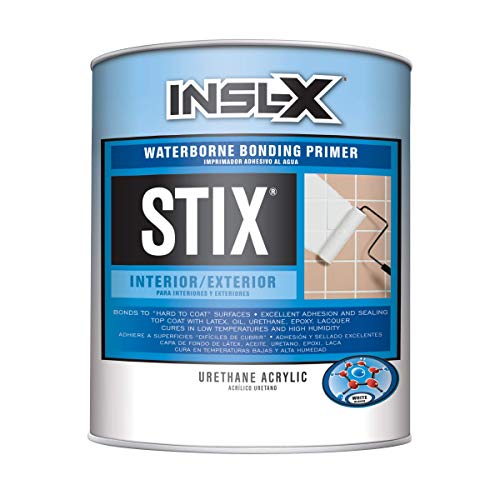
INSL-X Stix Acrylic Waterborne Bonding Primer
What We Like
- Bonds to glossy tile, PVC, vinyl, glass
- Cures in temperatures as low as 35°F
- Low VOC with soap-and-water cleanup
- Excellent enamel holdout for even topcoat
Trade-offs
- Limited coverage of 75-100 sq ft per quart
- Requires careful surface prep per label instructions
A bonding primer that sticks to glossy tile, PVC, vinyl, plastic, glass, and galvanized metal means you can paint surfaces most primers simply slide off. INSL-X Stix uses an acrylic-urethane formula that cures in temperatures as low as 35°F, so early spring or late fall exterior jobs stay on the table. It works inside or out, cleans up with soap and water, and gives an enamel holdout that helps your topcoat lay flat and even. For anyone facing a tricky surface, old ceramic tile, a vinyl fence, or a fiberglass door, this is the primer that makes the paint actually stay.
Coverage is the trade-off: at 75 to 100 square feet per quart, a large siding job will need two quarts or a gallon can. But when the surface is the real challenge, glossy tile, PVC, or galvanized metal. Stix’s adhesion is what matters. Read the label for prep steps; skipping them can undermine even this strong bond.
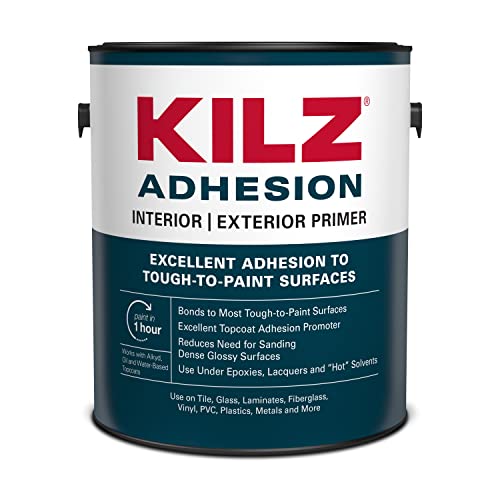
KILZ Adhesion Primer
What We Like
- Bonds to Kynar, PVC, Formica, glass, tile
- Reduces need for sanding glossy surfaces
- Trusted brand for nearly 50 years
- Works on interior and exterior surfaces
Trade-offs
- Coverage only 75-100 sq ft per quart
- Needs 24-hour dry time before hot solvents
- Heavy at 12.2 pounds per gallon
A high-adhesion primer that bonds to surfaces most primers can’t touch. Kynar, PVC, Formica, glass, tile, glazed brick, chalky paints, glossy finishes, fiberglass, and metals. The advanced styrenated acrylic polymer formula also reduces or potentially eliminates sanding on dense, glossy surfaces, saving serious prep time on tricky jobs like painting over laminate cabinets or vinyl siding. For interior or exterior surfaces where a secure bond is critical, this primer is formulated to provide a sound anchor for topcoats.
Coverage and patience are the main trade-offs here. At 75-100 square feet per quart, you will need more product than a standard gallon primer for a large project. If you plan to topcoat with epoxies, lacquers, or anything containing xylene, you must let it dry a full 24 hours and test compatibility first. Compared to a primer like Zinsser Smart Prime, which seals and blocks stains on interior/exterior wood, drywall, and metal, the KILZ Adhesion demands more planning and cost per square foot. But for notoriously difficult surfaces, this primer is designed to bond where traditional water- or oil-based primers might be questionable.
Product photos
Polar Wood Primer White Undercoat

What We Like
- Quick-drying in 1-2 hours
- Flexible, weather-resistant protection
- Deep penetration for bare wood
- Versatile on wood and MDF
Trade-offs
- Requires compatible topcoat for full weather resistance
- Only 2.5L size available in this listing
This Polar primer is built for bare wood, its low surface tension lets it soak deep into the grain, creating a flexible base that resists cracking and repels water once you add a topcoat. It dries in just one to two hours and can be recoated after four, so you can prep and paint in the same afternoon.
This is a dedicated wood primer, not a multi-surface stain blocker. If you need to seal nicotine, water marks, or ink stains on a mix of materials, a product like Zinsser Bulls Eye 1-2-3 covers more ground. But for bare wood that faces sun and rain, the flexible weather resistance here helps prevent cracking and water damage. Stick with a compatible topcoat, and you get a reliable system from a brand with over 130 years of paint manufacturing experience.
Product photos
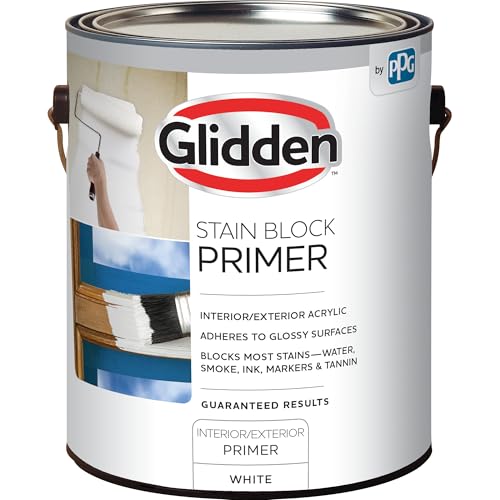
Glidden Interior/Exterior Stain Block Primer
What We Like
- Blocks water, smoke, ink, markers, tannins
- Recoatable in just 1 hour
- Easy soap and water cleanup
Trade-offs
- Flat finish won't hide heavy texture or peeling paint.
- Not a high-build primer for deep surface flaws.
A one-hour recoat time means you can prime in the morning and paint by lunch, no waiting overnight for the next coat. It blocks the usual suspects: water stains, smoke residue, ink marks, and even tannin bleed from cedar or redwood. That makes it a strong choice for quick refreshes on front doors, fence panels, or basement walls where stains are the main headache, not peeling paint.
This is a flat primer, so it won’t hide deep surface imperfections the way a higher-build primer might. If your project has heavy texture or old flaking paint, you will want to sand or fill before priming. For comparison, the Zinsser Smart Prime in this guide also offers stain blocking and a short recoat window. The Glidden delivers stain coverage and a one-hour recoat time for interior or exterior jobs.
Product photos
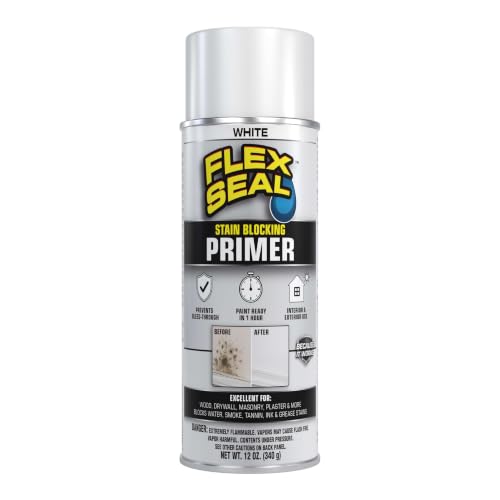
Flex Seal Stain Blocking Primer Spray
What We Like
- Blocks water, smoke, tannin, ink, grease stains
- Topcoat-ready in just 1 hour
- Works on wood, drywall, masonry, plaster
- Accepts latex and oil-based topcoats
Trade-offs
- 12 oz spray covers smaller areas than quart or gallon cans
- Requires a separate topcoat for full finish
This spray primer dries to the touch in 15-30 minutes and is ready for paint in just one hour. That speed makes it a smart choice for quick touch-ups or small projects where you don’t want to wait around. It blocks water, smoke, tannin, ink, and grease stains, so it handles the kind of stubborn bleed-through that ruins a finish. The bright white flat finish also gives you a clean base for either latex or oil-based topcoats, which adds flexibility when you’re matching paint types.
Coverage is the trade-off: a 12-ounce can goes fast, especially on porous masonry or rough drywall. If you’re priming a whole exterior wall, you’ll want a larger container like Zinsser Smart Prime’s quart size. But for spot repairs, small furniture, or stain-prone areas you can hit with a spray can, this Flex Seal primer does exactly what it promises without slowing you down.
Product photos
Rust-Oleum Painter's Touch 2X Ultra Cover Spray Primer
What We Like
- Sprays from any angle
- Dries to touch in 20 minutes
- Covers wood, plastic, metal, masonry, ceramic
- Comfort spray tip
Trade-offs
- Only 12 sq. ft. per can limits larger jobs
- Oil-based formula requires solvent cleanup
A 12-square-foot coverage per can makes this spray primer ideal for small projects like a single chair, a mailbox, or a set of planters. It dries to the touch in 20 minutes, so you can move quickly from priming to painting without waiting around. The oil-based formula resists chips and provides long-lasting protection on wood, plastic, metal, masonry, and unglazed ceramic, covering most surfaces you’d encounter on a small refresh. The any-angle spray and comfort tip make application easier on awkward spots, and the flat primer provides a surface ready for painting.
At 12 square feet per can, this spray runs out fast on a fence panel or a full door, so for bigger surfaces you’d want a quart or gallon primer. And because it’s oil-based, cleanup requires solvent rather than soap and water. For small jobs where convenience and speed matter more than volume, this spray primer keeps things simple and fast.
Rust-Oleum Marine Wood & Fiberglass Primer
What We Like
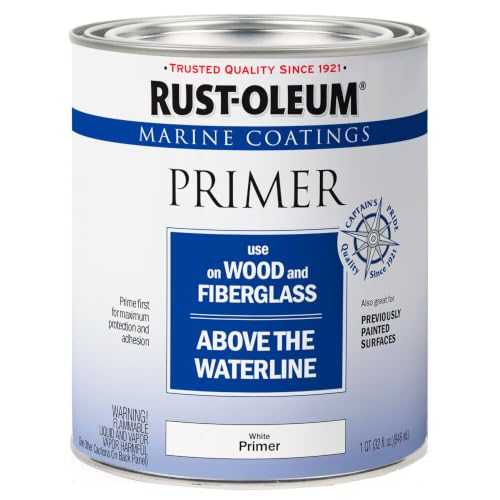
- Designed for wood and fiberglass above waterline
- Improves topcoat adhesion for longer-lasting finishes
- Dries to touch in 1 hour
- Sands easily, works on bare or painted surfaces
Trade-offs
- Limited to above-waterline marine use only
- Quart size covers only 100 sq ft
A quart covers 100 square feet, so this primer is meant for focused marine repairs rather than whole-boat jobs. It’s designed for wood and fiberglass surfaces above the waterline, which are the typical materials on many boat parts. The one-hour dry-to-touch time keeps work moving, and the sandable finish lets you smooth things out before the topcoat. That combination of targeted adhesion and easy prep makes it a good fit for boat owners who want a corrosion-resistant base layer that helps their finish paint hold an even gloss.
This primer is purpose-built for marine surfaces, so it won’t serve as a general exterior primer for siding, metal, or drywall. If your project is a dock box or a fiberglass dinghy, the adhesion and corrosion resistance here are exactly what you need. For a broader interior job covering multiple surface types, the Zinsser Bulls Eye 1-2-3 is an all-surface stain-blocking primer for interior use. Stick with the Rust-Oleum when your work lives above the waterline and you want a primer that preps those fiberglass and marine-grade wood surfaces.
How We Evaluated Exterior Primers
This evaluation is based on manufacturer technical data sheets, professional painter round-ups, and common themes from thousands of owner experiences. Every claim was compared against what real users report in the field.
We focused on four criteria that matter most for exterior work. First, adhesion to difficult surfaces without sanding, because outdoor materials like PVC, vinyl, and glossy trim are notoriously hard to coat. Second, stain-blocking capability, especially for tannin bleed from cedar and redwood, as well as water and smoke stains. Third, temperature tolerance, since many exterior jobs happen in cooler months. Fourth, dry and recoat time, because outdoor projects are often weather-dependent.
An honest limit of a research-led evaluation is that real-world performance can vary with application technique, surface condition, and local climate. We prioritized primers with consistent positive feedback across diverse conditions rather than those with theoretical advantages on paper.
What To Look For In Exterior Primers
Choosing the right exterior primer comes down to matching the product chemistry to your surface material, weather conditions, and the specific stains or adhesion challenges you face.
The best exterior primer for your project must bond to your specific surface. It also needs to block the stains you are dealing with, withstand the temperatures you will apply it in, and dry fast enough to work with your schedule.
Surface Compatibility
Not all primers stick to all surfaces. If you are painting over glossy trim, vinyl siding, PVC, or metal, look for a primer specifically formulated for low-energy surfaces. The INSL-X Stix Acrylic Waterborne Bonding Primer and KILZ Adhesion Primer are designed for notoriously tough materials like tile, glass, and Kynar. For bare wood, a dedicated wood primer like the Polar Wood Primer White Undercoat penetrates deep and provides flexible weather protection.
Stain Blocking and Sealing
Exterior stains come from tannins in wood, rust on metal, and water damage on old paint. Water-based primers with proprietary stain-blocking resins, such as those in the Zinsser Smart Prime and Zinsser Bulls Eye 1-2-3, seal these marks effectively. For heavy stains or multiple stain types, a shellac-based primer is sometimes recommended, but for most exterior jobs, a quality water-based stain blocker is sufficient.
Temperature and Weather Tolerance
Many exterior primers have minimum application temperatures. The Zinsser Bulls Eye 1-2-3 and INSL-X Stix both work down to 35°F, making them suitable for early spring or late fall projects. Primers that require temperatures above 50°F limit your working season. Also consider dry time: primers that recoat in one hour, like the Zinsser Smart Prime and Glidden Interior/Exterior Stain Block Primer, let you complete a project in a single day.
- Check the label for the minimum application temperature before starting.
- Confirm the primer is compatible with your topcoat (latex, oil, or both).
- For large projects, buy gallon containers to avoid running short mid-job.
- For small touch-ups or hard-to-reach spots, consider a spray primer like the Rust-Oleum Painter’s Touch 2X.
A primer that matches your surface and weather conditions is worth far more than one with flashy marketing claims.
Exterior Primers Compared
The table below compares our top exterior primers side by side, highlighting their best uses, key strengths, and practical trade-offs so you can quickly find the right match for your project.
| Product | Type | Drying Time | Use |
|---|---|---|---|
| Zinsser Smart Prime Water-Based Primer | Water-based primer-sealer | Minutes | Interior/exterior |
| INSL-X Prime All Multi-Surface Primer | 100% acrylic | N/A | Interior & exterior |
| Zinsser Bulls Eye 1-2-3 Primer & Sealer | Water-base primer-sealer | N/A | Interior & exterior |
| INSL-X Stix Acrylic Waterborne Bonding Primer | Acrylic-urethane bonding primer-sealer | N/A | Interior or exterior |
| KILZ Adhesion Primer | Styrenated acrylic polymer | 30 min to touch | Interior/Exterior |
| Polar Wood Primer White Undercoat | N/A | 1-2 hours | Interior and exterior wood |
| Glidden Interior/Exterior Stain Block Primer | Interior/exterior acrylic | N/A | Interior/exterior |
| Flex Seal Stain Blocking Primer Spray | N/A | 15-30 minutes | Interior exterior |
| Rust-Oleum Painter's Touch 2X Ultra Cover Spray Primer | Oil-based | 20 minutes | Indoor and Outdoor |
| Rust-Oleum Marine Wood & Fiberglass Primer | N/A | 1 hour to touch | Marine |
Frequently Asked Questions
Do I need a primer for exterior painting?
Yes, in most cases. Exterior primer improves paint adhesion, blocks stains from bleeding through, and provides a uniform surface for your topcoat. Skipping primer often leads to peeling, cracking, or discoloration within a year or two, especially on bare wood, metal, or previously unpainted surfaces.
Can I use interior primer outside?
No. Interior primers lack the mildew resistance, UV protection, and weather tolerance needed for outdoor exposure. Using an interior primer outside will likely result in premature failure, including peeling, chalking, and mold growth. Always choose a primer labeled for exterior use.
What is the best primer for glossy exterior surfaces?
For glossy surfaces like PVC, vinyl, or previously painted trim, a bonding primer is your best option. The INSL-X Stix Acrylic Waterborne Bonding Primer and KILZ Adhesion Primer are both formulated to grip slick surfaces without sanding, saving significant prep time.
How long should exterior primer dry before painting?
Dry time varies by product and weather conditions. Many modern water-based primers, including the Zinsser Smart Prime and Glidden Stain Block Primer, are recoatable in one hour. Others, like the KILZ Adhesion Primer, recommend 24 hours before applying hot solvents. Always follow the label instructions for your specific primer.
Can I prime in cold weather?
Yes, but you need a primer rated for low temperatures. The Zinsser Bulls Eye 1-2-3 and INSL-X Stix both work down to 35°F. Avoid applying primer when temperatures are expected to drop below the minimum during the drying period, as this can prevent proper film formation.
The Bottom Line
For most exterior projects, the Zinsser Smart Prime Water-Based Primer is the best overall choice. It bonds to glossy surfaces without sanding, blocks stains, resists mold and mildew, and dries in just one hour. This combination of speed and versatility makes it ideal for homeowners and pros who want a reliable, all-around exterior primer.
If your project involves multiple surfaces like wood, metal, and masonry, the INSL-X Prime All Multi-Surface Primer saves you from buying separate primers. For budget-conscious jobs, the Glidden Interior/Exterior Stain Block Primer offers stain blocking and fast drying at an affordable price point. And for tough surfaces like tile, glass, or PVC, the INSL-X Stix Acrylic Waterborne Bonding Primer is worth paying more for.
The single most important factor in choosing an exterior primer is matching it to your specific surface and weather conditions. A perfect primer applied in the wrong temperature or to the wrong material will fail. Take the time to read the label, and your paint job will last years longer.
