
9 Best Metal Primers For Rusty Metal in 2026
This post contains affiliate links. As an Amazon Associate, we earn from qualifying purchases.
For rusty metal projects that need a fast, durable fix, the Rust-Oleum Stops Rust Reformer Spray is our best overall pick because it converts rust instantly without sanding and sprays at any angle. DIYers needing wide coverage should consider the Corroseal Rust Converter & Metal Primer, while those who prefer a brush-on approach will find the Rust-Oleum Brush On Rusty Metal Primer a reliable choice.
Dealing with rust means choosing between a converter that chemically neutralizes the corrosion or a primer that seals it for painting. The right product depends on your project’s size, the rust severity, and whether you prefer spray or brush application.
This guide is based on manufacturer specifications, expert round-ups, and patterns in owner feedback. We break down the key features of nine top-rated primers to help you match the right formula to your specific metal repair.
Top 9 Metal Primers For Rusty Metal in the Market
Certain content that appears on this site comes from Amazon. This content is provided "as is" and is subject to change or removal at any time.
The Best Metal Primers For Rusty Metal, Reviewed
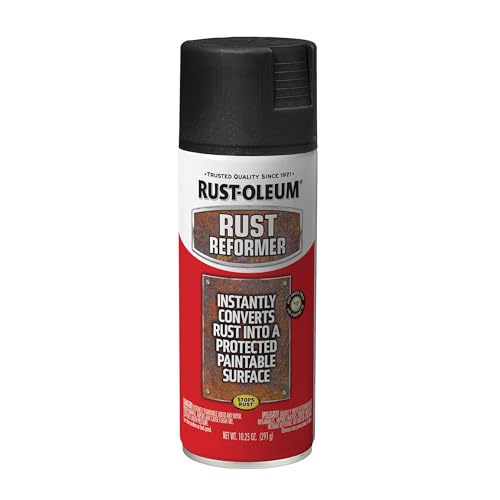
Rust-Oleum Stops Rust Reformer Spray
What We Like
- Converts rust instantly without sanding to bare metal
- Any-angle spray works upside down
- Dries tack free in 20-40 minutes
- Oil-based formula bonds with rusted surface
Trade-offs
- Requires 24 hours before applying a topcoat
- Oil-based formula means solvent cleanup
- Single-use spray can limits coverage on large jobs
This spray converts rust into a paintable flat black surface without sanding down to bare metal, saving you the effort of stripping rust by hand. The any-angle spray lets you reach awkward spots like the underside of a fender without tilting the can. It dries tack free in 20-40 minutes, so you can move on to other tasks quickly, but you need a full 24 hours before applying a topcoat.
You need a full 24 hours before applying a topcoat, so this isn’t a same-day finish. The spray can is convenient for small to medium projects where you want to avoid brush or roller cleanup. Unlike the Corroseal Rust Converter & Metal Primer which comes in a gallon size for larger jobs, this is best for quick rust repair where you value ease of application over immediate painting.
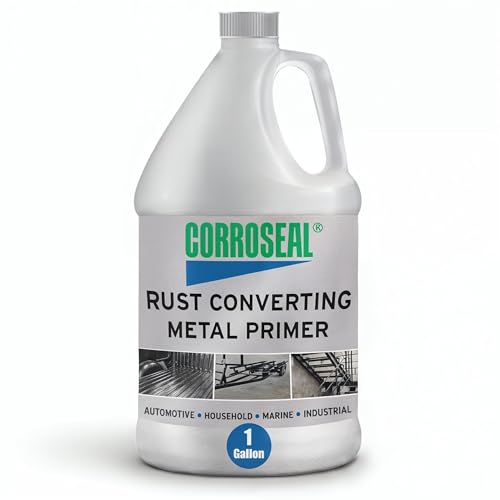
Corroseal Rust Converter & Metal Primer
What We Like
- Converts, primes, and paints in one step
- Water-based, non-flammable, non-corrosive
- Covers 200-250 sq ft per gallon
- Cleans up with soap and water
Trade-offs
- Requires 8-10 mils wet application thickness
A full gallon covers 200 to 250 square feet, so this single container can handle a trailer bed, a boat hull, or a set of wrought-iron railings without needing a second purchase. The water-based formula converts rust into a paintable surface while priming the metal, all in one coat, and cleans up with just soap and water. That makes it a practical pick for anyone tackling a large rusty project who wants to avoid the fumes and flammable hazards of solvent-based primers.
The catch is that you need to apply a wet film thickness of 8-10 mils to get the rated coverage. That means a heavier coat than some spray-on converters. Compared to the Rust-Oleum Brush On Rusty Metal Primer, which comes in a quart size and is applied by brush, this gallon-size product is better suited for large surfaces where you have a brush or roller in hand.
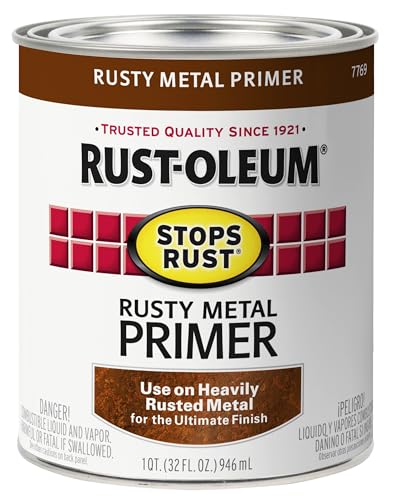
Rust-Oleum Brush On Rusty Metal Primer
What We Like
- Oil-based for durable rust prevention
- Covers 65-110 sq. ft. per can
- Dries to touch in 2-4 hours
- Creates paintable surface for topcoats
Trade-offs
- Intended for heavily rusted metal only
- Brush-on application slower than spray
- Quart size heavier than aerosol options
A quart of oil-based primer that covers 65 to 110 square feet means you can tackle a rusty gate, a set of wrought-iron railings, or a tractor fender in one go without running back to the store. The oil formula gives it the staying power to handle outdoor weather and heavy-use environments. The four-hour dry time lets you move through a project at a steady pace without rushing. It creates a surface that topcoats can easily adhere to, so you get a reliable base for painting.
This primer is designed specifically for heavily rusted surfaces. If your metal is only lightly oxidized or mostly clean, you are paying for more rust-fighting power than you need. Compared to the Rust-Oleum Reformer Spray, which comes in an aerosol can, the brush-on quart takes more effort to apply and requires a longer wait between coats. But for large areas of serious corrosion where you want a durable, oil-based layer that preps the surface for paint, this quart delivers what the label promises.
Corroseal Water-Based Rust Converter Metal Primer

What We Like
- Combines primer, paint, and rust converter
- Non-flammable and non-corrosive formula
- Easy cleanup with just soap and water
- Works on marine, auto, and household surfaces
Trade-offs
- Requires thick 8-10 mil wet application
- Not suitable for non-porous glossy metal surfaces
This water-based rust converter covers 200 to 250 square feet per gallon, so a single quart handles a sizable metal surface. It paints, primes, and converts rust in one step, and the non-flammable, non-corrosive formula cleans up with just soap and water. That makes it a straightforward option for rusty metal projects where you want to avoid harsh solvents.
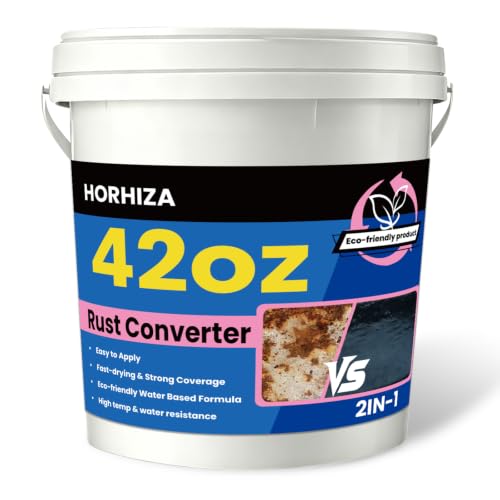
HORHIZA 2 in 1 Black Rust Converter & Metal Primer
What We Like
- Eco-friendly water-based formula
- Low odor, non-toxic
- UV, chemical, and abrasion resistant
- No primer needed before application
Trade-offs
- 24-hour drying time requires patience
- Brush-on only, no spray option
- Multiple coats needed for best results
This 42-ounce water-based formula is low-odor and non-toxic, so cleanup is easy with water. It works as both a rust converter and a metal primer, turning rust into a stable coating and sealing metal from water, salt, and chemicals. That makes it a practical choice for DIYers working on car chassis, ships, tools, fences, or machinery, especially when they want to avoid strong fumes.
This rust converter needs a full 24 hours to dry and asks for two to three thin coats for the best seal, so plan your project around that cure time. The water-based formula is non-toxic and low-odor, and cleanup is just water, which makes it friendlier for enclosed spaces than solvent-based alternatives. For anyone who can let the coating set overnight, the payoff is a smooth, tightly bonded surface that resists UV, chemicals, and abrasion.
Product photos
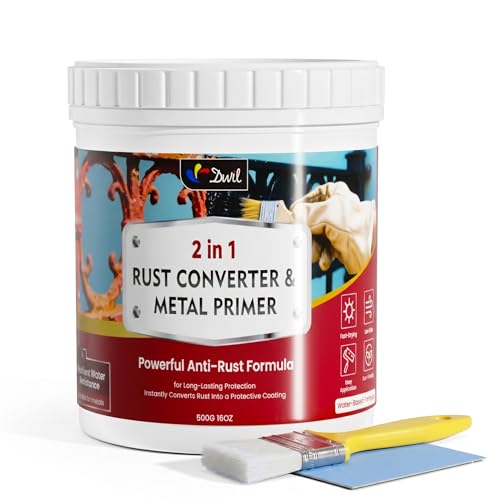
DWIL Rust Converter and Metal Primer 2 in 1
What We Like
- High-flow capillary action penetrates crevices
- 2-in-1 converter and primer saves steps
- Low-odor water base for indoor use
- Creates a paintable black polymer shield
Trade-offs
- Requires two thin coats for best results
- Not designed for spray application on large flat surfaces
A 16-ounce bottle of liquid that looks like water but works through capillary action to seep into microscopic pores and tight crevices where brushes can’t reach. That low-viscosity design is the key advantage here: instead of sitting on top of rust like a thick paint, it flows deep into pitted metal, neutralizes corrosion chemically, and bonds from the inside out. This makes it ideal for intricate ironwork, railings, or a car chassis with hard-to-reach spots where rust hides. The water-based formula keeps fumes low, so you can work indoors without harsh odors, and the single product handles both conversion and priming.
The 100% liquid formula uses capillary action to reach microscopic pores and tight crevices, ensuring every spot where brushes can’t reach is fully protected. For detailed jobs where penetration matters more than speed, that water-like consistency gets into places thick paints cannot. You’ll need two thin coats and a bit of patience to build a uniform seal, but the result is a paintable black polymer shield that blocks oxygen and moisture. The low odor makes it a practical choice for home workshops.
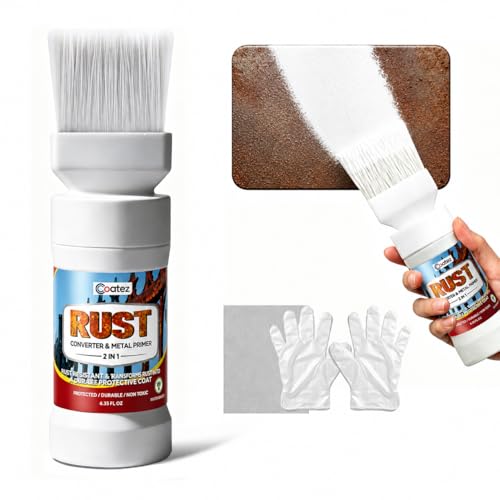
COATEZ 2-in-1 Rust Converter & Metal Primer
What We Like
- Built-in brush for easy application
- Converts rust into protective coating
- Low odor, works indoors
- Includes sandpaper and gloves
Trade-offs
- Small 6.35 oz bottle limits coverage
- Only for light to moderate rust
- Requires sanding before use
A 6.35-ounce bottle with a built-in brush means you can tackle a rust spot on a mailbox or gate without hauling out a paint tray, brush, and sandpaper separately. The brush applicator eliminates the need for separate tools, and the water-based formula is low odor, designed for convenient indoor and outdoor use. The kit also includes sandpaper and disposable gloves to help simplify the repair process.
The COATEZ bottle covers only 21.5 square feet, so it disappears fast on a larger project. The instructions call for sanding loose rust first, so it is not a spray-and-walk-away fix. For comparison, a quart-sized Rust-Oleum Brush On Rusty Metal Primer offers more volume for bigger jobs. The COATEZ bottle is sized for small touch-ups, and the integrated brush plus included gloves help keep the work neat.
Product photos
Krylon Red Oxide Rusty Metal Primer

What We Like
- Classic red oxide formulation
- Designed specifically for rusty metal
- Spray application for even coverage
Trade-offs
- 13.0 pounds is heavy for a spray can
- Not a rust converter or reformer
This Krylon primer comes in a 13.0-pound can, so you are getting a lot of product for the money. The red oxide formulation is designed for rusty metal, making it a straightforward choice for prepping surfaces like outdoor furniture or railings before a topcoat. It is a spray application, which helps achieve even coverage across larger areas.
At 13.0 pounds, this primer can is heavy enough to stay put on a workbench while you spray, so you won’t have to chase it around. The can holds a lot of paint, which means fewer trips to the store for refills. Reviewers note that the Krylon Red Oxide Rusty Metal Primer is designed to go over rusty metal, preparing it for a topcoat.
Product photos
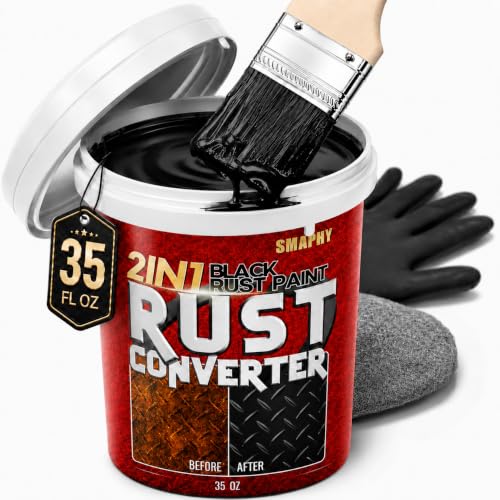
SMAPHY 2 in 1 Rust Converter & Primer
What We Like
- Converts rust in one coat
- Heat- and UV-resistant barrier
- No topcoat or grinding needed
- Covers up to 100 sq ft
Trade-offs
- One can covers limited area for large jobs
- Requires a water source for cleanup
A single coat that converts rust into a stable, protective finish means you can skip the grinding step entirely. This water-based formula seals out water and salt with a heat- and UV-resistant barrier, making it a strong fit for exhaust pipes, engine bays, and undercarriages. The matte black finish works as both a rust converter and primer, so you don’t need a separate topcoat. It’s a straightforward solution for anyone who wants durable rust protection without extra prep work.
Painting directly over rust converts it into a stable, protective flat black finish in a single coat, no need to grind or apply a separate topcoat. The water-based, non-toxic formula creates a heat- and UV-resistant barrier that seals out water and salt, so it works for car chassis, undercarriages, exhaust pipes, and outdoor metal exposed to road salt or coastal corrosion. One can covers up to 100 square feet of bare or rusty metal, making it practical for larger projects like truck frames or machinery.
Product photos
How We Evaluated Metal Primers For Rusty Metal
Our evaluation relied on manufacturer data, expert recommendations, and the collective experience of DIYers and mechanics shared in owner reviews. We focused on the chemistry behind each formula, whether it converts rust, primes, or does both, and how that translates to real-world application.
The three most critical criteria were rust conversion capability, ease of application, and surface preparation requirements. A true rust converter chemically alters iron oxide into a stable, paintable barrier, while a primer simply provides a bonding layer. Ease of application matters because rusty metal is often in awkward spots like car frames or garden railings.
We also considered coverage area, drying time, and the need for topcoats. A research-led evaluation cannot replicate product use, but by comparing specs and reading thousands of owner experiences, we identified which products consistently perform as described and which have trade-offs that matter for specific projects.
What To Look For In Metal Primers For Rusty Metal
Choosing the right primer for rusty metal means understanding the difference between rust converters, rust reformers, and traditional primers. Each type works best under different conditions, and matching the product to your project saves time and frustration.
Look for a rust converter if you want to chemically neutralize rust into a stable black coating. Choose a rust primer if you need a bonding layer for paint. For small jobs, spray-on converters are fastest; for large areas, brush-on or roll-on water-based formulas offer better coverage.
Rust Conversion vs. Rust Priming
A rust converter contains tannic acid or similar chemicals that react with iron oxide to form a stable, inert black layer. This layer acts as both a primer and a protective barrier. A rust primer, on the other hand, simply covers rust with a paint-like coating that bonds to the surface but does not chemically alter the rust. For heavily rusted metal, a converter is the better choice because it stops the corrosion process. For light surface rust, a high-quality primer may be sufficient.
Application Method and Coverage
Spray cans offer speed and access to tight spaces, making them ideal for small to medium projects like lawn furniture or car parts. Brush-on formulas give you more control over thickness and are better for large, flat surfaces where overspray is a concern. Coverage rates vary widely: a gallon of water-based converter can cover 200-250 square feet, while a single spray can may only handle about ten square feet. Consider the scale of your project before choosing.
Drying Time and Topcoat Compatibility
- Check the recoat window: some products need 24 hours before a topcoat, while others accept paint in 2-4 hours.
- Verify that your topcoat (oil-based or water-based) is compatible with the primer.
- For outdoor projects, look for UV-resistant or heat-stable formulas to prevent future peeling.
- If working indoors, prioritize low-odor, water-based formulas for ventilation safety.
- Always read the label for surface prep: some products require sanding, while others work on loose rust.
A rule of thumb: if you can scrape rust off with a fingernail, you need a converter. If the rust is just a stain, a primer will do.
Metal Primers For Rusty Metal Compared
The table below compares the nine primers side by side, highlighting their best use cases and key specifications.
| Product | Formula Base | Coverage | Application Method |
|---|---|---|---|
| Rust-Oleum Stops Rust Reformer Spray | Oil-based | N/A | Spray |
| Corroseal Rust Converter & Metal Primer | Water-based | 200-250 sq ft per gallon | Brush, roll, or spray |
| Rust-Oleum Brush On Rusty Metal Primer | Oil-based | 65-110 sq. ft. per quart | Brush-on |
| Corroseal Water-Based Rust Converter Metal Primer | Water-based | 200-250 sq ft/gal | Brush, roll, spray |
| HORHIZA 2 in 1 Black Rust Converter & Metal Primer | Water-based | N/A | Brush on |
| DWIL Rust Converter and Metal Primer 2 in 1 | Water-based | N/A | Brush-on |
| COATEZ 2-in-1 Rust Converter & Metal Primer | Water-based | 21.5 sq ft | Built-in brush |
| Krylon Red Oxide Rusty Metal Primer | N/A | N/A | N/A |
| SMAPHY 2 in 1 Rust Converter & Primer | Water-based | 100 sq ft | Directly over rust |
Frequently Asked Questions
Can I paint over rust converter without primer?
Yes, most rust converters are designed to serve as both a primer and a protective base coat. Once the converter has fully cured, you can apply a topcoat directly. Always check the manufacturer’s instructions for the recommended recoat time.
How long does rust converter last on metal?
A properly applied rust converter can last for several years, especially when topped with a quality paint. The durability depends on the environment, outdoor surfaces exposed to moisture and UV light may need recoating sooner than indoor projects.
Do I need to remove all rust before applying a converter?
No, that is the advantage of a rust converter. It chemically reacts with existing rust to form a stable barrier. However, you should remove loose, flaking rust and any dirt or grease to allow the converter to bond properly. Surface preparation still matters.
Can I use rust converter on a car body?
Yes, rust converters are commonly used on car frames, underbodies, and panels. For automotive use, choose a formula that is compatible with automotive paints and can withstand temperature changes. Some converters are specifically formulated for heat resistance near exhaust systems.
Is water-based or oil-based rust converter better?
Water-based converters are easier to clean up, have lower odor, and are non-flammable, making them better for indoor use. Oil-based converters typically offer a harder, more durable finish and may be preferred for heavy-duty outdoor applications. The choice depends on your workspace and the project’s demands.
The Bottom Line
For most DIYers, the Rust-Oleum Stops Rust Reformer Spray is the best overall choice because it converts rust instantly without sanding and sprays at any angle, making it ideal for small to medium projects. If you are tackling a large surface like a trailer or marine equipment, the Corroseal Rust Converter & Metal Primer offers one-step application with wide coverage per gallon.
Budget-conscious shoppers or those with specific needs should look at the Rust-Oleum Brush On Rusty Metal Primer for brush application or the HORHIZA 2 in 1 Black Rust Converter for a low-odor, eco-friendly formula. The single most important factor is matching the product type, converter versus primer, to your rust severity. Choose a converter for active corrosion and a primer for surface rust, and you will save time, money, and frustration.
