
10 Best Sanders For Removing Paint From Wood in 2026
This post contains affiliate links. As an Amazon Associate, we earn from qualifying purchases.
For removing paint from wood, the Skil 5″ Random Orbital Sander earns our best overall recommendation thanks to its variable speed control and cyclonic dust box that makes cleanup simple. The DEWALT DWE6423 is our top choice for dust control, while the Bosch ROS20VSC delivers a swirl-free finish.
Stripping old paint from wood is a messy, time-consuming job. The right sander saves hours of elbow grease, but choosing one means balancing power, dust collection, vibration control, and the ability to reach corners and edges.
This guide is research-based, drawing on manufacturer specifications, expert round-ups, and patterns in owner feedback. We compare 10 sanders across the criteria that matter most for paint removal, from aggressive orbital sanders to precision detail tools.
Top 10 Sanders For Removing Paint From Wood in the Market
Certain content that appears on this site comes from Amazon. This content is provided "as is" and is subject to change or removal at any time.
The Best Sanders For Removing Paint From Wood, Reviewed
Skil 5" Random Orbital Sander
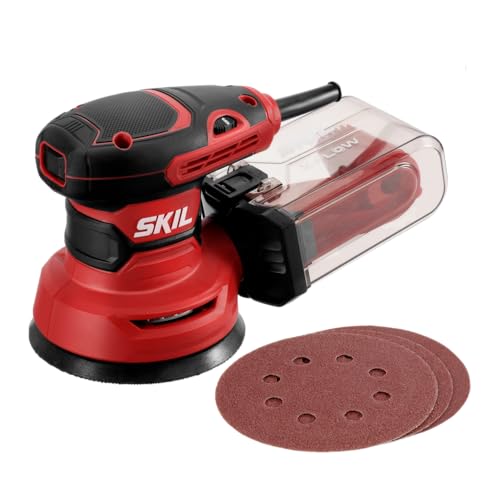
What We Like
- Variable speed control for different materials
- Cyclonic dust box easy to empty
- Low vibration with soft rubber grip
- Compact size for tight spaces
Trade-offs
- Corded design limits mobility
- No included sandpaper variety beyond 3 sheets
A 2.8 amp motor spinning at 13,000 orbits per minute gives this sander the steady muscle needed to strip paint from wood without bogging down. The variable speed control lets you dial back for delicate surfaces or crank it up for stubborn layers, while the cyclonic dust box keeps the air cleaner than a standard bag. It suits anyone who wants a compact, comfortable tool that handles the mess without extra fuss.
The 2.8 amp motor spins at up to 13,000 orbits per minute, so it can handle paint removal and smoothing across a variety of materials without bogging down. You do have to stay plugged into an outlet, which matters if you work far from power or on a ladder. The sander weighs 3.4 pounds, the same as the corded DEWALT DWE6423, and its compact size helps you get into tight spaces.
DEWALT Random Orbit Sander DWE6423
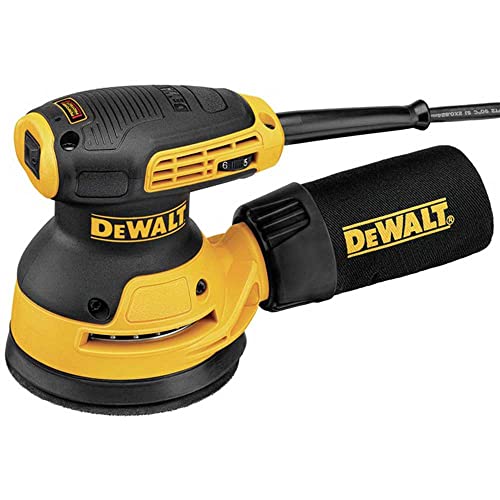
What We Like
- Separate counterweight reduces vibration
- Improved dust-sealed switch
- One-handed locking dust bag
- Rubber overmold improves grip
Trade-offs
- Corded electric limits mobility away from outlets
- Dust port needs adapter for 1-1/4 in. hoses
Variable speed from 8,000 to 12,000 orbits per minute lets you match the pad movement to the task, from heavy stock removal to fine finishing. A separate counterweight design cuts vibration for noticeably better comfort during extended use. The shorter body helps you work closer to the workpiece, while rubber overmold improves grip in all critical areas. For anyone needing a reliable sander for general sanding and finishing work, this tool prioritizes comfort and control.
You’re tethered to a cord, which means you’ll need an extension cord for outdoor projects or awkward spots. And while the dust port fits DEWALT’s own collectors directly, attaching it to a standard shop vacuum with a 1-1/4-inch hose requires an extra adapter. Compared to the Skil 5-inch random orbital sander with its built-in cyclonic dust box, the DEWALT relies on a bag or external vacuum, but its sealed switch and anti-vibration design make it a more refined choice for extended paint removal work.
Bosch ROS20VSC Palm Sander
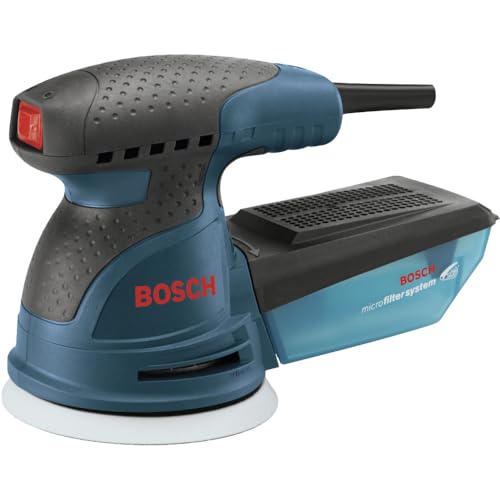
What We Like
- Pad dampening system reduces swirl marks
- Microfilter traps fine dust particles
- Includes carrying bag and vacuum adapter
Trade-offs
- Corded design limits mobility compared to cordless models
- At 3.5 lbs, heavier than some palm sanders for extended overhead use
The pad dampening system is designed to eliminate swirl marks on flat and contoured surfaces, which means less time fixing blemishes after sanding. The 2.5-amp motor delivers a speed range of 7,500 to 12,000 OPM, so you can adjust the pace for different tasks. Its microfilter traps particles as small as half a micron, helping to keep dust under control. For anyone who wants a smooth finish without swirl marks, this sander addresses that directly.
At 3.5 pounds, it’s a bit heavier than the Skil 5-inch random orbital sander, which weighs 3.4 pounds. That extra heft can tire your arm during long overhead sessions, and the cord means you’re tethered to an outlet. If you mostly sand at a workbench or on horizontal surfaces, the weight is negligible, and the swirl-free payoff is worth it. If you need cordless freedom, a cordless model might suit you better.
Avid Power 20V Cordless Random Orbital Sander

What We Like
- 6 variable speeds for paint removal control
- 30 sandpapers included for immediate use
- Dust-sealed switch protects from debris
Trade-offs
- No brushless motor for longer tool life
- 2.0Ah battery limits runtime for large projects
A 20-volt 2.0Ah battery means this sander cuts the cord, letting you move around a deck or furniture piece without hunting for an outlet. Six speed settings from 7000 to 11000 RPM give you the control to start slow on delicate paint layers and ramp up for stubborn coats. This is the sander for anyone who values mobility and quick touch-ups over raw continuous power.
The 2.0Ah battery is best for small projects and quick touch-ups rather than all-day sanding sessions. Compared to a corded model like the DEWALT DWE6423, which plugs into a wall for continuous use, this Avid Power sander gives you freedom from cords but limits runtime. If your work involves a few boards or a piece of furniture, the cordless convenience is real, just expect to recharge for longer jobs.
Product photos
PioneerWorks Brushless Palm Sander

What We Like
- Brushless motor maintains full torque under load
- 5 speed settings from 4,000 to 10,000 RPM
- 3/16" orbit for fast paint removal
- 6-inch pad covers 28.3 sq in per pass
Trade-offs
- At 4.8 lbs, heavier than most palm sanders
- Corded AC motor limits mobility vs cordless models
A 350W brushless AC motor delivers consistent torque under load, so it maintains speed during heavy material removal without bogging down. The 3/16-inch orbit combines aggressive stock removal with a swirl-free finish, making it suitable for stripping paint and leveling wood. Five adjustable speeds let you dial in from 4,000 to 10,000 RPM, with low speeds for fine finishing and polishing. This motor needs no brush replacements and runs cooler and quieter than brushed alternatives, built for extended shop use.
At 4.8 pounds, it’s noticeably heavier than the 3.4-pound Skil 5-inch random orbital sander, which can feel tiring during overhead or extended use.
Product photos
EVERGRADE Cordless DA Random Orbital Sander
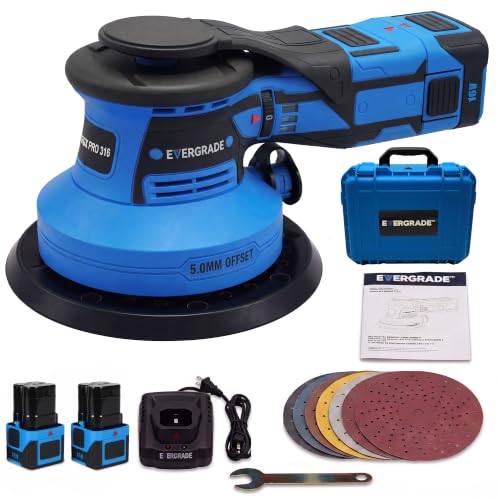
What We Like
- 5.0 mm orbit for aggressive cutting
- Cordless pneumatic-like performance
- Low vibration counterweight design
- Compact 2.65 lb with battery
Trade-offs
- Proprietary 16V battery limits cross-brand use
- No onboard dust collection box
A 5.0 mm orbit cuts aggressively, digging into old paint and coatings with each pass. The brushless motor and counterweight system keep vibration low, so you can work on stubborn layers without hand fatigue. For auto body, paint prep, woodworking, and refinishing, this cordless sander delivers pneumatic-like performance without the compressor or air hose.
The proprietary 16V battery platform is the main catch. Unlike the Skil or DEWALT corded options that run off any wall outlet, this sander ties you to EVERGRADE’s batteries and charger. At 2.65 lb it’s lighter than the corded Bosch ROS20VSC, but you’ll want a spare battery for extended stripping sessions. If your priority is raw speed and you don’t mind sticking with one battery system, this is the most aggressive cordless option for paint removal.
Product photos
Makita 9741 Wheel Sander

What We Like
- Flush sanding to walls with nose and side
- Adjustable front roller for uniform pressure
- Powerful 7.8 AMP motor for fast work
- Low center of gravity for stable operation
Trade-offs
- At 9.3 lb, it is heavy for extended handheld use
- Fixed 3,500 RPM offers no speed adjustment
A 7.8 AMP motor spinning at 3,500 RPM gives this wheel sander the grunt to strip paint fast. But what sets it apart is the ability to sand flush against a wall using both the nose and side of the tool. That means you can work right into corners and along baseboards without switching to a detail sander or hand sanding. The adjustable front roller lets you keep even pressure across the workpiece, and the low center of gravity helps the sander stay planted on the surface rather than tipping or bouncing. This is the tool to reach for when you need to remove paint from flat exterior wood, especially around trim and edges where other sanders leave a gap.
Heft and specialization are the main drawbacks. It also runs at a single 3,500 RPM with no variable speed dial, which is fine for aggressive stripping but not for blending or fine finishing.
Prostormer Multi-Function Mouse Sander
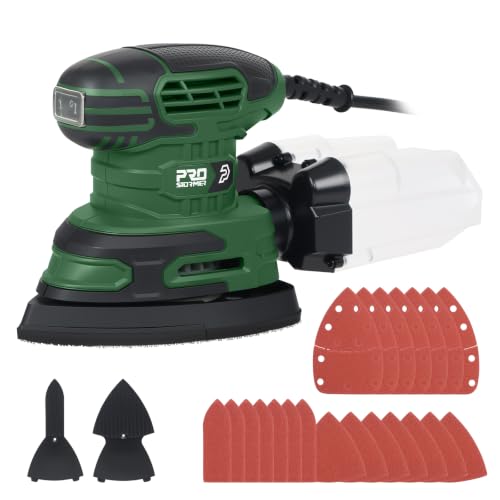
What We Like
- Lightweight at 2.44 lbs
- Transparent dust box shows fill level
- 21 sandpapers included out of box
Trade-offs
- Single fixed speed limits paint-removal control
- Corded only, no battery option for portability
The transparent dust box lets you see when it is full, so you can keep the work area clean without guessing. An 8-hole design captures sawdust and debris directly into that box, which helps reduce dust inhalation. Reviewers find it simple to check the fill level and empty the box as needed, keeping the workspace tidier throughout a project.
Product photos
DEKOPRO 1A Electric Mouse Sander
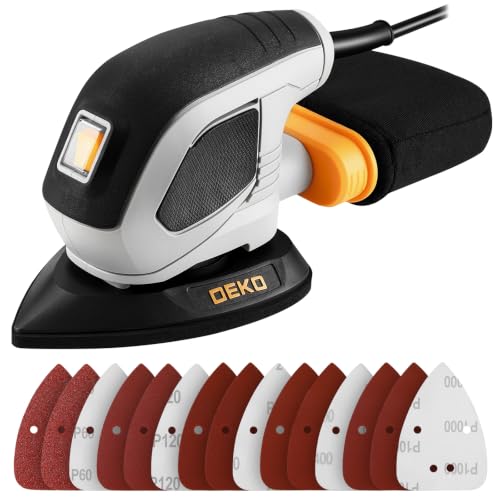
What We Like
- Triangular base reaches tight corners
- 15 sandpapers cover coarse to fine grits
- Dual dust collection with bag or vacuum
- Soft rubber grip reduces vibration
Trade-offs
- Corded design limits mobility to outlet range
- 100W motor struggles on thick paint layers
- No variable speed for different material needs
Because it’s corded, you’ll need to work near an outlet, and the motor is designed for detail work rather than stripping a whole door or tabletop. For big flat surfaces, a random orbital sander like the Skil 5-inch covers more area per pass, but that tool won’t slide into tight corners the way this mouse sander does. The soft rubber grip and low-vibration design keep your hand comfortable during extended use, and the dual dust collection, either the bag or a hose connected to a vacuum, helps keep your work area clean.
Product photos
SHALL 5-Inch Random Orbital Sander
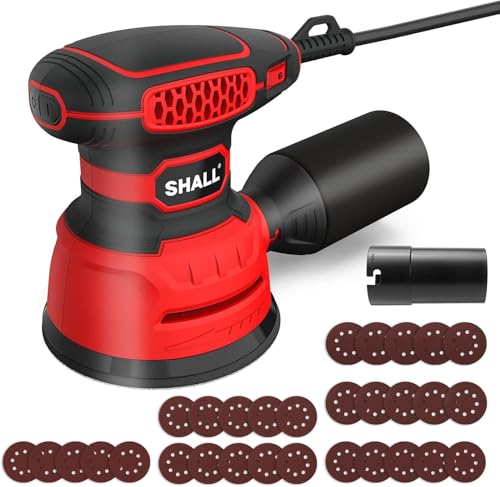
What We Like
- 30 sheets of sandpaper included
- 6 variable speeds up to 13,000 RPM
- Lightweight at 1.3 kg
- Velvet closure for easy paper changes
Trade-offs
- Corded design limits mobility
- Dust bag must be emptied frequently during heavy use
The included 30-sheet assortment means you can start sanding right out of the box, and at just 1.3 kg it won’t tire your arm during long sessions.
Because this is a corded tool, you need an outlet or extension cord nearby. The removable dust bag collects debris while cooling the motor, but it will fill up during heavy use. Compared to the Skil model, which has a cyclonic dust box, the SHALL uses a simpler bag system. For someone who works near a power source and wants a wide speed range with accessories included, this sander delivers what it promises.
Product photos
How We Evaluated Sanders For Removing Paint From Wood
Our evaluation began with a review of manufacturer specifications and expert recommendations for paint-removal sanders. We focused on tools designed to handle the load of stripping multiple layers of paint without bogging down or transferring excessive vibration to the user.
The four criteria that mattered most were power and speed control, dust management, vibration reduction, and the sander’s ability to reach flush to walls and into tight corners. For paint removal, variable speed is critical because different paint types and wood surfaces require different levels of aggressiveness.
Every evaluation has limits. These recommendations are based on published specifications, expert consensus, and what owners consistently report in their feedback. Always consider the scale of your project and whether a corded or cordless tool fits your workspace.
What To Look For In Sanders For Removing Paint From Wood
Choosing a sander for paint removal means balancing power, dust control, and maneuverability. The right tool will strip paint efficiently without damaging the wood underneath.
Look for variable speed control to match the sander’s aggressiveness to the paint type, effective dust collection to keep your workspace clean, and a design that allows flush sanding to walls and corners.
Power and Speed Control
Paint removal demands torque and the ability to adjust speed. A random orbital sander with variable speed lets you dial in a slower speed for delicate surfaces or a higher speed for thick, stubborn paint layers. Sanders with a larger orbit, 3/16 inch or 5.0 mm, remove material faster but leave a slightly coarser finish. For heavy stripping, look for a motor rated at 2.0 amps or more.
Dust Collection
Sanding paint creates fine, potentially hazardous dust. Effective dust collection is essential for health and for keeping your work area clean. Look for sanders with a dust-sealed switch to protect the tool’s internals, a cyclonic dust box that separates dust from air, or a port that connects to a shop vacuum. The best dust control systems keep the air clearer and reduce the time spent cleaning up.
Vibration and Ergonomics
Removing paint is often a long, repetitive task. A sander with a low-vibration design, such as a separate counterweight or a rubber overmold grip, reduces fatigue and lets you work longer comfortably. Weight matters too: a sander that is too heavy will tire your arms, while one that is too light may not have the mass to keep the pad flat and cutting effectively.
- Check if the sander has a pad dampening system to reduce swirl marks on the wood.
- Look for a dust-sealed switch to prevent paint debris from damaging the tool.
- Consider whether a corded or cordless model better suits your project’s location and duration.
- Verify that replacement sandpaper is readily available in the pad size you choose.
A sander with a low-vibration design and a comfortable grip will make a full day of paint removal far more manageable.
Sanders For Removing Paint From Wood Compared
The table below compares key specifications for the 10 sanders in this guide, helping you see at a glance which tool matches your paint-removal needs.
| Product | Motor | Speed Range | Weight |
|---|---|---|---|
| Skil 5" Random Orbital Sander | 2.8 amp | 13,000 OPM | 3.4 pounds |
| DEWALT Random Orbit Sander DWE6423 | 3-Amp | 8,000 – 12,000 OPM | 3.4 pounds |
| Bosch ROS20VSC Palm Sander | 2.5 amp | 7,500-12,000 OPM | 3.5 pounds |
| Avid Power 20V Cordless Random Orbital Sander | 20V 2.0Ah | 7000-11000 RPM | 3.3 pounds |
| PioneerWorks Brushless Palm Sander | 350W brushless AC | 4,000-10,000 RPM | 4.8 lbs |
| EVERGRADE Cordless DA Random Orbital Sander | 16V Brushless | Max 10,000 RPM | 3.3 pounds |
| Makita 9741 Wheel Sander | 7.8 AMP | 3,500 RPM | 9.3 pounds |
| Prostormer Multi-Function Mouse Sander | N/A | N/A | 2.44 lbs |
| DEKOPRO 1A Electric Mouse Sander | 100W | 13000 RPM | N/A |
| SHALL 5-Inch Random Orbital Sander | 3.2 AMP / 350W | 6,000-13,000 RPM | N/A |
Frequently Asked Questions
What type of sander is best for removing paint from wood?
A random orbital sander is the best choice for most paint-removal projects. It combines fast material removal with a swirl-free finish, and many models offer variable speed control to adjust to different paint types and wood surfaces.
Can I use a detail sander to remove paint?
Yes, a detail sander, sometimes called a mouse sander, is useful for removing paint from tight corners, edges, and irregular surfaces where a larger orbital sander cannot reach. However, it is slower on large flat areas and may struggle with thick paint layers.
Do I need a corded or cordless sander for paint removal?
Corded sanders generally offer more consistent power and longer runtime, making them better for large paint-stripping projects. Cordless models provide freedom of movement but may have limited battery life and less sustained torque under heavy loads.
How do I prevent swirl marks when sanding paint?
Choose a sander with a pad dampening system, which reduces the transfer of random orbital motion that causes swirl marks. Using progressively finer grits and keeping the sander moving evenly across the surface also helps achieve a smooth finish.
What grit sandpaper should I use to remove paint?
Start with a coarse grit to strip the paint layers quickly. Move to a medium grit to smooth the surface, and finish with a fine grit if you plan to repaint or apply a clear coat.
The Bottom Line
For most DIYers and painters, the Skil 5″ Random Orbital Sander is the best overall choice. Its variable speed control, effective dust collection, and compact size make it a versatile tool for everything from stripping old paint to fine finishing.
If dust control is your top priority, the DEWALT DWE6423 is worth paying more for, with its sealed switch and one-handed dust bag. For small projects where cordless freedom matters, the Avid Power 20V Cordless Random Orbital Sander offers convenience and a generous supply of sandpaper.
The single most important buying factor is matching the sander’s power and speed to your project. A variable-speed random orbital sander with good dust collection will handle most paint-removal jobs, while a detail sander is a valuable addition for corners and trim.
