
8 Best Boat Antifouling Paint in 2026
This post contains affiliate links. As an Amazon Associate, we earn from qualifying purchases.
For most boat owners, the best overall antifouling paint is TotalBoat AlumiPaint AF Antifouling Paint, a copper-free ablative formula designed specifically to protect aluminum hulls without galvanic corrosion. For aluminum boat owners who want an alternative, the TotalBoat Krypton Copper-Free Antifouling Paint is also a top choice, while those needing a durable, burnishable finish should consider the Pettit Vivid Hybrid Antifouling Bottom Paint.
Keeping a boat bottom clean and free of barnacles, slime, and algae is a constant battle that affects fuel efficiency and speed. The right paint depends on your hull material, aluminum, fiberglass, or wood, and how you use your boat, whether you trailer it, keep it in a slip, or store it on a rack.
This guide is based on research into manufacturer specifications, expert round-ups, and patterns in owner feedback. We break down the key differences between copper-free, ablative, hard, and hybrid paints so you can choose the right protection for your boat and your budget.
Top 8 Boat Antifouling Paints in the Market

Certain content that appears on this site comes from Amazon. This content is provided "as is" and is subject to change or removal at any time.
The Best Boat Antifouling Paints, Reviewed
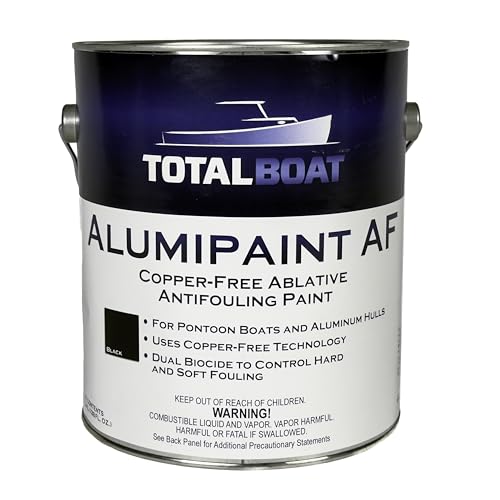
TotalBoat AlumiPaint AF Antifouling Paint
What We Like
- Copper-free formula protects aluminum hulls
- Ablative action reduces paint buildup
- Flexible launch timing with no max dry time
- Easy DIY application with roller or sprayer
Trade-offs
- Requires 1-2 thin coats for full protection
- Needs Aluminum Boat Barrier Coat on bare surfaces
- Only available in Black and Blue colors
A copper-free organic biocide paired with zinc means this paint is purpose-built for aluminum hulls, pontoons, and outdrives, no galvanic corrosion worries that copper-based paints can cause on underwater metals. It suits DIY owners who want reliable protection without hiring a yard crew.
The trade-off is preparation: bare aluminum needs a dedicated barrier coat before this paint goes on, adding a step and extra cost. Compared to TotalBoat Krypton, which works on fiberglass and wood too, AlumiPaint AF is more specialized for aluminum. The color choice is limited to Black or Blue. Still, for aluminum boat owners who want a copper-free ablative paint with flexible launch timing, this is a focused option.
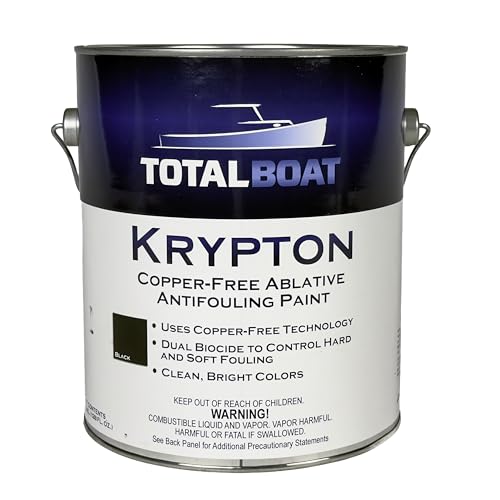
TotalBoat Krypton Copper-Free Antifouling Paint
What We Like
- Copper-free formula safe for aluminum
- Self-polishing ablative reduces paint buildup
- No maximum dry time for flexible launch
- Dual biocide prevents barnacles, slime, algae
Trade-offs
- Requires primer on bare surfaces (sold separately)
- Thinner needed for spray application (sold separately)
A dual-biocide formula that works on aluminum, fiberglass, wood, and steel hulls means this paint covers nearly every boat material without the galvanic corrosion risk copper paints cause on aluminum. It provides reliable full-season protection against barnacles, slime, algae, and weeds in all waters. The self-polishing ablative action gradually wears away, so you get fresh biocide throughout the season and less paint buildup over time.
Bare surfaces need a separate primer (TotalProtect) before application, and if you plan to spray it on, you’ll need to buy Brushing Thinner 100 or Spray Thinner 101 separately. The no-maximum-dry-time feature lets you prep and paint ahead of the season and launch when you’re ready. It’s a practical, low-hassle option for DIYers who want reliable antifouling performance without the aluminum worries.
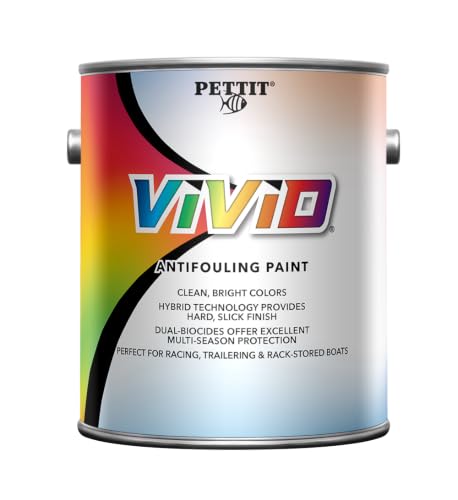
Pettit Vivid Hybrid Antifouling Bottom Paint
What We Like
- Dual-biocide protection for multi-season use
- Hard, smooth finish resists trailering and hauling
- Burnishable to a slick racing surface
- Aluminum-safe with correct primer system
Trade-offs
- Requires a specific primer system for aluminum hulls
- Heavier than some ablative-only paints at 16 lb per gallon
A dual-biocide formula pairing Cuprous Thiocyanate with Zinc Pyrithione means this paint targets barnacles, algae, and slime across a wide range of water conditions without relying on copper alone. That hybrid hard-ablative chemistry also solves a classic dilemma. The finish stays hard enough to survive trailering and rack storage, yet it wears away slowly to prevent the crusty buildup you get with traditional hard paints. For racers who want a burnished mirror-smooth bottom, or owners who haul out frequently, this blend of durability and self-renewal is a practical middle ground.
Weight and prep are the main considerations here. At 16 pounds per gallon, this is noticeably heavier than a water-based ablative like Pettit Hydrocoat, so if you’re chasing every ounce on a small trailer boat, that difference matters. More importantly, the aluminum-safe claim comes with a catch: you must use Pettit’s recommended primer system, which adds steps and cost compared to copper-free paints that work straight out of the can on aluminum. For fiberglass or wood hulls, though, that primer requirement is irrelevant, and the hard-slick finish gives you a performance edge that softer ablatives can’t match.
Product photos
Interlux Trilux 33 Antifouling Paint

What We Like
- Biolux technology targets slime specifically
- Works on fiberglass, wood, steel, aluminum
- Powerful antifouling protection
Trade-offs
- White color shows stains more easily
- Not suitable for aluminum boats without primer
The Biolux slime-blocking technology in Interlux Trilux 33 is its standout feature, designed to stop the slippery biofilm that attracts heavier fouling. That makes it a strong choice for boat owners in warm, nutrient-rich waters where slime is the first invader. It adheres to fiberglass, wood, steel, and primed aluminum, so you can use it on nearly any hull material without switching paints.
The white finish, while clean-looking at launch, shows dirt and discoloration faster than darker paints. If you keep your boat in high-traffic or muddy harbors, you might find yourself scrubbing more often.
Rust-Oleum Marine Boat Bottom Antifouling Paint
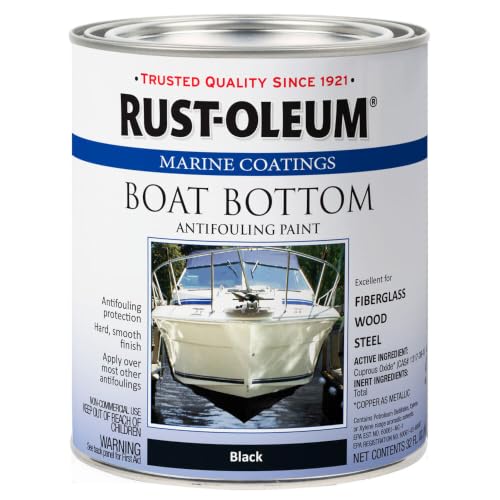
What We Like
- Recoat in just 4 hours
- Launch-ready in 16 hours
- Works on fiberglass, wood, steel
- Hard smooth flat finish
Trade-offs
- Copper-based formula limits use on aluminum
- Quart size covers only 110 sq ft
A 4-hour recoat window means you can apply multiple coats in a single day without waiting overnight. That speed is a real advantage for boat owners who need to get back on the water fast, especially during a short weather window or a tight haul-out schedule. The copper-based formula provides reliable protection against barnacles and algae in both fresh and saltwater, and the hard smooth finish holds up well against abrasion. This paint is a practical choice for fiberglass, wood, or steel hulls where fast turnaround matters more than a glossy appearance.
Copper antifouling paint is not compatible with aluminum hulls or outdrives, which limits its audience compared to copper-free options like TotalBoat Krypton. The quart container covers up to 110 square feet, so larger boats will need multiple quarts. For the DIY boater who values speed of application and a durable protective coating on a non-aluminum hull, this Rust-Oleum paint delivers exactly what the label promises.
Interlux Micron CSC Antifouling Bottom Paint
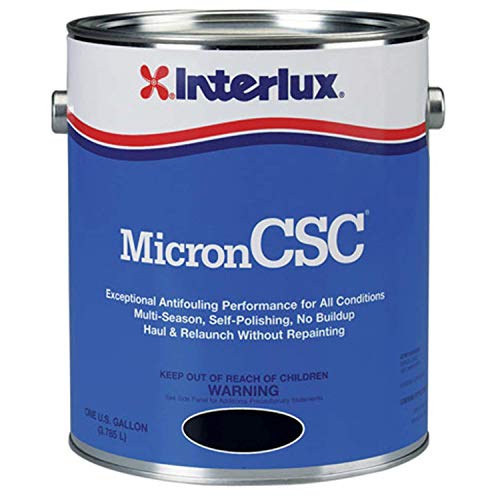
What We Like
- 37.2% copper for strong antifouling
- Lasts 20% longer than similar copper paints
- Improved resistance to weed and algae
- Suitable for all waters and boat types
Trade-offs
- Copper-based formula not for aluminum hulls
- Heavy gallon can at 18.0 pounds
A 37.2% copper load makes this ablative paint a good choice for boat owners who want extended protection between hauls. The manufacturer says it lasts 20% longer than other copper-based ablative paints, which translates to more time on the water and less time scraping and repainting. This improved resistance to weed and algae fouling means it handles the slimy stuff that slows your hull, and it’s formulated for both power and sail in any waters, fresh, salt, or brackish. For anyone who keeps their boat in the water season after season, that extra lifespan is a real advantage.
Copper-based paint is not compatible with aluminum hulls, so if your boat is aluminum you’ll want to look at a copper-free option like TotalBoat Krypton. At 18.0 pounds per gallon, the can is heavier than some alternatives, which matters if you’re hauling it down a dock or up a ladder. But for fiberglass or wood hulls where copper is the standard, this paint delivers the long-lasting ablative performance that reduces maintenance over time.
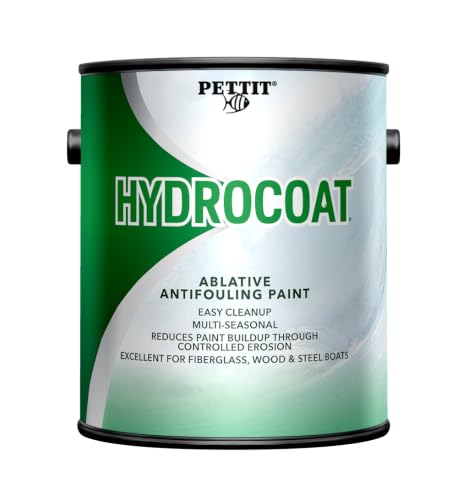
Pettit Hydrocoat Water-Based Ablative Antifouling Paint
What We Like
- Water-based for easy soap-and-water cleanup
- Self-polishing ablative reduces sanding between coats
- Unlimited dry time for off-season painting
- Works in fresh, salt, and brackish water
Trade-offs
- Copper biocide not suitable for aluminum hulls
- Requires active boating use to maintain self-polishing action
The unlimited dry time means you can paint months before launch, a rare convenience for off-season maintenance. Pettit Hydrocoat uses a water-based formula that cleans up with soap and water instead of harsh solvents. Its self-polishing ablative technology continuously exposes fresh biocide as the coating wears, reducing the need for sanding between seasons. This makes it an excellent fit for active boaters who trailer, beach, or haul frequently and want a lower-odor application that still delivers multi-season protection in fresh, salt, or brackish water.
The copper-based biocide rules out aluminum hulls, so owners of aluminum boats should look at TotalBoat AlumiPaint AF instead. For the weekend cruiser who paints in the garage over winter and wants a cleaner, more flexible application process, this is a smart, practical pick.
Product photos
Sea Hawk ColorKote Triple Biocide Antifouling Paint
What We Like
- Triple biocide protection for fouling
- Deep Black color for stealthy look
- Quart size for smaller projects
Trade-offs
- Only available in quart size
- Strong chemical odor during application
The Sea Hawk ColorKote Triple Biocide Antifouling Paint is formulated with three active ingredients to fight marine growth below the waterline. Its deep black color provides a uniform finish that hides minor imperfections. The quart size is convenient for small projects or touch-ups, but for larger hulls you will need multiple quarts.
How We Evaluated Boat Antifouling Paints
To build this guide, we analyzed manufacturer specifications, technical data sheets, and expert recommendations from marine publications and boat-building forums. We focused on how each paint performs across different hull materials, application methods, and real-world fouling conditions.
The four criteria that mattered most were hull compatibility, especially aluminum versus fiberglass. Also key were antifouling technology, copper-free versus copper-based and biocide types, paint type such as ablative, hard, or hybrid, and practical application factors like recoat times, dry times, and primer requirements.
A research-led evaluation like this has limits: we can’t claim first-hand testing of every paint in every water condition. Instead, we rely on documented specs, professional installer feedback, and consistent owner reports to identify the best options for common use cases.
What To Look For In Boat Antifouling Paints
Choosing the right bottom paint comes down to matching the paint’s chemistry to your hull material and your boating habits.
The key buying criteria are hull material compatibility, paint type (ablative, hard, or hybrid), biocide formulation, and practical application factors like primer needs and dry time.
Hull Material Compatibility
The single most important factor is whether the paint is safe for your hull. Copper-based paints cause galvanic corrosion on aluminum hulls, outdrives, and pontoons. For aluminum, you must use a copper-free formula like the TotalBoat AlumiPaint AF or TotalBoat Krypton. Fiberglass and wood hulls can use copper-based paints, but some formulas still require a specific primer system.
Paint Type: Ablative vs. Hard vs. Hybrid
Ablative paints, like the Interlux Micron CSC, wear away slowly as the boat moves through water, exposing fresh biocide. They reduce paint buildup over time but require regular use to maintain the self-polishing action. Hard paints, like the Pettit Vivid Hybrid, form a durable, burnishable finish that resists trailering and rack storage. Hybrid paints combine the durability of a hard finish with the controlled wear of an ablative.
Biocide Formulation and Protection
Copper is the most common biocide, but some paints use dual or triple biocides for broader protection against barnacles, slime, algae, and weed. The Interlux Trilux 33 uses Biolux technology to target slime specifically. Copper-free paints use alternative biocides that are safe for aluminum but may need more frequent application in heavy fouling waters.
- Check if the paint requires a primer on bare or previously painted surfaces.
- Verify the recoat window and minimum dry time before launch.
- Consider the paint’s coverage area per gallon for your boat’s bottom size.
- Look for a finish that matches your boat’s use: hard for trailering, ablative for slip-kept boats.
- Confirm the paint is available in a color that works with your boat’s appearance.
A good rule of thumb: For aluminum boats, always choose copper-free; for fiberglass, choose by your trailering or slip-kept habits.
Boat Antifouling Paints Compared
The table below compares each of our top picks across key specifications to help you see the differences at a glance.
| Product | Type | Biocide | Compatible Surfaces |
|---|---|---|---|
| TotalBoat AlumiPaint AF Antifouling Paint | Copper-free ablative | Organic biocide + zinc | Aluminum, pontoons, outdrives |
| TotalBoat Krypton Copper-Free Antifouling Paint | Copper-free ablative | Dual biocide | Aluminum, fiberglass, wood, steel |
| Pettit Vivid Hybrid Antifouling Bottom Paint | Hybrid Hard-Ablative | Cuprous Thiocyanate + Zinc Pyrithione | Aluminum (with proper primer) |
| Interlux Trilux 33 Antifouling Paint | N/A | N/A | Fiberglass, wood, steel, primed aluminum |
| Rust-Oleum Marine Boat Bottom Antifouling Paint | N/A | Copper release | Fiberglass, wood, steel |
| Interlux Micron CSC Antifouling Bottom Paint | Ablative bottom paint | 37.2% Copper | All power and sail, all waters |
| Pettit Hydrocoat Water-Based Ablative Antifouling Paint | Water-based ablative | Copper-based | N/A |
| Sea Hawk ColorKote Triple Biocide Antifouling Paint | N/A | Triple Biocide | N/A |
Frequently Asked Questions
Can I use copper-based antifouling paint on an aluminum boat?
No, copper-based paints cause galvanic corrosion on aluminum hulls, outdrives, and pontoons. You must use a copper-free formula specifically designed for aluminum, such as the TotalBoat AlumiPaint AF or TotalBoat Krypton.
How long does antifouling paint last before needing to be reapplied?
Lifespan varies by paint type and water conditions. Ablative paints typically last one to two seasons, while hard and hybrid paints can last two to three seasons. The Interlux Micron CSC is formulated to last 20% longer than similar copper paints.
What is the difference between ablative and hard antifouling paint?
Ablative paints wear away slowly as the boat moves, releasing biocide and reducing paint buildup over time. Hard paints form a durable, non-wearing finish that resists trailering and can be burnished to a slick surface. Hybrid paints combine both approaches.
Do I need a primer before applying antifouling paint?
Many paints require a primer on bare or previously painted surfaces, especially on aluminum hulls. The TotalBoat AlumiPaint AF needs an Aluminum Boat Barrier Coat on bare surfaces, while the Pettit Vivid Hybrid requires a specific primer system for aluminum.
How long does it take for antifouling paint to dry before launch?
Dry times vary significantly. The Rust-Oleum Marine Boat Bottom Antifouling Paint can be launched in 16 hours, while the Pettit Hydrocoat and TotalBoat paints have no maximum dry time, allowing flexible launch scheduling.
The Bottom Line
For most boat owners, especially those with aluminum hulls, the TotalBoat AlumiPaint AF Antifouling Paint is the best overall choice. Its copper-free formula eliminates the risk of galvanic corrosion while the ablative action reduces paint buildup over time, and the flexible launch timing makes DIY application straightforward.
If you need a durable finish that can handle trailering and rack storage, the Pettit Vivid Hybrid Antifouling Bottom Paint offers a burnishable hard surface with multi-season protection. For fiberglass boat owners who want maximum time between repaints, the Interlux Micron CSC provides long-lasting weed and algae resistance.
The single most important buying factor is hull material compatibility. Choose copper-free for aluminum, and match the paint type, ablative, hard, or hybrid, to how you use your boat.
