
10 Best Airbrushes For Miniatures in 2026
This post contains affiliate links. As an Amazon Associate, we earn from qualifying purchases.
The Master Airbrush G233 Performance Pro Kit earns our best overall spot for miniature painting because it includes three nozzle sets for fine detail to broad coverage, all in one versatile package. The Iwata Eclipse HP-CS is our pick for best versatile coverage, while the Harder & Steenbeck Ultra 2024 offers excellent German engineering for reliable basecoats.
The challenge with miniature painting is finding an airbrush that can lay down smooth basecoats on a space marine and still deliver crisp highlights on a tiny face. You need precise paint control, easy cleaning between colors, and a tool that won’t fatigue your hand during long sessions.
This guide is research-based, drawing from manufacturer specifications, expert round-ups, and patterns in owner feedback. We evaluated ten models across key criteria like nozzle versatility, ergonomics, and maintenance ease to help you choose with confidence.
Top 10 Airbrushes For Miniatures in the Market
Certain content that appears on this site comes from Amazon. This content is provided "as is" and is subject to change or removal at any time.
The Best Airbrushes For Miniatures, Reviewed
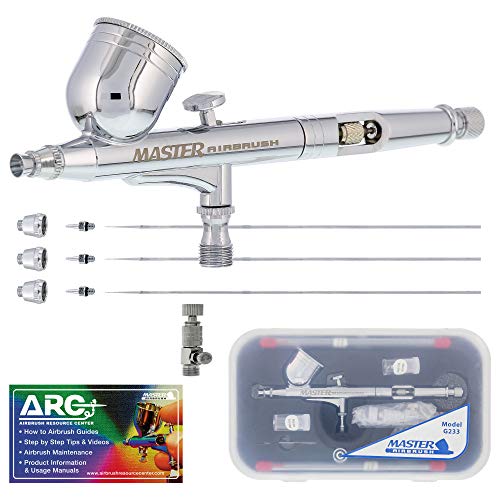
Master Airbrush G233 Performance Pro Kit
What We Like
- Three nozzle sets for fine to broad spray
- Gravity-feed dual-action for precise control
- Cutaway handle for easy cleaning
- Quick disconnect coupler with airflow valve
Trade-offs
- Heavier than the Iwata Eclipse HP-CS at 0.2 pounds
- Larger dimensions than the Iwate Eclipse HP-CS
Three interchangeable nozzle sets, 0.2mm, 0.3mm, and 0.5mm, let you switch from fine detail work to broader coverage without buying a second airbrush. The gravity-feed dual-action design gives you direct control over paint flow and air, which is exactly what you need for precise highlights and smooth gradients. This kit suits anyone who wants one tool that handles a range of tasks, and the quick disconnect coupler with built-in airflow valve makes swapping between tasks fast and frustration-free.
The airbrush weighs 0.2 pounds, which some users may find less substantial than heavier models like the Harder & Steenbeck Evolution 2024 CRplus at 0.6 pounds. The 100cm overall length also means it won’t tuck into a cramped workstation as easily as shorter models. For the user who values versatility over a dedicated single-needle setup, though, this kit delivers three airbrushes in one package at a very accessible entry point.
Iwata Eclipse HP-CS Airbrush

What We Like
- E3 nozzle for smooth atomization with less thinning
- Break-resistant spring-steel needle for durability
- Quick-flush cutaway handle for fast cleaning
- Gravity-feed cup works with many paint types
Trade-offs
- 0.24 oz cup is small for large surface coverage
- No interchangeable needle/nozzle sizes included
The gravity-feed 0.24 oz cup and threadless E3 nozzle work together to atomize paint with less thinning, so you can go from fine detail to wide coverage without fighting the brush. A break-resistant spring-steel needle and solvent-resistant packings mean this airbrush holds up to regular use with water-based, solvent, or pearlized paints, which is exactly what you want when you’re switching between projects.
The trade-off is that the fixed 0.24 oz cup holds less paint than some dedicated basecoating brushes. If you are priming large terrain pieces you will refill more often. Compared to the Harder & Steenbeck Ultra 2024, which comes with a 0.45mm nozzle for wider spray, the Eclipse leans toward versatility over raw speed, ideal for mini painters who value control and easy maintenance over maximum volume per fill.
Harder & Steenbeck Ultra 2024 Airbrush

What We Like
- Self-centering nozzle for repeatable atomization
- Tool-free disassembly for easy cleaning
- Modular design accepts FineLine head upgrades
- Micro-cup socket keeps sightline clear
Trade-offs
- Single 0.45mm nozzle limits ultra-fine detail out of box
- Heavier than the Iwata Eclipse HP-CS at 0.6 pounds
A self-centering 0.45mm nozzle means you get consistent atomization without fiddling with alignment every time you clean, a real time-saver when you’re switching colors mid-session. This German-engineered airbrush is built for the miniature painter who wants a reliable workhorse that can handle basecoats, shading, and broad highlights right out of the box. The modular design also lets you upgrade to a finer FineLine head later if you decide to push into extreme detail work, making it a smart long-term investment for someone growing their skills.
The single 0.45mm nozzle is versatile for priming and base layers, but the Harder & Steenbeck Evolution 2024 CRplus includes a 0.28mm nozzle for finer detail work. For most miniature painting, the 0.45mm handles coverage well, and the built-in micro-cup socket lets you use tiny paint amounts without losing your line of sight.
Harder & Steenbeck Evolution 2024 CRplus
What We Like
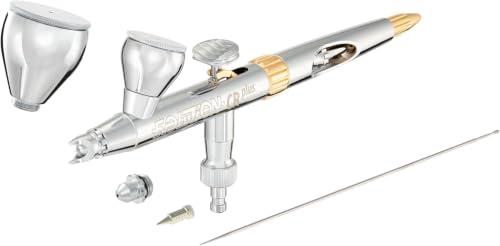
- Two self-centering nozzles included
- Tool-free disassembly for quick cleaning
- 0.28mm nozzle for ultra-fine detail
- Compatible with all H&S Evolution nozzle sets
Trade-offs
- No 0.6mm nozzle included for broad coverage
- Heavier than some competitors at 0.6 pounds
The included 0.28mm and 0.45mm self-centering nozzles let you switch between fine detail and broader coverage without buying extra parts. The self-centering design aligns automatically on assembly for reliable atomization every time. Tool-free disassembly and reassembly makes cleaning and nozzle changes fast and simple, keeping you painting with minimal downtime.
At 0.6 pounds, this airbrush has a denser feel than the lighter Iwata Eclipse HP-CS, which some users may notice during extended use. The weight comes from the precision-machined materials used in its German engineering, and the self-centering nozzle aligns automatically on assembly for consistent atomization. With interchangeable 0.28mm, 0.45mm, and 0.6mm nozzles, it supports a range of techniques from fine detail to broader strokes.
Paasche Airbrush TG-3AS Set
What We Like
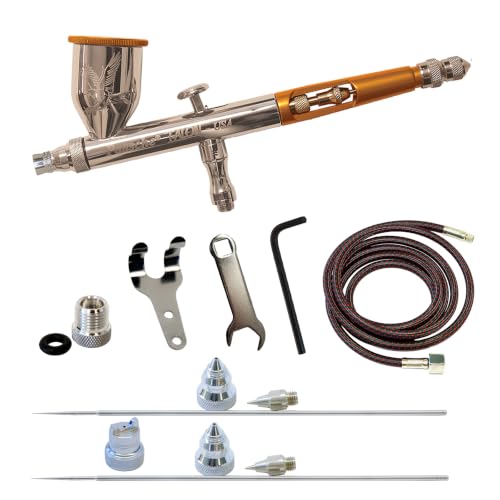
- Three nozzle sizes for versatility
- Finest detail from Paasche's top model
- Needle stop for consistent paint release
- Includes fan aircap for wider coverage
Trade-offs
- Smallest head is .25mm, not as fine as some 0.2mm competitors
- Requires separate air compressor, not included.
A needle stop built into the handle allows you to dial in a specific paint flow and return to it repeatedly. Reviewers find this especially useful when building up subtle gradients or maintaining consistent line width across multiple figures. Because the stop prevents the trigger from pulling back past your set point, each pull delivers the same amount of paint. That repeatability saves time and reduces waste on projects requiring precise, layered work. It is a practical feature for anyone who values control over their airbrush output without having to guess or readjust mid-project.
Iwata Revolution 4530 HP-CR3 Airbrush
What We Like
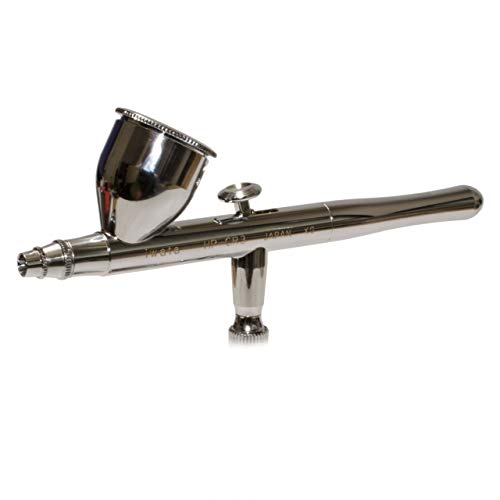
- Quality atomization at low air pressure
- Ergonomic handle design
- 0.3mm needle for fine detail work
- Suitable for beginner to advanced artists
Trade-offs
- Single needle size limits versatility without swapping parts
- 7ml cup is small for larger coverage projects
- Heavier than some comparable airbrushes at 0.6 pounds
A 0.3mm needle and nozzle paired with quality atomization at low air pressure means you can lay down fine, controlled lines without needing a high-powered compressor. The ergonomic handle helps reduce hand fatigue during long sessions, and the 7ml cup holds enough paint for most single-color basecoats or shading passes without constant refills.
The trade-off is that this airbrush comes with only one needle size. You cannot quickly swap to a larger setup for priming or broad coverage the way you can with the Master Airbrush G233 Performance Pro Kit, which includes 0.2, 0.3, and 0.5mm nozzles.
Product photos
OPHIR 0.35mm Dual-Action Airbrush

What We Like
- Two interchangeable cup sizes included
- Cutaway handle for quick color swaps
- 0.35mm needle resists clogging
Trade-offs
- At 0.7 lb, heavier than the Iwata Eclipse HP-CS (0.1 lb)
- Only one needle size included (0.35mm)
The dual-action trigger lets you practice with air only before adding paint, and the gravity-feed design keeps flow consistent at low pressure. For anyone moving from hand-painting to spraying, this kit makes the transition forgiving without skimping on detail capability.
The trade-off shows up in weight and nozzle options. At 0.7 pounds it feels heftier than the Iwata Eclipse HP-CS (0.1 lb), so longer sessions may tire your hand. And unlike the Master G233 kit, which ships with three nozzle sets, the OPHIR gives you one 0.35mm needle and two cup sizes.
Product photos
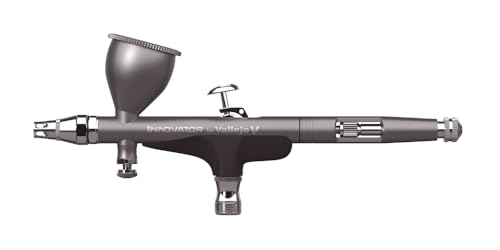
Vallejo Airbrush Innovator
What We Like
- Ultra-light alloy body reduces fatigue
- Two modular nozzles for detail and coverage
- Adjustable needle-travel regulation
- Quick-connect hose for fast color changes
Trade-offs
- 0.3 fl.oz. cup requires frequent refills for large areas
- Heavier than the 0.1 lb Iwata Eclipse HP-CS
The Vallejo Innovator weighs 0.4 pounds, which keeps your hand steady during long sessions without fatigue. The dual 0.2mm and 0.3mm nozzles let you switch between fine line work and broader coverage right out of the box, so you don’t need extra parts for different tasks. The adjustable needle-travel regulation lets you set a maximum trigger pull, helping you keep spray width consistent across multiple passes. The quick-connect hose coupling speeds up color changes, so you spend less time cleaning and more time painting.
The trade-off for that lightweight build is a smaller paint cup. At 0.3 fluid ounces, you will need to refill more often when covering larger surfaces like terrain or vehicle models, which can break your rhythm. Compared to the Harder & Steenbeck Ultra 2024, which weighs 0.6 pounds and comes with a 5ml cup, the Vallejo is easier on the wrist but less suited to high-volume work without frequent stops. For miniature painters who prioritize fine detail control and comfort over raw capacity, this is a thoughtfully engineered tool.
Product photos
Badger Sotar 2020-2F Airbrush

What We Like
- Sprays a hairline to 3/4 inch
- Micrometer setting presets spray pattern
- Rear needle release for easy cleaning
- 1/12 oz cup allows extended use
Trade-offs
- 2ml cup requires frequent refills for larger areas
- Only sprays properly reduced, low-viscosity paints and inks
A fine needle/nozzle that sprays a hairline to 3/4 inch means this airbrush excels at the most delicate detail work, like painting individual highlights on a miniature’s eyes or tiny armor panels. The micrometer setting lets you lock in a precise spray pattern, so you can repeat the same fine line without guesswork. This makes it a natural fit for artists who need consistent, razor-thin control on small surfaces.
Product photos
Gaahleri Seeker Dual-Action Airbrush

What We Like
- Built-in 6-channel quick-release nozzle
- Includes both 0.3mm and 0.5mm sets
- Calm Island reduces finger strain
- Longer nozzle for easier cleaning
Trade-offs
- Single cup size limits paint volume
- No additional needle sizes included
A built-in 6-channel quick-release nozzle lets you swap and clean the tip in seconds rather than wrestling with threads, which makes maintenance far less fussy during a painting session. The kit includes both 0.3mm and 0.5mm needle/nozzle sets, giving you two caliber options in one package. The Gaahleri Seeker is a strong fit for users who want easy disassembly and reduced downtime between colors, with a design that simplifies cleaning and nozzle changes.
The Seeker comes with a 1/3 oz flared cup, which is larger than the 0.24 oz cup on the Iwata Eclipse HP-CS, so you can spray longer before refilling when basecoating. The quick-release nozzle makes cleaning and switching between the 0.3mm and 0.5mm needle sets fast, cutting downtime during a project. For a modeler who values quick nozzle swaps and two caliber options in one tool, this airbrush delivers where it counts.
Product photos
How We Evaluated Airbrushes For Miniatures
Our evaluation process focused on what matters most for miniature painters: consistent atomization at fine needle sizes. It also considered the ability to cover both small details and larger basecoats, and a design that makes cleaning quick and straightforward. We studied manufacturer documentation, read through expert recommendations from painting communities, and identified common owner-reported strengths and pain points.
The four criteria that mattered most were nozzle and needle versatility for different paint tasks. We also looked at the quality of atomization at low air pressures, which is critical for thin paints. Overall weight and ergonomics for fatigue-free sessions, and the ease of disassembly and cleaning between color changes also ranked high. These factors directly affect how well an airbrush performs on small-scale models.
A research-led evaluation has limits: we cannot replicate the feel of a trigger under your finger or the exact spray pattern on a primed model. Instead, we provide a structured comparison of specs, features, and real-world feedback so you can narrow your choices before making a purchase.
What To Look For In Airbrushes For Miniatures
Choosing the right airbrush for miniatures means balancing precision, versatility, and ease of use. Focus on the needle and nozzle size, the type of paint feed, and how easily the tool breaks down for cleaning.
A dual-action, gravity-feed airbrush with a 0.3mm to 0.5mm needle range offers the best balance for miniature work, from fine highlights to smooth basecoats.
Needle and Nozzle Size
The needle and nozzle size determine the fineness of your spray pattern. For miniature painting, a 0.3mm or 0.35mm needle is the sweet spot for detail work like edge highlights and small features. A 0.5mm nozzle is better for priming, basecoating, and applying varnish. Kits with multiple nozzle sets, like the Master Airbrush G233, offer the most flexibility without buying extra parts.
Dual-Action vs. Single-Action
Dual-action airbrushes allow you to control both air and paint flow with one trigger, giving you precise command over line width and opacity. This is essential for miniature painting, where you need to switch from a fine line for a highlight to a broader spray for a basecoat. Gravity-feed cups are also preferred because they require less air pressure to pull paint and are easier to clean with small paint volumes.
Weight and Ergonomics
Miniature painting sessions can last hours, so the weight and balance of your airbrush matter. A heavier tool, like some at 0.6 pounds, can cause hand fatigue over time. Lightweight models, such as the Vallejo Airbrush Innovator, are designed for extended use. Look for features like a cutaway handle for quick cleaning and an ergonomic trigger to reduce strain on your finger.
- Check the included needle and nozzle sizes to ensure they cover your painting needs.
- Look for a quick-release or tool-free disassembly system for easier cleaning.
- Consider the paint cup size: smaller cups (like 1/12 oz) are fine for detail work, while larger cups help with basecoating.
- Verify compatibility with your existing air compressor and hose connections.
A good rule of thumb: prioritize a dual-action, gravity-feed airbrush with at least a 0.3mm needle for detail work, and consider a kit with multiple nozzle sizes for the most versatility.
Airbrushes For Miniatures Compared
The table below compares the key specifications of our ten top airbrushes for miniatures, helping you see at a glance which model fits your painting style and budget.
| Product | Action | Nozzle Size(s) | Cup Size(s) | Weight |
|---|---|---|---|---|
| Master Airbrush G233 Performance Pro Kit | Gravity dual-action | 0.2, 0.3, 0.5mm | 1/3 oz | 0.2 pounds |
| Iwata Eclipse HP-CS Airbrush | Dual action gravity feed | E3 nozzle | 0.24 oz (7 ml) | 0.1 pounds |
| Harder & Steenbeck Ultra 2024 Airbrush | Dual action gravity feed | 0.45mm | 5ml | 0.6 pounds |
| Harder & Steenbeck Evolution 2024 CRplus | Dual action gravity feed | 0.28mm + 0.45mm | 2ml + 5ml | 0.6 pounds |
| Paasche Airbrush TG-3AS Set | Double action gravity feed | .25mm, .38mm & .66mm | N/A | 0.0 pounds |
| Iwata Revolution 4530 HP-CR3 Airbrush | Dual action gravity feed | 0.3mm | 7ml | 0.6 pounds |
| OPHIR 0.35mm Dual-Action Airbrush | Dual-action | 0.35mm | 2CC & 7CC | 0.7 pounds |
| Vallejo Airbrush Innovator | Dual-action gravity-feed | 0.2mm & 0.3mm | 0.3 fl.oz. | 0.4 pounds |
| Badger Sotar 2020-2F Airbrush | Gravity feed, dual action, internal mix | Fine (black) needle/nozzle | 1/12 oz (2ml) | 0.5 Pounds |
| Gaahleri Seeker Dual-Action Airbrush | Dual-action gravity feed | 0.3 & 0.5mm | 1/3 oz | N/A |
Frequently Asked Questions
What size airbrush nozzle is best for painting miniatures?
A 0.3mm or 0.35mm nozzle is the most versatile for miniature painting. It handles fine detail work like highlights and small features while still being capable of smooth basecoats when you pull the trigger back further. For primarily basecoating and priming, a 0.5mm nozzle is a good choice.
Do I need a separate compressor for an airbrush?
Yes, most airbrushes require a separate air compressor to operate. Some kits, like the Master Airbrush G233 Performance Pro Kit, include a compressor, but many models, such as the Paasche TG-3AS, are sold as the airbrush only. Always check what is included in the package.
What is the difference between gravity-feed and siphon-feed airbrushes?
Gravity-feed airbrushes have a paint cup on top, using gravity to draw paint into the nozzle. They require less air pressure and work well with the small paint volumes typical in miniature painting. Siphon-feed airbrushes have a bottle underneath and are better for larger projects but waste more paint.
How do I clean an airbrush between color changes?
A cutaway handle design allows you to quickly flush the nozzle with cleaner. Most dual-action airbrushes can be cleaned by spraying cleaner through the cup until it runs clear. For deep cleaning, tool-free disassembly systems, like those on Harder & Steenbeck models, make removing the needle and nozzle straightforward.
Can I use acrylic paints in an airbrush for miniatures?
Yes, acrylic paints are the most common choice for miniature airbrushing. They need to be thinned to a milk-like consistency with water or a dedicated airbrush thinner. Some airbrushes, like the Iwata Eclipse HP-CS, are noted for their ability to atomize a wide range of paint types with less thinning required.
The Bottom Line
For most miniature painters, the Master Airbrush G233 Performance Pro Kit is the best overall choice because it delivers three nozzle sizes for detail, basecoating, and everything in between, all in one kit. It is ideal for hobbyists who want a single versatile setup without needing to buy additional parts.
If you prefer a lighter tool for long painting sessions, the Vallejo Airbrush Innovator is the best lightweight design, while the OPHIR 0.35mm Dual-Action Airbrush is our budget pick for those upgrading from brush painting. For painters who demand the absolute finest lines, the Badger Sotar 2020-2F sprays a hairline pattern perfect for tiny details.
The single most important factor is matching the airbrush’s needle size and nozzle options to the range of miniature painting tasks you plan to tackle. A versatile setup with at least a 0.3mm needle will cover most needs from priming to fine highlights.
