
9 Best Primers To Paint Over Stained Wood in 2026
This post contains affiliate links. As an Amazon Associate, we earn from qualifying purchases.
If you need a primer that sticks to stained wood and blocks bleed-through, the Zinsser Bulls Eye 1-2-3 Plus Spray Primer is our best overall pick. It dries fast and grips glossy surfaces. For heavy-duty water or smoke stains, the Zinsser Cover-Stain Stain-Blocking Primer is the top oil-based choice. And if you need a large volume for a whole room, the Glidden Interior/Exterior Stain Block Primer offers the best value per gallon.
Painting over stained wood is tricky because the stain can bleed through the new paint, and the smooth, often glossy surface can cause peeling. Many primers fail because they don’t seal the stain or bond to the slick finish. The right primer solves both problems, saving you from repainting in a few months.
This guide is based on manufacturer specifications, expert round-ups, and patterns in owner feedback. We focused on adhesion, stain-blocking power, drying time, and ease of cleanup. The nine primers here cover every scenario, from small spray touch-ups to whole-room renovations.
Top 9 Primers To Paint Over Stained Wood in the Market
Certain content that appears on this site comes from Amazon. This content is provided "as is" and is subject to change or removal at any time.
The Best Primers To Paint Over Stained Wood, Reviewed
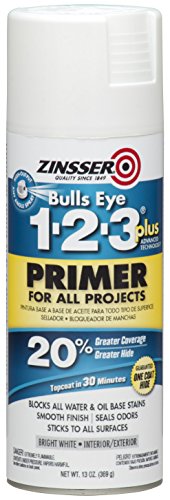
Zinsser Bulls Eye 1-2-3 Plus Spray Primer
What We Like
- Sticks to glossy surfaces
- Dries in 30 minutes
- Works indoors and outdoors
Trade-offs
- 13 oz can covers only 12 sq ft
- Oil-based formula requires solvent cleanup
You can spray this directly over glossy or difficult surfaces and trust it to hold, because the oil-based formula seals uniformly and sticks without sanding. It dries to the touch in just 30 minutes, so you can move through a project quickly. The 13-ounce can covers up to 12 square feet, making it ideal for smaller pieces like cabinets, trim, or furniture where you need precise, stain-blocking coverage in a single coat. It works on wood, metal, masonry, and drywall both indoors and out, so it’s a versatile pick for a variety of surfaces.
The trade-off is that 12 square feet per can covers a limited area, so you may need multiple cans for larger projects. And because it’s oil-based, you’ll need mineral spirits or paint thinner for cleanup rather than soap and water. Compared to the Zinsser Cover-Stain quart, which comes in a larger container, this spray is better for smaller jobs where a brush would leave marks. If you’re painting a single piece of furniture or a door, this spray offers convenient stain-blocking coverage.
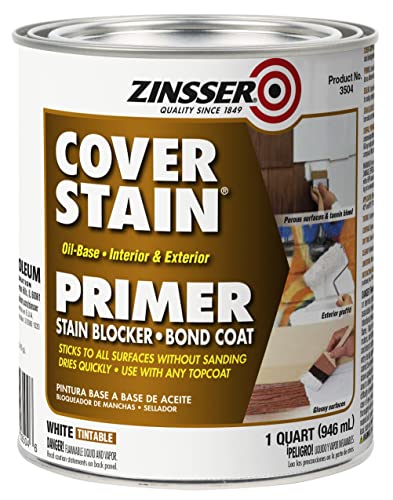
Zinsser Cover-Stain Stain-Blocking Primer
What We Like
- Blocks water, smoke, nicotine stains
- High-hiding formula seals stains
- Sands easily for smooth finish
- Works on interior and exterior surfaces
Trade-offs
- Oil-based formula requires solvent cleanup
- Dries quickly, so work time is limited
A quart of oil-based primer that blocks water, smoke, and nicotine stains means this is the go-to when you need to lock in tough, set-in discolorations on stained wood before painting. Its high-hiding formula seals the surface completely, and because it sands easily, you can smooth out any brush marks or imperfections for a professional-looking finish. This primer sticks to interior and exterior wood, drywall, and metal, so it works for everything from a nicotine-stained ceiling to a weathered porch railing. If you are facing stubborn stains that water-based primers might let bleed through, this is the one that gives you confidence the stain stays put.
Oil-based means you will need mineral spirits or paint thinner for cleanup, and the quart size goes fast if you are priming a large surface like a whole wall or a big piece of furniture. Compared to the Zinsser Bulls Eye 1-2-3 Plus spray primer, which is water-based and easier to clean up, this Cover-Stain is an oil-based formula that blocks stains and seals surfaces with superior adhesion. For a single piece of heavily stained furniture or a small repair job, the quart is plenty. For a whole room of smoke-stained wood, you might want to step up to a gallon.
KILZ Original White Flat Oil-Based Aerosol Primer

What We Like
- Works as both primer and sealer
- Aerosol spray application
Trade-offs
- Interior use only limits exterior projects
- Oil-based formula requires mineral spirits for cleanup
The oil base means it has a noticeable odor, so you will want to open windows or use a fan while working. The Zinsser Bulls Eye 1-2-3 Plus Spray Primer can handle more surface types and is listed for interior and exterior use, while this KILZ spray is listed only for interior use. It is a focused tool for indoor spot-priming, not a one-size-fits-all for every project.
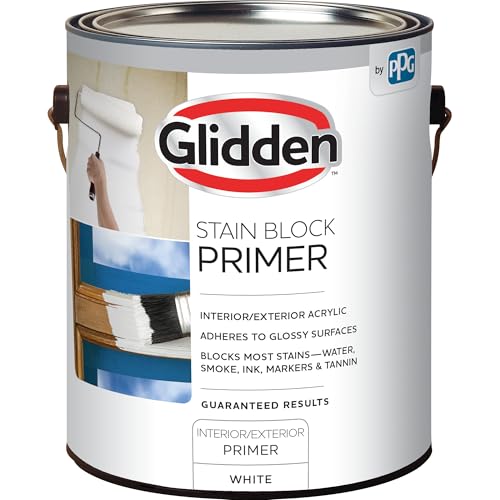
Glidden Interior/Exterior Stain Block Primer
What We Like
- Interior and exterior use in one can
- Soap and water cleanup saves solvent costs
- Blocks most stains including water, smoke, ink, markers, tannins
Trade-offs
- 1 gallon size is heavy for small touch-up jobs
- Flat finish limits sheen options for some projects
A full gallon of stain-blocking primer means you can tackle large wood paneling, multiple doors, or a whole room of stained trim without buying a second can. Cleanup with soap and water keeps the job simple, and you can apply your topcoat after just one hour, which speeds up projects that would otherwise stretch across days.
The trade-off for that volume is weight and finish. A gallon jug is heavy for quick spot repairs or small furniture pieces. Also, the flat finish hides stains well but may need a second coat of satin or gloss paint if you want a sheen that matches existing trim. For anyone refinishing a large area of stained wood on a budget, this primer delivers the coverage and stain blocking you need without the extra cost of smaller specialty cans.
Product photos
INSL-X Prime All Multi-Surface Primer

What We Like
- Quick drying; recoat in one hour
- Quick drying; topcoat in as little as one hour
Trade-offs
- Requires temperature above 40 °F to apply
A 100% acrylic formula that seals and blocks stains on both interior and exterior surfaces means this primer handles the messy reality of stained wood without locking you into a single room. It dries fast enough to topcoat in about an hour, so you can move through a project in a single afternoon.
This primer isn’t built for floors, so if your project is a deck or stair tread, you will need a different product. It also asks for surface and air temperatures between 40 and 90 degrees, which rules out cold-weather painting. For most indoor trim, cabinets, and furniture, that balance works well.
Product photos
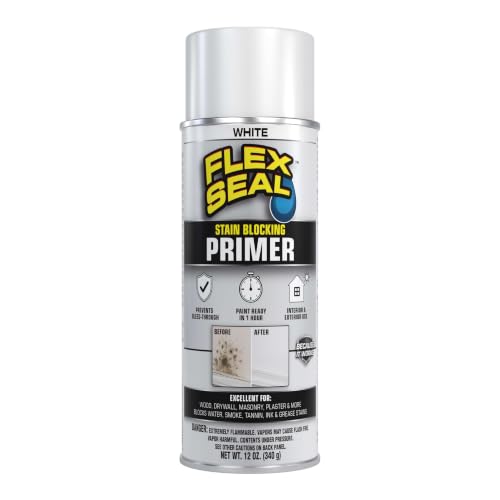
Flex Seal Stain Blocking Primer Spray
What We Like
- Accepts latex and oil-based topcoats
Trade-offs
- 12 oz can covers less area than a quart
- Oil-based formula requires mineral spirits for cleanup
The bright white flat finish provides a neutral starting surface that works well under either latex or oil-based topcoats. That flexibility means you can switch paint types between projects without needing a different primer. Many primers lock you into one paint chemistry, but this one accepts both, so a leftover gallon of latex or a fresh can of oil-based enamel both go on without adhesion issues. Reviewers note that the flat sheen also helps hide minor surface imperfections, making it a practical choice for walls, trim, or furniture where you want a uniform base before the final color coat.
The 12-ounce can size means for a large tabletop or multiple cabinets, you’ll need several cans, and the flat finish might need an extra coat of paint to get the sheen you want. The Zinsser Bulls Eye 1-2-3 Plus Spray Primer comes in a slightly larger 13-ounce can, but Flex Seal’s edge is its faster recoat time of one hour. If you’re patching a single stained spot or a small shelf, this spray saves you time and cleanup.
Product photos
KILZ Original Low Odor Primer

What We Like
- Lower solvent odor than oil-based primers
- Fast odor dissipation prevents lingering smell
- Non-yellowing bright white finish
- Works on glossy surfaces and wallpaper
Trade-offs
- Ventilation required during and after application
- Only for interior use, not exterior wood
- Quart size covers limited area
A 30-minute dry time and one-hour recoat window let you move through a project quickly, priming and painting in the same day on properly prepared interior surfaces. KILZ Original Low Odor is formulated with a special solution acrylic that provides stain blocking and adhesion similar to the original KILZ but with a lower solvent odor. Ventilation is required during and after application, but the odor dissipates faster than traditional oil-based primers. That makes it better suited for indoor spaces like dining areas, apartments, or offices where strong fumes would be disruptive. The finish is bright white and non-yellowing.
This primer is strictly for interior surfaces; if you need to block stains on exterior wood, you will want a different product. The Zinsser Cover-Stain Stain-Blocking Primer is suitable for interior and exterior wood, drywall, and metal, so it offers more versatility for outdoor use. When odor sensitivity matters more than outdoor versatility, the KILZ is the better choice for indoor projects where you want stain blocking with lower odor. Ventilation is still required, so it is not completely fume-free, but for indoor projects this primer is a reliable option.
INSL-X Prime Lock Plus Alkyd Primer

What We Like
- Alkyd base seals tough stains like smoke
- Fast-drying, re-coat in 1 hour
- Superior adhesion to glossy surfaces
- High hiding power for stain blocking
Trade-offs
- Requires temperature above 45°F to apply
- Heavy at 12.6 pounds per gallon
A full gallon of this alkyd primer covers 300-350 square feet, which means you can seal an entire room of stained wood without running back to the store. The alkyd formula is what gives it that serious stain-blocking muscle; water marks and smoke damage get locked away under a single coat. For anyone painting over problem wood, that high hiding power and fast one-hour recoat time make the job move quickly without waiting around.
This primer covers 300 to 350 square feet per gallon, so a single coat can handle an entire room without needing a second can. It weighs 12.6 pounds per gallon, which means you’ll want a sturdy mixing stick and a steady hand. Application requires temperatures above 45°F, so cold garages or winter projects need a heated space.
Product photos
Bartoline Stain Blocker Spray

What We Like
- Blocks tough stains like grease and rust
- Works as primer or standalone topcoat
- Fast-drying for quick recoating
- Compact 400ml spray can
Trade-offs
- Only 2 m² coverage per can
- Limited to indoor use only
- No option for large surface areas
With up to 2 square meters of coverage per 400ml can, this spray is designed for targeted stain blocking on walls, ceilings, plaster, window sills, and woodwork rather than covering entire rooms. Its fast-drying matt formula seals water damage, damp marks, grease, rust, smoke stains, and pen marks. That makes it useful for spot-treating problem areas before painting. If you need a compact spray that works as a primer or standalone finish, this can fits easily into a small workspace and gets you back to painting quickly.
The 400 ml can covers up to 2 square meters of stains, so you’ll need multiple cans for a full wall or several cabinets. For bigger projects, Zinsser Cover-Stain in quart form holds more volume in a single container, though you lose the spray convenience. Stick with Bartoline when you want to target one or two stubborn stains on any listed surface without mixing or brushing, and accept that it is a compact solution for spot work.
Product photos
How We Evaluated Primers To Paint Over Stained Wood
These primers were selected based on manufacturer technical data sheets, expert recommendations from painting and remodeling round-ups, and consistent patterns in owner reviews. The analysis relies on published specifications and the collective experience of thousands of real users.
The three most important criteria were stain-blocking capability, adhesion to glossy surfaces, and drying time. A primer that cannot seal tannin, water, or nicotine stains is useless for stained wood. Likewise, a primer that peels off a glossy varnish means the whole job fails. Fast drying matters because most projects require multiple coats and a topcoat the same day.
A research-led evaluation has limits: we cannot verify coverage claims firsthand or measure odor levels in a controlled setting. However, by cross-referencing multiple sources, we identified clear patterns that separate reliable primers from those that disappoint. We also note each product’s trade-offs honestly, so you know exactly what you are getting.
What To Look For In Primers To Paint Over Stained Wood
Choosing the right primer for stained wood comes down to matching the stain type, the surface finish, and your project size. The wrong choice leads to bleeding, peeling, or wasted time.
Look for a stain-blocking primer that specifically lists adhesion to glossy surfaces and sealing of water, smoke, tannin, or grease stains. Oil-based primers block best, but water-based options are easier to clean up.
Stain-Blocking Chemistry: Oil vs. Water vs. Alkyd
Oil-based primers like the Zinsser Cover-Stain are the gold standard for blocking stubborn stains because the solvent seals the stain into the wood. Water-based primers like the INSL-X Prime All are easier to clean up but may require two coats on heavy stains. Alkyd primers like the INSL-X Prime Lock Plus offer a middle ground with strong sealing and faster drying than traditional oil.
Adhesion to Glossy and Sealed Surfaces
Stained wood is often sealed with polyurethane or varnish, creating a slick surface. A primer must state that it bonds to glossy or previously painted surfaces without sanding. The Zinsser Bulls Eye 1-2-3 Plus is specifically formulated for this, while some budget primers will peel.
Application Method and Project Scale
Spray primers like the Flex Seal Stain Blocking Primer Spray are ideal for small projects, trim, and hard-to-reach spots. For large areas like paneling or cabinets, a quart or gallon of the Glidden Stain Block Primer is far more economical. Consider your workspace: oil-based sprays require ventilation and mineral spirits cleanup.
- Check the recoat and topcoat time on the label; some primers allow topcoating in one hour.
- Verify the temperature range for application; many primers require temperatures above 40-45°F.
- Read the label for interior-only or exterior use; some primers are limited to one or the other.
- For occupied spaces, choose a low-odor formula like the KILZ Original Low Odor Primer.
- Measure your surface area and compare it to the coverage stated on the can.
For most stained wood projects, an oil-based primer is the safest bet for stain blocking, but a high-quality water-based primer is a good choice when odor and cleanup are concerns.
Primers To Paint Over Stained Wood Compared
The table below compares the key specs and trade-offs of all nine primers so you can see at a glance which one fits your project.
| Product | Formula | Coverage | Use |
|---|---|---|---|
| Zinsser Bulls Eye 1-2-3 Plus Spray Primer | Oil-based | Up to 12 sq ft | Interior/exterior |
| Zinsser Cover-Stain Stain-Blocking Primer | Oil-based | N/A | Interior/exterior |
| KILZ Original White Flat Oil-Based Aerosol Primer | Oil-based | N/A | Interior |
| Glidden Interior/Exterior Stain Block Primer | Acrylic | N/A | Interior/exterior |
| INSL-X Prime All Multi-Surface Primer | 100% acrylic | 400-450 sq ft per gallon | Interior & exterior |
| Flex Seal Stain Blocking Primer Spray | N/A | N/A | Interior exterior |
| KILZ Original Low Odor Primer | N/A | 75-100 square feet per gallon | Interior |
| INSL-X Prime Lock Plus Alkyd Primer | Alkyd | 300-350 sq ft per gallon | N/A |
| Bartoline Stain Blocker Spray | N/A | 2 m² per 400ml can | N/A |
Frequently Asked Questions
Can I paint over stained wood without primer?
Painting directly over stained wood often leads to the stain bleeding through the new paint and poor adhesion, causing peeling. A dedicated stain-blocking primer is strongly recommended for a long-lasting finish.
What is the best primer for covering dark wood stain?
An oil-based primer like the Zinsser Cover-Stain is generally the most effective for covering dark stains because the solvent seals the stain into the wood. For lighter stains, a high-hiding water-based primer may work with two coats.
How long should primer dry before painting over stained wood?
Drying times vary by product. Some primers like the INSL-X Prime All allow recoating in as little as one hour, while oil-based primers may require longer. Always follow the label’s recoat time for best results.
Do I need to sand stained wood before priming?
Light sanding with fine-grit sandpaper helps the primer adhere to glossy or sealed surfaces. Some primers like the Zinsser Bulls Eye 1-2-3 Plus are formulated to stick to glossy surfaces without sanding, but sanding still improves durability.
Can I use water-based primer over oil-based stain?
Yes, you can apply a water-based primer over a fully cured oil-based stain. However, an oil-based primer is often a better choice for heavy stains because it seals more effectively and prevents bleed-through.
The Bottom Line
For most DIYers painting over stained wood, the Zinsser Bulls Eye 1-2-3 Plus Spray Primer is the best overall choice because it sticks to glossy surfaces, dries in 30 minutes, and works indoors and outdoors. It is ideal for small to medium projects where speed and adhesion matter most.
If you are tackling stubborn water, smoke, or nicotine stains, reach for the Zinsser Cover-Stain Stain-Blocking Primer. For large areas like a room of paneling or exterior siding, the Glidden Interior/Exterior Stain Block Primer gives you the most coverage per dollar.
The single most important factor is matching the primer’s chemistry to your stain type. Oil-based for heavy stains, water-based for easier cleanup, and always check the label for adhesion to glossy surfaces.
