
10 Best Paint For Engine Block in 2026
This post contains affiliate links. As an Amazon Associate, we earn from qualifying purchases.
For engine block paint that can handle extreme heat and chemicals, we recommend Rust-Oleum Automotive High Heat Spray Paint as the best overall. It resists gas, oil, grease, rust, salt, humidity, and solvents while withstanding up to 2000°F. For a colored finish, the Dupli-Color Engine Paint with CERAMIC offers excellent heat dissipation, while the VHT SP405 Engine Metallic High Heat Spray Paint provides a wide range of metallic color options.
Choosing the right paint for an engine block means balancing heat tolerance, chemical resistance, and durability. A standard rattle-can paint will blister and peel within minutes of startup, while a purpose-built engine enamel stays put through thermal cycles and oil exposure.
This guide is based on manufacturer specifications, expert recommendations, and patterns in owner feedback across ten top-rated products. We’ve organized them by their specific strengths so you can match a paint to your project’s exact demands.
Top 10 Paints For Engine Blocks in the Market
Certain content that appears on this site comes from Amazon. This content is provided "as is" and is subject to change or removal at any time.
The Best Paints For Engine Blocks, Reviewed
Rust-Oleum Automotive High Heat Spray Paint

What We Like
- Gas and oil resistant
- Heat resistant up to 2000°F
- Resists gas, oil, grease, rust, salt, humidity, solvents
Trade-offs
- Clear finish only, no color options
Because this is a clear finish, it won’t add color to your engine or parts. If you want a colored look, you’ll need to apply a color coat underneath. For comparison, the Dupli-Color Engine Paint with CERAMIC is available in aluminum, and other products in the guide offer various colors. As a protective topcoat that resists high heat and chemical exposure, this Rust-Oleum clear coat serves its purpose well.
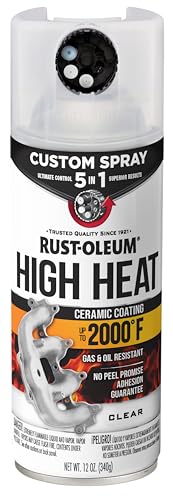
Rust-Oleum High Heat 5-in-1 Spray Paint
What We Like
- Five spray patterns for precise application
- Heat resistant up to 2000°F
- Ceramic formula resists gas and oil
- Sprays from any angle
Trade-offs
- Clear gloss finish only, no color options
- Intermittent heat rating, not continuous 2000°F
- Requires 30 minutes dry time between coats
A 2000°F intermittent heat rating means this paint can handle hot engine surfaces that cool between drives. The 5-in-1 spray dial lets you choose from high output, standard, low output, vertical fan, and horizontal fan patterns, giving you control over the spray width and flow. That flexibility, combined with a ceramic formula that resists gas and oil, makes it a strong match for anyone rebuilding an engine and wanting a durable clear coat.
If you need a color other than clear, this isn’t the can for you, the Dupli-Color Engine Paint with CERAMIC, for instance, comes in an aluminum shade. The 2000°F rating applies to intermittent heat, like an engine that runs hot then cools between drives, not constant high temperatures. For anyone who wants precise spray control and a protective clear coat, the Rust-Oleum does exactly what the dial says.
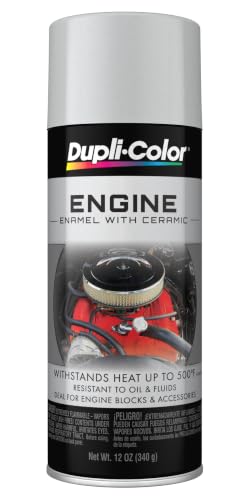
Dupli-Color Engine Paint with CERAMIC
What We Like
- Ceramic resins for maximum heat dissipation
- High gloss retention
- Resistant to oil and automotive fluids
- EZ Touch Conical Nozzle for precise application
Trade-offs
- Heat resistance limited to 500°F
- Not for exhaust parts above 500°F
A 500°F heat ceiling means this paint handles normal engine operating temperatures without blistering or peeling, but it won’t survive extreme exhaust manifold heat like some competitors. The ceramic resins are formulated for maximum heat dissipation and high gloss retention, which helps the finish stay reflective and resistant to oil and other automotive fluids. For a daily driver or weekend cruiser where the engine bay sees routine warmth, not racing-level infernos, this gloss aluminum finish offers a clean, reflective look that resists oil and fluid stains.
The trade-off is straightforward: if you need paint that laughs at 2000°F exhaust headers, Rust-Oleum Automotive High Heat Spray Paint covers that territory with a clear coat. But Dupli-Color’s ceramic formula gives you maximum heat dissipation and high gloss retention, along with resistance to oil and automotive fluids. The EZ Touch nozzle makes it easy to coat tight corners around block castings. Best for builders who want a durable, glossy engine bay finish that resists oil and fluids, not for those chasing maximum flame-proofing.
Product photos
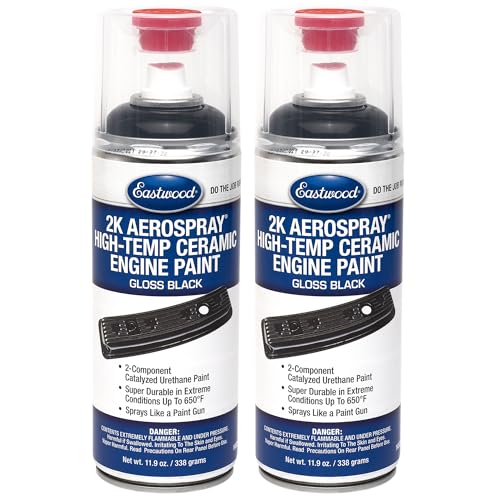
Eastwood 2K Aerospray High Temperature Ceramic Engine Paint
What We Like
- Two-component urethane for superior durability
- Ceramic formula resists extreme engine heat
- Wide fan pattern nozzle for even coverage
Trade-offs
- 650°F limit is lower than some 2000°F options
- Activator must be released before spraying
A 2-component urethane that mixes ceramic paint with a separate activator inside the can delivers a catalyzed finish that resists extreme conditions up to 650°F. The wide fan pattern nozzle helps cover engine parts evenly, and the dual-chamber design keeps the activator separate until you’re ready to spray. For anyone working on an engine where heat resistance and durability matter, this paint offers a tough coating from a simple aerosol can.
The heat ceiling here is 650 degrees Fahrenheit, which handles normal engine operating temps fine, but it won’t survive the same temperatures as Rust-Oleum’s 2000°F formula. And because the two components mix inside the can once you activate it, you have to use the whole can in one session or it cures and clogs the nozzle. That makes it a premium choice for a planned engine-paint job rather than a quick touch-up. If you need extreme heat tolerance or spot repairs, the Rust-Oleum High Heat 5-in-1 is a more flexible alternative.
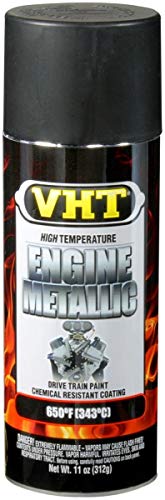
VHT SP405 Engine Metallic High Heat Spray Paint
What We Like
- Urethane and ceramic resin blend
- Withstands 650°F intermittent heat
- Dries to touch in 30 minutes
- 31 color options available
Trade-offs
- 650°F limit is lower than some competitors
- Overnight cure required before full use
With an intermittent heat tolerance of up to 650°F, this paint handles the temperatures you’ll see on engine blocks and valve covers without breaking down. It won’t stand up to the direct heat of exhaust headers the way some 2000°F-rated clear coats can. The blend of urethane and ceramic resins creates a finish that resists heat and chemicals, so it holds up against oil and coolant that might splash onto painted parts. That Black Pearl metallic sheen gives your engine bay a custom look that flat finishes can’t offer, making it a strong pick if you want both durability and a bit of sparkle under the hood.
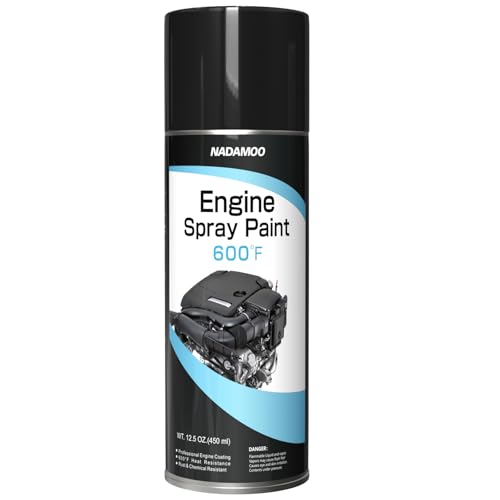
NADAMOO High-Temperature Matte Black Spray Paint
What We Like
- Withstands 600°F engine heat without cracking
- Flexible coating resists vibration and thermal expansion
- Protects against oil, grease, and corrosion
- Sleek matte black finish for engine blocks
Trade-offs
- Not for areas exposed to direct flame (3000°F+)
- Only one color option: matte black
- Coverage limited to 10-12 sq. ft. per can
A 600°F heat threshold means this paint can handle the hottest parts of an engine block without flaking or discoloring, which is exactly what you need for a reliable long-term finish. The flexible anti-crack formula is engineered to move with the metal as the engine heats up and cools down, so you won’t see peeling or spider-webbing after a few hard drives. For a DIY builder or weekend mechanic who wants a tough, corrosion-resistant coating that also looks clean under the hood, this paint offers the heat resistance and flexibility needed for engine components.
This paint isn’t rated for direct flame contact, so it’s not the right choice for exhaust manifolds or headers where temperatures can spike far beyond 600°F. Compared to Rust-Oleum’s 2000°F clear coat, the NADAMOO provides a matte black finish that’s purpose-built for engine blocks and brake calipers. If you need a high-heat clear or a glossier look, one of those alternatives would be a better fit. For a vibration-resistant matte black that sticks to clean metal, this can offers the features listed on the label.
Product photos
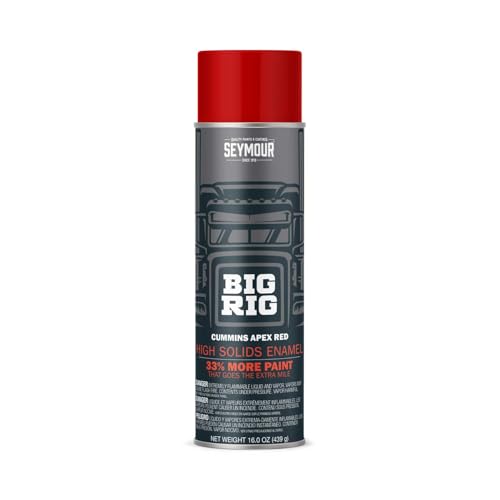
Seymour 20-1642 Big Rig Heavy-Duty Industrial Enamel
What We Like
- Resists heat, oil, gas, and rust
- Won't flake, blister, or crack
- Wide variety of colors available
- Ideal for frames and engine blocks
Trade-offs
- Not rated for extreme high-heat engine surfaces
- Heavier than some competing spray paints at 1.2 pounds
This enamel resists heat, oil, gas, abrasions, and rust, so it stands up to the harsh environment under a vehicle where frames and engine blocks live. It also protects without flaking, blistering, or cracking, which matters when you want a finish that lasts through road grime and weather. The 16-ounce can weighs 1.2 pounds, which is manageable for one-handed spraying on a frame or equipment.
Seymour doesn’t advertise a specific maximum temperature rating, unlike Rust-Oleum Automotive High Heat Spray Paint which handles up to 2000 degrees F. That makes this a better fit for frames and general engine block painting than for exhaust manifolds or turbo housings where extreme heat is constant. If your project stays within typical underhood temperatures, the Seymour delivers durable protection and a clean factory-style look in a range of colors.
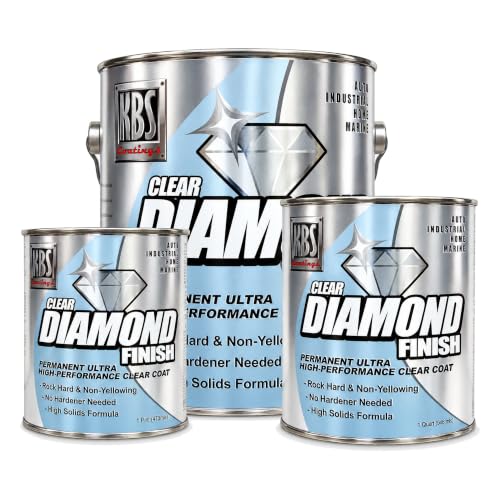
KBS Coatings DiamondFinish Clear Coat
What We Like
- Heat resistant to 325°F without yellowing
- Bonds directly to bare metal, no primer
- 7H pencil hardness at 7 days
Trade-offs
- Requires 7 days to reach full hardness
- Needs dry conditions and 50-82°F to apply
- Coverage drops up to 50% on rough surfaces
A 7H pencil hardness at seven days means this clear coat reaches a very hard finish, and it handles continuous heat up to 325°F without yellowing. That makes it a strong candidate if you want a clear layer that shows off bare metal or a base color underneath, and the moisture-cured urethane formula bonds straight to steel or aluminum without primer. It suits someone who values long-term protection over quick application and doesn’t mind waiting a week for the coating to reach its full strength.
The cure time and application conditions are the main considerations: you need 50-82°F and low humidity to brush or spray it on, and a full seven days before the 7H hardness develops. Compared to Rust-Oleum Automotive High Heat Spray Paint, which handles up to 2000°F, this KBS coating demands more patience and a controlled environment. It’s the better pick if you can plan ahead and want a clear finish that stays clear under hood heat.
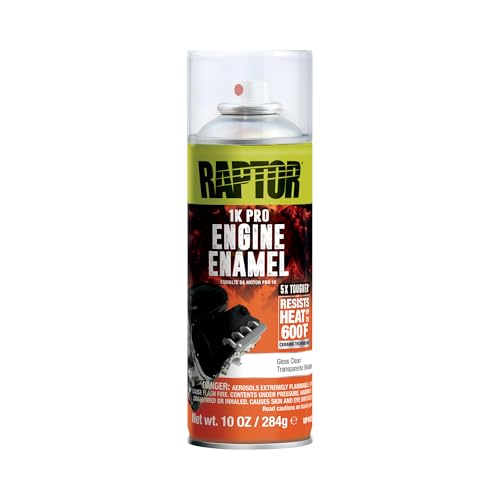
RAPTOR Engine Enamel Spray Paint
What We Like
- 5x tougher than traditional lacquers
- Heat resistant up to 600°F
- Superior adhesion on primed metals
- Clog-free nozzle for smooth application
Trade-offs
- Requires primed metal for best adhesion
- Not rated for exhaust components above 600°F
Raptor Engine Enamel is formulated for engine blocks, engine accessories, and other engine-compartment surfaces, with a 1K professional grade that resists heat up to 600°F. Its ceramic resins make it 5x tougher than traditional lacquers, so it holds up against heat, oil, and other automotive fluids without blistering, flaking, cracking, or peeling. That means for engine builders who want a durable finish on the block and nearby parts, this enamel provides lasting protection that won’t need redoing soon.
The 600°F heat resistance covers most underhood parts, but for extreme-duty spots like exhaust manifolds or turbo housings, Rust-Oleum Automotive High Heat handles up to 2000°F. And the enamel’s adhesion is designed for primed metals, steel, aluminum, and alloys, so proper surface prep is necessary for best results. For the block and accessories where oil resistance and toughness matter most, Raptor’s ceramic formulation delivers a finish that resists heat and fluids.
Product photos
VHT Engine Enamel Satin Black
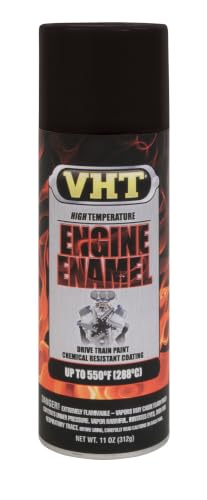
What We Like
- Excellent heat and chemical resistance
- Formulated to withstand corrosion and rust
- Salt spray and additive resistant
Trade-offs
- Satin finish shows grime more than gloss
- Requires careful surface prep for best adhesion
This paint offers excellent heat and chemical resistance, so it stands up to the temperatures and exposure an engine sees without degrading. It also resists corrosion, rust, salt spray, and additives, making it a practical choice for engine restoration or customization projects where long-term durability matters. The satin black finish gives a factory-inspired look that appeals to DIY builders and restorers who want protection over a high-shine appearance.
The satin texture hides fingerprints and imperfections better than gloss, but it does trap dirt and grease more visibly than a gloss clear coat would. If you prefer a low-reflect sheen and excellent chemical resistance over a mirror shine, this is your pick.
Product photos
How We Evaluated Paints For Engine Blocks
Our research focused on the technical specifications that matter most when painting a hot, oily engine block. We examined manufacturer data for heat resistance ratings, chemical resistance claims, and cure requirements across all ten products.
The three most important criteria were maximum temperature tolerance, resistance to automotive fluids (gas, oil, grease, and solvents), and application ease. An engine block sees sustained heat between typical operating temperatures during normal operation, but parts like exhaust manifolds can spike much higher. We prioritized paints that offered a clear margin above these operating temperatures.
Our evaluation relies on published specs, expert round-ups, and common patterns in owner feedback. This approach gives you a reliable starting point, but real-world results depend on surface preparation and application technique.
What To Look For In Paints For Engine Blocks
The right engine block paint survives heat, shrugs off oil, and bonds tightly to metal for years. Here’s what to check before you buy.
Look for a paint rated at least 500°F for engine blocks and 1200°F+ for exhaust parts. Choose a formula that explicitly resists oil, gas, and grease. Prioritize ceramic or urethane blends for maximum durability and adhesion.
Heat Resistance Rating
The single most important number is the paint’s maximum continuous operating temperature. Engine blocks typically run between typical operating temperatures, so a paint rated for 500°F to 600°F is sufficient for the block itself. Exhaust manifolds and headers need ratings of 1200°F to 2000°F. Some paints list “intermittent” heat ratings, which mean the paint can survive short temperature spikes but not sustained exposure.
Chemical and Fluid Resistance
Engine paint must resist oil, gasoline, grease, antifreeze, brake fluid, and road salt. A paint that looks great after a week but stains or softens from an oil leak is useless. Look for explicit claims of resistance to automotive fluids. Ceramic and urethane formulations generally offer the best chemical protection.
Application and Cure Requirements
Some paints require primer, some need specific temperature ranges (50-82°F), and others demand a full seven-day cure before reaching maximum hardness. Check the dry-to-touch time (often 30 minutes) and the recoat window. For show-quality work, a longer cure time is acceptable. For a quick weekend project, choose a paint that cures faster.
- Check the maximum continuous heat rating, not just the intermittent spike number.
- Confirm the paint resists oil, gas, grease, and solvents specifically.
- Note the cure time and whether primer is required.
- Consider the finish type: gloss, satin, matte, or metallic.
- Verify the spray pattern and nozzle type for even application.
A paint that cures to full hardness in under 24 hours is ideal for impatient builders, but the toughest finishes often take a week to reach peak durability.
Paints For Engine Blocks Compared
The table below compares all ten engine block paints side by side, so you can see heat ratings, finish types, and key features at a glance.
| Product | Heat Resistance | Resin/Formula Type | Resistance |
|---|---|---|---|
| Rust-Oleum Automotive High Heat Spray Paint | 2000°F | Stops Rust | Gas, oil, grease, rust, salt, humidity, solvents |
| Rust-Oleum High Heat 5-in-1 Spray Paint | 2000°F intermittent | Ceramic | Gas and oil resistant |
| Dupli-Color Engine Paint with CERAMIC | 500°F | Ceramic | Oil & automotive fluids |
| Eastwood 2K Aerospray High Temperature Ceramic Engine Paint | 650°F | 2-Component Urethane | N/A |
| VHT SP405 Engine Metallic High Heat Spray Paint | 650°F intermittent | urethane & ceramic | N/A |
| NADAMOO High-Temperature Matte Black Spray Paint | 600°F | N/A | Anti-rust, chemical resistant |
| Seymour 20-1642 Big Rig Heavy-Duty Industrial Enamel | Resists heat | N/A | oil, gas, abrasions, rust |
| KBS Coatings DiamondFinish Clear Coat | No yellowing up to 325°F | 1K moisture-cured urethane | N/A |
| RAPTOR Engine Enamel Spray Paint | 600°F | Ceramic resins | heat, oil |
| VHT Engine Enamel Satin Black | N/A | N/A | heat and chemical |
Frequently Asked Questions
What temperature does engine block paint need to withstand?
Engine block paint should be rated for at least 500°F continuous. Most engine blocks operate between typical operating temperatures, but a safety margin prevents failure during heat soak after shutdown. Exhaust parts require paint rated for 1200°F or higher.
Can I use regular spray paint on an engine block?
Regular spray paint is not recommended for engine blocks. It lacks the heat tolerance and chemical resistance needed to survive engine temperatures and exposure to oil, gas, and grease. Purpose-built engine enamels and high-heat paints are formulated to withstand these conditions without blistering or peeling.
How do I prepare an engine block for painting?
Proper surface preparation is critical. Degrease the block thoroughly, remove all oil and contaminants, then sand or wire-brush to create a rough surface for adhesion. Apply a high-heat primer if the paint requires it, and mask off any areas that should not be painted.
What is the best finish for an engine block?
Gloss finishes are easiest to clean and resist oil staining, but they show imperfections more readily. Satin and matte finishes hide grime and minor surface flaws but can be harder to wipe clean. Metallic finishes offer a custom look but may require more coats for even coverage.
How long does engine block paint take to cure?
Cure times vary widely. Some paints dry to the touch in 30 minutes and can be handled in a few hours, while others require up to seven days to reach full hardness. Heat-curing the engine by running it after painting can accelerate the cure for some formulas.
The Bottom Line
For most engine builders, the Rust-Oleum Automotive High Heat Spray Paint is the best choice. Its 2000°F heat rating and resistance to gas, oil, grease, rust, salt, humidity, and solvents make it a versatile protective topcoat for any engine block. Just keep in mind it’s a clear finish only.
If you need a colored finish, the Dupli-Color Engine Paint with CERAMIC offers excellent heat dissipation and a glossy, oil-resistant look for daily drivers and show cars. For a metallic option with 31 color choices, the VHT SP405 Engine Metallic High Heat Spray Paint is a strong pick.
The most important factor is matching the paint’s heat rating to the specific part you’re painting. A block needs at least 500°F, while exhaust manifolds need much more. Choose accordingly, prep thoroughly, and your engine will look great for years.
