
10 Best Paint Thickness Gauges in 2026
This post contains affiliate links. As an Amazon Associate, we earn from qualifying purchases.
For accurate paint thickness readings on steel and aluminum body panels, the VVV-Group CM-205FN Paint Thickness Gauge is the best overall, thanks to its automatic Fe/NFe detection and fine 0.1 μm resolution. The VVV-Group CM-224 Auto Paint Thickness Gauge is the best for automotive inspection, while the Extech CG204 is a strong choice for dual-technology versatility.
Shopping for a paint thickness gauge often means balancing speed, substrate compatibility, and data management. Whether you are a used car inspector, a body shop professional, or a DIY enthusiast, the right tool must match the surfaces you measure and the detail you need from your readings.
This guide is based on a review of manufacturer specifications, expert round-ups, and patterns in owner feedback. We focus on the criteria that matter most for real-world use, helping you choose with confidence.
Top 10 Paint Thickness Gauges in the Market
Certain content that appears on this site comes from Amazon. This content is provided "as is" and is subject to change or removal at any time.
The Best Paint Thickness Gauges, Reviewed
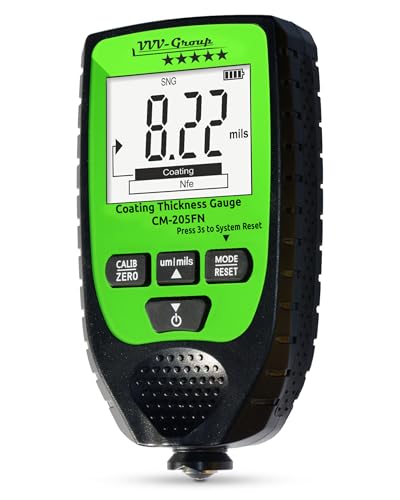
VVV-Group CM-205FN Paint Thickness Gauge
What We Like
- Auto Fe/NFe detection for mixed body panels
- 0.1 μm resolution for fine coating checks
- Dual magnetic induction and eddy current technology
- Factory calibrated, ready out of the box
Trade-offs
- No data storage or export capability
- At 1.1 lb, heavier than many portable gauges
A 0.1 μm resolution and ±(3%+2 μm) accuracy mean this gauge catches thin paint variations and hidden repairs that coarser meters might miss. It automatically detects whether the surface is steel or aluminum and switches measurement methods, so you can move from a steel door to an aluminum hood without touching a button. Factory calibration and a simple two-button interface make it usable right away for pre-purchase car checks, dealer appraisals, or detailing work.
It also lacks onboard data storage, so you will need to write down readings manually if you are logging multiple panels. Compared to the Extech CG204, which stores 255 readings, the VVV-Group is lighter on memory but offers a wider 1500 μm range and a lower 0.1 μm resolution for finer detail. For someone focused on metal body inspection and wanting a no-fuss, accurate tool, this is the gauge to grab.
Product photos
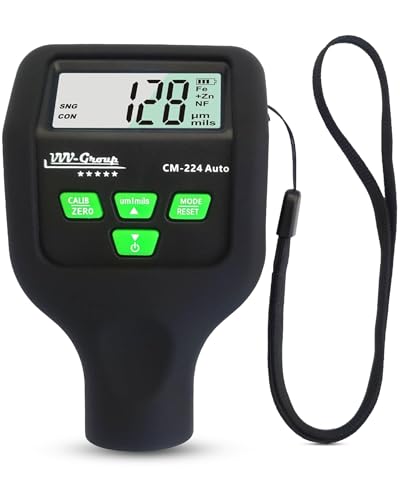
VVV-Group CM-224 Auto Paint Thickness Gauge
What We Like
- Factory calibrated for instant use
- Automatic Fe+Zn panel detection
- 0.1 μm resolution for fine readings
- Continuous scanning mode for large panels
Trade-offs
- Only works on metal substrates
- 1.0 pounds is heavier than many competitors
A 0.1 μm resolution and automatic Fe+Zn substrate detection make this gauge a sharp tool for anyone inspecting used cars. It recognizes steel, aluminum, and galvanized steel instantly, so you can spot replaced or non-original body panels without fiddling with settings. The factory calibration means you pop in the battery and start measuring, no setup, no guesswork. This is the kind of straightforward, purpose-built instrument that suits used car buyers, appraisers, and body shop pros who need reliable readings fast, not a gadget they have to learn.
The trade-off is that this gauge is designed exclusively for metal surfaces. If you work with plastic, carbon fiber, or composite panels, it simply won’t read them, that’s an honest limit the manufacturer states clearly. At 1.0 pounds it’s noticeably heavier than lighter picks like the Extech CG204, which may matter if you’re scanning dozens of cars in a day. But for automotive metal inspection, the CM-224’s dedicated Fe+Zn detection and out-of-the-box readiness give it a focused advantage that general-purpose meters don’t match.
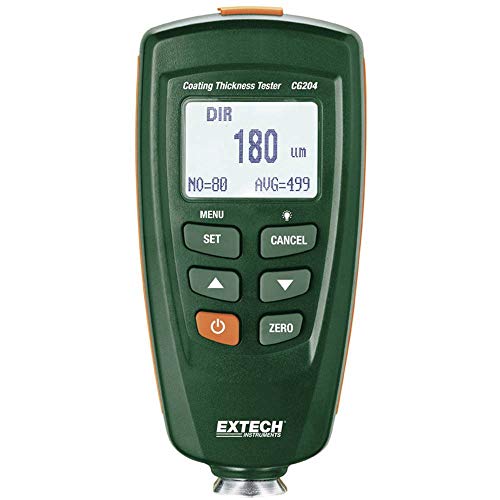
Extech CG204 Coating Thickness Tester
What We Like
- Auto substrate recognition for ferrous/non-ferrous
- 255-reading memory for later review
- Backlit LCD works in low light
- Compact 0.4 lb design
Trade-offs
- 1000 µm max range limits thick industrial coatings
- No external probe for tight spaces
- No data export or Bluetooth connectivity
Dual technology with automatic substrate recognition means this gauge instantly knows whether you are measuring paint on steel or aluminum, so you never stop to switch modes or guess the metal type. That speed and simplicity make it a natural fit for automotive shops, restoration work, and quality control checks where you move from one surface to another all day. The 255-reading memory lets you log inspections without a clipboard, and the backlit display keeps readings clear in dim booths or under a hood.
The 1000 µm range covers most automotive and marine paint jobs, but heavy powder coatings or thick industrial layers may exceed that limit. For those applications, a gauge with a wider range would be needed. The compact design and 0.4-pound weight make it easy to carry around a shop or job site. For everyday paint checks on cars and similar surfaces, the Extech delivers reliable dual-tech performance.
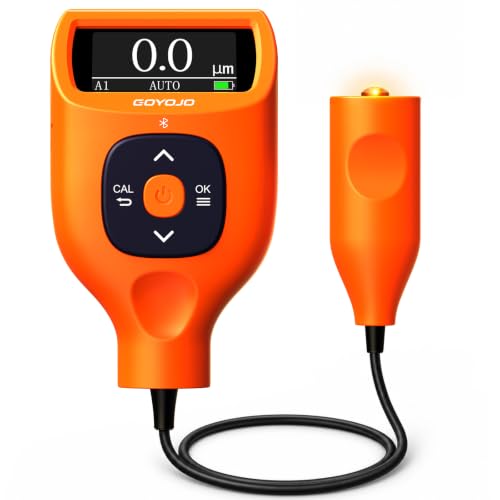
GOYOJO Professional Paint Thickness Gauge
What We Like
- External 1m probe reaches tight spots
- APP-based data tracking for records
- Auto substrate detection saves setup time
- 0.1 μm resolution for fine readings
Trade-offs
- External probe cable can be cumbersome in small shops
- APP adds complexity for quick checks
A 9000 μm range and an external 1-meter probe mean this gauge can handle thick industrial coatings and cramped engine bays that a built-in probe cannot reach. The auto-detection for Fe, Al, Zn, and Fe(C) substrates removes guesswork, so you can move from steel to aluminum without fiddling with settings. It suits technicians who need to measure heavy coatings on large equipment or tight automotive areas, and the app-based data tracking helps keep records organized on-site.
That much range and the external cable add bulk for simple car-paint checks. If you only measure thin automotive paint under 2000 μm, the VVV-Group CM-205FN offers a simpler package with a lower range and lighter weight. But for anyone regularly inspecting thick powder coats, marine finishes, or hard-to-reach surfaces, the GOYOJO’s extra capacity and probe flexibility make it a practical choice.
Product photos
Elcometer 415 Paint & Powder Coating Thickness Gauge
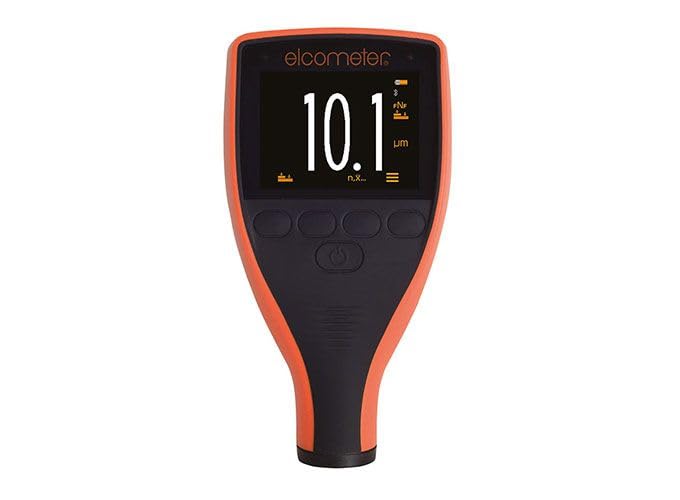
What We Like
- 60+ readings per minute for speed
- Scratch, solvent, and powder resistant
- USB live data transfer for reports
- IP64 rated rugged display
Trade-offs
- Ferrous-only model limits to steel substrates
- No auto substrate recognition feature
At over 60 readings per minute, this gauge lets you move through a car panel or production line in a fraction of the time slower meters take. The IP64 display shrugs off scratches, solvents, and powder, so it stays readable even after a long shift in a busy shop. With 1-point and 2-point calibration, you get consistent accuracy on smooth or thin coatings without fiddling with menus. For anyone who needs fast, repeatable checks on steel surfaces, this is the tool that keeps inspections moving.
This model works only on ferrous metals, so if you regularly check aluminum or zinc-coated panels, you will need a different gauge. If your work stays on steel and speed matters most, the 415 is worth the extra cost. If you need versatility across metals, the CM-205FN is the better fit.
Product photos
DeFelsko PosiTest G Coating Thickness Gage
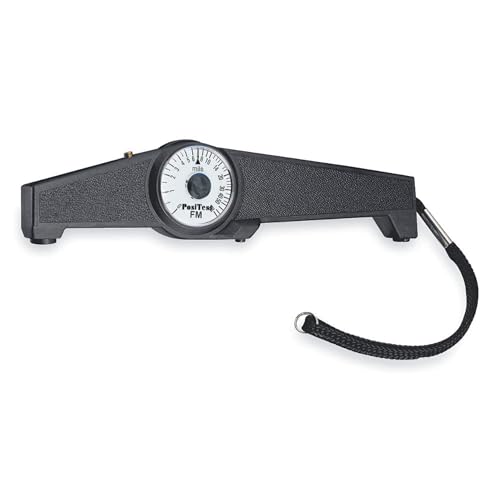
What We Like
- No batteries or electronics needed
- Fully submersible in water
- Carbide probe resists wear
- Includes leather case with belt loops
Trade-offs
- Limited to steel substrates only
- Narrow range: 0-200 microns
A permanent rare-earth magnet powers this gauge mechanically, so it never needs batteries, electronics, or charging. That means it is always ready for field inspectors, marine painters, or anyone working where dead batteries would stop the job. The carbide probe resists wear, keeping readings accurate over years of use, and the rugged housing shrugs off water, acid, and solvents. It is fully submersible, a feature few mechanical gauges offer. For checking non-magnetic coatings up to 200 microns on steel, this tool is straightforward and dependable.
The biggest limitation of this gauge is that it only measures non-magnetic coatings up to 200 microns on steel, so it won’t work for thick automotive paint or aluminum panels. If you need a wider range, the Extech CG204 handles 0-1000 microns and automatically recognizes the substrate. But for jobs like checking galvanizing, enamel, or thin paint on steel, the PosiTest G’s permanent magnet means it never needs batteries and can be fully submerged without damage.
Elcometer 311 FNF Model T Paint Meter

What We Like
- Fast 60+ readings per minute
- Wireless Bluetooth reporting via app
- IP64 dust & waterproof design
Trade-offs
- Heavier than some portable models at 0.3 lb
- No external probe for tight wheel wells
At 0.3 pounds, the Elcometer 311 FNF Model T is light enough to hold all day without fatigue. It measures on both steel and aluminum without needing to switch tools, and the ergonomic design keeps your hand comfortable during long inspections. The fast reading rate and Bluetooth reporting make it a focused tool for documenting thickness on the go.
Product photos
POROMETISTO Paint Thickness Gauge
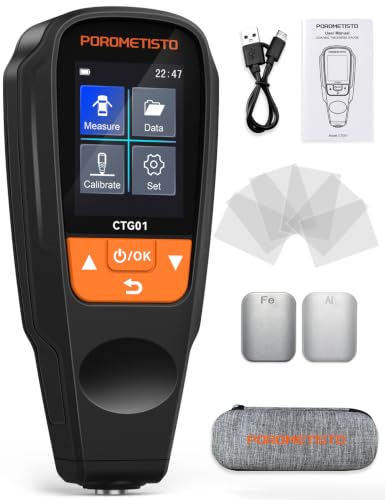
What We Like
- USB-C data export for PC logs
- Auto-rotating color display
- Continuous scan with average/min/max
- 0.1 μm resolution on thin coatings
Trade-offs
- No plastic, fiberglass, or wood reading
- 30-group memory is modest for high-volume work
- Requires zero-calibration on bare substrate first
Thirty stored readings and a USB-C export to a Windows PC let you transfer thickness data for dealer inspection sheets or QC logs. The 0-2000 μm range and 0.1 μm resolution on thin layers cover primer, base coat, and clear coat on steel and aluminum panels. Its continuous scan mode refreshes every 0.3 seconds, showing the average, maximum, and minimum of the last ten measurements. That combination of memory, export, and real-time scanning fits the needs of used-car buyers, bodyshop techs, and coating applicators.
This meter reads only magnetic and non-ferrous metal panels; plastic, fiberglass, and carbon fiber are out of bounds. Its 30-group memory is enough for a single inspection session but will fill fast if you are checking every panel on a fleet. Compared to the Extech CG204, which stores 255 readings, the POROMETISTO holds fewer records on board, though its USB-C export makes it easy to transfer data between jobs. The auto-rotating screen keeps readings upright no matter how you hold the gauge.
Product photos
YOWEXA Paint Thickness Gauge
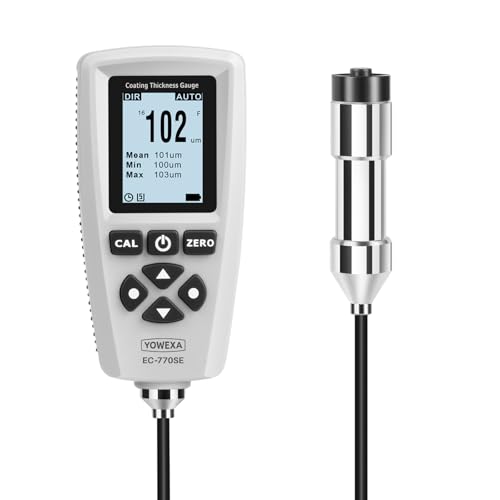
What We Like
- External probe reaches tight spots
- Stores up to 2000 readings with statistics
- USB data export to PC
- Switchable units and 180° rotatable display
Trade-offs
- DIR readings lost after power-off
- USB for data only, not charging
With a 2000 μm range and ±(2% + 1 μm) accuracy, this gauge covers the typical coating thicknesses found on automotive panels and industrial metal parts. The external probe lets you reach curved or recessed areas that a fixed-probe gauge cannot access, such as inside wheel wells or around door jambs. Four storage groups hold up to 500 readings each, so you can track measurements across multiple vehicles or jobs and export them to a PC via USB for reporting.
This gauge is designed exclusively for dry coatings on ferrous and non-ferrous metals, so if you need to check paint on plastic bumpers, wood, or concrete, you’ll have to look elsewhere. Its 2000 μm range covers most automotive and industrial jobs, and the ±(2% + 1 μm) accuracy means you can trust the numbers when inspecting a repair or a production part. The separate probe lets you reach into tight spots like door jambs, and the display rotates 180°, which helps when you’re working upside down or at an odd angle.
Product photos
KNKCS Paint Thickness Gauge KC-125
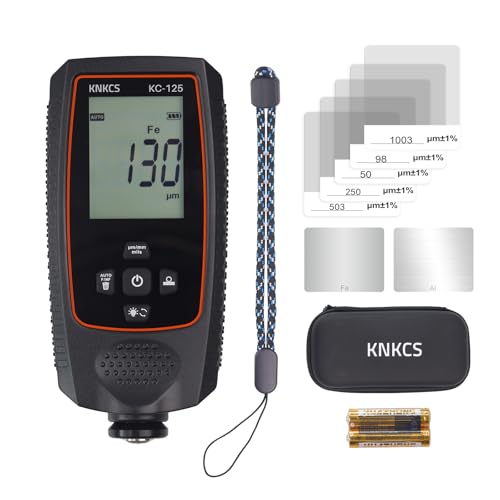
What We Like
- Rotating screen for easy reading
- Continuous measurement mode for efficiency
- Iron powder filler recognition
- 5-year maintenance program included
Trade-offs
- Accuracy ±(3%+1μm) is looser than some rivals
- No data storage or export mentioned
The KNKCS KC-125 measures paint thickness from 0 to 2500μm, which covers everything from thin clear coats to thick body filler on steel, aluminum, or zinc panels. Its screen rotates, so you can tilt the gauge for a clear view without twisting your wrist. The continuous mode lets you take readings one after another as you move the probe across a panel. That makes it a practical tool for used-car buyers and detailers who want to quickly check for hidden repairs on a lot or in a shop.
Accuracy is ±(3%+1μm), which is fine for detecting thick filler layers, but if you’re measuring very thin coatings, the GOYOJO offers ±(2%+1μm) for a tighter margin. The KC-125 also recognizes iron powder filler and iron-zinc substrates, so it can tell you whether the gauge is reading paint or filler on those metals. It does not store readings internally, so you’ll need to jot down numbers by hand if you want to compare panels later.
Product photos
How We Evaluated Paint Thickness Gauges
Our evaluation of these paint thickness gauges began with a close look at each model’s published specifications and manufacturer documentation. We compared factors like measurement range, resolution, substrate compatibility, and calibration requirements to establish a baseline for performance.
We then examined patterns in owner feedback and expert commentary to understand how each gauge performs in daily use. The four criteria that mattered most were accuracy and resolution for fine coating checks, substrate detection capabilities (especially for mixed-metal car panels), data management features like memory and export options, and overall build quality and portability for field work.
A research-based evaluation has limits: we rely on the accuracy of published specifications and the consistency of user reports. Our goal is to give you a clear, honest picture of what each gauge offers so you can match it to your specific needs.
What To Look For In Paint Thickness Gauges
Choosing the right paint thickness gauge means understanding the surfaces you will measure and the data you need to capture. Focus on substrate compatibility, measurement range, resolution, and data management features.
Look for a gauge that matches your primary substrates (steel, aluminum, or both), offers resolution fine enough for your coating thicknesses, and provides the data storage or export you need for records and reports.
Substrate Compatibility and Auto Detection
The most critical factor is whether the gauge can measure on your target substrates. Ferrous-only models work on steel, while dual-technology gauges handle both ferrous (steel) and non-ferrous (aluminum, zinc) metals. Auto substrate recognition is a major convenience, as it eliminates the need to switch modes manually between different body panels.
Measurement Range and Resolution
Consider the range of coating thicknesses you will encounter. Automotive paint typically falls between 80 and 200 microns, while industrial powder coatings can exceed 1000 microns. Resolution matters for fine work: a 0.1 μm resolution is ideal for detecting thin clear coats and light resprays, while coarser resolution may suffice for thicker industrial coatings.
Data Management and Export
If you need to document readings for reports or dealer negotiations, look for models with internal memory, USB or Bluetooth data export, and companion apps. Continuous scanning modes with average, minimum, and maximum values are helpful for large panels. For quick pass/fail checks without record-keeping, a simple display may be all you need.
- Confirm the gauge supports your primary substrates (steel, aluminum, or both).
- Check the measurement range against your typical coating thicknesses.
- Decide whether you need data logging and export for reports or records.
- Consider the probe design: external probes help with tight spaces like wheel wells.
- Look for auto substrate detection to save time on mixed-material inspections.
A gauge that matches your substrates and offers the resolution you need will save time and reduce errors on every job.
Paint Thickness Gauges Compared
The table below compares the key specifications and features of each paint thickness gauge in our lineup, making it easy to see how they stack up side by side.
| Product | Range | Resolution | Substrates |
|---|---|---|---|
| VVV-Group CM-205FN Paint Thickness Gauge | 0-1500 μm (0-59.1 mils) | 0.1 μm | Fe (steel/iron) + NFe (aluminum/copper) |
| VVV-Group CM-224 Auto Paint Thickness Gauge | 0-1500 μm (0-59.1 mils) | 0.1 μm | Fe / NFe / Fe+Zn auto detection |
| Extech CG204 Coating Thickness Tester | 0-1000 µm (0-40 mils) | N/A | Fe/NFe |
| GOYOJO Professional Paint Thickness Gauge | 0-9900 μm (0-390 mils) | 0.1 μm | Fe/Al/Zn/Fe(C) auto detection |
| Elcometer 415 Paint & Powder Coating Thickness Gauge | Up to 1000 μm (40 mils) | N/A | N/A |
| DeFelsko PosiTest G Coating Thickness Gage | 0-200 microns | N/A | N/A |
| Elcometer 311 FNF Model T Paint Meter | N/A | N/A | Steel and Aluminum |
| POROMETISTO Paint Thickness Gauge | 0-2000 μm | 0.1 μm (0-99.9 μm) | Steel/iron (Fe) & aluminum/copper (NFe) |
| YOWEXA Paint Thickness Gauge | 0–2000 μm | N/A | Fe/NFe auto |
| KNKCS Paint Thickness Gauge KC-125 | 0-2500μm | 0.1μm | Iron, aluminum, zinc |
Frequently Asked Questions
What is a paint thickness gauge used for?
A paint thickness gauge measures the thickness of coatings on metal substrates. It is commonly used by used car inspectors, auto detailers, and body shop professionals to detect resprays, body filler, or inconsistent paint jobs that may indicate prior damage.
Can a paint thickness gauge measure on plastic bumpers?
Most paint thickness gauges are designed for metal substrates only. They use magnetic induction or eddy current technology that requires a conductive base material. Plastic, fiberglass, and carbon fiber panels cannot be measured with standard paint thickness gauges.
What is the difference between Fe and NFe modes?
Fe mode measures coatings on ferrous (iron or steel) substrates using magnetic induction. NFe mode measures coatings on non-ferrous metals like aluminum or zinc using eddy current technology. Dual-technology gauges automatically detect and switch between these modes.
Do I need a gauge with data export?
Data export is useful if you need to create reports for dealer negotiations, quality control logs, or insurance documentation. For quick pass/fail checks on a single car, a gauge without data storage is often sufficient and simpler to use.
How accurate are paint thickness gauges?
Accuracy varies by model and price point. Higher-end gauges typically offer accuracy within ±1-3% of the reading plus a small fixed offset. Budget models may have looser tolerances. Resolution, which affects the smallest change the gauge can detect, is also important for fine coating work.
The Bottom Line
For most used car inspectors, detailers, and appraisers, the VVV-Group CM-205FN Paint Thickness Gauge is the best overall choice. Its automatic Fe/NFe detection and fine 0.1 μm resolution make it ideal for fast, accurate readings on mixed-metal body panels without any setup hassle.
If your work is limited to steel panels and you want a dedicated tool for automotive inspection, the VVV-Group CM-224 offers the same factory-calibrated convenience. For budget-conscious DIYers, the YOWEXA Paint Thickness Gauge provides solid accuracy and data export at a more accessible price point.
The single most important factor in choosing a paint thickness gauge is matching it to the substrates you measure most. A gauge that works on your target surfaces and offers the resolution you need will serve you well for years.
