
Extension Pole Guide for Painting: 6 Inches vs 3 Inches
This post contains affiliate links. As an Amazon Associate, we earn from qualifying purchases.
That 6-versus-3-inch gap is the most concrete difference between the two poles, and the one spec you can compare without guessing. Everything else needs a closer read. Tip threads that say “universal” and don’t mean it. Product titles that disagree with their own spec tables. Pressure ceilings that change from one Graco model to the next. An extension pole guide for painting should flag these traps before you buy.
Key Takeaways
- Lock spacing decides your rhythm. The Wooster Sherlock adjusts every 6 inches; the Purdy Pole+ adjusts every 3.
- Trust the spec table over the product title. Imperial Supplies lists its 910828-2 as an 8 to 16 ft pole, but the spec table says 15-3/4 ft maximum.
- Graco’s two poles don’t share a pressure ceiling. ProReach is rated 3600 psi; ASM Maxi Poles 3400 Series is rated 4050 psi.
- A squeaking roller frame is usually dry, not broken. Wooster’s own fix is submerging the cage in clean water for a few minutes.
- Keep a metal pole dry and 10 feet from overhead lines. Water running down the pole makes the electrical risk worse.
What the Spec Sheet Actually Tells You
Graco publishes two different length numbers for the same pole, and the gap between them is the one people skim past.
The Graco ProReach Telescoping Spray Pole measures 5 ft (1.52 m) retracted, 4.5 ft (1.37 m) compacted, and 12 ft (3.66 m) fully extended. Weight is 3.75 lb (1.7 kg). Maximum gun fluid working pressure is 3600 psi (248 bar, 24.8 MPa), per Graco manual X055732. The pole is rated for professional use only.
Retracted vs Compacted: Two Different Numbers
Retracted is the working length with the sections collapsed. Compacted is shorter still, which only matters if the pole lives in a van, a closet, or a job box. On the ProReach that’s 5 ft versus 4.5 ft.
Small difference. Big difference when you’re deciding whether it fits behind a truck seat.
Here’s the rest of the field, side by side.
| Pole | Stated Length | Pressure or Lock Spec |
|---|---|---|
| Graco ProReach X055732 | 5 ft retracted, 12 ft extended | 3600 psi max gun fluid pressure |
| Graco ASM Maxi Poles 3400 | 2, 3, 4, 6 and 9 ft sections | 4050 psi max working pressure |
| Wooster Sherlock | 8 ft to 16 ft | Locks every 6 in |
| Purdy Pole+ | 8 ft to 16 ft (part 651360521) | Pin lock every 3 in |
| Keiser P2054 | 225 cm to 400 cm | 2-section aluminum telescopic |
Read the Imperial Supplies 910828-2 listing and you hit a different problem entirely. The product title says 8 ft to 16 ft. The spec table says 15-3/4 ft maximum. Same pole, two answers, and the spec table is the one to trust.
That’s not a knock on Imperial specifically. It’s a habit worth building: on any pole, the extension pole guide for painting rule is that the number in the spec table beats the number in the headline. If you want a broader sweep of what’s out there, this roundup of best paint poles covers more models than one table can hold.
Why Does My Extension Pole Collapse Mid-Roll?
A loose latch or a bad thread causes most mid-roll collapses, and both are checkable before you climb anything.
Wooster’s own documentation is confident about this. The Sherlock’s pole lock lever “easily adjusts pole length every 6 inches with a touch of the thumb and locks securely in place so it won’t collapse.” The tip is designed to hold the frame and keep it from twisting or loosening.
Then there’s the field.
You can hear the difference before you can see it.
Where this goes sideways: Buying a pole and a frame from two different locking systems. The tip thread either matches or it doesn’t, and no amount of tightening fixes a thread that was never going to seat.
Three things worth checking the day a pole arrives:
- The latch, under load. Lock it, then push down hard on the tip with the pole angled. A latch that slips here will slip on a loaded roller.
- The thread engagement. Thread your frame on by hand and count the turns. If it bottoms out almost immediately, the thread is wrong, not tight.
- The tip collar. Wooster’s tip is meant to stop the frame twisting. Rock the frame side to side; any wobble at the collar shows up later as a roller that walks off the wall.
If you’re still choosing between pole styles, this breakdown of paint roller extension poles goes deeper on which locking systems hold up.
6 Inches vs 3 Inches: The Lock Spacing You’re Actually Buying
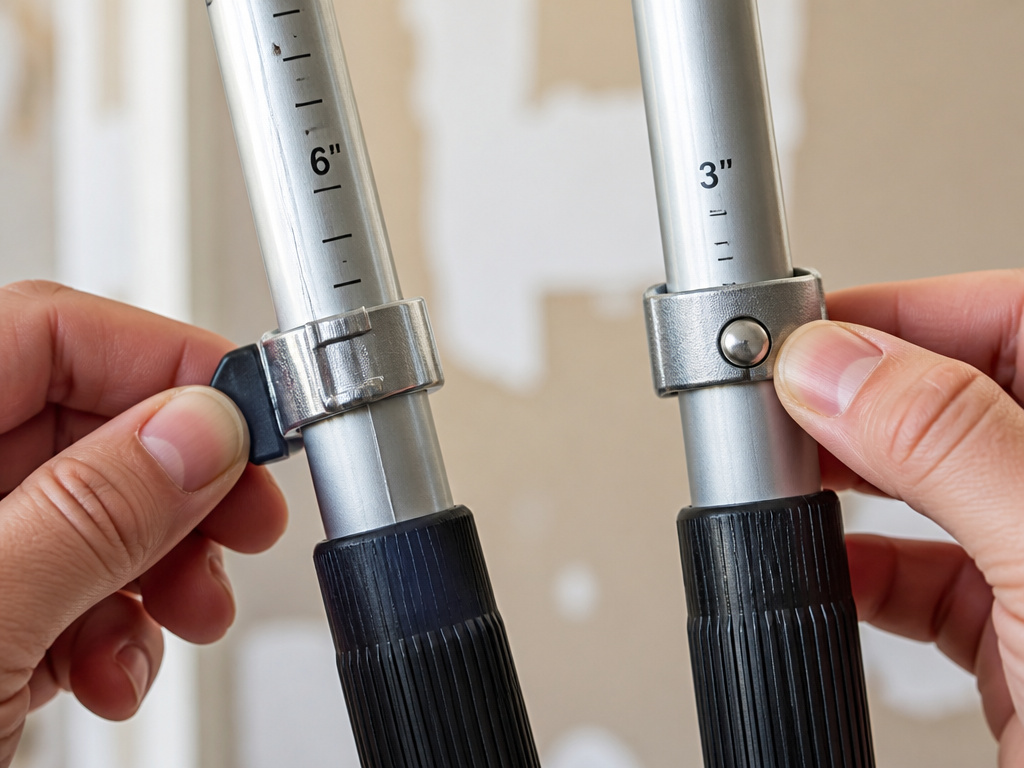
Two premium poles, both marketed as secure, and their lock increments differ by a factor of two.
| Pole | Lock Type | Adjustment Increment |
|---|---|---|
| Wooster Sherlock | Thumb lever | Every 6 in |
| Purdy Pole+ | Pin lock | Every 3 in |
| Imperial 910828-2 | Locking mechanism | Any extended length |
| Keiser P2052 to P2054 | 2-section telescopic | Any length between min and max |
Neither number is wrong, and the extension pole guide for painting makes clear they solve different problems.
The Sherlock’s 6-inch steps are coarser but faster to set. On a flat room where you set the height once and roll the whole wall, you won’t notice.
I’d rather see someone buy one pole that matches their actual rooms than two poles that cover every theoretical case. The second pole usually stays in the garage. (Mine did.)
If your reach problem is mostly height, this guide on how to reach high ceilings pairs well with a pole you already trust.
The Threaded Tip Problem Nobody Warns You About
A Purdy Revolution frame one-clicks onto a Purdy Pole+ tip. A frame with a different thread simply won’t seat, no matter what “universal” suggests.
Purdy’s universal tip is a one-click quick connection to Purdy Revolution frames or acme-threaded frames. That “or” is doing a lot of work. Acme thread is a specific thread profile. A frame with a different thread simply won’t seat, and the click you’re waiting for never comes.
Wooster’s Sherlock tip holds the roller frame in place and keeps it from twisting or loosening, and the GT insert has threads for standard extension poles plus a design that eliminates twisting when paired with Sherlock GT poles. The GT Tip Lever, found only on GT poles, lets you attach and release tools with one press.
What “Universal Tip” Actually Covers
Universal means “fits the common thread,” not “fits everything.” Before you buy a pole to go with a frame you already own, look at the frame’s thread, not the pole’s marketing.
- Hyde 47400 is light-duty with no cage, so it wants gentle pressure.
- Hyde 47401 carries four spring wires, built for square, repeat work.
- Hyde 47402 adds a 180-degree pivot and two adaptors for changing angles or cover cores.
- Wooster’s own guidance puts a high-quality conventional frame at five or more cage wires so the sleeve keeps its shape.
Once the frame is threaded on, this walkthrough on how to paint high walls takes the next step.
How Do You Set a Pole Up Without Wrecking the Wall?
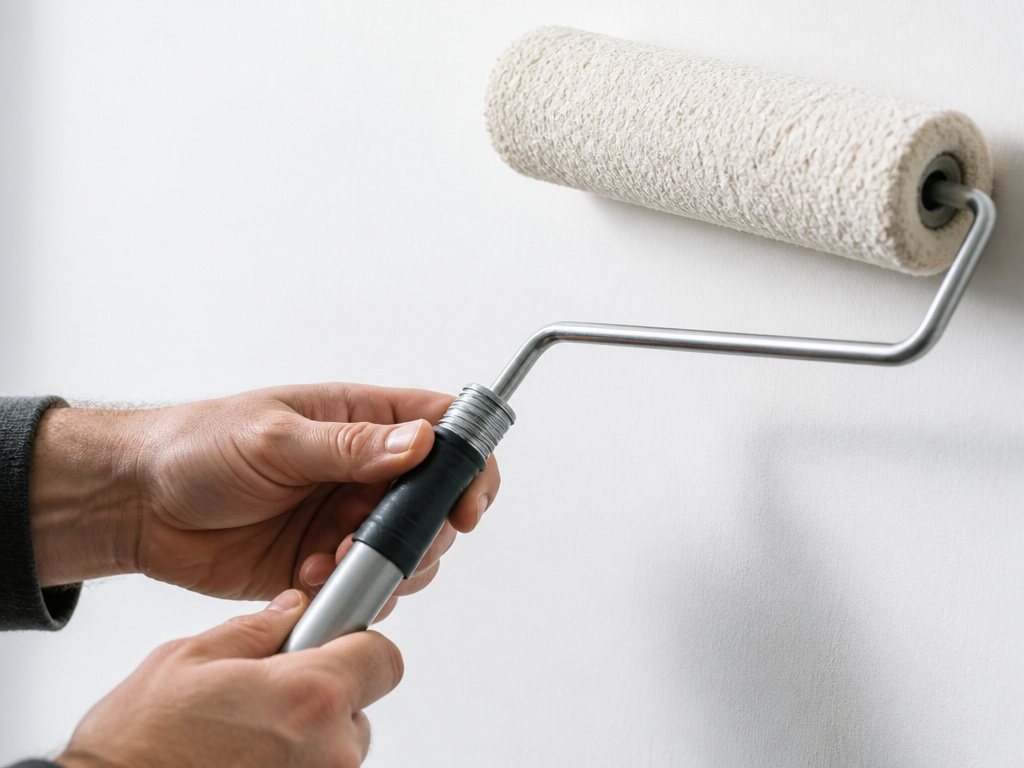
- Rock the joint and spin the dry roller against a wall. Cheapest test there is. A thread that isn’t fully seated shows up here, not halfway up a stairwell.
Step four is the one people skip. It takes only a moment and it’s the difference between a pole you trust and a pole you fight all afternoon.
For the ceiling-specific version of this, here’s how to paint a high ceiling safely without turning it into a balance exercise.
Where the Pressure Rating Stops Being a Suggestion
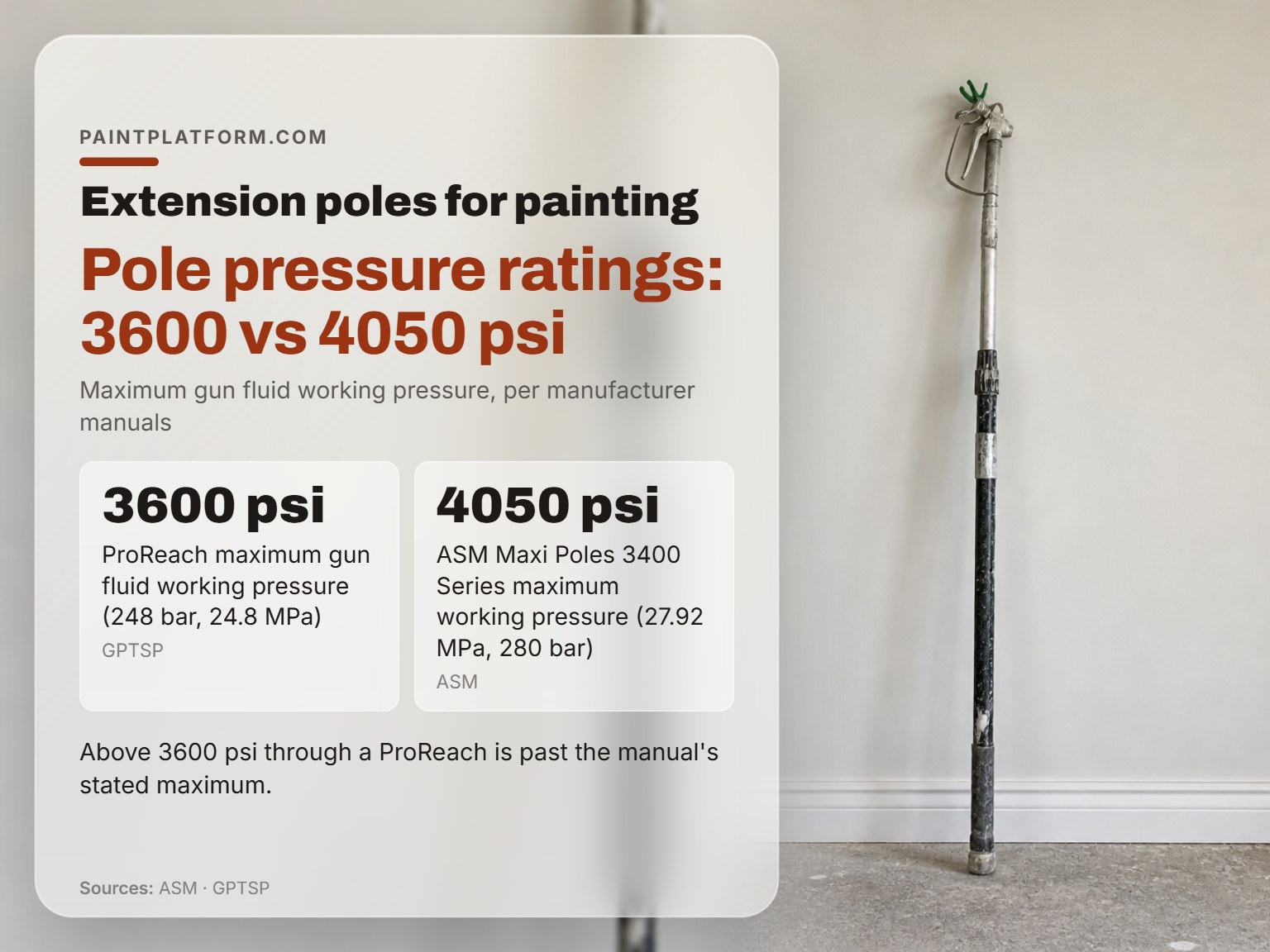
The ProReach tops out at 3600 psi (248 bar, 24.8 MPa) maximum gun fluid working pressure. The ASM Maxi Poles 3400 Series is rated 4050 psi (27.92 MPa, 280 bar). Run a sprayer set above 3600 psi through a ProReach and you’re past the manual’s stated maximum. That’s a hard boundary, not a suggestion.
Matching a Pole to a Sprayer
Check your sprayer’s working pressure first, then the pole’s rating. Not the other way around. A pole rated below your sprayer’s output is the wrong pole, full stop.
A few more things from the ASM Maxi manual worth knowing:
- Relieve pressure before installing or maintaining the AngleHead adapter, gasket, seat, or tip guard.
- Apply anaerobic sealant to the pole adapter thread before screwing it in.
- The AngleHead swivels 90 degrees for ceilings, soffits, and stairwells.
- Hand-Tight Maxi Poles accept an additional Maxi or Mini Pole for 12 ft maximum length.
Graco also says plainly not to let the pole tube slam down when collapsing it, to reduce the risk of injury from unexpected spray. That’s a small habit that saves a big mess.
If your reach problem keeps pulling you toward a ladder, this step ladder vs extension ladder comparison is the honest version of that decision.
Frequently Asked Questions
Do all extension poles fit all roller frames?
No. Purdy’s universal tip connects to Purdy Revolution frames or acme-threaded frames. Wooster’s Sherlock tip uses its own metal universal thread, and the GT insert is designed to work with Sherlock GT poles. Check the frame’s thread before you buy a pole for it.
What’s the difference between a paint pole and a spray pole?
Paint pole carries a roller frame on a threaded tip. A spray pole carries an airless spray gun and has a pressure rating tied to the sprayer. The Graco ProReach is rated to 3600 psi maximum gun fluid working pressure, which is a spec a roller pole never needs.
How do I stop my extension pole from collapsing?
Check the latch under load first, then the thread engagement. Wooster’s own reply to a 2026 owner complaint conceded a possible manufacturing defect in the thread. If the latch clicks hard and the frame seats fully, the pole is fine. If either is soft, it’s the hardware.
Can I use an extension pole while standing on a ladder?
Not for swinging a long pole. Use a ladder or platform for cutting in, corners, and fixtures, and keep the pole at least 10 feet from energized overhead lines outdoors. Water running down a metal pole makes the electrical risk worse.
What length extension pole do I need?
Set the pole to the shortest length that reaches, lock it, and press the dry roller on the wall to check for creep. Extend only as far as the room demands. A pole run at full extension flexes more and is harder to control than one run a section short.
Why does my roller frame squeak?
Wooster attributes it to going from wet paint to dry conditions, or to storage in cold or dry climates. The fix is hydrating the bearings: submerge the entire cage in a bucket of clean water for a few minutes, shake off the excess, and install the cover.
The Bottom Line
One threshold worth memorizing: if your sprayer’s gauge reads above 3600 psi, the Graco ProReach is out. The ASM Maxi Poles 3400 Series is rated for that range and the ProReach isn’t. That single number decides the purchase before anything else does.
Your first step this week costs nothing. Before the next wall, spray a little non-stick cooking spray on the aluminum inner pole, Wooster’s own tip. Paint wipes off afterward and the sections stop sticking. I keep a can in the same tray as the roller covers.
One concession: none of this helps if you’re buying a pole to solve a reach problem you could solve by moving a piece of furniture. Poles are for ceilings, soffits, stairwells, and the tops of tall walls. Everything below shoulder height, you’re better off with a step stool and your own arm.
Fair warning: the pole that fails on you will fail at the worst possible moment, usually with a loaded cover over a finished floor. Test it dry first. Every time.
