
Paint Shield Guide: PPF vs Ceramic Coating
This post contains affiliate links. As an Amazon Associate, we earn from qualifying purchases.
A paint shield guide covers two products: paint protection film (PPF), a 0.16 mm urethane sheet that absorbs stone chips, and ceramic coating, a liquid that cures into a hard, slick layer. Both need the same surface prep, and a dirty surface is the fastest way to waste the product.
The prep step decides whether the coating lasts or peels at the edges. Wax, sealant, or polish residue left on the paint stops the bond, and the failure shows up as water spots that won’t wipe away.
What follows walks through what each product does, the two places where the manufacturer instructions openly disagree, and the prep sequence that both Paint Shield and Avery Dennison agree on, as any paint shield guide would.
Key Takeaways
- Prep decides the outcome. Wax, sealant, or polish residue left on the paint stops the bond, and the coating peels at the edges.
- Post-paint wait splits the sources. Paint Shield says 4 weeks; Avery Dennison says baked paint can take film immediately after cooling.
- Wash wait splits too. Paint Shield says 5 days; Avery Dennison says 48 hours.
- Temperature matters. Paint Shield wants 20-30°C throughout; a hot panel cures the coating too fast.
- Test on an inconspicuous area first. Paint Shield requires it, and Avery Dennison applies the same rule to any new cleaner.
What a Paint Shield Actually Is
Two products share the name. Paint protection film is a clear urethane sheet; ceramic coating is a liquid that cures into a hard layer. They protect against different things, and the prep work is nearly identical.
Paint protection film is an aliphatic polyurethane sheet, backed with a pressure-sensitive acrylic adhesive. It absorbs impact from stone chips and road debris. Ceramic coating is a liquid product that cures into a hard, thin layer, measured in microns rather than millimeters. The two products protect against different failure modes.
PPF: The Impact Absorber
PPF takes the hits. PPF absorbs impact from stone chips and road debris. Eastman’s PremiumShield Matte spec sheet lists the film at 0.16 mm of aliphatic polyurethane over a 0.04 mm acrylic adhesive layer. A fresh film feels slick under a fingertip.
Ceramic Coating: The Slow-Build Protector
Ceramic coating handles water spotting and contamination. It doesn’t stop chips. Paint Shield’s instructions treat ceramic as a sacrificial layer that bonds to the clear coat, and the bond is only as good as the prep underneath.
| Property | PPF | Ceramic Coating |
|---|---|---|
| Thickness | Urethane sheet (PremiumShield Matte: 0.16 mm) | Micron-scale cured layer |
| Best against | Stone chips, scratches | Water spots, contamination |
| Wash wait | 48 hours (Avery Dennison) | 5 days (Paint Shield) |
| Cure window | Immediate tack | Up to 5-7 min per panel |
For a daily driver on gravel roads or a highway commute, PPF earns its keep, and a paint shield guide explains why. For a garage-kept car that mostly sees sun and rain, ceramic coating does more of the work. Many owners run both: PPF on the front bumper and hood, ceramic over the whole car. If you’re comparing film brands, the paint protectors breakdown covers options by use case, and the car paint protection comparison covers both product types side by side.
How Long After Painting Can You Apply a Paint Shield?
Four weeks versus immediate. That’s the gap between Paint Shield and Avery Dennison on post-paint timing, and it’s the biggest disagreement in the source material.
Paint Shield’s 4-week rule exists because fresh paint releases solvent as it cures, and trapping that solvent under a coating risks “wax eyes” – small craters in the finish. Avery Dennison’s position is narrower: on most baked paints, the solvent is already gone by the time the panel cools, so film can go on immediately. For air-dried or repair paints, Avery says to follow the paint maker’s cure guidelines.
| Question | Paint Shield (NZ) | Avery Dennison |
|---|---|---|
| Post-paint wait | At least 4 weeks | Immediate after cooling (baked paint) |
| Wash wait | 5 days | 48 hours |
| Indoor rest | 12-24 hours | Not specified |
| Non-OEM paint | No restriction stated | Warranty void on non-OEM |
The practical answer depends on your paint. Factory paint on a new car is baked, so Avery’s immediate-after-cooling rule applies. A repainted panel from a body shop is air-dried, and that’s where Paint Shield’s 4-week wait earns its keep. When in doubt, ask the paint manufacturer for the cure schedule before you touch the panel.
Common mistake: Treating “4 weeks” and “immediate” as competing rules. They apply to different paint systems. Baked OEM paint and air-dried repair paint cure on completely different schedules.
The Prep Sequence Both Brands Agree On
Both instruction sheets run the same steps in the same order. Skip any one and the coating fails at the edges first.
Before you start: Ceramic coatings and their solvents are flammable and give off vapour. Work in a well-ventilated area, wear nitrile gloves and a ventilator with vapour filters, and keep the product out of reach of children. Store it under 30°C.
- Wash with mild detergent. Skip this and the IPA has to cut through road film on its own, which it won’t do evenly.
- Clay bar the clear coat. Avery Dennison recommends it. Skip it and the IPA wipes over contaminants instead of lifting them.
- Wipe with isopropyl alcohol. This is the final clean before application. Both brands require it, and skipping it leaves polish residue that stops the bond.
- Mask edges and sensitive trim. Tape off anything solvent-sensitive before the applicator touches the panel.
- Test on an inconspicuous area. Paint Shield requires it. A test patch on the door jamb shows you how the product behaves before you commit to the hood.
Just try it on a scrap before you commit to the hood. Buying a full PPF kit before you’ve tested a patch is like buying a spice rack before you’ve cooked a meal. You don’t know what you need yet.
I keep a dedicated IPA bottle for this step, and I’ve ruined a test patch or two by rushing the wipe. Polish, wax and sealant residue stops the bond.
Why a Hot Panel Ruins the Cure
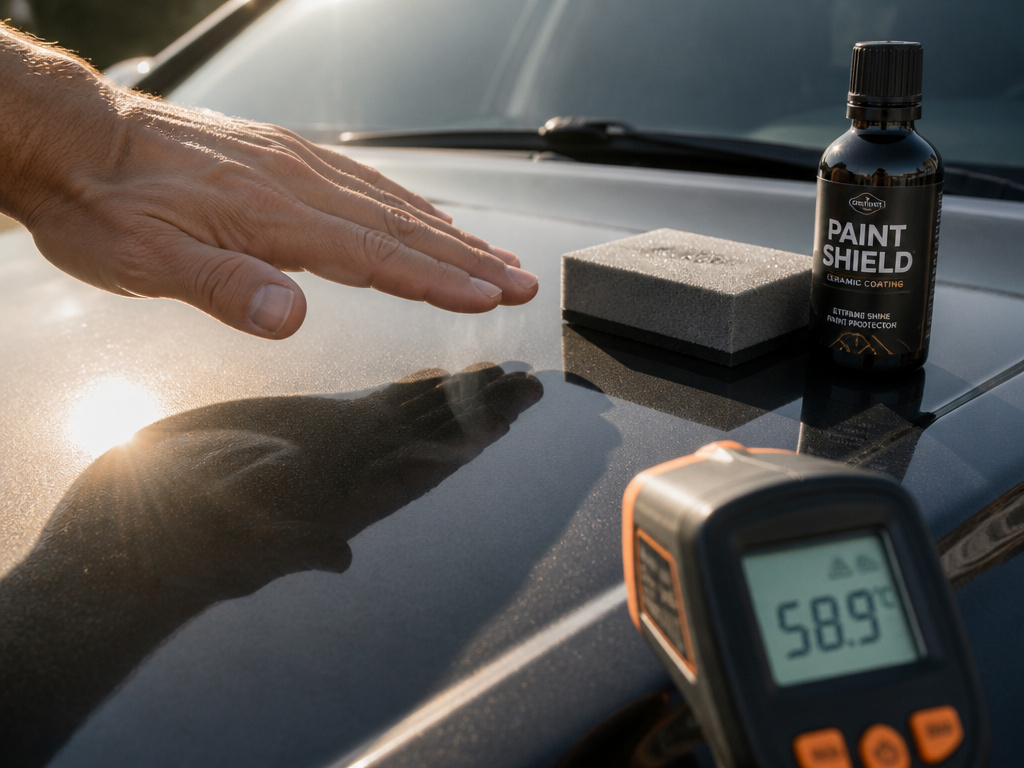
A warm panel feels right and behaves wrong. The coating flashes before the applicator clears the section, and you’re left polishing a high spot instead of wiping excess.
The coating cures by solvent evaporation. A hot panel accelerates that evaporation, and the product goes from wet to hazy faster than you can work. Paint Shield’s instructions call for a stable 20-30°C throughout, and a sun-heated hood runs well above that.
What Counts as Too Hot
Paint Shield warns that paintwork under direct sunlight, or recently driven, will cure the coating too fast. A panel that’s warm to the back of your hand may already be past the safe window. Let the car sit in shade before you start.
I won’t apply any coating to a car that just got driven. Paint Shield’s own instructions warn that recently driven paint cures the coating too fast, and once it flashes you’re polishing a high spot instead of wiping excess. Waiting for the panel to cool costs you nothing.
How Long Before You Can Wash It?
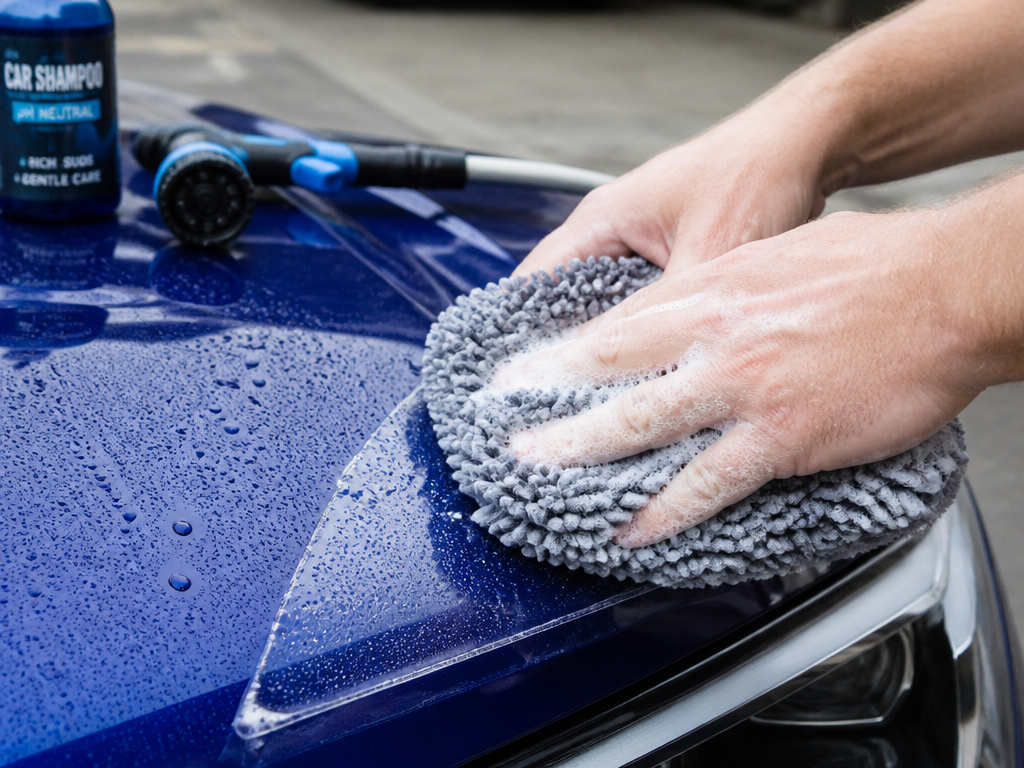
Five days or 48 hours, depending on which instruction sheet you read. Paint Shield says wait at least 5 days post-coating before washing. Avery Dennison’s PPF bulletin says wait 48 hours after installation.
The gap matters less than the reason behind it. Both windows exist so the product can finish bonding before water and detergent hit it. A pressure washer near the film edges is the bigger risk: Avery Dennison warns that high-pressure water can lift the film, and once an edge lifts it stays lifted.
- Hand wash only at first. Mild detergent, clean water, no pressure washer near the edges.
- Remove insect and bird stains promptly. Avery Dennison says to use Surface Cleaner as soon as you see them.
- Skip the automatic car wash. The high-pressure rinse can lift the film edges.
Avery Dennison also notes that light scratches in the film self-heal in 20-30 minutes at room temperature. In colder conditions, pour warm water at 120°F over the area to speed it up. That’s the film doing its job.
Maintenance That Actually Extends Life
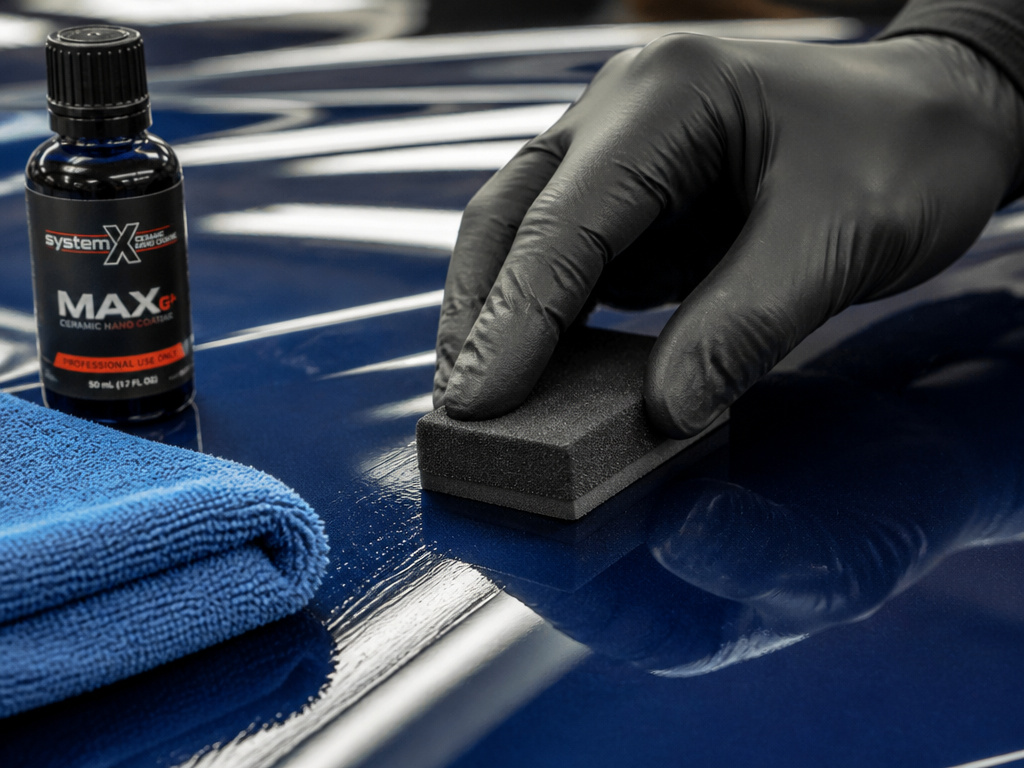
The quarterly seal is the one step that separates a film that lasts from a film that goes flat. Avery Dennison calls for sealing the film with their Sealant at least once every 3 months to preserve high gloss. Petroleum-distillate-free waxes work too, and they’re easier to find.
A neglected film can feel gritty under a fingertip even after a wash. That grit is contamination bonded to the topcoat. Seal it on schedule and the surface stays slick.
The 3-Month Seal
Put it on the calendar. Avery Dennison calls for sealing at least once every 3 months to preserve high gloss. If the car sits outside, seal at least once every 3 months.
Seal the film every 3 months or the gloss goes flat. Avery Dennison’s own maintenance sheet calls for it, and a flat film shows every water spot.
If the car sits outside, UV protection for paint is worth a look beyond the film itself. Most paint sealants work on film, but petroleum-distillate-free waxes are the safe choice. The automotive paint sealers breakdown covers what’s safe over film.
When Not to Apply a Paint Shield
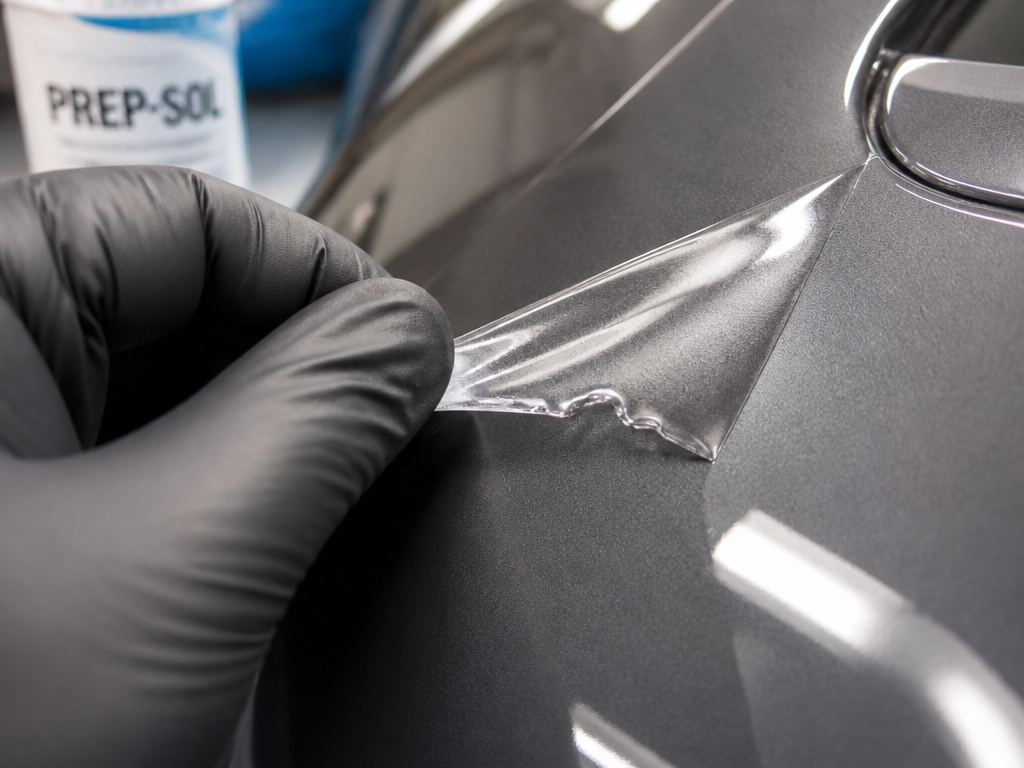
Skip the film on a fresh repaint. Avery Dennison warrants its film only on fully cured OEM paint. On non-OEM paint, removal without damage isn’t warranted, and solvent residue in a fresh repair can cause the film to shrink or blister.
Paint Shield doesn’t state an OEM-only restriction, but their 4-week post-paint wait covers the same ground from a different angle. The two positions aren’t contradictory so much as aimed at different paint systems.
Toyota’s Clear Protective Film procedure adds one more rule: inspect the paint for existing damage before installation, and repair anything loose or scratched first. Toyota’s procedure says to repair any existing damage before installation. The paintwork protection comparison covers film, coating, and sealant side by side. A clear coat spray is a different product with a different prep sequence, and it doesn’t replace film.
Where this goes sideways: Wiping excess too late. Paint Shield says the Professional Range can take up to 5-7 minutes per panel to cure, but on a warm day the residue turns tacky inside that window and buffs into a smear instead of wiping clean.
Frequently Asked Questions
Can you apply a paint shield over wax?
No. Paint Shield’s instructions state the surface must be completely free of wax, sealant, oil, and residue, or the coating won’t bond correctly. Avery Dennison says the same: car wax and polish residues must be completely removed before application. An IPA wipe is the final step that gets you there.
How long does a paint shield last?
Neither instruction sheet gives a fixed lifespan. Paint Shield ties duration to prep quality and cure conditions, and warns that a contaminated surface reduces the coating’s lifespan. Avery Dennison warrants its film only on fully cured OEM paint.
Can you take a PPF car through an automatic car wash?
Avery Dennison warns against pressure washers near the film edges because high-pressure water can lift the film. Automatic car washes use high-pressure rinse, which can lift a film edge. Hand washing with mild detergent is the safe route.
Does ceramic coating stop rock chips?
No. Ceramic coating is a micron-scale layer. It handles water spotting and contamination, but a stone chip carries more energy than the coating can absorb. That’s the job PPF does, and it’s why many owners run both products on the same car.
What temperature should you apply a paint shield?
Paint Shield calls for a stable 20-30°C throughout application. A hot panel cures the coating too fast, and a hot panel cures the coating too fast. If the panel is warm to the back of your hand, wait for it to cool before you start.
The Bottom Line
Here’s the concession: if your car is a lease or you’re selling it in two years, skip the film. A ceramic coating alone handles water spotting and contamination. The film earns its keep on cars you plan to keep past the warranty.
Start with the test patch. Pick a door jamb or the inside of the fuel filler door, clean it with IPA, and apply a small square of whatever product you’re considering. Look at it in morning light and evening light before you commit to the hood.
The prep work is the whole game. A product on a dirty panel fails, and a product on a properly prepped panel holds. Get the surface right and the rest follows.
