
7 Best Primers For Kitchen Cabinets No Sanding in 2026
This post contains affiliate links. As an Amazon Associate, we earn from qualifying purchases.
The Zinsser Odor Killing Primer is our best overall pick for kitchen cabinets without sanding because it bonds directly to glossy surfaces and seals stubborn smells from pets, smoke, and cooking. For a complete system, the Rust-Oleum Cabinet Transformations Kit skips both sanding and priming steps. DIYers wanting a smooth, brush-mark-free finish should look at the Stone Coat Cabinet Primer Bundle.
Refinishing kitchen cabinets is one of the most rewarding home projects, but the sanding step stops many people from starting. The real challenge is finding a primer that sticks to slick surfaces like laminate, melamine, or existing gloss paint without that tedious prep work.
This guide is built from manufacturer specifications, expert round-ups, and patterns in owner feedback. We focused on adhesion, odor control, ease of application, and coverage to help you choose the right primer for your kitchen.
Top 7 Primers For Kitchen Cabinets No Sanding in the Market
Certain content that appears on this site comes from Amazon. This content is provided "as is" and is subject to change or removal at any time.
The Best Primers For Kitchen Cabinets No Sanding, Reviewed
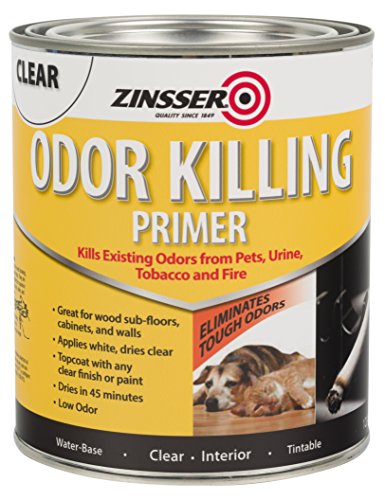
Zinsser Odor Killing Primer
What We Like
- No sanding needed on glossy surfaces
- Dries to touch in 25 minutes
- Seals pet, smoke, and musty odors
- Works with any topcoat or clear finish
Trade-offs
- Quart size covers only 100 square feet
- Requires thorough cleaning of surfaces before application
This water-base primer locks in stubborn odors from pets, smoke, or musty basements while adhering to glossy surfaces like laminate or varnished cabinet doors without any sanding or deglossing. For anyone tackling a quick refresh on surfaces that have absorbed years of cooking smells or pet accidents, that odor-sealing ability is the deciding factor. It accepts any topcoat or paint you choose, making it a flexible foundation for your project.
A quart covers up to 100 square feet, enough for a small kitchen or one set of upper cabinets, but larger kitchens will need two quarts. It dries to the touch in 25 minutes and recoat-ready in 45 minutes, so you can move through a project quickly. That speed is a real advantage when you’re painting multiple coats in a single afternoon.
Rust-Oleum Cabinet Transformations Kit

What We Like
- No sanding or priming needed
- Covers 102 sq. ft. per kit
- Works on wood, melamine, metal, laminate
- All-in-one kit for complete cabinet makeover
Trade-offs
- Kit size limits use to smaller cabinet projects
- Color options limited to what the kit includes
The Rust-Oleum Cabinet Transformations Kit covers 102 square feet, which the manufacturer says is perfect for kitchen cabinets, bath vanities, and furniture. It requires no sanding, stripping, or priming, so you can skip the messy prep work that other cabinet paints demand. The kit is designed for wood, melamine, metal, and laminate cabinetry, meaning you can start painting right after cleaning the surface. For a DIYer who wants a complete system in one box rather than buying separate primer and paint, this all-in-one package delivers exactly that: a single purchase that includes everything needed for the job.
The kit covers 102 square feet, so if your cabinets exceed that area or you want a custom color, you will need to buy multiple kits or look elsewhere. This Rust-Oleum product combines primer and paint in one package, making it a straightforward all-in-one solution for someone who wants to skip picking separate products.
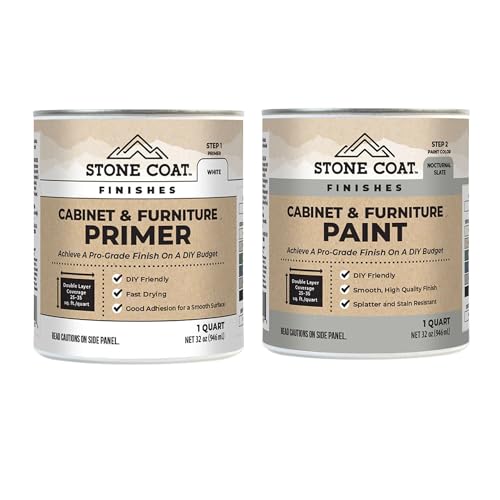
Stone Coat Cabinet Primer Bundle
What We Like
- Self-leveling for smooth, brush-mark-free finish
- Bonds to laminate, melamine, and Thermofoil
- Blocks wood tannins and old colors
- Low odor and low VOC for indoor use
Trade-offs
- Only one paint color (Nocturnal Slate) in bundle
- Requires 1-3 hours dry time between coats
A self-leveling primer that minimizes brush marks and dries in 1-3 hours helps you build a smooth, professional-looking base on cabinets, furniture, doors, and trim. The primer bonds to wood, laminate, melamine, and Thermofoil surfaces, which are often tricky to paint. This bundle pairs that primer with a warm, modern gray paint called Nocturnal Slate that resists scratches, chips, and peeling for long-lasting performance. It suits DIYers who want a clean, refined look with minimal effort and who appreciate a low-odor, low-VOC formula for indoor work.
The trade-off is that you’re locked into one paint color, Nocturnal Slate, so if gray isn’t your vision, you’ll need to buy additional paint separately. Compared to other cabinet paint kits, this Stone Coat set gives you a ready-to-use color and a self-leveling advantage that helps beginners avoid visible roller or brush lines. For anyone wanting a fuss-free path to a soft gray kitchen, this bundle delivers exactly that.
Product photos
Zinsser Bulls Eye 1-2-3 Primer

What We Like
- Sticks without sanding
- Dries in 30 minutes
- Blocks stains on glossy surfaces
- Works indoors and outdoors
Trade-offs
- Quart size covers only 100 sq. ft.
- Not designed to seal odors like the Odor Killing Primer
The single fact that matters most here is that this primer sticks to glossy or difficult surfaces without any sanding. That means you can brush or roll it onto your kitchen cabinets right over the existing finish, skip the dusty, time-consuming prep work, and still get a bond that holds. It’s a water-based formula, so cleanup is just soap and water, and it dries to the touch in 30 minutes. For anyone who wants to refresh cabinets fast without renting a sander or wearing a mask all weekend, this is the primer that makes that possible.
The quart size covers up to 100 square feet, which is enough for a small set of cabinets but may leave you short on a full kitchen. The gray tint is designed to improve hide and coverage of deep topcoats, saving time and money on those colors. Compared to the INSL-X Stix Bonding Primer, which also bonds without sanding, Zinsser’s faster dry time gets you to painting sooner, but the smaller can means you might need two quarts for a larger project.
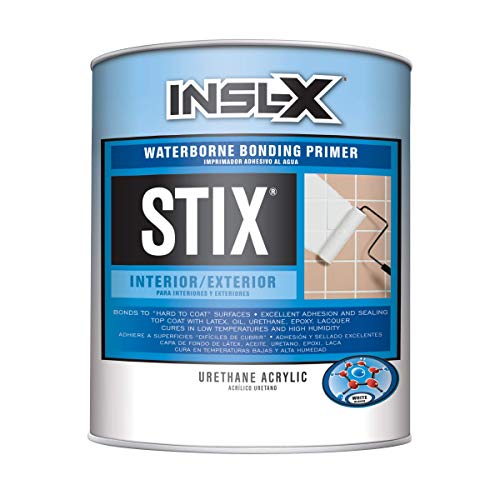
INSL-X Stix Bonding Primer
What We Like
- Bonds to glossy tile, PVC, glass, metal
- Low VOC and easy soap cleanup
- Cures in temperatures as low as 35°F
- Accepts almost any topcoat
Trade-offs
- Coverage only 75-100 sq ft per quart
- Requires careful surface prep per label
An acrylic-urethane bonding primer that sticks to glossy tile, PVC, glass, and galvanized metal means you can prime even the slickest kitchen cabinet surfaces without worrying about adhesion failure. This primer seals and bonds, and its low-VOC formula cleans up with soap and water, keeping your workspace breathable. It also cures in temperatures as low as 35°F, so you can paint a chilly garage or basement without waiting for a warm spell. For anyone facing laminate, Formica, or high-gloss cabinets that other primers reject, this is the remedy.
The trade-off is that a quart covers only 75 to 100 square feet, so a full kitchen may need multiple quarts. That puts it at a higher material cost than some other primers, but when your cabinets are covered in glossy paint or plastic laminate, the extra cost buys adhesion that won’t peel later.
Product photos
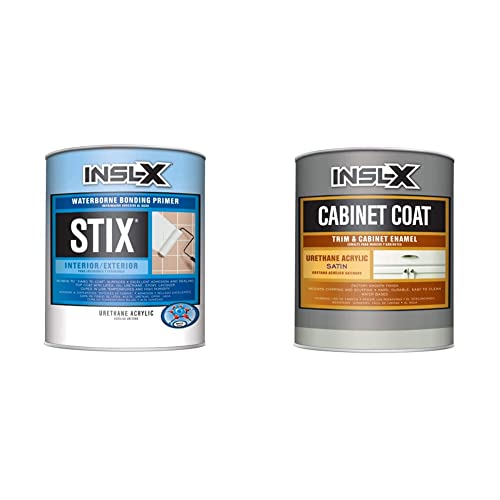
INSL-X Stix & Cabinet Coat Bundle
What We Like
- Resists chipping, scuffing, grease, stains
- Cures down to 35°F
- Topcoat with alkyd, urethane, epoxy, lacquer
Trade-offs
- Two separate products: primer + paint needed
- Quart size limits large cabinet projects
After the Stix primer establishes a strong bond, the Cabinet Coat urethane acrylic enamel goes on to create an ultra smooth, durable satin finish. This topcoat is formulated to resist chipping, scuffing, food stains, grease, and water, making it well suited for high-use areas like cabinets, shelving, furniture, trim, and crown molding. The paint covers 87 to 112 square feet per quart, so a single quart handles a modest kitchen cabinet set. Cleanup requires only soap and water, which simplifies the process compared to solvent-based alternatives.
You get two separate quarts, a bonding primer and a urethane acrylic paint, so you will need to apply both. The primer covers 75-100 square feet and the paint covers 87-112 square feet per quart. That is enough for a smaller kitchen or a single cabinet bank, though a full remodel will require multiple bundles. The primer can be topcoated with alkyd, acrylic latex, urethane, epoxy, or lacquer finishes, giving you more flexibility in your final look.
Product photos
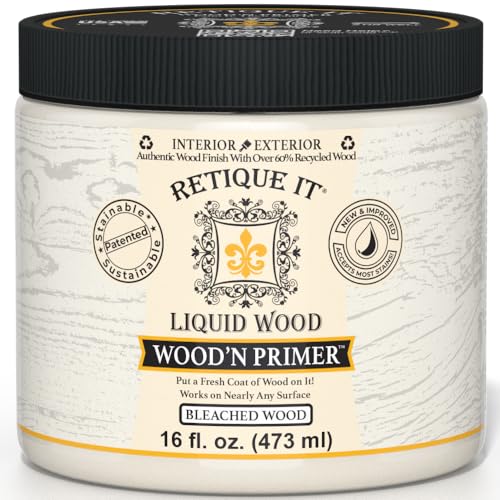
Retique It Wood'n Primer
What We Like
- Works on glass, metal, plastic, tile, laminate
- Ultra-low VOC and virtually odorless
- Stainable for light or dark wood tones
Trade-offs
- Requires a separate stain and sealer for final finish
- Only a primer: not a one-coat paint solution
Retique It Wood’n Primer uses a patented wood-fiber formula that mimics raw wood’s absorbency, so stain penetrates with the depth and contrast of a natural surface. That means you can prep kitchen cabinets without sanding off old paint or varnish, just clean, lightly scuff, and apply. It bonds to surfaces like laminate, metal, and glass, making it a versatile choice for cabinets with different materials. For anyone who wants the final result to look and feel like real stained wood rather than painted plastic, this primer delivers that authentic grain and texture.
If you want a stainable, natural-wood finish on glossy or painted cabinets, this primer’s no-sanding prep and broad surface adhesion make it a smart fit. Just know you’ll need to buy stain and a clear sealer separately to finish the job.
Product photos
How We Evaluated Primers For Kitchen Cabinets No Sanding
This evaluation is based on research of manufacturer specifications, guidance from painting professionals, and common patterns in owner feedback across multiple sources.
The four criteria that mattered most were adhesion to glossy and slick surfaces without sanding, dry time for quick project turnaround, and coverage per quart or kit to avoid running out mid-project. The ability to block stains or odors common in kitchens also mattered. These factors determine whether a primer saves you time and delivers a lasting finish.
A research-led approach has honest limits. We cannot report on long-term durability or application ease from personal experience. Instead, we rely on documented specs and the collective experience of many DIYers to highlight what works and what to watch for.
What To Look For In Primers For Kitchen Cabinets No Sanding
Choosing a no-sanding primer comes down to knowing what your cabinet surface is made of and what kind of finish you want. Here are the key criteria to consider.
Look for a primer labeled “bonding” or “adhesion” that specifically says it works on glossy or slick surfaces without sanding. Check the dry time, coverage area per quart, and whether it seals odors or stains if that matters in your kitchen.
Adhesion Without Sanding
The whole point of this category is skipping sanding. Bonding primers contain special resins that grip slick surfaces like laminate, melamine, Thermofoil, and existing gloss paint. Some formulas are water-based for easy cleanup, while others are solvent-based for maximum grip. Always check the label to confirm the primer is designed for your specific cabinet surface.
Dry Time And Recoat Window
Fast dry time keeps your project moving. Many no-sanding primers dry to the touch in 25 to 30 minutes, allowing you to apply a second coat or topcoat the same day. Slower-curing options may need one to three hours between coats. Consider your workspace and how quickly you need the cabinets back in use.
Coverage And Kit Size
Coverage varies widely. A quart of primer typically covers 75 to 100 square feet, which may be enough for a small kitchen or a single cabinet set. Larger kitchens or full remodels may require multiple quarts or a kit that includes enough product. Some kits combine primer, paint, and tools in one box, which simplifies shopping but limits color choices.
- Measure your cabinet surface area before buying.
- Check whether the primer requires a separate topcoat or includes paint in the kit.
- Look for low-VOC or low-odor formulas if you are working indoors without great ventilation.
- Verify the primer works on your cabinet material (wood, laminate, melamine, metal, Thermofoil).
- Read the surface prep instructions, most no-sanding primers still require a clean, degreased surface.
A bonding primer is only as good as the surface prep. Clean cabinets thoroughly with a degreaser before applying any no-sanding primer.
Primers For Kitchen Cabinets No Sanding Compared
The table below compares key specs for each of the seven no-sanding primers we evaluated, so you can see at a glance which one fits your project.
| Product | Coverage | Recoat Time | Surface Types |
|---|---|---|---|
| Zinsser Odor Killing Primer | 100 sq ft | 45 min | painted or unpainted interior surfaces |
| Rust-Oleum Cabinet Transformations Kit | 102 sq. ft. | N/A | Wood, melamine, metal, laminate |
| Stone Coat Cabinet Primer Bundle | N/A | 1-3 hours | wood, laminate, melamine, and Thermofoil |
| Zinsser Bulls Eye 1-2-3 Primer | Up to 100 sq. ft. | 1 hour | Wood, metal, glossy, masonry |
| INSL-X Stix Bonding Primer | 75-100 sq ft | N/A | glossy tile, PVC, vinyl, plastic, etc. |
| INSL-X Stix & Cabinet Coat Bundle | 75-100 sq ft/qt | N/A | tile, PVC, vinyl, plastic, glass, etc. |
| Retique It Wood'n Primer | N/A | N/A | Furniture, cabinets, glass, metal, plastic, tile, painted wood, laminate |
Frequently Asked Questions
Can I really paint kitchen cabinets without sanding?
Yes, if you use a bonding primer designed for glossy or slick surfaces. These primers contain adhesion promoters that grip without mechanical abrasion. Thorough cleaning with a degreaser is still essential to remove grease and grime.
What is the best primer for laminate cabinets without sanding?
The Stone Coat Cabinet Primer Bundle is a strong choice for laminate cabinets because it self-levels and bonds to laminate, melamine, and Thermofoil. The INSL-X Stix Bonding Primer also works well on glossy laminate surfaces.
How long does no-sanding primer take to dry?
Most fast-drying options like the Zinsser Odor Killing Primer dry to the touch in 25 to 30 minutes. The Stone Coat Cabinet Primer requires one to three hours between coats. Always check the label for exact recoat times.
Do I need to prime cabinets before using the Rust-Oleum Cabinet Transformations Kit?
No. The Rust-Oleum Cabinet Transformations Kit is formulated to work without priming or sanding. It includes everything needed for a complete cabinet makeover in one box.
What kind of finish can I put over a no-sanding primer?
You can use almost any topcoat over a bonding primer, including latex, alkyd, urethane, epoxy, and lacquer. The Zinsser Odor Killing Primer and INSL-X Stix Bonding Primer both accept a wide range of topcoats. Always test compatibility on a small area first.
The Bottom Line
The Zinsser Odor Killing Primer is our best overall pick for most homeowners because it bonds without sanding, dries fast, and seals odors that linger in kitchen cabinets. It is ideal for small to medium projects where coverage of about 100 square feet per quart is sufficient.
If you want a complete system that skips priming altogether, the Rust-Oleum Cabinet Transformations Kit is the best complete kit for a one-box solution. For laminate or melamine cabinets where you want a smooth, brush-mark-free finish, the Stone Coat Cabinet Primer Bundle delivers a self-leveling coat in a modern gray tone.
The single most important factor is matching the primer to your cabinet surface and cleaning it thoroughly before you start. A bonding primer does the heavy lifting, but a clean surface is what makes it stick.
