
10 Best Waterproofing Paint For Concrete in 2026
This post contains affiliate links. As an Amazon Associate, we earn from qualifying purchases.
The KILZ Basement and Masonry Waterproofing Paint is the best overall choice for sealing concrete, brick, and cinder block walls against moisture. It blocks up to 12 PSI of water pressure and uses a low-odor, alkali-resistant formula, so it holds up in damp basements and on fresh concrete. For those fighting active mold, the Zinsser WaterTite Mold & Mildew Waterproofing Paint offers a dedicated film guarantee, while the INSL-X WaterBlock Acrylic Masonry Waterproofer excels where high alkali exposure is a concern.
The real challenge with waterproofing concrete isn’t just picking a paint, it’s matching the product to your specific moisture problem, surface condition, and application area. A below-grade basement wall with active hydrostatic pressure needs a different solution than a patio floor or a small crack repair.
Our research-based guide evaluates these paints using manufacturer specifications, expert recommendations, and patterns in owner feedback. We break down the key criteria so you can choose the right formula for your project without guesswork.
Top 10 Waterproofing Paints For Concrete in the Market

Certain content that appears on this site comes from Amazon. This content is provided "as is" and is subject to change or removal at any time.
The Best Waterproofing Paints For Concrete, Reviewed
KILZ Basement and Masonry Waterproofing Paint

What We Like
- Blocks up to 12 PSI water pressure
- Low-odor formula for easy application
- Works indoors and outdoors
- Alkali-resistant finish for high-moisture areas
Trade-offs
- Requires filling cracks with hydraulic cement before below-grade use
- Full cure takes 7-14 days before washable
A 12 PSI water-pressure rating means this paint stops serious infiltration on basement walls and masonry, enough to handle most below-grade conditions short of a gusher. The advanced nanotechnology creates a dense barrier that resists alkali buildup, so it holds up in damp basements and outdoor walls without flaking or powdering. That combination of pressure resistance and durability makes it a strong option for sealing concrete or block walls.
Before painting below-grade surfaces, you must fill every hole and crack with hydraulic cement, and the paint itself won’t stop an active leak. KILZ uses nanotechnology to block up to 12 PSI of water pressure, which is strong enough for most basement walls. The low-odor formula dries to the touch in one hour, so you can move on with the project quickly.
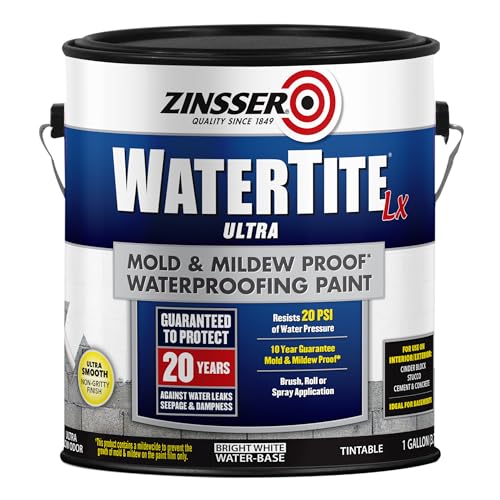
Zinsser WaterTite Mold & Mildew Waterproofing Paint
What We Like
- 15-year waterproof guarantee
- 10-year mold & mildew-proof film guarantee
- Ultra low odor for indoor use
Trade-offs
- Only for dry wall application before painting
- Requires dry wall surface before application
Backed by a 15-year waterproof guarantee and a separate 10-year mold and mildew-proof film guarantee, it offers long-term protection for interior masonry surfaces. The ultra low odor and soap-and-water cleanup make it practical for finished basements or occupied spaces where strong fumes would be a problem.
The trade-off is that this is a latex-based paint, so it requires a dry surface for proper adhesion and may not bond well over previously painted or sealed walls without preparation. For a basement with persistent dampness and mold concerns, the extra upfront prep is worth the added security.
Product photos
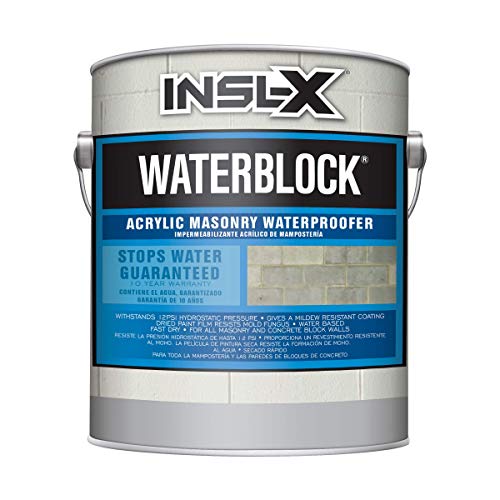
INSL-X WaterBlock Acrylic Masonry Waterproofer
What We Like
- Withstands up to 12 psi hydrostatic pressure
- High alkali resistance up to pH-13
- Water-based for low odor and easy cleanup
- Works on interior and exterior masonry
Trade-offs
- Only for vertical walls, not horizontal surfaces
- Requires surface and air temps between 50-90°F
- Needs careful surface prep per label instructions
Withstands up to 12 psi of hydrostatic pressure, so this coating actually blocks water from seeping through basement walls or foundations, not just hides stains. The high alkali resistance up to pH-13 means it holds up against the alkaline salts that often form on fresh concrete or masonry. That combination makes it a real waterproofing solution for vertical interior and exterior walls, cinder blocks, stucco, and brick.
This water-based coating is formulated specifically for vertical interior and exterior concrete walls, including basement walls, foundations, and retaining walls. Application requires surface and air temperatures between 50°F and 90°F, so planning around weather is essential. Reviewers note that sticking to that range ensures proper curing and adhesion. The paint withstands up to 12 psi of hydrostatic pressure, which means it can handle moderate groundwater pressure against basement walls. It also offers high alkali resistance up to pH-13, making it suitable for fresh concrete or surfaces prone to alkaline salts.
Product photos
Zinsser WaterTite General Purpose Waterproofing Paint
What We Like
- Resists up to 10 PSI water pressure
- Applies to wet or dry masonry
- Low odor water-based formula
- Covers 250 sq. ft. per gallon
Trade-offs
- Bright white finish shows dirt on high-traffic walls
- Not suitable for vertical exterior walls above grade
The 10 PSI water pressure resistance means this paint stops moderate seepage through basement walls. It applies to wet or dry masonry with a brush or roller, and the low-odor water-based formula keeps the job tolerable even in tight spaces with limited ventilation. The bright white, non-gritty finish is a standard feature for general waterproofing use.
The 10 PSI water pressure resistance means this paint stops the kind of dampness you’d see in a typical basement, but it’s not designed for walls with active leaks or high groundwater pressure. For buyers who need mold resistance, the Zinsser WaterTite Mold & Mildew version includes antimicrobial protection, though this general-purpose formula keeps things simple. The low-odor, water-based formula cleans up with soap and water, making it a practical choice for routine waterproofing jobs.
Product photos
UGL Drylok Extreme Concrete & Masonry Waterproofer

What We Like
- Withstands up to 15 psi hydrostatic pressure
- Penetrates deep into masonry pores
- Bright white finish can be tinted
- Applies with brush, roller, or sprayer
Trade-offs
- Intended for concrete and masonry only
- Heavy at 24 pounds per case
Up to 15 psi of hydrostatic pressure means this sealer can hold back as much as a 33-foot wall of water, so it handles the worst basement seepage and wet retaining walls without flinching. The formula penetrates deep into masonry pores, creating a barrier that resists water from both above and below grade. For anyone with persistent dampness or actively wet concrete, that pressure tolerance gives real peace of mind. The bright white finish brightens dark basement walls and can be tinted to match your space.
Weight is a factor here: at 24 pounds for the two-gallon case, it’s heavier to haul than a single gallon of most waterproofing paints. That’s partly because you’re getting two gallons, but it’s still a factor if you’re carrying it down basement stairs alone. For the buyer who needs maximum water-stopping power in a deep-penetrating coating, this is the one to reach for.
Rust-Oleum Watertite Latex Waterproofing Paint

What We Like
- Ultra low odor formula
- Easy soap and water cleanup
- Smooth, bright white finish
Trade-offs
- Quart size covers less area than gallon options
- Not suitable for large walls or whole basements
A water-pressure rating up to 20 pounds, enough to handle typical basement moisture, comes in a quart-sized container that fits on a shelf next to your touch-up supplies. This is the pick for anyone fixing a small crack, painting a single wall, or patching a spot where moisture sneaks through. The latex formula goes on smooth and bright white with a brush or roller, and cleanup is just soap and water. Low odor means you don’t have to air out the room for days.
Size is the main consideration: a quart covers less area than the gallon jugs from KILZ Basement and Masonry Waterproofing Paint. If you’re coating an entire foundation or a big basement wall, you’ll need multiple quarts, and that adds up in cost and trips to the store. Stick with this Rust-Oleum for small jobs where convenience and a fast, clean finish matter more than bulk coverage.
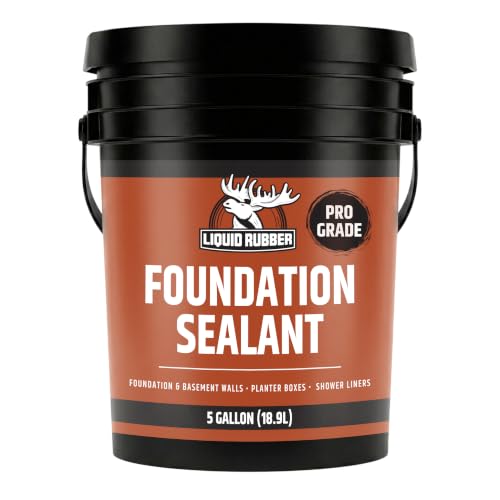
Liquid Rubber Foundation Sealant
What We Like
- 900% elongation for crack-bridging flexibility
- Zero VOCs for safe indoor use
- Adheres to concrete, masonry, wood, metal
- No mixing required, apply by brush/roller/sprayer
Trade-offs
- Not suitable for walking surfaces due to tackiness
- Requires 2-4 coats depending on location
- Exterior coverage is only 20 sq ft/gal
With 900% elongation, this sealant stretches to nine times its original length. That gives it the flexibility to bridge foundation cracks that shift with seasonal ground movement. It goes on brown and dries black, forming a thick rubber membrane that sticks to concrete, masonry, wood, and metal. The zero-VOC formula makes it safe to use inside a basement without gassing out the room, and since no mixing is required, you can pour it straight into a roller tray or sprayer and get to work. This is the pick for anyone who needs a waterproof barrier that moves with the substrate rather than cracking apart under stress.
Coverage and finish are the trade-offs here. At 20 square feet per gallon for exterior use (and 50 for interior), you will go through material faster than you would with a standard waterproofing paint. And because the cured coating stays tacky, you cannot use it on a floor or any surface you plan to walk on. If your priority is a flexible membrane that seals active leaks and bridges moving cracks, this Liquid Rubber sealant delivers where rigid paints cannot.
Ames Block & Wall Liquid Rubber Waterproofer

What We Like
- Fills cracks up to ⅛ inch
- 1800% elongation resists re-cracking
- Low odor, non-toxic formula
- Works on concrete, cinder block, ICF, metal, wood
Trade-offs
- Two coats recommended for full coverage
- Heavy 47-pound pail requires careful handling
- White finish only, no color options
Ames Block & Wall Liquid Rubber can stretch up to 1800% without breaking, which means it handles the small shifts and settling that cause other waterproofers to crack. That extreme flexibility pairs with its ability to fill cracks up to ⅛ inch thick, so you can seal existing fissures in a single product rather than patching first. It goes on thick with a roller, brush, or sprayer, and the low-odor, non-toxic formula makes it comfortable to use in enclosed basements or crawl spaces. For anyone dealing with a foundation wall that has visible cracks, this is the coating that actually bridges them rather than just painting over the surface.
A 5-gallon pail of this waterproofer weighs 47 pounds, so you will want a dolly or a helper for basement stairs. The manufacturer recommends two coats, and at 1 gallon per 100 square feet per coat, a single pail covers 250 square feet total. That coverage matters if you are planning a large foundation wall.
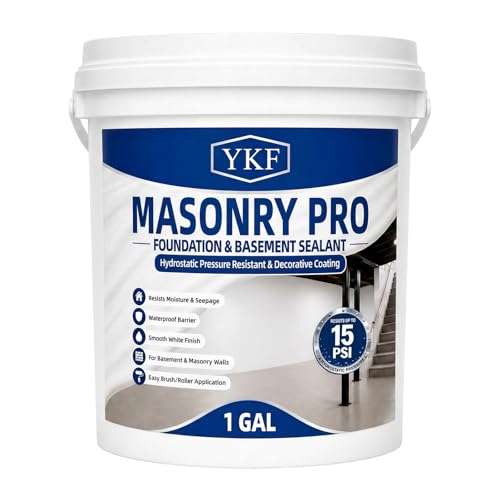
YKF Masonry Pro Foundation Waterproofing Sealer
What We Like
- 15 PSI hydrostatic pressure resistance
- Water-based polyurethane high-solids formula
- Smooth white finish conceals minor imperfections
- Works on dry or slightly damp surfaces
Trade-offs
- Covers only 100 sq ft per gallon
- Requires surface prep and leak repair first
- Needs at least 2 hours before handling
A 15 PSI hydrostatic pressure resistance rating puts this coating in a league of its own for below-grade walls. That number means it can withstand the kind of groundwater pressure that pushes through foundation cracks and porous concrete, making it the go-to option for basements with active seepage or high water tables. The water-based polyurethane formula bonds to dry or even slightly damp masonry, so you don’t have to wait for bone-dry conditions before applying. It also dries to a clean white finish that hides minor surface flaws, which helps if your walls look rough after years of moisture exposure.
Coverage is the main drawback: at roughly 100 square feet per gallon, you will need more material than some alternatives to finish a typical basement wall. Compare that to Zinsser WaterTite General Purpose, which covers 250 square feet per gallon, and the YKF Masonry Pro requires more product for the same area. Still, for a wall that needs strong hydrostatic pressure resistance, the extra coats are worth the effort. This is a product built for demanding below-grade conditions, not a quick fix for cosmetic dampness.
Product photos
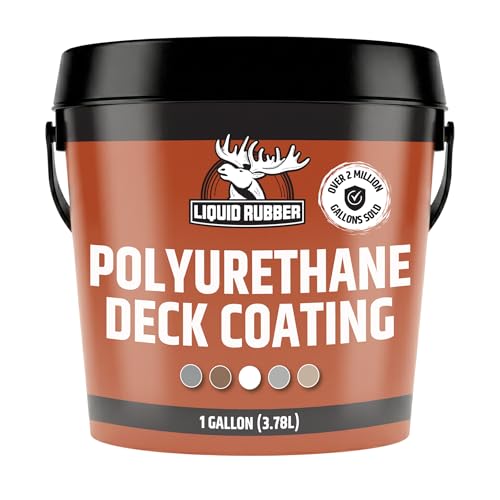
Liquid Rubber Polyurethane Deck Coating
What We Like
- Flexible polyurethane membrane resists peeling and cracking
- Smooth finish is barefoot-friendly for patios
- Works on wood, concrete, plywood, and metal
Trade-offs
- Low coverage: 50 sq ft per gallon requires multiple gallons
- Full waterproof cure takes 72 hours
- Prep required: cleaner, primer, and crack repair needed
A single gallon covers only 50 square feet, so a typical 200-square-foot deck needs about 4 gallons to build the recommended membrane thickness. That thickness is exactly what gives this coating its edge over ordinary deck paint. The polyurethane forms a hard yet flexible layer that bonds to wood, concrete, plywood, and metal, resisting peeling, cracking, and UV damage for years rather than seasons. It suits homeowners who want a long-term waterproof deck or patio coating and are willing to invest in the extra material and preparation for a result that won’t need annual repainting.
Preparation and patience are the main demands here. Proper adhesion demands cleaning with Liquid Rubber Deck & Patio Cleaner, applying primer, reinforcing seams with Geo-Textile, and repairing cracks before coating. Then you wait 72 hours for the full waterproof cure. Compared to Zinsser WaterTite General Purpose, which can handle 10 PSI water pressure on basement walls with a simpler application, this Liquid Rubber coating is better suited for horizontal outdoor surfaces like decks and patios where foot traffic and barefoot comfort matter. It’s a premium choice for the right project, not a quick fix.
How We Evaluated Waterproofing Paints For Concrete
We built this guide by analyzing manufacturer technical data sheets, reviewing expert recommendations from masonry and waterproofing professionals, and identifying consistent patterns in owner feedback across a wide range of concrete waterproofing projects. Our goal was to find paints that deliver real moisture protection, not just a cosmetic coat.
The three criteria that mattered most were hydrostatic pressure resistance (measured in PSI), surface compatibility (vertical walls vs. Horizontal floors, interior vs. Exterior), and formula durability (alkali resistance, flexibility, and mold resistance). A paint that can’t handle the water pressure behind your wall or the alkalinity of fresh concrete won’t last.
We also noted each product’s honest limitations, such as cure times, surface prep requirements, and whether it’s suitable for active leaks or only for dry walls.
What To Look For In Waterproofing Paints For Concrete
Choosing the right waterproofing paint starts with understanding your specific moisture problem and surface conditions. Here are the critical factors to evaluate before you buy.
Key buying criteria: Match the paint’s hydrostatic pressure rating to your wall’s moisture level. Choose a formula that resists alkali if your concrete is new or unsealed. Confirm the paint is designed for your surface (vertical wall vs. Horizontal floor) and application temperature range.
Hydrostatic Pressure Resistance (PSI)
Hydrostatic pressure is the force of water pushing against your wall from the outside. Paints are rated by how many PSI they can withstand. A rating of 10-12 PSI is suitable for damp basement walls with moderate seepage, while 15 PSI is better for below-grade walls with heavier water pressure. For walls with no visible moisture, a lower PSI rating may be sufficient, but it’s always safer to choose a higher rating than you think you need.
Surface Compatibility and Prep
Not all waterproofing paints work on all surfaces. Some are formulated for vertical masonry walls only, while others can be applied to horizontal floors or decks. Most require the surface to be dry, clean, and free of existing coatings, though a few products can be applied to damp masonry. Cracks wider than ⅛ inch typically need to be filled with hydraulic cement before painting. Always check the label for surface temperature requirements, many acrylic and water-based formulas need temperatures between 50-90°F for proper curing.
Formula Type and Durability
Water-based acrylic and latex formulas are low-odor and easy to clean up, making them ideal for indoor use. Solvent-based options may offer better adhesion on certain surfaces but have stronger fumes. For high-moisture areas like basements, look for alkali-resistant finishes that won’t break down when in contact with fresh concrete (pH up to 13). For surfaces prone to cracking, a flexible membrane with high elongation (900% or more) can bridge small cracks and prevent re-cracking. For mold-prone areas, choose a paint with a mold and mildew-resistant film guarantee.
- Check the hydrostatic pressure rating (PSI) against your wall’s moisture level.
- Confirm the paint is labeled for your surface type (vertical wall, horizontal floor, interior, exterior).
- Fill any cracks wider than ⅛ inch with hydraulic cement before painting.
- Verify the application temperature range matches your workspace conditions.
- Choose a low-odor, water-based formula for indoor basement projects.
Rule of thumb: If your wall feels damp but has no active leaks, a 10 PSI paint is a safe starting point. If you see water beading or trickling, go with a 15 PSI-rated product and prepare to repair the source of the leak first.
Waterproofing Paints For Concrete Compared
The table below compares the key specs and best-use scenarios for each of our top waterproofing paints, making it easy to see which one matches your concrete project.
| Product | Use Location | Water Pressure Resistance | Surfaces |
|---|---|---|---|
| KILZ Basement and Masonry Waterproofing Paint | Interior & exterior | Up to 12 PSI | Concrete, brick, cinder block, stucco |
| Zinsser WaterTite Mold & Mildew Waterproofing Paint | Interior | up to 20 lbs. of water pressure | N/A |
| INSL-X WaterBlock Acrylic Masonry Waterproofer | interior/exterior | Up to 12 psi | Concrete, cinder block, stucco, brick |
| Zinsser WaterTite General Purpose Waterproofing Paint | N/A | up to 10 PSI | N/A |
| UGL Drylok Extreme Concrete & Masonry Waterproofer | Above & below grade | N/A | N/A |
| Rust-Oleum Watertite Latex Waterproofing Paint | Interior | up to 20-Pound of water pressure | N/A |
| Liquid Rubber Foundation Sealant | Indoor/Outdoor | N/A | N/A |
| Ames Block & Wall Liquid Rubber Waterproofer | N/A | N/A | N/A |
| YKF Masonry Pro Foundation Waterproofing Sealer | Indoor And Outdoor | 15 PSI | N/A |
| Liquid Rubber Polyurethane Deck Coating | N/A | N/A | Wood, concrete, plywood, metal |
Frequently Asked Questions
What is the best waterproofing paint for concrete basement walls?
The KILZ Basement and Masonry Waterproofing Paint is our top pick for interior and exterior basement walls. It blocks up to 12 PSI of water pressure, has a low-odor formula, and resists alkali damage from high-moisture concrete.
Can I apply waterproofing paint over damp concrete?
Some products, like the Zinsser WaterTite General Purpose Waterproofing Paint, are designed to be applied to damp masonry. However, most waterproofing paints require a dry surface for proper adhesion and curing. Always check the manufacturer’s instructions for your specific product.
How much hydrostatic pressure can waterproofing paint withstand?
Ratings vary by product. The UGL Drylok Extreme resists up to 15 PSI, while the KILZ Basement and Masonry paint handles up to 12 PSI. For walls with heavy water pressure, a higher PSI rating is recommended.
What is the difference between waterproofing paint and regular paint?
Waterproofing paint is formulated with rubber or acrylic resins that create a watertight membrane on the surface, blocking liquid water and moisture vapor. Regular paint does not provide this barrier and will peel or bubble when exposed to moisture.
How long does waterproofing paint take to cure before it can get wet?
Cure times vary widely. The KILZ Basement and Masonry paint takes 7-14 days before the surface is washable. The Liquid Rubber Polyurethane Deck Coating requires a full 72 hours for a waterproof cure. Always follow the label’s specific cure time instructions.
The Bottom Line
For most homeowners sealing interior or exterior concrete walls, the KILZ Basement and Masonry Waterproofing Paint delivers the best balance of pressure resistance, low odor, and alkali protection. It’s a reliable choice for basements, foundations, and retaining walls that aren’t actively leaking.
If your project involves active mold or mildew, the Zinsser WaterTite Mold & Mildew Waterproofing Paint offers a dedicated film guarantee. For high-alkali surfaces or vertical masonry walls, the INSL-X WaterBlock Acrylic Masonry Waterproofer is a strong alternative. Budget-conscious DIYers with small projects should consider the Rust-Oleum Watertite Latex Waterproofing Paint in quart size.
The single most important factor in any waterproofing job is proper surface preparation. No paint can fix a wall that hasn’t been cleaned, dried, and repaired according to the manufacturer’s instructions. Take the time to prep right, and your waterproofing paint will do its job for years.
