
6 Best Epoxy Pool Paint in 2026
This post contains affiliate links. As an Amazon Associate, we earn from qualifying purchases.
The In The Swim Super Poxy Shield Epoxy Pool Paint is the best overall because it delivers a stain-resistant, ceramic-like finish that can last up to eight years per coat. For those who prefer a trusted American brand, the RAMUC EP Epoxy Pool Paint offers a similarly durable, high-gloss finish. Pool owners restoring aging surfaces should consider the RAMUC Hi-Build Epoxy Pool Paint for its ability to fill minor imperfections.
Choosing the right epoxy pool paint is a major decision. The wrong paint can peel, fade, or require frequent recoating, turning a weekend project into a recurring headache. What matters most is finding a formula that bonds strongly to your specific pool surface and provides the longevity you expect from an epoxy coating.
This guide is based on a careful review of manufacturer specifications, technical data, and patterns in owner feedback. We focused on the key factors that determine a successful paint job: durability, adhesion, finish quality, and ease of application. Our goal is to help you pick the paint that fits your pool’s surface and your comfort level with the application process.
Top 6 Epoxy Pool Paints in the Market

Certain content that appears on this site comes from Amazon. This content is provided "as is" and is subject to change or removal at any time.
The Best Epoxy Pool Paints, Reviewed
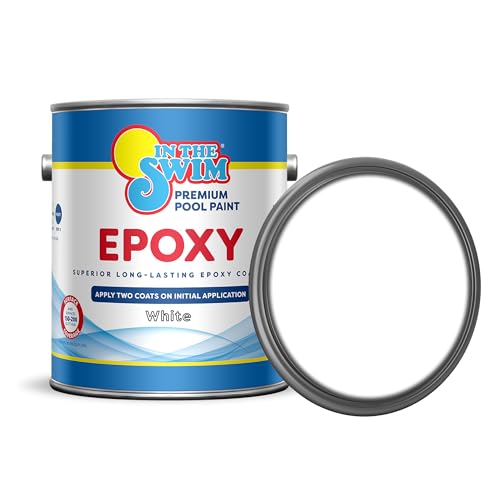
In The Swim Super Poxy Shield Epoxy Pool Paint
What We Like
- Lasts up to 8 years per coat
- Stain-resistant ceramic-like finish
- Works on plaster, gunite, fiberglass
- High-gloss appearance
Trade-offs
- Requires mixing epoxy base with catalyst
- Must add sand for slip resistance on steps
A single application lasting up to eight years with routine maintenance means you can repaint your pool and then not worry about it for a long time. That longevity comes from its epoxy-base formula, which cures into a hard, stain-resistant, high-gloss finish described as ceramic-like. It covers 150 to 200 square feet per gallon and bonds well to plaster, gunite, and fiberglass surfaces, making it a versatile fit for most in-ground pools. For anyone who wants a durable, beautiful coating without the need for frequent re-coats, this is a strong option.
This is a two-part epoxy system, so you have to mix the base with the included catalyst before painting, that adds a step and means you have a limited working time once combined. The high-gloss finish is slippery when wet, so the manufacturer recommends sprinkling sand onto the wet coating in shallow areas and on steps for traction. Compared to a satin-finish option like the WOOLSEY Premium Epoxy Pool Paint, this one has a glossier finish, but you need to account for that extra safety prep.
Product photos
RAMUC EP Epoxy Pool Paint
What We Like
- Durable two-part epoxy system
- Smooth high-gloss finish
- Excellent adhesion to pool surfaces
Trade-offs
- Two-part system requires mixing before use
- Only available in 1.25 gal kit size
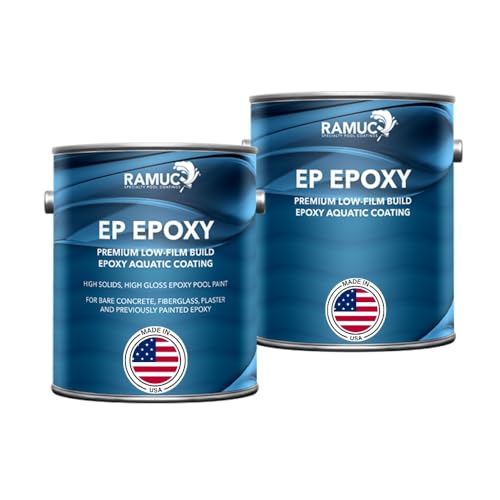
This two-part epoxy creates a hard, non-porous coating designed to withstand pool environments, heavy use, and prolonged water exposure, so your pool surface stays protected. RAMUC EP is made by a U.S. manufacturer with a history going back to 1933, and that contractor-grade pedigree means it’s used by homeowners and professionals who want a finish that holds up. With 7 color choices and a high-gloss look, it’s a strong fit if you value long-term durability and a clean, attractive surface.
The biggest thing to know is that this coating uses a two-part mix. Part A and Part B need to be combined before you can roll, brush, or spray it on. That’s an extra step compared to a single-can product like WOOLSEY Premium Epoxy Pool Paint, but if you’re comfortable with epoxy, it’s straightforward. Owners report that the effort pays off with a hard, non-porous coating that stands up to heavy use and prolonged water exposure for multiple years.
Product photos
WOOLSEY Premium Epoxy Pool Paint

What We Like
- High solids satin epoxy coating
- Builds up to 8 mils thick per coat
- Smooths rough surfaces
- Up to 8 years service life
Trade-offs
- Two coats required for full service life
- Satin finish lacks high-gloss shine
Up to 8 mils per coat means this paint fills pitted plaster and rough concrete in a single pass, saving time on surface prep. The high-solids satin epoxy cures into a hard, stain-resistant shell that holds up against pool chemicals and abrasion. For anyone resurfacing an older pool with texture issues, that build capacity is the decisive advantage. It works on concrete, plaster, and fiberglass, so it fits most pool types without needing a separate primer.
If you want that high-shine look, RAMUC EP Epoxy Pool Paint delivers a high-gloss finish in a two-part formula. But for a durable coating that hides rough surfaces and provides excellent protection against stains, chemicals, and abrasions, Woolsey is a practical choice.
RAMUC Hi-Build Epoxy Pool Paint
What We Like
- Fills minor surface imperfections
- Self-leveling for smooth application
- High-build formula reduces coats needed
Trade-offs
- Two-part mixing required before use
- Not suitable for those wanting a one-part paint
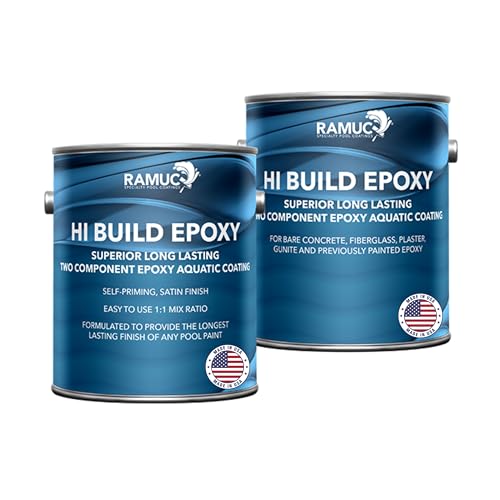
With a high-build formula that covers 125-150 square feet per gallon, this RAMUC kit is engineered to fill minor cracks and surface imperfections in aging concrete and plaster pools. The thick, self-leveling consistency helps reduce the number of coats needed for complete coverage, which can save time and material when you are trying to revive a tired pool interior. It is a restoration-focused coating built for homeowners who want to bring an old pool back to life rather than just maintain a newer one.
The catch is that this paint requires mixing resin and hardener before application, adding a step compared to single-part paints like the WOOLSEY Premium Epoxy Pool Paint. For anyone whose main goal is covering age-related wear with a durable, water-resistant layer, this high-build approach delivers exactly what the job demands.
Product photos
Kop-Coat Ramuc HB31 Epoxy Pool Paint
What We Like
- Designed for concrete and fiberglass
- High solids content
- Smooths rough surfaces
- Satin finish
Trade-offs
- Only available in Ocean Blue
- Two-part kit requires mixing before use
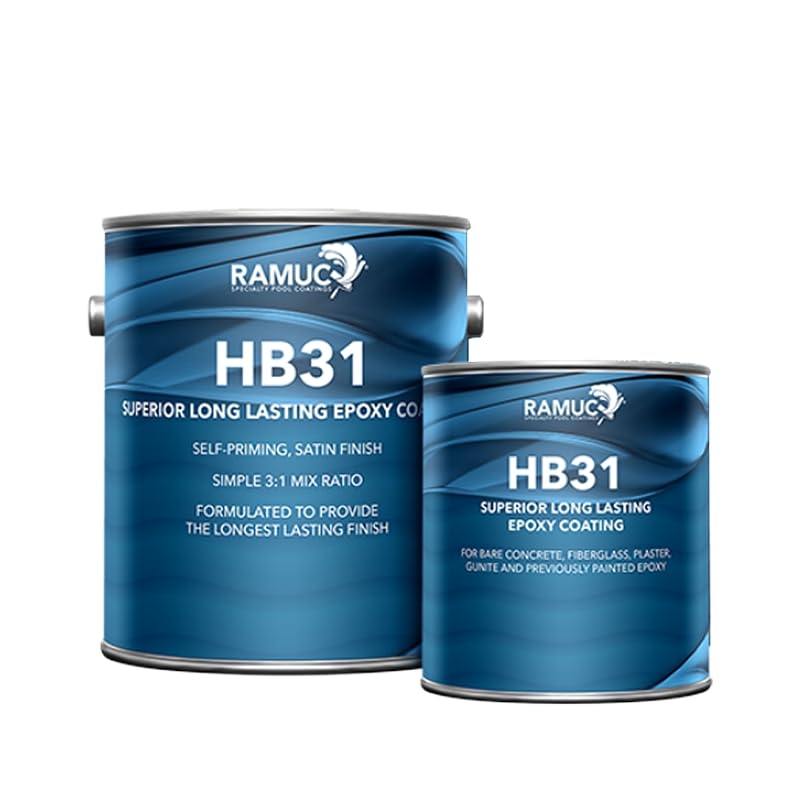
This epoxy paint comes in a single gallon and is formulated for concrete or fiberglass pools, spas, and slides. Its high solids content means less solvent and more actual paint per coat, which helps fill and smooth rough surfaces rather than just sitting on top. The satin finish gives a soft sheen that hides minor imperfections better than a high-gloss would, making it a practical pick for older pools with worn plaster or textured fiberglass.
The trade-off is color choice: you get Ocean Blue, and that’s it. If you want a white, tan, or darker blue, you’d need to look at something like the RAMUC EP, which offers seven colors. The single-gallon size also means you may need multiple kits for a full-sized pool, so measure your surface area before ordering. For a concrete or fiberglass pool that needs a durable, smoothing coat and you’re happy with a classic blue, this kit gets the job done without fuss.
Kelley Technical Coatings 260 Epoxy Pool Paint
What We Like
- All-in-one can, no separate catalyst mixing
- Covers up to 250 square feet per gallon
- Base and catalyst in one can
Trade-offs
- Results not guaranteed by manufacturer
- Requires a separate epoxy topcoat to complete the job
Compared to a one-coat epoxy like In The Swim Super Poxy Shield, this adds an extra step and an extra purchase. The rebranding to Smart Seal by Olympic also means the label you receive might look different from the listing, though the formula stays the same.
How We Evaluated Epoxy Pool Paints
To build this guide, we researched the leading epoxy pool paint brands, analyzing their published specifications and technical data sheets. We looked closely at the chemical composition, solids content, and recommended surface preparation for each product. We also studied patterns in owner reviews to understand real-world performance, noting common praise and frequent complaints about application and longevity.
The most important criteria we used were durability, adhesion, and finish type. Durability, measured in years of service life promised by the manufacturer, was our top priority because repainting a pool is a labor-intensive job. Adhesion to common pool surfaces like plaster, gunite, concrete, and fiberglass was critical, as poor adhesion leads to peeling. Finish type, high-gloss versus satin, determines the final look and how the paint hides surface imperfections.
A research-led evaluation has limits. We did not apply these paints to test pools, so we cannot speak to firsthand application experience. Our recommendations are based on what the manufacturers claim and what owners consistently report, not on controlled testing. We recommend checking your pool surface condition and consulting with a local pool professional before making a final decision.
What To Look For In Epoxy Pool Paints
Choosing the right epoxy pool paint starts with understanding your pool’s surface and your performance expectations. The key is matching the paint’s properties to your specific needs.
Look for a two-part epoxy system for maximum durability. Check the solids content, higher solids mean thicker coats and better hiding power. Choose a finish (gloss or satin) based on whether you want a reflective look or need to hide surface flaws. Confirm the paint is designed for your pool’s material.
Surface Compatibility
Epoxy pool paints are formulated for specific surfaces. Most two-part epoxies work on plaster, gunite, and concrete, but compatibility with fiberglass or metal pools varies. The In The Swim Super Poxy Shield, for example, works on plaster, gunite, and fiberglass, while the Kop-Coat Ramuc HB31 is specifically designed for concrete and fiberglass. Applying the wrong paint type to a surface can lead to poor adhesion and early failure.
Finish Type and Appearance
The finish you choose affects both the look and the practicality of your pool. High-gloss finishes, like those from the In The Swim Super Poxy Shield and RAMUC EP, create a reflective, ceramic-like appearance that resists stains and makes the water sparkle. Satin finishes, such as the WOOLSEY Premium Epoxy Pool Paint, are better at hiding rough or pitted surfaces because they have less sheen and a thicker build. If your pool has visible surface imperfections, a satin finish is the more forgiving choice.
Application and Mixing
Most high-durability epoxy pool paints are two-part systems that require mixing a base with a catalyst before application. This is a non-negotiable step for the top-performing paints in our guide. The Kelley Technical Coatings 260 is a notable exception, offering a water-based, all-in-one can that requires no mixing. However, it is designed as a transition coat and requires a separate epoxy topcoat, making it a less common choice for a full paint job.
- Check if the paint requires a separate primer or an additional topcoat.
- Confirm the paint’s coverage rate (e.g., square feet per gallon) to estimate how many kits you need.
- For two-part systems, ensure you have a clean mixing container and a drill with a mixing paddle.
- If your pool has steps, verify whether the manufacturer recommends adding sand for slip resistance.
Always follow the manufacturer’s surface preparation instructions exactly, proper etching and cleaning are more important than the paint itself.
Epoxy Pool Paints Compared
The table below compares the six epoxy pool paints side-by-side, highlighting their key features, best uses, and important trade-offs to help you make a quick decision.
| Product | Finish | Coverage | Surface Types |
|---|---|---|---|
| In The Swim Super Poxy Shield Epoxy Pool Paint | High-gloss | 150-200 sq ft/gal | Plaster, gunite, fiberglass |
| RAMUC EP Epoxy Pool Paint | High-gloss | N/A | Concrete, gunite, fiberglass |
| WOOLSEY Premium Epoxy Pool Paint | Satin | N/A | Concrete, plaster, fiberglass |
| RAMUC Hi-Build Epoxy Pool Paint | Satin | 125-150 sq ft/gal | Concrete & plaster |
| Kop-Coat Ramuc HB31 Epoxy Pool Paint | Satin | N/A | Concrete or fiberglass |
| Kelley Technical Coatings 260 Epoxy Pool Paint | N/A | 225-250 sq ft/gal | N/A |
Frequently Asked Questions
How long does epoxy pool paint last?
A high-quality two-part epoxy pool paint can last between five and eight years when applied correctly to a properly prepared surface. The In The Swim Super Poxy Shield and WOOLSEY Premium Epoxy Pool Paint both claim a service life of up to eight years per coat. Surface condition, water chemistry, and climate all affect actual longevity.
What is the difference between epoxy and acrylic pool paint?
Epoxy pool paint is a two-part chemical-cured coating that forms a hard, durable, and glossy finish. It bonds strongly to pool surfaces and lasts significantly longer than acrylic paint, which is a water-based, one-part coating that is easier to apply but less durable. Epoxy is the better choice for a long-term finish, while acrylic is more suitable for quick refreshes or cooler climates.
Can I apply epoxy pool paint over old paint?
Yes, but the old paint must be in good condition and properly prepared. If the existing paint is peeling, chipping, or has multiple layers, it should be stripped or sanded down to the original pool surface. Applying epoxy over failing paint will result in poor adhesion and premature peeling. A thorough acid wash or pressure wash is typically required.
Do I need to mix two parts for epoxy pool paint?
Most high-performance epoxy pool paints are two-part systems that require mixing a resin base with a catalyst hardener before application. This includes the In The Swim Super Poxy Shield, RAMUC EP, and WOOLSEY Premium Epoxy Pool Paint. The Kelley Technical Coatings 260 is a rare water-based option that comes in a single can, but it is not a standalone paint and requires an epoxy topcoat.
How many coats of epoxy pool paint do I need?
Most two-part epoxy pool paints require two coats for full service life and even coverage. The WOOLSEY Premium Epoxy Pool Paint explicitly states that two coats are needed to achieve its eight-year durability. Some high-build formulas, like the RAMUC Hi-Build, may reduce the number of coats needed by filling surface imperfections in fewer applications. Always follow the manufacturer’s specific recommendations.
The Bottom Line
For pool owners who want the longest-lasting, glossiest finish and are comfortable mixing a two-part epoxy, the In The Swim Super Poxy Shield is the clear choice. Its ceramic-like finish and eight-year durability make it the best overall for those who prioritize longevity and a high-gloss appearance.
If you prefer a trusted American brand with a proven track record, the RAMUC EP Epoxy Pool Paint delivers similar durability and a smooth high-gloss finish. For pool owners with rough or pitted surfaces, the WOOLSEY Premium Epoxy Pool Paint‘s high-build satin formula is the better option, as it fills imperfections and provides a durable, long-lasting coat without the reflective shine.
The single most important factor in any epoxy pool paint job is surface preparation. No paint, no matter how good, will perform well on a poorly prepared surface. Take the time to clean, etch, and dry your pool properly, and you will get the most out of whatever paint you choose.
