
10 Best Primers For Laminate Cabinets in 2026
This post contains affiliate links. As an Amazon Associate, we earn from qualifying purchases.
The INSL-X Stix Acrylic Waterborne Bonding Primer is our best overall pick because it bonds reliably to glossy laminate and tile, cures in temperatures as low as 35°F, and cleans up with soap and water. For smaller projects, the Rust-Oleum Universal Bonding Primer Spray offers fast drying in a convenient can. Those on a budget should check out the KILZ Adhesion Primer for its fast drying time and strong bond to Formica and vinyl.
Painting laminate cabinets is a cost-effective way to refresh a kitchen, but the slick, non-porous surface is notoriously difficult for standard primers to grip. The wrong primer leads to peeling, chipping, and wasted effort. Success depends on choosing a primer specifically formulated to bond with glossy, manufactured surfaces.
This guide is based on a thorough review of manufacturer specifications, expert recommendations, and patterns in owner feedback. We evaluated each primer for its adhesion to laminate, application method, dry time, and overall value for the project size. Our goal is to help you choose the right primer for your specific cabinets and skill level.
Top 10 Primers For Laminate Cabinets in the Market
Certain content that appears on this site comes from Amazon. This content is provided "as is" and is subject to change or removal at any time.
The Best Primers For Laminate Cabinets, Reviewed
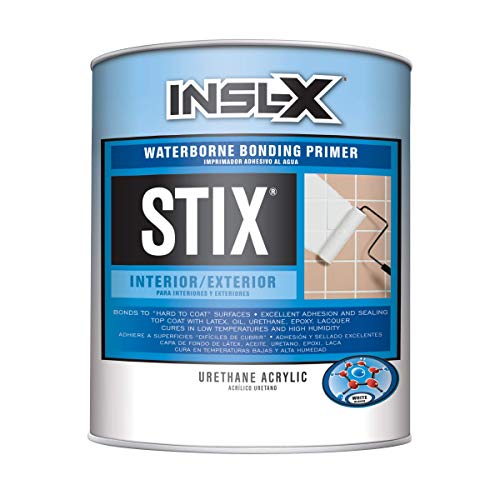
INSL-X Stix Acrylic Waterborne Bonding Primer
What We Like
- Bonds to glossy tile and laminate
- Cures in temperatures as low as 35°F
- Low VOC with soap-and-water cleanup
- Excellent enamel holdout for smooth topcoats
Trade-offs
- 1-quart size covers only 75-100 sq ft
- Requires careful surface prep per label instructions
A 75-to-100-square-foot-per-quart coverage means a single quart can handle most kitchen cabinet fronts without forcing you to buy a gallon you won’t finish. The acrylic-urethane formula is built for the very surfaces that make laminate cabinets tricky: glossy tile, Formica, and pre-coated siding all get the same tenacious grip. That low-VOC claim and soap-and-water cleanup make it a comfortable choice for indoor work where ventilation is limited and you don’t want to scrub brushes with solvent.
The primer cures in temperatures as low as 35°F, so you can keep working even in a chilly garage or unheated basement. It covers 75-100 square feet per quart, which is enough for a small room or a handful of tricky surfaces like glossy tile or PVC. Just don’t skip the label’s prep steps, cleaning and sanding as directed makes the adhesion reliable on those hard-to-coat materials.
Rust-Oleum Universal Bonding Primer Spray

What We Like
- Bonds to laminate and difficult surfaces
- Dries to touch in 30 minutes
- Low odor, low VOC water-based formula
- Works in humid or moist environments
Trade-offs
- Covers only 10-12 sq ft per can
- Spray application limited to small projects
A 30-minute dry-to-touch time means you can move through a small project in a single afternoon without waiting overnight between coats. This spray primer bonds directly to laminate and other slick surfaces like PVC and glazed brick, as stated on the label. For a quick refresh on a small item, the low-odor water-based formula is designed for interior or exterior use. It also offers excellent wet adhesion in moist or humid environments, which matters if you’re painting in a damp basement or a humid garage.
The biggest trade-off is coverage: each can covers up to 10-12 square feet, so painting a full set of kitchen cabinets will take several cans. A quart of INSL-X Stix Acrylic Waterborne Bonding Primer covers a larger area, but you’ll need a brush or roller and more time between coats. For a single piece of furniture or a small laminate accent wall, the spray format that dries to the touch in 30 minutes saves setup and cleanup time.
Stone Coat Countertops Bonding Primer & Sealer

What We Like
- Strong adhesion on slick surfaces
- Low-odor, low-VOC for indoor use
- Easy water-based cleanup
- Works on laminate, tile, granite, quartz
Trade-offs
- Requires two coats and sanding between layers
- 1 quart size limits large projects
A 30-40 square foot coverage with two coats means this primer can handle a modest kitchen island or a set of cabinet doors without running out mid-project. The water-based, low-odor formula makes it comfortable to use indoors, and its strong adhesion on slick surfaces like laminate and tile gives it a clear edge for refinishing dated surfaces. This primer is designed to create a durable bond on slick surfaces, ensuring a strong foundation for epoxy applications.
Applying two coats and sanding lightly between them is required for a strong bond on slick surfaces like laminate, tile, and granite. The quart size covers up to 30-40 square feet with those two coats, so you have enough material for a typical countertop. Cleanup is straightforward with warm soapy water because it’s water-based, which saves time after the work is done. For anyone willing to do the sanding step, this primer creates a durable foundation for epoxy.
Country Chic Paint Clear Bonding Primer

What We Like
- Green Wise Certified, ultra low VOC
- No harsh chemical additives
- Dries clear for distressing
- Almost no odor
Trade-offs
- Pint size covers less area than quarts
- Not intended for exterior or textured surfaces
Green Wise Certification and ultra low VOC levels mean this primer has almost no odor, so it’s a good choice for indoor painting projects. The water-based formula contains no phthalates, formaldehyde, or heavy metals, and it dries clear, which lets the original surface show through if you distress it later.
The trade-off is coverage: a 16-ounce pint is smaller than a quart, so you may need to buy more for a full set of cabinets. For a small project where low odor is a priority, this is a thoughtful choice.
Product photos
Stone Coat Cabinet & Furniture Primer

What We Like
- Bonds to laminate, melamine, and Thermofoil
- Self-levels to reduce brush marks
- Blocks wood tannins and old paint colors
- Low odor for indoor use
Trade-offs
- 1-3 hour dry time per coat slows multi-coat jobs
- Not designed for exterior use
This water-based acrylic primer bonds to wood, laminate, melamine, and Thermofoil, giving you a strong foundation for cabinet or furniture paint. It dries in one to three hours per coat and self-levels to reduce brush marks, which helps DIYers achieve a smooth finish. The formula also blocks wood tannins and old paint colors so your topcoat color reads true. With low odor and low VOCs, it is safe for indoor projects. Apply it with a brush, roller, or sprayer for flexibility.
Product photos
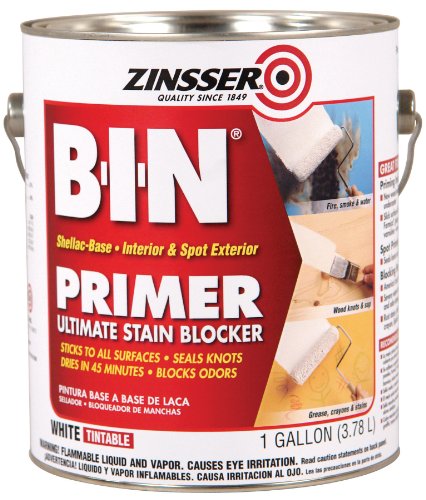
Rust-Oleum 901 Primers
What We Like
- Shellac base seals tough stains
- Blocks pet, smoke, and musty odors
- Adheres without sanding
Trade-offs
- Shellac base has strong solvent fumes
- Heavier than water-based primers at 10.6 lb
- Spot exterior use only, not full outdoor
A shellac-base primer that seals the toughest stains and odors without any sanding means you can block pet, smoke, or musty smells in one coat on laminate cabinets. It sticks to every surface right out of the can, so you skip the tedious sanding step and get straight to priming.
Shellac-based primers come with strong solvent fumes, so you need good ventilation or a respirator while working. It is also heavier than some other primers, which can be a factor if you are carrying it around a job site. But for blocking stubborn stains and odors, the Rust-Oleum 901 delivers a sealed foundation that many primers cannot match.
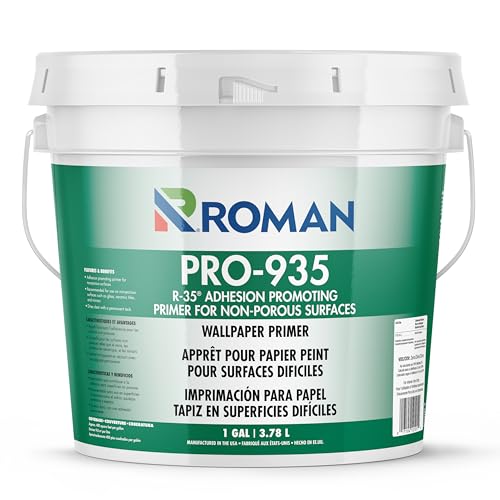
ROMAN PRO-935 R-35 Adhesion Promoting Primer
What We Like
- Zero VOC, low-odor formula
- Dries clear with strong residual tack
- Covers 450 sq ft per gallon
- Water-based, cleans up with water
Trade-offs
- Heavy tack can attract dust during application
A 450-square-foot coverage per gallon means one can of this primer can handle a full kitchen’s worth of laminate cabinets without needing a second gallon. It’s a clear acrylic formula that dries with a heavy tack, creating the mechanical “tooth” needed for paint to grip slick, non-porous surfaces like sealed laminate. That makes it ideal for anyone refinishing glossy cabinet doors where standard primers would peel or bead up. The zero-VOC, water-based composition also keeps the workspace breathable and cleanup simple, just soap and water.
The clear acrylic primer dries with a heavy tack that creates the “tooth” needed to hang even heavy-weight wallcoverings on slick surfaces like glass, tile, and mirrors. That tackiness is great for adhesion, but it can pull in airborne dust if you don’t keep the work area spotless. Unlike the INSL-X Stix Acrylic Waterborne Bonding Primer, which comes in a quart-sized white formula, this one is a clear, high-tack option built specifically for wallcovering jobs rather than as a color-blocking base coat.
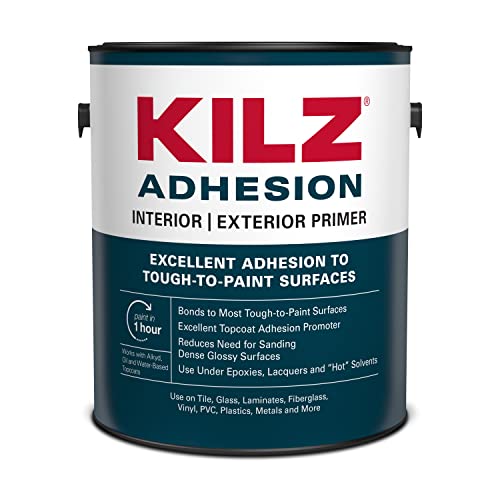
KILZ Adhesion Primer
What We Like
- Covers Formica, vinyl, tile, and metals
- Dries in 30 minutes, recoat in 1 hour
- Bonds to Kynar, PVC, Formica, vinyl, glass, tile, and metals
Trade-offs
- At 12.2 lb per gallon, heavy for one-hand application
- Requires 24-hour dry time before hot-solvent topcoats
A bonding primer that sticks to Formica, glossy finishes, and even tile without sanding, that’s the decisive feature here. For laminate cabinets, which are notoriously slick and prone to peeling paint, the advanced styrenated acrylic formula creates a sound anchor for your topcoat. It dries to the touch in 30 minutes and lets you recoat in an hour, so a weekend cabinet refresh stays on schedule. The formula can reduce or potentially eliminate the need for sanding dense, glossy surfaces, saving you prep time.
At 12.2 pounds for a gallon, the can itself is hefty, so you’ll want a steady hand or a smaller quart if you’re working overhead. And if you plan to topcoat with epoxy, lacquer, or xylene-based paints, you must wait a full 24 hours and test compatibility first. For most laminate cabinet jobs with water- or oil-based paint, though, the KILZ Adhesion Primer delivers the grip you need.
Product photos
INSL-X Aqua Lock Plus Stain Blocking Primer

What We Like
- Quick drying, recoat in 1 hour
- Low VOC for indoor use
- Works with latex or oil topcoats
Trade-offs
- Requires temperature above 50°F to apply
- Not ideal for outdoor use in cold climates
A 30-minute tack-free time and 1-hour recoat window mean you can finish a laminate cabinet project in a single afternoon without long waits between coats. This water-based 100% acrylic primer sealer delivers excellent adhesion to a variety of interior and exterior surfaces. It provides superior sealing and coverage, making it a strong base coat for both latex and oil-based finish paints. Coverage runs 75 to 100 square feet per quart, so a single quart handles a small dresser or a few cabinet doors. The low-VOC formula keeps the workspace more comfortable during application.
Product photos
Zinsser Bulls Eye 1-2-3 All Surface Spray Primer

What We Like
- Dries in 30 minutes for fast recoating
- Bonds to glossy surfaces without sanding
- Excellent stain blocking resistance
- Works with oil or latex topcoats
Trade-offs
- Covers only 12 sq ft per can
A 30-minute dry time means you can prime a cabinet door and be ready for paint before you finish the next one. That speed, paired with a water-based formula that sticks to glossy laminate without sanding, makes this spray a natural fit for anyone who wants to refresh kitchen cabinets in a weekend. It blocks stains well and accepts both oil and latex topcoats, so you aren’t locked into one paint system. For small projects or touch-ups, the convenience is hard to beat.
At just 12 square feet per can, you will need multiple cans for a full set of cabinets. The INSL-X Stix Acrylic Waterborne Bonding Primer, sold by the quart, stretches further and comes in white, which saves time and topcoat. But for a single drawer front or a quick repair, this spray is the fastest way to get a bonded, paintable surface.
How We Evaluated Primers For Laminate Cabinets
Our research began with a deep dive into product specifications from leading paint and primer manufacturers. We focused on identifying primers explicitly formulated to bond with non-porous surfaces like laminate, melamine, and Thermofoil, as these require specific adhesion promoters that standard wall primers lack.
We then established four key criteria for evaluation: adhesion strength to glossy surfaces, application method (brush-on vs. Spray), dry and recoat times, and the practicality of the container size for a typical kitchen cabinet project. Owner feedback patterns were cross-referenced to confirm which products consistently delivered on their bonding promises and which had common complaints about peeling or poor coverage.
A research-led evaluation has limits: we do not have a lab to test adhesion under controlled conditions. Our recommendations are drawn from technical data sheets, expert round-ups, and the collective experience of many DIYers. This approach helps you narrow the field, but surface preparation and proper application are ultimately the deciding factors for any primer’s performance.
What To Look For In Primers For Laminate Cabinets
Choosing the right primer for laminate cabinets means looking past the price tag and focusing on the chemical bond. The surface is slick and non-absorbent, so a standard primer will simply sit on top and eventually peel.
Focus on primers labeled as “bonding” or “adhesion” primers that are specifically formulated for non-porous surfaces like laminate, tile, and glossy finishes.
Adhesion Technology
The most critical factor is the primer’s ability to mechanically or chemically bond to a slick surface. Look for primers that list laminate, melamine, Thermofoil, or Formica directly on the label. Water-based acrylic bonding primers, like our top pick from INSL-X, use advanced resin technology to grip glossy surfaces without extensive sanding. Shellac-based primers, like the Rust-Oleum 901, provide excellent adhesion through a different chemical mechanism and are also superior stain blockers.
Application Method and Project Size
Consider the scale of your project. For a full set of kitchen cabinets, a quart or gallon of brush-on primer is far more economical and practical than spray cans. Spray primers, like the Rust-Oleum Universal Bonding Primer Spray, are excellent for small projects like a single cabinet door or a piece of furniture, offering a smooth, even coat without brush marks. However, they cover a very small area (10-12 sq ft per can), making them costly for large jobs.
Dry Time and Recoat Window
Your project timeline is directly affected by the primer’s drying and recoat times. Some primers, like the KILZ Adhesion Primer, dry to the touch in 30 minutes and can be recoated in an hour, allowing for same-day progress. Others, like the Stone Coat Cabinet & Furniture Primer, have a longer 1-3 hour dry time per coat, which can stretch a project over a weekend.
If you are working in a cold garage or basement, check the minimum application temperature; the INSL-X Stix works down to 35°F, while others require temperatures above 50°F.
- Check the label for “bonding primer” or “adhesion promoter” specifically for laminate.
- Match the container size (pint, quart, gallon, or spray can) to the total square footage of your cabinet doors and frames.
- Verify the dry and recoat times fit your schedule, and note the minimum application temperature for your workspace.
- For heavy stains or odors, consider a shellac-based primer for maximum blocking power.
A general rule: if the primer label does not include “bonding” or “laminate,” it is probably not the right product for the job.
Primers For Laminate Cabinets Compared
The table below compares the key specifications and best-use scenarios for each of our top-rated primers for laminate cabinets, making it easy to find the right one for your project.
| Product | Coverage | Base Type | VOC Level |
|---|---|---|---|
| INSL-X Stix Acrylic Waterborne Bonding Primer | 75-100 sq ft/qt | Waterborne | Low |
| Rust-Oleum Universal Bonding Primer Spray | 10-12 sq ft per can | Water-based | Low VOC |
| Stone Coat Countertops Bonding Primer & Sealer | 30-40 sqft (2 coats) | Water-based | Low-VOC |
| Country Chic Paint Clear Bonding Primer | N/A | Water-based | Ultra low |
| Stone Coat Cabinet & Furniture Primer | N/A | Water-based acrylic | Low VOC |
| Rust-Oleum 901 Primers | N/A | Shellac-base | N/A |
| ROMAN PRO-935 R-35 Adhesion Promoting Primer | 450 sq ft per gallon | Water-based | Zero VOC |
| KILZ Adhesion Primer | 75-100 sq ft per quart | Water-based | N/A |
| INSL-X Aqua Lock Plus Stain Blocking Primer | 75-100 sq ft per quart | Water-based acrylic | Low VOC |
| Zinsser Bulls Eye 1-2-3 All Surface Spray Primer | Up to 12 sq ft | Water-based | N/A |
Frequently Asked Questions
Do I need to sand laminate cabinets before priming?
While some bonding primers are formulated to adhere without sanding, light sanding with fine-grit sandpaper is always recommended to improve mechanical adhesion and ensure the best possible result. At a minimum, thoroughly clean the surface with a degreaser to remove any grease or grime.
Can I use a regular wall primer on laminate cabinets?
No. Standard wall primers are not designed to bond to non-porous, glossy surfaces like laminate. Using one will almost certainly result in peeling and chipping. You must use a primer specifically labeled as a bonding primer or adhesion primer for slick surfaces.
What is the best primer for laminate cabinets without sanding?
Several bonding primers, including the Rust-Oleum Universal Bonding Primer Spray and the Zinsser Bulls Eye 1-2-3 All Surface Spray Primer, are advertised to bond to glossy surfaces without sanding. However, for the most durable finish, proper cleaning and degreasing are still essential steps.
How many coats of primer do I need on laminate cabinets?
One coat of a high-quality bonding primer is often sufficient for adhesion, but a second coat can provide a more uniform base and better hide the old color or grain of the laminate. Products like the Stone Coat Countertops Bonding Primer & Sealer specifically recommend two coats with sanding between them.
What kind of paint should I use over a laminate primer?
You can use either a water-based latex paint or an oil-based paint over most bonding primers, but it is crucial to check the primer’s label for compatibility. A high-quality cabinet or trim enamel with a satin or semi-gloss sheen is recommended for a durable, washable finish on cabinets.
The Bottom Line
For most DIYers painting laminate cabinets, the INSL-X Stix Acrylic Waterborne Bonding Primer is the best overall choice. Its ability to bond in cold weather, low VOCs, and excellent enamel holdout make it a reliable foundation for a professional-looking finish. It is the primer we recommend for anyone taking on a full kitchen cabinet makeover.
For small projects or when you want the convenience of a spray can, the Rust-Oleum Universal Bonding Primer Spray is the best spray primer for speed and ease of use on a few doors. Budget-conscious shoppers will find the KILZ Adhesion Primer offers fast drying and strong adhesion at a lower cost, though its heavier weight is worth noting.
The single most important factor for success with laminate cabinets is surface preparation. No primer, no matter how advanced, can overcome a greasy or dirty surface. Clean thoroughly, follow the label instructions, and choose a bonding primer made for the job.
