
6 Best Epoxy Pool Paint For Inground Pools in 2026
This post contains affiliate links. As an Amazon Associate, we earn from qualifying purchases.
The best epoxy pool paint for inground pools is Doheny’s Pro-Grade Epoxy Pool Paint. Its self-priming formula and high-build coating up to 8 mils dry deliver excellent stain and chemical resistance without a separate primer step. For owners who want the longest-lasting finish, In The Swim Epoxy Pool Paint offers a high-gloss ceramic-like coating that can hold up for years. RAMUC EP remains the most trusted American brand for those who prioritize brand heritage.
Choosing an epoxy pool paint for an inground pool means balancing surface preparation effort, desired sheen, and the condition of your existing pool surface. A satin finish covers minor flaws better, while a high-gloss finish gives a more polished look but shows every imperfection. You also need to decide between self-priming formulas and two-part epoxies that require mixing.
This guide is based on a thorough review of manufacturer specifications, surface compatibility charts, coverage data, and patterns in owner feedback across dozens of products. We focused on the criteria that matter most for inground pools: adhesion, durability, coverage thickness, and ease of application. Our six picks cover the key trade-offs so you can match the right paint to your pool’s specific needs.
Top 6 Epoxy Pool Paints For Inground Pools in the Market
Certain content that appears on this site comes from Amazon. This content is provided "as is" and is subject to change or removal at any time.
The Best Epoxy Pool Paints For Inground Pools, Reviewed
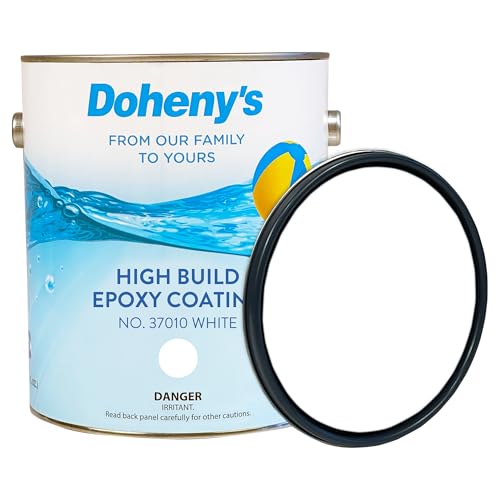
Doheny's Pro-Grade Epoxy Pool Paint
What We Like
- Self-priming formula saves time
- High-build coating up to 8 mils dry
- Excellent stain, chemical, abrasion resistance
- Versatile surface compatibility
Trade-offs
- Satin finish, not high-gloss like some alternatives
- Requires precise 3:1 mixing ratio
A self-priming formula that builds up to 8 mils dry per coat means you can get thick, protective coverage in fewer steps, which is exactly what you want when painting an inground pool. This epoxy paint works on concrete, fiberglass, plaster, gunite, and previously painted epoxy surfaces, so it suits a wide range of pool types without needing a separate primer. The satin finish gives a smooth, attractive look that resists stains, chemicals, and abrasion, making it a reliable choice for long-term durability.
The trade-off is that the satin finish won’t deliver the high-gloss look you get from a product like RAMUC EP Epoxy Pool Paint, which is described as having a high-gloss protective finish. If you prefer a shiny, reflective surface, this might feel a bit subdued. Also, the 3:1 mix ratio requires careful measuring for consistent results, so take your time during preparation. For most pool owners who want a tough, self-priming coating that simplifies the job and holds up well, this is the one to reach for.
Product photos
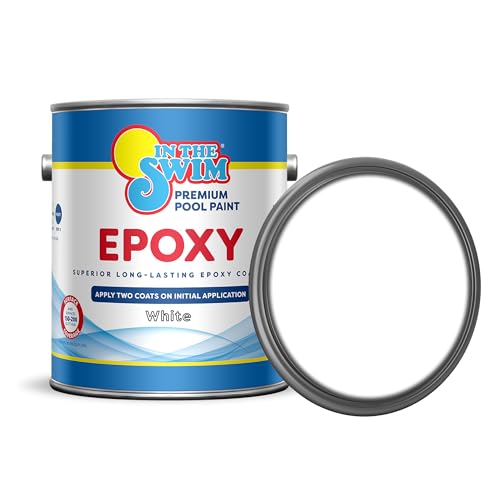
In The Swim Epoxy Pool Paint
What We Like
- Lasts up to 8 years with routine maintenance
- High-gloss, stain-resistant ceramic-like finish
- Works on plaster, gunite, and fiberglass pools
- Includes catalyst for easy on-site mixing
Trade-offs
- Requires mixing epoxy base with catalyst before use
- Needs sand sprinkled on wet coating for slip resistance
An eight-year lifespan from a single coat is rare among epoxy pool paints, and that’s exactly what In The Swim Epoxy Pool Paint promises with routine maintenance. The high-gloss, ceramic-like finish resists stains and keeps your pool looking fresh season after season, making it a strong choice for anyone who values longevity over frequent repainting. It bonds to plaster, gunite, and fiberglass surfaces, so most inground pools can benefit from its durable shield.
You’ll need to mix the epoxy base with the included catalyst before brushing or rolling, which adds a step compared to single-part paints. And if your pool has shallow areas or steps, you’ll want to sprinkle sand onto the wet coating for traction, an extra detail that requires planning. Compared to Doheny’s Pro-Grade Epoxy, which is self-priming, In The Swim assumes your surface is ready to coat, so prep work matters more here. For someone who wants a finish that outlasts the competition, this paint delivers.
Product photos
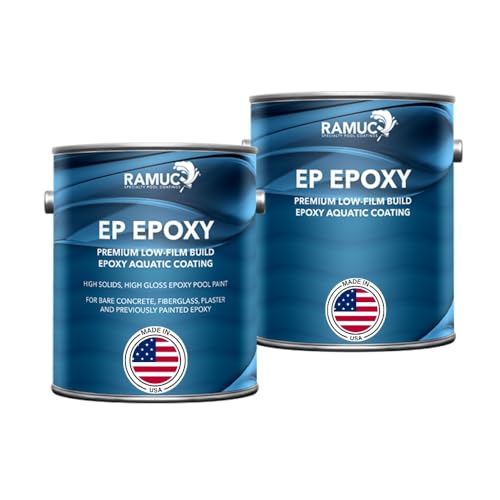
RAMUC EP Epoxy Pool Paint
What We Like
- Trusted American brand since 1933
- Two-part epoxy for durable, non-porous coating
- Excellent adhesion to concrete, gunite, fiberglass
- Smooth high-gloss finish retains color
Trade-offs
- Requires thorough surface preparation for multi-year durability
- Two-part mixing adds steps vs. single-part paints
RAMUC EP Epoxy Pool Paint comes from a manufacturer that has been making pool coatings since 1933, a track record that speaks to consistent quality. Its two-part epoxy system forms a hard, non-porous barrier designed to stand up to heavy use and constant water exposure, making it a reliable choice for homeowners who want a finish that lasts. The high-gloss surface keeps its color over time, and the paint bonds well with concrete, gunite, and fiberglass pools, so it works for both new applications and recoating old epoxy surfaces.
This paint demands careful surface prep to deliver its multi-year durability, so skipping that step will cut its lifespan short. It also requires mixing Part A and Part B before application, which adds a little more effort than a single-part epoxy like Doheny’s Pro-Grade. But for someone who values a proven brand and is willing to follow the prep and mixing steps, RAMUC EP offers the kind of long-term performance that makes the extra care worthwhile.
Product photos
WOOLSEY Premium Epoxy Pool Paint

What We Like
- Builds up to 8 mils per coat
- Smooths rough surfaces for even finish
- Up to 8 years of service life
- Hard, durable satin epoxy coating
Trade-offs
- Two-coat system requires more time to apply
- Satin finish lacks the mirror-like shine of high-gloss options
A single coat of Woolsey Premium Epoxy Pool Paint builds up to 8 mils thick, which is unusually high for a pool paint. That means you can smooth over rough plaster or concrete surfaces in fewer passes, creating a uniform satin finish without fighting every bump and pit. For someone who wants a durable, low-maintenance surface that resists stains and chemicals, this high-build formula delivers a hard protective layer that can last up to eight years with two coats. It works on concrete, plaster, and fiberglass pools, making it a versatile option for most inground installations.
The thickest build in the guide, up to 8 mils per coat, means this paint can smooth over rough plaster or concrete in a single pass, saving you from endless sanding or priming. Two coats deliver up to 8 years of service life, so you are looking at a full weekend of work but then nearly a decade without repainting. The satin finish hides imperfections better than a high-gloss would, though if you want a mirror-like shine, RAMUC EP Epoxy Pool Paint offers a high-gloss protective finish instead.
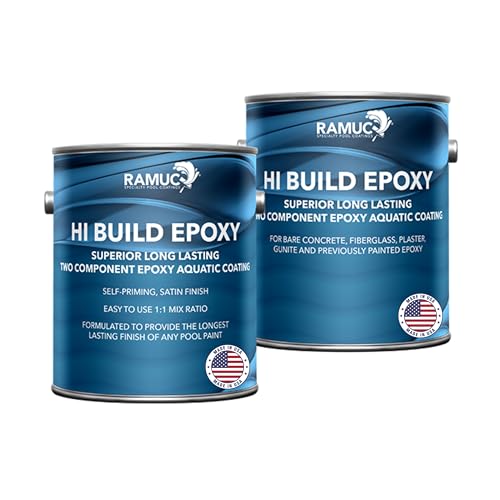
RAMUC Hi-Build Epoxy Pool Paint
What We Like
- High-build formula fills minor imperfections
- Self-leveling for smooth application
- Restores aging pool interiors
- Trusted for residential and commercial pools
Trade-offs
- Two-part epoxy requires mixing before use
- Limited to concrete and plaster surfaces
Covering 125-150 square feet per gallon, this high-build two-part epoxy is designed to fill minor surface cracks and imperfections in one go. That thickness means you can bring a tired, chipped concrete or plaster pool back to a smooth, even surface without endless coats. The satin finish gives a soft sheen that hides flaws better than high-gloss, making it a practical pick for older pools that need structural renewal rather than just a cosmetic refresh.
Mixing a two-part epoxy adds prep time and requires careful measuring, not a weekend warrior’s grab-and-go paint. Compared to other epoxy pool paints like Doheny’s Pro-Grade, RAMUC is a two-part system that requires mixing before application. If your pool’s surface is already smooth and you want a quick refresh, a simpler coating might save you effort. But for restoring a weathered interior, this kit’s build and coverage are worth the extra steps.
Product photos
Pond Armor Clear Epoxy Coating
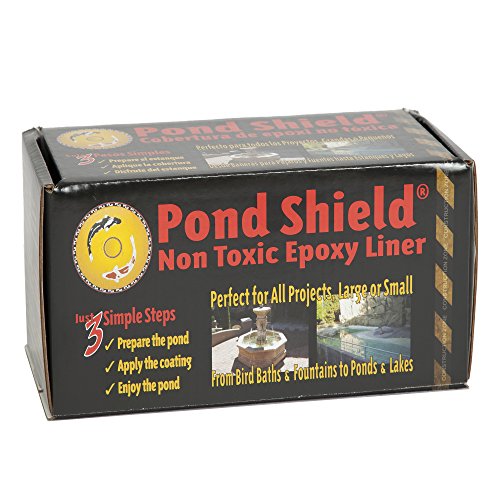
What We Like
- Clear finish preserves natural surface look
- Self-priming formula saves time
- Works on concrete, wood, metal, stone
- Suitable for submerged pool use
Trade-offs
- 1.5-quart kit covers small areas only
- Clear coating shows every surface imperfection
- Requires thorough surface preparation before application
A 1.5-quart kit means this clear epoxy is built for smaller inground pool touch-ups, accent features, or full coverage on a compact water feature rather than a standard-sized swimming pool. Its self-priming formula bonds directly to prepared concrete, stone, wood, or metal, which cuts out an extra step. That makes it a practical option for DIYers who want a transparent waterproof barrier that won’t hide the original surface texture or color. The clear finish works especially well when you want to preserve a decorative aggregate or a natural stone look while still locking out moisture.
The Pond Armor Clear Epoxy Coating kit holds 1.5 quarts, so it’s sized for small ponds, fountains, or water features, not a full inground pool. For larger projects, a pigmented epoxy like Doheny’s Pro-Grade High Build Self-Priming Epoxy Pool Paint is marketed for pool-scale use. But this clear formula works where you want the substrate’s look to show through, like a stone waterfall or a concrete pond.
Product photos
How We Evaluated Epoxy Pool Paints For Inground Pools
Our evaluation combines manufacturer technical data, surface preparation requirements, and patterns reported by pool owners and renovation professionals. We examined dry film thickness, chemical resistance claims, and published service life estimates for each product. Because epoxy pool paint performance depends heavily on proper surface preparation and correct mixing, we prioritized products with clear instructions and forgiving application windows.
The four criteria that mattered most were adhesion to common inground pool surfaces (concrete, gunite, plaster, fiberglass), dry film build (mils per coat), stain and chemical resistance, and the number of coats required. A higher-build paint can smooth rough surfaces and hide minor imperfections, while a thinner coating may require more careful surface prep. We also weighed whether a product is self-priming, since that saves a full day of labor.
Research-led evaluation has limits: we cannot replicate the exact conditions of your pool’s age, prior coatings, or water chemistry. Owner results vary with temperature, humidity, and mixing precision. Use this guide as a starting point, and always follow the manufacturer’s surface preparation steps for best results.
What To Look For In Epoxy Pool Paints For Inground Pools
Choosing the right epoxy pool paint means matching the product to your pool’s surface material, its current condition, and your desired finish. Here are the key factors to consider.
Look for an epoxy pool paint with a dry film build of at least 8 mils per coat for proper coverage. You also want a surface-compatible formula for concrete, gunite, plaster, or fiberglass, and a finish sheen that matches your preference for hiding imperfections or achieving a glossy look.
Dry Film Build and Coverage
The thickness of the coating once dry, measured in mils (thousandths of an inch), determines how well the paint hides surface flaws and resists wear. High-build epoxies can fill minor pitting and rough texture in older pools. Standard-build paints require more careful surface prep and may need two coats to reach comparable protection. Check the manufacturer’s coverage rate in square feet per gallon to estimate how many kits you need for your pool’s surface area.
Surface Compatibility and Primer
Not all epoxies adhere equally to every pool surface. Most two-part epoxies bond well to concrete, gunite, and plaster. Fiberglass pools need a paint specifically rated for that material, as some epoxies can delaminate. Self-priming formulas eliminate the need for a separate primer coat, saving time and reducing the risk of adhesion failure. If you are painting over an existing coating, verify compatibility with the old paint type.
Finish Sheen: Satin vs. High-Gloss
Satin finishes hide surface imperfections better and are more forgiving of minor prep mistakes. High-gloss finishes provide a mirror-like, ceramic appearance that resists staining and is easier to clean, but they show every bump, scratch, and patch. If your pool surface is smooth and well-prepped, high-gloss delivers a premium look. If you are restoring an aging or rough pool, satin is the practical choice.
- Measure your pool’s surface area (length × width × depth factor) to calculate how many gallons you need.
- Check the required mixing ratio, some epoxies use a precise 3:1 base-to-catalyst ratio that demands accurate measurement.
- Confirm the paint is rated for submerged use and resists pool chemicals like chlorine and algaecides.
- Look for a product that includes a catalyst or hardener in the kit, not sold separately.
- Read the recoat window: some epoxies require recoating within a day, others allow up to several days.
A good rule of thumb: budget one gallon of epoxy pool paint per 150 square feet of pool surface, and always buy a little extra for touch-ups and future repairs.
Epoxy Pool Paints For Inground Pools Compared
The table below compares the six epoxy pool paints across the features that matter most for inground pool application, so you can see at a glance which product fits your surface and finish preferences.
| Product | Surface Compatibility | Finish Type | Coverage |
|---|---|---|---|
| Doheny's Pro-Grade Epoxy Pool Paint | Concrete, fiberglass, plaster, gunite, epoxy | Satin | N/A |
| In The Swim Epoxy Pool Paint | Plaster, gunite, fiberglass | High-gloss | 150-200 sq ft per gallon |
| RAMUC EP Epoxy Pool Paint | Concrete, Gunite, Fiberglass | High-Gloss | N/A |
| WOOLSEY Premium Epoxy Pool Paint | Concrete, plaster, fiberglass | Satin | N/A |
| RAMUC Hi-Build Epoxy Pool Paint | Concrete & plaster | Satin | 125-150 sq ft per gallon |
| Pond Armor Clear Epoxy Coating | Concrete, wood, metal, stone | Clear | N/A |
Frequently Asked Questions
How long does epoxy pool paint last on an inground pool?
With proper surface preparation and routine maintenance, a quality two-part epoxy pool paint can last 5 to 8 years. Factors like water chemistry, sun exposure, and the condition of the underlying surface affect longevity. Some high-build formulas are rated for up to 8 years of service life when applied correctly.
Can I apply epoxy pool paint over old paint?
Yes, but only if the existing coating is well-adhered, clean, and compatible with epoxy. If the old paint is peeling, chalking, or a different type (such as rubber-based paint), it must be removed completely. A simple adhesion test, applying tape and pulling it off, can tell you if the old coating is sound enough to paint over.
Do I need to drain the pool before applying epoxy pool paint?
Yes, the pool must be completely empty and dry before any epoxy pool paint application. The surface needs to be clean, etched (for concrete or plaster), and free of moisture. Most manufacturers recommend waiting at least a day after draining to ensure the surface is fully dry, especially in humid conditions.
What is the difference between one-part and two-part epoxy pool paint?
Two-part epoxy requires mixing a resin base with a catalyst or hardener just before application. This chemical reaction creates a harder, more durable, and longer-lasting coating. One-part epoxies are ready to use out of the can but do not achieve the same level of chemical resistance or service life. For inground pools, two-part epoxies are the standard for lasting results.
How many coats of epoxy pool paint should I apply?
Most high-build epoxy pool paints require only one coat to reach 8 mils dry film thickness, which is sufficient for most inground pools. Some standard-build epoxies recommend two coats for full protection. Always follow the specific product’s instructions, as applying a second coat outside the recoat window can cause adhesion failure.
The Bottom Line
For most inground pool owners, Doheny’s Pro-Grade Epoxy Pool Paint is the best overall choice. Its self-priming formula and high-build coating simplify the application process while delivering excellent stain and chemical resistance in a satin finish. It works on concrete, gunite, plaster, and fiberglass surfaces, making it the most versatile pick in this guide.
If your priority is a high-gloss finish that lasts, In The Swim Epoxy Pool Paint offers a ceramic-like coating rated for up to 8 years. For those restoring an aging concrete or plaster pool with visible imperfections, RAMUC Hi-Build Epoxy Pool Paint fills minor flaws and self-levels for a smooth result. Budget-conscious buyers should consider WOOLSEY Premium Epoxy for its thick, durable satin coating on rough surfaces.
The single most important factor in getting a long-lasting epoxy pool paint job is thorough surface preparation, cleaning, etching, and drying the pool surface before you open the first can. No paint, regardless of quality, can overcome poor prep.
