
10 Best Single Stage Paint For Cars in 2026
This post contains affiliate links. As an Amazon Associate, we earn from qualifying purchases.
For a straightforward, durable finish without the complexity of a basecoat and clearcoat system, the Restoration Shop Jet Black Acrylic Enamel Auto Paint is the best overall single stage paint for cars. It comes as a complete gallon kit with hardener and strainers, simplifying the spray process for DIYers. Other strong contenders include the Eastwood Rat Rod Satin Black for a consistent matte look and the High Teck 1400 Series Fleet White for commercial fleet work.
The challenge with single stage paint is balancing gloss, durability, and ease of application. A poorly chosen product can lead to orange peel, fading, or a finish that requires immediate clearcoat. This guide focuses on paints that deliver a self-leveling, color-and-gloss-in-one coat that holds up to the elements.
This guide is research-based, drawing from manufacturer specifications, expert round-ups, and patterns in owner feedback to identify the ten best single stage paints for different needs and budgets. We help you match the right paint to your project, whether it’s a full restoration, a chassis coating, or a quick touch-up.
Top 10 Single Stage Paints For Cars in the Market

Certain content that appears on this site comes from Amazon. This content is provided "as is" and is subject to change or removal at any time.
The Best Single Stage Paints For Cars, Reviewed
Restoration Shop Jet Black Acrylic Enamel Auto Paint
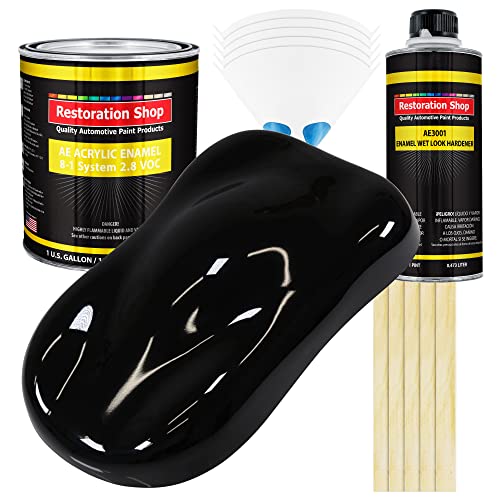
What We Like
- Complete gallon kit includes hardener and strainers
- Fast-drying topcoat for efficient workflow
- High gloss, durable finish resists chips and UV
- No reducer needed; 8:1 mix ratio simplifies spraying
Trade-offs
- Optional reducer sold separately for thinning if needed
- Not designed for satin or matte finishes
A complete gallon kit that yields over a gallon of sprayable material means you can coat an entire car or large equipment without hunting for extra components. The 8:1 mix ratio with no required reducer simplifies the process for anyone who wants a durable, high-gloss finish that resists chemicals, chipping, and UV fading. This makes it a strong fit for DIY restorers and small shops who value convenience and consistent results from a single package.
The kit is designed for easy spraying and fast drying, which suits many projects. For those who need a different paint system, the Restoration Shop Chassis Black Acrylic Urethane kit is available as an alternative. This acrylic enamel kit delivers a high-gloss finish and is a practical choice for most single-stage jobs on classic cars or fleet vehicles.
Product photos
Eastwood Rat Rod Satin Black Single Stage Paint
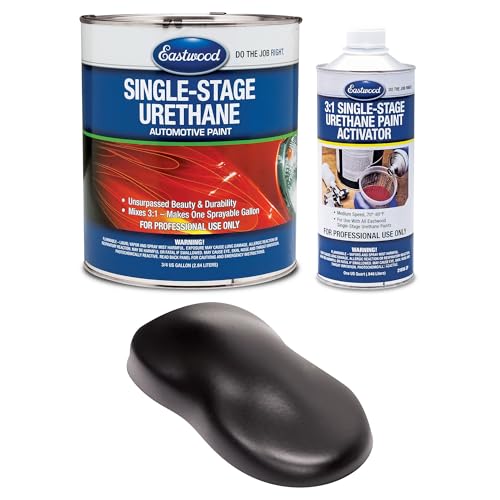
What We Like
- Durable catalyzed urethane formula
- UV, chemical, and chip resistant
- Consistent satin finish at 20-25% gloss
- Made in the USA
Trade-offs
- Satin finish won't suit high-gloss restorations
- Coverage limited to 125 sq ft per gallon
A 20-25 percent gloss level gives this paint a true satin look that resists UV rays, chemicals, and chips thanks to its catalyzed 2-component urethane formula. That makes it a durable option for rat rods, hot rods, or any car where you want a flat, understated finish that holds up to road debris and sunlight. The 3:1 mix ratio with activator is straightforward, and the 125-square-foot coverage per gallon is reasonable for a single-stage system.
The gloss level lands around 20-25 percent, so you get a deliberate low-luster satin finish rather than a mirror shine. You do have to buy the activator separately and mix it 3:1, which adds a step compared to a ready-to-spray enamel like Restoration Shop Jet Black Acrylic Enamel (which mixes 8:1 and gives a high-gloss sheen). The payoff is a catalyzed 2-component urethane that resists UV rays, chemicals, and chips. That durability a simple enamel can’t match.
Product photos
Eastwood Boulevard Black Single Stage Paint

What We Like
- Catalyzed 2-component urethane for durability
- UV, chemical and chip resistant
- Covers 125 square feet per gallon
- Classic black color for any vehicle
Trade-offs
- Requires activator for mixing, not ready-to-spray
- Single gallon yields only 125 sq ft coverage
A catalyzed 2-component urethane formulation means this paint lays down a finish that holds up against UV rays, chemicals, and road chips far better than standard enamel. The classic black color suits just about any vehicle, from a vintage truck to a modern project car, and the 125-square-foot coverage per gallon is enough for a full body paint job on most cars. If you want a deep, durable black that stays glossy without needing a clear coat, this is the straightforward choice.
The trade-off is that this is a two-part urethane that must be mixed 3:1 with activator before use, which adds a step compared to a single-stage enamel. The Restoration Shop Jet Black Acrylic Enamel uses an 8:1 mix ratio and is a different chemistry, so the choice depends on whether you prioritize the urethane’s durability or the enamel’s simpler mixing. For someone who values a tough, classic black finish and does not mind mixing, this delivers exactly what the specs promise.
Product photos
Restoration Shop Chassis Black Acrylic Urethane Paint
What We Like
- Complete quart kit with hardener and strainers
- Chemical and solvent resistant coating
- Resists chipping, cracking, and UV fading
- Fast-drying, easy-to-spray topcoat
Trade-offs
- Quart kit yields less than a gallon of sprayable paint
- No reducer included for thinning adjustments
This quart kit uses a 4:1 mix ratio and is formulated at 2.8 VOC when used as packaged, so no reducer is required unless you want to thin it further. The kit includes hardener and three 190-micron strainers, giving you the essentials to start spraying. The coating is described as a fast-drying, high-gloss single-stage system that resists chemicals, solvents, chipping, cracking, and UV fading, making it a durable option for automotive refinishing, fleet, and industrial equipment.
Coverage is the trade-off: a quart kit provides just over a quart of sprayable material, so it’s best for targeted jobs rather than a full body respray. For larger projects, other products in the guide, such as the Restoration Shop Jet Black Acrylic Enamel gallon kit, offer more volume. But for undercarriage and chassis work where toughness matters more than total area, this kit delivers professional-level protection in a manageable, low-VOC package.
Product photos
Custom Shop Military Flatz Black Automotive Paint
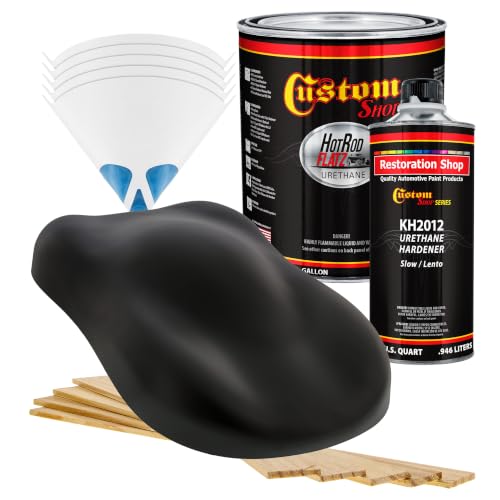
What We Like
- Pre-flattened to consistent 30-degree satin
- UV inhibitors protect from fading and chalking
Trade-offs
- 4:1 mix ratio requires careful measuring
- Requires optional reducer for different spray conditions
A pre-flattened 30-degree satin sheen means this paint delivers a consistent military-style finish straight from the kit, with no guesswork about adding flattener or clearcoat. The 4:1 mix ratio and included hardener make it straightforward for a DIYer who wants a durable coating that resists chipping and cracking. UV inhibitors help the satin black stay dark and even, so it works well on project vehicles, off-road rigs, or resto-mods where a low-gloss tactical look is the goal.
If you want a specific non-military satin black or a more traditional hot-rod vibe, the Eastwood kit offers a simpler 3:1 mix and a wider color selection. But for a true satin finish that resists solvents and weather without needing a clearcoat, this Custom Shop kit is a focused, ready-to-spray solution.
Product photos
High Teck 1400 Series Fleet White Acrylic Urethane
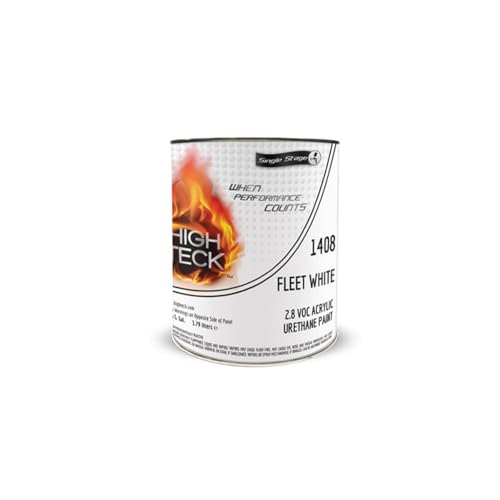
What We Like
- Direct to metal application
- High solids content (50%+)
- 2.8 VOC compliant nationwide
- User-friendly 4:1:1 mix ratio
Trade-offs
- Requires separate catalyst (1020) and reducer (1070)
- Fleet White color only limits color options
A 50%+ solids content means this single-stage paint lays down thick coverage in fewer coats, saving time on large fleet jobs or industrial equipment. The direct-to-metal formulation is designed for use without a separate primer, which simplifies the process for DIYers and shop owners alike. With a straightforward 4:1:1 mix ratio and 2.8 VOC compliance across the U.S. and Canada, it’s a practical choice for anyone who needs a durable, clean white finish without regulatory headaches.
You’ll need to buy High Teck’s 1020 catalyst and 1070 reducer separately, adding a step to your shopping list. Compared to the Restoration Shop Chassis Black Acrylic Urethane, which comes as a quart kit, this gallon gives you more volume for larger projects. The product is listed for automotive, DIY, marine, and industrial markets, so it suits a wide range of users.
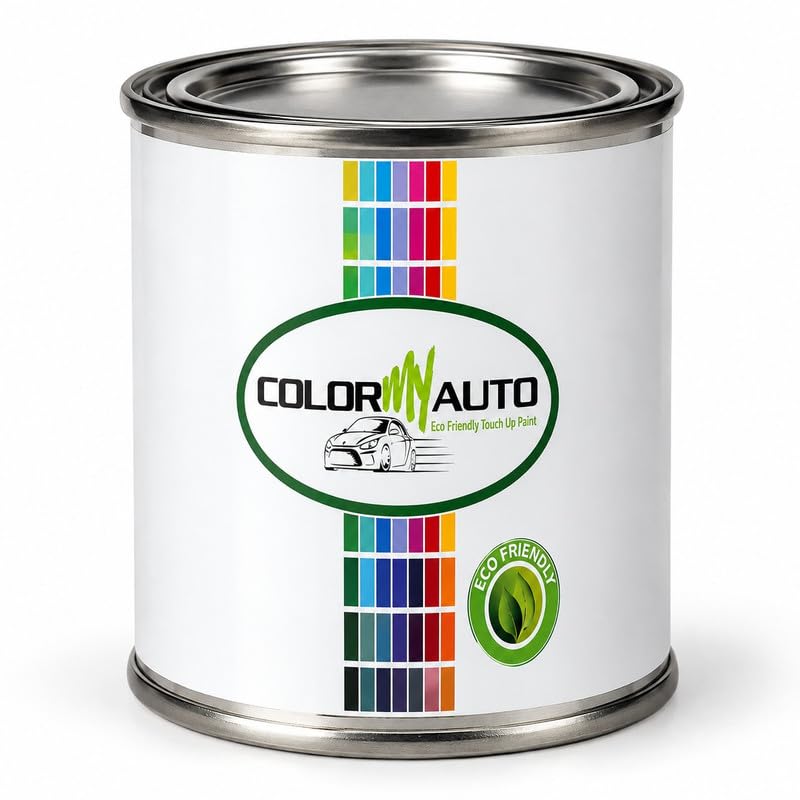
Color My Ride RTS Single Stage Switchblade Silver
What We Like
- Pre-reduced, no additional reducer needed
- Color and gloss in one coating system
- Mixed to your specific vehicle paint code
- No separate clearcoat required
Trade-offs
- Quart size limits coverage for large vehicles
- Requires spray-out test to match aged paint
- Tricoat colors ship as two separate components
Getting a color-matched single stage paint that arrives ready to spray means you skip the step of measuring and mixing reducer entirely. This quart is pre-reduced for spray gun application right after stirring, so you can focus on laying down an even coat of Switchblade Silver without worrying about viscosity or thinning ratios. It combines color and gloss in one system, eliminating the need for a separate clearcoat layer. That makes it a straightforward choice for DIYers who want a factory-matched finish without the complexity of multi-stage paint jobs.
A quart only goes so far. If you are painting a full car body, you may need multiple quarts, and the pre-reduced formulation means you cannot adjust the thickness yourself. Compared to the Restoration Shop Jet Black Acrylic Enamel, which comes as a gallon kit you mix yourself, this Color My Ride quart is more convenient for smaller touch-ups or single panels. But it is less economical for large projects. The requirement to do a spray-out test before final application is also a necessary extra step to account for paint fade on older vehicles.
Product photos
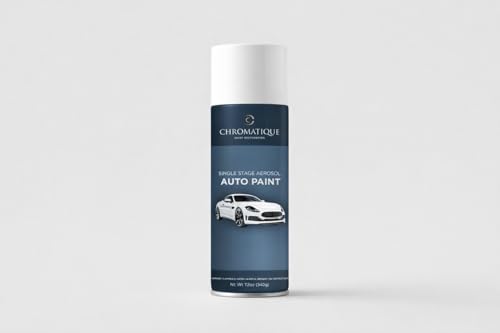
Chromatique Single Stage Aerosol Clementine L20D
What We Like
- Factory-matched to OEM color code
- Color and gloss in one coat
- Covers bumpers, fenders, doors
- Easy aerosol spray pattern
Trade-offs
- Single color limits use to one vehicle
- Aerosol can smaller than gallon kits
- Not for mixing or custom tinting
A factory-matched aerosol that hits the exact Clementine L20D code means you can touch up a 1970 Volkswagen Beetle without guessing the shade or mixing anything. The single stage formula puts color and gloss down together, so you get a durable finish in fewer passes. It covers bumpers, fenders, and doors smoothly, and the spray pattern is designed for both DIYers and pros who want consistent results straight from the can. For anyone restoring a classic Beetle in this specific orange, this is the most direct path to a spot-on repair.
You are locked into one color and one paint code. Unlike a gallon kit like Restoration Shop Jet Black, which is available in a larger volume for multiple projects, this aerosol is purpose-built for a single paint code. If your vehicle is not Clementine L20D, it simply does not apply. But for that exact match, the convenience of a ready-to-spray can that needs no reducer or gun makes it a tidy solution for small repairs and spot jobs.
Product photos
Paint Advantage Pro Single Stage Dark Spruce
What We Like
- Factory-matched OEM color accuracy
- No separate clear coat needed
- Excellent UV resistance and gloss retention
- Made in USA with high-grade pigments
Trade-offs
- Quart size covers less area than gallon kits
- Requires spray gun system, not aerosol
- Single stage limits color depth vs. basecoat+clear
This Dark Spruce single-stage paint is mixed to OEM-quality standards, so it delivers consistent color for automotive, industrial, or equipment applications. The formula puts color and gloss together in one coat, eliminating the need for a separate clear coat and making refinishing faster. For anyone working on a Dodge or equipment that needs this specific spruce tone, the UV resistance helps the finish hold its color and gloss over time. That durability makes it a practical choice for vehicles or equipment that are frequently exposed to sunlight.
A quart is a smaller volume than the gallon kits from Restoration Shop or Eastwood, so covering a full car would require multiple quarts. Unlike the Chromatique aerosol, this paint is designed for spray gun systems, which means you need a compressor and gun setup. For a single panel or a small repair on a Dark Spruce vehicle, this quart gives you factory-matched color and gloss in one formula, no separate clear coat needed.
Product photos
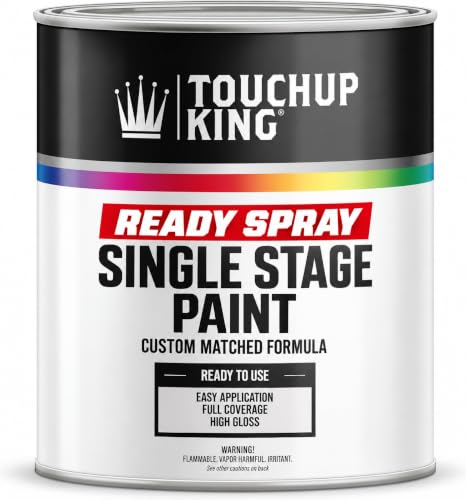
TOUCHUP KING PPG Single Stage Paint
What We Like
- Pre-reduced, no reducer needed
- Made in USA
- Hardener optional for enhanced durability
Trade-offs
- Color limited to specific vehicle match (Dodge Dark Spruce Metallic)
- Requires a spray gun, no aerosol convenience
This paint is pre-reduced and ready to spray straight from the quart, which means you skip the step of mixing in a reducer and can focus on laying down color. For anyone tackling a metallic refinish on a Dodge in Dark Spruce, the convenience of a single-stage formula that delivers both color and gloss in one coat saves time and reduces the chance of mix-up errors. A compatible hardener may be added to improve cure time, UV and chemical resistance, gloss, and overall durability, but the paint cures without it.
This is a specific color match for Dodge Dark Spruce Metallic, so it only suits vehicles needing that exact hue. If your car isn’t Dark Spruce Metallic, you’re locked out of this ready-to-spray convenience. For those who do have the right color, the pre-reduced formula and American manufacturing make it a straightforward choice that cuts prep work without cutting quality.
Product photos
How We Evaluated Single Stage Paints For Cars
Our evaluation started with a deep dive into each product’s technical data sheet, focusing on mix ratios, recommended reducers, and application guidelines from the manufacturer. We cross-referenced this with expert opinions from automotive painting forums and professional restorers to understand real-world performance.
The four criteria that mattered most were finish quality, durability, ease of use, and coverage. Finish quality covers gloss level, consistency, and resistance to orange peel. Durability includes UV resistance, chip resistance, and chemical resistance. Ease of use considers mix ratio simplicity, whether reducer is included, and spray gun setup. Coverage is about square footage per gallon or quart. For a single stage paint, the ability to lay down a smooth, level coat without runs is paramount.
A research-based evaluation has limits: we cannot replicate the exact conditions of a spray booth or the skill level of every user. Our recommendations are based on the consensus of experienced users. We prioritize products with clear instructions and forgiving application windows for the DIY audience.
What To Look For In Single Stage Paints For Cars
Choosing the right single stage paint means matching the product’s chemistry and gloss level to your project’s needs and your skill level. The best paint for a show car is different from the best paint for a farm truck.
A single stage paint combines color and gloss in one coat. Key factors include the paint’s resin type (urethane, enamel, acrylic), its mix ratio, UV and chip resistance, and whether it comes as a complete kit or requires separate activator and reducer.
Resin Type and Chemistry
The resin type determines the paint’s durability, gloss retention, and ease of application. Urethane paints, like those from Eastwood, are catalyzed and offer excellent chemical and chip resistance, but require a hardener (activator) to cure. Enamel paints, like the Restoration Shop options, are often simpler to use with an 8:1 mix ratio and can air-dry or be force-dried. Acrylic urethanes offer a middle ground with good durability and a faster dry time than traditional enamels. For maximum durability on a daily driver, a two-part urethane is the standard.
Mix Ratio and Convenience
The mix ratio tells you how much paint, activator, and reducer to combine. A simple 8:1 ratio (paint to hardener) is very user-friendly for beginners. A 4:1:1 ratio (paint, catalyst, reducer) offers more control but requires careful measuring. Pre-reduced paints, like the Color My Ride RTS, are the most convenient as they require no reducer at all, reducing the chance of application errors. Consider your comfort level with mixing chemicals when choosing a paint system.
Gloss Level and Finish
Single stage paints range from high-gloss to satin to flat. High-gloss paints require a clean, dust-free environment and careful technique to avoid imperfections. Satin and flat finishes are more forgiving of surface imperfections but are less durable against scratches and UV fading. The Eastwood Rat Rod Satin Black is pre-formulated to a consistent 20-25% gloss, while the Custom Shop Military Flatz is pre-flattened to 30 degrees. Choose a gloss level that matches your vehicle’s intended look and your ability to apply it.
Coverage and Kit Contents
Coverage is typically rated in square feet per gallon (e.g., 125 sq ft for Eastwood paints). A gallon kit is ideal for a full car, while a quart is sufficient for a panel, chassis, or small project. Check what is included in the kit: does it come with hardener, strainers, and reducer? A complete kit like the Restoration Shop Jet Black saves you from buying separate components. For fleet work, the High Teck 1400 Series requires separate catalyst and reducer, which adds cost but allows for custom thinning.
- Check the product’s VOC compliance if you live in a regulated area; the High Teck 1400 Series is 2.8 VOC compliant nationwide.
- Look for UV inhibitors in the paint’s formulation to prevent fading and chalking over time.
- Verify the paint’s recommended spray gun tip size for best atomization.
- If matching a factory color, confirm the paint code is correct and order a spray-out test card if possible.
- Read reviews regarding the paint’s pot life (working time after mixing) to ensure you can finish your job before it thickens.
A good rule of thumb: if you are painting a full vehicle, buy a gallon kit with hardener included. If you are doing a spot repair, a pre-reduced quart or aerosol is safer and more economical.
Single Stage Paints For Cars Compared
The table below compares the ten single stage paints across key specs like finish type, mix ratio, and best use, making it easy to see which one fits your project.
| Product | Mix Ratio | VOC | Finish Type |
|---|---|---|---|
| Restoration Shop Jet Black Acrylic Enamel Auto Paint | 8:1 | 2.8 | Single-stage high gloss |
| Eastwood Rat Rod Satin Black Single Stage Paint | 3:1 | N/A | Satin (20-25% gloss) |
| Eastwood Boulevard Black Single Stage Paint | 3:1 | N/A | N/A |
| Restoration Shop Chassis Black Acrylic Urethane Paint | 4:1 | 2.8 | High Gloss |
| Custom Shop Military Flatz Black Automotive Paint | 4:1 | 2.8 | 30-degree satin sheen |
| High Teck 1400 Series Fleet White Acrylic Urethane | 4:1:1 | 2.8 | N/A |
| Color My Ride RTS Single Stage Switchblade Silver | N/A | N/A | Single Stage Direct Gloss |
| Chromatique Single Stage Aerosol Clementine L20D | N/A | N/A | Single stage gloss |
| Paint Advantage Pro Single Stage Dark Spruce | N/A | N/A | Single Stage |
| TOUCHUP KING PPG Single Stage Paint | N/A | N/A | Single Stage |
Frequently Asked Questions
Is single stage paint as durable as basecoat and clearcoat?
Modern catalyzed single stage urethanes, like the Eastwood Boulevard Black, offer excellent durability, UV resistance, and chip resistance that can rival a basecoat and clearcoat system. However, a high-quality clearcoat layer can offer slightly better depth and scratch resistance. For most DIY restorations and daily drivers, a good single stage paint is more than durable enough.
Can I spray single stage paint over old paint?
Yes, but only if the old paint is properly prepared. This means cleaning, sanding with appropriate grit paper, and applying a primer or sealer to ensure adhesion. You cannot spray single stage directly over a glossy clearcoat without sanding first. Always test a small area to check for compatibility.
Do I need a clearcoat over single stage paint?
No, that is the main advantage of single stage paint. It includes the color and gloss in one coating, eliminating the need for a separate clearcoat layer. This simplifies the painting process and reduces material cost, which is why it is popular for fleet vehicles and budget restorations.
What is the best single stage paint for a beginner?
The Restoration Shop Jet Black Acrylic Enamel is an excellent choice for beginners because it comes as a complete kit with a simple 8:1 mix ratio and does not require a separate reducer. This reduces the chance of mixing errors. The fast-drying topcoat also helps prevent dust nibs, a common issue for new painters.
How much single stage paint do I need for a full car?
A typical full-size car requires approximately one to two gallons of sprayable paint for two coats. Since most gallon kits yield slightly less than a gallon after adding hardener, we recommend buying two gallons for a full body job. For a smaller car or a truck, one gallon may be sufficient, but it is safer to have extra.
The Bottom Line
For most DIY restorers and small shop owners, the Restoration Shop Jet Black Acrylic Enamel Auto Paint is the best overall choice. Its complete kit, forgiving mix ratio, and durable high-gloss finish make it the most straightforward path to a professional-looking black paint job without the complexity of a basecoat and clearcoat system.
If your project calls for a specific finish, look to the award picks. The Eastwood Rat Rod Satin Black is a durable flat look. The High Teck 1400 Series Fleet White works well for commercial jobs. The Color My Ride RTS offers a pre-reduced factory-matched color. Budget-conscious buyers should consider the Restoration Shop Chassis Black for undercarriage work or the Chromatique aerosol for small touch-ups.
The single most important factor in a successful single stage paint job is surface preparation. No paint, no matter how good, can hide poor sanding, inadequate cleaning, or a dusty spray environment. Invest your time in prep, and the paint will do the rest.
