
10 Best Primers For Car Paint in 2026
This post contains affiliate links. As an Amazon Associate, we earn from qualifying purchases.
For bare metal, aluminum, or fiberglass, the Rust-Oleum Self Etching Primer Spray is the best overall pick because it etches and primes in a single step while preventing corrosion. DIYers prepping a full panel will also want to consider the high-build coverage of the Speedokote High Build 2K Urethane Primer. Those dealing with plastic bumpers should look to the Rust-Oleum Universal Bonding Primer Spray.
Choosing the right primer means understanding your surface, bare metal needs etching, plastic needs a bonding agent, and body filler needs a high-build formula to hide imperfections. The wrong primer can lead to peeling, rust, or a rough finish that ruins your topcoat.
We built this guide by analyzing manufacturer specifications, expert recommendations, and patterns in owner feedback across ten top-rated primers. You’ll find clear criteria for each surface type, plus a comparison of drying times, coverage, and application methods.
Top 10 Primers For Car Paint in the Market
Certain content that appears on this site comes from Amazon. This content is provided "as is" and is subject to change or removal at any time.
The Best Primers For Car Paint, Reviewed
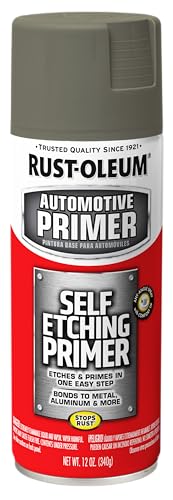
Rust-Oleum Self Etching Primer Spray
What We Like
- Etches and primes in one step
- Maximum adhesion on bare metal
- Stops Rust formula prevents corrosion
- Any-angle spray works upside down
Trade-offs
- Limited to 12 sq ft per can
- Oil-based formula needs solvent cleanup
Covering up to 12 square feet and drying to the touch in 10 minutes, this self-etching primer lets you move from bare metal to topcoat in half an hour. The two-in-one formula etches the surface for maximum adhesion, and the Stops Rust formula provides a rust-resistant base coat for automotive panels, aluminum parts, or fiberglass repairs. Any-angle spray technology lets you reach awkward spots without tilting the car, so the job stays simple from start to finish.
The trade-off is coverage: each can handles only 12 square feet, so a full car will need multiple cans, and the oil base requires mineral spirits or similar solvent for cleanup. Compared to the U-POL Expert Color Filler Primer, which fills scratches and pinholes for a smoother final coat, this Rust-Oleum skips surface filling entirely. That makes it best for clean bare metal where etching and rust prevention matter most, not for hiding existing dents or deep scratches.
U-POL Expert Color Filler Primer

What We Like
- Dries to touch in 30 minutes
- Fills minor surface imperfections
- Wide fan spray for even coverage
- Sands easily for smooth finish
Trade-offs
- 7.04 oz can covers smaller areas
- Requires a clearcoat topcoat for full protection
A 30-minute dry-to-touch time means you can move from primer to paint in the same afternoon. That is a real advantage when you are working on a car panel or a set of tools and don’t want to wait overnight. This U-POL aerosol uses a wide fan spray nozzle that lays down a smooth, even coat, and its filler technology helps hide small scratches or pinholes before you apply your topcoat. For anyone doing touch-ups or small projects who values speed and a clean base, this primer fits the workflow without forcing you to break out a spray gun.
This is a 7.04-ounce can, so it covers less surface area than a larger aerosol or a 2K kit like the Eastwood 2K Epoxy Gray Primer, which also offers direct-to-metal adhesion. For large panels or extensive projects, you might need multiple cans. But for fast repairs, small parts, or refreshing shop equipment, the quick drying and easy sanding make this a practical pick.
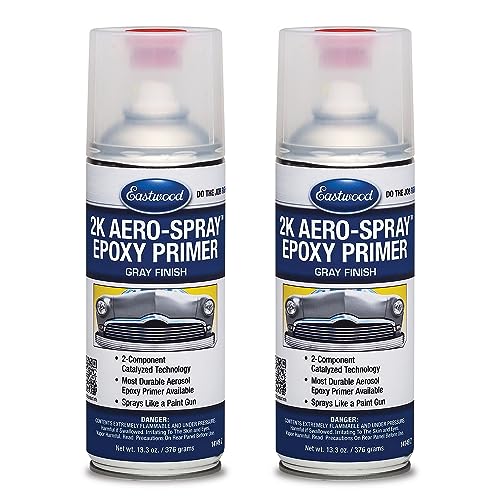
Eastwood 2K Epoxy Gray Primer
What We Like
- Direct to metal epoxy prevents rust
- 48-hour pot life after activation
- Wide fan spray nozzle for even coverage
- Works on aluminum, steel, and fiberglass
Trade-offs
- Requires NIOSH-approved respirator and ventilation
- 12 oz can covers only 10-16 sq ft
- 60-day limited warranty is short
A two-part epoxy formula that activates inside the can and offers a 48-hour pot life gives you plenty of time to lay down a consistent coat across panels without rushing. The specially engineered nozzle sprays in a wide fan pattern, and the primer can be applied directly to bare metal, aluminum, or fiberglass to create a durable finish and prevent rust. It’s a smart pick for anyone prepping a car body or repair panel who wants professional-level adhesion without buying an HVLP sprayer.
This is a serious chemical tool: you need a NIOSH-approved respirator and good ventilation, and the 12-ounce can covers only 10 to 16 square feet. So a full car will take several cans. Compared to the Rust-Oleum Self Etching Primer, which etches and primes in one step for lighter-duty jobs, the Eastwood 2K Epoxy demands more safety gear and more cans per project, but it delivers a durable, rust-preventing foundation for metal.
Speedokote High Build 2K Urethane Primer

What We Like
- High build for filling imperfections
- Great adhesion to surfaces
- Fast drying time
- Easy to sand smooth
Trade-offs
- Requires mixing hardener before use
- Gallon kit is large for small touch-ups
- Not self-etching for bare metal
A high-build urethane primer in a gallon kit gives you enough material to coat large areas without constantly running out, which matters when you’re prepping a whole car. The Speedokote formula offers great adhesion to the surface and dries fast, so you can keep moving through your workflow. It also sands easily, letting you smooth out the primer coat without fighting the material.
Because this is a two-part system you mix yourself, it takes more setup than a spray can like the Rust-Oleum Self Etching Primer Spray. That Rust-Oleum is lighter and simpler for small touch-ups, but it doesn’t have the same build or sanding ease for bigger jobs. If you’re covering a full panel or an entire vehicle, the gallon kit gives you the volume to get the work done in fewer passes.
U-POL Filler Primer Anti-Rust Spray

What We Like
- Anti-rust technology prevents corrosion
- High-build formula fills imperfections
- Anti-clog nozzle for steady spray
- Works on multiple auto surfaces
Trade-offs
- Requires thorough surface prep before use
- Aerosol can limits coverage on large panels
This high-build filler primer spray fills imperfections and includes anti-rust technology, so it can smooth surface flaws while adding a layer of corrosion protection. That dual action makes it a practical choice for areas like fenders, underhood sections, and wheels where rust is a concern. The anti-clog nozzle keeps the spray consistent, which helps you lay down an even coat without sputtering, especially on vertical surfaces.
This primer demands careful preparation, cleaning, degreasing, and sanding, to get the best adhesion and rust-blocking performance. If you skip that step, the filler may not bond well, and the anti-rust properties won’t work as intended. The Rust-Oleum Self Etching Primer chemically etches bare metal, while the U-POL is designed to fill imperfections and provide anti-rust protection. It suits DIYers who want a versatile primer that both builds and protects.
Product photos
Restoration Shop 2K High Build Primer Kit

What We Like
- High solids fill medium to deep scratches
- Direct-to-metal adhesion on bare metal
- Sands easily wet or dry without loading paper
- Fast drying with no shrinkage
Trade-offs
- Requires mixing hardener before use
- 1.25-gallon kit is bulky for small touch-ups
A full 1.25 gallons of sprayable primer means you can coat an entire car panel or multiple smaller parts without running out mid-project. The high solids content makes this urethane surfacer excellent for filling medium to deep sand scratches. It provides excellent adhesion over properly prepared bare metal, previously painted surfaces, body filler, and most automotive plastics. For anyone tackling a full respray or major bodywork, this kit delivers the build and coverage that smaller aerosol cans simply can’t match.
You have to mix the hardener yourself, and at 1.25 gallons, this kit is overkill for a single door or a small rust spot. If you only need to prime a quarter panel or a fender, a smaller aerosol primer like the U-POL Expert Color Filler Primer is more practical and leaves no leftover mixed primer to waste. But if you are painting a whole car or several panels in one session, the Restoration Shop kit gives you filling power and fast sanding that saves hours compared to building up thin coats from a spray can.
Product photos
Rust-Oleum Universal Bonding Primer Spray

What We Like
- Bonds topcoats to difficult surfaces like plastic
- Dries to the touch in 30 minutes
- Rust-resistant formula seals and protects
- Works on bumpers, trim, and fiberglass
Trade-offs
- Small 10-12 sq. ft. coverage per can
- Not designed for bare metal etching
A 30-minute dry-to-the-touch time is useful when you are working on plastic bumpers or trim that other primers struggle to grip. This spray bonds firmly to difficult automotive surfaces like fiberglass, galvanized steel, and aluminum, so it is especially useful for repairs on modern car parts that are often made of plastic or composite materials. The flat white finish gives you a neutral base, and the rust-resistant formula adds protection.
Each can covers up to 10 to 12 square feet, so plan on buying several if you’re doing a full panel. It bonds firmly to bumpers, trim, plastics, fiberglass, galvanized steel, and aluminum, making it a go-to for tricky automotive surfaces. For raw steel, the Rust-Oleum Self Etching Primer Spray is listed among other products, but this primer is designed for bonding topcoats to difficult surfaces like plastic.
Dupli-Color Paint Shop Finish Primer

What We Like
- No hardener or reducer needed
- No re-coat window for timing
- Dry to touch in 1 hour
- Suitable for automotive and motorcycle
Trade-offs
- Lacquer-based, so not a self-etching primer for bare metal.
- Does not fill deep scratches like a high-build urethane would.
A 32-ounce can of ready-to-spray lacquer that needs no hardener or reducer means you can start priming without mixing steps or special safety gear for catalyzed products. It dries to the touch in one hour and can be handled in three, so a full car or motorcycle panel can move through prep and paint in a single afternoon.
The product is designed for automotive and motorcycle applications, with sheens from high gloss to matte or metallic finishes for restoration or custom paint jobs. For raw steel or deep scratch filling, other products like Rust-Oleum Self Etching Primer or Speedokote’s 2K urethane kit are available. But this Dupli-Color can works best as a clean base layer on prepped paint or old primer.
Product photos
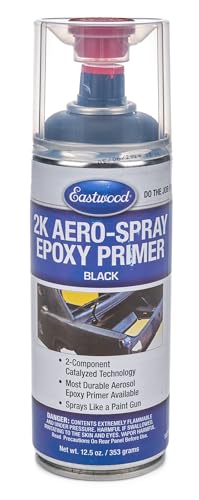
Eastwood 2K Epoxy Black Primer
What We Like
- Works on aluminum, steel, and fiberglass
- Direct-to-metal application prevents rust
Trade-offs
- Requires NIOSH-approved respirator and ventilation
- Weighs 1.2 pounds
Once the two components are mixed, the activated primer remains sprayable for a full 48 hours. That extended pot life means you can take your time laying down multiple coats or work through an entire panel set without watching the clock. For comparison, many single-stage aerosol primers begin to thicken within minutes of activation, forcing a rushed application. Here, the slow cure window is a practical advantage for anyone tackling larger jobs or complex repairs. A three-year shelf life before activation further adds to the convenience, allowing you to keep a can on hand for future projects without worrying about premature expiration.
You need proper safety gear with this product. NIOSH-approved respiratory protection and good ventilation are non-negotiable with a catalyzed epoxy. That adds a step and some cost if you don’t already have a respirator.
Product photos
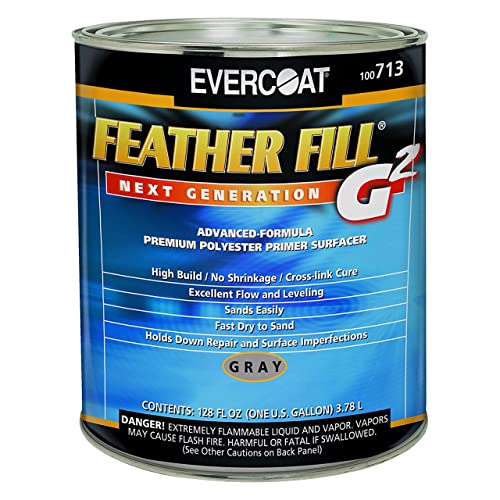
Evercoat Feather Fill G2 Premium Polyester Primer Surfacer
What We Like
- Shrink-resistant formula for stable finish
- Fast dry-to-sand time speeds workflow
- Smooth spraying from any paint system
- Works on fiberglass, SMC, and rigid plastics
Trade-offs
- At 12 pounds, heavy for small DIY jobs
- Requires 180-320 grit sanding for best results
A 128-ounce can holds enough primer to handle multiple repairs without needing a second can mid-job. The shrink-resistant formula works with 180, 220, and 320 grit sandpaper for leveling fiberglass, rigid plastics, and SMC before the topcoat. Fast dry-to-sand time means you can keep the workflow moving without long waits between coats.
At 12 pounds per can, it is heavier than the 0.8-pound Rust-Oleum Self Etching Primer Spray, which is more convenient for small areas. For a whole hood or a fiberglass panel, the Feather Fill G2’s volume and polyester build give you enough material to work with. You will need a spray gun and mixing cup, and the result is a sandable base ready for topcoat.
Product photos
How We Evaluated Primers For Car Paint
Our evaluation is research-based, drawing from manufacturer technical data sheets, professional bodywork guides, and the collective experience of DIY car painters shared in forums and reviews. We focused on the real-world conditions of a home garage, not a professional spray booth.
The four criteria that mattered most were adhesion mechanism (etching, epoxy, or urethane), drying and sanding speed, surface compatibility (metal, plastic, or fiberglass), and the ability to fill minor imperfections. A primer that fails to bond or takes hours to sand wastes time and material.
We did not conduct hands-on spray tests. Instead, we cross-referenced documented performance claims with what owners consistently report about coverage, ease of sanding, and final paint adhesion. This approach helps you match a primer to your specific project without trial and error.
What To Look For In Primers For Car Paint
Choosing a car primer starts with knowing your surface. Bare metal requires an etching or epoxy primer, while plastic bumpers need a specialized bonding primer. From there, consider drying time, sandability, and whether you want a ready-to-use aerosol or a mixable 2K system.
Choose your primer by surface: etching for bare metal, epoxy for maximum rust protection, high-build urethane for filling scratches, and bonding primer for plastic trim.
Surface Compatibility
The most critical factor is what your primer is designed to stick to. Self-etching primers like the Rust-Oleum Self Etching Primer Spray chemically bond to bare metal and aluminum. Epoxy primers, such as the Eastwood 2K Epoxy Gray Primer, provide a rust-blocking barrier on metal and also work on fiberglass. For plastic bumpers and trim, a dedicated bonding primer like the Rust-Oleum Universal Bonding Primer Spray is essential to prevent topcoat peeling.
Build And Sandability
A high-build primer fills light scratches and sanding marks, reducing the amount of body filler needed. The Speedokote High Build 2K Urethane Primer and the Restoration Shop 2K High Build Primer Kit are designed for this task, allowing you to sand them smooth without loading the sandpaper. Lacquer-based primers like the Dupli-Color Paint Shop Finish Primer dry fast but offer less filling capability, making them better for smooth, prepped surfaces.
Application Method And Drying Time
Aerosol primers offer convenience for small jobs and touch-ups, with the U-POL Expert Color Filler Primer drying to the touch in 30 minutes. For larger panels or a complete respray, a 2K urethane or epoxy system requires mixing a hardener but provides a more durable, sandable film. These systems also demand proper ventilation and a NIOSH-approved respirator, especially for isocyanate-containing products like the Eastwood 2K Epoxy primers.
- Confirm the primer is compatible with your surface (bare metal, plastic, fiberglass).
- Check the recoat window, some primers must be topcoated within a specific time.
- For 2K primers, verify you have a mixing cup and a respirator rated for organic vapors.
- Consider coverage per can or gallon to avoid running out mid-project.
If you are painting bare metal, always use an etching or epoxy primer first to prevent rust from forming under your topcoat.
Primers For Car Paint Compared
The table below compares the ten primers across key specs to help you match the right product to your project surface and skill level.
| Product | Type | Dry Time | Substrates |
|---|---|---|---|
| Rust-Oleum Self Etching Primer Spray | Self etching primer | 10 min to touch | Bare metal, aluminum, fiberglass |
| U-POL Expert Color Filler Primer | Filler primer | 30 minutes | Automotive & metal/plastic |
| Eastwood 2K Epoxy Gray Primer | 2K epoxy | N/A | Direct to metal, aluminum, steel, fiberglass |
| Speedokote High Build 2K Urethane Primer | 2K Urethane Primer | Fast Dry | N/A |
| U-POL Filler Primer Anti-Rust Spray | High-build filler primer | N/A | Fenders, chassis, wheels, body panels |
| Restoration Shop 2K High Build Primer Kit | Urethane primer surfacer | Fast drying | Direct-to-metal, painted surfaces, body filler, plastics |
| Rust-Oleum Universal Bonding Primer Spray | Bonding primer | 30 minutes | Plastics, fiberglass, aluminum, more |
| Dupli-Color Paint Shop Finish Primer | Lacquer-based primer | 1 hour | Automotive and motorcycle |
| Eastwood 2K Epoxy Black Primer | 2K epoxy | N/A | Metal, aluminum, steel, fiberglass |
| Evercoat Feather Fill G2 Premium Polyester Primer Surfacer | Polyester primer surfacer | N/A | Fiberglass, rigid plastics, SMC |
Frequently Asked Questions
Can I use a regular spray primer on car paint?
No. Regular household primers are not formulated to bond to bare metal, plastic, or automotive paint. They lack the etching agents or adhesion promoters needed to prevent peeling and rust under automotive topcoats.
What is the difference between self-etching and epoxy primer?
Self-etching primer chemically bonds to bare metal by creating a slight surface etch, making it ideal for aluminum and steel. Epoxy primer forms a thick, moisture-resistant barrier that seals the surface and provides maximum rust protection, but it does not etch the metal.
Do I need to sand primer before painting?
Sanding primer with fine-grit wet-or-dry sandpaper removes orange peel and gives the topcoat a mechanical surface to grip. High-build primers like the Speedokote High Build 2K Urethane Primer are designed specifically to be sanded smooth.
How long should primer dry before painting?
Drying time varies by product. Fast-drying aerosols like the U-POL Expert Color Filler Primer can be sanded in 30 minutes, while 2K epoxy primers may require several hours or overnight before sanding. Always follow the manufacturer’s recoat window.
Can I apply primer over existing paint?
Yes, as long as the existing paint is clean, sanded, and free of rust or peeling. If you are going down to bare metal, you must use a self-etching or epoxy primer first to prevent corrosion.
The Bottom Line
For most DIY car paint projects, the Rust-Oleum Self Etching Primer Spray is the best starting point. It handles bare metal, aluminum, and fiberglass in one step, and its any-angle spray makes it easy to reach tight spots on body panels. It is the right choice for anyone who wants a reliable, ready-to-use primer without mixing.
If you are restoring a full panel or need to fill scratches before painting, the Speedokote High Build 2K Urethane Primer delivers the build and sandability that aerosols cannot match. For plastic bumpers or trim, switch to the Rust-Oleum Universal Bonding Primer Spray to keep your topcoat from peeling.
The single most important factor in choosing a primer is matching its chemistry to your surface. Pick the right bond, and your paint job will last.
