
7 Best Boat Bottom Paint in 2026
This post contains affiliate links. As an Amazon Associate, we earn from qualifying purchases.
For aluminum boats, the TotalBoat AlumiPaint AF Antifouling Paint is our best overall pick because it delivers strong antifouling protection with a copper-free, ablative formula that won’t cause galvanic corrosion. For fiberglass and wood hulls, the Interlux Micron CSC offers the longest-lasting copper-based protection, while the Pettit Vivid Hybrid is ideal for trailered boats needing a durable, burnishable finish.
The real challenge with bottom paint is matching the chemistry to your hull material and your boating habits. Choose the wrong formula and you risk corrosion, poor adhesion, or fouling that slows your boat and wastes fuel.
This guide is research-based, drawing on manufacturer specifications, expert recommendations, and patterns in owner feedback. We break down the key factors, hull compatibility, paint type, and application requirements, to help you choose with confidence.
Top 7 Boat Bottom Paints in the Market
Certain content that appears on this site comes from Amazon. This content is provided "as is" and is subject to change or removal at any time.
The Best Boat Bottom Paints, Reviewed
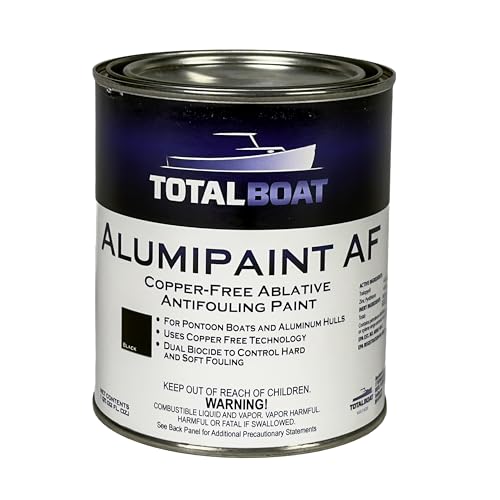
TotalBoat AlumiPaint AF Antifouling Paint
What We Like
- Copper-free formula safe for aluminum
- Ablative wear exposes fresh biocide
- No maximum dry time for flexible launch
- Compatible with most existing paints
Trade-offs
- Only available in black and blue
- Requires primer on bare aluminum surfaces
- Needs 1-2 thin coats for full protection
A copper-free ablative formula with an organic biocide plus zinc means this paint is engineered specifically for aluminum hulls, pontoons, and outdrives where copper-based paints would cause galvanic corrosion. The paint pairs an organic biocide with zinc to repel growth on aluminum surfaces, providing full-season protection against barnacles, slime, algae, and weeds. The lack of a maximum dry time also lets you paint well ahead of launch day and splash whenever you’re ready, a real convenience for seasonal boaters.
The trade-off is that you’ll need to apply a dedicated primer on bare aluminum before painting, adding a step to the prep work. And while the color options are limited to black and blue, that’s typical for this category. The TotalBoat Krypton works on aluminum, fiberglass, and wood hulls, while the AlumiPaint AF is purpose-built for aluminum hulls and outdrives.
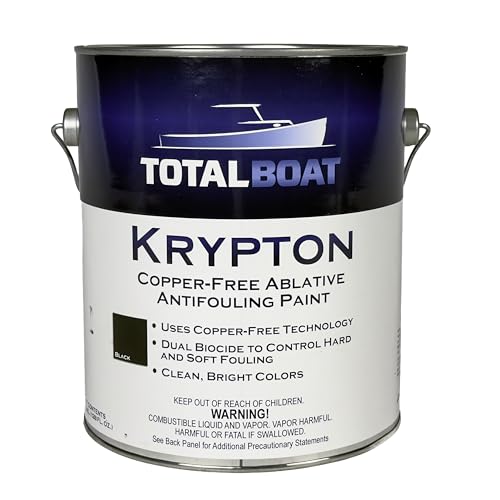
TotalBoat Krypton Copper-Free Antifouling Paint
What We Like
- Safe for aluminum hulls and outdrives
- Self-polishing reduces paint buildup
- No maximum dry time for flexible launch
- Compatible with most existing bottom paints
Trade-offs
- Requires primer on bare surfaces (sold separately)
- Needs 1-2 thin coats for full protection
- Thinner needed if spraying (not included)
A copper-free dual-biocide ablative formula makes this paint safe for aluminum hulls, outdrives, and pontoons. One gallon covers 500 square feet, so a typical 20-foot powerboat needs about one gallon for two thin coats. The self-polishing coating gradually wears away, continuously exposing fresh biocide and reducing paint build-up over time. There is no maximum dry time, so you can prep and paint well ahead of the season and launch only when you are ready.
Bare aluminum, fiberglass, or wood surfaces must be primed with TotalProtect before applying this paint, adding an extra step and cost. Compared to the Pettit Vivid Hybrid, the TotalBoat Krypton is compatible with most existing bottom paints, so you can often apply it over previously painted hulls without a full strip. For boat owners who need an aluminum-safe antifouling option, this paint delivers full-season protection without the copper.
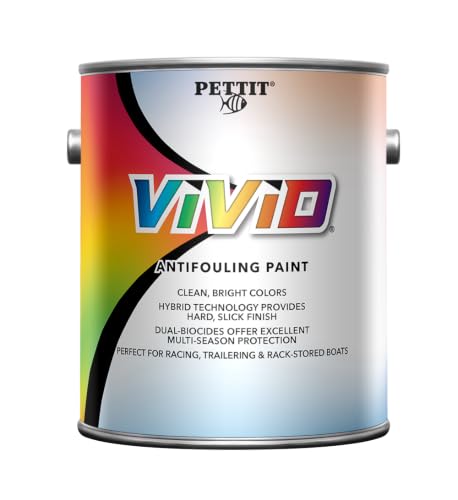
Pettit Vivid Hybrid Antifouling Bottom Paint
What We Like
- Hybrid hard-ablative reduces paint buildup
- Dual-biocide protection for barnacles and slime
- Smooth burnishable finish for racing
- Withstands trailering, hauling, and rack storage
Trade-offs
- Requires a specific primer system for aluminum hulls
- Heavy at 16 pounds for a gallon of paint
A hybrid formula that blends the toughness of a hard paint with the self-renewing action of an ablative coating gives you multi-season protection without the heavy buildup that comes from layering traditional hard paints year after year. The dual-biocide system, Cuprous Thiocyanate and Zinc Pyrithione, targets barnacles, algae, and slime across a range of water conditions. That hard, smooth surface also burnishes to a slick racing finish. So if you like to squeeze every tenth of a knot from your hull, this paint won’t hold you back.
The Pettit Vivid Hybrid Antifouling Bottom Paint combines hard and ablative benefits in a single formula, so you get the durability of a hard paint with the self-renewing properties of an ablative coating. That means less paint buildup over time and long-lasting protection against barnacles, algae, and slime. If your boat spends time on a trailer or in rack storage, this hybrid finish can handle the repeated hauling and relaunching without flaking off.
Product photos
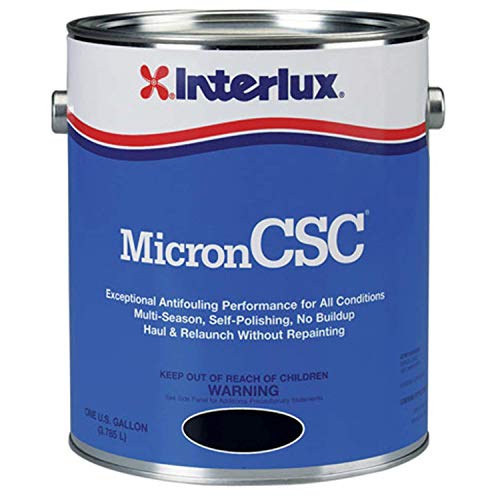
Interlux Micron CSC Antifouling Paint
What We Like
- 37.2% copper for strong antifouling
- Lasts 20% longer than comparable copper paints
- Improved resistance to weed and algae
- Suitable for all waters and boat types
Trade-offs
- Heavy gallon at 18 pounds requires secure storage
- Not suitable for aluminum hulls due to copper content
With 37.2% copper content and a formulation that lasts 20% longer than other copper-based ablative paints, this Interlux Micron CSC gives you extended protection between haul-outs. That means fewer weekends spent scraping and repainting, especially if you keep your boat in the water for long seasons. The improved resistance to weed and algae fouling makes it a strong fit for saltwater sailors and powerboaters who want reliable performance without constant maintenance. It works across all waters and on both power and sail hulls, so it’s a versatile choice for a wide range of boats.
The 37.2% copper content gives this ablative bottom paint a 20% longer lifespan than other copper-based ablatives. That means you can go an extra season between haul-outs if you keep your boat in the water year-round. At 18 pounds per gallon, the can is heavy enough that you’ll want a sturdy work surface and a good stir stick before you start. Owners of fiberglass or wood boats who value longevity over convenience will find the improved resistance to weed and algae fouling a real time-saver.
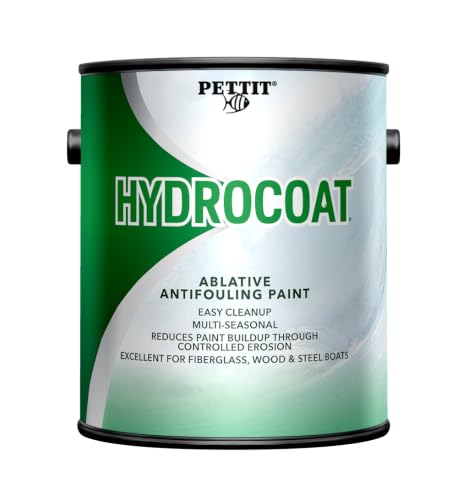
Pettit Hydrocoat Water-Based Antifouling Paint
What We Like
- Cleans up with soap and water
- Unlimited dry time before launch
- Works in fresh, salt, and brackish water
Trade-offs
- Copper biocide not suitable for aluminum hulls
- Requires dry time before launch, limiting last-minute use
A water-based formula that cleans up with soap and water means no harsh solvent fumes and far easier cleanup, a real advantage if you’re painting in a garage or near neighbors. Hydrocoat’s ablative copolymer technology continuously exposes fresh biocide as it wears, reducing the need for sanding between maintenance cycles. It’s engineered to withstand frequent trailering, beaching, launching, and hauling, and the unlimited dry time lets you paint in the fall, winter, or spring without worrying about a launch window.
The trade-off is that this is a copper-based antifoulant, so it’s not the right choice for aluminum hulls; those boaters should look at a copper-free option like TotalBoat AlumiPaint AF instead. For hulls compatible with copper-based paint in mixed waters, though, the convenience of water cleanup and the flexibility of painting on your own schedule make this a thoughtfully engineered pick.
Product photos
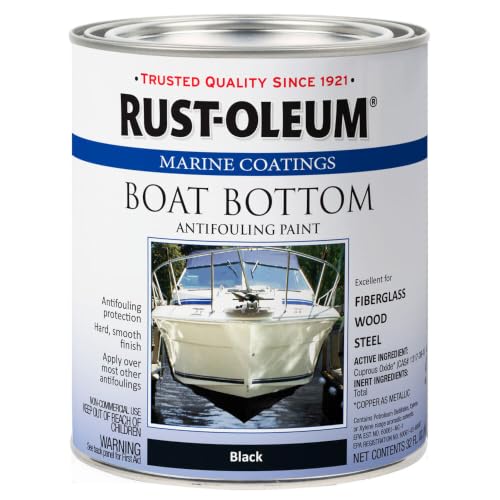
Rust-Oleum Marine Boat Bottom Antifouling Paint
What We Like
- Recoat in just 4 hours
- Launch-ready in 16 hours
- Resists barnacles and algae
- Works on fiberglass, wood, steel
Trade-offs
- Copper-based formula not for aluminum hulls
- 16-hour wait before launching after painting
A four-hour recoat window means you can finish two coats in a single day without waiting overnight. That speed is a real advantage when you are racing a tight haul-out schedule or working in unpredictable weather. The hard, smooth finish resists barnacles and algae in both fresh and salt water, and it covers up to 110 square feet per quart. So a small to mid-size hull is manageable with just one can. This paint suits the DIY boat owner who values efficiency and wants to get back on the water fast.
The surface compatibility is limited to fiberglass, wood, and steel, so if your boat is aluminum, you will need a copper-free alternative. The hard finish may require more sanding when repainting compared to ablative paints. For fiberglass, wood, or steel boats where speed matters, this Rust-Oleum provides the stated performance.
Interlux Aqua-One Performance Ablative

What We Like
- Ablative action minimizes paint buildup
- Works in salt, brackish, and fresh water
- Easy to apply without heavy sanding
Trade-offs
- Black color only limits hull finish options
- Water-based paints often need more careful surface prep.
A water-based ablative formula wears away with use, minimizing paint buildup and the need for heavy sanding between coats. That means you can apply it easily without the thick, flaky layers that force major prep work later. Owners who repaint regularly will appreciate how simple maintenance stays.
How We Evaluated Boat Bottom Paints
We evaluated these paints by analyzing manufacturer specifications, technical data sheets, and expert round-ups from marine industry sources. We also looked at patterns in owner feedback to understand real-world performance, ease of application, and durability across different boating conditions.
The four criteria that mattered most were hull compatibility (copper vs. Copper-free for aluminum), paint type (ablative vs. Hard vs. Hybrid), application and recoating requirements, and overall antifouling effectiveness. Each paint was assessed for how well it balances protection with practicality.
A research-led evaluation has limits: we didn’t test these paints in the water, and local fouling conditions vary widely. We recommend verifying compatibility with your existing paint and consulting a marine professional if you have a unique hull material or extreme fouling environment.
What To Look For In Boat Bottom Paints
Choosing the right bottom paint starts with understanding your hull material and how you use your boat. Here’s what matters most.
Match the paint chemistry to your hull, copper-free for aluminum, copper-based for fiberglass and wood, and choose a paint type (ablative, hard, hybrid) that fits your haul-out schedule and trailering habits.
Hull Material Compatibility
Aluminum hulls require copper-free paints to prevent galvanic corrosion. Copper-based paints, while highly effective against fouling, will attack aluminum. For fiberglass, wood, and steel hulls, copper-based paints are the standard and offer the broadest protection. Some hybrid paints require specific primer systems for aluminum, so always check the manufacturer’s instructions.
Paint Type: Ablative, Hard, or Hybrid
Ablative paints wear away slowly, exposing fresh biocide and minimizing buildup over multiple seasons. Hard paints form a durable, burnishable shell that holds up to trailering and rack storage but can build up over time. Hybrid paints combine the durability of a hard finish with the self-polishing action of an ablative, reducing buildup while resisting fouling. Your choice depends on how often you haul your boat and whether you want to sand between coats.
Application and Launch Timing
Some paints require a minimum dry time before launch, while others have no maximum dry time, letting you launch when ready. Recoat times vary from 4 hours to overnight. Water-based paints clean up with soap and water, reducing solvent fumes, but often need more careful surface prep. If you need to paint and launch quickly, look for fast-recoat formulas.
- Check your existing paint for compatibility before applying a new type.
- Use a primer on bare aluminum or wood surfaces for best adhesion.
- Apply thin, even coats rather than one thick coat for better performance.
- Verify the paint works in your water type: fresh, salt, or brackish.
- Consider ventilation and odor if painting in an enclosed space.
A general rule: the more you use your boat, the more an ablative paint makes sense, as water movement keeps it working.
Boat Bottom Paints Compared
The table below compares all seven paints across key specs so you can see at a glance which one fits your hull and boating style.
| Product | Paint Type | Biocide | Hull Materials |
|---|---|---|---|
| TotalBoat AlumiPaint AF Antifouling Paint | Ablative, copper-free | Organic biocide + zinc | Aluminum |
| TotalBoat Krypton Copper-Free Antifouling Paint | Ablative | Dual biocide ablative | Aluminum, fiberglass, wood, steel |
| Pettit Vivid Hybrid Antifouling Bottom Paint | Hybrid hard-ablative | Cuprous Thiocyanate + Zinc Pyrithione | Aluminum |
| Interlux Micron CSC Antifouling Paint | Ablative | 37.2% Copper | All power and sail |
| Pettit Hydrocoat Water-Based Antifouling Paint | Self-polishing ablative | Copper-based | N/A |
| Rust-Oleum Marine Boat Bottom Antifouling Paint | Hard | Copper | Fiberglass, wood, steel |
| Interlux Aqua-One Performance Ablative | Water-based ablative | N/A | N/A |
Frequently Asked Questions
What is the best boat bottom paint for aluminum hulls?
The TotalBoat AlumiPaint AF Antifouling Paint is our top pick for aluminum hulls because it uses a copper-free formula that prevents galvanic corrosion. The TotalBoat Krypton is another excellent copper-free option for aluminum outdrives and pontoons.
Can you paint over old bottom paint?
Yes, but compatibility is critical. Some paints are designed to adhere to most existing bottom paints, while others require specific primers or full removal of the old coating. Always check the manufacturer’s instructions and test a small area first.
How often should you apply bottom paint?
It depends on the paint type and your local fouling conditions. Ablative paints typically last one to two seasons before needing a fresh coat, while hard paints can last longer but may require sanding between applications. Boats kept in warm, nutrient-rich water may need more frequent recoating.
What is the difference between ablative and hard bottom paint?
Ablative paints wear down slowly as the boat moves through water, continuously exposing fresh biocide and preventing excessive buildup. Hard paints form a tough, non-wearing shell that resists scrubbing and trailering but can accumulate layers over time. Hybrid paints offer a middle ground.
Is water-based bottom paint as good as solvent-based?
Water-based paints offer easier cleanup and lower odor, making them more pleasant to apply. Their antifouling performance can be comparable to solvent-based paints in moderate fouling conditions, but they often require more careful surface preparation and may not hold up as well in extreme fouling environments.
The Bottom Line
The TotalBoat AlumiPaint AF Antifouling Paint is the best overall choice for aluminum boat owners who need a reliable, copper-free ablative paint with flexible launch timing. If you have a fiberglass or wood hull and want the longest-lasting protection, the Interlux Micron CSC is worth paying more for.
For boaters who trailer frequently or need a tough finish that resists scrubbing, the Pettit Vivid Hybrid offers a durable, burnishable surface. Budget-minded owners with fiberglass hulls will find the Rust-Oleum Marine Boat Bottom Antifouling Paint a reasonable option for fast recoating and quick launch times.
The single most important buying factor is hull compatibility: choose a copper-free paint for aluminum, and a copper-based paint for fiberglass or wood. Get that right, and you’re on your way to a clean, efficient season on the water.
