
10 Best Paint For Fireplace in 2026
This post contains affiliate links. As an Amazon Associate, we earn from qualifying purchases.
For a fireplace refresh that lasts, the Pellethead Paint earns our Best Overall award for its ability to withstand extreme heat up to 1200°F and its easy aerosol application for even coverage, so you get a smooth finish without much effort. If you prefer a brush-on formula for cast iron, the Furniture Clinic Stove Restorer Paint is our pick for Best Brush-On For Cast Iron. For a reliable spray option for grills and stoves, the Rust-Oleum High Heat Enamel Spray Paint takes the award.
Painting a fireplace isn’t like painting a wall. The surface sees intense, repeated heat that can cause standard paint to peel, crack, or discolor in a single burn cycle. Choosing the wrong formula means a messy redo, so heat resistance and application method are the real deciding factors.
This guide is based on a thorough review of manufacturer specifications, expert round-ups, and patterns in owner feedback. We’ve organized the top 10 paints by their specific strengths, from extreme heat tolerance to easy brush-on application, so you can find the right match for your project.
Top 10 Paints For Fireplaces in the Market
Certain content that appears on this site comes from Amazon. This content is provided "as is" and is subject to change or removal at any time.
The Best Paints For Fireplaces, Reviewed
Pellethead Paint

What We Like
- Withstands extreme heat up to 1200°F
- Easy aerosol application for even coverage
- Available in multiple colors including satin black
- Versatile for stoves, fireplaces, and grills
Trade-offs
- Only sold as a single 12 oz can
- Spray application requires masking for precision
This spray paint withstands temperatures up to 1200°F, so it can handle the heat from stoves, fireplaces, and BBQ grills without peeling or discoloring. The 12-ounce aerosol can delivers a smooth, even coat with minimal effort, making it a practical option for refreshing heat-sensitive surfaces. For a finish that holds up under high heat, this paint offers reliable performance.
The big thing to know is that this paint resists heat up to 1200°F, which covers most stoves, fireplaces, and BBQ grills without worrying about discoloration or peeling. It comes in a single 12-ounce aerosol can, so if you’re painting a large fireplace surround or plan on multiple coats, you’ll need to buy extra cans. The spray format means you’ll want to mask off nearby brick or tile to prevent overspray, unlike brush-on paints such as the Furniture Clinic Stove Restorer Paint.
Product photos
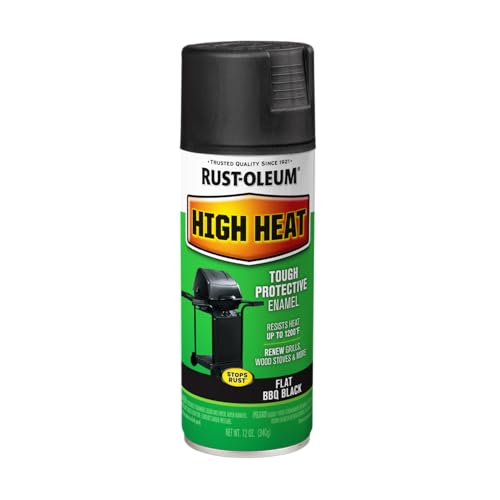
Rust-Oleum High Heat Enamel Spray Paint
What We Like
- Withstands intermittent heat up to 1200°F
- Dries to the touch in 30 minutes
- Rust and corrosion resistant finish
- Works on grills, stoves, and fire pits
Trade-offs
- Only 7-8 sq ft coverage per 12 oz can
- Requires heat curing for maximum durability
With heat protection rated up to 1200°F, this spray enamel is built for surfaces that face direct flame or high radiant heat, think the exterior of a wood-burning stove, a grill lid, or a fireplace screen. The fast-drying formula reaches tack-free in about half an hour. So you can finish a small project in a single afternoon without waiting around. It also adds a layer of rust and corrosion resistance, which matters when the paint is exposed to outdoor moisture or the humidity near a fireplace. For anyone refreshing a barbecue or a stove that gets regular use, this is a straightforward, reliable option that keeps its color through repeated heating cycles.
The flat black finish is a functional choice for high-heat surfaces, but it may not suit every setting. If you prefer a different sheen, the Chimney Plus 401990 Stove Bright paint is listed as a satin black alternative in the same product category.
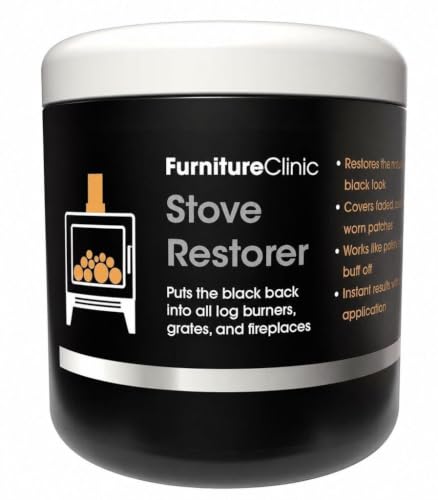
Furniture Clinic Stove Restorer Paint
What We Like
- Non-toxic and non-flammable formula
- Dries in 10 minutes without flaking
- Easy sponge application with natural finish
- Works on cast iron and all metals
Trade-offs
- Sponge application only, no spray option
- Requires lighting the stove to cure the paint
An 8.5 oz tub of high-heat paint that restores faded cast iron with a single sponge application, no spraying, no overspray, no masking. The non-toxic, non-flammable formula dries in ten minutes and cures to a natural matte black finish that won’t flake or peel, even on log burners and grates that see extreme temperatures. This is the paint for anyone who wants a quick, low-mess refresh on a cast-iron fireplace or stove without the prep work that spray cans demand.
The trade-off is coverage: at 8.5 ounces, this tub suits touch-ups and smaller cast-iron surfaces better than a full stove or large fireplace surround. If you need to paint a broad area in one go, a spray like Stove Bright High Temp covers more surface per can and lays down a uniform coat faster. But for precision work on intricate cast-iron details, or for anyone who hates cleaning overspray, the Furniture Clinic’s sponge-on simplicity makes it the smarter pick.
Chimney Plus 401990 Paint

What We Like
- Withstands up to 1200°F
- Quick drying for fast projects
- Easy spray application
Trade-offs
- Only available in satin black finish
- Spray application requires masking and ventilation
The 1200°F temperature rating means this paint handles the heat of a wood-burning fireplace without peeling or discoloring, so you can refinish the surround and firebox with confidence. The quick-drying satin black formula goes on smoothly, and the manufacturer says it retains color under extreme heat. That makes it a reliable choice for anyone who needs a high-heat spray paint that won’t fade or flake under regular use.
Compared to the Rust-Oleum High Heat Enamel Spray Paint, which also offers 1200°F protection, the Chimney Plus paint focuses specifically on a satin sheen and color retention, while Rust-Oleum emphasizes rust and corrosion resistance.
Product photos
POR-15 High Temperature Paint

What We Like
- Withstands up to 1200°F heat
- Resists cracking, chipping, and peeling
- Weather and moisture resistant
- Meets MIL-C-13370 military specification
Trade-offs
- Requires 24-hour cure before full heat exposure
- Small 8 oz can covers less area than larger options
A 1200°F heat tolerance means this paint can handle the hottest fireplace surfaces without burning off or discoloring, making it a reliable choice for cast iron inserts, stove pipes, and firebox doors. The application requires a clean surface and two coats, with glossy areas roughened using 320 grit sandpaper before recoating. It also resists weather, salt, and moisture, so it holds up well even if your fireplace is near an exterior wall or in a damp basement. This is the paint to reach for when you want a durable, corrosion-resistant finish that stays put through season after season of fires.
The main trade-off is patience: you need to let it cure for a full 24 hours before raising the temperature above 300°F, which means you cannot fire up the fireplace the same day you paint. Also, at only 8 fluid ounces, this small can is best for a single stove or fireplace surround rather than a large masonry project. If you are willing to wait for the cure and you follow the surface preparation steps, this paint delivers a tough coating that meets military specification MIL-C-13370.
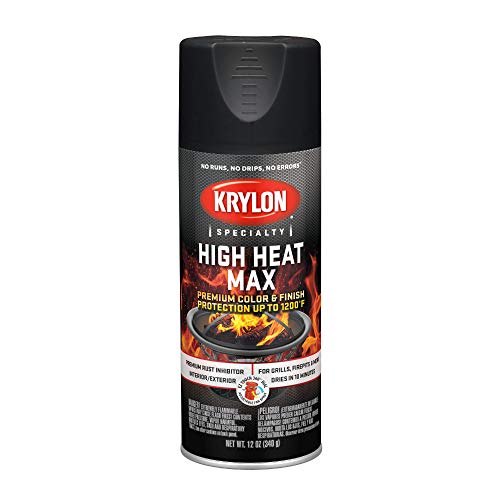
Krylon High Heat Max Spray Paint
What We Like
- Dries in 10 minutes or less
- Withstands 1200°F intermittent heat
- Premium rust resistance included
- Works on grills, fire pits, stoves
Trade-offs
- Only 12 oz can for larger fireplace projects
- Continuous heat limit is 600°F, not 1200°F
A 10-minute dry time means you can finish a grill or fire pit project in a single afternoon without waiting around between coats. That speed, paired with the ability to handle up to 1200°F intermittent heat and up to 600°F continuously, makes this spray a practical fit for wood-burning stoves and fire pits. The surface gets hot but not red-hot in those applications. The paint also offers premium rust resistance, so it holds up against moisture and temperature swings. It’s designed for use on grills, BBQs, fire pits, wood-burning stoves, and heating radiators.
The trade-off comes down to finish choice: this is gloss, not matte or satin. The continuous heat rating of up to 600°F means it’s fine for a stove that runs at normal operating temperatures. But if your fireplace insert or stovepipe regularly exceeds that for hours, you’d want a paint rated higher for continuous use. For most home fireplaces and occasional-use fire pits, though, the combination of fast drying and solid heat tolerance makes this a straightforward, no-fuss option.
Product photos
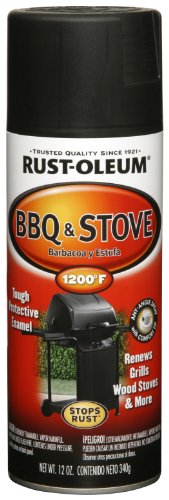
Rust-Oleum BBQ & Stove Spray Paint
What We Like
- Withstands heat up to 1200°F
- Prevents rust, corrosion and chipping
- Dries to the touch in 30 minutes
- Retains color after repeated heating
Trade-offs
- Designed for automotive metal surfaces, not masonry
- Oil-based formula requires mineral spirits for cleanup
This spray paint is rated for metal surfaces subject to heat up to 1200°F, so it can handle the high temperatures near a grill, stove, or automotive engine without losing color. Rust-Oleum formulated it specifically for automotive parts like radiators and engines, so it bonds tightly to bare metal and resists the rust that moisture and heat cycles can cause. If you need to refresh a painted metal surface that sees high heat, this oil-based formula provides a rich satin finish that prevents rust, corrosion, and chipping.
This paint is formulated exclusively for metal surfaces, so it won’t stick to brick, stone, or ceramic tile. For those materials, the Rutland Premium Hi-Temp Brush-On Paint handles higher temperatures and adheres to porous surfaces. On metal, the Rust-Oleum covers up to 12 sq. ft., dries to the touch in 30 minutes, and retains its color after repeated heating. Because it’s oil-based, you’ll need mineral spirits for cleanup.
VHT Flameproof Coating

What We Like
- Ceramic resins resist up to 2000°F
- EZ Touch spray nozzle for control
- Dries to touch in 30 minutes
Trade-offs
- Must be properly cured for maximum performance
- Automotive category, not labeled for fireplace use
With a heat ceiling of 2000°F, this coating handles temperatures far beyond what most automotive exhaust systems ever see, making it a strong choice for anyone who wants serious thermal headroom. The ceramic-resin formulation is designed for exhaust headers and manifolds, so it brings proven high-temperature protection to metal surfaces that need to withstand extreme heat. If you are restoring a high-heat automotive part, this flat aluminum finish can renew surfaces without worrying about performance at extreme heat levels.
This paint requires a proper curing process to reach its full performance, so you cannot simply spray it on and use the part right away. The VHT is rated for a higher temperature than the Rust-Oleum High Heat Enamel, which is rated for 1200°F and marketed directly for grills and stoves, but demands more patience upfront. Best for projects where maximum heat resistance is the priority and you are willing to follow the cure schedule to get it.
Product photos
Rutland Premium Hi-Temp Brush-On Paint

What We Like
- No primer needed before application
- Withstands up to 1400°F heat
- Weather- and heat-resistant for indoor/outdoor use
- Contains no lead, fluorocarbons, or vinyl chloride
Trade-offs
- Brush-on application only, no spray option
- Best results require heat curing after application
This paint is rated for up to 1400°F, which means it can handle high-heat surfaces like grills, stoves, or automotive parts without needing a primer. The 16 fl oz can provides a decent amount of paint for a single project, and since no primer is required, you can apply it directly after cleaning. The flat black finish is weather- and heat-resistant, and the paint offers 1 year of UV resistance after application, making it suitable for both indoor and outdoor use. It contains no lead, fluorocarbons, or vinyl chloride, so it is a safer choice for home projects.
Brush-on application takes more time and care than a spray can, especially on intricate cast iron details or grates. You will also get the best durability if you heat-cure the paint after it dries, which adds an extra step to the process. The Rutland requires more patience than the Rust-Oleum High Heat Spray Paint, which offers a faster spray application and a similar 1200°F rating, but delivers a thicker coating and a higher temperature ceiling. It is a practical choice for DIYers who value heat protection and a simple, no-primer workflow over speed.
Product photos
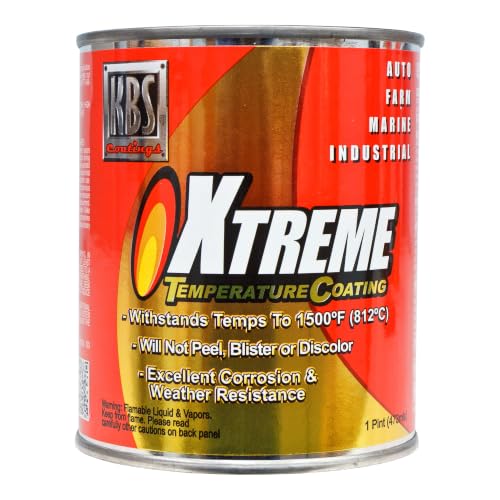
KBS Coatings Xtreme Temperature Coating
What We Like
- Withstands continuous heat up to 1500°F
- Won't peel, flake, or chalk
- Resists scratching and marring
- Can be brushed or sprayed on
Trade-offs
- Requires XTC Primer for rust resistance
- Only available in Pure White
A 1500°F continuous heat rating means this paint can handle the hottest fireplace inserts, wood stoves, and even exhaust manifolds without breaking down. That extreme tolerance makes it a strong choice for anyone restoring a high-heat surface that needs to stay white, with no peeling or flaking over time. It brushes or sprays on easily, so you can get a smooth finish on cast iron or steel without needing special gear.
Rust protection only kicks in when you pair this paint with the brand’s XTC Primer, adding an extra step to prep. And unlike the Stove Bright or Rutland options that come in black, this is pure white only, so it suits a bright fireplace surround but not a classic matte black stove. If your project demands a crisp white finish that handles extreme heat, this is the one to reach for.
How We Evaluated Paints For Fireplaces
Our evaluation focused on the technical specs that matter most when paint meets high heat. We started by examining each product’s stated temperature tolerance, paying close attention to whether that rating was for intermittent or continuous heat. We also looked at the required curing process, because a paint that needs a 24-hour wait or a specific heat cycle is very different from one that dries to the touch in minutes.
The three criteria that mattered most were heat resistance, application method, and durability. Heat resistance is the non-negotiable: a paint rated below the required temperature for a functional fireplace is risky. Application method determines whether you’ll be spraying, brushing, or sponging, which affects both ease of use and the final look. Durability covers resistance to chipping, cracking, peeling, and rust after repeated heating cycles.
A research-led evaluation has limits. We haven’t tested these paints in a lab or on a live fire. Our recommendations come from analyzing the data provided by manufacturers and the real-world experiences shared by many owners. This approach helps you narrow the field, but the best paint for your specific stove or fireplace will also depend on the surface material and your comfort with the application process.
What To Look For In Paints For Fireplaces
Choosing the right paint starts with understanding the heat your fireplace produces and the surface you’re working on. The wrong paint can fail in minutes, so focus on these key criteria before you buy.
Choose a paint rated for the appropriate temperature for functional fireplaces. Match the application method (spray, brush, or sponge) to your surface and skill level. Prioritize paints that resist chipping and rust for long-lasting results.
Heat Resistance Rating
The temperature rating is the single most important specification. For a wood-burning fireplace, look for a paint that withstands the required high heat. Gas fireplaces typically run cooler, but a high rating gives you a safety margin. Be careful to note whether the listed temperature is for intermittent or continuous use; some paints handle high heat in short bursts but lower heat when the fire is on for hours.
Application Method
Spray paints offer the most even coverage and are ideal for intricate metal surfaces like stove doors and grills, but they require masking and good ventilation. Brush-on paints give you more control for touch-ups and work well on flat panels, though they may show brush strokes. Sponge-on formulas, like the one from Furniture Clinic, are non-toxic and easy to apply but are limited to small areas.
Curing Requirements
Some high-heat paints dry to the touch in minutes but require a full cure through gradual heating to reach their maximum durability. Others, like POR-15 High Temperature Paint, need a 24-hour wait before any heat exposure. If you need a same-day solution, look for a paint that cures quickly without a multi-step process.
- Check the paint’s continuous vs. Intermittent heat rating.
- Decide if you prefer spray, brush, or sponge application.
- Plan for the curing time required before using the fireplace.
- Confirm the paint is suitable for your surface material (metal, masonry, cast iron).
- Look for rust and corrosion resistance if the paint will be used outdoors.
A paint that requires a long cure time is often more durable in the long run, but only if you can follow the instructions exactly.
Paints For Fireplaces Compared
The table below compares the key specs of our top ten picks, including heat rating, application method, and cure time, to help you choose the right paint for your fireplace project.
| Product | Heat Resistance | Finish | Container Size |
|---|---|---|---|
| Pellethead Paint | Up to 1200°F | Satin Black | 12 oz |
| Rust-Oleum High Heat Enamel Spray Paint | Up to 1200°F | Flat black enamel | 12 oz |
| Furniture Clinic Stove Restorer Paint | N/A | Matte Black | 8.5 oz |
| Chimney Plus 401990 Paint | Up to 1200°F | Satin Black | N/A |
| POR-15 High Temperature Paint | 1200°F / 648.8°C | Flat Black | 8 Fluid Ounces |
| Krylon High Heat Max Spray Paint | 1200°F | Gloss | 12 ounce |
| Rust-Oleum BBQ & Stove Spray Paint | 1200°F | Rich satin | 12 oz |
| VHT Flameproof Coating | 2000°F | Flat, Aluminum | 11 oz |
| Rutland Premium Hi-Temp Brush-On Paint | 1400 Degree F | Flat black | 16 fl oz |
| KBS Coatings Xtreme Temperature Coating | 1500°F | Pure White | 16 Fl Oz |
Frequently Asked Questions
What kind of paint do you use on a fireplace?
You need a high-heat paint specifically formulated to withstand the temperatures a fireplace produces. Standard wall paint will blister and peel. Look for paints rated for the appropriate temperature, and choose between spray, brush-on, or sponge-on formulas depending on your surface and skill level.
Can I use regular spray paint on a fireplace?
No, regular spray paint is not designed to handle high heat. It will likely bubble, crack, or burn off the first time you light a fire. Always use a paint labeled for high-heat applications, such as those rated for grills, stoves, or fireplaces.
Do I need to prime a fireplace before painting?
Many high-heat paints are self-priming and do not require a separate primer. However, for best adhesion on bare metal, a light sanding and cleaning is recommended. Some paints, like KBS Coatings Xtreme Temperature Coating, require their own specific primer for rust resistance.
How long does fireplace paint last?
With proper application and curing, a high-quality fireplace paint can last for several years. Durability depends on the frequency of use, the heat levels reached, and the surface preparation. Paints that resist chipping and rust will naturally last longer than less durable options.
Can I paint a brick fireplace with high-heat paint?
High-heat paints are primarily formulated for metal surfaces. Painting brick or stone requires a different type of masonry paint. Check the product label carefully; some high-heat paints may not adhere well to porous surfaces like brick.
The Bottom Line
For most homeowners, the Pellethead Paint is the best overall choice. Its 1200°F heat rating and easy aerosol application make it a versatile option for stoves, fireplaces, and grills. It’s ideal for anyone who wants a reliable spray-on finish for a smaller project.
If you prefer a brush-on formula for a cast-iron stove, the Furniture Clinic Stove Restorer Paint is a non-toxic, easy-to-apply alternative. For those on a tighter budget, the Rutland Premium Hi-Temp Brush-On Paint offers excellent heat resistance up to 1400°F without needing a primer.
The single most important factor is matching the paint’s heat rating to your fireplace’s operating temperature. Ignore this, and no amount of careful application will save your finish. Choose a paint rated for the required temperature, and you’ll be set for many warm fires to come.
